N S W E
Wildlife Expeditions

Wildlife of
Anguilla

Anguilla is most notable for its vibrant nearshore seas-coral reefs, seagrass meadows, and turtle-nesting beaches that deliver some of the Caribbean's most accessible marine wildlife viewing.
1 Species
91 km² Land Area
Overview

About Anguilla

Anguilla's wildlife story is written mainly in saltwater: clear, warm shallows ring this low-lying island and support a rich mosaic of coral reefs, patch reefs, sandy lagoons, and seagrass beds. While land mammals are limited and terrestrial habitats are relatively small, the coastline and surrounding marine environment host much of the territory's natural heritage-reef fish communities, rays and other invertebrate-rich reef life, and beaches that become critical seasonal habitat for nesting sea turtles.

Key ecosystems underpinning Anguilla's biodiversity include fringing and offshore reefs (essential nursery and feeding grounds for reef-associated fish), seagrass beds (high-productivity habitat that supports food webs and stabilizes sediments), and sheltered bays and lagoons that act as refuges for juvenile marine life. These habitats also buffer the island from storms and erosion, making them ecologically and economically significant. For visitors, this translates into wildlife encounters that are often close to shore-snorkel- and dive-friendly reefs, calm bays, and coastal walks timed with nesting and hatching seasons.

In terms of conservation relevance, Anguilla contributes to wider Caribbean and global efforts by safeguarding interconnected marine habitats used by migratory and wide-ranging species, particularly sea turtles that traverse international waters. The wildlife experience here is distinctive for its intimacy and immediacy: you can go from beach to reef in minutes, observe reef life in shallow water, and-when conditions and regulations allow-witness the seasonal rhythm of turtle nesting on protected shores, all within a compact island setting where coastal stewardship has outsized impact.

Physical Features

Geography

Anguilla's wildlife is shaped by its very small, low-lying limestone landmass and extensive shallow coastal platform. With no permanent rivers and limited freshwater, terrestrial habitats are largely dry scrub and thorn woodland, while biodiversity concentrates around coastal wetlands (salt ponds, lagoons, mangroves) and especially marine habitats-fringing coral reefs, seagrass beds, and sandy beaches that support reef fish communities and nesting sea turtles. Offshore cays expand nesting/roosting sites for seabirds and provide relatively undisturbed coastal habitat.

91 km² Land Area
Among the world's smallest inhabited territories; about half the land area of Washington, DC Size Rank

Key Landscapes

  • Low limestone island with very low relief (no mountains)
  • Extensive coastline with sandy beaches and rocky shores/cliffs
  • Coastal dunes and beach systems (important for nesting sea turtles)
  • Shallow shelf waters with fringing coral reefs (reef fish and invertebrates)
  • Seagrass beds and sandy bottoms (nursery habitat; foraging areas for turtles and fish)
  • Salt ponds/salt flats and coastal lagoons (key waterbird habitat)
  • Small, patchy mangroves and coastal wetland vegetation (nursery/refuge habitat)
  • Offshore islets/cays (e.g., Dog Island, Prickly Pear Cays, Scrub Island) important for seabirds and less-disturbed coastal fauna
  • No permanent rivers; drainage is mostly ephemeral after rains, limiting freshwater-dependent species

Ecoregions

  • Leeward Islands xeric scrub (WWF terrestrial ecoregion)
  • Tropical Northwestern Atlantic (marine realm); Eastern Caribbean marine ecoregion (commonly used MEOW classification-coral reef and seagrass systems dominate)
Parks & Reserves

Protected Areas

Anguilla's protected-area system is heavily marine-focused, reflecting the territory's dependence on coral reefs, seagrass beds, and coastal wetlands. Formal protection is delivered mainly through designated Marine Parks (nearshore zones set aside for reef and fisheries conservation, often with anchoring restrictions and/or no-take rules) plus a smaller set of terrestrial/coastal protected sites (salt ponds, cays, and habitat areas) supported by the Department of Environment and partner organizations such as the Anguilla National Trust. In practice, many of the most important biodiversity sites are offshore cays and surrounding reefs used by nesting seabirds and sea turtles.

Protected Coverage

Approximate land under formal protection: ~5-10% (small, site-based protection concentrated in a few wetlands and offshore cays). Protection is substantially larger in the marine realm via multiple Marine Parks around key reef and cay systems (coverage varies by how boundaries are defined and reported).

Notable Parks & Reserves

Prickly Pear Cays Marine Park

Marine Park

One of Anguilla's best-known reef-and-seagrass complexes, notable for clear-water snorkeling/diving and habitat that supports sea turtles, rays, and diverse reef fish. The small cays also provide roosting and nesting habitat for coastal seabirds.
Hawksbill sea turtle
Green sea turtle
Southern stingray
Queen conch
Caribbean spiny lobster
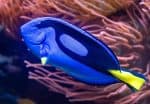
Blue tang
Blue tang
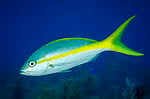
Yellowtail snapper
Yellowtail snapper

Sandy Island Marine Park

Marine Park

A tiny sand cay and surrounding shallow reef/seagrass habitat that functions as an important nursery area for reef fish and invertebrates. It's also a reliable spot for encountering turtles and stingrays in calm, shallow water.

Green sea turtle
Hawksbill sea turtle
Southern stingray
Stoplight parrotfish
Sergeant major
Queen conch
Caribbean spiny lobster

Sombrero Island (Hat Island) and surrounding waters

Protected cay / seabird habitat (site-based protection; often managed as a conservation area with adjacent marine protections)

A remote offshore island valued for seabird breeding/roosting and relatively undisturbed surrounding marine habitat. The adjacent reefs and open water support turtles and reef-associated fish communities, making it a high-conservation-value cay site.

Red-billed tropicbird
Sooty tern
Brown noddy
Royal tern
Hawksbill sea turtle
Green sea turtle
Frigatebird
Frigatebird

Dog Island and surrounding waters

Protected cay / seabird habitat (site-based protection; often managed with adjacent marine protections)

An offshore cay that is especially important for seabirds and as a low-disturbance refuge compared with main-island beaches and shorelines. The nearby reefs and drop-offs support strong reef-fish assemblages and turtle foraging habitat.

Brown booby
Masked booby
Red-billed tropicbird
Sooty tern
Hawksbill sea turtle
Green sea turtle
Magnificent frigatebird

East End Pond (salt pond wetland)

Ramsar Wetland of International Importance; Important Bird Area (IBA)

Anguilla's most significant coastal wetland for birdlife, supporting resident waterbirds and serving as a key stopover/foraging site for migratory shorebirds. It is one of the best places on the island to observe waders and wetland species.

Black-necked stilt
Snowy egret
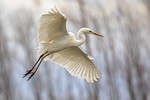
Great egret
Great egret
White-cheeked pintail
Willet
Least sandpiper
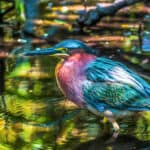
Green heron
Green heron

Shoal Bay marine area (reef and nearshore habitats)

Marine Park / managed marine area (nearshore reef protection)

A high-quality fringing reef/seagrass system that supports abundant reef fish, grazing parrotfish, and invertebrates important to fisheries and ecosystem health. It is also suitable habitat for foraging sea turtles and reef predators.
Hawksbill sea turtle
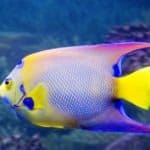
French angelfish
French angelfish
Queen parrotfish
Nassau grouper
Bar jack
Caribbean spiny lobster
Queen conch
Animals

Wildlife

Anguilla's wildlife diversity is strongly shaped by its small size, low relief, dry scrubby vegetation, and-most importantly-its coastal and marine habitats. Coral reefs, seagrass beds, sandy beaches, and shallow lagoons/salt ponds support the most visible biodiversity: reef fish and invertebrates, nesting sea turtles, and large numbers of resident and migratory waterbirds. Terrestrial wildlife is comparatively limited, dominated by reptiles (lizards/snakes) and a small bat fauna, with several conservation-priority species restricted to the Anguilla Bank and its offshore cays (notably Sombrero Island).
~10-15 (mostly bats; few/no native non-bat land mammals; some introduced species) Mammals
~160-200 recorded (mix of residents, seabirds, and many North American migrants; dozens breed locally) Birds
~20-30 (multiple lizards/snakes plus 3 regularly occurring sea turtles) Reptiles
~1-2 (very limited; some populations may be introduced) Amphibians

Iconic Species

Hawksbill Sea Turtle A flagship species for Anguilla's beaches and nearshore reefs; nests on sandy beaches in season and feeds around coral reef habitat. Conservation-focused turtle patrols and protected nesting areas make it one of the territory's most sought-after wildlife sightings.
Green Sea Turtle Commonly associated with Anguilla's seagrass beds and shallow lagoons; nesting also occurs on suitable beaches. Best chances are in calm, clear nearshore waters over seagrass and sandy bottoms.
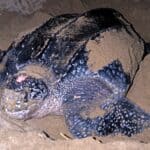
Leatherback Sea Turtle
Leatherback Sea Turtle Less frequent but highly charismatic; the largest sea turtle occasionally nests on Anguilla's more open, high-energy beaches. Sightings are most likely during the nesting season and around offshore waters.
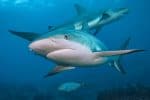
Caribbean Reef Shark
Caribbean Reef Shark A signature predator of healthy Caribbean reef systems; encountered by divers/snorkelers on outer reef slopes and drop-offs, reinforcing Anguilla's reputation for clear water and reef biodiversity.
Nassau Grouper An iconic reef fish in the region (and conservation priority in many islands). In Anguilla it represents the classic "Caribbean reef" experience around structured coral and rocky reef habitat.
Stoplight Parrotfish A conspicuous reef herbivore seen grazing on reefs and hardbottom areas; important to reef resilience and frequently noticed by snorkelers due to its size and color.
Queen Conch A culturally and ecologically important species of seagrass beds and sandy flats. Visitors often encounter conch habitat while snorkeling; the species is also central to local fisheries management.
Caribbean Spiny Lobster A well-known nocturnal reef/rocky-bottom species. While often hidden by day, it is a defining component of Anguilla's marine biodiversity and a key managed fishery species.
Caribbean Flamingo A standout bird for visitors scanning salt ponds and coastal wetlands; numbers vary, but the species is emblematic of Anguilla's hypersaline lagoons and wetland birdlife.
Brown Pelican One of the most visible coastal birds around bays, beaches, and nearshore waters; regularly seen plunge-diving and roosting along the coast and on small cays.

Endemic Species

Sombrero Ground Lizard (Sombrero Whiptail) Endemic to Sombrero Island (an offshore cay of Anguilla). Its entire global range is extremely small, making Anguilla's offshore islets critical for the species' survival. Endemic
Anguilla Bank Anole A near-endemic anole largely restricted to the Anguilla Bank (Anguilla and nearby bank islands). It is among the most characteristic native land vertebrates visitors may notice in scrub and garden habitats. Endemic
Anguilla Bank Skink A conservation-priority lizard with a very limited range on the Anguilla Bank; local habitat protection and invasive predator control are important due to its restricted distribution. Endemic
Leeward Islands Racer A near-endemic snake of the northern Lesser Antilles/Anguilla Bank, typically most secure on smaller offshore islets where invasive predators are absent or controlled; a key species for island reptile conservation. Endemic
Anguilla Bank Ameiva (Whiptail) A near-endemic ground-dwelling lizard of the Anguilla Bank, characteristic of dry coastal scrub and open habitats; often one of the most frequently observed native reptiles on land. Endemic

Notable Populations

  • Sombrero Island holds the entire wild global population of the Sombrero Ground Lizard (Pholidoscelis corax), making it globally significant despite its tiny area.
  • Regionally important nesting activity for threatened sea turtles (especially hawksbill and green turtles) on Anguilla's beaches, supported by local protection and monitoring.
  • Salt ponds and coastal wetlands provide important stopover and wintering habitat for migratory shorebirds and waterbirds moving through the northeastern Caribbean.
Protection

Conservation

Primary Threats

  • Rising sea temperatures drive coral bleaching and reduce reef resilience; stronger hurricanes and storm surge physically damage reefs and erode turtle-nesting beaches; sea-level rise and chronic beach loss threaten low-lying coastal habitats and increase pressure for hard shoreline defenses that further degrade natural systems.
  • Land-based sources (septic leakage, wastewater, and runoff from roads/landscaped areas) can elevate nutrients and pathogens in nearshore waters, stressing reefs and seagrass; marine debris (especially plastics) accumulates on beaches and in seagrass; boating-related spills and chronic small discharges affect heavily used bays and anchorages.
  • Coastal development for tourism and housing can remove or fragment dunes, coastal vegetation, and wetlands/salt ponds, and can narrow beaches through construction close to the shore; nearshore dredging and shoreline alteration can smother adjacent seagrass and reef habitats.
  • Ports, marinas, coastal roads, seawalls, and other shoreline works can alter sediment movement, increase erosion down-drift, and reduce natural beach dynamics; construction and maintenance activities increase turbidity and sedimentation that can impair nearby coral and seagrass.
  • Beach grooming, vegetation clearing, and shoreline armoring reduce nesting habitat quality for sea turtles and diminish dune function; altered drainage and infilling around ponds/wetlands can change salinity and water levels, affecting waterbird use and wetland productivity.
  • Fishing pressure on reef-associated fish and high-value invertebrates (notably spiny lobster and queen conch) can reduce spawning biomass and alter reef food webs; localized depletion is more likely around accessible reefs and near populated areas, especially where enforcement is difficult across multiple cays.
  • High visitation at popular beaches and cays increases disturbance to nesting turtles (lights, nighttime activity, trampling) and to seabirds; heavy boating/anchoring can directly damage seagrass and coral, and frequent diver/snorkeler use can add physical stress to shallow reef areas.
  • Coral disease outbreaks (including regionally spreading conditions affecting Caribbean hard corals) can rapidly reduce key reef-building species; disease impacts are compounded by heat stress and localized water-quality issues, slowing recovery after storms and bleaching.
  • Concentrated development in coastal zones increases impervious surfaces and runoff, intensifies demand for wastewater and solid-waste services, and pushes construction into remaining natural shorelines and wetlands-amplifying cumulative impacts on reefs, beaches, and ponds.
  • Limited freshwater resources on a small, low-lying island increase reliance on groundwater and desalination; high demand can stress aquifers (including salinization risk) and raises energy use and brine-disposal considerations that must be managed to avoid coastal water-quality impacts.
Visit

Wildlife Tourism

Best Time to Visit

Wildlife viewing is possible year-round, but conditions and highlights vary by season:

- December-April (dry season; clearest water, calmer seas): Best overall for snorkeling/diving visibility and comfortable on-water days. Expect vibrant reef fish, rays over sandy patches, and strong chances of seeing seabirds around offshore cays.

- February-April (late winter to early spring): Peak period for migratory and pelagic sightings offshore on longer boat trips; best time to add a "wildlife-focused" boat day that looks for seabirds and occasional whales/dolphins while transiting between cays.

- May-June (shoulder season): Water is warming and often still clear; great for long snorkel sessions, seagrass spotting (juvenile fish, turtles), and quieter beaches.

- July-October (warmer water; variable seas; hurricane season): This is generally the key window for sea turtle nesting activity (and early hatchling events later in the season). Best for turtle-focused trips and night-time nest monitoring only where permitted and guided. Plan around weather and be ready to shift days.

- November (transition): Improving sea conditions and visibility returning; a nice balance of fewer crowds and strong reef time.

What you see when:
- Reef fish and invertebrates: year-round (best visibility Dec-Apr).
- Sea turtles (foraging on seagrass, reef edges): year-round; nesting peaks in summer/early fall.
- Seabirds (cays and offshore): year-round with good activity in the drier, windier months.
- Whales/dolphins: occasional; best odds on dedicated offshore boat trips in late winter/early spring.

Top Wildlife Experiences

  • Snorkel a protected reef-and-seagrass circuit by boat: Start on a shallow seagrass bed to look for grazing sea turtles and juvenile fish, then move to a reef edge for parrotfish, angelfish, and rays-finishing with a drift snorkel back toward the boat (best on calm mornings).
  • Take a small-boat "cays and seabirds" day trip: Cruise to offshore cays to watch for terns, noddies, and other seabirds, then snorkel nearby patch reefs; bring binoculars and ask your captain to route around active roosting areas at a respectful distance.
  • Join a guided sea turtle experience (daytime foraging or permitted night monitoring): Learn how to spot turtle surfacing behavior from shore or boat, identify tracks/nesting signs responsibly, and understand local protection rules; only do night activities with authorized guides to avoid disturbing nesting females.
  • Do a sunrise paddle (kayak/SUP) over seagrass shallows: Early light and glassy conditions make it easier to see stingrays, small schools of fish, and turtles; keep strokes quiet and maintain distance to avoid stressing wildlife.
  • Book a "reef naturalist" snorkel lesson: Go beyond sightseeing-practice buoyancy/fin control, learn how to read coral health, and identify common reef species; ideal for first-time snorkelers who want a low-impact approach.
  • Scuba dive a reef wall/ledge for bigger encounters: Choose sites with ledges and current to increase chances of seeing larger fish, barracuda, turtles, and rays; add a macro-focused dive for cleaner shrimp, juvenile fish, and reef invertebrates.
  • Glass-bottom boat or semi-submersible-style reef viewing (low-effort option): Great for families and non-swimmers-look for coral structures, sea fans, and fish schools without entering the water; pair it with one short snorkel stop if conditions allow.
  • Plan a responsible 'blue-water' wildlife cruise: On a calm day, head offshore with a skipper who knows pelagic bird and marine mammal spotting; it's your best chance for dolphins and occasional whale sightings during late winter/early spring, plus flying fish and seabird action en route.
  • Coastal birding at dawn near wetlands and salt ponds: Bring a scope/binoculars and visit at first light for the highest activity-watch waders and shorebirds feeding, then combine with a beach walk for seabirds and turtle track checks (no disturbance).

Safari Types Available

  • Boat safaris (reef-and-cay cruises, seabird-focused routes, pelagic wildlife excursions)
  • Snorkeling safaris (guided multi-stop snorkel days across reefs and seagrass beds)
  • Scuba diving safaris (single- or multi-dive trips; reef walls/ledges; macro-focused dives)
  • Paddle safaris (kayak and stand-up paddleboard trips over shallow bays and seagrass)
  • Shore-based wildlife walks (beach ecology walks; tide and intertidal exploration where accessible)
  • Birdwatching outings (wetlands/salt ponds at dawn; coastal seabird scanning)
  • Responsible sea turtle experiences (daytime spotting/education; guided nest monitoring where permitted)
  • Glass-bottom/low-impact viewing tours (for non-swimmers and families; reef interpretation)
Fun Facts

Did You Know?

Anguilla's wildlife story is mostly underwater: its biodiversity "hotspots" are reefs and seagrass beds, not forests-so many of the most important conservation actions are marine (protecting turtle nesting beaches, seagrass, and reef structure).

During the last Ice Age, today's Anguilla, St. Martin, and St. Barths were joined as one larger landmass (the Anguilla Bank). That ancient connection helps explain why several reptiles and other species are shared across these islands today.

The Anguilla racer's stronghold isn't the main island-it's tiny offshore islets where invasive predators (especially rats and cats) are absent. In other words, the species survives best on the smallest pieces of land.

Even with heavy beach use, sea turtles still nest on Anguilla's sands (hawksbill and green turtles are regular nesters; leatherbacks are also recorded). Conservation patrols often find that the same "postcard" beaches for people can be critical nursery sites for wildlife.

Home to one of the world's rarest snakes: the Anguilla racer (Alsophis rijgersmaei). Conservation reports note it fell to roughly ~50 individuals in the 1990s and today survives mainly on small, predator-free offshore cays.

Sombrero Island (a protected seabird sanctuary/Important Bird Area) is Anguilla's largest seabird breeding site-hosting large multi-species colonies (notably boobies and tropicbirds) concentrated on a single, tiny, remote rock.

Anguilla sits on the broad, shallow "Anguilla Bank," giving it an outsized area of shallow-water habitat (reefs, sand flats, and seagrass) compared with its land area-prime conditions for reef fish nurseries and turtle foraging grounds.

In a territory with no rivers, Anguilla's salt ponds/wetlands (e.g., the East End Pond area and other coastal ponds) are the island's most important inland wildlife habitats-supporting some of its highest bird concentrations, especially during migration.

Thank you for reading! Have some feedback for us?