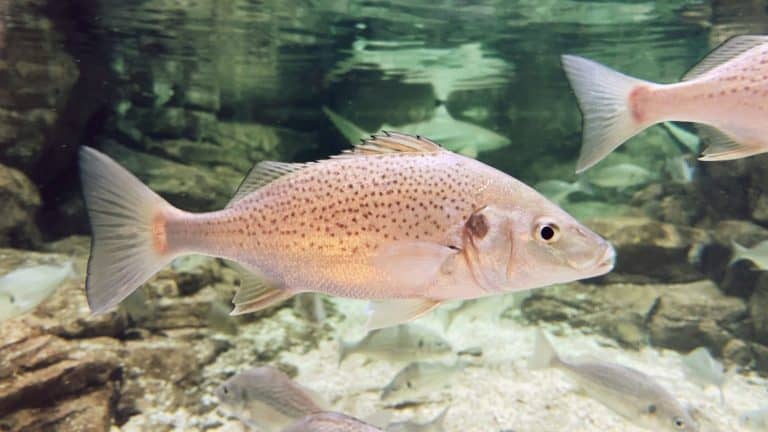
Mangrove Snapper
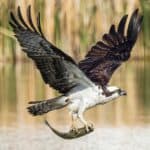
From mangroves to wrecks: built to hunt

From mangroves to wrecks: built to hunt
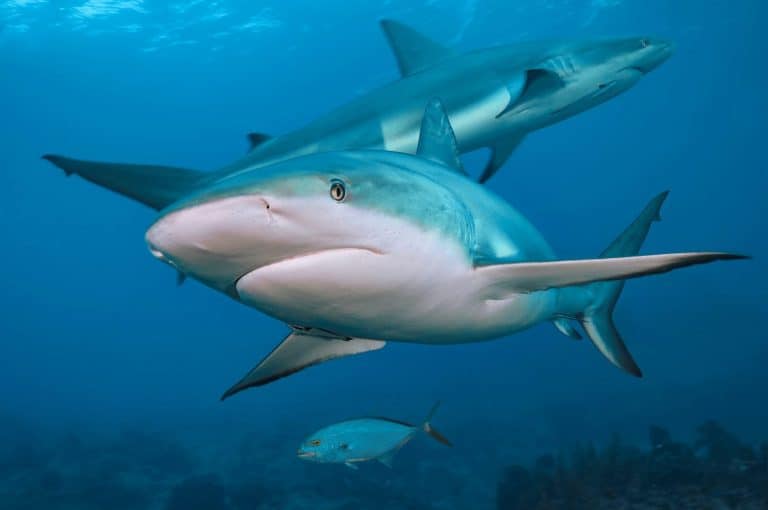
The reef's resident requiem shark
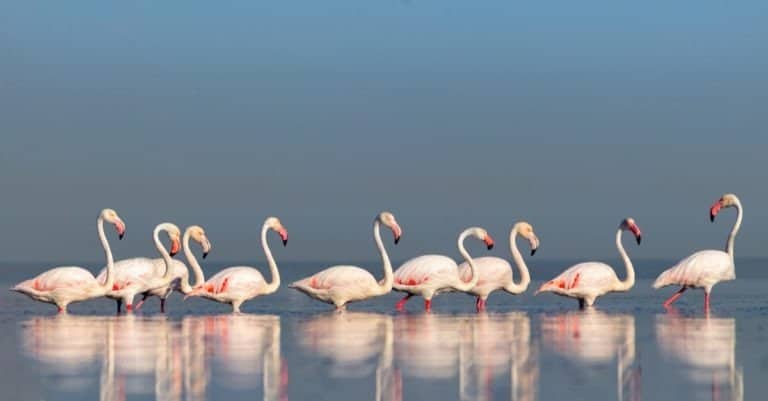
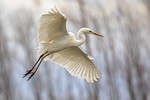
Pink by diet, united by colonies
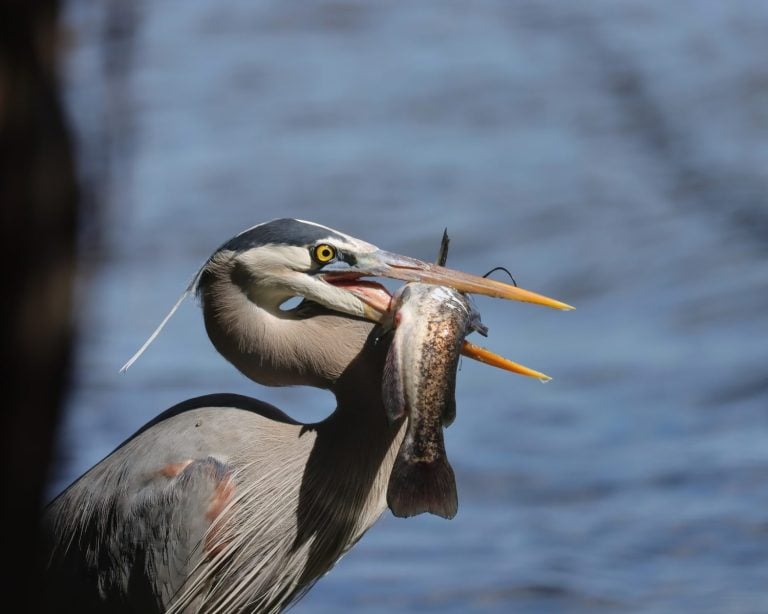
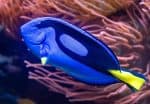
Stand still. Strike fast. Fly blue.
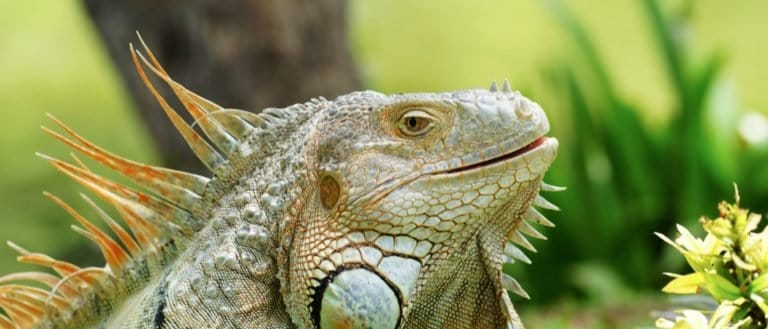
Sun-powered lizards of the Americas
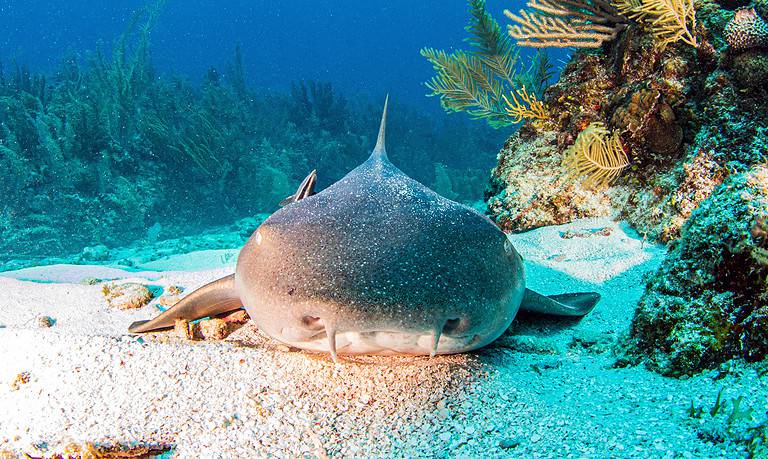
The reef's gentle vacuum hunter
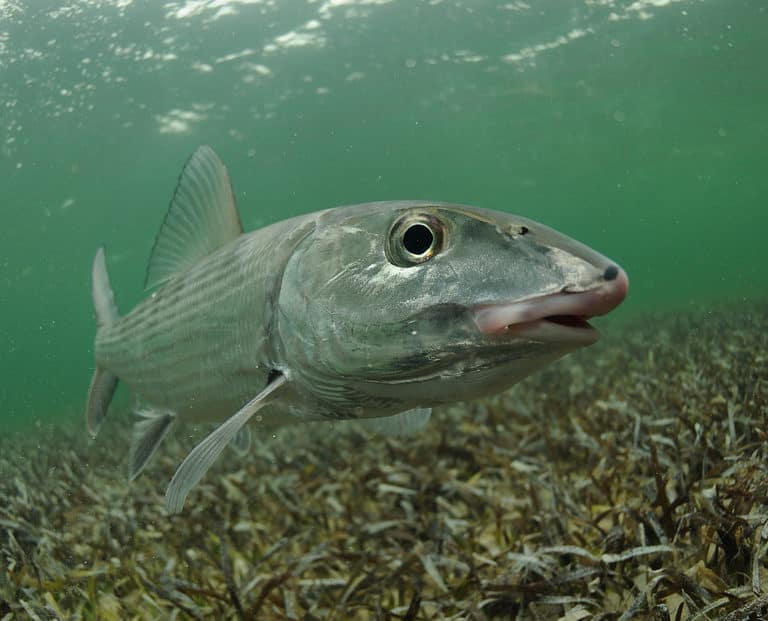
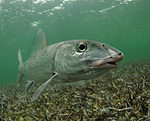
Grey ghost of the tidal flats
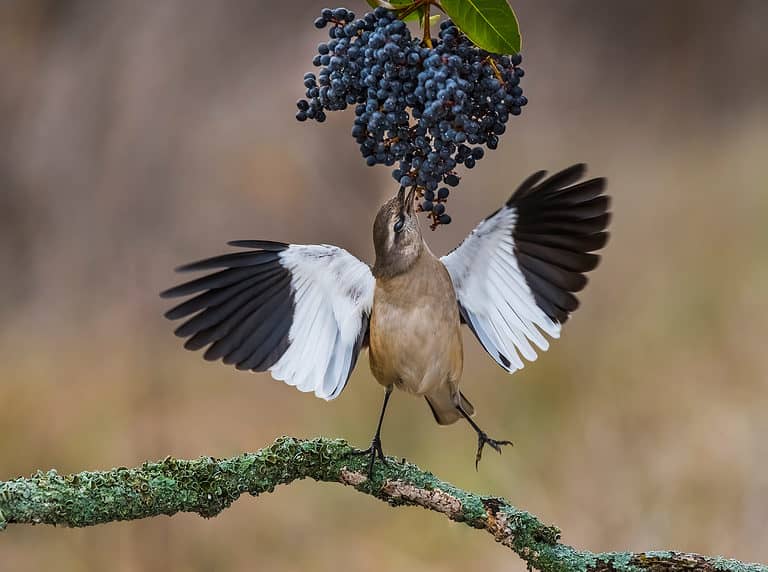
The bird with 400 voices
Small fish, big bladefin.
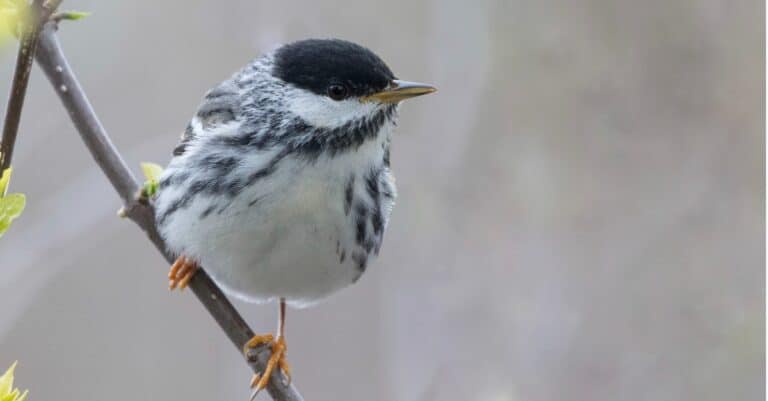
Tiny warbler, ocean-crossing athlete
The Turks and Caicos Islands' wildlife character is defined by the meeting of shallow carbonate banks, steep "wall" drop-offs, and low-lying islands fringed with mangroves and salt flats-creating an unusually rich blend of reef, open-ocean, and coastal-wetland life in a compact area. Much of the magic here is marine: vibrant reef fish communities, sea fans and corals, and charismatic megafauna like turtles, dolphins, and rays. On land, the islands are home to hardy coastal specialists and notable endemics, most famously the Turks and Caicos rock iguana, which has become a symbol of local natural heritage and conservation.
Key ecosystems include extensive barrier and fringing coral reefs (critical nurseries and feeding grounds), broad seagrass meadows that support grazing turtles and juvenile fish, and coastal wetlands-mangroves, tidal creeks, and salinas-where herons, egrets, and migratory shorebirds refuel. These habitats are significant not only for local biodiversity but also for regional connectivity across the Lucayan Archipelago and the wider Caribbean, linking fish and invertebrate populations via currents and providing essential stopover and wintering habitat for migratory birds.
In global conservation terms, Turks and Caicos plays an outsized role as a refuge for Caribbean marine biodiversity and as part of international migratory bird networks. Protected areas and internationally recognized wetlands help safeguard reef resilience, turtle nesting beaches, and critical waterbird habitat, while local organizations and community-led programs support rock iguana protection, sea turtle monitoring, and responsible marine tourism. The wildlife experience is uniquely "blue": world-class snorkeling and diving on clear-water reefs and dramatic walls, quiet kayaking through mangroves, flats alive with rays and bonefish, and seasonal whale encounters-often with fewer crowds than many Caribbean hotspots.
The Turks and Caicos Islands are low-lying carbonate (limestone) islands and cays with very limited freshwater and no mountains, so wildlife is strongly structured by coastal and marine habitats rather than elevation gradients. Extensive fringing reefs, shallow banks, and seagrass meadows support reef fish and invertebrates and provide major foraging habitat for green and hawksbill turtles; sheltered tidal creeks, mangroves, and salt flats concentrate juvenile fish and crustaceans and provide critical stopover/wintering areas for migratory shorebirds and waterbirds. Terrestrial habitats are patchy and drought-prone (dry scrub/woodland on thin soils), favoring hardy island plants and reptiles and limiting the distribution of freshwater-dependent fauna.
Turks and Caicos Islands (TCI) protects biodiversity through a government-designated network of terrestrial and, especially, marine protected areas (typically National Parks, Nature Reserves, Sanctuaries, and Marine National Parks). Management and enforcement are led by the Department of Environment and Coastal Resources (DECR), with support from partners such as the Turks & Caicos National Trust. Because TCI's ecology is dominated by coral reefs, seagrass flats, lagoons, and coastal wetlands, many of the most important protected areas are marine/nearshore and focus on safeguarding reef fish spawning habitats, turtle foraging/nesting areas, and critical stopover/wintering habitat for migratory shorebirds.
Approximate land under formal protection: ~15-25% of TCI's land area (varies by how small cays and mixed land-sea parks are counted). The protected-area network covers a much larger share of nearshore/coastal waters than of land, reflecting TCI's reef-and-wetland conservation priorities.
A flagship nearshore park protecting extensive seagrass beds, coral reefs, and mangrove-fringed shallows that support turtles, rays, and high reef-fish diversity-excellent for snorkeling and wildlife viewing.
Exposed reef slopes and spur-and-groove formations create habitat for large reef fish and cruising predators; it's one of the island's most wildlife-rich dive and snorkel areas.
A turquoise inland lagoon with surrounding dry coastal scrub and rocky islets; notable for roosting/foraging waterbirds and nursery habitats linked to nearby coastal ecosystems.
The most famous stronghold for the endemic Turks and Caicos rock iguana, protected from habitat loss and invasive predators; a key site for endemic-species conservation and viewing.
A high-value mix of reefs, seagrass, and coastal habitats that support turtles and commercially important marine life; important for sustaining local fisheries while conserving biodiversity.
Protects coastal habitats and adjacent reefs around one of TCI's most visited shorelines; important for sea turtle use of nearby waters and for reef fish and corals close to shore.
A vast complex of salt flats, lagoons, mangroves, and tidal creeks that is among TCI's most important areas for migratory shorebirds and waterbirds, including large flamingo concentrations.
The Turks and Caicos Islands (TCI) are a low-lying carbonate island chain with wildlife dominated by marine and coastal ecosystems: coral reefs, seagrass flats, sandy beaches, mangroves, and hypersaline wetlands. On land, native terrestrial fauna is relatively limited (few small reptiles and bats), but the surrounding waters and coastal habitats support high diversity and memorable viewing-sea turtles on nesting beaches and in seagrass, wintering humpback whales offshore, and large numbers of migratory shorebirds and seabirds using salt ponds, mudflats, and cays. Several reptiles are endemic or near-endemic, making TCI especially notable for island herpetofauna conservation.
Wildlife tourism in the Turks and Caicos Islands (TCI) is overwhelmingly marine-focused: coral reefs, seagrass flats, mangroves, and coastal wetlands drive visitor demand for snorkeling, diving, boating, and birding. Economically, nature-based activities (dive/snorkel trips, whale-watching cruises, turtle encounters, guided kayak tours, and reef-friendly resort excursions) are a major pillar of the tourism offer alongside beaches and luxury stays-supporting boat operators, dive shops, guides, accommodation, and conservation-linked fees and donations. Historically, TCI's reefs and wall dives (especially around Providenciales/West Caicos/French Cay) helped establish the islands' global reputation among divers; more recently, whale watching, guided paddling in mangroves, and responsible turtle-focused excursions have broadened wildlife tourism beyond scuba. Accessibility is straightforward: most travelers arrive via Providenciales International Airport (PLS) with frequent connections from North America and the region, then access reefs and wetlands by short boat rides, taxis/rental cars (where available), and inter-island flights/ferries for more remote experiences (e.g., Salt Cay). Because much of the best wildlife viewing is offshore or in shallow-water habitats, guided boat and paddle tours are the most practical way for visitors to see wildlife while minimizing impacts (reef-safe practices, no-touch policies, and appropriate distances for whales/turtles).
Much of Turks and Caicos is not "island sea" but ankle-to-waist-deep bank: in places on the Caicos Banks you can be miles from land and still be standing in shallow water-ideal conditions for seagrass, conch nurseries, and bonefish flats.
The flagship "Iguana Island" is a conservation story: Little Water Cay's rock iguanas persist largely because invasive predators (especially cats and rats) are kept off/controlled-showing how tiny offshore cays can hold globally important wildlife.
Some coastal ponds are naturally hypersaline (saltier than the ocean): these salinas support specialized food webs (including brine shrimp and other invertebrates) that help fuel birdlife such as herons, egrets, and (seasonally) flamingos.
Turks and Caicos beaches aren't just for tourists-they're migration rest stops: long, open shorelines and tidal flats provide wintering/stopover habitat for Arctic-breeding shorebirds (e.g., sanderlings and other sandpipers) that can be seen feeding at the waterline in peak season.
Global stronghold for an endemic reptile: the Turks and Caicos rock iguana (Cyclura carinata) lives naturally only in Turks and Caicos, and key protected cays such as Little Water Cay (Iguana Island) support a large share of the species' remaining wild population.
One of the region's largest shallow seagrass-and-sandbank systems: the Caicos Banks cover roughly 3,000 km² of very shallow habitat-an outsized nursery area for species like queen conch, juvenile reef fish, and bonefish.
Wetlands on a massive scale for a small territory: the North, Middle and East Caicos Wetland is a Ramsar site of ~58,000 hectares, making it one of the largest protected wetland complexes in the northern Caribbean and a major refuge for migratory waterbirds.
A dramatic "nearshore deep ocean" habitat: along the Caicos Wall (off Providenciales/West Caicos), the reef edge drops from shallow reef into very deep water (on the order of ~2,000 m), creating a steep ecological gradient that concentrates pelagic wildlife close to the reef.
12 species documented in our encyclopedia
Thank you for reading! Have some feedback for us?
We appreciate your help in improving our content.
Our editorial team will review your suggestions and make any necessary updates.
There was an error submitting your feedback. Please try again.