
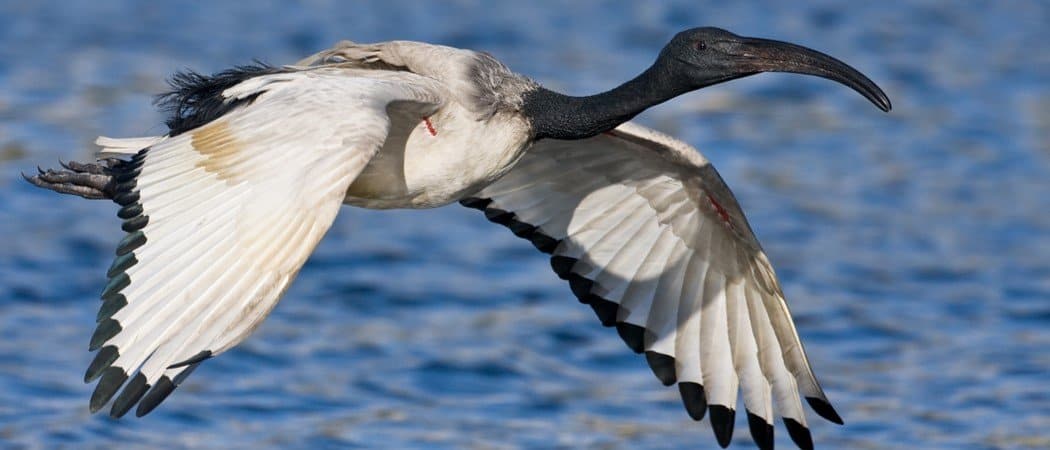
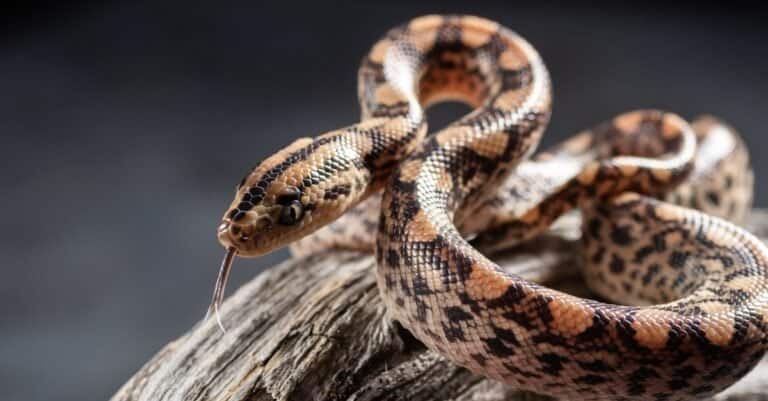
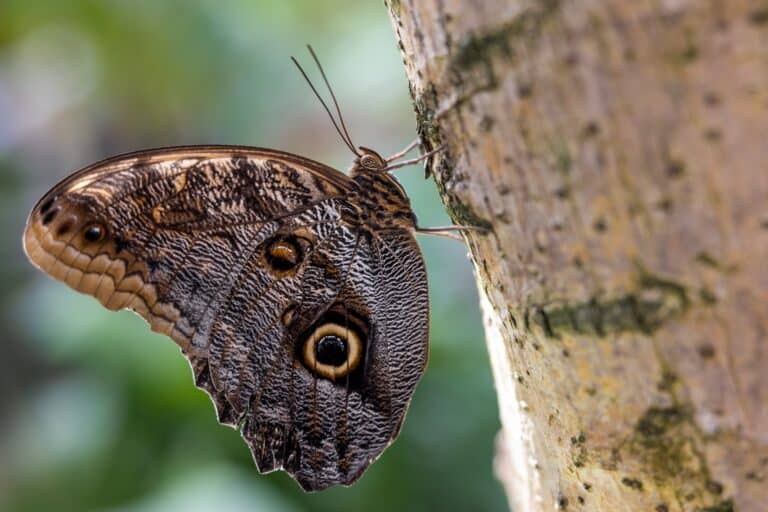
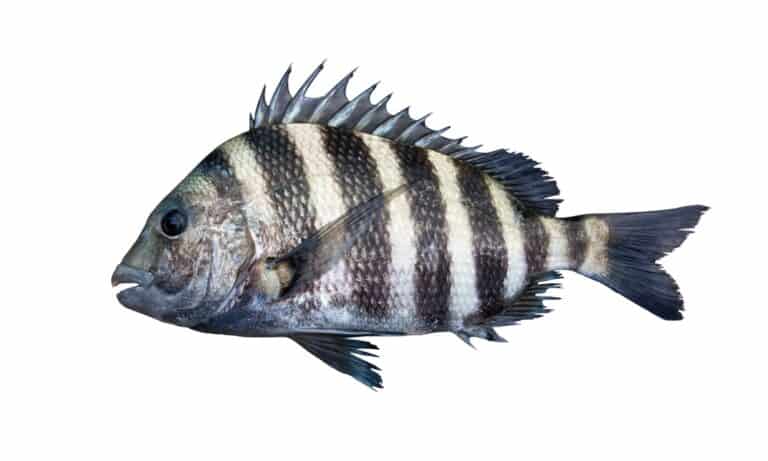

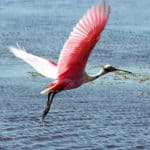
The fauna in Trinidad and Tobago is unlike that found in other islands of the Caribbean. Its unique nature arose because millions of years ago the island was actually connected to South America, and the ancestors of many animals found in Venezuela came over the land bridge to what became T & T.
About 100 species of mammals, and 90 species of reptiles, including five types of marine turtles. There are 50 species of freshwater fish, 30 species of amphibians, and 950 species of marine fish that live on or in the waters around Trinidad and Tobago and its smaller islands. Some of these species are only found in Trinidad and Tobago.
The Official National Animal of Trinidad and Tobago
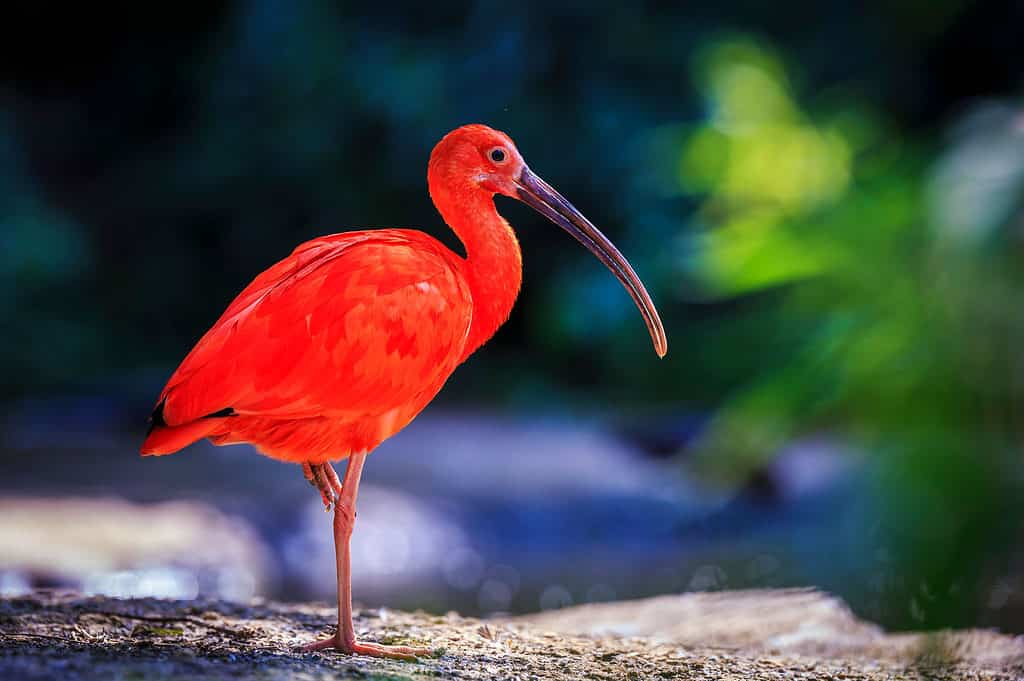
The national symbol of Trinidad is the scarlet ibis, and the national animal of Tobago is the cocrico.
©SanderMeertinsPhotography/Shutterstock.com
Since Trinidad and Tobago are two islands, they have two national animals. The national symbol of Trinidad is the scarlet ibis, and the national animal of Tobago is the cocrico, also called the Rufous-tailed chachalaca. Both animals are birds.
Rarest Animals in Trinidad and Tobago
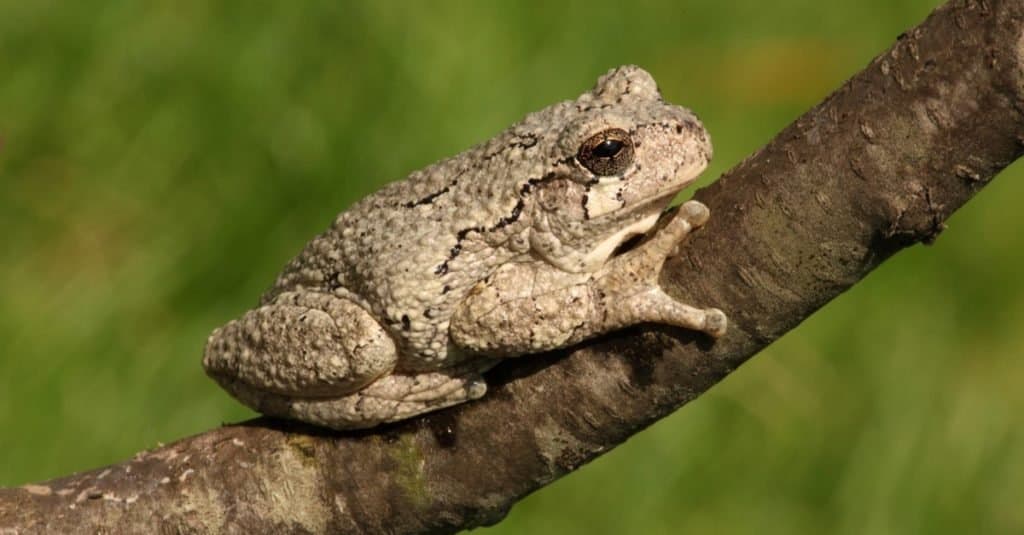
The golden tree frog is common in Trinidad and Tobago.
©Steve Byland/Shutterstock.com
Trinidad and Tobago are twin-island nations located in the southern Caribbean and are renowned for their lush rainforests, scenic beaches, and vibrant culture.
The country boasts a diverse range of flora and fauna, with many endemic species found nowhere else in the world. However, like many other countries, Trinidad and Tobago is also home to several rare and endangered species.
Here is a short list of rare species found in Trinidad and Tobago:
- Aechmea Downsiana
- Eriocaulon Caesium
- Phytotriades Auratus (more commonly known as the Golden Treefrog)
- Neurolepis Virgata
- Pipile (commonly known as the Trinidad Piping-guan)
Largest Animals in Trinidad and Tobago
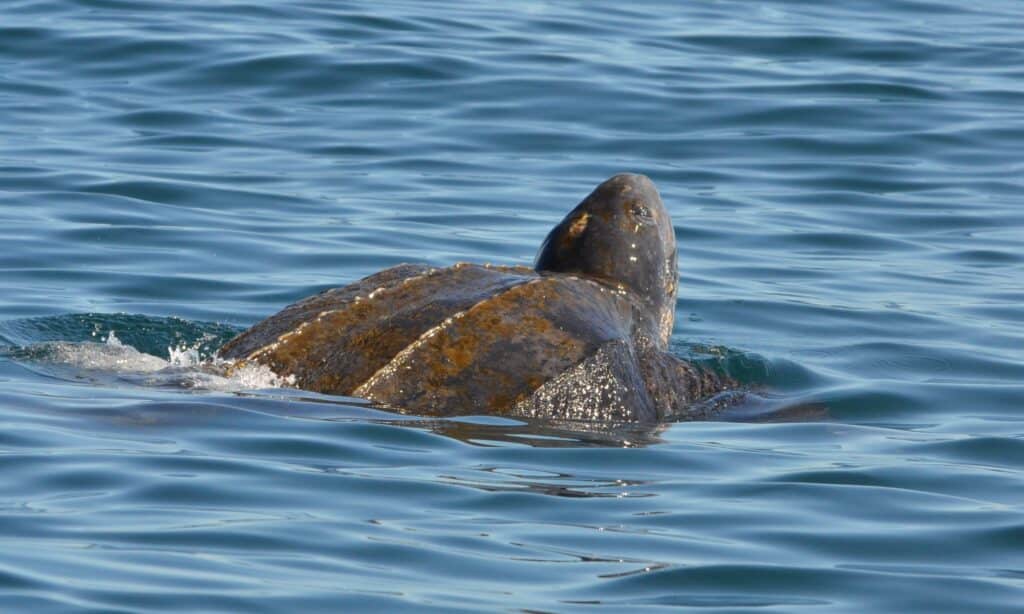
The leatherback sea turtle can weigh up to 2000 pounds and grow up to 7 feet in length.
©iStock.com/jtstewartphoto
Trinidad and Tobago are islands with lush rainforests, rivers, and surrounding seas that host many of the largest creatures found in the region, ranging from marine mammals to reptiles and primates.
Here, we take a closer look at some of the largest and most awe-inspiring animals that call Trinidad and Tobago home:
- Leatherback Sea Turtle: can weigh up to 2000 pounds and grow up to 7 feet in length.
- West Indian Manatee: can weigh up to 1500 pounds and grow up to 13 feet in length.
- Red Howler Monkey: can weigh up to 22 pounds and grow up to 2 feet in length.
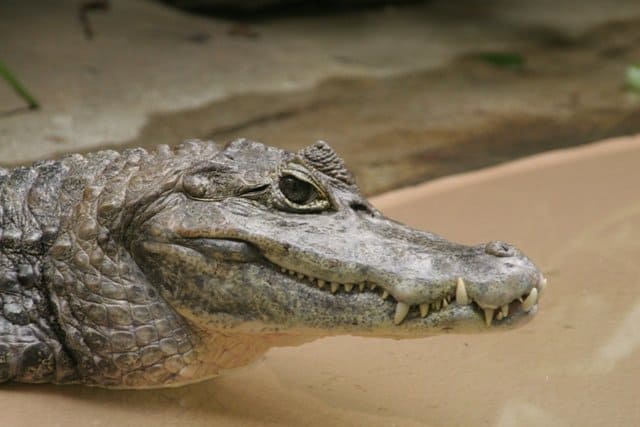
- Spectacled Caiman: can weigh up to 110 pounds and grow up to 7 feet in length.
- Yellow-headed Amazon Parrot: can weigh up to 1.1 pounds and grow up to 15 inches in length.
Where To Find The Top Wild Animals in Trinidad and Tobago
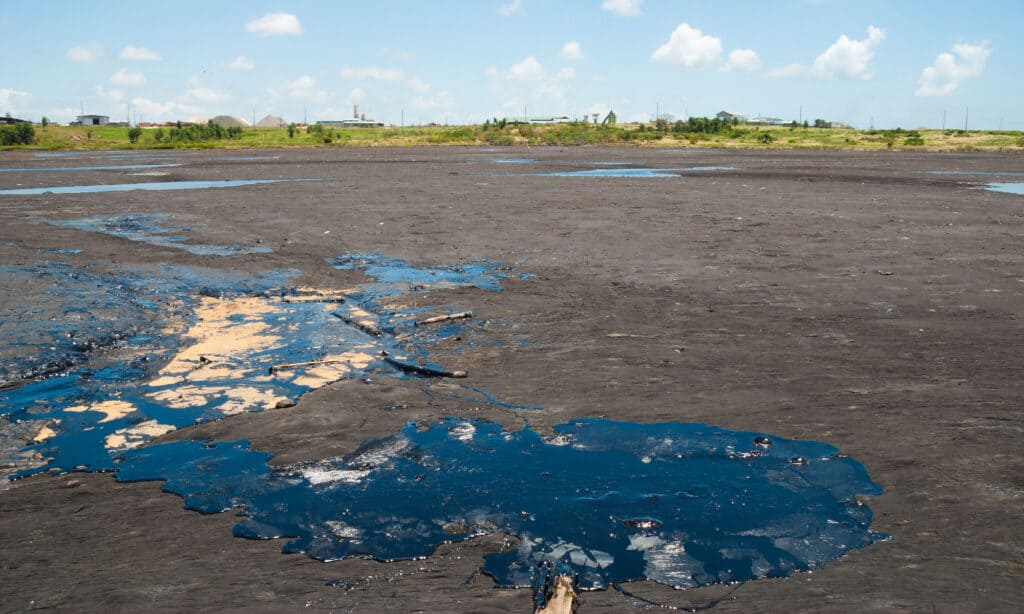
Pitch Lake is found in Trinidad.
©iStock.com/CircleEyes
The top wild fauna in T & T can be found in its moist forests dry forests, xeric scrubland, and mangrove swamps. There are also freshwater rivers and streams and dams, coral reefs, seagrass beds, and the open ocean.
The government of Trinidad and Tobago recognizes 61 protected areas around the country, and they are separated into categories that include national parks, natural landmarks, nature conservation reserves, scenic landscapes, scientific reserves, and recreation parks, all of which cover some 170,502 acres.
Among Trinidad and Tobago’s nature reserves are
- Argyle Falls found outside Roxborough in Tobago
- Aripo Savannas in the eastern central part of Trinidad
- Balandra Basins on the northeast coast of Trinidad
- Buccoo Reef, a marine park in Tobago
- The Caroni Bird Sanctuary on the island of Caroni
- El Socorro Centre For Wildlife Conservation in Freeport
- Nariva Swamp on the east coast of Trinidad
- The Tobago Main Ridge Forest Reserve
- Yerette in St. Joseph is famous for its population of protected hummingbirds.
The Most Dangerous Animals In Trinidad and Tobago Today
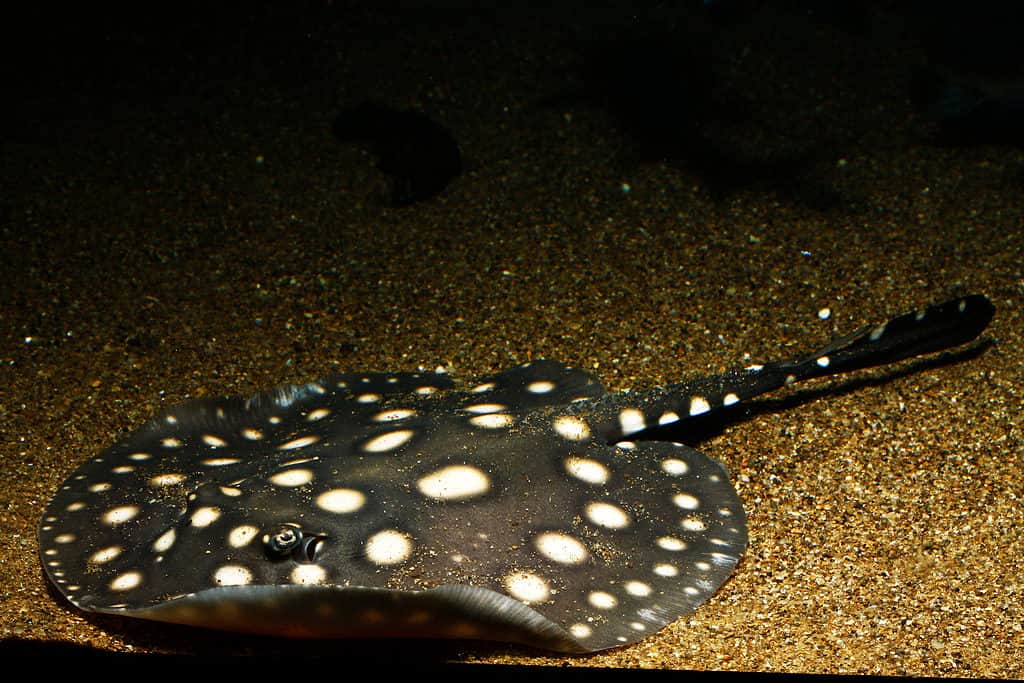
Xingu River ray white-blotched river stingray or the polka-dot stingray Southern stingrays are often found in the Trinidad region.
©Pavaphon Supanantananont/Shutterstock.com
- Southern stingray – Fatal stings from this animal are very rare, and the death by the stingray of naturalist Steve Irwin must be counted as a freak occurrence. But these cartilaginous relatives of the shark do tend to bury themselves in the sand near the coast and will defend themselves if they’re stepped on. Naturalists recommend a person walking shuffle their feet a bit if they walk through the surf to warn the animal that they’re coming.
- Great White Shark – This shark, which can be 20 feet long and weigh 2.5 tons, causes the most shark injuries and deaths around the world.
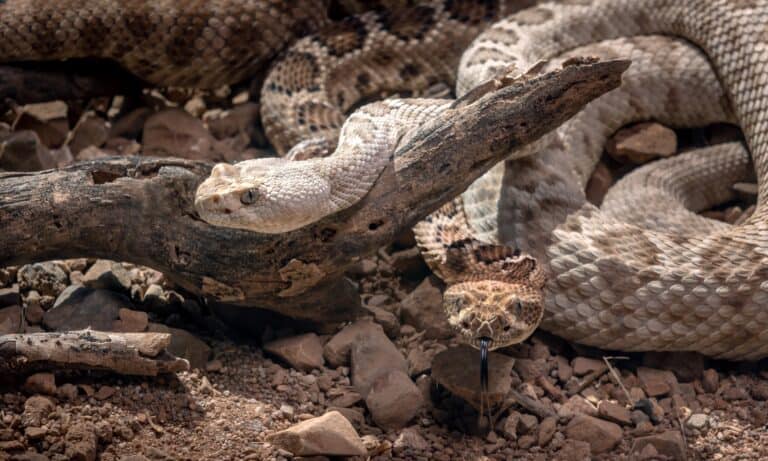
- Venomous snakes – Venomous snakes are only found in Trinidad and the Boca Islands. Among them are the fer-de-lance, the bushmaster, and two species of coral snake.
- Spectacled Caiman – This crocodilian is a potential threat to humans. It has also been known to take livestock and pets. However, it does try to avoid human contact in the places where it’s been hunted.
Endangered Animals In Trinidad and Tobago
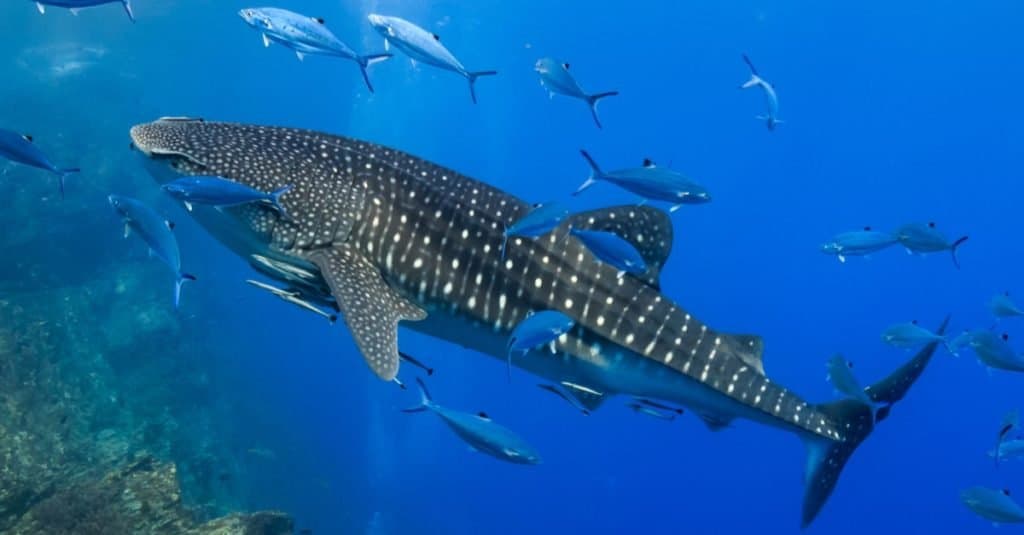
A large Whale Shark swimming in shallow water over a tropical coral reef. Each whale shark has its own unique pattern of spots, much like human fingerprints. They are common in the Trinidad oceans.
©Richard Whitcombe/Shutterstock.com
Like nearly everywhere else on earth, Trinidad and Tobago has its share of endangered fauna, and some animals may even be extinct in their native habitat. They include:
- Leatherback turtle – This huge marine turtle can grow as long as 7.2 feet and weigh 1540 pounds. It is unique among sea turtles in the size of its flippers, which can grow even longer than its body, and the leathery skin that covers its carapace. It hauls out on the beaches of T & T to lay its eggs. Despite being protected, leatherback turtles are listed as vulnerable or endangered due to being caught in webs meant for fish and struck by sea-going vessels. Pollution, including light pollution that disorients hatchlings, also takes a toll on this animal.
- West Indian manatee – This marine mammal is also called the sea cow and was a relative of the now-extinct Stellar’s sea cow. The West Indian manatee is related to the elephant and spends all of its time in the water, with its dense bones helping it stay submerged. It can grow to 11.5 feet long and weigh 1320 pounds, though the heaviest recorded weight was 3649 pounds. Manatees are also unique when it comes to other mammals because of their diaphragm. It’s split in two and each side works independently. The West Indian manatee is considered vulnerable, while its subspecies are endangered.
- Whale shark – Bigger even than the Great White and able to grow as long as 62 feet, the whale shark is harmless to humans. It is not a whale but it is a shark but is unusual among sharks that it is a filter feeder that feeds on the soup of plankton in the ocean. It simply opens its mouth and plunges right into its food, or sucks the food in, closes its mouth, and flushes the excess water out through its gills. The whale shark is endangered.
- Horned screamer – This is a bird that gets its name from its shrieking call. Related to ducks and geese, it is so rare in Trinidad and Tobago that biologists believe it has been extirpated or made extinct in a region where it once lived. However, it is of least concern in countries of South America such as Venezuela, Brazil, and Colombia.