Bonefish
Grey ghost of the tidal flats

Montserrat packs a surprising amount of biodiversity into a small, rugged island shaped by active volcanism. Its natural heritage is defined by steep forested ravines, misty uplands, and warm coastal habitats that together support rich birdlife, bats, reptiles, and a distinctive suite of island species found nowhere else. The island's modern identity is inseparable from the Soufriere Hills volcano: while the southern exclusion zone is largely off-limits, volcanic change has also created a living laboratory of succession, where nature reclaims ash and lava margins and wildlife adapts to a shifting landscape.
Key ecosystems include the Centre Hills, a globally important block of humid tropical forest that functions as Montserrat's biodiversity stronghold and a critical refuge for endemic species. Along the coast, beaches and nearshore waters add another dimension: sea turtle nesting occurs on suitable sands, while rocky shores and surrounding reefs support colorful marine life for snorkelers and divers. Together, upland forest and coastal habitats make the island ideal for birding, night walks for bats and frogs, and low-impact nature exploration.
In global conservation terms, Montserrat matters because island endemics are disproportionately vulnerable: one hurricane, disease outbreak, or invasive predator can change everything. Local and partner-led efforts (including habitat protection, research, and species recovery work) focus on safeguarding the Centre Hills, managing invasive threats, and monitoring emblematic species like the Montserrat oriole and the Mountain chicken (a critically endangered giant frog). What makes the wildlife experience unique here is the intimacy: sightings often happen on short hikes, the best wildlife areas are close to town, and the backdrop, an active volcano and emerald forest, feels unlike anywhere else in the Caribbean.
Montserrat's small, steep volcanic island geography strongly concentrates wildlife into a few remaining habitat blocks. Elevation and rainfall gradients-from drier coastal lowlands to wetter uplands-create distinct vegetation zones, while deep ravines and rugged slopes provide refuges for native forest birds, bats, reptiles, and invertebrates. The active Soufriere Hills volcano has removed and fragmented habitats in the south (ash, pyroclastic flows, lahars), shifting much biodiversity importance to the Centre Hills and northern coasts; coastal cliffs, beaches, and nearshore reefs support seabirds and marine-associated species.
Montserrat's protected area system is small but conservation-significant, centered on (1) a legally protected upland forest block in the Centre Hills (critical endemic-bird habitat), (2) a small number of coastal/wetland wildlife sites used by seabirds and migratory shorebirds, and (3) marine managed/protected areas established under fisheries/environment regulations to safeguard reefs, turtles and nearshore fisheries. In practice, large parts of the south of the island are also access-restricted for volcanic hazard management (Soufrière Hills), which can function as de facto habitat refugia, though this is not primarily a biodiversity designation. Management and stewardship are typically shared among Government (e.g., Forestry/Environment and Fisheries functions) and local conservation bodies such as the Montserrat National Trust, with additional "Important Bird Area" recognition (not itself a legal designation) helping prioritize key biodiversity sites like Centre Hills.
Approx. 10-15% of Montserrat's land area is under formal, site-based protection (notably the Centre Hills forest reserve/protected forest and small coastal/wetland wildlife sites). If volcanic exclusion/access-restriction zones are counted as de facto protected land, the share of land with restricted access can be substantially higher, but it is not primarily designated for conservation.
Montserrat's most important terrestrial conservation area, protecting the island's last extensive tract of moist tropical forest and the core habitat for endemic and range-restricted birds. It is the premier location for birdwatching and for conserving native forest biodiversity.
A key coastal wetland/lagoon area that supports herons, egrets and migratory shorebirds, making it one of the best places on-island for viewing wetland birds. Its habitats are limited and sensitive, so the site is important for safeguarding remaining coastal wetland biodiversity.
Protects nearshore marine habitats including fringing reefs and rocky reef communities important for reef fish, invertebrates and sea turtles. It underpins local fisheries sustainability while providing the best opportunities for snorkelling/diving-based wildlife viewing.
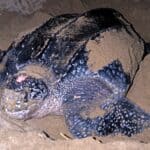
One of Montserrat's most important natural beaches and a focal area for sea turtle nesting and coastal wildlife. Its relative remoteness helps reduce disturbance, making it a high-priority site for coastal habitat and turtle conservation.
Although primarily designated for public safety due to volcanic hazards, restricted access can reduce direct human pressure and allow natural regeneration in parts of the impacted landscape. It offers a unique example of ecological recovery gradients after major eruptions.
Montserrat's wildlife is shaped by a small-island setting and a dramatic volcanic landscape (Soufriere Hills), producing a mosaic of habitats-from dry coastal scrub and beaches to moist upland forest on the Centre Hills. While large terrestrial mammals are absent, the island is notable for endemic and highly range-restricted reptiles and birds, strong Caribbean seabird presence along cliffs and offshore waters, and regionally important marine turtles. Volcanic exclusion zones and regenerating forests have also created a "natural laboratory" of habitat recovery that benefits forest birds and some endemics.
Montserrat offers a distinctive, small-island style of wildlife tourism shaped by its dramatic volcanic landscape and recovering ecosystems. Wildlife watching is not a mass-market industry here; it's a niche, high-value add-on to hiking, culture, and volcano/geo-tourism-especially birding, coastal wildlife, and night nature. Since the 1995 eruptions of Soufriere Hills Volcano, parts of the island remain restricted (notably within/near the Exclusion Zone), but nature has rebounded in accessible northern and coastal areas, creating excellent opportunities to see tropical birds, reptiles, and marine life in a rugged setting. Access is straightforward via regional connections (ferry/short-hop flights from nearby islands), and once on-island, a rental car or local driver-guides make it easy to reach trailheads, beaches, and viewpoints. Guided outings are recommended for safety, navigation on steep trails, and up-to-date guidance on any volcano-related access limitations.
"Mountain chicken" isn't a bird at all-it's a frog, nicknamed for its historical role as a local delicacy. Today it's critically threatened, largely due to outbreaks of the chytrid fungus that has devastated amphibians worldwide.
Montserrat's volcanic disaster accidentally created a wildlife refuge: much of the island's south lies in a long-standing volcanic exclusion zone around Soufrière Hills, sharply reducing human disturbance across a large swath of habitat.
Montserrat's national bird, the Montserrat oriole (Icterus oberi), was originally described in 1880 (and has also been treated historically as a subspecies of the Martinique oriole).
A reptile many feared had vanished was confirmed still surviving: the Montserrat galliwasp went decades with no verified records before being confirmed again in 2005-one reason it's often cited as one of the most elusive lizards in the Caribbean.
Despite its lush look, Montserrat has no native land mammals other than bats; mammals you're likely to see on the ground (rats, cats, goats, etc.) arrived with people, reshaping the island's ecology in outsized ways.
The Montserrat oriole (Icterus oberi) is a true single-island endemic: it occurs naturally nowhere on Earth except Montserrat (mostly in the Centre Hills).
The Montserrat galliwasp (Diploglossus montisserrati) is found nowhere else on the planet-making it one of the most range-restricted (and rarest-documented) lizards in the world; it is listed as Critically Endangered on the IUCN Red List.
The Montserrat anole (Anolis lividus) is another single-island endemic reptile: Montserrat is the only place in the world where it occurs in the wild.
Montserrat is one of only two islands where the 'mountain chicken' (Leptodactylus fallax) is native (the other is Dominica); it's also among the largest native frogs in the Lesser Antilles.
Thank you for reading! Have some feedback for us?
We appreciate your help in improving our content.
Our editorial team will review your suggestions and make any necessary updates.
There was an error submitting your feedback. Please try again.