N S W E
Wildlife Expeditions

Wildlife of
Haiti

Haiti is most notable for rare island endemics-especially distinctive birds and reptiles-found in rugged mountains, remnant dry forests, and mangrove-lined coasts where conservation efforts are racing to protect some of the Caribbean's most threatened habitats.
137 Species
27,750 km² Land Area
Overview

About Haiti

Haiti's wildlife story is one of extraordinary biodiversity under intense pressure: as part of Hispaniola, it harbors a suite of plants and animals found nowhere else on Earth, shaped by steep mountains, rain-shadow valleys, and a long coastline. Birdlife is the standout for many visitors-Hispaniolan endemics (shared with the Dominican Republic) and Caribbean specialties persist in pockets of remaining habitat, while coastal wetlands and lagoons provide critical stopover and wintering grounds for migratory shorebirds and waterfowl. Reptiles and amphibians add to the island's uniqueness, including remarkable anoles, boas, and other species adapted to dry forests, karst slopes, and montane refuges.

Key ecosystems span pine-forested highlands, cloud-forest remnants, limestone and thorny dry forests, and productive mangroves and seagrass-fringed bays. These systems matter far beyond Haiti's borders: mangroves and coastal wetlands support regional fisheries and protect shorelines, while upland forests regulate water supplies and reduce erosion and flooding risk. Because much of Haiti's native vegetation has been converted or degraded, the country's protected areas and community-managed forests are especially important as "last refuges" where conservation can still secure viable populations of endemic species.

In global conservation terms, Haiti lies within the Caribbean Islands biodiversity hotspot-an international priority due to exceptional endemism and high levels of habitat loss. While it is not part of African conservation, Haiti plays a meaningful role in hemispheric biodiversity protection and migratory bird networks linking North America, the Caribbean, and South America. The wildlife experience here is uniquely defined by seeking nature in resilient fragments: birding for endemics in mountain parks, scanning mangrove channels for herons and shorebirds, and learning about locally led restoration and reforestation projects that combine biodiversity protection with livelihoods and disaster-risk reduction.

Physical Features

Geography

Haiti's wildlife distribution is strongly shaped by rugged mountain ranges separated by dry valleys and short, steep watersheds. Elevation and rain-shadow effects create sharp habitat transitions-from lowland dry forests and scrub in leeward basins and coastal plains to moist broadleaf forests and pine forests at higher elevations. Major river valleys (notably the Artibonite) and interior lakes support freshwater and wetland species, while mangroves, lagoons, and nearshore reefs along the coastline provide critical nursery and feeding habitat for fish, turtles, and waterbirds. Extensive deforestation and fragmentation have greatly reduced and isolated remaining forest patches, concentrating many endemic and threatened species in a few mountainous refuges, especially in the Hotte Massif and the Selle Massif.

27,750 km² Land Area
~146th largest country by area; about the size of Albania Size Rank

Key Landscapes

  • Mountainous interiors (La Hotte Massif, La Selle Massif, Black Mountains) with strong elevation-driven habitat zonation
  • High peaks and ridgelines (e.g., Pic la Selle) supporting cooler montane broadleaf and pine habitats
  • Rain-shadow valleys and basins with dry forest/scrub (e.g., Cul-de-Sac Plain)
  • Artibonite River and valley (largest watershed) with riparian corridors, wetlands, and floodplain agriculture mosaic
  • Short, steep coastal watersheds prone to seasonal flow-important but vulnerable riparian strips
  • Coastal plains and lagoons used by waterbirds; key sites include estuaries and low-lying bays
  • Mangroves and salt flats (notably around parts of the Gulf of Gonave) as fish/crustacean nurseries and bird habitat
  • Interior saline and freshwater lakes (e.g., Lake Saumatre, also called Lake Azuei) and associated wetlands
  • Karst/limestone areas with caves and sinkholes that can support specialized fauna
  • Islands and peninsulas (Tiburon Peninsula, Gonave Island) with distinct, often drier habitats and local endemism
  • Nearshore marine habitats-seagrass beds and coral reefs-that interact with mangroves/estuaries to support coastal biodiversity

Ecoregions

  • Hispaniolan moist forests (broadleaf forests, including many montane remnants)
  • Hispaniolan dry forests (lowlands and rain-shadow regions)
  • Hispaniolan pine forests (higher-elevation pine stands)
  • Greater Antilles mangroves (coastal mangrove systems)
Parks & Reserves

Protected Areas

Haiti's protected-area system is relatively small and unevenly managed, but it safeguards some of the last intact habitats on the western half of Hispaniola-especially high-elevation cloud forests (critical for endemic birds and mammals) and coastal wetlands and mangroves (critical for waterbirds, fisheries, and marine megafauna). Protected areas are designated under categories such as National Parks, nature reserves/protected areas, protected forests, and marine/coastal protected areas. Governance is led by the Ministry of the Environment (MDE) and the National Agency of Protected Areas (ANAP), often with substantial support from NGOs and local/community partners; enforcement capacity and funding remain major constraints, and some sites exist largely on paper.

Protected Coverage

Approx. ~5% of Haiti's land area is under formal protection (estimate; coverage and on-the-ground effectiveness vary, and coastal/marine protection adds additional area in some sites).

Notable Parks & Reserves

Pic Macaya National Park

National Park

One of Haiti's most important refuges for remaining native cloud forest in the Hotte Massif, a global hotspot for endemism. It is a stronghold for endemic birds and the island's rare native mammals, and it supports threatened watershed and forest connectivity values.

Hispaniolan solenodon
Hispaniolan hutia
Hispaniolan trogon
Hispaniolan parakeet
Hispaniolan amazon (parrot)
Hispaniolan emerald (hummingbird)

La Visite National Park

National Park

A high-elevation national park in the Massif de la Selle with remnant pine and cloud forest that supports important Hispaniolan endemic wildlife, especially forest birds, in a heavily deforested country.

Hispaniolan trogon
Hispaniolan piculet
Hispaniolan crossbill
La Selle thrush
Hispaniolan parakeet
Hispaniolan emerald (hummingbird)

Pine Forest Protected Area

Protected Forest / Protected Area

Haiti's largest remaining native pine forest landscape, important for endemic highland birds and as a watershed buffer along the Selle Massif. The site is highly threatened by firewood and charcoal pressure and land conversion, making it central to forest restoration efforts.

Hispaniolan crossbill
Hispaniolan trogon
Hispaniolan parakeet
Hispaniolan spindalis
Hispaniolan emerald (hummingbird)

Three Bays National Park

National Park (coastal/marine protected area)

A flagship coastal-marine protected area in northeast Haiti that includes mangroves, seagrass, reefs, and bays-key habitat for fisheries nurseries and migratory shorebirds. It is also among Haiti's best places for marine and coastal wildlife conservation and viewing.

West Indian manatee
Hawksbill sea turtle
Green sea turtle
American flamingo
Brown pelican
Osprey
Osprey

Lake Azuei

Ramsar Wetland

Haiti's largest lake and an important wetland for waterbirds in an otherwise dry, heavily altered landscape. It is especially notable for large congregations of flamingos and other wetland birds.

American flamingo
Black-necked stilt
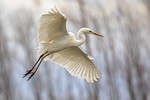
Great egret
Great egret
White ibis
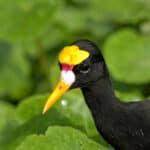
Northern jacana
Northern jacana

Acul Bay Mangroves and Wetlands

Coastal Wetland Protected Area (mangroves)

A major mangrove and lagoon system that provides nursery habitat for coastal fisheries and supports diverse waterbirds near the Port-au-Prince region. Its mangroves are among the most important remaining coastal wetland habitats in Haiti.

American flamingo
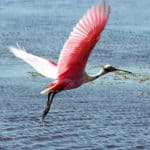
Roseate spoonbill
Roseate spoonbill
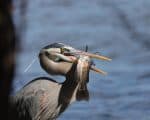
Great blue heron
Great blue heron
Brown pelican
Mangrove cuckoo
Animals

Wildlife

Haiti's wildlife diversity is rich for a Caribbean island but highly threatened: most large native mammals are absent, while biodiversity is concentrated in birds, reptiles, amphibians, bats, and coastal and marine fauna. The country's steep mountain ranges (notably the Massif de la Hotte and Massif de la Selle), remnant pine and cloud-forest patches, dry forests, mangroves, and large saline lakes (for example, Lake Azuei) support many Hispaniola-endemic species and key wetlands. Extensive habitat loss and fragmentation mean many signature species are now localized and best sought in protected areas such as Pic Macaya National Park and La Visite National Park and remaining coastal wetland and mangrove systems.

~40-50 native species (mostly bats; few non-bat terrestrial mammals) Mammals
~280-320 species recorded (including migrants; many Hispaniola endemics) Birds
~60-80 species (notably lizards and snakes; includes island endemics) Reptiles
~20-35 species (mostly Eleutherodactylus frogs; many localized endemics) Amphibians

Iconic Species

Hispaniolan Solenodon A globally famous, ancient-looking, venomous insectivore found only on Hispaniola; in Haiti it persists in a few remote forested and karst areas. It's one of the most sought-after (but rarely seen) flagship species for conservation in the Massif de la Hotte/Massif de la Selle region.
Hispaniolan Hutia The island's largest native land mammal (a rodent), typically nocturnal and hard to spot. In Haiti it survives in shrinking forest remnants and is a key indicator of remaining native habitat quality.
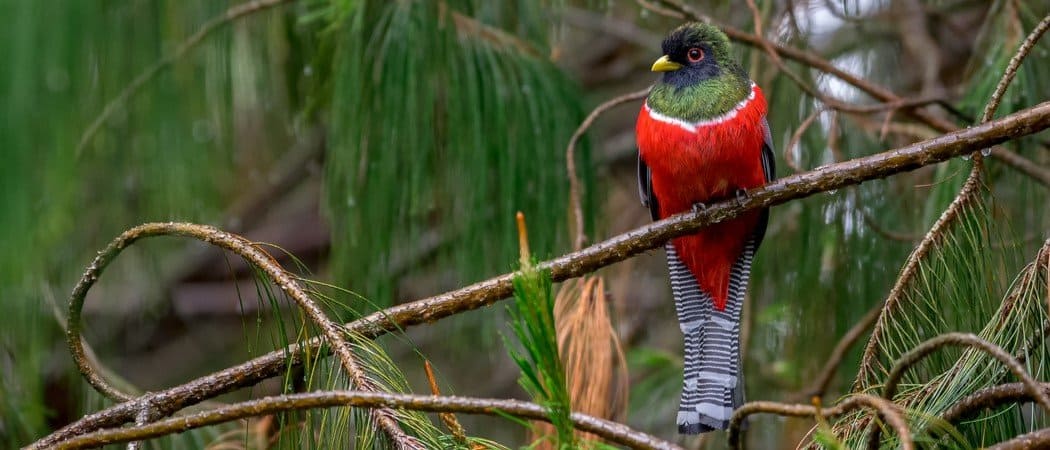
Hispaniolan Trogon A striking, colorful forest bird and one of the signature endemics of Hispaniola. In Haiti, the best chances are in remaining montane broadleaf forest and edges in/around Pic Macaya and La Visite National Parks.
Hispaniolan Parrot A charismatic Caribbean parrot; in Haiti it is highly impacted by habitat loss and trapping, making wild sightings notable. Where present, it is most associated with remaining forest patches and upland slopes.
Hispaniolan Palm Crow A distinctive crow of Hispaniola, closely tied to palms and open woodland/forest edge. In Haiti it remains a characteristic bird of lowland-to-mid-elevation landscapes where suitable trees persist.
White-necked Crow A threatened Hispaniola-endemic crow and one of the island's most impressive corvids. In Haiti it is localized and strongly associated with remaining mature forest and well-wooded ravines.
Hispaniolan Crossbill A specialized finch adapted to pine cones; a flagship for Hispaniola's pine forests. In Haiti it is tied to remnant Hispaniolan pine (Pinus occidentalis) areas, making it a key target for birders visiting upland sites.
American Crocodile The top aquatic predator in Haiti's coastal wetlands and saline lakes; the Lake Azuei system is a notable Haitian stronghold where crocodiles may be seen basking along shores and canals.
West Indian (Antillean) Manatee A rare coastal and estuarine species in Haiti, now very localized due to hunting pressure and habitat disturbance. Occasional sightings are most associated with quieter bays, estuaries, and mangrove-fringed coasts.

Endemic Species

Hispaniolan Solenodon Endemic to the island of Hispaniola; Haiti contains important remaining habitat in remote mountainous and karst regions, though populations are highly fragmented. Endemic
Hispaniolan Hutia Endemic to Hispaniola; in Haiti it survives mainly in remnant forest patches and is vulnerable to deforestation and hunting. Endemic
Hispaniolan Trogon Hispaniola-endemic forest bird; in Haiti it is most strongly associated with the last substantial montane forest blocks (notably the Macaya-Hotte and Selle ranges). Endemic
La Selle Thrush A Hispaniola-endemic, range-restricted montane thrush. In Haiti it is tied to higher-elevation forests of the Massif de la Selle/La Visite area, making intact upland habitat especially important. Endemic
White-winged Warbler Hispaniola-endemic warbler of montane forests and woodland; in Haiti it is best sought in higher-elevation habitats where native forest structure persists. Endemic
Hispaniolan Rhinoceros Iguana A large, charismatic lizard endemic to Hispaniola's dry forests and scrub. In Haiti it is most associated with remaining dry-forest habitats (including some offshore/islet settings) and is threatened by habitat loss and hunting. Endemic

Notable Populations

  • Massif de la Hotte (Pic Macaya area) and Massif de la Selle (La Visite area) are globally important refuges for Hispaniola-endemic birds and herpetofauna, holding some of the last sizable native forest blocks in Haiti.
  • The Lake Azuei wetland complex is one of Haiti's most significant sites for large reptiles (notably American crocodiles) and for migratory and wetland bird concentrations.
  • Haiti's remaining mangroves and quieter coastal embayments are regionally important (though increasingly rare) habitats for West Indian manatees and nesting/foraging marine turtles, where local protection determines persistence.
Protection

Conservation

Primary Threats

  • Native forests and natural habitats have been heavily reduced and fragmented, especially in mountain areas where remaining moist broadleaf forest patches (e.g., Massif de la Hotte and Massif de la Selle) are surrounded by farms and charcoal-production zones. Coastal habitats (mangroves, wetlands) have been cleared for settlements, small-scale aquaculture, fuelwood, and shoreline development, reducing nursery habitat for fisheries and storm buffering.
  • Cultivation on steep slopes and expansion into remaining forest edges are common due to land scarcity and rural poverty. Hillside farming accelerates erosion and landslides, degrades watersheds, and drives sediment plumes that smother nearshore coral reefs and seagrass beds-linking upland land-use directly to coastal biodiversity loss.
  • Most tree cutting is for fuelwood and charcoal rather than industrial timber. Chronic, small-scale harvesting-including cutting of mangroves for fuel and construction-prevents regeneration and steadily converts wooded landscapes into scrub, exacerbating watershed instability and biodiversity decline.
  • Dependence on biomass energy (charcoal/fuelwood) and extraction of sand/stone from rivers and coasts for construction can outpace natural replenishment. This depletion undermines watershed function, increases flood risk, and degrades beaches and riverine habitats.
  • Watershed alteration from deforestation and channel changes, drainage/filling of wetlands, and modification of coastal areas for settlements and small infrastructure reduce ecosystem services (flood buffering, water filtration) and fragment habitats. In some areas, altered fire regimes and repeated disturbance keep landscapes from returning to forest.
  • Solid waste and untreated wastewater commonly enter rivers and coastal waters near urban centers (e.g., Port-au-Prince bay), contributing to eutrophication and localized reef stress. Agricultural runoff and sediment are major pollutants, with chronic turbidity reducing light for seagrasses and corals.
  • Rising temperatures, shifting rainfall patterns, and more intense hurricanes amplify drought-flood cycles. Coral bleaching risk and ocean warming threaten reefs, while sea-level rise and storm surge increase coastal erosion and salinization of low-lying areas, stressing mangroves and coastal agriculture. Climate shocks also increase pressure on natural resources as livelihoods are disrupted.
  • Nearshore fisheries are heavily relied upon for food and income, and many areas experience high fishing pressure with limited management/enforcement. Removal of herbivorous fish and other key species can destabilize reef systems, while mangrove loss reduces fish recruitment and further undermines catches.
  • Opportunistic hunting and collection of wildlife occur in rural areas, affecting vulnerable birds and reptiles, especially where habitat has already been fragmented and populations are small. Hunting pressure can be locally significant around remaining forest refuges.
  • Introduced mammals (e.g., rats, cats, dogs, mongooses in parts of Hispaniola) and invasive plants can impact native wildlife through predation, competition, and habitat alteration. On islands and coastal habitats, invasive predators can be especially damaging to nesting birds and small vertebrates.
  • Rapid, often informal urban expansion around major cities increases demand for charcoal, construction materials, and land, while creating additional pollution loads in waterways. Settlement in flood-prone areas increases vulnerability and can drive further environmental degradation after disasters.
  • Road building and expansion of settlements in steep terrain can trigger landslides and open access to previously remote forest remnants, increasing extraction and encroachment. Coastal infrastructure can fragment mangroves and alter sediment dynamics along shorelines.
  • Frequent human presence in remaining natural areas (fuelwood collection, grazing, farming incursions, and uncontrolled visitation) reduces habitat quality and increases fire risk. Disturbance is particularly acute in and around protected areas where staffing and budgets are limited.
  • Extraction of aggregates and quarrying materials for construction can degrade habitats and waterways, particularly where sand/gravel are taken from rivers and coastal zones. Broader mineral development interest exists in Hispaniola; where exploration or extraction occurs, it can increase road access and land conversion pressures.
Visit

Wildlife Tourism

Haiti's wildlife tourism is small but meaningful, centered on endemic birds, reptiles/amphibians, coastal-mangrove ecosystems, and marine life along relatively undeveloped shorelines. Economically, nature travel tends to be community-scale (guiding, homestays, local transport, small lodges) rather than large safari-style operations; it can directly support conservation and livelihoods where protected-area budgets are limited. Historically, much of Haiti's native habitat was lost to deforestation and land conversion, so today's viewing is best in remaining forest patches, higher-elevation mountain areas, mangroves, and offshore cays/reefs. Accessibility is improving in some corridors but remains uneven: expect variable road conditions, limited signage, and fewer formal visitor facilities than many Caribbean destinations. Hiring a reputable local guide, planning point-to-point transport, and keeping expectations oriented toward 'rare and local' (endemic birds, herps, mangrove wildlife) rather than high-density megafauna will make for a rewarding, conservation-positive trip.

Top Wildlife Experiences

  • Dawn endemic-bird walk in a montane forest with a specialist local guide: start pre-sunrise, work mixed-species flocks, and target Hispaniola specialties (bring binoculars, a headlamp for the first hour, and expect steep trails).
  • Night 'herp hunt' after rain in foothill/forest-edge habitat: slow, quiet walk with headlamps to look for treefrogs, anoles, geckos, and other nocturnal reptiles/amphibians; best in May-Oct but can work year-round after showers.
  • Mangrove kayak or small-boat wildlife circuit: paddle quietly through channels to spot herons/egrets, kingfishers, migratory shorebirds, juvenile fish nurseries, and (with luck) sea turtles near the mouth of the lagoon.
  • Ridgeline raptor and seabird watch: spend a morning scanning thermals and coastal flight lines for soaring birds; pair with a second session at dusk for owls and nightjars where present.
  • Snorkel a reef-and-seagrass mosaic with a naturalist guide: focus on turtles, rays, reef fish, and invertebrates; ask operators to prioritize no-touch wildlife etiquette and reef-safe practices.
  • Citizen-science style birding day (eBird-style checklisting): travel between a wetland, a mid-elevation farm mosaic, and a forest patch in one day to maximize species variety and generate useful records for under-surveyed sites.
  • Community-led forest restoration visit + wildlife walk: combine a short interpretive hike with a visit to a local nursery/restoration plot to learn how reforestation links to bird habitat and watershed protection.
  • Coastal mudflat/estuary shorebird session at falling tide: time your visit around tides to watch feeding flocks (plovers, sandpipers, and other migrants), plus wading birds hunting in shallows.
  • Cave/karst edge exploration (where safely accessible and permitted): daytime search for swifts/swallows at entrances and a guided bat-viewing session at dusk without disturbing roosts.
  • Day trip to offshore islets/cays by local boat (weather permitting): combine seabird watching, snorkeling, and a beach cleanup/low-impact visit to reduce footprint on fragile nesting areas.

Safari Types Available

  • Guided birding walks (dawn and late afternoon)
  • Night walks / 'herping' excursions for reptiles and amphibians
  • Hiking-based wildlife treks in montane and foothill habitats
  • Mangrove canoe/kayak safaris and lagoon boat trips
  • Coastal/estuary shorebird watching excursions (often tide-timed)
  • Snorkeling and small-boat marine wildlife tours (reefs, seagrass, cays)
  • Community-based ecotourism outings (restoration visits + wildlife interpretation)
  • Raptor migration/flightline watches from ridges and headlands
  • Cave/bat viewing (only with responsible, disturbance-minimizing guides)
Fun Facts

Did You Know?

A "seabird" nests in the mountains of Haiti: black-capped petrels fly out to sea to feed but return to burrows high on rugged slopes to breed-far from the shoreline.

Haiti's best-known crocodile habitat isn't a river: American crocodiles live in and around Étang Saumâtre, a salty lake system where a crocodilian thrives in brackish-to-saline conditions.

Some of Haiti's native frogs skip the tadpole stage entirely: many Caribbean *Eleutherodactylus* ("coquí"-type) frogs lay eggs on land that hatch directly into tiny froglets-an adaptation to mountain forests where standing water can be scarce.

Haiti has "temperate-looking" high-elevation pine forests: in places like Forêt des Pins (Massif de la Selle), Hispaniolan pine (*Pinus occidentalis*) forms cool, upland habitats that feel more like a montane forest than a tropical beach country.

Haiti is one of three countries on Earth that still has a living solenodon species (the Hispaniolan solenodon, *Solenodon paradoxus*)-a lineage often called a "living fossil" because it diverged from other mammals tens of millions of years ago.

The Hispaniolan solenodon is one of the very few venomous mammals in the world: it delivers venom through grooves in its lower incisors (a rare trait among mammals).

Hispaniola is the only Caribbean island where two native, non-bat land mammals survive from pre-Columbian times-the Hispaniolan solenodon (*Solenodon paradoxus*) and the Hispaniolan hutia (*Plagiodontia aedium*); both species persist in Haiti's remaining forest refuges.

Haiti is one of the few confirmed breeding areas for the black-capped petrel (*Pterodroma hasitata*), a globally endangered seabird; nesting has been documented in Haiti's high mountain massifs (not on beaches).

Étang Saumâtre (Lake Azuei) is Haiti's largest lake and its biggest inland wetland-one of the country's most important remaining strongholds for wetland wildlife, including American crocodiles (*Crocodylus acutus*).

The country of Haiti is found in the Caribbean, sharing an island with the Dominican Republic where many of the Hispaniolan Trogons – Haiti’s national animal – lives. Much of the land is still in recovery after an earthquake over a decade ago, and the flooding and deforestation of the area leave much of Haiti’s wildlife endangered.

Haiti is home to one of the only venomous mammals in the world, though seeing one is incredibly rare.

The Official National Animal of Haiti
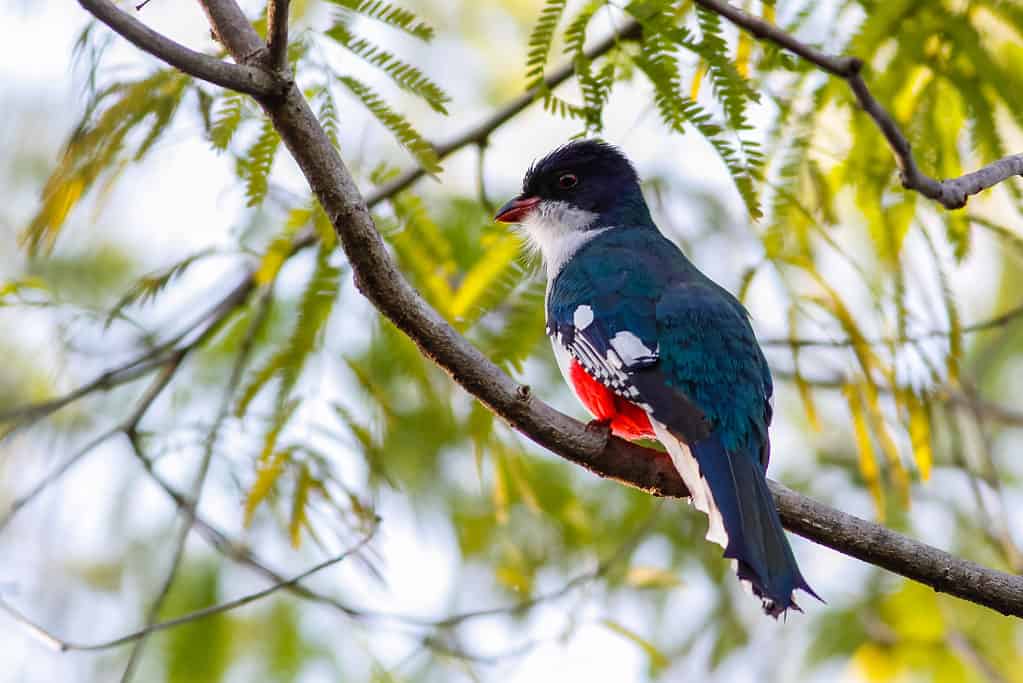
Cuban trogon or tocororo, the national bird of Cuba

The Hispaniolan trogon is under threat of extinction owing to deforestation

Haiti has a rather beautiful and vibrant national animal – the Hispaniolan Trogon. This bird has a rich assortment of bright feathers along its wings and breast, though the blend along its tail offers a unique pattern. Though they have a rather slow song, it can be heard within quite a large area.

While the species is relatively common in the Dominican Republic and Haiti, it is specifically found in Hispaniola, which is an island that the two areas share. It is also one of the only two trogons found in the entirety of the Caribbean.

The main reason that the Hispaniolan Trogon was chosen as the national bird is due to the threat of extinction. By declaring it to be a national symbol, this bird was granted protection against deforestation in Haiti.

Where to Find the Top Wild Animals in Haiti
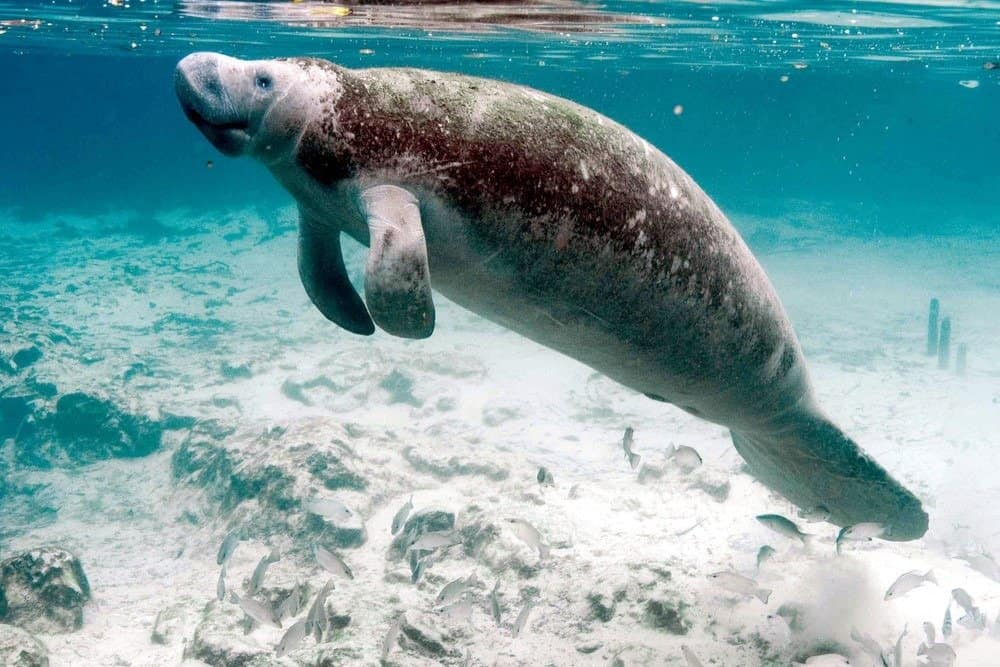
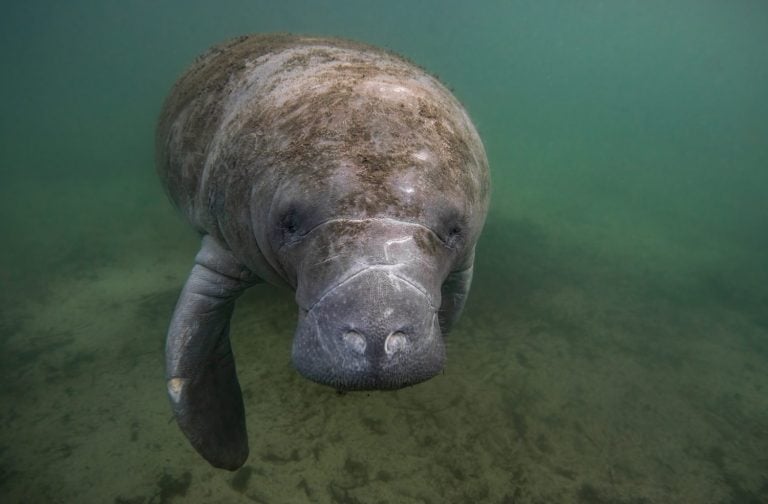
Manatee swimming in Crystal River

Since Haiti is largely surrounded by water, the marine mammal fauna is part of what makes the country so unique. Some of the most popular wildlife in Haiti includes:

  • West Indian manatees – These mammals are the largest type of manatee in the area, though it is considered vulnerable. They are most easily found around the entire Caribbean, though some are frequently spotted in Florida and Central America as well.
  • Pygmy sperm whales – These whales prefer the warm waters of the oceans, often living right off the tropical coast.
  • Candy Cane Snail – This snail is only found within Haiti, and it specifically lives on only one tree species. The multi-colored shell attracts many people, but the country has criminalized the sale to preserve the species.
  • There are a large number of species of bats in the area, and many are native to Haiti. With the incredible diversity in Haiti, it is difficult to go anywhere without discovering the natural habitat of one animal or another.

The Most Dangerous Animals in Haiti Today
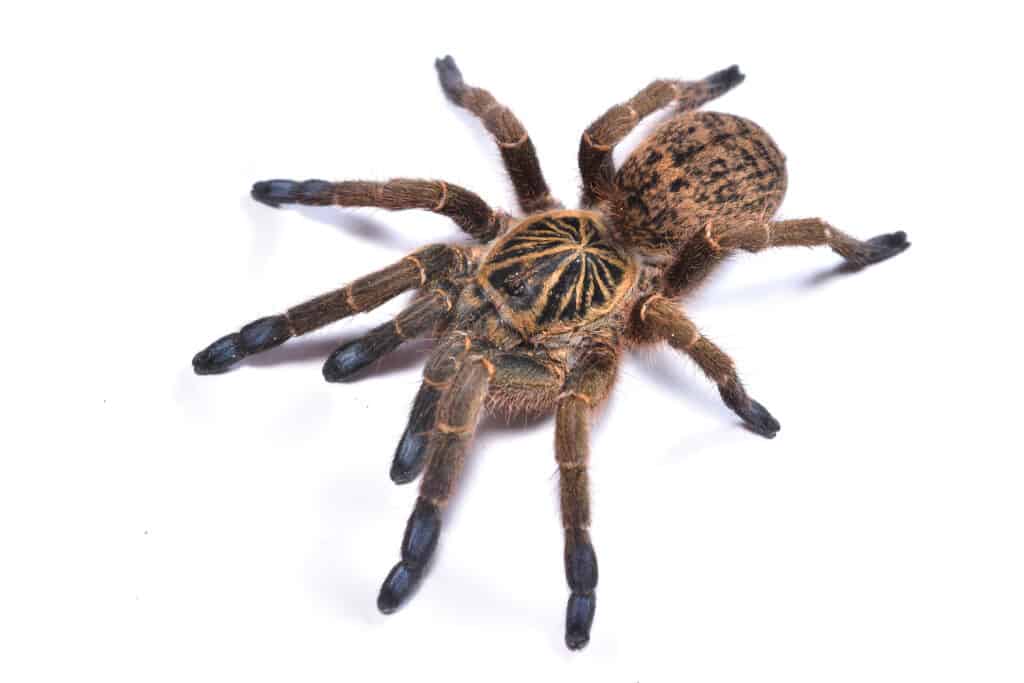
Close-up picture of the blue-foot baboon spider or trap-door tarantula Idiothele mira (Araneae: Theraphosidae) from KwaZulu-Natal, South Africa, photographed on white background.

Tarantulas are known for their ability to deal painful bites that may cause nausea and fever

Due to the unique wildlife found in Haiti, you may not be surprised to find that there are multiple dangerous (and even deadly) animals that live in the area. The majority of these animals thrive peacefully together, but there are a few to look out for, including:

  • Tarantula spider. While the painful bite may not be fatal to humans, most people experience intense effects like nausea and fever. Dogs, however, may not be so lucky against this creature.
  • Banana spider. With an incredibly painful bite, the banana spider is easily identifiable by its yellow body. Luckily, they don’t go after humans unless someone tries to hold them or they feel threatened, so stay away!
  • Haiti chery. This mammal is one of the most venomous creatures in the area, and it is currently endangered as the result of deforestation. However, very little is known about the creature.
  • Even though fear of the snakes in Haiti is common, you can find solace in the fact that none of them actually have dangerous levels of venom if they were to bite a human. That’s not to say that the snakes aren’t venomous – they are! However, the venom in these snakes is usually reserved for the prey it plans to eat, rather than nearby tourists.

The Largest Animal in Haiti
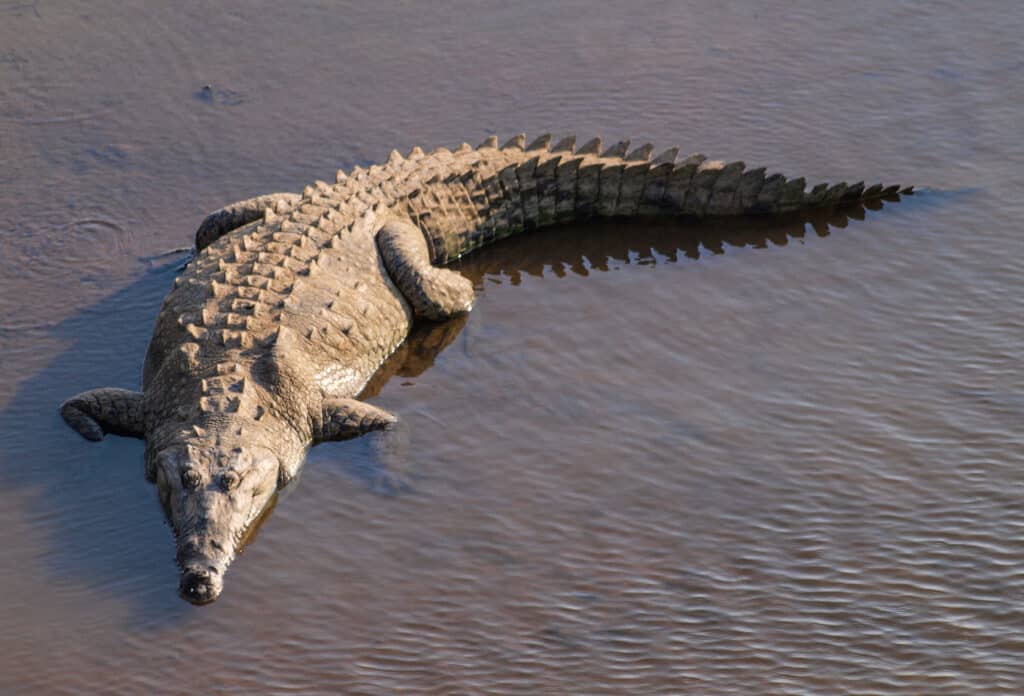
American crocodile

American crocodiles prefer the warmth and are incapable of tolerating the cold like alligators

The largest animal in Haiti is the American crocodile (Crocodylus acutus). The apex predator which is known for its ability to tolerate salty water and even live in hypersaline lakes, is capable of growing to 2,000 lbs and 20 feet.

It is also known for its preference for warmer climes owing to a lower cold tolerance compared to its relative, the American alligator.

In Haiti, the American crocodile can be found in one single location alone. These reptiles live in the Caribbean nation’s largest freshwater lake, Etang Saumatre (also referred to as Lake Azuei). The body of water itself is located in Haiti’s southeastern region close to the Dominican border. The population of its scaly residents is rapidly shrinking owing to heavy hunting.

The Rarest Animal in Haiti
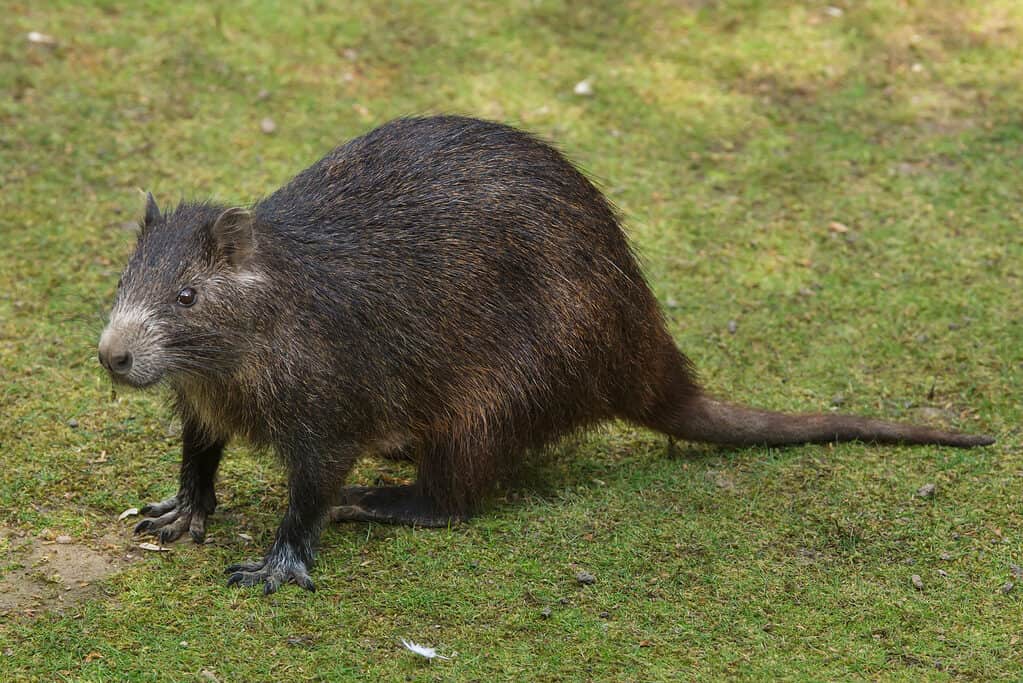
Desmarest's hutia (Capromys pilorides), also known as the Cuban hutia

The Cuviers hutia is facing a reduction in its range and threat from predators such as cats and dogs

Cuviers Hutia is one of the rarest animals in the island nation. The rodent which is also known as Plagiodontia aedium is capable of reaching one foot in length with a tail which is half that length as well. The mammal is generally nocturnal and herbivorous and nibbles fruit and roots. They generally take five months to deliver their young and give birth to one to two of them at a time.


The frugivorous mammal which is called zagouti on Haiti has seen its habitat shrink owing to deforestation, competition from other rodents such as mice and rats, and certain predators such as cats, dogs, and mongooses. Its current circumstances are a direct reversal of its teeming numbers which occurred in the absence of few predators.

Endangered Animals in Haiti

With the deforestation and floor in Haiti, there are a substantial number of species that have become endangered in the region. Some of the animals that are currently endangered (which could lead to them becoming extinct) include:

  • Ball bearing frog
  • Bicknell’s thrush
  • Bigeye tuna
  • Buff-breasted sandpiper
  • Black rockfish
  • Cuban lesser funnel-eared bat
  • Cuvier’s hutia
  • Giant Hispaniola galliwasp
  • Plain pigeon
  • Oceanic whitetip shark
  • Yellow cave grouper

The local government has made efforts to conserve some of these species. Unfortunately, there are several extinct species that have not been so lucky, including the creole pig and the Acratocnus (a species of sloth).

Researchers estimate that, without changes, it is possible that Haiti will no longer have its primary forest in less than 15 years. In fact, over 40 of the 50 largest mountains have no primary forest area anymore, so there are many species that have already likely gone extinct before they were ever researched by the public.

Animals Found in Haiti

137 species documented in our encyclopedia

Thank you for reading! Have some feedback for us?