


M
Species Profile

Maremma Sheepdog

Canis lupus familiaris

White guardian of the flock.
Anastasiia Cherniavskaia/Shutterstock.com

Maremma Sheepdog Distribution

Click a location to explore more animals from that region

Origin Location

This map shows the native origin of the Maremma Sheepdog. As a domesticated species, they are now found worldwide.

Loading map...

Found in 1 country

Size Comparison

Human 5'8"
Maremma Sheepdog 2 ft 2 in

Maremma Sheepdog stands at 39% of average human height.

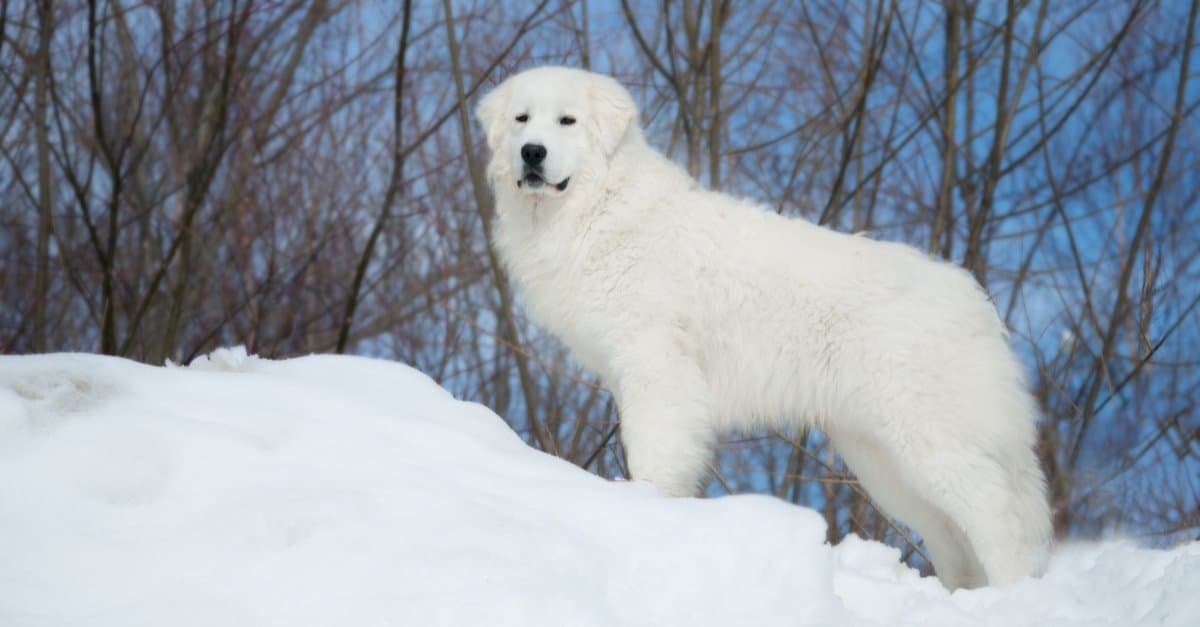
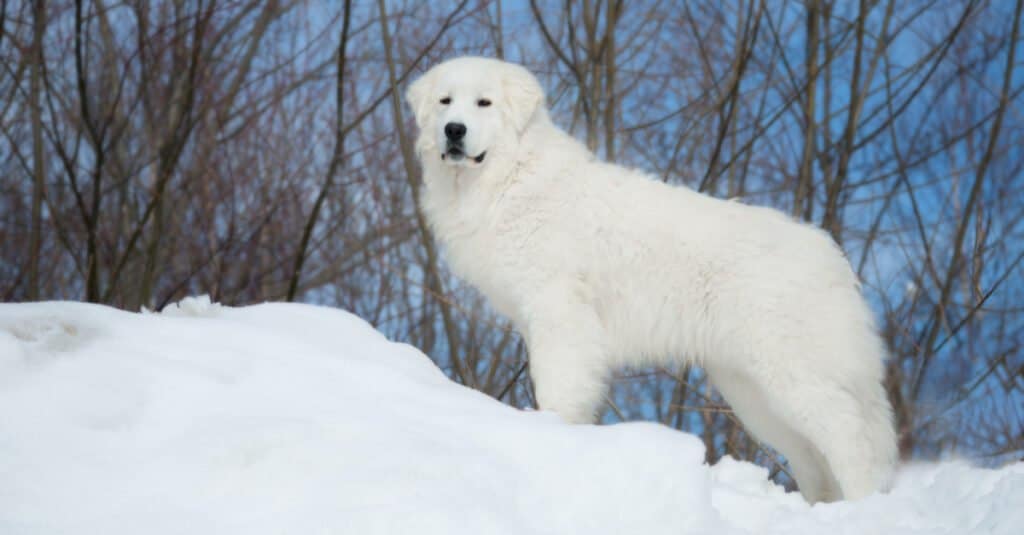
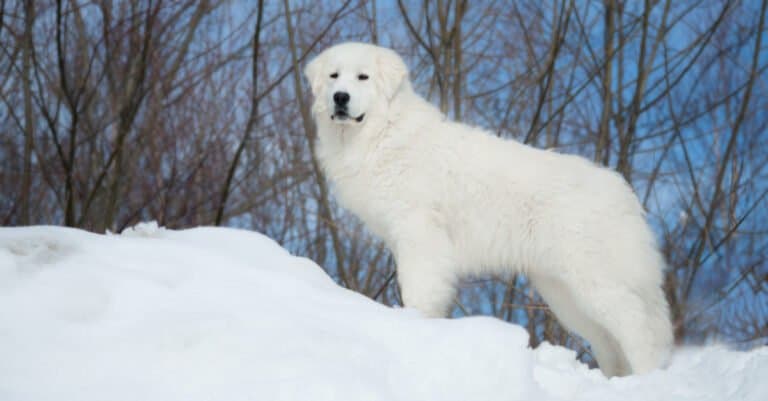
Maremma Sheepdog standing on top of snow hill

At a Glance

Domesticated
Also Known As Maremmano, Maremma, Abruzzese Sheepdog, Maremma Shepherd, Italian Maremma
Diet Omnivore
Activity Cathemeral+
Lifespan 5 years
Weight 45 lbs
Status Not Evaluated
Did You Know?

The Maremma Sheepdog is a true livestock guardian dog (LGD): it bonds to the flock more than to a handler and works by deterrence, not herding.

Scientific Classification

A large white livestock guardian dog breed developed in central Italy (Maremma and Abruzzo regions) for protecting sheep and other livestock from predators.

Kingdom
Animalia
Phylum
Chordata
Class
Mammalia
Order
Carnivora
Family
Canidae
Genus
Canis
Species
Canis lupus

Distinguishing Features

  • Large, robust guardian-type build
  • Thick, weather-resistant white coat (often solid white)
  • Drop ears; broad head with strong muzzle
  • Bred for independent guarding behavior and strong territorial/protective instincts around livestock

Physical Measurements

Males and females differ in size

Height
2 ft 3 in (2 ft 2 in – 2 ft 5 in)
2 ft 1 in (1 ft 12 in – 2 ft 3 in)
Length
4 ft (3 ft 7 in – 4 ft 5 in)
Weight
88 lbs (77 lbs – 99 lbs)
77 lbs (66 lbs – 88 lbs)
Tail Length
1 ft 4 in (1 ft 2 in – 1 ft 6 in)
Top Speed
28 mph
running

Appearance

Primary Colors
Secondary Colors
Skin Type Thick, well-pigmented skin with dense double coat; weather-resistant and suited for outdoor living.
Distinctive Features
  • Large, robust livestock guardian dog (LGD) built for endurance in harsh pastoral climates.
  • Dense double coat with heavy neck ruff; sheds seasonally and mats if not brushed.
  • Dark eye rims, nose, and paw pads create strong contrast against white coat.
  • Broad head with medium drop ears; calm, steady expression.
  • Thick tail carried low with slight curve; substantial bone and strong feet.
  • Independent, protective, and wary of strangers; not a driving/herding breed like collies.
  • Bred in Italy's Maremma and Abruzzo regions for round-the-clock flock guarding.
  • Health concerns: hip/elbow dysplasia risk; monitor weight and joint health in growth.
  • Health concerns: bloat (GDV) risk in deep-chested dogs; use slow feeding and avoid post-meal exercise.
  • Care: frequent brushing during coat blow; check for burrs, ticks, and skin irritation under coat.
  • Care: needs secure fencing, space, and purposeful guardian-style engagement; can roam if unsupervised.
  • Care: early socialization and consistent boundaries; strong guarding instincts can lead to territorial behavior.

Sexual Dimorphism

Males are typically larger and heavier-boned with a more pronounced neck ruff and broader head. Females are slightly smaller and finer-built, often appearing more streamlined while retaining the same dense white coat and guardian posture.

  • Greater overall height and weight; heavier bone and broader chest.
  • More pronounced mane/ruff around neck and shoulders.
  • Larger head with wider muzzle and thicker neck.
  • Slightly smaller frame with lighter bone and narrower chest.
  • Ruff often less exaggerated, giving a cleaner outline.
  • May appear more agile and refined while maintaining strong guarding build.

Did You Know?

The Maremma Sheepdog is a true livestock guardian dog (LGD): it bonds to the flock more than to a handler and works by deterrence, not herding.

Despite two regional names, the modern breed standard reflects a shared Italian type from the Maremma plains and Abruzzo mountains (often treated as one breed: Maremmano-Abruzzese).

Its all-white coat historically helped shepherds distinguish it from wolves at night and in bad weather.

Traditional anti-wolf defenses in Italy paired Maremmas with spiked collars (roccale) to protect the neck during predator attacks.

Many Maremmas prefer patrolling perimeters and high points-using posture, barking, and presence to keep threats at distance.

The dense double coat sheds heavily seasonally and tends to self-clean; mud often dries and falls out with brushing.

Working lines are still used in Italy and abroad to protect sheep, goats, poultry, and even some conservation projects guarding vulnerable wildlife from predators.

Unique Adaptations

  • LGD temperament shaped by domestication: compared with the base species (gray wolf, Canis lupus), the Maremma is selected for reduced predatory sequence toward livestock, higher tolerance of close association with other species, and stable territorial defense.
  • Weather-ready coat: thick, harsh outer coat plus insulating undercoat protects against cold, wind, and precipitation; light color reduces heat absorption under strong sun.
  • Endurance build: large frame, substantial bone, and efficient gait suited to long hours on rugged terrain and open pasture.
  • Deterrence toolkit: powerful voice, imposing silhouette, and confident stance are key "non-contact" adaptations that prevent escalation with predators.
  • Territorial mapping: strong spatial memory and routine-based patrol routes help maintain consistent coverage of grazing areas.
  • Low handler-dependence: selection favors dogs that can work far from people for extended periods, maintaining flock cohesion and safety.

Interesting Behaviors

  • Perimeter patrolling: repeatedly walking fence lines or ridgelines to check for changes, scents, and intrusions.
  • Strategic barking: a deep, rhythmic "alarm" bark sequence used to announce presence and escalate warnings long before physical contact.
  • Flock-bonding: lying among animals, moving with them, and positioning the body between livestock and perceived threats.
  • Independent decision-making: evaluates situations without waiting for cues; may ignore commands if they conflict with guarding instincts.
  • Suspicion of strangers: watchful, reserved greetings and slow acceptance of new people/animals in its territory.
  • Night activity: heightened vigilance after dusk; may be more active and vocal at night when predators are likely.
  • Low prey-drive compared with many canids: typically less chasing of livestock, reflecting selection for calm steadiness around animals.

Cultural Significance

In central Italy, the Maremmano-Abruzzese (Maremma Sheepdog) is a symbol of transhumance, guarding sheep between Maremma lowlands and Abruzzo highlands. For centuries it has been part of shepherd life, shown in art, and used worldwide to protect livestock from predators.

Myths & Legends

Italian pastoral lore often describes the "white dog of the shepherds" as a near-mythic sentinel that 'doesn't sleep,' watching the flock through winter storms and moonlit nights-an idealized guardian figure in rural storytelling.

Old transhumance anecdotes from central Italy recount Maremmas leading lost lambs back to camp or holding a protective ring around sheep until shepherds arrived, stories repeated as proof of the breed's instinctive guardianship.

Historical tradition in wolf country tells of the roccale (spiked collar) as the shepherd's charm against the wolf's bite-when the white guardian wore it, the flock was thought to be under special protection.

Regional naming stories tie the breed to place: 'Maremmano' to the coastal Maremma and 'Abruzzese' to Abruzzo's mountains, reflecting a long narrative of flocks, dogs, and people traveling together across Italy's spine.

Conservation Status

NE Not Evaluated

Has not yet been evaluated against the criteria.

Population Stable

Life Cycle

Birth 7 pups
Lifespan 5 years

Lifespan

In the Wild
2–12 years
In Captivity
9–13 years

Reproduction

Mating System Polygynandry
Social Structure Managed Domestic
Breeding Pattern Serial
Fertilization Internal Fertilization
Birth Type Internal_fertilization

In this domesticated livestock-guardian breed, mating is usually human-managed: selected sires may service multiple bitches and pair bonds are not maintained. If free-roaming, like other dogs, adults mate opportunistically with several partners via internal fertilization.

Behavior & Ecology

Social Pack Group: 2
Activity Cathemeral, Nocturnal, Diurnal
Diet Omnivore Meat-forward meals (especially lamb or beef) with moderate fat-well-suited to this large livestock-guardian breed's energy needs.

Temperament

HUBS: Livestock-guardian breeds trend calm with stock, aloof with strangers; intensity varies by lines.
Distinct from base wolf-like social hunting: low prey-drive selection, high guarding/territorial focus.
Independent decision-maker; less handler-oriented than many breeds, may ignore repetitive commands.
Strongly protective and suspicious of unfamiliar approach; early, ongoing socialization reduces reactivity.
Steady, patient, and nurturing with livestock and family; typically gentle with children when well-managed.
Can be assertive with unfamiliar dogs, especially same-sex; careful introductions and management needed.
Territorial boundary behavior: patrolling, fence-running, and perimeter lying; needs secure fencing.
Care requirements: large, safely contained space; mental work (patrol walks, scent games), not just exercise.
Coat care: dense white double coat sheds heavily; routine brushing, seasonal blowouts, mat prevention.
Heat tolerance: heavy coat and guardian habits require shade, water, and avoiding intense midday exertion.
Health concerns: hip/elbow dysplasia risk; keep lean, controlled growth, and joint-friendly conditioning.
Health concerns: gastric dilatation-volvulus (bloat) risk; slow feeding and post-meal rest recommended.
Health concerns: entropion/ectropion and other eye issues occur; regular eye checks advised.
Training style: calm, consistent boundaries; harsh methods can increase distrust and defensive responses.

Communication

deep repetitive alarm barking Primary deterrent
low growls and warning grumbles
howls/long barks to broadcast territory
whines/soft grunts for affiliative contact
scent marking and overmarking along perimeter routes
body blocking: stepping between threat and stock/family
still, upright posture with forward weight shift to signal challenge
circling/patrolling patterns to monitor boundaries and regroup livestock
stare, head carriage, ear/tail set changes to escalate or de-escalate conflict
muzzle nudges and gentle herding pressure to reposition sheep without gripping

Habitat

Biomes:
Mediterranean Temperate Grassland Temperate Forest Alpine Boreal Forest (Taiga) Tundra Desert Hot Desert Cold Wetland Freshwater +4
Terrain:
Mountainous Hilly Plains Valley Coastal
Elevation: Up to 9842 ft 6 in

Ecological Role

Domesticated livestock guardian (human-associated canid) rather than an active predator in its working role.

Non-lethal deterrence of predators (e.g., wolves, feral dogs) around flocks Reduced livestock depredation and improved pastoral productivity Altered predator behavior/space use, potentially lowering human-carnivore conflict Carcass/food waste consumption when available (minor scavenging service in rural settings)

Diet Details

Main Prey:
Ungulates Small mammals Birds and eggs Carrion
Other Foods:
Cooked grains and starches Vegetables Fruits and berries Grasses

Human Interaction

Domestication Status

Domesticated

Maremma Sheepdog (Maremmano-Abruzzese Sheepdog), Canis lupus familiaris, is a fully domesticated livestock guardian dog from central Italy (Maremma and Abruzzo). Bred to guard flocks: steady nerves, strongly territorial, low prey drive toward stock, independent, white weatherproof coat. Works daily with shepherds, patrols and scares off predators, and may bark or guard strangers.

Danger Level

Moderate
  • Protective/territorial aggression toward unfamiliar people or dogs, especially near the home, flock, or vehicles; risk increases if under-socialized or allowed to free-roam.
  • Bite risk during boundary challenges (fence-line disputes), handling when stressed/in pain, or when a stranger approaches livestock/children the dog is guarding.
  • Knock-down risk due to large size and strength, particularly with elderly people or small children.
  • Nuisance barking and roaming can escalate conflicts with neighbors and the public if not managed with secure fencing and training.

As a Pet

Suitable as Pet

Legality: Usually legal to own as a pet, but may face dangerous-dog rules after incidents, and HOA or landlord size or breed rules. Working dogs may need livestock and land; some areas limit guardian dogs on public lands.

Care Level: Experienced

Purchase Cost: $800 - $2,500
Lifetime Cost: $25,000 - $70,000

Economic Value

Uses:
Livestock protection and predator deterrence (working LGD) Farm/ranch operations and animal welfare (reduced losses, reduced lethal predator control) Breeding and sale of working and show prospects Companion animal in suitable rural/suburban homes Security/estate guardian roles (non-sporting deterrence)
Products:
  • Guarding labor/service (predator conflict mitigation value)
  • Puppies and trained started dogs for farms
  • Stud services and breeding stock
  • Participation in conformation/working evaluations
  • Coat grooming services/maintenance products (indirect)

Relationships

Ecological Equivalents 6

Animals that fill a similar ecological role in their ecosystem

Great Pyrenees
Great Pyrenees Canis lupus familiaris Similar livestock-guardian dog: the Maremma (Maremmano-Abruzzese) bonds tightly to flocks, is highly territorial, conducts strong night patrols, has a white weatherproof coat, exhibits low prey drive toward livestock, and is independent and enduring.
Kuvasz
Kuvasz Canis lupus familiaris Large white flock guardian; uses a similar deterrence strategy (presence, barking, and confrontation when needed). The Kuvasz may be sharper and less tolerant of strangers; both require experienced handling and extensive socialization to prevent inappropriate guarding.
Akbash
Akbash Canis lupus familiaris Turkish livestock guardian selected for predator defense in open country; similar independence and low handler-orientation. Akbash often has a lighter, more sighthound-influenced build, while the Maremma is typically more heavily coated for colder, wetter conditions.
Anatolian Shepherd Dog
Anatolian Shepherd Dog Canis lupus familiaris Guardian breed used against wolves and other predators; shares a similar need for space, clear boundaries, and purposeful work. Anatolian types are generally more heat-adapted with shorter coats, while Maremma dogs are more cold- and wet-tolerant with a dense white coat.
Central Asian Shepherd Dog Canis lupus familiaris Independent, territorial guardian used for flock and property defense; similar high deterrence and low biddability. Central Asian Shepherds may be more overtly combative ('hard') in some lines; both require careful management around unfamiliar dogs and people.
Tibetan Mastiff
Tibetan Mastiff Canis lupus familiaris Mountain/range guardian with strong territorial instincts and nocturnal vigilance, and similarly aloof toward strangers. Tibetan Mastiffs are often more property-focused, while Maremmas are classically flock-bonded and work closely with sheep and goats.

Quick Take

  • Achieving the 100-pound weight limit requires a strict 22% protein nutritional threshold.
  • The 60-minute exercise requirement creates severe obesity and bloat risks when neglected.
  • This Italian guardian utilizes a counterintuitive intellectual independence that disrupts standard obedience expectations.
  • The early socialization process is mandatory to neutralize aggressive territorial instincts.

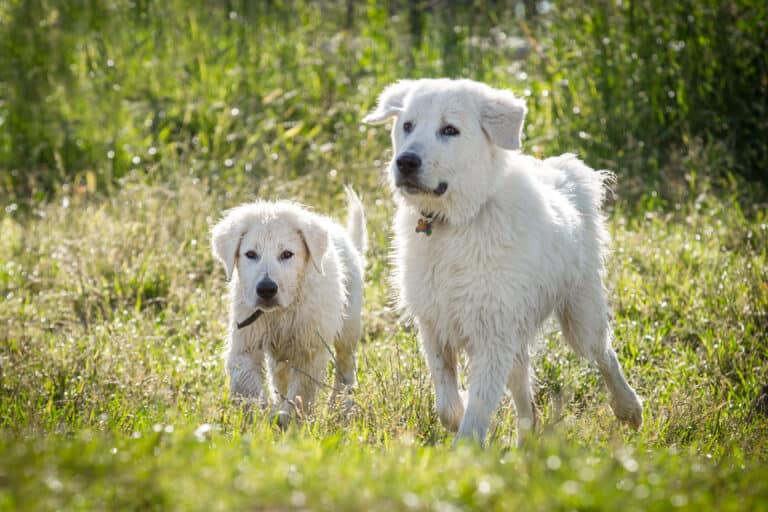
It’s a breed with many names: the Maremmano, the Maremmano-Abruzzese Sheepdog, the Cane da Pastore Abruzzese, and, as we’ll call it here, the Maremma Sheepdog. This fluffy herding dog is native to its namesake region of Abruzzo and the Maremma marshlands of Italy, where it guarded sheep against predatory wolves.

Maremma Sheepdogs remain widely used in sheep farming, especially in regions where protection from predators is needed. They share a common ancestor with the Great Pyrenees, featuring a fluffy white coat and a sharp intelligence bred to work independently and with their owners. This intelligence may make them trickier to train, but with the right tactics, you can earn this dog’s respect and enjoy its partnership for many years.

Infographic about Maremma Sheepdogs featuring sections on size, health, care, and training with green icons and dog silhouettes.
From battling wolves to disrupting obedience expectations, this 100-pound Italian guardian is a force of nature that demands expert handling. © A-Z Animals

3 Pros and Cons of Owning a Maremma Sheepdog

ProsCons
Highly intelligent and easy to train
As independent thinkers, these dogs love to — and quickly learn — new tricks.
Protective of family
Without socialization, these dogs can become overprotective around strangers.
Exceedingly loyal
Earn the Maremma’s trust and have a constant life companion.
Independent with herding instincts 
If you don’t establish yourself as the pack leader, Maremmas can take matters into their own hands.
Healthy with low medical maintenance
These dogs are generally healthy with no breed-specific concerns.
High-maintenance grooming needs
Their fluffy undercoats shed twice yearly and require regular brushing.

Size and Weight

The Maremma Sheepdog female’s average height ranges between 25 and 28 inches, with males capable of growing about three inches taller. Males can weigh up to 100 pounds when fully grown, and females weigh about 85 pounds.

Common Health Issues

On average, Maremma Sheepdogs are generally healthy and have no common or genetic health issues. Preventative vaccines and vet-recommended boosters protect them from influenza and infections such as heartworm or tapeworms. These larger, mobile dogs can sometimes develop hip dysplasia later in life. It’s important to only purchase a Maremma Sheepdog from a breeder who can provide a certification that your dog’s parents are free from hip dysplasia. Feeding them a consistent, moderate diet will also help prevent bloat and symptoms from weight-related health issues.

Temperament

Maremmas were bred as sheep and personal protection animals and, as such, turn to their owners for directions. They thrive when provided responsibility and can become anxious or aggressive without a purpose. They are independent, brilliant pups and, without proper guidance or training, can make up their own minds about whether a mail carrier is a friend or thief, for example.

Proper socialization early in life, combined with disciplined and positive training, will help establish you as the leader of the pack and put your Maremma’s mind at ease.

How To Take Care of a Maremma Sheepdog 
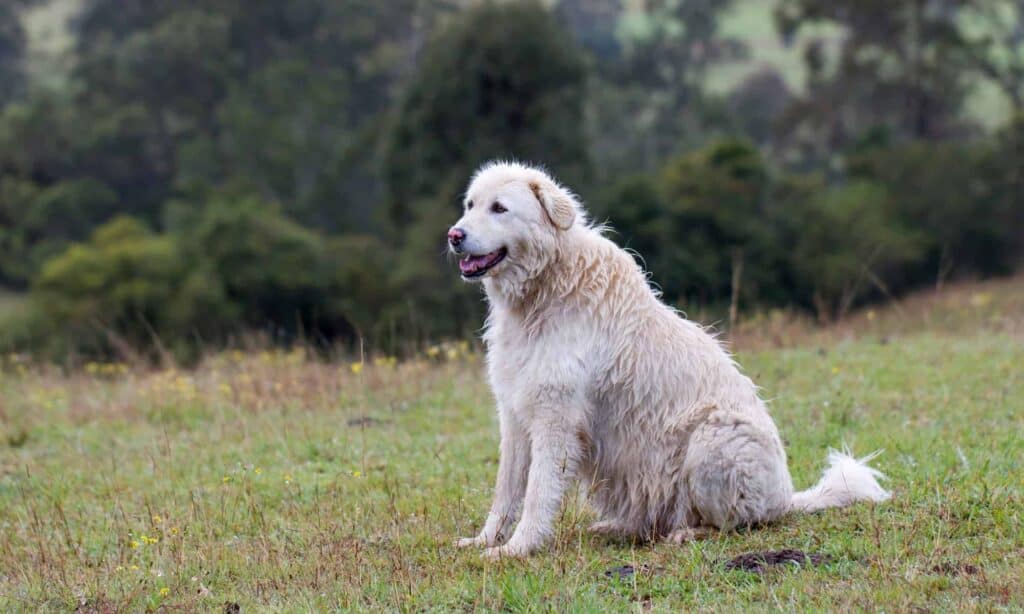
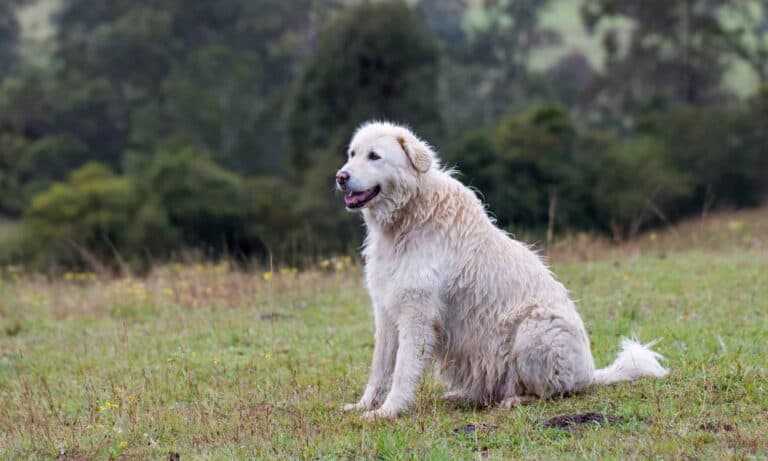
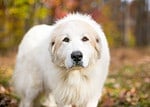
Maremmas sport dense, fluffy undercoats that shed seasonally in the spring and autumn.

Maremma Sheepdogs are fluffy, beautiful dogs requiring moderate grooming levels and attentive, positive-reinforcement training. While not recommended for first-time dog owners, a dedicated trainer can earn a Maremma’s trust and enjoy the benefits of an intelligent, loyal companion for years to come.

The Best Dog Food

Maremmas require a nutrient-dense, balanced diet to keep them in good physical condition and healthy and energetic order. Regular mealtimes — usually twice a day — with consistent food measurements are a must to prevent obesity. You should adjust this measurement in tandem with your pup’s exercise and lifestyle. It’s also easy to overfeed them during their growing years, which can contribute to hip dysplasia and other musculoskeletal or joint-related issues, so consult your vet to determine the best serving sizes for your pup.

A balanced dry food with plenty of Calcium, Phosphorus, and at least 22% protein content will help provide your Maremma Sheepdog the diet it needs to thrive. Plenty of fats will keep coats shiny and healthy and help bones, teeth, and hair stay strong.

Maintenance And Grooming

Maremmas sport dense, fluffy undercoats that shed seasonally in the spring and autumn. They can go a long time without grooming or a bath if constantly exposed to wind and weather. However, dogs that spend most of their time indoors may require more frequent baths and regular brushing to maintain their good health. Be sure to check your dog’s ears for dirt or debris regularly, file nails to prevent breakage, and brush teeth routinely.

Training

House- and obedience training your Maremma will go quickly with regular, short sessions and lots of positive reinforcement. Puppies can learn tricks as early as four or five months, and training treats and plenty of encouragement will help them associate obedience with affection and praise. Maremma Sheepdogs can also be trained to compete in agility and obedience competitions, given their intelligence and eagerness to please. 

Exercise

Maremma’s are sheep guarders rather than sheep herders, so they don’t require quite as much exercise as their shepherd companions. However, they should be walked at least twice daily for 45 to 60 minutes to keep them from becoming overweight or developing bloat. Maremmas also love long walks or hikes and generally keep their owners company on longer outdoor adventures.

Puppies

Maremma Sheepdog puppies require heavy and consistent socialization from a very early age, as soon as their vaccinations allow. Allow your pup to constantly meet other dogs and get used to being handled by friendly strangers. This continual stimulation will help prevent your dog from becoming anxious or overprotective of its family. Even then, Maremmas insist on being correctly introduced to newcomers to the house. Crate training will provide your pup a safe space to call their own and help get them used to confinement if the situation requires it.

Maremma Sheepdog And Children

The Maremma Sheepdog is a big fan of children and babies and enjoys playing with well-behaved kids. They will follow their charges around the house and happily lean into or hug children during play or rest. However, Maremmas can sometimes overprotect their families and may object to strangers’ kids being overtly physical with their charges. Take care to supervise play between your Maremma and children and to properly teach kids to treat a dog with respect before introducing them to your pup. 

Dogs Similar to the Maremma Sheepdog

The fluffy Maremma Sheepdog is closely related to the Great Pyrenees, the Komondor, and the Anatolian.

  • Great Pyrenees: These gentle giants are slightly larger than the Maremma Sheepdog but share a thick, fluffy coat.
  • Komondor: The long, corded fur of the Komondor is unmistakable, but these dogs are also responsible for guarding flocks of sheep.
  • Anatolian: The Anatolian originated in Turkey, rather than Italy, but was also used to protect sheep from wolves and other predators.

View all 330 animals that start with M

Sources

  1. The Kennel Club / Accessed October 29, 2022
  2. United Kennel Club / Accessed October 29, 2022
  3. Maremma Club / Accessed October 29, 2022
Shanti Ryle

About the Author

Shanti Ryle

Shanti Ryle is a content marketer with nearly a decade's experience writing about science, real estate, business, and culture. Her work has been featured in Forbes, Wall Street Journal, Global Finance and Banking, Weedmaps News/Marijuana.com, and other publications. Her favorite animal (by far) is the Pembroke Welsh Corgi!

Thank you for reading! Have some feedback for us?


Maremma Sheepdog FAQs (Frequently Asked Questions)

The Maremma Sheepdog possess a natural, protective instinct that makes them highly loyal and friendly to their families but cautious of strangers. They love their own children but require supervision when meeting strangers’ kids.