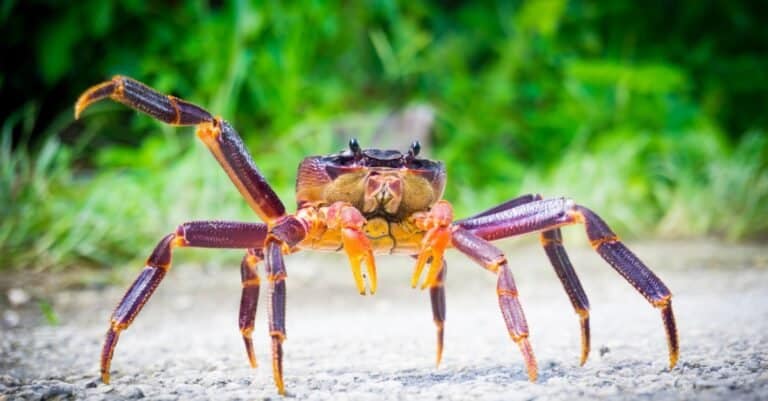
Coconut Crab
Biggest land crab. Biggest grip.

Nauru is a tiny raised coral island whose natural heritage has been profoundly shaped by history: decades of phosphate mining transformed much of the interior into a rugged limestone landscape with limited remaining terrestrial habitat. As a result, the country's wildlife character is defined by contrasts-pockets of hardy coastal vegetation and inland plantings supporting a small but distinctive land fauna (including an endemic songbird), while the sea around the island holds the richest and most reliable biodiversity.
The key ecosystems are Nauru's fringing coral reef and reef flat, and offshore pelagic waters. These marine environments support reef fish assemblages, invertebrates, and larger ocean wanderers such as tuna and occasional dolphins, and they provide feeding and passage habitat for migratory species moving through the central Pacific. On land, wildlife viewing is more intimate and exploratory: birding and nature walks focus on coastal strip habitats, gardens, and rehabilitated or less-disturbed areas where native and naturalized trees offer cover and food.
In conservation terms, Nauru's role is best understood in a global and Pacific-island context rather than an African one: it contributes to regional ocean stewardship where many species are wide-ranging and shared across national borders. With limited land area, protecting coastal waters, reducing pressure on reefs, and supporting habitat recovery after mining are especially significant. For visitors, the wildlife experience is unique because it is both accessible and instructive-snorkeling and shoreline watching can reveal abundant marine life just meters from land, while the island's endemic bird underscores how island species persist (and can be safeguarded) even in heavily altered landscapes.
Nauru's wildlife is shaped by extreme small size, isolation, and a strongly human-altered interior. A narrow coastal plain and fringing reef concentrate most remaining natural habitats (seabird nesting/roosting areas, coastal strand vegetation, reef and lagoon ecosystems), while the island's raised coral plateau has been heavily transformed by historic phosphate mining, greatly reducing native forest cover and fragmenting terrestrial habitats. With no rivers and very limited freshwater (mainly Buada Lagoon and rain-fed groundwater), wildlife distribution is tightly linked to coastal habitats, scrub/secondary vegetation patches, and surrounding marine waters.
Nauru has no well-established, formally gazetted national park system comparable to larger Pacific states. Biodiversity protection is largely delivered through sectoral regulation (fisheries/coastal management), rehabilitation planning for the mined central plateau, and small, locally important sites (especially Buada Lagoon and key coastal reef areas). Given the island's tiny size and extensive historic phosphate mining footprint, coastal waters and remaining pockets of native vegetation are the most important habitats for conservation.
Approximate land under formal, legally designated protection: ~0% (no widely documented, gazetted terrestrial protected areas). Protection is mainly informal/local and via general environmental and fisheries controls rather than mapped national parks or reserves.
Nauru's only significant inland waterbody and one of the country's most important remaining natural habitats. It supports wetland-associated birds and remnant vegetation in a landscape otherwise heavily modified by mining and development.
A rare higher-elevation area with patches of remaining vegetation adjacent to the mined-out central plateau, providing critical refuge for Nauru's limited terrestrial wildlife. It is especially important for landbirds and as a stepping-stone habitat in restoration planning.
One of Nauru's best-known reef-and-beach stretches, important for coral-reef biodiversity and as coastal habitat used by turtles and seabirds. It is also among the more accessible areas for observing reef fish and nearshore marine life.
Broad reef flats and intertidal areas that can be important for migrating and resident shorebirds, while also supporting typical central-Pacific reef assemblages. These coastal margins are among the most ecologically valuable areas remaining on the island.
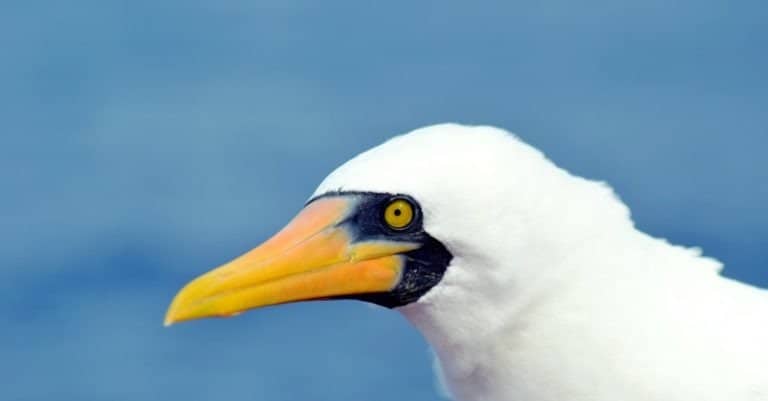
With little intact interior habitat, many seabirds concentrate along the coastal fringe for roosting and nesting. Maintaining low disturbance and protecting nesting trees/structures is important for sustaining local seabird populations.
Nauru's wildlife is shaped by its very small size, raised-coral geology, and extensive historic phosphate mining that removed or altered much of the island's interior habitat. As a result, terrestrial biodiversity is limited and heavily influenced by introduced species, while the most characteristic "wildlife experience" is coastal: seabirds using cliffs and shorelines, and marine life (especially sea turtles and passing cetaceans) in surrounding reef and pelagic waters. A small set of hardy native land birds persists, including one true island endemic.
Wildlife tourism in Nauru is small-scale and largely coastal/marine-focused due to the island's tiny size and extensive habitat alteration from historic phosphate mining. There are no large terrestrial mammals and limited forested habitat, so the standout biodiversity experiences are reef snorkeling/diving, seabird watching along cliffs and coastal scrub, and (seasonal) pelagic wildlife viewed from shore or by small boat. Economically, tourism is not a major pillar compared with services and fisheries, but nature-based activities can be an important add-on for visitors, supporting local guides, boat operators, and small hospitality businesses. Access is relatively straightforward but limited: most visitors arrive by air, then move around the island by car/scooter; wildlife viewing is typically day-based, with easy shore access to reefs and coastal viewpoints. Conditions are tropical year-round, so planning around sea state, visibility, and seabird breeding activity is key.
Roughly 80% of Nauru's land surface was altered by historic phosphate mining, so there's very little continuous natural terrestrial habitat; conserving wildlife often means restoring vegetation on mined "Topside" rather than protecting intact forest.
Nauru is a raised coral island, not an atoll-its interior sits above sea level as uplifted limestone, so many land habitats are essentially ancient reef turned to rock (a very different setup from low, sandy atolls nearby).
Despite being a country with almost no rivers or streams, Nauru has an inland lagoon (Buada Lagoon) that is brackish and has been used for aquaculture (notably milkfish), making one of the island's most notable inland "wildlife" features a salt-tolerant fish system.
Because the coastal strip is narrow and the fringing reef is crucial, a relatively small stretch of shoreline change (storms, coastal development, erosion) can affect a disproportionately large share of the country's usable habitat-on land and in the water-at the same time.
Tiny-country endemic: Nauru (~21 km² of land) is among the smallest sovereign states that still has its own endemic bird species-the Nauru reed warbler (Acrocephalus rehsei).
All-on-one-island range: the Nauru reed warbler's entire natural range is the single island of Nauru-about 21 km² total-making it an extreme example of "one-island endemism."
Ocean-dominated biodiversity: Nauru's Exclusive Economic Zone is roughly 320,000 km²-over 15,000× larger than its land area-so the vast majority of the wildlife Nauru manages lives in the sea (reef communities and open-ocean species).
Wildlife-to-rock pipeline: Nauru's phosphate-once the backbone of its economy-formed largely from seabird guano accumulating over long timescales, a rare case where a nation's signature mineral deposit is literally "fossilized seabird nutrients."
5 species documented in our encyclopedia
Thank you for reading! Have some feedback for us?
We appreciate your help in improving our content.
Our editorial team will review your suggestions and make any necessary updates.
There was an error submitting your feedback. Please try again.