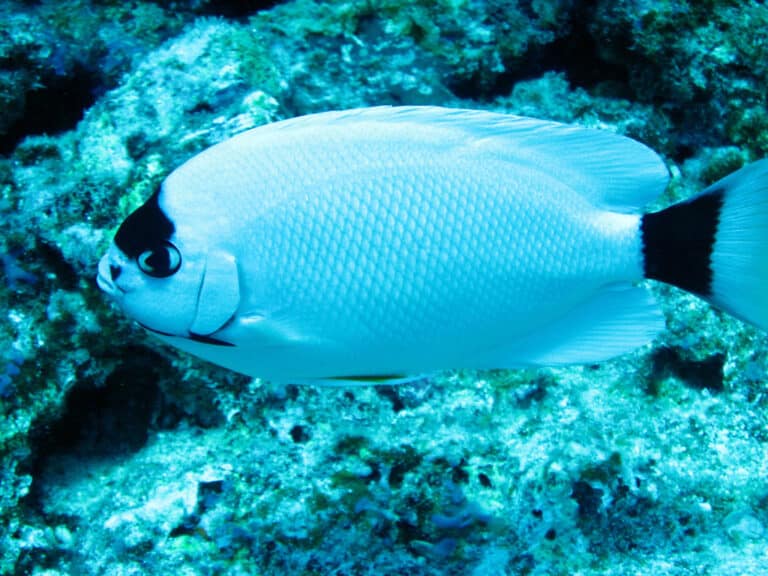
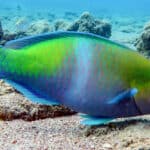
Masked Angelfish
Hawaii's twilight-zone masked angel

Scattered like stepping-stones across the Pacific (with one remote Caribbean outpost), the United States Minor Outlying Islands are less a "country to tour" than a network of wild, mostly uninhabited refuges whose natural heritage is defined by seabirds and the sea. These tiny atolls and islands-such as Midway Atoll, Palmyra, Johnston, Wake, Baker, Howland, Jarvis, Kingman Reef, and Navassa-host immense breeding assemblages of ocean-going birds that can travel thousands of kilometers yet return faithfully to nest. For wildlife enthusiasts, the draw is the sheer density of life in places with little human footprint: nesting beaches, booming seabird rookeries, and reefs that function as living laboratories of what healthy oceans can look like.
Their key ecosystems are coral reefs, lagoons, open-ocean pelagic waters, and sparse but vital island vegetation that provides nesting substrate and shelter. The reefs and surrounding waters support rich food webs-from plankton to predatory reef fish and sharks-while sandy shores and protected shallows provide habitat for sea turtles (notably green turtles in parts of the central Pacific). Seabirds-albatrosses, terns, tropicbirds, boobies, and frigatebirds-transfer marine nutrients onto land, literally fertilizing these islands and shaping their ecology. The conservation significance is global: many of these places are encompassed by large protected areas (including the Pacific Remote Islands Marine National Monument and a suite of National Wildlife Refuges), safeguarding critical breeding sites and some of the most intact tropical marine ecosystems under U.S. jurisdiction.
Although they are not part of African conservation, their role in global conservation is outsized for their small land area: they protect internationally important seabird populations and safeguard genetic and ecological diversity in coral reef systems at a time of accelerating climate stress. What makes the wildlife experience unique is the remoteness and protection status-access is often limited to permitted visits, research, or tightly managed eco-operations-so encounters tend to be less about crowds and more about witnessing raw ecological abundance: albatross courtship displays at close range, turtle tracks on empty beaches, and reef communities where top predators remain a visible, functional part of the ecosystem.
The United States Minor Outlying Islands are tiny, widely separated islands and atolls whose wildlife is shaped far more by isolation, ocean currents, and reef/lagoon structure than by inland topography. Most have no rivers, minimal freshwater, and low elevation, so terrestrial habitats are limited to salt-tolerant strand vegetation, scrub, and (in places) seabird-guano-enriched plant communities. In contrast, surrounding coral reefs, lagoons, and vast pelagic waters provide the primary habitat base, supporting globally important seabird colonies, nesting sea turtles, and rich reef and open-ocean ecosystems-many within national wildlife refuges and large marine protected areas/monuments.
Protected areas across the United States Minor Outlying Islands are dominated by large-scale marine protections and U.S. Fish & Wildlife Service (USFWS) National Wildlife Refuges (NWRs) on tiny, mostly uninhabited atolls and islets. The backbone is the Pacific Remote Islands Marine National Monument (covering several central Pacific islands/atolls) and, for Midway Atoll, the Papahānaumokuākea Marine National Monument (a vast Northwestern Hawaiian Islands protected seascape). Most emergent land on these territories is managed primarily for seabird colonies, sea turtle nesting, and intact coral reef ecosystems; human access is typically by permit only and focused on biosecurity and conservation monitoring rather than recreation.
Approx. 85-95% of the total land area is under formal protection (mostly as USFWS National Wildlife Refuges and/or within U.S. marine national monuments). While land area is small, the protected marine area is immense-among the largest fully/strongly protected ocean areas on Earth when monument waters are included.
A mostly undisturbed tropical ocean wilderness in U.S. waters, protecting seabird breeding islands, intact coral reefs and pelagic ecosystems. Noted for large seabird colonies, nesting sea turtles, and reefs with many predators and very little fishing.
Midway is globally renowned for immense albatross colonies and other seabirds that rely on the atoll's protected beaches and lagoon. The surrounding waters support threatened marine megafauna and productive reef habitats central to conservation of the Northwestern Hawaiian Islands ecosystem.
A near-pristine tropical atoll with rich seabird rookeries and a highly studied coral reef system, making it a flagship site for understanding reef resilience and recovery. Its lagoon and outer reefs support abundant fish biomass and important turtle foraging habitat.
Often cited as one of the most intact coral reef ecosystems in the U.S., with exceptionally high densities of top predators-an indicator of low human disturbance. Its reefs are important reference sites for what healthy tropical reefs can look like.


A remote atoll with significant seabird nesting habitat and surrounding waters that support large pelagic and reef species. After historical military impacts, ongoing conservation management has helped sustain important breeding colonies and marine habitat recovery.
Jarvis protects a key central Pacific seabird breeding island and nearby reefs influenced by equatorial productivity, which can boost marine food webs. Its isolation supports large nesting aggregations and relatively intact nearshore ecosystems.
A rugged Caribbean islet important for nesting seabirds and surrounding coral reef communities, with limited human access that helps maintain wildlife values. The refuge supports breeding colonies and offshore habitats used by sea turtles and diverse reef fish.
A remote, largely uninhabited central Pacific island protected as a U.S. Fish and Wildlife Service National Wildlife Refuge. Baker Island is also included within the Pacific Remote Islands Marine National Monument.
A remote central Pacific island protected as a U.S. Fish and Wildlife Service National Wildlife Refuge. Howland Island is also included within the Pacific Remote Islands Marine National Monument.
Wake Atoll is one of the units of the Pacific Remote Islands Marine National Monument, protecting extensive marine waters and associated reef and seabird habitat around Wake Atoll.
The United States Minor Outlying Islands (USMOI) are a scattered set of mostly uninhabited coral atolls and remote islets (notably Midway, Palmyra, Kingman Reef, Wake, Johnston, Baker, Howland, Jarvis in the Pacific, plus Navassa in the Caribbean). Wildlife diversity is defined far more by seabirds and marine life than by land mammals: vast breeding colonies of albatrosses, terns, boobies, and frigatebirds occur on low-lying islands, while surrounding waters support sea turtles, reef sharks, dolphins, and exceptionally intact coral-reef food webs. Many areas fall within major protected networks (e.g., Pacific Remote Islands Marine National Monument, Papahānaumokuākea, Navassa Island National Wildlife Refuge), making the "wildlife experience" largely one of seabird rookeries and near-pristine ocean ecosystems rather than terrestrial megafauna.
Wildlife tourism in the United States Minor Outlying Islands (USMOI) is defined less by conventional "tourism" and more by rare, permit-based expeditions to some of the most intact seabird and coral-reef ecosystems under U.S. protection. Economically, these islands don't function as visitor economies (most have no permanent residents or tourism infrastructure); their value is primarily ecological and strategic, with visitation tightly managed by U.S. agencies, the military (some islands), and conservation partners. Historically, several atolls were used for military purposes in the 20th century, while many are now national wildlife refuges and/or part of large marine protected areas (notably the Pacific Remote Islands region). Accessibility is the limiting factor: many islands are closed to the public or require special permits, and reaching those that are occasionally visitable typically involves charter aircraft/ship, research partnerships, or liveaboard-style expeditions. Practical planning often centers on the few places with any pathway to visitation (e.g., Midway Atoll's wildlife legacy and Palmyra Atoll via conservation-controlled access), with the rest experienced indirectly through pelagic trips in surrounding waters or through formal research/education programs. If you're seeking world-class seabird colonies, predator-rich reefs, and true "end of the map" wildlife watching-this is it, but it's logistically complex and highly regulated. Planning realities (important): - Many units are closed to general public access or have highly restricted entry (permits, biosecurity rules, guided-only access, seasonal closures). - Expect expedition-style logistics (limited supplies, strict quarantine/cleaning protocols to prevent invasive species, and weather-driven delays). - The most feasible experiences usually come via: (1) approved conservation/research visits, (2) rare, sanctioned small-group trips, or (3) pelagic boating in adjacent waters where allowed.
Because these islands span wide latitudes and are mostly marine/seabird destinations, "best time" depends on breeding cycles and ocean conditions. A practical, wildlife-forward calendar (focused on the few places visitors may realistically reach and on what you can see from nearby waters):
Jan-Mar
- Seabird peak on Northwestern Hawaiian atolls (e.g., Midway region): Laysan albatross courtship, nesting, and chick-rearing; large, noisy colonies and spectacular flight activity.
- Hawaiian monk seals (where present): higher haul-out visibility in cooler months; pups/juveniles sometimes seen resting on beaches.
Apr-Jun
- Reef visibility often improves in many central Pacific areas as winter swells ease (site-specific): better snorkeling/diving windows if you have access via expedition.
- Late seabird season: chicks growing, more predictable nest sites for photography.
Jul-Sep
- Tropical calmer seas in parts of the equatorial Pacific can favor boat-based expeditions (still cyclone-risk dependent by region).
- Sea turtle activity in many tropical atolls: increased nesting and hatchling events in some places (timing varies by atoll and species; access for night work is typically restricted to authorized programs).
Oct-Dec
- Seabird season restarts in the north: returning albatrosses and other colonial seabirds begin re-occupying nesting areas.
- Shoulder season can offer fewer weather extremes for long transits (route dependent), but storms can still disrupt plans.
What to prioritize by "wildlife theme":
- For seabird spectacle: Nov-Mar (strongest) in the north Pacific atolls.
- For underwater big-fish/sharks and reef life: many equatorial atolls can be excellent year-round if seas allow, with best windows often tied to calmer periods and expedition schedules.
- For turtles: generally warmer months in the tropics, but exact nesting peaks are highly location-specific and access-limited.
One of these U.S. "islands" is essentially an island that vanishes: Kingman Reef is mostly submerged, with only tiny bits of land that may be exposed at low tide-yet it still counts as U.S. territory and generates a vast surrounding marine zone that's protected for wildlife.
Midway Atoll is a U.S. refuge where humans are the minority by orders of magnitude: it has no native permanent population, but in breeding season the ground is blanketed with nesting albatross-so the most common "resident" by far is a seabird, not a person.
Johnston Atoll has one of the most dramatic conservation turnarounds on the planet: it was used for major Cold War activities (including the 1962 "Starfish Prime" high-altitude nuclear test and later chemical weapons storage/disposal), and is now part of a huge marine monument managed for recovering reef and seabird habitat.
Wake Island's wildlife story includes a cautionary tale: it once had an endemic, flightless bird-the Wake Island rail (Gallirallus wakensis)-which went extinct in the 20th century after human activity and introduced predators transformed the atoll.
Not all "U.S. Minor Outlying Islands" are in the Pacific: Navassa Island sits in the Caribbean between Haiti and Jamaica, and its isolation is so complete that it evolved its own endemic reptiles found nowhere else on Earth.
Pacific Remote Islands Marine National Monument (surrounding Baker, Howland, Jarvis, Johnston, Kingman Reef, Palmyra, and Wake) spans about 1.27 million km² (≈490,000 sq mi) of ocean-one of the largest highly protected marine areas on Earth, created specifically to safeguard remote seabird- and reef-rich ecosystems.
Midway Atoll National Wildlife Refuge hosts the world's largest breeding colony of Laysan albatross (Phoebastria immutabilis), with about 1.5 million birds present during the breeding season-an outsized share of the species' global population packed onto a tiny atoll.
Kingman Reef has produced some of the most extreme "predator-dominated" reef measurements on record: surveys have found roughly ~85% of reef-fish biomass made up of top predators (e.g., sharks and large jacks), among the highest predator-biomass proportions reported for any coral reef system.
Navassa Island is the entire world range for multiple reptiles-most notably the Navassa anole (Anolis longiceps) and the Navassa leaf-toed gecko (Sphaerodactylus becki): if you're seeing them in the wild, you're on Navassa.
2 species documented in our encyclopedia
Thank you for reading! Have some feedback for us?
We appreciate your help in improving our content.
Our editorial team will review your suggestions and make any necessary updates.
There was an error submitting your feedback. Please try again.