N S W E
Wildlife Expeditions

Wildlife of
Heard Island and McDonald Islands

Heard Island and McDonald Islands is notable for its near-pristine Southern Ocean wildlife spectacle-vast penguin and seal colonies thriving beneath an active volcano and retreating glaciers, virtually untouched by people.
2 Species
372 km² Land Area
Overview

About Heard Island and McDonald Islands

This uninhabited Australian external territory is one of the world's most remote wildlife sanctuaries: a raw, subantarctic landscape where life concentrates in astonishing abundance along the coasts. With no permanent human presence and very limited visitation under strict permitting, Heard and McDonald Islands remain among the least disturbed island ecosystems on Earth-an invaluable baseline for understanding what "natural" Southern Ocean communities look like when free from most direct human pressures.

The wildlife character here is defined by the meeting of ice, rock, and sea. Towering Big Ben volcano on Heard Island rises above extensive glaciers and wind-scoured tundra, while narrow coastal plains and beaches become breeding stages for immense seabird colonies and hauled-out seals. Nutrient-rich waters of the Southern Indian Ocean drive the entire system, supporting krill, fish, and squid that in turn feed dense populations of penguins, albatrosses, petrels, and marine mammals. As glaciers advance and retreat, they continuously reshape habitat-creating a living laboratory for studying how subantarctic ecosystems respond to climate and landscape change.

Globally, Heard Island and McDonald Islands matter far beyond their tiny land area: they are a benchmark site for Southern Ocean conservation science and are managed under strong protection (including a large surrounding marine reserve), reinforcing international efforts to safeguard migratory seabirds and wide-ranging marine predators. The wildlife experience is unique precisely because it is so hard to access-more akin to a scientific expedition than conventional tourism-rewarding those who study or visit with scenes of extraordinary density and authenticity: crowded penguin beaches, booming seal rookeries, and seabirds riding relentless winds over one of the planet's wildest coastlines.

Physical Features

Geography

Heard Island and McDonald Islands are remote, volcanic subantarctic islands where wildlife distribution is tightly controlled by ice cover, rugged topography, and exposure to the Southern Ocean. Most land is glaciated and largely unsuitable for terrestrial life, so breeding colonies concentrate on the relatively small, ice-free coastal fringes-beaches, rocky platforms, and low coastal plains-used by penguins, albatrosses, petrels, and seals. Steep mountains and active volcanism limit soil development and vegetation (mostly mosses, lichens, and sparse tundra plants), while the surrounding productive marine waters and shelf areas provide the primary food base that supports very large seabird and marine mammal populations. Ongoing glacier retreat can rapidly change available haul-out and nesting habitat by creating new ice-free ground, altering shoreline shape, and changing access routes to colonies.

372 km² Land Area
Extremely small territory-about the size of Malta (slightly larger) Size Rank

Key Landscapes

  • Glaciated volcanic massif on Heard Island (Big Ben/Mawson Peak) creating strong elevation, wind, and temperature gradients
  • Extensive glaciers and ice caps with dynamic ice-free margins that determine where terrestrial breeding habitat exists
  • Narrow ice-free coastal plains and raised beaches used for penguin rookeries and seal haul-outs
  • Rocky shorelines, boulder beaches, and sea cliffs providing nesting ledges and wind-exposed seabird habitat
  • Lagoons, meltwater streams, and proglacial flats (seasonal) that create localized freshwater/wet ground in an otherwise icy landscape
  • McDonald Islands' steep, rocky volcanic islets with limited low ground, favoring cliff/coastal nesting
  • Nearshore marine zone: kelp/reef areas and shallow shelf waters important for foraging, especially close to colonies
  • Open Southern Ocean waters around the islands (strong winds, swells, and mixing) supporting marine productivity that drives seabird and marine mammal distribution

Ecoregions

  • Heard and McDonald Islands tundra (WWF terrestrial ecoregion; subantarctic tundra with moss/lichen and sparse vascular plants)
  • Subantarctic/Southern Ocean marine ecological zone (surrounding pelagic and shelf waters that underpin most wildlife biomass)
Parks & Reserves

Protected Areas

Heard Island and McDonald Islands (HIMI) is an uninhabited Australian external territory managed primarily for strict nature conservation. The entire terrestrial territory is set aside as a Commonwealth reserve with highly restricted access (permit-only) and stringent biosecurity to prevent introductions. Surrounding waters are also protected through a large Commonwealth marine reserve (now managed within Australia's marine park system), safeguarding key subantarctic foraging and breeding habitat for seabirds and marine mammals with minimal direct human disturbance.

Protected Coverage

Approximately ~100% of the land area is under formal protection (the whole territory is reserved and also inscribed as a UNESCO World Heritage natural site). In addition, a very large surrounding marine area is protected under a Commonwealth marine reserve/marine park designation.

Notable Parks & Reserves

Heard and McDonald Islands (UNESCO World Heritage Area)

UNESCO World Heritage (Natural) site

One of the world's most pristine subantarctic island ecosystems, notable for vast breeding colonies of seabirds and seals and for its near-absence of introduced species. The World Heritage listing recognizes ongoing geological and glacial processes alongside exceptional wildlife values.
King penguin
King penguin
Macaroni penguin
Macaroni penguin
Antarctic fur seal
Southern elephant seal
Wandering albatross
Wandering albatross
Southern giant petrel

Heard Island and McDonald Islands Reserve (terrestrial Commonwealth reserve)

Commonwealth reserve / strict nature conservation reserve (Australia)

The whole terrestrial territory is managed as a strict conservation reserve, protecting major penguin rookeries and seal haul-outs as well as intact tundra and coastal habitats. Human visitation is tightly controlled to keep ecosystems essentially undisturbed.
King penguin
King penguin
Gentoo penguin
Gentoo penguin
Macaroni penguin
Macaroni penguin
Antarctic fur seal
Southern elephant seal
Heard Island shag (cormorant)

Heard Island and McDonald Islands Marine Reserve / Australian Marine Park (HIMI waters)

Commonwealth Marine Reserve / Australian Marine Park (marine protected area)

Protects critical subantarctic feeding grounds and migration corridors used by breeding seabirds and pinnipeds from Heard and McDonald islands. The reserve helps limit extractive pressures and supports ecosystem-scale conservation in a highly productive ocean region.
Antarctic fur seal
Southern elephant seal
Leopard seal
Leopard seal
Killer whale (orca)
Wandering albatross
Wandering albatross
Sooty albatross

Atlas Cove-Spit Bay coastal breeding area (Heard Island; within the Reserve/WHA)

Protected area within the Heard Island and McDonald Islands Reserve and UNESCO World Heritage Area

A key lowland coastal plain where wildlife is especially concentrated, with dense penguin colonies and frequent seal haul-outs during the breeding season. It is among the most important areas for onshore wildlife viewing (where landings are permitted).

King penguin
King penguin
Gentoo penguin
Gentoo penguin
Macaroni penguin
Macaroni penguin
Antarctic fur seal
Southern elephant seal

Laurens Peninsula (Heard Island; within the Reserve/WHA)

Protected area within the Heard Island and McDonald Islands Reserve and UNESCO World Heritage Area

Important breeding and resting habitat for seals and seabirds, with coastal and nearshore zones that support large aggregations during summer. Its remoteness and protection maintain highly natural colony dynamics.

Antarctic fur seal
Southern elephant seal
King penguin
King penguin
Macaroni penguin
Macaroni penguin
Southern giant petrel

McDonald Islands group (within the Reserve/WHA)

Protected area within the Heard Island and McDonald Islands Reserve and UNESCO World Heritage Area

A rarely visited volcanic island group that provides predator-free nesting habitat for seabirds and contributes to the territory's outstanding natural integrity. Active volcanism and isolation further limit human impact and help keep ecosystems exceptionally intact.

Macaroni penguin
Macaroni penguin
Antarctic fur seal
Southern elephant seal
Southern giant petrel
Storm petrels (various)

UNESCO World Heritage Sites

  • Heard and McDonald Islands
Animals

Wildlife

Heard Island and McDonald Islands (HIMI) is a remote, glacier-clad subantarctic volcanic territory with virtually no introduced predators and very limited human disturbance. Wildlife diversity is therefore dominated by dense, highly visible seabird colonies and breeding pinnipeds concentrated on ice-free coastal margins, with a marine ecosystem driven by the Southern Ocean's high productivity. Terrestrial vertebrate diversity is extremely low (no reptiles or amphibians), while the "wildlife experience" is defined by penguin rookeries, albatross and petrel nesting sites, and large seal haul-outs.

~15-25 marine mammal species recorded in surrounding waters (mostly whales/dolphins and seals); ~4-6 pinniped species regularly haul out and/or breed Mammals
~35-45 bird species recorded overall; ~25-30 seabird and shorebird species breed (numbers dominated by penguins, albatrosses, petrels and shags) Birds
0 (none in this subantarctic climate) Reptiles
0 (none) Amphibians

Iconic Species

King Penguin
King Penguin Forms spectacular, tightly packed rookeries on ice-free beaches and plains of Heard Island; this is one of the major king penguin breeding sites in the Southern Indian Ocean and a signature sight for the territory.
Macaroni Penguin
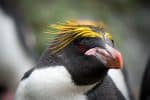
Macaroni Penguin Breeds in large, noisy colonies on vegetated coastal slopes and rocky shorelines; Heard Island supports some of the most important macaroni penguin concentrations in the region.
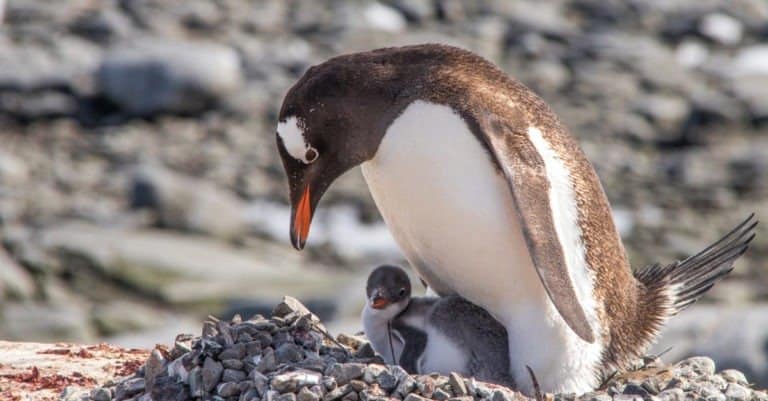
Gentoo Penguin
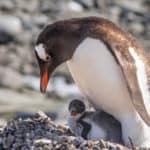
Gentoo Penguin A common inshore breeder that nests near beaches and low slopes, often close to seal haul-outs; reliable to encounter at multiple coastal sites during the breeding season.
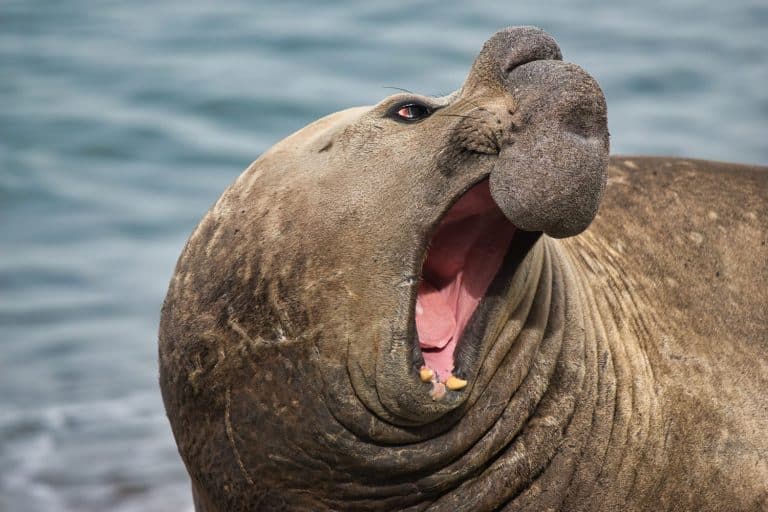
Southern Elephant Seal Large breeding and molting aggregations occur on beaches and flat coastal areas; bulls, pups and dramatic social behavior make them one of HIMI's most memorable mammals.
Antarctic Fur Seal Now abundant on many subantarctic islands after historical sealing, it commonly hauls out around Heard Island's shores; important as a visible example of ecosystem recovery under strict protection.
Subantarctic Fur Seal Regularly recorded hauling out and mixing with other seals; adds to the diversity of pinnipeds seen along sheltered beaches and rocky coasts.
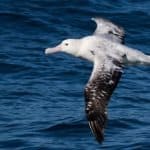
Wandering Albatross
Wandering Albatross A flagship Southern Ocean seabird; seen soaring along coastal cliffs and offshore waters, with breeding in the broader region making HIMI waters a key foraging area.
Light-mantled Sooty Albatross Typically associated with steep coastal terrain and high-energy seas; prized by visitors/observers for close views of dynamic flight in the strong subantarctic winds.
Southern Giant Petrel A dominant scavenger/predator around seabird colonies and seal carcasses; often conspicuous on beaches and slopes near breeding areas.

Endemic Species

Heard Island Shag A coastal cormorant endemic to Heard Island and the McDonald Islands, breeding on rocky shores and foraging in nearby inshore waters. Endemic

Notable Populations

  • One of the key King Penguin breeding concentrations in the Southern Indian Ocean, with very large colonies on Heard Island.
  • Regionally significant Macaroni Penguin colonies, contributing to some of the largest concentrations in the Indian Ocean sector of the Southern Ocean.
  • Important breeding and haul-out area for Southern Elephant Seals in the southern Indian Ocean, with dense seasonal aggregations.
  • High-density seabird breeding assemblages (penguins, petrels, albatrosses, shags) supported by minimal human disturbance and strong legal protection, making HIMI a benchmark site for near-pristine subantarctic ecosystems.
Protection

Conservation

Primary Threats

  • Warming in the subantarctic is driving rapid glacier retreat and changes in snow/ice dynamics on Heard Island, reshaping coastal breeding sites, exposing new ice-free ground (altering vegetation succession), and potentially shifting the timing/availability of marine prey that seabirds and seals depend on. Ocean warming and acidification can affect krill/forage fish pathways, with cascading impacts on top predators.
  • Local pollution sources are limited because there are no residents, but the territory is exposed to long-range marine pollution: drifting plastics/ghost gear and other marine debris can entangle seals and seabirds or be ingested. Any ship-based fuel spills during rare research or management landings would be disproportionately damaging due to slow ecosystem recovery in cold climates.
  • The greatest terrestrial risk is accidental introduction of non-native species (invertebrates, plant seeds, rodents, pathogens) via visiting ships, cargo, clothing, or equipment. Even a single successful introduction could disrupt seabird colonies and fragile subantarctic plant communities; the islands' isolation means native species have limited defenses.
  • Ecosystem impacts can occur if fishing pressure in the surrounding Southern Ocean reduces key prey or alters food webs. The region's high-value fisheries (notably Patagonian toothfish in broader CCAMLR areas) create incentive for illegal, unreported, and unregulated (IUU) fishing, which can also cause seabird bycatch if not tightly controlled.
  • Human presence is rare but concentrated at sensitive coastal landing sites. Disturbance from occasional scientific expeditions or compliance operations can cause trampling of vegetation, disruption of breeding birds and seals, and introduction of noise/light-risks managed through strict permitting and operational protocols.
  • Low baseline exposure makes wildlife vulnerable to introduced avian diseases or parasites transported on footwear, equipment, or via contact with other regions' seabirds. Disease outbreaks in dense breeding colonies could spread quickly even though visitation is infrequent.
Visit

Wildlife Tourism

Heard Island and McDonald Islands (HIMI) is one of the world's most remote wildlife destinations: an uninhabited, strictly protected Australian external territory in the subantarctic southern Indian Ocean. Wildlife tourism here is not a conventional industry-there are no towns, roads, lodges, or regular transport-so economic importance is minimal compared with mainstream destinations. Instead, visitation is rare and typically tied to small expedition-style voyages (often with a strong education/science focus) that operate under tight biosecurity and environmental rules to protect seabird colonies, seal haul-outs, and fragile tundra/vegetation. Historically, human presence has been limited (notably sealing in past centuries, then scientific activity). Today, the defining feature for visitors is minimal human impact: vast penguin and seabird breeding sites, recovering seal populations, and dramatic scenery-glaciers running to the sea and the active volcanic massif Big Ben on Heard Island. Accessibility is the main barrier: expect a multi-day open-ocean transit on an ice-strengthened expedition vessel (routes vary by operator and conditions), highly weather-dependent landing opportunities, and the real possibility that you may view much of HIMI from ship and Zodiac rather than on foot. Permits/permissions and strict conduct rules are typically handled by the expedition operator; independent travel is impractical.

Best Time to Visit
  • Wildlife viewing is essentially an austral summer proposition, when seas are most navigable and breeding seasons peak.
  • November: Early-season breeding activity ramps up. Expect increasing numbers of seabirds around nesting areas; penguin colonies become more active as adults return and pair up. Fur seals begin to appear in greater numbers along beaches.
  • December-January (peak): Best overall. Penguin colonies are at their busiest (high adult density, nesting, and early chick stages depending on species). Elephant seals are abundant on beaches (including resting and social behavior), and seabird cliffs are packed with albatrosses/petrels in active breeding cycles. Long daylight hours favor photography and on-deck birding.
  • February: Excellent for penguin chick activity and colony dynamics as the season progresses; seals remain common ashore and in nearshore waters. Whale encounters can be rewarding during summer cruising in the Southern Ocean-expect ship-based sightings with occasional close passes.
  • March (late season/shoulder): Fewer peak breeding behaviors, but still strong marine mammal viewing and dramatic landscapes with shifting weather and light. Sea conditions may begin to deteriorate, and landing windows can narrow. Outside November-March: Conditions become increasingly harsh (short daylight, heavy seas, icing risk), and tourism operations are generally not feasible.

Top Wildlife Experiences

  • Ship-to-shore Zodiac 'wildlife safaris' along penguin beaches and seal haul-outs, keeping respectful distances while guides interpret colony behavior and species ID.
  • Time a guided shore landing (if conditions allow) specifically for penguin colony observation-settle in quietly at the edge of the colony to watch courtship, nesting exchanges, chick feeding, and constant seabird traffic overhead.
  • Photograph elephant seals and fur seals from safe, designated viewing positions with a naturalist guide-focus on behaviors like sparring, vocalizing, and maternal care while staying outside the animals' movement paths.
  • Do an on-deck seabirding session during the approach and departure-scan for albatrosses, giant petrels, prions, and shearwaters riding the wind alongside the ship, with help from the expedition team for identification.
  • Cruise slowly past glacier fronts and iceberg-strewn bays for a combined scenery-and-wildlife experience-look for seals in the water, seabirds rafting on the surface, and birds feeding at tide lines.
  • Join a ship-based marine mammal watch (often scheduled in peak light/sea-state windows) to spot and interpret whale blows, breaching, and feeding behavior-sightings are opportunistic but memorable in these waters.
  • Take part in expedition 'biosecurity and minimal-impact' routines as a hands-on experience: boot scrubs, gear checks, and briefings that explain why HIMI remains so pristine-and how visitors help keep it that way.
  • Attend natural history and geology sessions onboard (subantarctic ecology, penguin/seal life cycles, volcanic and glacial processes), then apply that knowledge immediately during landings and Zodiac cruises for a deeper, more rewarding trip.

Safari Types Available

  • Expedition cruise (ship-based wildlife viewing as the core platform)
  • Zodiac/boat safaris (coastal cruising for wildlife and landing access)
  • Guided shore landings with short walks (weather- and permit-dependent; strict protocols)
  • On-deck pelagic birding (seabird 'safari' during ocean transits)
  • Whale and marine mammal watching (opportunistic ship-based encounters)
  • Nature photography-focused expeditions (guided shoots from ship, Zodiac, and landing sites)
  • Citizen-science/education-style voyages (lectures, species logs, observation projects led by naturalists)
Fun Facts

Did You Know?

Australia's "penguin-and-seal territory" sits on an active volcano: Big Ben (Mawson Peak) on Heard Island is volcanically active, so wildlife breeds on beaches below a live volcanic system while glaciers descend from the same mountain.

The land itself can change faster than the wildlife can: eruptions on the McDonald Islands in the late 20th century dramatically enlarged parts of the islands and reshaped coastlines-instantly creating (and destroying) habitat used by seals and seabirds.

It's a world-class wildlife refuge precisely because it's hard to reach: the islands are so remote and storm-battered that visits are rare and tightly controlled, which has helped keep breeding colonies comparatively free from the disturbance common at more accessible subantarctic islands.

Some of the "action" is offshore: much of the territory's biodiversity is supported by the surrounding Southern Ocean food web-seabirds and seals commute huge distances from the beaches to feed at sea, meaning the richest wildlife story is often happening far beyond the shoreline.

One of the world's biggest king penguin nurseries: Heard Island's rookeries have been estimated at roughly ~200,000 breeding pairs (hundreds of thousands of birds), putting it among the largest king penguin colonies on Earth.

A major global stronghold for macaroni penguins: Heard Island supports breeding colonies numbering in the hundreds of thousands of pairs-among the largest concentrations of this species anywhere.

One of the most important southern elephant seal breeding areas in the Indian Ocean sector of the Southern Ocean: Heard Island hosts large annual haul-outs and pupping beaches that make it a key site for the species' regional population.

Among the rarest "pristine" wildlife sites at island scale: Heard and McDonald Islands are famous for having exceptionally little human-caused ecological change-no permanent settlement and minimal introduced species-making them one of the cleanest baselines for studying subantarctic seabirds and marine mammals.

Thank you for reading! Have some feedback for us?