N S W E
Wildlife Expeditions

Wildlife of
Marshall Islands

The Marshall Islands is notable for its vast, crystal-clear atoll lagoons and outer reef drop-offs-prime places to encounter thriving coral reef life, sea turtles, and spectacular seabird colonies in one of the Pacific's most ocean-dominated nations.
21 Species
181 km² Land Area
Overview

About Marshall Islands

The Marshall Islands' wildlife story is overwhelmingly a marine one: a nation of low-lying coral atolls where life concentrates along reef crests, lagoon patch reefs, seagrass beds, and open-ocean waters. While terrestrial fauna is limited by small land area and low elevation, the islands support important seabird rookeries and coastal strand vegetation that stabilizes shorelines and provides nesting habitat. For visitors, the natural heritage is defined by the intimate scale of atolls-wildlife experiences unfold close to shore, often within lagoons that function like living aquariums.

Key ecosystems include coral reefs (barrier and fringing), lagoon habitats, reef passes with strong currents, and pelagic waters that connect the islands to wider Pacific migratory routes. Reefs and lagoons are ecological engines: they shelter juvenile fish, sustain subsistence and artisanal fisheries, and support charismatic species such as green and hawksbill sea turtles. These ecosystems are also among the most climate-sensitive on Earth-warming seas, coral bleaching, ocean acidification, and sea-level rise directly threaten both biodiversity and the atoll communities that depend on it, making the Marshall Islands a frontline indicator of global ocean health.

In global conservation terms, the Marshall Islands contributes to Pacific-wide efforts to manage highly migratory species, protect nesting beaches and seabird sites, and improve ocean governance across large marine territories. The wildlife experience here is uniquely immersive and community-linked: clear-water snorkeling and diving in lagoons and along steep reef walls, quiet island visits to observe nesting seabirds, and opportunities to learn how local stewardship and traditional knowledge shape marine resource use. It's a destination where the drama is often subtle but profound-reef resilience, turtle recoveries, and seabird breeding success playing out against an ever-changing climate.

Physical Features

Geography

The Marshall Islands' wildlife is shaped by extremely low-lying coral atolls spread across a vast ocean area. With no mountains and virtually no rivers, terrestrial habitats are limited to narrow islets with coastal strand vegetation, coconut forest, scrub, and small freshwater "lens" aquifers. In contrast, the ring-shaped reefs and large lagoons create extensive marine habitat mosaics (reef crest, reef flat, patch reefs, seagrass/algal beds where present, lagoon basins, and outer reef slopes) that drive the country's biodiversity-reef fish, sharks and rays, sea turtles, and rich seabird colonies. Because most land is only a few meters above sea level, habitat distribution is highly sensitive to sea-level rise, storm surge, erosion, saltwater intrusion, and coral bleaching that can cascade from reef condition to fish and seabird food webs.

181 km² Land Area
Among the world's smallest countries by land area; roughly comparable to Washington, DC (~177 km²) Size Rank

Key Landscapes

  • Low-lying coral atolls and reef-fringed islands (no significant elevation gradients)
  • Large shallow lagoons enclosed by reef rims (major nursery and foraging areas for fish and turtles)
  • Outer reef slopes/drop-offs exposed to ocean currents (high coral and pelagic connectivity)
  • Reef flats, reef crests, and patch reefs (core coral-reef habitat diversity)
  • Sandy beaches and islet shorelines (sea turtle nesting; coastal invertebrates)
  • Seabird nesting islets/cays and coastal strand vegetation
  • Coastal wetlands/mangrove patches where present (localized nursery habitat and shoreline stabilization)
  • Freshwater lens aquifers and limited inland depressions (key constraint on terrestrial plants and land birds)

Ecoregions

  • Micronesian tropical moist forests (WWF terrestrial ecoregion; highly limited/fragmented on atolls)
  • Micronesia (Marine Ecoregions of the World realm/province context)
  • Marshall Islands (MEOW marine ecoregion designation used in some marine biogeographic classifications)
Parks & Reserves

Protected Areas

Protected areas in the Marshall Islands are dominated by community- and atoll-level marine protected areas (MPAs) rather than large terrestrial national parks. Most conservation designations are implemented through local governments and landowners under the national 'Way of the People' conservation planning framework, which supports locally managed reefs, lagoon nurseries, seabird and turtle nesting islets, and no-take or gear-restriction zones. National-scale measures also exist for highly migratory marine wildlife (for example, shark protections) across the country's vast ocean territory, reflecting that the nation's biodiversity is overwhelmingly marine and lagoon-based.

Protected Coverage

Land under formal protection is small and patchy because the country's land area is tiny and highly settled on a few atolls; a reasonable estimate is ~5-10% of land area within designated local conservation areas (varies by atoll and ordinance; comprehensive terrestrial coverage datasets are limited). Marine protection measures are more extensive in scope (including large-scale national shark protections), but the exact proportion of nearshore/reef areas in fully no-take zones varies by site and management plan.

Notable Parks & Reserves

Jaluit Atoll Conservation Area (JACA)

Ramsar Wetland of International Importance; Local Conservation Area / MPA

A large lagoon-and-reef complex important for coral reef fish diversity, turtle foraging, and seabird use of small islets; it is one of the best-known formally designated wetland/lagoon conservation sites in the country.

Green sea turtle
Hawksbill turtle
Reef manta ray
Giant clams
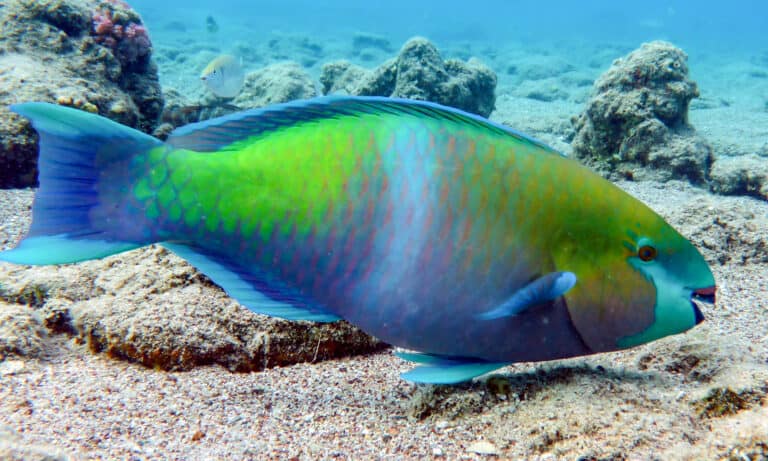
Bumphead parrotfish
White-tip reef shark
Sooty tern

Rongelap Atoll Local Conservation Area / Marine Protected Area

Local Conservation Area / community-managed MPA (National Conservation Area Planning Framework, "Way of the People")

A remote atoll with extensive reef and lagoon habitats that support high fish biomass and recovery potential; it is notable for clear-water diving, turtle habitat, and seabird islets where human pressure is relatively low.

Green sea turtle
Hawksbill turtle
Grey reef shark
Grey reef shark
Napoleon wrasse (maori wrasse)
Giant clams
Blacktip reef shark
Blacktip reef shark
Red-footed booby

Arno Atoll Lagoon & Reef Conservation Area (community-managed)

Local Conservation Area / community-managed marine protected area (Marshall Islands National Conservation Area Plan framework)

A biologically rich lagoon system close to the population center (Majuro), making it important for conservation, fisheries nursery functions, and local education; coral reefs and seagrass/algal areas support juvenile fish and foraging turtles.
Green sea turtle
Hawksbill turtle
Giant clams
Parrotfish (reef parrotfish)
Groupers
Eagle ray
Eagle ray
Black noddy

Erikub Atoll Conservation Area (community-managed)

Local Conservation Area / community-managed MPA (community-based "Way of the People" conservation area planning framework)

A largely uninhabited atoll valued for turtle nesting beaches and seabird rookeries; limited development helps maintain intact coastal strand vegetation and relatively undisturbed reef flats.

Green sea turtle
Hawksbill turtle
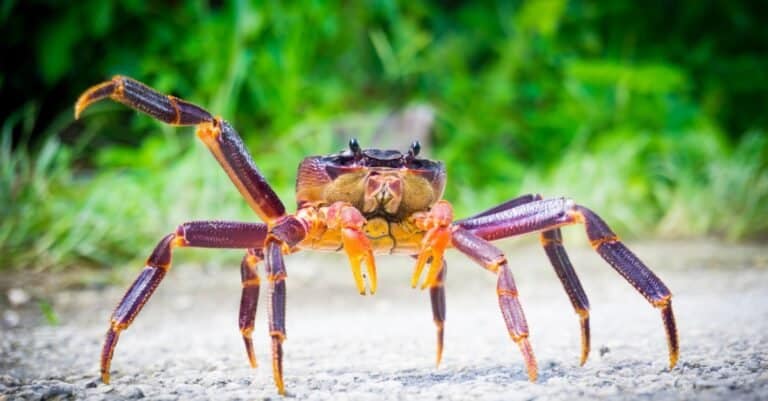
Coconut crab
Coconut crab
Frigatebirds
Frigatebirds
Brown booby
Reef sharks
Tropicbirds
Tropicbirds

Bikar Atoll (uninhabited wildlife refuge area)

De facto wildlife refuge / remote atoll conservation area (management typically via atoll/local authority and customary tenure)

One of the most remote, least disturbed atolls in the Marshall Islands, important as a seabird breeding site and for turtle nesting on undisturbed beaches; its isolation makes it a high-value reference site for climate-sensitive reef ecosystems.

Green sea turtle
Hawksbill turtle
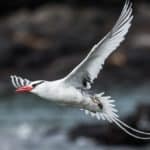
Red-tailed tropicbird
Sooty tern
Great frigatebird
Reef sharks
Giant clams

Bokak Atoll (remote wildlife refuge area)

De facto wildlife refuge / remote atoll conservation area (management typically via atoll/local authority and customary tenure)

A very remote atoll with extensive seabird colonies and important marine habitats; low human use supports large aggregations of nesting seabirds and relatively intact reef communities.

Green sea turtle
Hawksbill turtle
Masked booby
Red-footed booby
Frigatebirds
Frigatebirds
Grey reef shark
Grey reef shark
Parrotfish (reef parrotfish)

Marshall Islands National Shark Sanctuary (EEZ-wide)

National shark sanctuary (nationwide marine wildlife protection)

A nationwide protection measure across one of the world's largest ocean areas relative to land, designed to reduce shark mortality and support healthy reef food webs and pelagic ecosystems.
UNESCO World Heritage Sites

  • Bikini Atoll Nuclear Test Site
Animals

Wildlife

Wildlife diversity in the Marshall Islands is dominated by the ocean: coral reefs, lagoons, and pelagic waters support high diversity of reef fish, corals, sharks, rays, sea turtles, and migratory whales. On land, low-lying coral atolls have limited native terrestrial fauna (few reptiles, no native amphibians), but they are highly important for seabirds-many remote, predator-free islets host dense nesting colonies. The overall wildlife experience is therefore defined by snorkeling/diving on reefs and lagoon drop-offs, encounters with turtles/sharks/rays, and visiting (or observing offshore) seabird breeding islands. Climate change, sea-level rise, bleaching, and invasive species are key pressures.
~25-35 (mostly whales/dolphins; very few native land mammals such as flying foxes; many small introduced mammals on inhabited atolls) Mammals
~70-110 (strongly seabird- and migrant-heavy; relatively few resident landbirds) Birds
~15-25 (notably sea turtles; plus geckos/skinks on atolls) Reptiles
0 native (amphibians are essentially absent on remote coral atolls; any records are typically introductions and not widespread) Amphibians

Iconic Species

Green Sea Turtle A flagship lagoon-and-reef species and one of the most frequently encountered megafauna while snorkeling/diving. The Marshall Islands includes important foraging habitat on reefs and seagrass/algal areas, with nesting on some remote atolls and sandy islets.
Hawksbill Sea Turtle Closely associated with coral reefs and lagoons; valued by visitors because it is less common globally and often seen around healthy reef structure. The Marshalls' reef habitats are regionally important for foraging hawksbills.
Reef Manta Ray Seen by divers at cleaning stations and along reef edges in clear lagoon passes. Encounters are most likely around channels and outer-reef slopes where plankton flow concentrates.
Spinner Dolphin Frequently encountered in tropical Pacific island waters and sometimes observed bow-riding or resting in calmer leeward areas; a memorable surface-wildlife highlight around atolls.
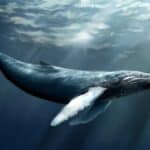
Humpback Whale
Humpback Whale A seasonal visitor during migration/breeding periods in the central Pacific; whale sightings (and occasional breaching) are a major draw when conditions align.
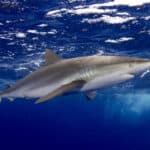
Silky Shark
Silky Shark A common open-water and reef-edge shark in many Pacific island settings; notable in the Marshall Islands due to the country's large shark-protection measures and strong diving interest in shark-rich reef passes.
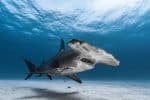
Gray Reef Shark
Gray Reef Shark A classic atoll-pass and outer-reef predator often seen by divers in current-swept channels; part of the signature 'reef pass' wildlife experience.
Great Frigatebird An iconic tropical seabird often seen soaring above atolls; remote islets support breeding, and the species is a highly visible symbol of intact seabird communities.
Sooty Tern Forms large, noisy nesting colonies on uninhabited islands; these mass seabird aggregations are among the most dramatic terrestrial-wildlife spectacles in the country.
Red-footed Booby A characteristic tropical seabird of remote atolls; often nests in low vegetation on predator-free islets and is commonly seen foraging offshore over reefs and lagoon passes.

Endemic Species

Marshall Islands Reed Warbler A true endemic songbird of the Marshall Islands, occurring in dense shrub and woodland edge habitats on vegetated atolls. Endemic
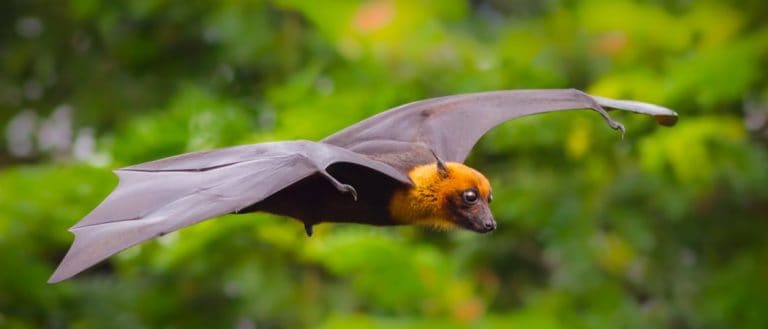
Insular Flying Fox (Marshall Islands subspecies) A fruit bat subspecies restricted to the Marshall Islands (an endemic subspecies of the insular flying fox), important for pollination and seed dispersal on vegetated atolls. Endemic

Notable Populations

  • The Marshall Islands declared a very large shark sanctuary (nationwide protection measures in its vast EEZ), making the country globally notable for shark conservation policy.
  • Remote northern atolls (e.g., uninhabited/predator-free islets) support regionally significant seabird breeding colonies, with dense nesting by terns, boobies, and frigatebirds.
  • National waters include important habitat and migration corridors for Pacific cetaceans (including humpback whales), and extensive reef/lagoon foraging grounds for green and hawksbill sea turtles.
Protection

Conservation

Primary Threats

  • Sea-level rise and increasing wave-driven flooding ("king tides") erode shorelines, contaminate fragile freshwater lenses, and force hardening/raising of coastlines that can degrade reefs. Marine heatwaves drive coral bleaching in atoll lagoons and outer reefs, reducing habitat complexity for reef fish and weakening natural coastal protection. Ocean acidification threatens calcifying organisms (corals, crustose coralline algae) that build reef structure.
  • Pressure occurs at two scales: (1) local reef and lagoon fisheries that support food security, where concentrated harvesting near population centers (especially Majuro and Ebeye) can reduce key species and alter reef food webs; and (2) highly valuable industrial tuna fisheries across the EEZ, where sustainability depends on effective regional controls (effort limits, bycatch mitigation for sharks, turtles, seabirds).
  • Solid waste and limited landfill capacity on small atolls lead to plastics and debris entering lagoons and reefs. In densely populated areas, inadequate wastewater treatment contributes nutrients and pathogens to nearshore waters, stressing corals and seagrass/algal habitats. The country also faces site-specific contamination issues associated with the nuclear testing legacy in parts of the northern atolls (long-term environmental monitoring and risk management needs).
  • Invasive rats, ants, and other non-native species on small islets can devastate seabird colonies by preying on eggs/chicks or disrupting nesting habitat. Invasive plants can alter strand vegetation that stabilizes islets and provides nesting cover, reducing resilience to storms and erosion.
  • Coastal erosion, storm damage, and land scarcity drive shoreline armoring, reclamation, and dredging for building materials and infrastructure. These activities can smother corals, reduce water quality in lagoons, and simplify natural shoreline habitats important for fish nursery areas and turtle nesting beaches.
  • Dredging of reef flats and lagoon bottoms, creation of causeways, and channel modification for navigation and construction change currents and sediment dynamics in atolls. Altered circulation can increase stagnation or turbidity in lagoons, affecting coral health and nearshore fisheries productivity.
  • Ports, seawalls, airports, and urban expansion on narrow atoll land strips often require reef excavation, fill, and coastal hardening. While critical for safety and services, these projects can fragment or degrade nearshore habitats and increase chronic sedimentation and turbidity.
  • Freshwater is naturally limited to thin groundwater lenses; drought and saltwater intrusion reduce potable water and constrain vegetation, which in turn affects soil stability and coastal erosion risk. Reliance on reef fish for protein can intensify fishing pressure when imported food costs rise or supply chains are disrupted.
  • Boat traffic, shoreline activity, and development near nesting beaches and seabird islets can disturb breeding, reduce nesting success, and increase light/noise impacts. Tourism and recreation are smaller-scale than in many Pacific states but can still concentrate on sensitive reef areas around Majuro and outer-atoll lagoons.
  • Traditional take of sea turtles and seabirds has occurred historically; where it persists, it can affect slow-reproducing populations. Management is complicated by the cultural importance of customary harvest and the need for clear, enforceable seasonal/size/area rules.
Visit

Wildlife Tourism

Wildlife tourism in the Marshall Islands is overwhelmingly marine-focused, centered on coral atolls, lagoons, and outer-reef drop-offs within a vast Exclusive Economic Zone. While tourism is smaller than in many Pacific destinations, dive/snorkel and nature travel can be economically meaningful for local operators (boat charters, guides, homestays, small hotels) and supports awareness and stewardship of fragile reef and seabird habitats. Nature travel here has grown from early diving and WWII wreck-interest into broader lagoon ecology experiences (turtles, rays, reef fish, seabird islets), with accessibility shaped by limited international flights, inter-island air/boat schedules, and weather. Most visitors route through Majuro (capital) and travel onward to outer atolls for clearer water, richer reefs, and more remote seabird nesting areas; planning and flexibility are essential because services are small-scale and conditions can change with swell, wind, and tides.

Best Time to Visit

Practical wildlife-viewing calendar (what to see and when):

- January-March: Typically drier trade-wind season conditions overall; good visibility windows for snorkeling/diving when winds and swell cooperate. Expect strong currents at passes-great for pelagics on advanced dives/reef-edge drifts.
- April-June: Often a sweet spot for calmer seas and reliable water time. Excellent for lagoon snorkeling, coral viewing, and turtle encounters; good months to plan outer-atoll trips and boat days.
- July-October: Trade winds can strengthen and surface conditions can be choppy on windward sides; leeward lagoons can still be productive. This is a strong period for seabird activity at many islets-bring binoculars and plan boat day trips when seas allow.
- November-December: Transition months can bring calmer spells and warm water, but also more variable weather. Good for general reef life, photography, and lagoon days when conditions line up.

Wildlife highlights by season (general):
- Sea turtles (green/hawksbill): Possible year-round; sightings often best on healthy reef flats and near seagrass/foraging areas. Nesting is beach-specific and variable-ask local guides about current, low-impact viewing.
- Reef fish and coral: Year-round, with best visibility often in calmer months (commonly April-June) and around neap tides for snorkel comfort.
- Seabirds: Many species present year-round; nesting/colonies are highly site-dependent on predator-free islets. Late spring through early fall often offers the most conspicuous breeding activity.

Tip: For snorkelers, aim for April-June and choose leeward sites; for experienced divers chasing pass/drift action, winter-early spring can be rewarding if you can handle current and surface chop.

Top Wildlife Experiences

  • Outer-reef drift dive at a pass (advanced): plan a guided drift timed to tide changes to spot schooling reef fish, trevallies, sharks (where present), and big-eye jacks along the drop-off.
  • Lagoon snorkeling circuit by small boat: spend a full day hopping between coral gardens, patch reefs, and sandy channels-ideal for turtles, anemonefish, parrotfish, and giant clam areas (where protected).
  • Turtle-focused snorkel with a local guide: visit known foraging reefs at slack tide and practice low-impact viewing (no touching/chasing; keep distance, stay off coral).
  • Sunrise seabird islet visit: boat to a small, uninhabited islet with active colonies (site-dependent) for early-morning flight activity and photography; bring binoculars and wind protection.
  • Night snorkeling in a calm lagoon area: look for sleeping parrotfish, hunting octopus, crustaceans, and bioluminescent flashes-best done with an experienced guide and strict safety protocols.
  • Bluewater/edge-of-lagoon pelagic hunt (by charter): troll or cast along reef edges to observe oceanic food chains and seabirds working bait (combine with responsible fishing practices and release where possible).
  • WWII wreck + reef ecology dive/snorkel combo: pair a historic wreck site (where accessible) with nearby reef habitats to see how marine life colonizes structure-excellent for photography and interpretation.
  • Citizen-science style reef survey snorkel: join or self-run a simple fish-and-coral observation session (photo-transects, species lists) to contribute to local awareness; keep it non-invasive.
  • Kayak or SUP along sheltered lagoon margins: quiet paddling for spotting rays, juvenile fish in shallow nurseries, and seabirds overhead; time it for high tide to avoid coral contact.
  • Responsible beach walk for tracks and coastal wildlife: early-morning shoreline walk on suitable beaches to look for turtle tracks (site/season dependent) and shorebirds-observe without disturbing nests or dune vegetation.

Safari Types Available

  • Boat-based snorkeling safaris (lagoon hop days, reef-edge circuits)
  • Scuba diving safaris (day-boat diving; drift/pass dives; wreck-focused outings where available)
  • Seabirding boat trips (islet colony visits, sunrise/sunset photography runs)
  • Kayak/SUP wildlife excursions (quiet lagoon exploration)
  • Shore-based reef walks and tidepooling (only where safe and permitted; avoid coral damage)
  • Bluewater charters (pelagic viewing combined with responsible fishing/boating)
  • Night wildlife experiences (guided night snorkel in calm lagoons; limited, condition-dependent)
  • Community-guided nature days (local knowledge-led reef, lagoon, and coastal interpretation trips)
Fun Facts

Did You Know?

The country's "mainland" for wildlife is underwater: the Marshall Islands' sovereign ocean area is comparable in size to a large country, while its land is tiny-so protecting biodiversity here is primarily about reefs, lagoons, open-ocean species (like sharks and tuna), and turtle migration corridors, not forests or mountains.

A UNESCO World Heritage Site is also a living reef ecosystem: Bikini Atoll was inscribed by UNESCO (2010) for its nuclear-test history, but it's simultaneously a functioning coral-reef and lagoon system where marine life persists and, in places, has rebounded in the absence of routine local harvesting.

There are essentially no natural freshwater habitats (no rivers, no lakes): on low coral atolls, wildlife and people rely on rainfall and the thin freshwater "lens" underground-one reason land biodiversity is limited while marine biodiversity dominates.

Traditional Marshallese navigation is tightly linked to ecology: navigators historically used ocean swells and biological cues-especially seabird flight behavior (birds commuting between feeding grounds and nesting islets)-as practical "instruments" for finding land across long open-water distances.

One of the world's largest shark sanctuaries: in 2011 the Marshall Islands declared its entire EEZ (about 2.0 million km²) a shark sanctuary, banning commercial shark fishing and shark finning across an area far larger than the country's land.

An extreme "ocean nation" record: with only ~181 km² of land but ~1.99 million km² of ocean (EEZ), the Marshall Islands has an ocean-to-land ratio on the order of ten-thousand-to-one-among the most lopsided on Earth, meaning most Marshallese wildlife habitat is marine.

Kwajalein Lagoon is among the largest atoll lagoons on the planet (about 2,100+ km²), creating a vast, semi-enclosed reef-and-lagoon ecosystem that supports reef fish, turtles, and seabirds around a single ring of low coral islets.

Bikini Atoll is one of the world's best-known "accidental marine reserves": decades of restricted human use after nuclear testing left reefs with relatively low local fishing pressure, and dive surveys commonly report unusually high numbers of large reef fish and top predators compared with many inhabited atolls.

Thank you for reading! Have some feedback for us?