N S W E
Wildlife Expeditions

Wildlife of
Samoa

Samoa stands out for wildlife lovers as a lush volcanic island nation where endemic rainforest birds and bats meet vibrant coral reefs-offering close-up encounters with Pacific island biodiversity shaped by long isolation.
28 Species
2,842 km² Land Area
Overview

About Samoa

Samoa's wildlife character is defined by its Polynesian island setting: steep volcanic interiors draped in tropical rainforest, freshwater streams and waterfalls, and an encircling ring of lagoons and reefs. Long geographic isolation has produced distinctive island species, especially among birds and bats, while the surrounding ocean supports an outsized share of Samoa's biodiversity through reef fish, corals, turtles, and migratory megafauna. For visitors, the appeal is the feeling of immersion-wildlife is woven into daily life, from forested uplands to reef flats just offshore.

Key ecosystems include lowland and upland rainforests (important for native birds, fruit bats, and watershed protection), coastal wetlands and mangroves (nursery habitat for fish and buffers against storms), and coral reefs and lagoons (the country's most species-rich wildlife arena, supporting reef communities and coastal fisheries). Volcanic geology adds to the experience: cratered peaks, rugged lava-formed shorelines, and cloudier, cooler forest zones can concentrate birds and create distinct habitat bands over short distances.

In global conservation terms, Samoa contributes to the protection of Pacific island biodiversity and the wider South Pacific seascape-regions that are highly sensitive to invasive species, habitat loss, and climate-driven impacts such as coral bleaching and sea-level rise. Conservation work here often blends community stewardship with protected areas and marine management, reflecting the strong cultural connection between people and place. What makes Samoa unique for wildlife travelers is the "ridge-to-reef" accessibility: you can go from endemic-rich forest walks to snorkelling coral gardens in the same day, with a strong chance of seeing iconic Pacific species and learning how island communities manage and protect them.

Physical Features

Geography

Samoa's wildlife is shaped by two steep, volcanic high islands (Upolu and Savai'i) separated by deep ocean and surrounded by reefs. Strong elevation gradients create distinct habitats-from coastal strand and mangroves to lowland rainforest and wetter montane/cloud forests-driving localized distributions and endemism. Short, fast rivers and narrow coastal plains limit extensive freshwater wetlands but create riparian corridors. Extensive fringing reefs, lagoons, and offshore waters support high marine biodiversity, while long geographic isolation has promoted endemic land birds, bats, reptiles, and plants.

2,842 km² Land Area
About 3/4 the size of Rhode Island; roughly ~170th largest country by land area Size Rank

Key Landscapes

  • Volcanic high islands of Upolu and Savai'i with rugged central highlands
  • Montane and cloud-forest zones on higher peaks (e.g., Mt Silisili on Savai'i)
  • Lowland tropical rainforest and secondary forest mosaics
  • Narrow coastal plains and coastal strand vegetation
  • Short, steep river catchments, stream valleys, waterfalls, and riparian forest
  • Lava flows and volcanic soils creating patchy, regenerating habitats
  • Mangroves and small estuarine areas (notably in protected bays)
  • Fringing coral reefs, lagoons, reef passes, and nearshore seagrass/algal flats
  • Rocky headlands and sandy beaches important for coastal and marine fauna

Ecoregions

  • Samoan tropical moist forests (WWF terrestrial ecoregion)
  • Samoan Islands (WWF marine ecoregion within the Tropical Southwestern Pacific realm)
Parks & Reserves

Protected Areas

Samoa's protected-area system is a mix of (1) government-declared terrestrial protected areas (notably O Le Pupu-Pu'e National Park and smaller forest/scenic reserves), (2) marine protected areas (MPAs) and no-take/limited-take zones established with village and district participation, and (3) community-managed conservation areas (e.g., rainforest preserves) that play an outsized role in safeguarding lowland rainforest, watershed forests, and nearshore reefs. Because most land is under customary ownership, conservation commonly relies on partnerships with villages for access rules, hunting limits, and reef management rather than large, fully state-owned park estates.

Protected Coverage

Approximate land under formal protection: ~4-8% of Samoa's land area in nationally gazetted parks/reserves (estimate; exact figures vary by definition and by inclusion of community conservation areas). Marine protection is broader in footprint in some districts, but coverage and enforcement levels vary among MPAs and village-managed fisheries areas.

Notable Parks & Reserves

O Le Pupu-Pu'e National Park (Upolu)

National Park

Samoa's flagship terrestrial protected area, protecting upland and lowland rainforest, waterfalls, and volcanic landscapes that support many of the country's key forest birds and fruit bats. It's one of the best places to experience intact native forest close to the main population centers.

Tooth-billed pigeon
Giant honeyeater
Samoan flying fox
Pacific pigeon
Samoan whistler
Samoan starling

Tafua Peninsula Rainforest Preserve (Savai'i)

Community Rainforest Preserve / Conservation Area

A community-led rainforest reserve known for strong local stewardship and for protecting habitat used by rare forest birds; it is also notable for large flying-fox activity. Tafua is frequently cited in conservation programs focused on Samoa's endemic and threatened avifauna.

Tooth-billed pigeon
Giant honeyeater
Samoan flying fox
Samoan whistler
Cardinal honeyeater
Pacific pigeon

Falealupo Rainforest Preserve (Savai'i)

Community Rainforest Preserve / Conservation Area

A well-known community-protected forest area that helps conserve remaining lowland rainforest on Savai'i, supporting native birds and bats while demonstrating ecotourism-linked conservation. It's valuable for maintaining connectivity between coastal forest and higher-elevation habitat.

Samoan flying fox
Pacific pigeon
Samoan starling
Samoan whistler
Cardinal honeyeater
Polynesian wattled honeyeater

Aleipata Islands (Nu'utele & Nu'ulua) Marine Protected Area (Upolu)

Marine Protected Area

One of Samoa's most important nearshore conservation areas, protecting coral reefs, lagoons, and seabird islets with strong biodiversity value. It's notable for turtle habitat, seabird colonies, and high-quality reef snorkeling/diving in calmer seasons.

Green sea turtle
Hawksbill sea turtle
Giant clams
Reef sharks
Humpback whale (seasonal)
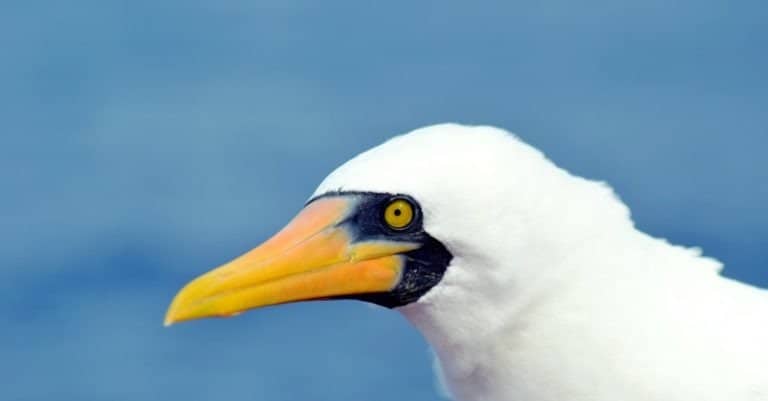
Brown booby

Palolo Deep Marine Reserve (Apia, Upolu)

Marine Reserve / No-take area

A small but iconic urban-adjacent marine reserve protecting a steep reef drop-off with dense reef fish and invertebrate life-important for education, recreation, and demonstrating no-take benefits. Visibility and easy access make it one of the most wildlife-viewable reefs near the capital.

Giant clams
Parrotfish
Parrotfish
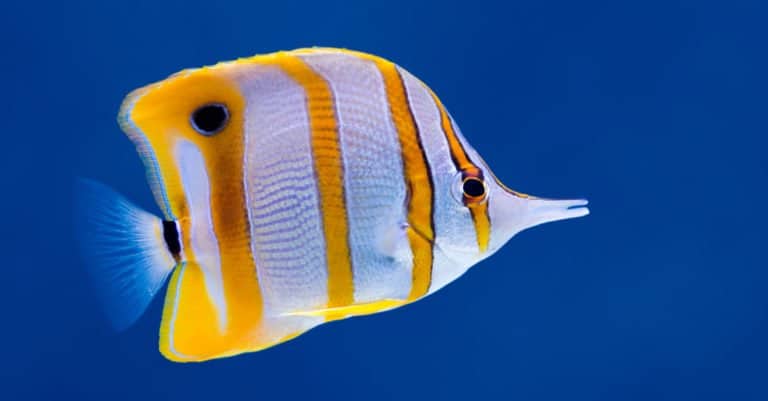
Butterflyfish
Green sea turtle
Hawksbill sea turtle
Octopus
Octopus

Safata District Marine Protected Area (Upolu)

District/Community Marine Protected Area

A locally managed MPA network safeguarding fringing reefs, seagrass/lagoon habitats, and reef fish breeding areas. It supports food-security goals while protecting reef biodiversity and offering opportunities for community-based monitoring and eco-visits.

Giant clams
Green sea turtle
Hawksbill sea turtle
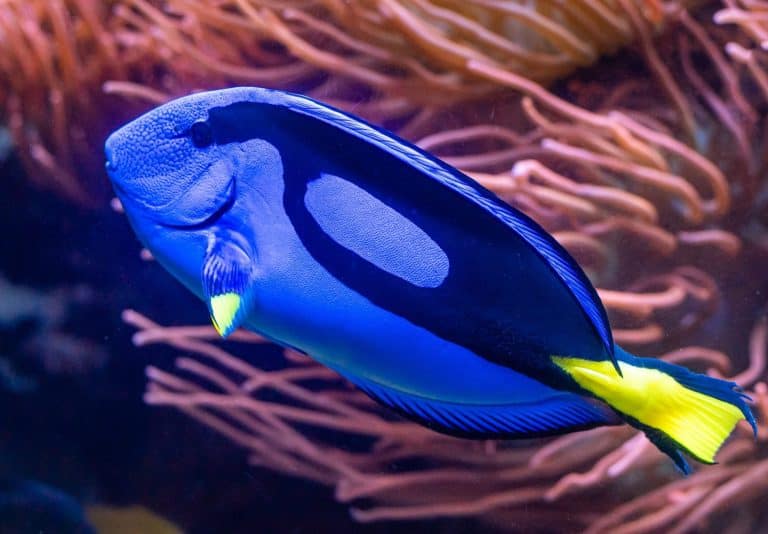
Surgeonfish
Surgeonfish
Parrotfish
Parrotfish
Reef sharks
Animals

Wildlife

Samoa's wildlife is shaped by long isolation on small volcanic islands: relatively few native land mammals and amphibians, but a distinctive set of forest birds (including several endemics), abundant seabirds, and exceptionally important marine biodiversity on coral reefs and coastal lagoons. The "classic" wildlife experience is rainforest birding (especially on Upolu and Savaii), watching large flying-fox roosts at dusk, and snorkeling/diving with reef fish, turtles, and (seasonally) migrating humpback whales.
Low diversity. ~8-12 recorded terrestrial mammals overall, but only ~2 native land mammals (both fruit bats/flying foxes); most others are introduced (rats, pigs, dogs, cats). Several cetaceans occur seasonally/offshore. Mammals
99 Birds
26 Reptiles
Very low. No native amphibians; ~1 introduced species is widespread (cane toad). Amphibians

Iconic Species

Tooth-billed Pigeon Samoa's most famous and culturally significant bird - an ancient, rare pigeon lineage found nowhere else. Extremely difficult to see; best chances are in remaining lowland and upland forests on Savaii and Upolu with experienced local guides.
Samoan Flying Fox A key native pollinator and seed disperser in Samoa's rainforests. Often seen at forest edges and over valleys at dusk/dawn; roosting and feeding activity is most visible near intact forest on Upolu and Savai'i.
Pacific Flying Fox Common and conspicuous in Samoa, forming large colonies that are easy for visitors to observe. Notable for evening fly-outs over villages, plantations, and coastal forest.
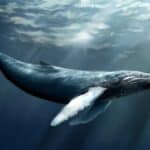
Humpback Whale
Humpback Whale Seasonal visitor that migrates through and uses parts of the Samoan region for breeding/calving. Peak viewing is typically during the Southern Hemisphere winter/spring (often July-October) from boats and coastal vantage points.
Hawksbill Sea Turtle A globally threatened reef-associated turtle seen while snorkeling/diving around coral reefs and lagoons. Samoa's reefs provide important feeding habitat; sightings are most likely in healthy coral areas.
Green Sea Turtle Frequently encountered in lagoons and seagrass areas, especially around reef passages and sheltered bays. A flagship species for marine conservation awareness in Samoa.
White-tailed Tropicbird A striking seabird often seen offshore and around rugged coastal cliffs, where it nests. Memorable for its long white tail streamers and aerial displays.
Giant Clam (Small Giant Clam) An iconic coral-reef invertebrate for snorkelers, notable for vivid mantle colors and its role in reef ecosystems. Best seen in clear, shallow lagoon reefs.

Endemic Species

Tooth-billed Pigeon A critically endangered pigeon endemic to Samoa; the only living species in the genus Didunculus, making it evolutionarily distinctive. Endemic
Samoan Flying Fox Near-endemic to the Samoan archipelago; a keystone rainforest species that disperses native tree seeds across upland and lowland forests. Endemic
Samoan Whistler A characteristic forest songbird of Samoa, most often encountered in native and mixed forests; its calls are a defining sound of the bush. Endemic
Samoan Triller Endemic forest bird typically found in wooded habitats; often seen foraging actively in the mid-canopy. Endemic
Samoan Starling Endemic and locally common in forest and edge habitats; an important frugivore that helps move seeds among forest patches. Endemic
Samoan Fantail Endemic and frequently encountered along trails and in forest clearings; known for close, inquisitive behavior and constant tail-fanning. Endemic
Samoan Flycatcher (Samoan Broadbill) Endemic forest flycatcher of Samoa; typically seen sallying for insects from perches in mid- to upper-canopy. Endemic
Samoan Skink A near-endemic skink associated with the Samoan region; part of the distinctive Pacific island reptile fauna commonly seen in sunny forest edges and coastal vegetation. Endemic

Notable Populations

  • Samoa is the only country where the Tooth-billed Pigeon survives in the wild - its entire global population is confined to the Samoan archipelago.
  • Large flying-fox colonies (Pteropus spp.) are a defining feature of Samoan forests and provide major ecosystem services (pollination and seed dispersal) critical to rainforest regeneration.
  • The Samoan marine environment (fringing reefs, lagoons, and offshore waters) supports regionally important habitat for threatened sea turtles and seasonal humpback whale presence during the migration/breeding period.
Protection

Conservation

Primary Threats

  • Rising sea levels, warmer seas, and ocean acidification increase coastal erosion and coral bleaching risk; stronger cyclones and extreme rainfall events trigger landslides and flooding that strip vegetation, damage reefs via sediment pulses, and repeatedly set back restoration and infrastructure.
  • Lowland forests and wetlands are fragmented by settlement expansion and conversion to agriculture and plantations; coastal habitats (mangroves, strand vegetation) are squeezed by development and shoreline hardening, reducing nursery areas for fish and natural storm protection.
  • Sediment and nutrient runoff from roads, farms, and cleared slopes flows quickly from steep catchments to lagoons, smothering corals and seagrass; solid waste and inadequate wastewater management near towns and tourist areas degrade water quality and public confidence in reef protection.
  • Introduced predators (rats, feral cats) and invasive plants reduce breeding success and habitat quality for endemic forest birds; invasive pests and weeds also affect agroforestry systems and forest regeneration, complicating native replanting and watershed protection.
  • Heavy reliance on nearshore reef fisheries leads to local depletion of reef fish and invertebrates (including vulnerable invertebrate fisheries in lagoons), especially close to population centers; this reduces reef resilience after cyclones and bleaching events.
  • Opportunistic hunting/harvest of native wildlife (notably flying foxes and some birds in certain areas) can add pressure to small island populations already stressed by habitat change and invasive predators.
  • Coastal tourism and recreation (snorkeling, boating, anchoring, shoreline foot traffic) can physically damage shallow reef flats and disturb nesting/roosting sites; post-cyclone cleanup and ad hoc coastal works can further disturb sensitive habitats.
  • Road building and upgrades on steep volcanic terrain can increase erosion and landslide risk if drainage and slope stabilization are inadequate; coastal protection works and reclamation can alter currents and sand movement, affecting reefs and mangroves.
  • River channelization, wetland drainage, mangrove cutting, and shoreline armoring change natural sediment transport and coastal hydrology, reducing the buffering capacity of mangroves and increasing lagoon turbidity during storms.
  • Expansion or intensification of cultivation and pasture in lowlands and foothills can remove riparian buffers and increase chemical and sediment runoff, directly impacting downstream reefs and drinking-water catchments.
  • Growth around Apia and along accessible coastal corridors concentrates wastewater, stormwater, and solid waste pressures; informal or unplanned expansion can encroach on flood-prone areas and sensitive coastal habitats.
  • Selective timber extraction and clearing for local use (even when not industrial-scale) can open forests, introduce erosion-prone tracks, and reduce habitat quality for endemic birds, especially where regeneration is hindered by invasive plants.
  • Quarrying and sand/aggregate extraction for construction can destabilize slopes or alter coastal sediment budgets, increasing erosion and turbidity that degrade lagoon and reef habitats.
  • Flying foxes and some bird species can be perceived as crop pests in fruit-growing areas, leading to retaliatory killing that can disproportionately affect local populations.
  • Several endemic species occur in small, isolated populations on limited remaining habitat; fragmentation and repeated cyclone impacts heighten risks of inbreeding and stochastic losses, particularly for forest birds with restricted ranges.
  • Plant and animal diseases/pests (including those affecting key crops and forest trees) can shift land-use pressure toward new clearing or chemical inputs; disease outbreaks can also reduce resilience of already stressed native populations and food systems.
  • While not a dominant driver compared with habitat and fishing pressures, any collection/illegal trade of charismatic marine species (e.g., turtles) or ornamental reef organisms can undermine local recovery efforts and village-based management rules.
Visit

Wildlife Tourism

Wildlife tourism in Samoa is primarily a marine-and-forest experience built around coral reefs, lagoons, whale migration routes, and intact pockets of tropical rainforest. Economically, nature-based activities (snorkelling/diving, whale watching, turtle encounters, guided coastal/forest walks) are a key draw for international visitors and help support local operators, village-run access fees, and marine/reef stewardship. Historically, Samoa's relationship with wildlife is closely tied to customary marine tenure and village governance (many coastal areas are managed locally), which can shape where/when you can access reefs and beaches. Accessibility is good for visitors: Upolu (where the capital Apia sits) has the main international gateway and a dense set of day-trip options; Savai'i is wilder and more spacious but requires a ferry connection and a bit more planning. Most wildlife experiences are half-day to full-day guided trips-often combining reef time with waterfalls, lava fields, or coastal scenery-rather than classic big-game "safaris."

Best Time to Visit
  • Jul-Oct: Peak humpback whale season (best chances for whale watching; occasional mother-and-calf sightings). Also a strong period for clear-water snorkelling/diving in many lagoons.
  • May-Jun: Shoulder-season sweet spot-good visibility on reefs, fewer crowds, and still a chance of early whales later in June.
  • Nov-Apr: Warmer water and lush landscapes; great for rainforest ambience and waterfall hikes. Marine life remains excellent, but this is also the wetter/cyclone-prone season, so plan buffer days and choose operators with flexible scheduling.
  • Year-round highlights: Reef fish, giant clams, corals, and sea turtles are possible year-round (sightings vary by site and local conditions). Seabirds and fruit bats are most active at dawn/dusk; forest birding is best early morning in any month.

Top Wildlife Experiences

  • Humpback whale-watching by boat (Jul-Oct), timed for calm morning seas; choose operators that follow responsible approach distances and limit chase behavior.
  • Guided snorkel safari on a fringing reef or lagoon: slow, skills-matched drift/snorkel with an interpretive guide focused on reef ecology, fish ID, and safe coral etiquette.
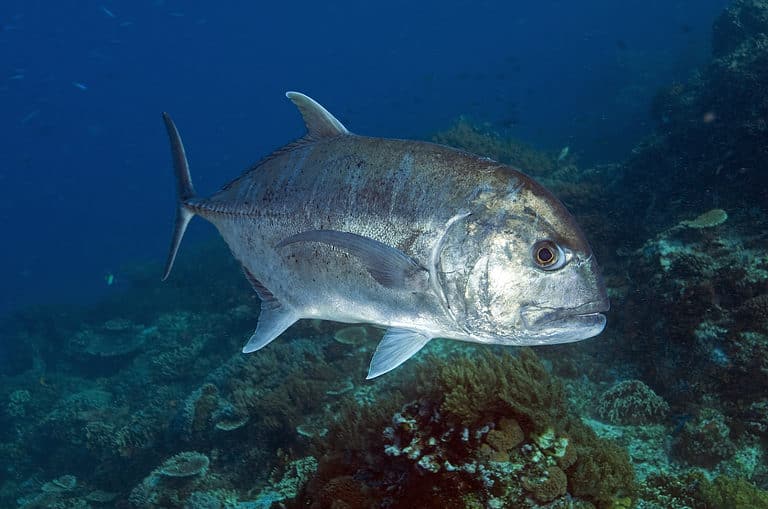
  • Night snorkel or dusk lagoon paddle (where conditions allow): look for nocturnal reef activity-octopus, hunting trevallies, sleeping parrotfish in mucus cocoons-under strict safety supervision.
  • Sea turtle-focused snorkel session at a known turtle area (seasonally variable): patient, low-impact viewing with an emphasis on distance, no-touch rules, and habitat protection.
  • Scuba dive day (or refresher + 2-tank) on coral gardens, bommies, and drop-offs: expect colorful reef fish, turtles, and occasional pelagics depending on site and season.
  • Village-managed marine reserve visit with a local guide: learn how customary rules (temporary fishing closures/seasonal no-take zones) support fish recovery; combine with snorkelling and cultural interpretation.
  • Early-morning rainforest bird walk: target endemic and regional island birds, listen for dawn choruses, and learn how isolation shaped Samoa's forest fauna.
  • Dusk fruit bat (flying fox) watching from a safe viewpoint: observe commuting flights and feeding behavior; pair with a short interpretive walk on native trees they rely on.
  • Waterfall-and-forest hike with a naturalist guide: focus on forest ecology, insects, reptiles, and plant-animal interactions rather than just reaching the viewpoint.
  • Coastal sea-kayak or stand-up paddle eco-tour along mangroves/reef edges (site-dependent): spot seabirds, juvenile fish nurseries, and reef flats at low tide while minimizing disturbance.

Safari Types Available

  • Boat-based whale watching (seasonal)
  • Reef snorkel safaris (guided lagoon/reef interpretation)
  • Scuba diving trips (shore dives and boat dives, depending on area)
  • Night wildlife experiences (night snorkel where safe; dusk bat watching)
  • Walking wildlife tours (rainforest birding, coastal ecology walks)
  • Paddle safaris (kayak/SUP eco-tours on lagoons and sheltered coasts)
  • Community/village-managed marine reserve visits (guided access + conservation context)
  • Photography-focused nature outings (sunrise birding, reef macro/underwater photo sessions)
Fun Facts

Did You Know?

A bat that breaks the rules: the Samoan flying fox (Pteropus samoensis) is notably active in daylight (diurnal) more often than most bats, so it's common to see large fruit bats flying in full sun over forest canopies.

A marine "calendar event" you can eat: palolo worms (Eunice viridis / palolo) swarm to spawn on a few nights tied to the lunar cycle (traditionally around October-November). In Samoa the swarms are so predictable they're anticipated culturally and the worms are collected as a seasonal delicacy.

Samoa has a pigeon with a "toothed" beak: the tooth-billed pigeon's bill has serrated, tooth-like edges adapted for gripping and crushing tough native fruits-one of the strangest-looking beaks in the pigeon family.

A 'Lazarus' bird in the mountains: the Samoan Moorhen (Pareudiastes pacificus) was long feared gone and then rediscovered alive in 1984 on Savai'i; today it remains extremely range-restricted, which makes sightings a genuine rarity even within Samoa.

Samoa is the only country on Earth where the Tooth-billed Pigeon (Didunculus strigirostris) naturally occurs-and it is the only living species in its entire genus (Didunculus), making Samoa the species' entire global stronghold.

Samoa's only native land mammals are bats, so flying foxes are (by default) the largest native terrestrial mammals in the country-an unusually "bat-dominated" setup for an island nation's native mammal fauna.

The Tooth-billed Pigeon is famous in evolutionary biology as the pigeon often nicknamed the "little dodo": genetic and anatomical studies place it among the closest living relatives of the extinct dodo/solitaire lineage, giving Samoa a uniquely important living link to that lost branch of island birds.

Samoa's reefs can host the world's largest bivalve, the Giant Clam (Tridacna gigas), which can reach well over 1 meter in shell length-making it one of the most visually striking "record-size" animals a snorkeler can encounter in Samoan lagoons.

Thank you for reading! Have some feedback for us?