N S W E
Wildlife Expeditions

Wildlife of
Cook Islands

The Cook Islands are most notable for crystal-clear lagoons and coral reefs teeming with tropical fish and turtles, plus close-to-shore humpback whale encounters during the winter migration season.
3 Species
236 km² Land Area
Overview

About Cook Islands

Wildlife in the Cook Islands is defined by the ocean: a vast South Pacific realm of coral reefs, reef flats, and luminous lagoons where biodiversity concentrates in shallow, accessible waters. While the land area is small and many native terrestrial species have been impacted historically by habitat change and introduced predators, the islands still hold important natural heritage-especially seabirds and coastal ecosystems-and the surrounding seas remain the main stage for wildlife viewing and conservation.

The country's key ecosystems include fringing reefs and lagoon habitats (especially around Aitutaki and Rarotonga), offshore pelagic waters, and smaller islets that can support nesting seabirds. Lagoons and reefs function as nurseries and feeding grounds for an array of reef fish, rays, and invertebrates, and they provide critical habitat for marine turtles. Offshore, seasonal productivity supports larger migratory species, most famously humpback whales, which visit to breed and calve-creating one of the Cook Islands' most distinctive wildlife seasons.

Globally, the Cook Islands' conservation relevance is strongly tied to ocean stewardship in the Pacific: safeguarding reef health, maintaining sustainable fisheries, and protecting migratory species that connect multiple nations' waters. For visitors, the experience is uniquely intimate-snorkeling and diving in warm, clear lagoons often puts you within meters of reef life, and whale watching can be remarkably close to shore during peak season. The combination of Polynesian culture, small-island scale, and marine-first biodiversity makes wildlife encounters feel personal and place-based rather than safari-like.

Physical Features

Geography

The Cook Islands' wildlife is shaped by its tiny total land area spread across widely separated islands, creating strong habitat fragmentation and high endemism on individual islands. The southern group includes rugged volcanic high islands (notably Rarotonga) with steep rain-fed valleys and remnant upland/"cloud" forest that support most native terrestrial biodiversity, while many other southern islands are raised limestone (makatea) with caves, cliffs, and dry forest/scrub. The northern group is dominated by low coral atolls where land habitats are limited but lagoons, reef flats, and open ocean waters drive biodiversity-supporting rich coral reef communities, seabird colonies, and migratory megafauna such as humpback whales that use nearshore waters seasonally.

236 km² Land Area
One of the world's smallest countries by land area (roughly comparable to Washington, DC). Size Rank

Key Landscapes

  • Volcanic high islands with steep ridges and peaks (e.g., Rarotonga; highest point Te Manga ~652 m)
  • Upland and ridge-top wet forest/cloud forest remnants on high islands (key refugia for native landbirds and plants)
  • Short, flashy streams and ravines on volcanic islands (localized freshwater and riparian habitat)
  • Raised coral limestone (makatea) islands with cliffs, caves, and dry forest/scrub (e.g., Atiu, Mangaia, Mauke, Mitiaro)
  • Low coral atolls with coconut woodland, strand vegetation, and limited freshwater lenses (northern group)
  • Large lagoons and semi-enclosed reef systems (e.g., Aitutaki lagoon) supporting nursery habitat for reef fish and invertebrates
  • Fringing and barrier reefs, reef passes, and reef flats (major drivers of marine biodiversity and fisheries)
  • Sandy beaches, dunes, and rocky shorelines (nesting/roosting areas for seabirds; coastal turtle habitat potential)
  • Nearshore pelagic waters and island slopes (important for cetaceans, including seasonal humpback whale presence, and other migratory species)

Ecoregions

  • Cook Islands tropical moist forests (WWF terrestrial ecoregion; includes remaining native forest on the higher southern islands)
  • Cook Islands (Marine Ecoregions of the World/MEOW marine ecoregion; within the Central Polynesia province, influencing marine species distributions)
Parks & Reserves

Protected Areas

The Cook Islands' protected-area system is strongly marine-focused. Terrestrial protection is limited to a small number of formally designated sites (notably Suwarrow National Park and the Takitumu Conservation Area), while most day-to-day conservation outcomes-especially for reefs and lagoons-are delivered through a mix of (1) the national-scale Cook Islands Marine Park ocean governance framework and (2) locally managed customary community closures (community-imposed closures/no-take areas) around many islands. Key conservation targets include coral reef and lagoon ecosystems, seabird nesting colonies on remote atolls, and migratory humpback whales that use Cook Islands waters seasonally.

Protected Coverage

Approximate land under formal protection: ~1-2% (small, scattered terrestrial protected areas). Marine coverage is far more substantial: the Cook Islands Marine Park encompasses the entire Cook Islands EEZ as a managed ocean area with zonation (including areas intended for higher protection), complemented by numerous nearshore customary community closures; however, the strict no-take proportion varies by island and management plan.

Notable Parks & Reserves

Cook Islands Marine Park / Managed Ocean Area

National marine park / managed ocean area (multi-use with zonation)

A nationally designated, large-scale ocean management area spanning the Cook Islands' entire EEZ, crucial for protecting pelagic biodiversity and migratory corridors. It is especially important for humpback whales, oceanic sharks and rays, tuna-associated food webs, and the health of reef/lagoon systems connected to offshore waters.

Humpback whale
Humpback whale
Green sea turtle
Hawksbill turtle
Reef manta ray
Blacktip reef shark
Blacktip reef shark
Giant clam
Giant clam

Suwarrow National Park (Suwarrow Atoll)

National Park (atoll national park)

One of the South Pacific's most important seabird atolls, with extensive nesting colonies and relatively intact lagoon and reef habitats. Its remoteness makes it a high-value refuge for breeding seabirds and marine turtles.

Sooty tern
Brown noddy
Great frigatebird
Red-footed booby
Green sea turtle
Hawksbill turtle

Takitumu Conservation Area (Rarotonga)

Conservation Area / community-managed protected area (terrestrial reserve)

A small but globally significant montane forest reserve created to prevent the extinction of the Rarotonga monarch, protecting key upland habitat and watershed forest. It is the country's flagship terrestrial conservation site and a focal point for native forest restoration and invasive predator control.

Rarotonga monarch
Cook Islands fruit-dove
Pacific imperial-pigeon
Polynesian rat (introduced, managed)
Pacific flying fox

Muri Lagoon customary community closure area (Rarotonga)

Customary/community marine protected area (nearshore closure/no-take rules may vary)

A well-known lagoon-and-reef area where customary protections help sustain nearshore reef fish and invertebrates and improve resilience of coral habitats close to the main population center. It is also a key site for public engagement and compliance-driven reef stewardship.

Green sea turtle
Hawksbill turtle
Parrotfish
Parrotfish
Giant clam
Giant clam
Sea cucumbers
Butterflyfish

Aitutaki Lagoon customary community closure areas (Aitutaki)

Customary/community lagoon and reef protected areas

Aitutaki's lagoon is a biodiversity hotspot for coral reef and lagoon species; community-led protections help conserve nursery habitats and sustain fisheries productivity. The lagoon is also a prime wildlife-viewing area for turtles and diverse reef fish assemblages.

Green sea turtle
Hawksbill turtle
Giant clam
Giant clam
Parrotfish
Parrotfish
Reef heron
Spotted eagle ray

Tikioki / "Fruits of Rarotonga" Reef Area (Rarotonga)

Locally managed reef stewardship area (often associated with ra'ui-style restrictions; specific legal status can vary)

A heavily visited snorkelling reef where local stewardship and informal/area-based protection efforts aim to reduce extraction pressure and maintain fish biomass and coral condition. It's notable for accessible reef biodiversity viewing close to shore.

Blacktip reef shark
Blacktip reef shark
Napoleon wrasse
Parrotfish
Parrotfish
Butterflyfish
Moray eels
Giant clam
Giant clam
Animals

Wildlife

Cook Islands wildlife is defined by ocean ecosystems: warm-water coral reefs, huge lagoons (especially Aitutaki), and deep pelagic waters close to shore. Terrestrial biodiversity is comparatively limited (small land area, long isolation, and historical extinctions), but the islands support distinctive endemic forest birds and important seabird rookeries on offshore motu (islets). The marquee wildlife experiences for visitors are humpback whale season (winter-spring), sea turtles and reef life in lagoons, and seabird viewing on outer islands and uninhabited islets. Conservation is strongly marine-focused, including large-scale ocean management (Marae Moana).
~25-30 total, dominated by marine mammals (cetaceans); only ~2 native land mammals (bats) plus introduced rats/cats/pigs. Mammals
~60-90 regularly recorded (mix of resident landbirds, seabirds, and migrants); several single-island endemics survive on predator-managed islands. Birds
~15-25 (mostly skinks/geckos plus sea turtles); diversity is modest but locally important in coastal/forest habitats. Reptiles
0 native (any frogs present are introduced/irregular). Amphibians

Iconic Species

Humpback Whale
Humpback Whale A flagship species for the Cook Islands: whales migrate here to breed and calve in the austral winter (roughly July-October). Rarotonga's nearshore drop-offs make boat-based and occasional shore-based sightings possible in season; Aitutaki and some outer islands also host whales.
Green Sea Turtle Frequently encountered in lagoons and reef flats, especially around Aitutaki and Rarotonga's reef passages. A key snorkelling/diving species and an important focus of local protection due to regional harvesting pressures.
Hawksbill Turtle Less common than green turtles but highly sought-after by divers/snorkellers. Strongly associated with coral reef habitats; notable because it is globally Critically Endangered and dependent on healthy reef structure.
Spinner Dolphin Often seen in coastal waters and around reef passes, sometimes bow-riding. Adds to the 'big blue' wildlife feel of the Cook Islands, complementing whale season and reef-based tourism.
Giant Trevally (GT) A defining lagoon-and-reef predator, famous among anglers and divers. Aitutaki's lagoon edges and channels are especially known for encounters, reflecting the productivity of Cook Islands reef systems.
Great Frigatebird A charismatic seabird frequently seen soaring over lagoons and outer islets. Notable for kleptoparasitic behavior and for representing the importance of offshore motu as seabird breeding habitat.
Red-tailed Tropicbird Iconic tropical seabird of remote Pacific islands; seen around cliffs and offshore islets. Its presence underscores the Cook Islands' role as a haven for wide-ranging oceanic birds.
Sooty Tern Forms dense breeding colonies on suitable predator-free islets, creating spectacular 'bird island' scenes in parts of the Southern Group. A hallmark species of intact tropical seabird rookeries.
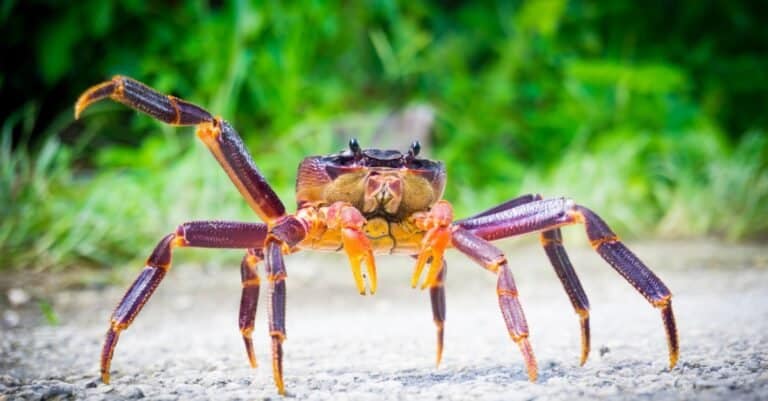
Coconut Crab
Coconut Crab A bucket-list invertebrate for visitors on less-developed islands and motu (where protected). It is among the largest land arthropods on Earth and is culturally significant, but vulnerable to overharvest and habitat disturbance.

Endemic Species

Rarotonga Monarch (Kakerori) A conservation success story and one of the Cook Islands' most famous endemics. Restricted to Rarotonga's remaining native forest and recovery sites; predator control has been crucial to its survival. Endemic
Atiu Swiftlet Endemic to Atiu and notable for roosting in caves-often viewed on guided cave visits. Its tiny range makes it vulnerable to habitat change and introduced predators. Endemic
Mangaia Kingfisher A striking, single-island endemic confined to Mangaia. Sought by birders because of its very limited distribution and the distinctiveness of Cook Islands' island-by-island evolution. Endemic
Cook Islands Fruit Dove A colorful forest pigeon endemic to the Cook Islands (centered in the Southern Group). A key representative of native forest bird communities and an important seed disperser where forests remain. Endemic
Cook Islands Reed Warbler An endemic reed-warbler of the Cook Islands found on a small number of islands. It inhabits dense vegetation and is a localized but regularly encountered landbird where it persists. Endemic
Rarotonga Skink An endemic lizard associated with forest and coastal vegetation on Rarotonga. Represents the limited but distinctive terrestrial reptile fauna of the Cook Islands, which is highly sensitive to invasive predators. Endemic

Notable Populations

  • Seasonal humpback whale breeding/calving aggregation in Cook Islands waters (a major South Pacific whale-watching destination in austral winter).
  • Regionally important seabird breeding on predator-free or low-predator offshore motu (notably colonies of sooty terns, tropicbirds, and frigatebirds).
  • Large, nationally managed ocean estate (Marae Moana) supporting reef-to-pelagic biodiversity-key for maintaining turtle, cetacean, and reef-fish populations in a heavily ocean-dependent country.
Protection

Conservation

Primary Threats

  • Warming oceans drive coral bleaching and reduced reef resilience; ocean acidification threatens coral calcification; stronger cyclones and marine heatwaves damage reefs and coastal infrastructure. Sea-level rise increases coastal erosion and saltwater intrusion on low-lying islands/atolls, affecting freshwater lenses and coastal vegetation important for seabirds.
  • Nearshore lagoon and reef fisheries face localized depletion around populated/tourist hubs (e.g., Rarotonga and lagoon systems such as Aitutaki), including pressure on reef fish and invertebrates. Pelagic fishing pressure in the wider region increases risk to migratory species and can complicate sustainable management across the Cook Islands' large EEZ.
  • Land-based runoff (sediment and nutrients) from roads, construction, and disturbed slopes degrades lagoon water quality and smothers coral and seagrass; inadequate wastewater/septic performance around dense settlements can elevate nutrient loading. Plastic and marine debris arrive via ocean currents and local waste streams, impacting turtles, seabirds, and reef habitats.
  • Introduced rats, cats, and other predators reduce seabird breeding success on islets; invasive weeds alter native coastal forest and seabird nesting habitat. Biosecurity challenges are heightened by inter-island transport and imports, increasing the risk of new invasive pests establishing on outer islands.
  • Coastal development for housing and tourism can remove or fragment dune/coastal vegetation, disturb turtle nesting beaches, and alter natural shoreline dynamics. Land clearing and earthworks increase erosion that directly impacts adjacent fringing reefs and lagoons.
  • Tourism and recreational use (boating, anchoring, snorkeling/diving) can physically damage corals and disturb wildlife if unmanaged; whale-watching pressure can disrupt humpback behavior without strong operating standards and enforcement. Beach use and lighting can affect nesting turtles where present.
  • Shoreline hardening (seawalls, reclamation) and modifications to drainage/streams change sediment delivery and coastal processes, often shifting erosion problems and degrading nearshore habitats. Lagoon circulation can be affected by infrastructure and dredging in sensitive areas.
  • High reliance on reefs and lagoons for food and income can lead to serial depletion of preferred species, especially where customary management is weakened or where market demand rises. Limited freshwater resources on some islands (freshwater lens dependence) are stressed by droughts and increasing demand, indirectly increasing pressure on natural catchments and wetlands.
  • Roading, ports, and coastal protection works can increase sedimentation during construction and alter nearshore habitats. The dispersed geography makes surveillance and compliance costly, limiting the effective reach of conservation rules across remote islands and waters.
Visit

Wildlife Tourism

Wildlife tourism in the Cook Islands is overwhelmingly marine-based, centered on lagoon and reef ecosystems (snorkeling/diving, turtle and ray encounters, reef fish diversity), seabirds on outer islands, and seasonal humpback whale migration. It's a key pillar of the visitor economy alongside culture and beaches: operators, guides, accommodation, inter-island flights, and marine-protection initiatives all benefit from wildlife-focused travel. Nature protection has strengthened over recent decades (community-led marine reserves and responsible whale-watching codes), helping keep nearshore wildlife accessible from shore and by short boat rides. Accessibility is straightforward for most visitors: international flights typically arrive on Rarotonga (the hub), with Aitutaki a common add-on via a short domestic flight; outer islands (e.g., Atiu, Mangaia, Mauke) offer quieter, bird- and cave-oriented nature experiences with fewer services but high authenticity.

Best Time to Visit

Year-round reef and lagoon wildlife; best overall planning depends on whales and seabirds.

- January-March: Peak lagoon clarity and warm water for snorkeling/diving; strong reef fish activity and manta/ray sightings are possible in lagoons; seabird activity continues on outer islands.
- April-June: Excellent shoulder season for underwater visibility and comfortable weather; good time for lagoon cruises, diving, and outer-island nature walks with fewer crowds.
- July-October: Prime humpback whale season (often best August-September). Expect whale-watching by boat and occasional sightings from shore; this is the headline wildlife window.
- November-December: Water warms again; great for snorkeling and lagoon cruising; early-season seabird activity on some islands and continued turtle/ray encounters in lagoons.

What to see when:
- Whales: July-October (best Aug-Sep).
- Lagoon/reef life (turtles, rays, reef fish, corals): All year; often most comfortable/clear in the drier months (roughly May-October) and during calm spells.
- Seabirds & island endemics: Year-round on appropriate islands, with variability by breeding cycles and local conditions.

Top Wildlife Experiences

  • Humpback whale-watching by boat off Rarotonga (July-October), choosing an operator that follows local approach-distance and time-with-whales guidelines.
  • Snorkel a protected lagoon/marine reserve area with a local guide to learn reef etiquette, identify fish, and avoid standing on coral (Rarotonga and Aitutaki both offer easy access).
  • Aitutaki lagoon cruise with snorkel stops on coral bommies: look for giant clams, colorful reef fish, and rays in shallow sand flats between small islets.
  • Lagoon paddleboarding or kayaking at sunrise/sunset for low-impact wildlife viewing-reef fish, rays, and seabirds are often easiest to spot in calm, glassy conditions.
  • A night-time guided walk on Atiu to search for the endemic and vulnerable Atiu swiftlet near its nesting/roosting areas, often combined with cultural storytelling.
  • Explore Atiu's limestone caves and forest with a guide, focusing on native birds, land crabs, and cave ecology (headlamp/caving-style wildlife experience).
  • Scuba dive on Rarotonga's reef slopes and passes to look for larger pelagics when conditions allow (e.g., trevally, eagle rays), plus healthy coral gardens and macro life.
  • Join a responsible turtle and ray snorkeling session in sandy-lagoon habitats (where offered), prioritizing operators that prohibit touching/feeding and keep group sizes small.
  • Seabird-spotting and coastal nature walk on a quieter outer island (e.g., Mauke or Mangaia depending on logistics) to combine cliffs, forest pockets, and birdlife away from the main hubs.
  • Citizen-science style reef outing (when available): participate in a guided reef check/ID session or a community conservation activity supporting lagoon health and marine reserves.

Safari Types Available

  • Boat-based whale-watching tours (seasonal, humpback-focused)
  • Lagoon cruises with guided snorkeling stops (reef and sand-flat wildlife)
  • Guided shore snorkeling and marine reserve interpretation tours
  • Scuba diving (reef walls, bommies, passes; conditions vary by island/season)
  • Kayak/SUP wildlife paddles (low-impact lagoon exploration)
  • Guided birding walks (especially outer islands like Atiu)
  • Cave-and-forest guided nature tours (Atiu and other raised coral islands)
  • Coastal wildlife walks and photo tours (seabirds, intertidal life)
  • Conservation-oriented experiences (reef monitoring, community marine reserve education sessions, when offered)
Fun Facts

Did You Know?

A bird on Atiu navigates like a bat: the Atiu swiftlet (Aerodramus sawtelli) uses echolocation to fly in and out of dark limestone caves-one of only a few bird species known to echolocate.

Whales are protected not just near beaches but across an ocean area bigger than many countries: the Cook Islands legally designated its entire ~1.9 million km² EEZ as a whale sanctuary in 2012.

The country did the same for sharks: in 2012 it declared the entire EEZ a shark sanctuary, banning commercial shark fishing and shark finning across the whole zone.

One of the Cook Islands' most famous land birds nearly vanished: the Rarotonga monarch fell to fewer than ~50 birds in the 1980s, then rebounded through intensive conservation (notably predator control and habitat protection).

You can see breeding humpback whales without going far offshore: the Cook Islands (especially around Rarotonga and Aitutaki) is a South Pacific breeding/calving area in the austral winter (roughly July-October), and whales are often spotted from land during the season.

Marae Moana (created 2017) covers about 1.9 million km²-essentially the Cook Islands' entire exclusive economic zone-and is widely cited as one of the world's largest multi-use marine protected areas.

The Cook Islands Whale Sanctuary (established 2012) spans roughly 1.9 million km² (the whole EEZ), making it one of the largest national whale sanctuaries on Earth.

The Cook Islands Shark Sanctuary (declared 2012) also covers the full ~1.9 million km² EEZ-one of the largest shark sanctuaries in the world when announced.

Aitutaki Lagoon is the largest lagoon in the Cook Islands (about 74 km²), supporting extensive coral-reef and lagoon habitats in a single, easily observed system.

The entire global wild population of the Rarotonga monarch (Pomarea dimidiata) occurs on one small island (Rarotonga), making it a "single-island endemic" bird with one of the most geographically restricted ranges of any Pacific passerine.

Thank you for reading! Have some feedback for us?