N S W E
Wildlife Expeditions

Wildlife of
Kiribati

Kiribati is notable for vast, largely undeveloped coral atolls where crystal lagoons and remote reefs host vibrant tropical marine life, while huge seabird colonies crowd predator-free islets in one of the Pacific's most far-flung wildlife frontiers.
18 Species
811 km² Land Area
Overview

About Kiribati

Kiribati's wildlife story is written more in saltwater and sky than on land: low, coral-built atolls support limited terrestrial fauna, but they sit atop an expansive ocean realm of reefs, channels, and lagoon systems teeming with tropical fish, reef sharks, turtles, rays, and invertebrate diversity. Because many islands are sparsely populated and far from major markets, visitors can still encounter reefscapes that feel wild and lightly touched-snorkeling and diving often revolve around big schools of fish, healthy coral communities, and the simple thrill of exploring an atoll lagoon with few other boats around.

Ecologically, the country's defining habitats are its barrier and fringing reefs, broad lagoons, and the seabird-nesting islets that ring many atolls. These systems are tightly linked: seabirds feed at sea and return nutrients to land, enriching coastal vegetation and nearshore waters; turtles depend on quiet beaches and healthy reef feeding grounds; and reef fish rely on complex coral structures and nursery habitats within lagoons. Kiribati is also globally important for conserving wide-ranging pelagic species-tuna and other open-ocean fish underpin both biodiversity and livelihoods-making the health of its ocean waters a conservation priority with international relevance.

What makes the wildlife experience unique here is the scale and remoteness: an entire nation scattered across the central Pacific, spanning the equator and the International Date Line, where conservation challenges and solutions play out on low-lying islands at the front line of climate change. For wildlife enthusiasts, Kiribati offers a rare chance to combine classic reef encounters (turtles, sharks, dazzling reef fish) with authentic seabird spectacle on isolated islets, all within a cultural landscape deeply tied to the sea and to stewardship of lagoon and reef resources.

Physical Features

Geography

Kiribati's wildlife is shaped far more by ocean and coastline than by land. The country consists of low-lying coral atolls and reef islands with very limited elevation, no mountains, and few freshwater sources (freshwater is mainly a thin underground lens). Terrestrial habitats are narrow coastal strands, scrub/woodland (often coconut and pandanus), and small wetlands or mangroves where present-supporting relatively few native land vertebrates but important nesting and roosting sites for seabirds. In contrast, the vast surrounding marine area, lagoons, reef flats, and outer reef slopes underpin high biodiversity and fisheries productivity, concentrating wildlife around coral reefs, seagrass/algal beds, and productive upwelling/open-ocean waters along migration routes.

811 km² Land Area
One of the world's smallest countries by land area (≈186th globally); about the size of New York City or Singapore Size Rank

Key Landscapes

  • Low-lying coral atolls and reef islands (33 island units across Gilbert, Phoenix, and Line groups)
  • Shallow lagoons enclosed by atoll rims (critical nursery and feeding habitat for fish, sharks, rays, turtles)
  • Fringing reefs, reef flats, and outer reef slopes (primary biodiversity centers)
  • Narrow coastal strand vegetation and dune/beach systems (seabird nesting, turtle nesting beaches)
  • Brackish ponds/saltwater lagoons and small wetlands (localized habitat for shorebirds and waterbirds)
  • Sparse mangroves in sheltered areas on some islands (coastal nursery habitat, shoreline stabilization)
  • Freshwater lens aquifers (controls where terrestrial vegetation and human settlement can persist)
  • Highly exposed oceanic waters between island groups (important for pelagic species and migratory corridors)

Ecoregions

  • Micronesia tropical moist forests (terrestrial; often applied to the Gilbert Islands' native vegetation on coral substrates)
  • Central Polynesian tropical moist forests (terrestrial; often applied to the Line and Phoenix Islands' native vegetation on coral substrates)
  • Central Indo-Pacific / Central Pacific coral reefs (marine ecoregion concept; atoll reefs, lagoons, and outer slopes supporting reef biodiversity)
Parks & Reserves

Protected Areas

Kiribati's protected-area system is dominated by large-scale marine conservation, reflecting the country's extremely low-lying atolls and globally important reef-lagoon ecosystems. Formal protection is delivered through nationally declared protected areas (notably the Phoenix Islands Protected Area) and smaller island/islet sanctuaries and no-take/limited-take areas, often supported by community-based management in the inhabited Gilbert Islands. Conservation priorities emphasize intact coral reefs, oceanic pelagic systems, turtle nesting beaches, and dense seabird breeding colonies on uninhabited atolls and islets.

Protected Coverage

Land under formal protection is small-approximately ~4-8% of Kiribati's total land area (most protected land is on remote, uninhabited atolls/islets). By contrast, marine protection is very significant: the Phoenix Islands Protected Area alone covers ~408,000 km², making protected waters a substantial share of Kiribati's EEZ (exact national % varies by definition and zoning).

Notable Parks & Reserves

Phoenix Islands Protected Area (PIPA)

National protected area (large marine protected area); UNESCO World Heritage Site (Natural)

One of the largest and most intact oceanic coral reef wilderness areas on Earth, protecting remote atolls, reefs, and deep-water habitats with exceptional seabird colonies and predator-rich reef ecosystems. It is globally notable for near-pristine reef food webs and large-scale conservation of central Pacific biodiversity.

Green sea turtle
Hawksbill turtle
Reef sharks (e.g., grey reef shark)
Manta rays
Red-footed booby
Sooty tern
Giant trevally
Giant trevally

Kiritimati (Christmas Island) lagoon and islet bird sanctuaries (Kiritimati Atoll)

Wildlife sanctuary / protected islets (national designation in parts); Important Bird Area (international conservation recognition)

Kiritimati supports vast lagoon flats, reef passages, and seabird-nesting islets that are among the most important wildlife areas in the Line Islands. It is especially notable for seabird breeding concentrations and as habitat for migratory shorebirds using central Pacific flyways.

Great frigatebird
Red-tailed tropicbird
Sooty tern
Brown noddy
Bristle-thighed curlew
Green sea turtle
Spinner dolphin

Caroline Island (Millennium Island) Wildlife Sanctuary

Wildlife sanctuary / conservation area (national)

A largely uninhabited atoll with native coastal vegetation, major seabird breeding sites, and important nesting/foraging habitat for sea turtles. Its isolation helps maintain relatively undisturbed island and lagoon ecosystems.
Green sea turtle
Hawksbill turtle
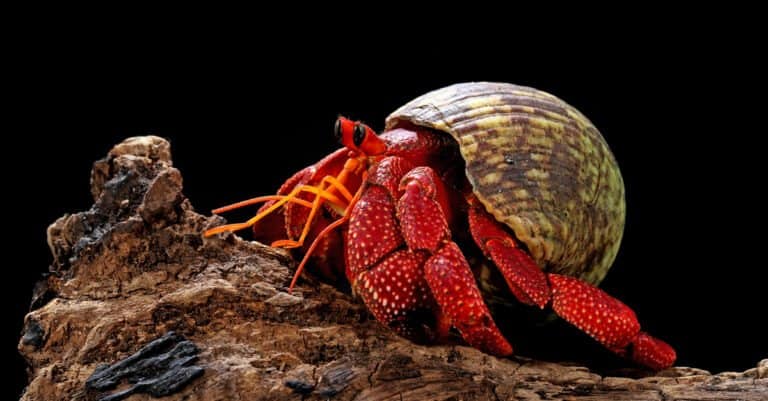
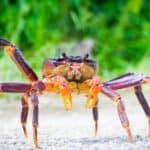
Coconut crab
Coconut crab
Red-footed booby
Great frigatebird
White tern
Sooty tern

Vostok Island Nature Reserve (Vostok Island)

Nature reserve / wildlife sanctuary (national)

A small, exceptionally intact island dominated by dense Pisonia forest that supports abundant nesting seabirds. It is notable as a reference site for minimally disturbed tropical seabird-island ecology.

Red-footed booby
Brown noddy
White tern
Great frigatebird
Coconut crab
Coconut crab
Reef sharks (nearshore)

Starbuck Island Seabird Sanctuary (Starbuck Island)

Seabird sanctuary / wildlife sanctuary (national); Important Bird Area (international conservation recognition)

An uninhabited coral island recognized for very large seabird breeding assemblages typical of remote central Pacific islands. Its beaches and nearshore waters also support marine megafauna movements and occasional turtle nesting.

Sooty tern
Brown noddy
Red-tailed tropicbird
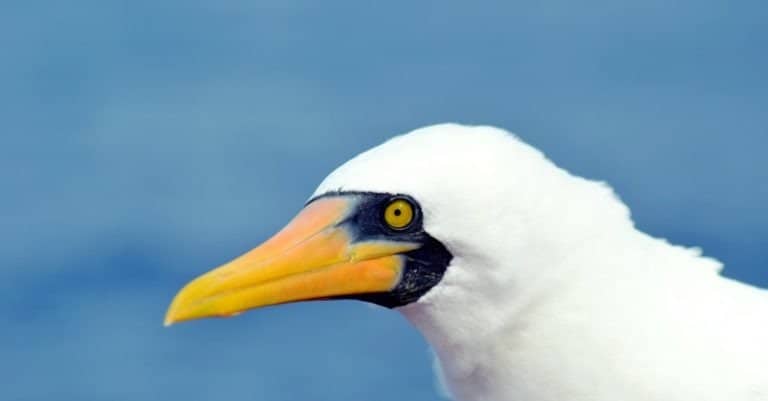
Masked booby
Green sea turtle
Reef sharks (nearshore)

Malden Island Wildlife Sanctuary (Malden Island)

Wildlife sanctuary / conservation area (national); Important Bird Area (international conservation recognition)

A remote island with important seabird colonies and productive surrounding reefs that contribute to regional biodiversity connectivity across the Line Islands. Its isolation and limited human presence make it valuable for conservation and monitoring.

Red-footed booby
Masked booby
Sooty tern
Brown noddy
Green sea turtle
Giant trevally
Giant trevally

UNESCO World Heritage Sites

  • Phoenix Islands Protected Area (PIPA)
Animals

Wildlife

Kiribati's wildlife experience is defined far more by ocean and sky than by land mammals: low-lying coral atolls and reef islands support vast tropical seabird colonies, important sea turtle nesting beaches, and exceptionally diverse coral-reef and pelagic ecosystems. Terrestrial fauna is naturally limited (few native land vertebrates), but the surrounding lagoons, outer reefs, and the remote Phoenix Islands Protected Area (PIPA) make Kiribati globally notable for intact central-Pacific marine biodiversity and seabird breeding habitat.

≈25-35 (overwhelmingly cetaceans-dolphins and whales-plus a few introduced land mammals; very few/none native terrestrial mammals on most atolls) Mammals
≈100-130 recorded (a core of breeding seabirds plus many migrant/visitor shorebirds and seabirds; diversity varies strongly by island group) Birds
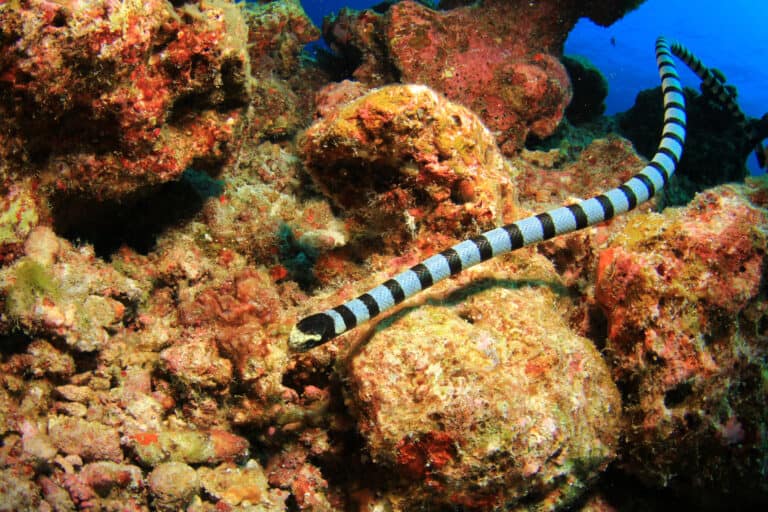
≈15-25 (sea turtles, sea snakes in surrounding waters, and a small set of widespread Pacific geckos/skinks) Reptiles
0 native (amphibians are generally absent from remote coral atolls; any records are typically human-introduced and localized) Amphibians

Iconic Species

Green Sea Turtle A flagship species across Kiribati's atolls, with nesting and foraging in lagoons and reef flats; remote islands in the Phoenix and Line groups are especially important for undisturbed beaches and feeding areas.
Hawksbill Turtle Associated with healthy coral reefs; encountered around outer reef slopes and reef crests where sponges and reef invertebrates are abundant, making it a key 'reef health' icon for divers.
Great Frigatebird One of the most conspicuous seabirds over lagoons and colonies; visitors often see them soaring over nesting islands and kleptoparasitizing other seabirds in major breeding areas.
Red-footed Booby A classic tropical seabird of remote atolls; large breeding groups occur where predator-free islets and intact coastal vegetation remain, especially within protected/isolated colonies.
Sooty Tern Forms extremely dense breeding colonies on suitable sandy or coral rubble islets; their mass 'bird city' colonies are among the most memorable wildlife spectacles on remote Kiribati atolls.
Black Noddy Common around lagoons and nesting trees/bushes on seabird islets; often seen commuting in flocks between offshore feeding grounds and colony sites.
Spinner Dolphin Frequently encountered in tropical central-Pacific waters; can be seen traveling and feeding near reef drop-offs and channels, and is a signature marine-mammal sighting for boat trips.
Blacktip Reef Shark
Blacktip Reef Shark A defining reef predator of shallow lagoons and reef flats; commonly observed by snorkelers along reef edges and sandy channels, particularly in clearer-water atolls.
Reef Manta Ray Where present, mantas are a high-value dive/snorkel target around cleaning stations and plankton-rich passes; sightings depend strongly on local currents, productivity, and reef structure.

Endemic Species

Kiritimati Reed-warbler Kiribati's best-known land-bird endemic, restricted to Kiritimati (Christmas Island) in the Line Islands; found in scrub and vegetated areas and represents the islands' uniquely localized terrestrial evolution. Endemic

Notable Populations

  • Phoenix Islands Protected Area (PIPA) is one of the world's largest marine protected areas and safeguards a major expanse of relatively intact central-Pacific coral reef and pelagic habitat.
  • Kiribati's remote atolls (especially in the Phoenix and Line Islands) support globally significant tropical seabird breeding colonies-often numbering in the hundreds of thousands to millions across species such as terns, noddies, boobies, and frigatebirds.
  • Remote, less-disturbed beaches and reef systems across the archipelago provide regionally important nesting and foraging habitat for sea turtles (notably Green and Hawksbill turtles).
Protection

Conservation

Primary Threats

  • Kiribati is among the world's most climate-exposed nations: sea-level rise drives shoreline erosion, inundation and saltwater intrusion into fragile freshwater lenses on atolls; marine heatwaves cause coral bleaching and reef degradation; and ocean acidification reduces coral growth. These impacts undermine natural coastal protection, fisheries productivity, and seabird nesting habitat, and increase reliance on hard coastal defenses that can further stress reef-lagoon systems.
  • Pollution is concentrated on densely populated atolls (notably South Tarawa), where limited land and infrastructure lead to solid-waste accumulation, plastic leakage to lagoons and reefs, and sewage/greywater contamination that contributes to eutrophication and reef stress. Leaking septic systems and shoreline dumping can degrade nearshore habitats used for subsistence fishing and reduce water quality in enclosed lagoons.
  • Nearshore and lagoon fisheries face pressure from population density and market demand (reef fish, invertebrates such as sea cucumbers), while large-scale industrial tuna fishing in the EEZ creates management and monitoring demands. Kiribati relies heavily on fisheries for food security and revenue, so balancing access, licensing, and sustainability-especially for highly migratory tuna influenced by climate-driven shifts-is a persistent challenge.
  • High dependence on local natural resources can deplete key stocks and ecosystem functions on small atolls: harvest of reef fish and invertebrates, occasional overextraction of aggregate/sand for construction, and pressure on limited freshwater lenses. Depletion is amplified on urbanized atolls where alternatives are scarce and imports are expensive.
  • Invasive rats, cats, ants, and some invasive plants can severely reduce seabird breeding success and alter native vegetation on small, predator-naïve islands. Invasives are a particular risk for remote bird islands and protected areas where a single introduction can rapidly collapse nesting colonies; prevention and biosecurity are logistically difficult across many scattered atolls.
  • Land area is extremely limited and coastal ecosystems are easily displaced. Shoreline erosion and inundation remove beach and strand habitat used by seabirds and turtles; land reclamation and dredging for causeways/borrow pits can damage lagoon edges and seagrass/algal habitats; and settlement expansion compresses remaining natural areas, especially on South Tarawa.
  • Coastal protection works, causeways, ports, and land reclamation are often necessary for safety and connectivity but can interrupt water flow in lagoons, increase sedimentation, and damage coral and seagrass habitats. Dispersed islands make environmentally sensitive design and monitoring hard to standardize and enforce.
  • Seabird colonies and turtle nesting areas can be disturbed by settlement expansion, egg collecting, light pollution in inhabited areas, and frequent human presence on small islets. Recreational and small-scale tourism is limited compared with other Pacific states, but disturbance around urban centers and accessible islets can still be significant.
  • To cope with erosion and flooding, communities may modify shorelines (seawalls, infilling, reef flat extraction) and alter lagoon hydrodynamics (causeways). These actions can reduce natural coastal resilience, exacerbate erosion elsewhere, and degrade reef-lagoon habitats that support fisheries.
  • Urban growth is concentrated in South Tarawa, creating intense localized pressure: loss of coastal vegetation, habitat fragmentation, increased waste and wastewater loads, and higher demand for reef resources. The extreme crowding on a narrow atoll intensifies human-environment conflicts even when national population is modest.
Visit

Wildlife Tourism

Kiribati's wildlife tourism is overwhelmingly ocean-based: coral reefs, lagoons, pelagic waters, and globally important seabird colonies are the main draw rather than large land animals. Economically, tourism is small compared with fisheries and remittances, but it's meaningful for local guesthouses, guides, boat operators, and craft/food vendors-especially on Kiritimati (Christmas Island) and parts of the Gilbert Islands. Wildlife travel here has roots in sportfishing and remote-island exploration, and is increasingly tied to reef/snorkel tourism and birdwatching. Accessibility is the biggest constraint and part of the adventure: inter-island distances are vast, schedules can be limited, and conditions are simple. Most visitors route via Tarawa (South Tarawa is the main gateway) or fly directly to Kiritimati on select routes; once in-country, expect small-plane hops, boats, and careful planning around tides, weather, and local transport. The payoff is uncrowded reefs, huge lagoon systems, and seabird sites in a true "edge of the map" destination.

Best Time to Visit
  • Wildlife viewing is possible year-round, but plan around the drier trade-wind season and the best sea conditions.
  • May-October (generally drier, steadier weather; best overall for comfort and visibility): - Snorkeling/reef viewing: typically clearer water and calmer planning windows. - Seabird watching: strong all-round period for colony activity on suitable islets. - Lagoon/kayak days: more reliable conditions for long days on the water.
  • November-April (wetter, more variable squalls; still rewarding if flexible): - Big-water and pelagic encounters: opportunities can be excellent between weather systems. - Turtle seasonality varies by island; you may see nesting/nearshore turtles depending on local beaches and protections. - Birding: many seabirds remain present; some sites can be wind- and rain-exposed.
  • Equatorial timing notes (Kiribati spans the equator and the Date Line): - Conditions differ between island groups (Gilberts/Line/Phoenix). If you're splitting regions, build buffer days and treat "best months" as guidance rather than a guarantee. What to see when (practical highlights):
  • May-October: best combination of comfortable travel + reef fish diversity + seabird colony visits.
  • December-March: warmer water and intermittent calm windows; plan short-notice boat days for dolphins, tuna-feeding action, and pelagic sightings when seas allow.

Top Wildlife Experiences

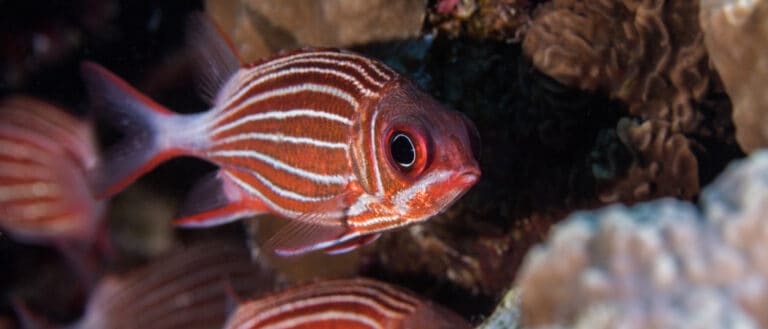
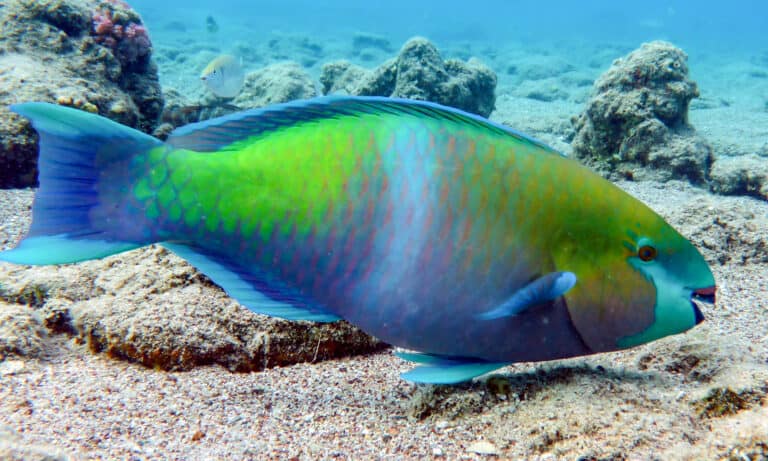
  • Snorkel a shallow lagoon coral garden at high tide with a local guide, focusing on reef fish identification (butterflyfish, parrotfish, surgeonfish) and coral-safe techniques.
  • Take a small-boat trip to outer-reef channels and drift-snorkel where currents concentrate fish-watch for schools, reef sharks at a distance, and cleaner-station behavior.
  • Join a dedicated seabird outing to a protected islet/colony area (where access is allowed), using binoculars to spot frigatebirds, boobies, terns, and noddies; time it for early morning when activity is highest.
  • Do a sunset shoreline walk to look for turtle tracks and nesting signs on suitable beaches (only with local guidance and where permitted); learn how local communities manage nesting areas.
  • Kayak or paddleboard across a calm lagoon section at slack tide for close-up views of rays, juvenile fish nurseries, and coral bommies (best in low-wind windows).
  • Book a dawn "reef flat exploration" (tide-dependent) to observe tidal-pool life-sea cucumbers, small crabs, and juvenile fish-while learning local reef etiquette and no-take rules.
  • Take a responsible dolphin-watching trip (no chasing, keep distance) in areas where pods are known to transit; combine with a snorkel stop if conditions permit.
  • Plan a catch-and-release fly-fishing day on Kiritimati's flats (world-famous), targeting bonefish and trevally with experienced local guides and strict fish-handling best practices.
  • Join a night snorkel in a sheltered lagoon zone (only with a competent guide and safety gear) to see different reef behavior: sleeping parrotfish, hunting jacks, and nocturnal invertebrates.
  • Add a community-led "marine conservation day" (where available): reef clean-up, coral/lagoon monitoring, or a talk with local stewards about climate impacts on atolls and reefs.

Safari Types Available

  • Boat safaris (lagoon cruises, outer-reef runs, dolphin/wildlife watching)
  • Snorkel safaris (guided reef and lagoon snorkeling, drift snorkeling in channels)
  • Dive trips (where operators exist; reef and wall dives, current-dependent)
  • Birding excursions (seabird colony/islet visits, coastal bird walks)
  • Kayak/stand-up paddle wildlife tours (lagoon-focused, tide and wind dependent)
  • Shore-based wildlife walks (turtle track walks, reef-flat/tidepool exploration)
  • Sportfishing/fly-fishing safaris (notably flats fishing on Kiritimati; best as guided, catch-and-release)
  • Conservation/learning experiences (community-led stewardship, reef etiquette briefings, monitoring/cleanup activities)
Fun Facts

Did You Know?

Kiribati is the only country that lies in all four hemispheres at once (north/south because it straddles the equator, and east/west because it spans across the 180th meridian).

In 1995, Kiribati shifted the International Date Line eastward to keep the whole country on the same calendar-this made Caroline Island (Millennium Island) one of the first places on Earth to see the sunrise of the year 2000.

Kiribati has just one truly endemic land bird: the Kiritimati warbler (also called the Christmas Island warbler), found only on Kiritimati-an unusually small endemic set for a whole sovereign nation.

Kiritimati and other Kiribati islands are key "rest stops" for migratory shorebirds that commute across the Pacific (species like Pacific golden plover and Bristle-thighed curlew), meaning birds you see there may have flown thousands of kilometers nonstop between continents.

Phoenix Islands Protected Area (PIPA) is one of the world's largest marine protected areas-about 408,250 km² of ocean, reefs, and seamounts-and was inscribed as the largest UNESCO-listed marine World Heritage site at the time (2010).

Kiritimati (Christmas Island) is the world's largest coral atoll by land area (about 388 km²), creating an outsized amount of reef-flat, lagoon, and shoreline habitat for seabirds, turtles, and reef fish.

Kiritimati is home to one of the world's largest seabird concentrations-surveys have reported colonies on the order of a million+ sooty terns, plus large numbers of boobies and frigatebirds.

Kiribati controls one of the planet's largest Exclusive Economic Zones (around 3.5 million km²), meaning its marine wildlife habitat is ocean-dominated on a scale that puts it among the big ocean states despite having very little land.

Thank you for reading! Have some feedback for us?