

©Songquan Deng/Shutterstock.com
One of the most important rivers in the history of the United States, the Hudson River in New York has since been a source of many industrial, recreational, and commercial purposes that made life easy for millions of locals living around its area. The river is 315 miles (507 kilometers) long, flowing through two U.S. states, New York and New Jersey. Its average depth is 30 feet, while the deepest is estimated to be 202 feet.
Aside from that, the Hudson River is also called “a river that flows two ways” as it is a tidal river from an estuary that brings ocean water up the basin and a freshwater river that flows from the mountains to the ocean. This means there are two high tides and two low tides each day.
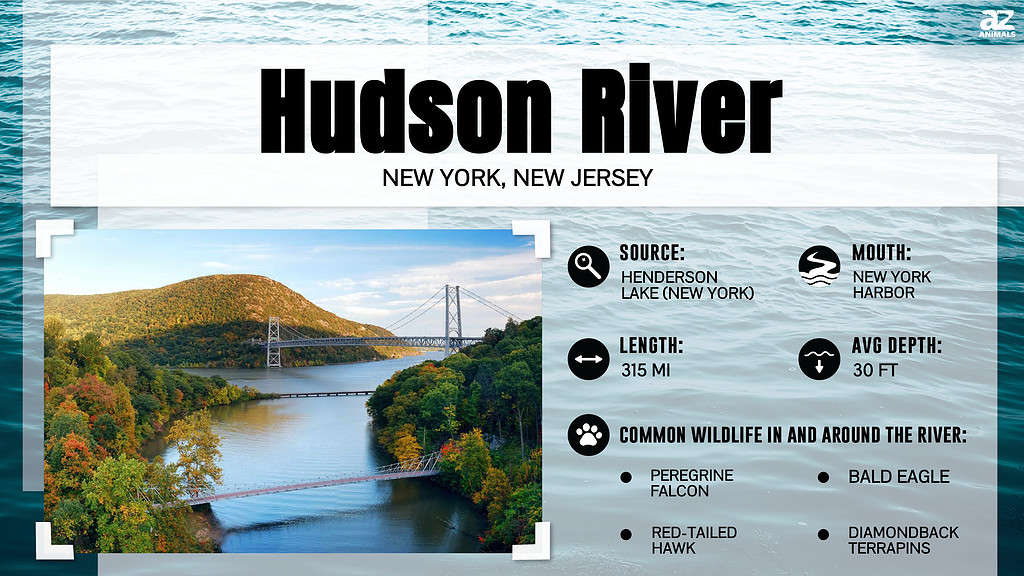
When it comes to wildlife, the river is also well-known for it. The Hudson River provides a habitat for 54 mammals, 199 species of birds, 28 species of amphibians, and 27 species of reptiles. It also hosts a home for 140 rare plant species, one of which is called the Hudson River water nymph, which doesn’t grow anywhere else in the world but the river only.
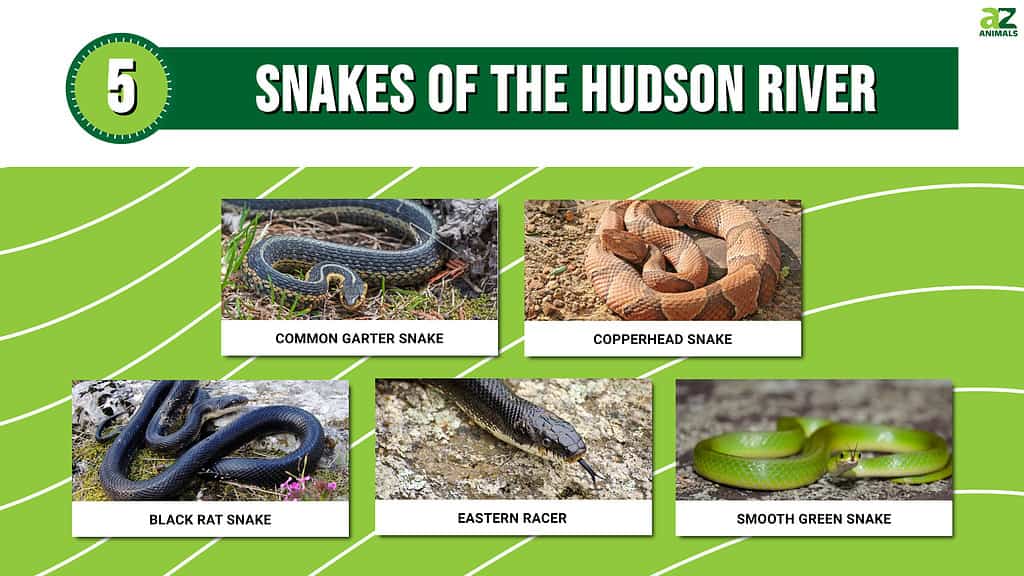
Speaking of reptiles, snakes are also one of the things that you should watch out for when visiting the Hudson River. Today, we’ll meet five snakes that thrive within the river’s premises and learn more about their diet, habitat, traits, and unique characteristics.
1. Common Garter Snake
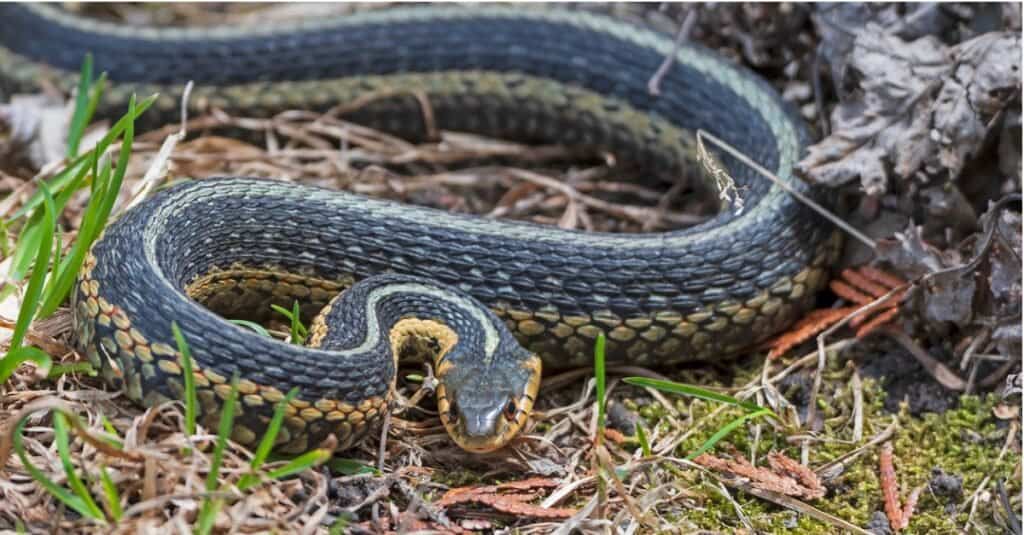
Common garter snakes are harmless, nonvenomous snakes that are helpful to humans.
©iStock.com/Wildnerdpix
| Common Garter Snake | |
|---|---|
| Scientific name | Thamnophis sirtalis |
| Length | Up to 4.5 feet |
| Diet | Earthworms, Snails, Leeches, Slugs, Grasshoppers |
Common garter snakes are harmless, nonvenomous snakes that are helpful to humans. They help gardeners steer clear of pests in their plants and crops as they eat earthworms, snails, leeches, slugs, grasshoppers, and other insects that might be considered pests. Adult garter snakes may also eat mice or critters such as frogs, salamanders, and toads.
Garter snakes are the most widespread snake species in North America and are primarily found in marshes, meadows, hillsides, and woodlands but are sometimes spotted near or around the Hudson River. They usually have a darker body with various colors and patterns. They are generally small but can grow up to 4.5 to 5 feet.
Garter snakes are nonvenomous, meaning that they do not bite instantly. However, they can still bite you if provoked or handled. These snakes are generally shy and will simply crawl away if they see a potential threat. Unfortunately, they are killed because they are sometimes misidentified as venomous snakes.
2. Copperhead Snake
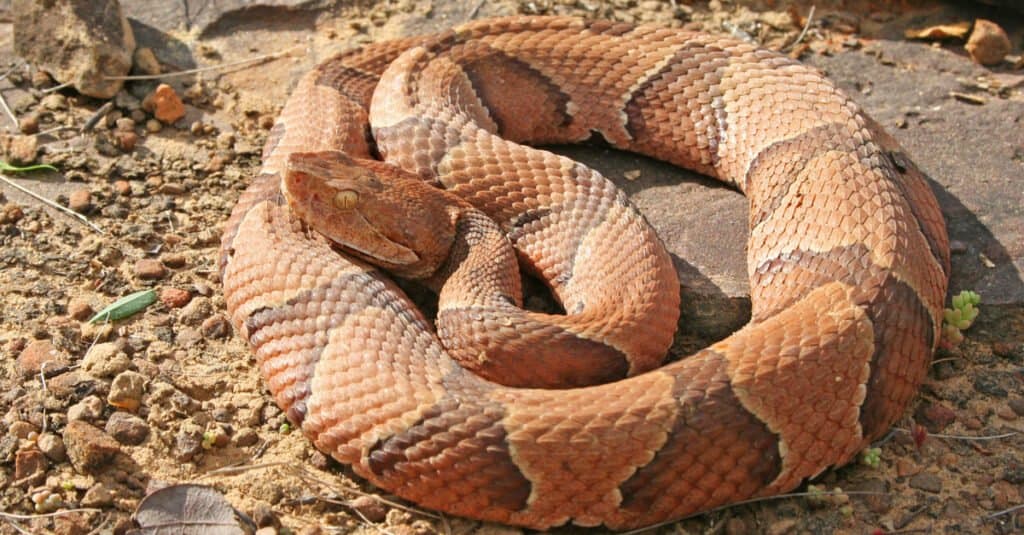
Copperhead snakes can be found in forested hillsides or wetlands.
©Creeping Things/Shutterstock.com
| Copperhead Snake | |
|---|---|
| Scientific name | Agkistrodon contortrix |
| Length | Up to 3 feet |
| Diet | Rabbits, Mice, Rats, Birds, Lizards |
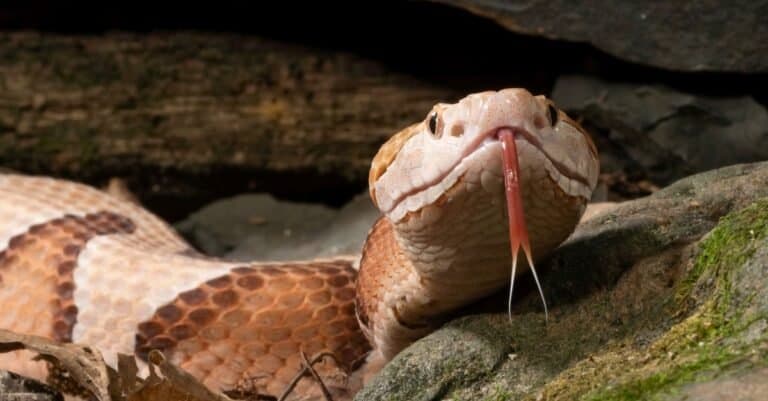
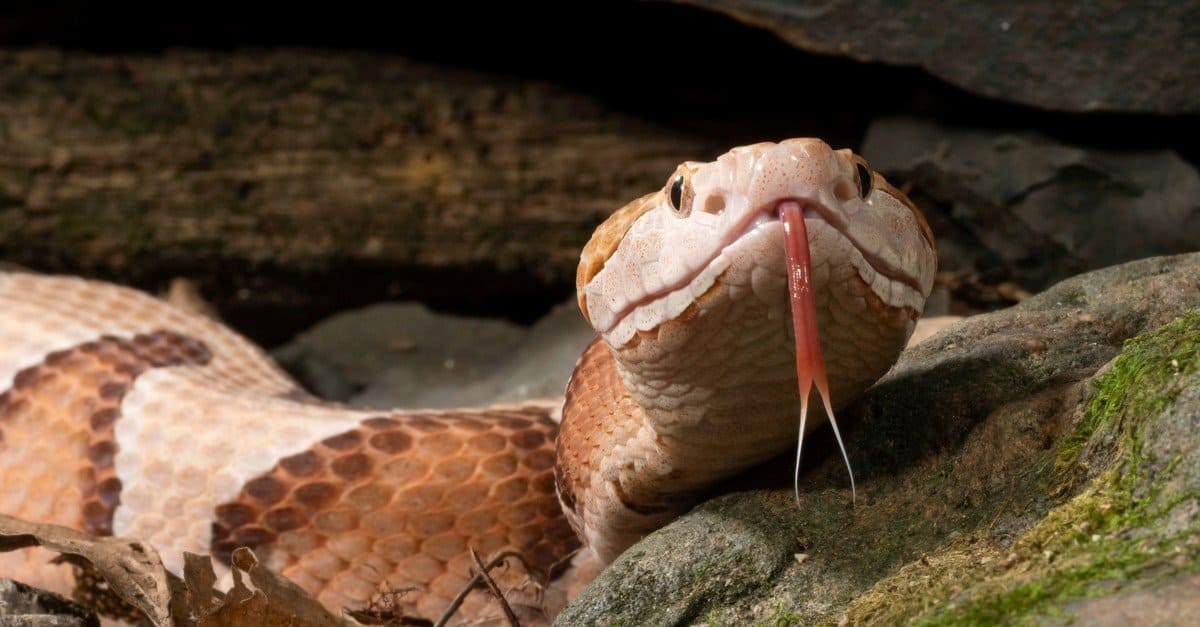
Copperhead snakes are also found everywhere in the state and the whole country. They got their name “copperhead” as they have bronze-colored heads and bodies ranging from tan, copper, or gray with hourglass-shaped stripes on their back.
These venomous snakes live in a wide range of habitats. They can be terrestrial or semiaquatic based on their preferences. They can be found in forested hillsides or wetlands and can also occupy rotting wood or sawdust piles, construction sites, and suburban areas. They typically feed on rabbits, mice, rats, birds, lizards, frogs, toads, grasshoppers, cicadas, and even baby cottontails. Although venomous, they aren’t among the most potent, meaning their bites are rarely fatal. However, the elderly, children, and people with low immune systems risk a deadly outcome from a copperhead’s bite.
3. Black Rat Snake
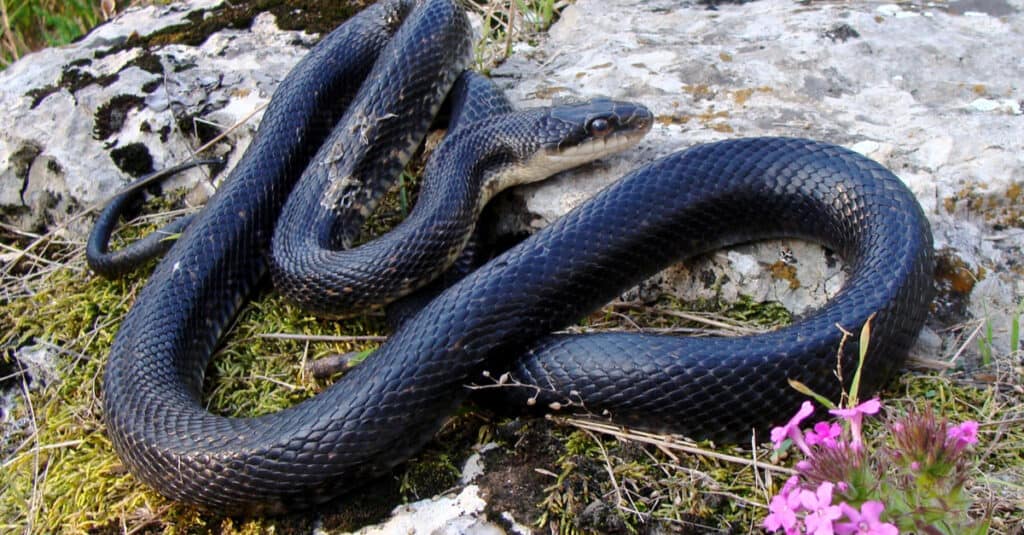
Black rat snakes mainly eat small rodents such as mice, moles, chipmunks, and rats.
©Matt Jeppson/Shutterstock.com
| Black Rat Snake | |
|---|---|
| Scientific name | Pantherophis obsoletus |
| Length | Up to 8 feet |
| Diet | Moles, Chipmunks, Bird eggs, Frogs |
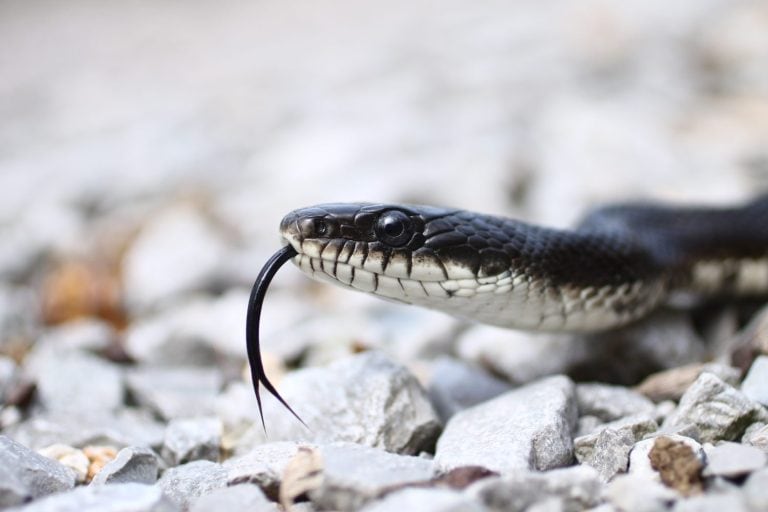
Black rat snakes are among the most commonly seen snakes in suburban areas around the Hudson River. Just like the copperhead, they can also live in a wide range of habitats, such as rocky hills, forests, and flat farmlands, and they are also able to survive in places situated within high elevations. As their name suggests, their bodies are primarily black with black and white checkered or cream-colored bellies. These snakes are also excellent climbers and can hunt and chase prey.
Black rat snakes are nonvenomous, and they kill their prey by constriction. They mainly eat small rodents such as mice, moles, chipmunks, and rats. They also eat frogs, bird eggs, and even small lizards. Despite their fearful appearance and black color, they are surprisingly shy and docile snakes, making them suitable pets for exotic pet keepers.
4. Eastern Racer
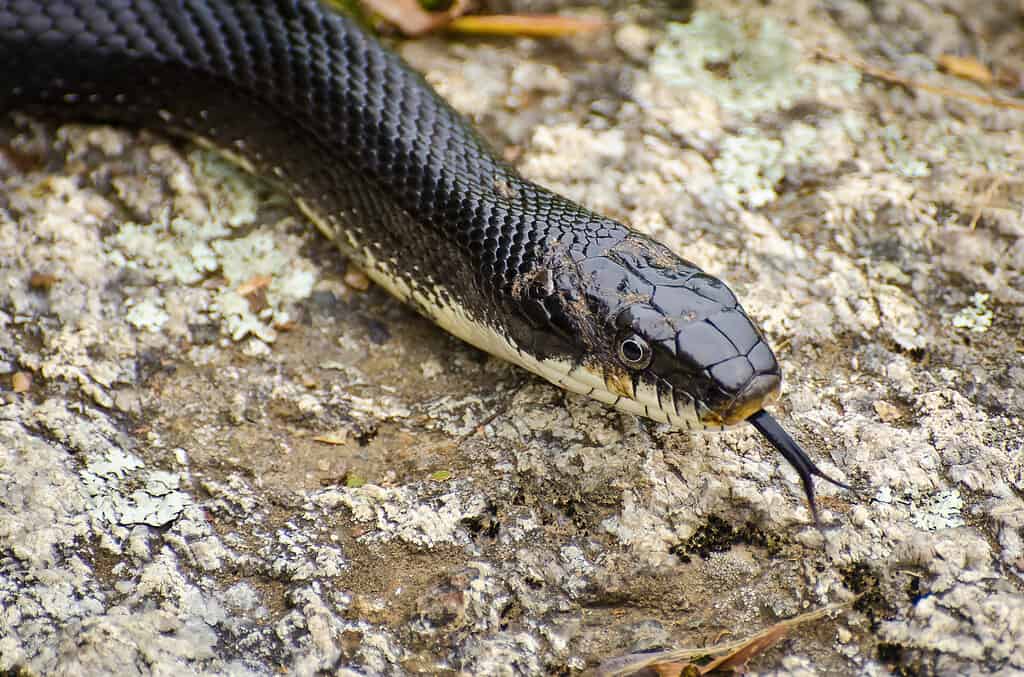
Eastern racers are harmless and nonvenomous snakes that are incredibly fast.
©iStock.com/RCKeller
| Eastern Racer | |
|---|---|
| Scientific name | Coluber constrictor |
| Length | Up to 5 feet |
| Diet | Toads, Crickets, Eggs, Young birds, Small rodents |
Eastern racers are harmless and nonvenomous snakes that are incredibly fast, at top speeds of 8 to 10 miles per hour. They have black bodies and white scales on the chin and throat, with blackish or grayish bellies. Young eastern racers have strong, broad brown patterns, which usually fade through aging. These fast-moving snakes can be found in grasslands, wetlands, marshes, deserts, forests, swamps, and even rocky areas.
These nonvenomous snakes usually feed on toads, crickets, eggs, young birds, and small rodents such as rats and mice. They are highly active snakes, typically burrowed into the ground, and excellent tree climbers. They are shy and docile snakes but will aggressively vibrate their tails like rattlesnakes and will bite if confronted by a potential threat.
5. Smooth Green Snake
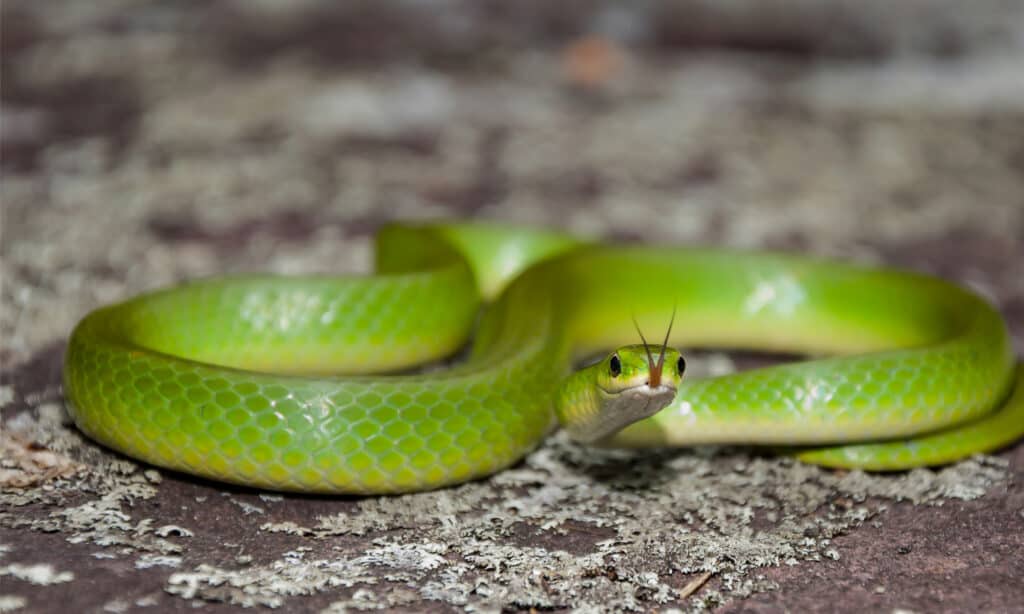
Smooth green snakes are found near moist habitats or areas near permanent water sources.
©iStock.com/JasonOndreicka
| Smooth Green Snake | |
|---|---|
| Scientific name | Opheodrys vernalis |
| Length | Up to 1.5 feet |
| Diet | Spiders, Caterpillars, Moths, Ants, Worms |
As their name suggests, smooth green snakes indeed have smooth scales and green bodies with yellowish or white bellies. They are found near moist habitats or areas near permanent water sources to stay in green spaces for camouflage, which is their tactic in hunting prey. They can thrive near lakes, rivers, forests, grasslands, wetlands, and sometimes even rocky areas.
Like most snakes, smooth green snakes are solitary animals. They are active day and night and hibernate during the winter when the weather is cold. They also look for areas in the environment that can match their green scales for them to camouflage and hide from potential predators such as hawks, crows, raccoons, or foxes. These small snakes feed on spiders, caterpillars, moths, ants, and worms.
Summary Of The 5 Snakes Of The Hudson River
| Rank | Snake | Venomous? |
|---|---|---|
| 1 | Common Garter Snake | No |
| 2 | Copperhead | Yes |
| 3 | Black Rat Snake | No |
| 4 | Eastern Racer | No |
| 5 | Smooth Green Snake | No |
Other Animals Found Near The Hudson River
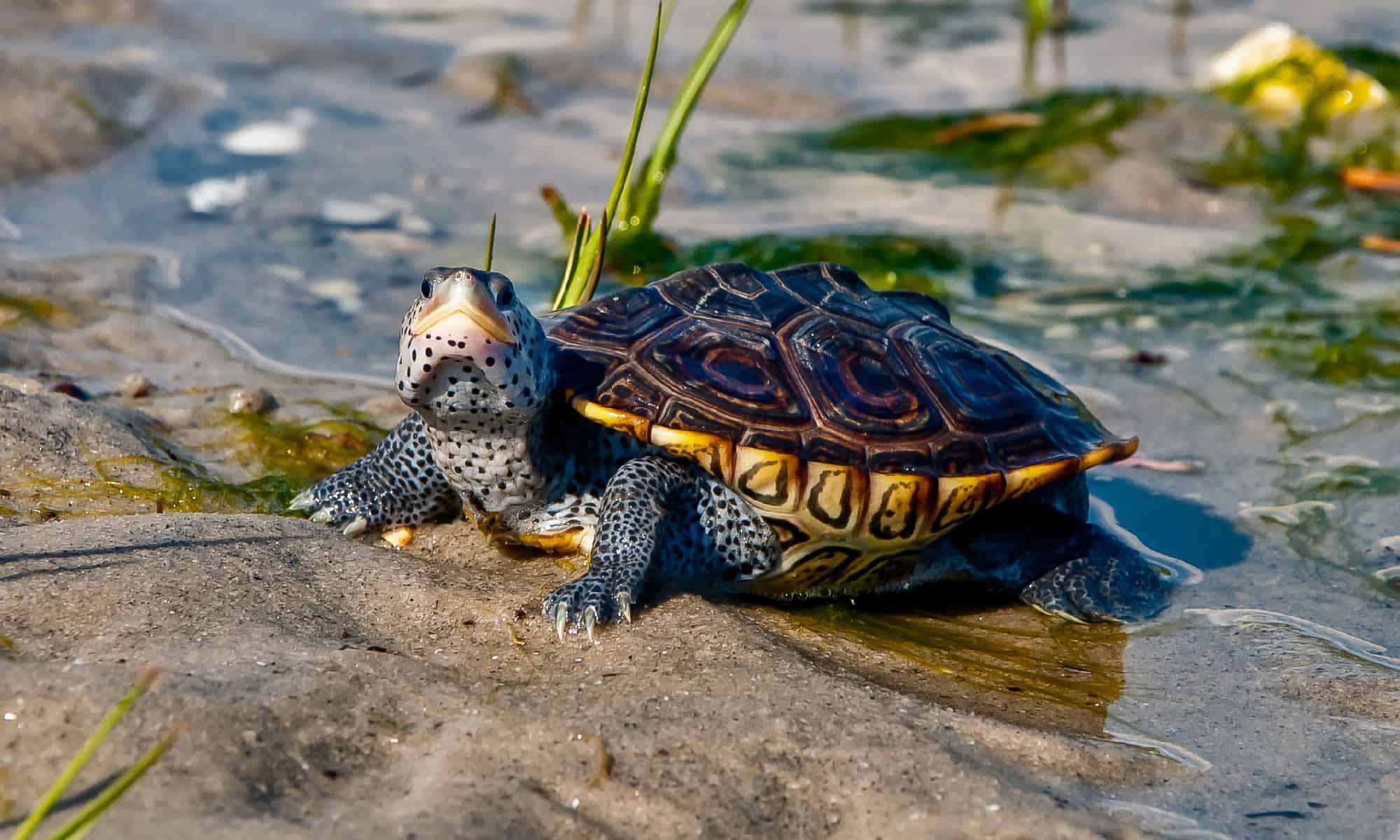
The diamondback terrapin is currently listed as vulnerable.
©iStock.com/JasonOndreicka
One of the unique animals found along the Hudson River is the diamondback terrapin. Native to brackish, coastal tidal marshes, shallow bays, and lagoons found along the Northeast, as well as the Southern United States and Bermuda, this is the only species of turtle that lives permanently in brackish water. Named for the diamond-shaped patterns on the top of its shell, this reptile spends most of its time in the water but comes ashore to lay eggs, and like many others of its species, the sex is determined by temperature. The higher the temperature is, the result will be a female and these are also the larger of the two sexes, reaching more than nine inches, compared to males who reach five inches.
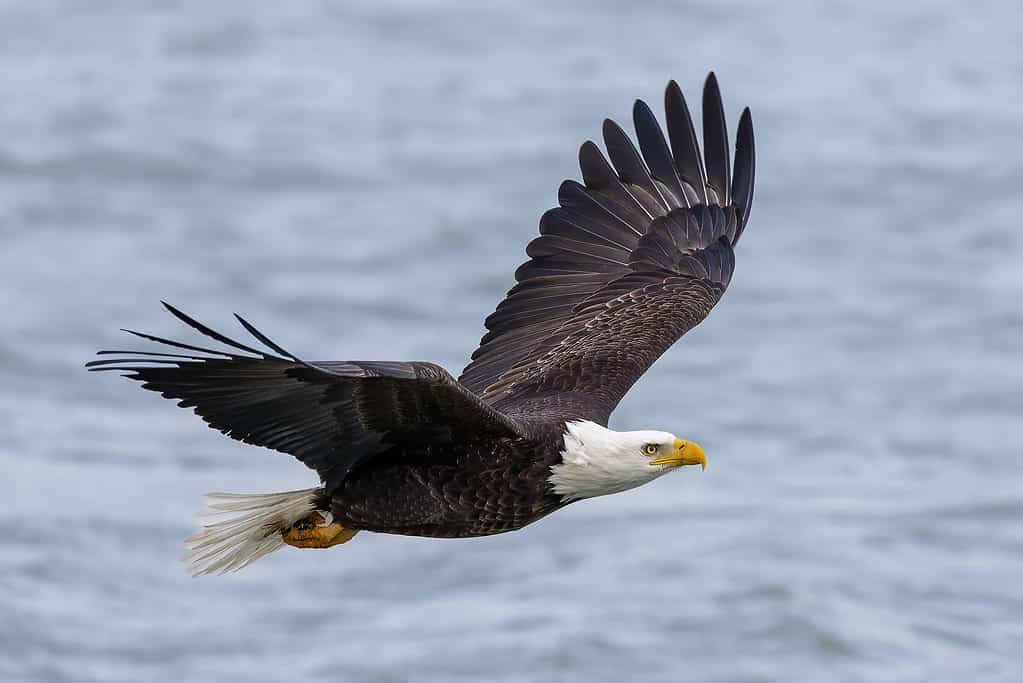
Bald eagles are typically found near bodies of water.
©iStock.com/Karel Bock
Not only is the bald eagle the national symbol of the United States, dating back to 1782, but it is also a spiritual symbol for native people. While this bird may seem majestic to many, to others it is known as a thief that prefers to take the food that another bird has finished catching. They have taken fish directly out of the talons of Opreys as well as other fishing mammals, humans included, however, they are generally powerful predators. The bald eagle can grow up to 14 pounds and may have a wing span of up to 90 inches and use their large talons for surprising prey. They are also known to form strong bonds with each other in order to raise new eaglets each year.