P
Species Profile

Phytosaurs

Phytosauria

Croc-lookalikes of the Triassic
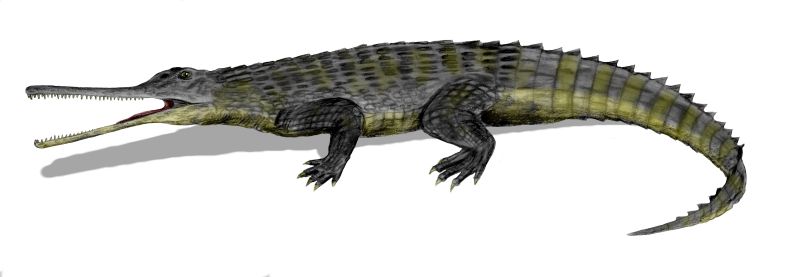
800 × 277 pixels, file size: 22 KB, MIME type: image/jpeg

Phytosaurs Distribution

Click a location to explore more animals from that region

Loading map...

Size Comparison

Human 5'8"
Phytosaurs 2 ft 11 in

Phytosaurs stands at 52% of average human height.

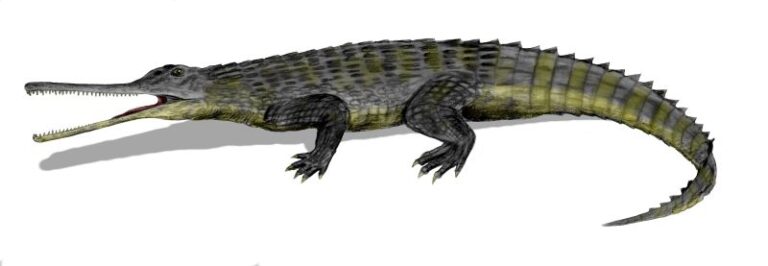
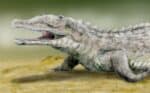
Rutiodon carolinensis, a phytosaur

At a Glance

Order Overview This page covers the Phytosaurs order as a group. Stats below are general traits shared across the order.
Also Known As Triassic crocodile, prehistoric crocodile, crocodile-like reptile, proto-crocodile
Diet Carnivore
Activity Crepuscular+
Lifespan 15 years
Weight 1500 lbs
Status Not Evaluated
Did You Know?

Phytosaurs weren't crocodiles or dinosaurs-they're archosauriforms outside Crocodylomorpha, yet evolved a strikingly croc-like body plan.

Scientific Classification

Order Overview "Phytosaurs" is not a single species but represents an entire order containing multiple species.

Phytosaurs (Phytosauria) are an extinct group of semi-aquatic archosauriform reptiles that strongly converged on crocodile-like body plans. They were common predators in river and swamp ecosystems during the Late Triassic, but are not true crocodilians and are outside Crocodylomorpha.

Kingdom
Animalia
Phylum
Chordata
Class
Reptilia
Order
Phytosauria

Distinguishing Features

  • Crocodile-like semi-aquatic form with elongated snout in many taxa (convergent with crocodilians)
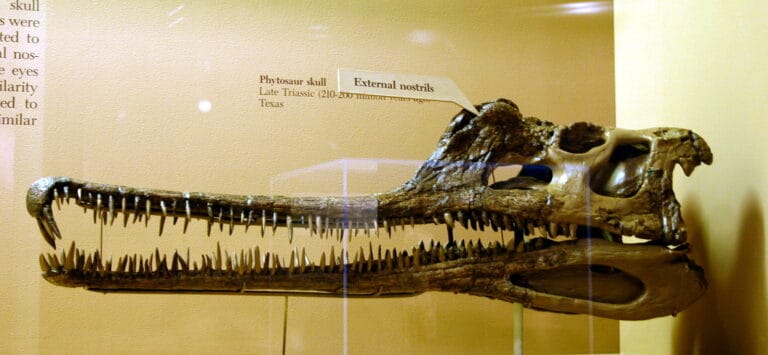
  • Nostrils positioned high on the skull and set back near the eyes (unlike crocodilians, where nares are at the snout tip)
  • Armored body with osteoderms in many forms
  • Late Triassic age; prominent components of pre-Jurassic archosauriform faunas

Physical Measurements

Males and females differ in size

Height
1 ft 12 in (12 in – 3 ft 7 in)
Length
18 ft 1 in (6 ft 7 in – 36 ft 1 in)
18 ft 1 in (6 ft 7 in – 32 ft 10 in)
Weight
882 lbs (88 lbs – 2.2 tons)
1,433 lbs (88 lbs – 2.2 tons)
Tail Length
8 ft 10 in (2 ft 11 in – 19 ft 8 in)
7 ft 7 in (2 ft 7 in – 14 ft 9 in)
Top Speed
12 mph
swimming

Appearance

Primary Colors
Secondary Colors
Skin Type Thick, keratinized scaly skin with dorsal osteoderms (armored scutes) in many taxa; smoother ventral scales; robust cranial skin over heavily sculptured skull bones.
Distinctive Features
  • Extinct Late Triassic archosauriform reptiles; not dinosaurs and not true crocodilians (outside Crocodylomorpha).
  • Strong crocodile-like convergence: long low body, powerful tail, semi-aquatic build.
  • Diagnostic trait across the order: external nostrils set far back near the eyes, not at snout tip.
  • Elongate snout with numerous conical teeth; snout proportions range from slender to very robust among genera.
  • Heavily sculptured skull roof and jaws; some taxa show cranial crests or bosses.
  • Eyes positioned high on skull, aiding surface-level ambush in shallow freshwater.
  • Dorsal armor often present as rows of osteoderms; extent and robustness vary among species.
  • Measurements (range across order): ~2-12 m total length; roughly ~50 to >2,000 kg depending on taxon and build.
  • Lifespan (range estimate across order): likely ~10-40 years; direct data limited, inferred from growth patterns and crocodile-like ecologies.
  • Behavior/Ecology (generalized): mostly freshwater ambush predators in rivers, lakes, and swamps; diets ranged from fish and amphibians to large tetrapods; some taxa more terrestrial or more aquatic, varying by region and habitat.

Did You Know?

Phytosaurs weren't crocodiles or dinosaurs-they're archosauriforms outside Crocodylomorpha, yet evolved a strikingly croc-like body plan.

A key identification clue is their retracted nostrils: the external nares sit high and back on the skull, near the eyes, not at the snout tip.

They were among the top predators of Late Triassic rivers, lakes, and wetlands on multiple continents, showing a truly global distribution in Triassic sediments.

Some lineages had very long, narrow snouts suited to fish-snapping, while others had broader, more robust skulls for larger prey-diversity within the order was substantial.

Many had heavy dorsal armor (bony scutes), giving protection and helping stiffen the body during swimming and shoreline movement.

The name "Phytosaur" ("plant lizard") reflects an early historical misunderstanding-some early workers thought they might be herbivores based on limited material.

Their fossil record helps scientists study convergent evolution: similar habitats repeatedly produced crocodile-like predators in unrelated lineages.

Unique Adaptations

  • Retracted external nares placed high/back on the skull-distinctive among many crocodile-shaped reptiles and useful for identification.
  • Crocodile-like, dorsoventrally flattened skulls and long jaws with conical teeth in many species-well suited to seizing slippery prey; other species evolved deeper, stronger snouts.
  • Dermal armor (scutes/osteoderms) along the back provided protection and structural support, paralleling but not identical to crocodilian armor.
  • Powerful tails and streamlined bodies in many taxa indicate efficient aquatic propulsion and stability in riverine environments.
  • Convergent "croc" package (semi-aquatic lifestyle, long snout, armored back) evolved in a non-crocodilian lineage-an adaptation set tied to freshwater predator niches of the Late Triassic.

Interesting Behaviors

  • Semi-aquatic ambush hunting was likely common: many species had limb and body proportions consistent with slow stalking in shallow water and rapid strikes at the margin.
  • Diet probably ranged from mostly fish and aquatic prey (in long-snouted forms) to more generalist predation/scavenging that could include terrestrial animals (in broader-snouted, more robust forms).
  • Habitat use likely varied across the order: some taxa appear more strongly tied to aquatic settings, while others show features consistent with more frequent overland travel between waterways.
  • Like modern river predators, individuals likely used still or slow-moving water (oxbows, channels, swamps) as hunting grounds; ecological roles could differ by snout shape, body size, and local fauna.
  • Growth and reproduction behavior are not directly known; nesting/parental care remains uncertain across the order, with interpretations limited by the available fossil evidence.

Cultural Significance

Phytosaurs are important in paleontology. Museums and books use them to show convergent evolution (crocodile-like but not true crocodiles). Their Late Triassic river and swamp fossils are found worldwide and help compare Triassic deposits; their wrong early name is a lesson.

Myths & Legends

No widely documented pre-modern folklore is specifically about phytosaurs; they were unknown to human cultures until their fossils were recognized scientifically in the 1800s.

Historical naming story: early interpretations led to the term "Phytosaur" ("plant lizard"), reflecting an initial misconception about diet based on limited fossils-an enduring anecdote in paleontological history.

Museum and popular-science tradition often frames phytosaurs as the Triassic's "false crocodiles," a recurring cultural motif in exhibits explaining how similar environments can shape unrelated animals into similar forms.

Conservation Status

NE Not Evaluated

Has not yet been evaluated against the criteria.

Population Unknown

You might be looking for:

Smilosuchus

28%

Smilosuchus gregorii

Large, robust phytosaur from Late Triassic North America; often depicted with prominent cranial ornamentation.

View Profile

Rutiodon

22%

Rutiodon carolinensis (genus: Rutiodon)

Well-known North American phytosaur; classic example in older literature of “crocodile-like” Triassic reptiles.

Nicrosaurus

18%

Nicrosaurus kapffi (genus: Nicrosaurus)

European phytosaur genus from the Late Triassic; representative of the group’s Old World diversity.

Machaeroprosopus

17%

Machaeroprosopus (genus)

North American phytosaur genus frequently encountered in discussions of phytosaur diversity and taxonomy.

Mystriosuchus

15%

Mystriosuchus (genus)

Slender-snouted European phytosaur; often used to illustrate variation in snout form within Phytosauria.

Life Cycle

Lifespan 15 years

Lifespan

In the Wild
5–40 years

Reproduction

Mating System Data Deficient
Social Structure Aggregation Group
Breeding Pattern Seasonal
Fertilization Internal Fertilization
Birth Type Internal_fertilization

Direct evidence is lacking. By comparison with other archosaurs, phytosaurs likely used internal fertilization, with seasonal breeding aggregations along waterways; males competed for access to females, suggesting a promiscuous or polygynous system with no lasting pair bonds.

Behavior & Ecology

Social Aggregation Group: 3
Activity Crepuscular, Cathemeral, Diurnal
Diet Carnivore Fish (commonly inferred as a major, often preferred prey across many long-snouted forms)

Temperament

Ambush-predatory and generally asocial outside breeding contexts
Likely territorial around prime shoreline or channel habitats, with intraspecific threat displays
Opportunistically tolerant of conspecifics during basking, drought crowding, or mass feeding events
Aggression probably increased during mating season and around nesting/young (if guarded)
Behavior likely varied by size, habitat openness, and local prey density across the order

Communication

Hissing or snorting during close encounters
Low-frequency bellow-like calls plausibly used in mate attraction or intimidation
Juvenile chirps/short squeaks are plausible but unconfirmed
Visual displays: head elevation, body arching, lateral presentation of jaws
Jaw gaping and possible jaw-clap signaling at close range
Water splashing, tail slaps, and substrate vibrations during disputes or courtship
Chemical cues from cloacal/musk secretions for individual or reproductive state signaling

Habitat

Biomes:
Freshwater Wetland Tropical Dry Forest Savanna Temperate Forest Temperate Grassland
Terrain:
Riverine Valley Plains Coastal Muddy Sandy
Elevation: Up to 6561 ft 8 in

Ecological Role

Dominant freshwater-to-riparian predator guild (often apex or high-level mesopredators) in many Late Triassic river and swamp ecosystems; niche partitioning among species likely reflected differences in snout shape, size, and habitat use.

Top-down regulation of fish and amphibian populations in fluvial/wetland food webs Shaping community structure through size-selective predation and niche partitioning within predator assemblages Energy and nutrient transfer between aquatic and terrestrial systems via riparian predation and carcass processing Opportunistic scavenging contributing to carcass breakdown and nutrient recycling (variable among species and local conditions)

Diet Details

Main Prey:
Fish Aquatic and semiaquatic tetrapods Small to medium terrestrial vertebrates Carrion

Human Interaction

Domestication Status

Wild

Phytosaurs (Order Phytosauria) were extinct Late Triassic semi-aquatic archosauriform reptiles never domesticated by people. Human contact is modern and indirect: finding and digging fossils, scientific study, museum displays, education, paleoart, and geotourism. Different lineages—from slim fish-catchers to large river and swamp apex predators—shape research and fossil collecting.

As a Pet

Not Suitable as Pet

Legality: Not applicable: Phytosaurs are extinct. Fossils are covered by local laws (permits for public land, export limits, ownership rules). Treating fossils as "pets" is not legal and can be illegal or unethical.

Care Level: Expert Only

Purchase Cost:
Lifetime Cost:

Economic Value

Uses:
Scientific research value Museum and educational value Cultural/media value Geotourism value Fossil/collectibles market (often regulated)
Products:
  • museum exhibits and traveling displays
  • scientific publications and datasets (CT scans, 3D models)
  • replica casts and educational models
  • documentaries/books/paleoart and game/film creature design inspiration
  • guided tours and interpretive programs at fossil sites

Relationships

Predators 5

Rauisuchid apex predators Postosuchus kirkpatricki
Large loricatans Loricata
Large Triassic predatory archosaurs Loricata
Early theropods
Early theropods Theropoda
Phytosaur
Phytosaur Phytosauria

Related Species 4

Ecological Equivalents 5

Animals that fill a similar ecological role in their ecosystem

Modern crocodiles, alligators, caimans, gharials Crocodylia Strong convergent evolution: semi-aquatic ambush predators with elongate snouts, armored bodies, and river- and swamp-hunting strategies — despite phytosaurs being outside Crocodylomorpha.
False gharial Tomistoma schlegelii Longirostrine (long-snouted) fish-focused niche parallels many slender-snouted phytosaur morphotypes found in river systems.
Gharial
Gharial Gavialis gangeticus Extremely long-snouted piscivory provides a modern analog for the hydrodynamic snout forms seen in several phytosaur lineages.
Champsosaurs Champsosaurus spp. Extinct, semi-aquatic ambush predators with crocodile-like lifestyles in a different lineage and time period; useful as ecological parallels for freshwater predatory roles.
Saltwater crocodile Crocodylus porosus Behavioral/functional analog for the largest phytosaurs: opportunistic predation on sizable vertebrates near waterways, including terrestrial animals at the water's edge.

Types of Phytosaurs

13

Explore 13 recognized types of phytosaurs

Rutiodon Rutiodon carolinensis
Smilosuchus
Smilosuchus Smilosuchus gregorii
Leptosuchus Leptosuchus crosbiensis
Machaeroprosopus Machaeroprosopus buceros
Pseudopalatus Pseudopalatus pristinus
Redondasaurus Redondasaurus gregorii
Redondasaurus Redondasaurus bermani
Angistorhinus Angistorhinus grandis
Nicrosaurus Nicrosaurus kapffi
Mystriosuchus Mystriosuchus planirostris
Parasuchus Parasuchus hislopi
Paleorhinus Paleorhinus bransoni
Belodon Belodon plieningeri

Introduction

Phytosaurs are an extinct group of semi-aquatic reptiles that were heavily armored. They were alive around the Late Triassic Period around 200-290 million years ago. These animals were not dinosaurs, even though the name sounds similar. Rather, archosaurs are a group of reptiles such as crocodiles and pterosaurs which are flying reptiles. The phytosaur is found across North America, Asia, Europe, northern Africa, and Madagascar. No fossils have been located in Australia, Antarctica, or sub-Saharan Africa.

Description & Size
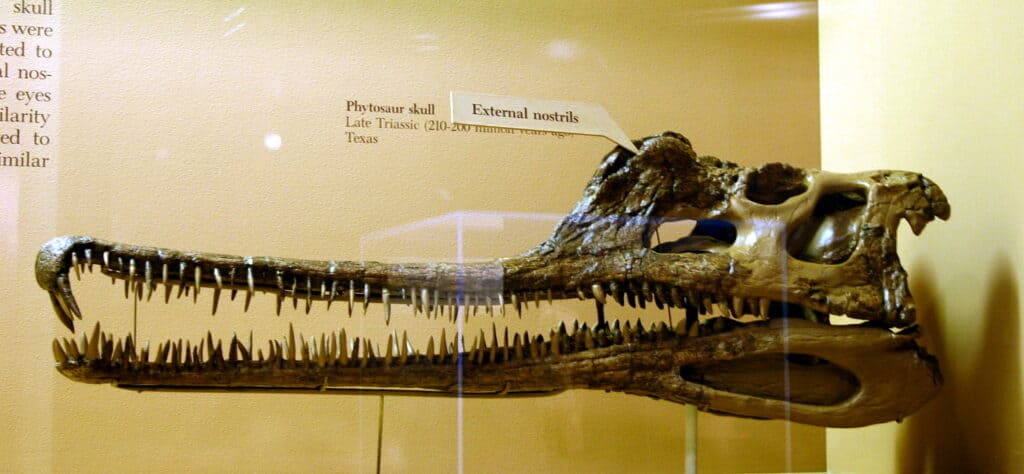
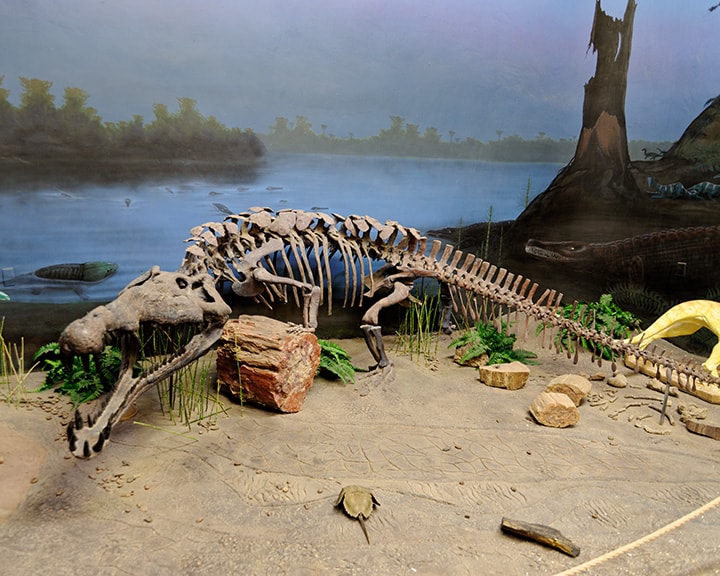
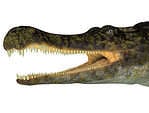
Phytosaur skull

The phytosaur had sharp teeth that they used to catch fish and had long, pointed jaws.

These creatures resembled crocodiles and walked on land and swam in the water, making them semi-aquatic. Like crocodiles, the phytosaur had thick armor on their body along with rows of bony armor on their backs. The phytosaur had sharp teeth that they used to catch fish and had long, pointed jaws. They had high crested nostrils that sat in front of their eyes. These allowed them to breathe and see over the waterline when they float in it, much like a crocodile.

Phytosaurs have similar habits to crocodiles. This is due to their similar appearance. Presumably, they have the same fleshy palate that crocodiles have. The phytosaur is unable to breathe when their mouth is full of water.

The phytosaurs reached a maximum length of 35 feet. It is possible that they grew smaller or larger than that depending on the species. So far, there are only two discoverable phytosaur species. One discovered with a long snout (dolichorostral), and another with a broader snout (brachyrostral).

Diet – What Did Phytosaurs Eat?

Although the name phytosaur means “plant lizard”, they did not eat plants, but rather ate a carnivore diet. They are heterodonts, which means that they have prominent fangs, and the back teeth are sharp. These teeth enabled them to slice through their prey. The phytosaur preyed on animals that came near the water. They would wait with their protruding eyes and nostrils from the water’s surface waiting to strike.

Believably, these reptiles ate fish and other fast aquatic prey. The dolichorostral phytosaurs has a long snout that is for catching this type of prey. The broad-snouted brachyrostral phytosaur was great for hunting terrestrial prey.

Fossilized tooth evidence of the different phytosaur species showed that they either ate a piscivore or carnivore diet. They consumed either hard or soft invertebrates depending on the species’ teeth and jaw structure.

Habitat – When and Where It lived

Most phytosaurs lived a semi-aquatic lifestyle, meaning that they would come and go from water to land. The Nicrosaurus species seems to be more evolved to a terrestrial lifestyle than the others. Though all species of the phytosaur were first thought to be aquatic.

The Nicrosaurus had more developed limbs that were loner. Also possessing a deep-set upper jaw that allowed them to be efficient terrestrial hunters. Most dolichorostral types of phytosaurs did best in marine environments. Fossil evidence showed that the bones of a Mystriosuchus planirostris found in a marine setting died in either the sea or freshwater environment.

The fossils showed they had limbs that helped them paddle in the water. This would make them less adapted to walking on land for long. The tail was also compressed which is believed to have helped the creature propel itself through the water and make it a good swimmer. The majority of phytosaurs were semi-aquatic, but most species spent more time in the water than others.

Threats And Predators

The phytosaur was a predator itself that preyed on other terrestrial or aquatic creatures. They are thought to have been ambush predators that hunted animals that came down to the river to drink. The exact predators and threats that these creatures faced are unknown, but we do know that their heavily armored bodies kept them safe from most attacks by predators.

Discoveries and Fossils

The phytosaur fossils are some of the most abundant vertebrate fossils in the Petrified Forest National Park located in Arizona. The first fossil of the phytosaur is unknown. The mud-caked teeth causes researchers to believe that the phytosaur was a plant eater, but later known to be false. G. Jaeger made this discovery in 1828. The old name “phytosauria” was described by a German paleontologist named Hermann von Meyer back in 1861.

The other species of phytosaurs were described by Hermann von Meyer and Plieninger in 1844, along with Thomas Huxley’s discovery of the Indian species in 1875. This led to the generic name for the reptile being phytosaur, and evidence showed that their sharp teeth and prominent fangs were an indication that the phytosaur was not a herbivore according to the first discovery in 1828, but rather an indication of a carnivore diet.

The phytosaur fossils were discovered in India, Europe, North America, Thailand, Brazil, Madagascar, and Greenland where they were found in early Jurassic rocks, which makes it possible that they extended their range beyond the Triassic-Jurassic boundaries.

The first crocodile-like fossils of the phytosaur discovered in southern Africa were in South Africa, Zimbabwe by Steve Edwards who brought the discovery to Professor Paul Barret, and his American colleagues. This newly discovered evidence of phytosaur fossils shows that these creatures might be more widely distributed than scientists and researchers first believed.

Extinction – When Did It Die Out?

The phytosaur lived during the Late Triassic Period over 200 million years ago which is during the Carnian age. They are believed to have evolved from a crurotarsan ancestor and went extinct at the end of the Triassic. There is a hypothesis that the end-Triassic mass extinction 200 million years ago caused mass deaths in marine reefs and North American vertebrates such as the phytosaur.

Some other hypotheses of the phytosaur’s death include meteorites, global warming, rising sea levels, and even global cooling. There has been no scientific evidence yet to prove these theories, but the phytosaur did not make it out of the Triassic period like many other extinct creatures.

The Triassic-Jurassic extinction killed off around 76% of marine and terrestrial species, ending around 20% of all taxonomic families. The mass extinctions responsible for the phytosaur and many other creatures’ demise could have also been widespread volcanic activity found by scientists around the same time these creatures went extinct.

Similar Animals to The Phytosaur

There are few animals that resemble or have physical similarities to the phytosaur, but here are a few modern and extinct creatures that have exceptionally strong similarities to these reptiles.

  • Crocodiles- They share a similar body structure and lifestyle to the phytosaur.
  • Pterosaurs (extinct)- The earliest evolved vertebrates known to have evolved to have the ability to fly with wings.  
  • Dinosaurs (extinct)- Phytosaurs were alive at the same time as dinosaurs when they were still small and evolving, so there is a slight relation between the two creatures.
View all 246 animals that start with P

Sources

  1. Wikipedia / Accessed October 6, 2022
  2. University of California Museum / Accessed October 6, 2022
  3. Fossil wiki / Accessed October 6, 2022
  4. Science news / Accessed October 6, 2022
Sarah Psaradelis

About the Author

Sarah Psaradelis

Sarah is a writer at A-Z Animals primarily covering aquatic pets, rodents, arachnids, and reptiles. Sarah has over 3 years of experience in writing and researching various animal topics. She is currently working towards furthering her studies in the animal field. A resident of South Africa, Sarah enjoys writing alongside her pets and almost always has her rats perched on her shoulders.
Connect:

Thank you for reading! Have some feedback for us?


Phytosaurs FAQs (Frequently Asked Questions)

The phytosaur was alive during the Carnian age in the Late Triassic Period (201-237 million years ago). They roamed the earth and lived alongside small evolving dinosaurs and other extinct ancient creatures. Most species of the phytosaur can be found in a semi-aquatic environment, while others were more evolved for life on land.