
S
Species Profile

Slovak Cuvac

Canis lupus familiaris

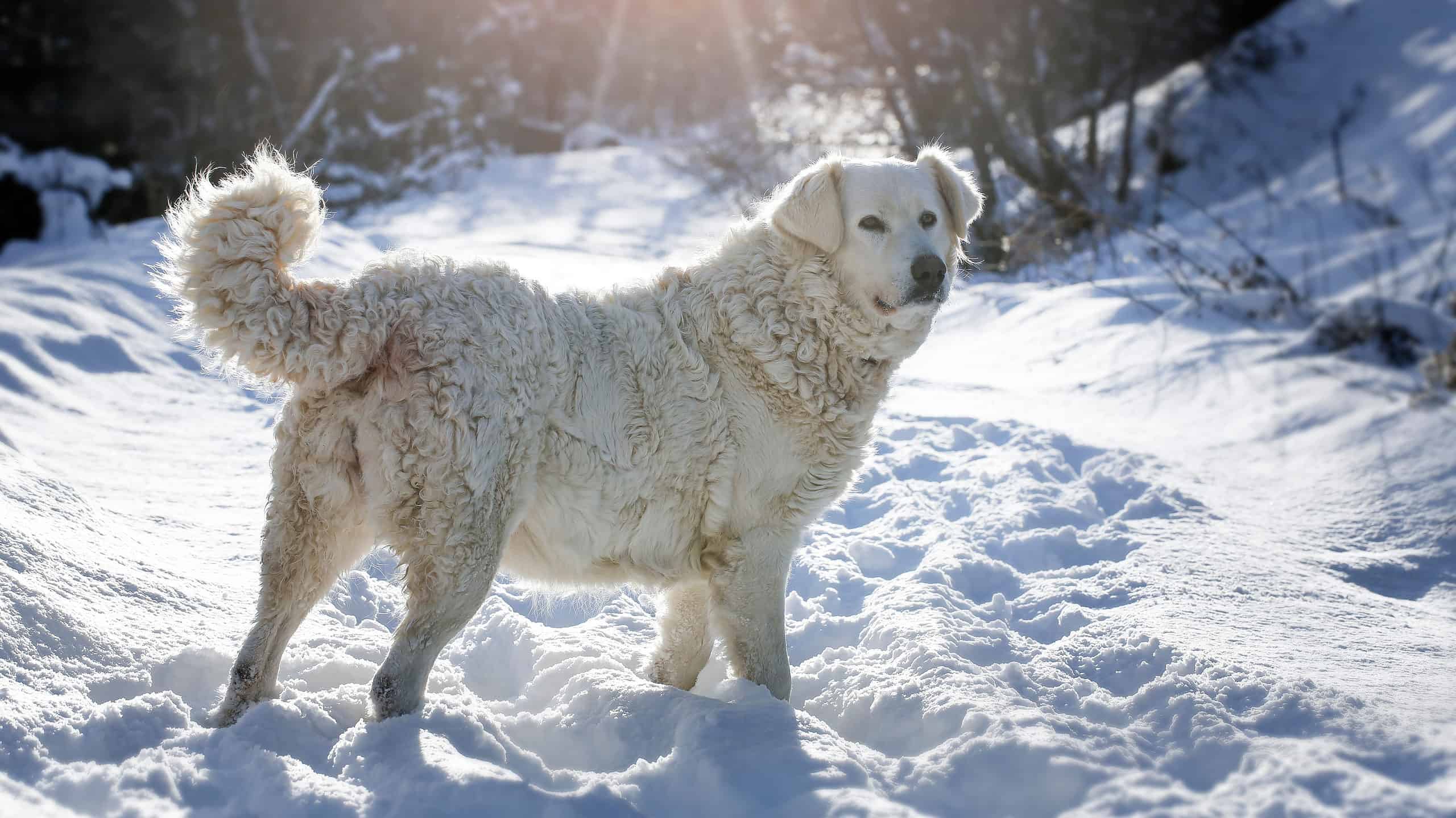
White coat. Mountain heart. True guardian.
mmpixel91/Shutterstock.com

Slovak Cuvac Distribution

Click a location to explore more animals from that region

Origin Location

This map shows the native origin of the Slovak Cuvac. As a domesticated species, they are now found worldwide.

Loading map...

Found in 1 country

Size Comparison

Human 5'8"
Slovak Cuvac 2 ft 2 in

Slovak Cuvac stands at 38% of average human height.

Slovak Cuvac

At a Glance

Domesticated
Also Known As Slovenský čuvač, Čuvač, Cuvac, Slovak Chuvach
Diet Omnivore
Activity Cathemeral+
Lifespan 4 years
Weight 44 lbs
Status Not Evaluated
Did You Know?

"Cuvac" relates to Slovak words meaning "to hear," reflecting its alert, watchful nature.

Scientific Classification

The Slovak Cuvac is a large, white, mountain livestock-guardian dog developed in Slovakia (Carpathian/Tatra region) for protecting sheep and property against predators and intruders.

Kingdom
Animalia
Phylum
Chordata
Class
Mammalia
Order
Carnivora
Family
Canidae
Genus
Canis
Species
Canis lupus

Distinguishing Features

  • Large, robust livestock-guardian build
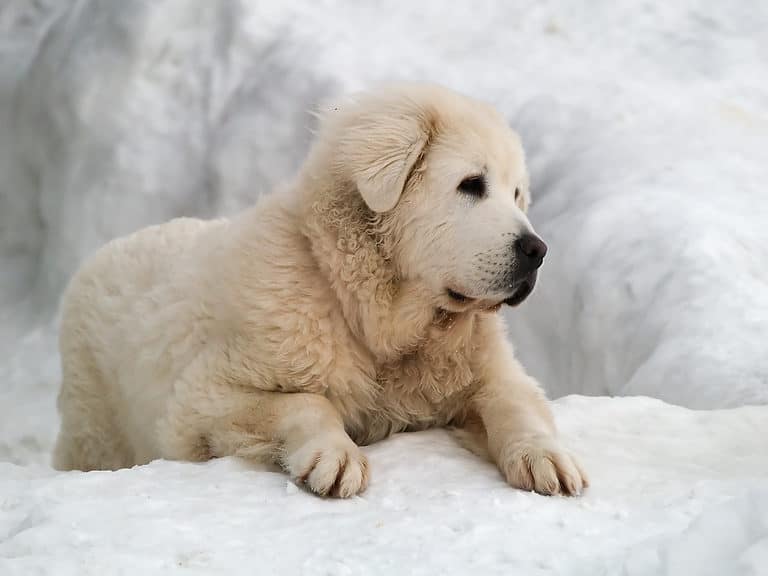
  • Thick, white, double coat adapted to cold conditions
  • Drop ears and strong, broad head; overall similar LGD silhouette
  • Protective, territorial guardian temperament; typically wary of strangers

Physical Measurements

Males and females differ in size

Height
2 ft 2 in (2 ft – 2 ft 4 in)
2 ft (1 ft 11 in – 2 ft 2 in)
Length
3 ft 10 in (3 ft 5 in – 4 ft 3 in)
3 ft 10 in (3 ft 5 in – 4 ft 2 in)
Weight
88 lbs (79 lbs – 97 lbs)
75 lbs (68 lbs – 82 lbs)
Tail Length
1 ft 4 in (1 ft 2 in – 1 ft 6 in)
Top Speed
28 mph
running

Appearance

Primary Colors
Secondary Colors
Skin Type Tough, well-pigmented skin; dark facial pigmentation helps reduce sun/irritation.
Distinctive Features
  • Domestic dog (Canis lupus familiaris) selectively bred as a Carpathian/Tatra livestock-guardian, not a wild canid.
  • Large, powerful, slightly rectangular build; deep chest and strong bone for rugged terrain.
  • Dense double coat: harsh, weather-resistant outer coat with heavy insulating undercoat; heavy seasonal shedding.
  • Wedge-shaped head with dark almond eyes; triangular drop ears set high; black nose and tight lips.
  • Plumed tail carried low at rest, raised in alert; thick neck with more pronounced ruff in males.
  • Working role/behavior: territorial guardian, vigilant barking, strong protective instinct; needs early socialization and firm, calm training.
  • Care: frequent brushing (especially during coat blow), regular parasite checks; heat management needed in warm climates.
  • Exercise/management: steady daily activity and mental work; secure fencing due to patrolling and boundary-focused behavior.
  • Health concerns seen in large guardian breeds: hip/elbow dysplasia, gastric dilatation-volvulus (bloat), and occasional eyelid issues (entropion/ectropion).

Sexual Dimorphism

Males are typically taller, heavier, and more strongly boned with a broader head and more pronounced neck ruff. Females are smaller and more refined in build, often with slightly less coat volume and a lighter overall frame.

  • Greater height and mass; heavier bone and broader chest.
  • More pronounced neck ruff/mane and thicker head/neck profile.
  • Often stronger territorial display and patrolling posture.
  • Smaller, lighter frame with a more refined head.
  • Ruff typically less pronounced; overall coat may appear slightly less bulky.
  • Often a more agile, streamlined outline while retaining guardian alertness.

Did You Know?

"Cuvac" relates to Slovak words meaning "to hear," reflecting its alert, watchful nature.

Bred in Slovakia's mountain regions (Carpathians/Tatras) to guard sheep from wolves and bears.

Its all-white coat helped shepherds distinguish it from predators at dusk or in snow.

Unlike herding breeds that move flocks, the Cuvac's job is to live with them and deter threats.

Typically bonds strongly to its "home territory" and patrols it with purpose.

Often compared to other European white LGDs (e.g., Kuvasz, Maremma), but tied to Slovak pastoral tradition.

Unique Adaptations

  • Dense double coat with heavy undercoat for insulation in cold, wet mountain weather; sheds seasonally.
  • Large frame and strong bone suited to confronting predators and enduring long outdoor hours.
  • White coloration increases visibility to shepherds and can confuse/deter predators in low light.
  • High environmental sensitivity (sound/scent): tuned for early detection of intruders across open valleys.
  • Territorial imprinting: strong site fidelity-thrives when given a defined area and consistent routine.
  • Low "prey-drive" relative to many working dogs: selected to coexist calmly with sheep/goats while remaining protective.

Interesting Behaviors

  • Perimeter patrolling: regularly circles and checks boundaries, especially at dawn/dusk.
  • "Stand and stare" deterrence: holds ground, watches silently, then escalates if a threat persists.
  • Deep, rhythmic alarm barking: a distance-warning signal aimed at driving predators away without a chase.
  • Selective sociability: reserved with strangers, warm with family and known livestock.
  • Guardian positioning: chooses high vantage points (porches, slopes) to monitor movement.
  • Independent decision-making: evaluates situations without constant handler cues-classic livestock-guardian mindset.

Cultural Significance

The Slovak Cuvac (Canis lupus familiaris) is a living symbol of Slovak mountain shepherd life. Linked to mountain sheepfolds, it stands for being independent and guarding home and herd, and is a national breed tied to shepherding tradition.

Myths & Legends

Carpathian shepherd lore tells of white guardian dogs stationed around night sheepfolds whose barking was believed to "break" a wolf's courage before it reached the flock.

Shepherd tradition in Slovakia holds that the Slovak Cuvac's white coat was valued because it made the dog easy to distinguish from predators while guarding mountain sheep flocks, especially in low light.

Naming lore links "cuvac" to exceptional hearing: tales say a true cuvac could hear a predator step on frozen grass long before humans noticed, giving the flock time to cluster behind it.

Mountain herding tales say prized white Slovak Cuvac were given between villages as trust gifts. The dog's first night at a new fold was watched to see if it 'accepted' the sheep.

Conservation Status

NE Not Evaluated

Has not yet been evaluated against the criteria.

Population Stable

Life Cycle

Birth 6 pups
Lifespan 4 years

Lifespan

In the Wild
2–8 years
In Captivity
10–14 years

Reproduction

Mating System Polygyny
Social Structure Managed Domestic
Breeding Pattern Serial
Fertilization Managed Selective
Birth Type Internal_fertilization

As a domestic breed, matings are usually arranged by breeders: a selected stud may mate one or several bitches during estrus cycles, with no enduring pair bond. Reproduction occurs via internal fertilization; pups are raised mainly by the dam with human support.

Behavior & Ecology

Social Pack Group: 2
Activity Cathemeral, Crepuscular, Nocturnal
Diet Omnivore Meat-rich meals (e.g., beef/lamb, organ meats) often paired with a staple carbohydrate (rice/oats) in traditional working rations.

Temperament

Species context (Canis lupus familiaris): highly social; Slovak Cuvac is selectively bred for independent guarding rather than cooperative hunting.
Distinguishing from base species/wolf: lower prey-drive and higher defensive territoriality; relies on alarm/deterrence more than chase.
HUBS (livestock-guardian group patterns): steady vigilance, boundary patrols, selective sociality; variation by line, training, and livestock exposure.
Reserved/aloof with strangers; loyal and affectionate with family; typically tolerant and gentle with familiar stock.
Bold, confident, and watchful; can be stubborn/independent-responds best to consistent, calm, reward-based handling.
Protective barking and barrier behavior are common; early socialization reduces unnecessary suspicion and reactivity.
Generally good with children in the household; supervision needed due to size and guarding responses to unfamiliar play/noise.
Dog-sociality varies: can coexist with other working dogs; same-sex conflicts possible without management.
Care requirements: needs secure fencing, daily purposeful exercise, and a job (guarding/patrolling) to reduce frustration.
Care requirements: early, extensive socialization to people/places/animals; structured introductions to visitors and new dogs.
Health concerns (breed-specific tendencies): hip/elbow dysplasia risk; monitor growth, keep lean, consider orthopedic screening.
Health concerns: gastric dilatation-volvulus (bloat) risk in large deep-chested dogs; feed management and vigilance advised.
Health concerns: eyelid/eye issues and degenerative joint disease may occur; regular veterinary checks recommended.
Coat/skin care: heavy double coat needs regular brushing; sheds seasonally; watch for hot spots/matting behind ears.

Communication

Deep, repetitive alarm barking directed at intruders/predators
Growls and low rumbles as distance-increasing warnings
Whines/soft barks used for appeasement or to solicit attention
Occasional howls, especially in response to other dogs or distant stimuli
Boundary patrolling and strategic positioning between flock/family and perceived threat
Scent marking (urine/ground scratching) to reinforce territorial boundaries
Body blocking, head/shoulder lean, and chest-forward stance as deterrent displays
Direct stare, ear posture, and tail carriage to signal vigilance or escalation
Pacing and circling the perimeter to monitor movement and wind-borne scents

Habitat

Biomes:
Temperate Forest Alpine Boreal Forest (Taiga) Temperate Grassland Tundra Mediterranean Desert Cold Desert Hot Wetland Freshwater Marine Savanna Tropical Dry Forest Tropical Rainforest Temperate Rainforest +9
Terrain:
Mountainous Hilly Plateau Valley Rocky
Elevation: Up to 8710 ft 8 in

Ecological Role

Human-associated livestock-guardian omnivore; primarily a managed domestic protector rather than a wild predator.

reduces livestock losses by deterring large predators (e.g., wolves, bears) and intruders helps mitigate human-carnivore conflict by providing non-lethal predator deterrence indirectly supports pastoral/agroecosystems by enabling grazing in predator-present landscapes can suppress local mesopredators/strays near farms via territorial presence (management-dependent)

Diet Details

Main Prey:
Small mammals Lagomorphs Ground-nesting birds and poultry Carrion
Other Foods:
Grasses Berries Fallen fruit Roots and plant scraps Grains and starches Vegetables

Human Interaction

Domestication Status

Domesticated

The Slovak Cuvac (Canis lupus familiaris) is a large, white livestock-guardian dog from Slovakia's Carpathian/Tatra mountains. Bred to guard sheep and farms from wolves, bears, and intruders, it is calm, independent, strongly territorial, with a heavy, weather-resistant coat and can work all day. It serves as a guard or rural family dog but needs careful socialization and handling.

Danger Level

Moderate
  • Territorial defensiveness toward unfamiliar people entering home/farm space; may block, bark, and escalate if not properly managed.
  • Protective aggression risk is higher than in many companion breeds due to livestock-guardian selection; early socialization and clear boundaries are essential.
  • Large size and strength increase injury severity potential in any bite or knock-down incident.
  • Wariness of strangers can lead to fear-based reactions in crowded/public settings if under-socialized.
  • Higher risk of dog-dog conflict with unfamiliar dogs, especially around property boundaries.

As a Pet

Suitable as Pet

Legality: Generally legal to own as a domestic dog in most jurisdictions. May be subject to local large-dog, leash, containment, livestock-guardian, or "dangerous dog" ordinances; not commonly breed-banned, but always verify city/HOA rules and liability insurance requirements.

Care Level: Experienced

Purchase Cost: $800 - $2,500
Lifetime Cost: $20,000 - $55,000

Economic Value

Uses:
Livestock protection (non-lethal predator control) Property/security guarding Breeding and kennel services Pet/companion animal market Veterinary and grooming services
Products:
  • predator deterrence and reduced livestock losses for sheep/goat operations
  • guard-dog services for rural properties
  • purebred puppies and stud services (where ethically bred)
  • equipment purchases: fencing, secure kennels, crates, working collars/leads, grooming tools
  • routine and emergency veterinary care (vaccination, parasite control, orthopedic care)

Relationships

Ecological Equivalents 5

Animals that fill a similar ecological role in their ecosystem

Great Pyrenees
Great Pyrenees Canis lupus familiaris The Slovak Cuvac fills the same mountain sheep guardian role: slightly lighter and more agile, strongly territorial, independent, alert-barking, and closely bonded to the flock. Requires early socialization, secure fencing, regular brushing, and seasonal de-shedding.
Maremma Sheepdog
Maremma Sheepdog Canis lupus familiaris Another white, flock-integrated livestock guardian dog. The Slovak Cuvac is similarly independent but often noted for pronounced vigilance and nighttime alerting. Success depends on correct placement with livestock early (imprinting) and avoiding pet-only confinement, which can amplify nuisance barking and territorial reactivity.
Kuvasz
Kuvasz Canis lupus familiaris Close match: large white guardian. Slovak Cuvac was bred for Slovak mountain pastures and does best with work and space. Care like other large guardian breeds: protect joints, control growth, avoid early jumping, manage weight, and watch for bone and joint disease.
Kangal
Kangal Canis lupus familiaris Similar predator-deterrence role. Highlights breed-specific care needs relevant to the Slovak Cuvac as well: extensive daily movement, mental stimulation through patrolling/guard tasks, and a strong training focus on boundary-setting and reliable recall—often challenging due to guardian independence.
Gray wolf
Gray wolf Canis lupus Slovak Cuvac (Canis lupus familiaris) was bred from wolves for steady flock guarding, a reduced tendency to hunt livestock, and a strong bond with humans and territory. It is tolerant and trainable, with a large white weatherproof coat and a calm but watchful temperament.

The Slovak cuvac is a large Slovakian breed of dog that is also sometimes called the “Slovensky cuvac.” They are actually descended from Arctic wolves! Farmers tamed them and have used them ever since as watchdogs and herd dogs. They do well high up in the snow-covered mountains of Eastern and Central Europe. They have a long lifespan, so they serve for many years.

Slovak cuvacs bond closely with their people and will sacrifice their own lives to protect humans and their property. They’re good with children but might chase small pets. A couple of drawbacks they have are that they shed a lot, and they are stubborn when it comes to training. So they are not recommended for people who are not experienced in training dogs or don’t have the time to put into training. Some breeders have experimented with mixing them with Labrador retrievers or German shepherds to improve those kinds of qualities. Do you research before committing to this breed, but this is for sure — you will never doubt this dog’s love and loyalty to you.

3 Pros and Cons of Owning Slovak Cuvacs

Pros!Cons!
A very healthy breed
This dog is pretty hardy and healthy, but has a few health problems that are common to large dogs.
They shed massively
Their beautiful, pure white fur sheds year-round, especially in the summer when they lose their undercoats. During the period of heaviest shedding, they need to be brushed daily.
Energetic breed for an active family
Slovak cuvacs are a great choice for a large, active family that enjoys running, hiking, swimming, and playing games, or for people who have large, fenced yards, farms, or ranches.
A prey instinct for smaller animals
This is a gentle breed, but around smaller animals, their prey instinct may get activated. They need to be trained and watched until they can be trusted.
Playful and kid-friendly!
They’re intimidatingly large, but are still gentle and affectionate playmates for kids.
Challenging to train
They like to be in charge. Training needs to be positive, but firm and consistent as well.

The Best Dog Food for Slovak Cuvacs

Choosing a dog food for your companion is something that should be a matter of research, thought, and consultation with your veterinarian. Large breeds eat a lot, so, understandably, owners will want to find a food that fits their budgets. However, keep in mind that loading a dog up on cheap food might cause health problems as your pup grows older.  

Some things to look for in a quality dog food are natural ingredients without cheap fillers or artificial additives. You also want to look for a brand that is specially formulated for the developmental level and size of your dog. For example, puppies should have a puppy recipe because it has the specific nutrients young growing dogs need for overall health. As your dog gets older, gradually introduce an adult formula, and later a senior formula. It is generally best not to switch between brands or flavors frequently, as that can upset your dog’s digestion.

Slovak Cuvac Size and Weight

The Slovak cuvac is a large breed dog ranging from 24 to 27.5 inches tall and 79 to 97 pounds for males, and 23 to 25.5″ tall and 68 to 82 pounds for females.

Slovak Cuvac Common Health Issues

As you’re looking at dog breeds, be aware that certain health problems are common to dogs of a particular size, and this does not have to mean there is something especially wrong with that breed. Large dogs like Slovak cuvacs often have trouble with hip dysplasia and elbow dysplasia. These are deformed joints that happen as the dog grows and more weight is put on the joints. Big dogs can also get bloat. This can happen when a dog wolfs down its food, and its stomach and intestines fill with gas and get twisted. Bloat can be deadly, so the dog needs to get to the vet immediately if it is showing signs of pain and distress after eating. This is a long-lived breed, though, that does not have any major unusual health issues.

Slovak Cuvac Temperament and Behavior

Slovak Cuvacs are superior guard dogs. They will literally give their lives to defend their people and territory. This is an athletic breed that likes to run, play games, and show off its agility. They get along great with children but have a prey instinct to chase small animals. They can be stubborn when you try to train them, so they are not recommended for new dog owners.

How To Take Care of Slovak Cuvacs

Maintenance and Grooming

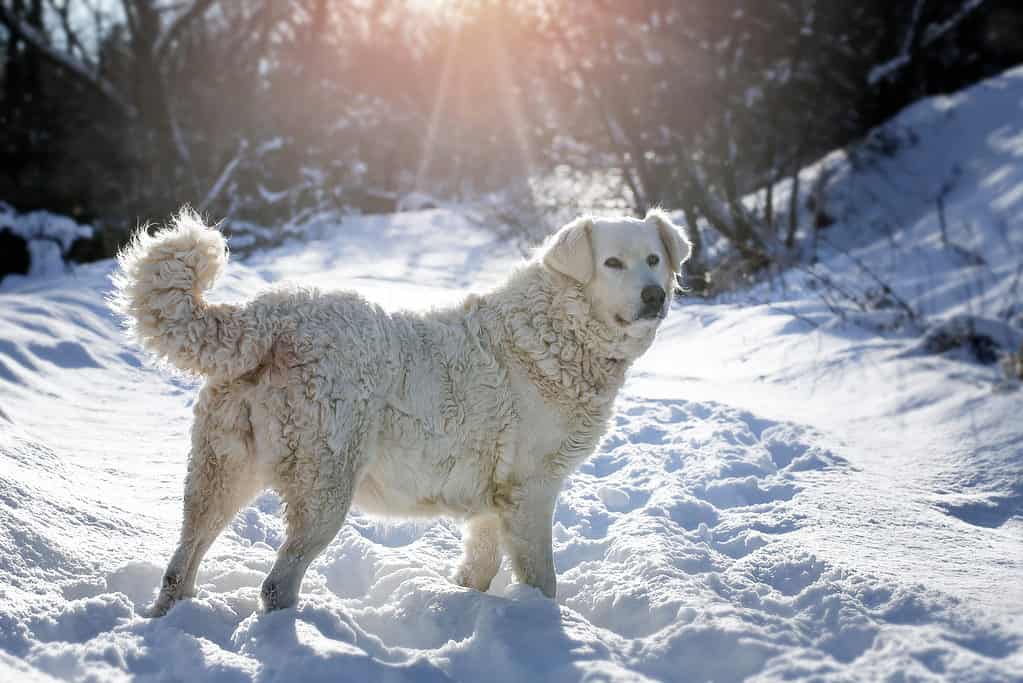
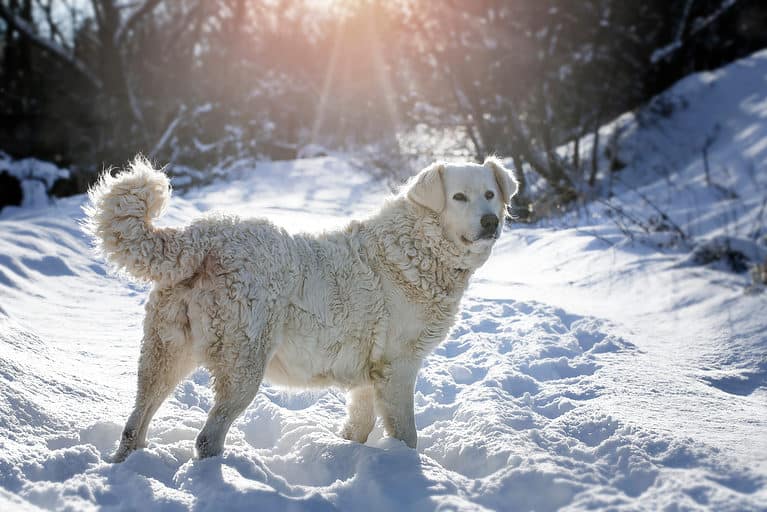
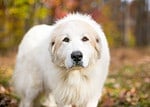
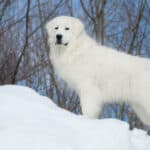
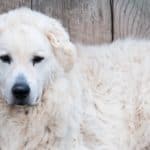
The coat of a Slovak cuvac is white, thick, dense, and a little bit wavy. Males have a mane of longer fur around their necks. With their heavy coats, these dogs do great in cold weather but may suffer in warm climates. Make sure during the summer, they have access to plenty of water, shade, and cool air. These dogs are heavy shedders that owners should brush frequently to remove dead hair and cut down on the amount of fur that will litter your house, yard, or car. They lose all of their undercoats during the summer. During this time, owners may need to groom their pup twice a day.  

Training

These can be difficult dogs to train. They really have a mind of their own and will try to be dominant. An experienced trainer will know how to handle a large dog like this with patience, consistency, and positive reinforcement. These dogs benefit from being exposed to different situations and meeting a variety of people and dogs so they can learn to behave politely. Around smaller animals, their prey instinct might get activated, so owners need to watch them closely in those situations until they can be trusted.

Exercise

This is a large and athletic breed that needs rigorous exercise, including daily jogs, hide-and-seek, fetch, flying disc, and similar games. They like to swim, so if you live near a lake or the ocean, this dog will love it. What it enjoys best, though, is running freely outdoors. They do not do well in apartments or small houses. They do best in large homes with space to roam, especially on a farm or ranch with livestock and an active family. Make sure any toys you provide are designed for large and powerful breeds. They will chew up toys that aren’t durable and swallow little pieces of them.

Puppies
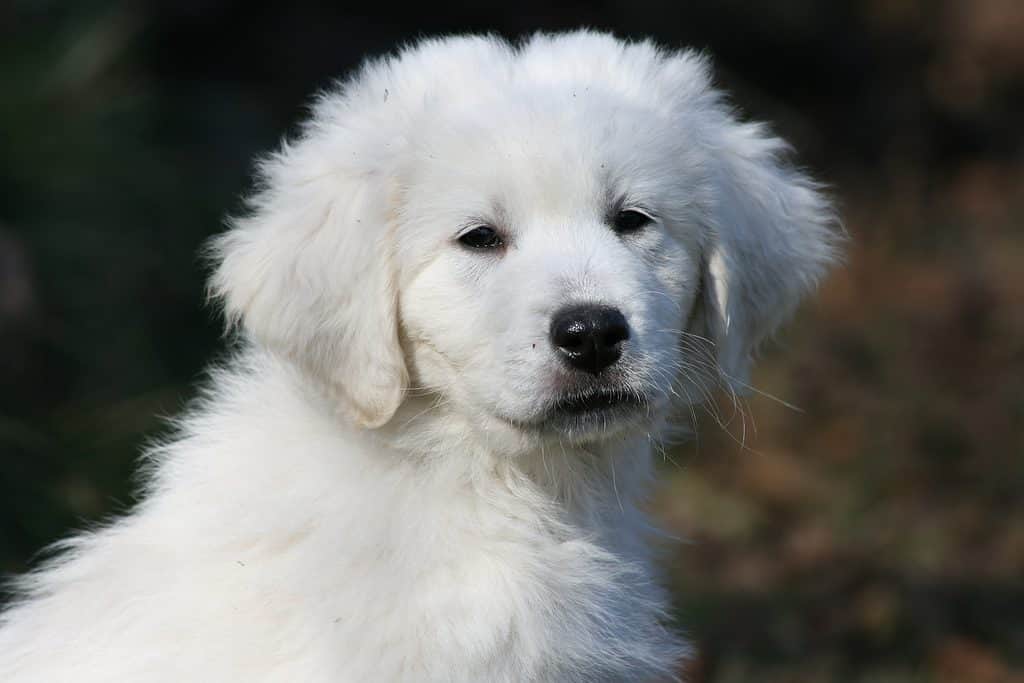
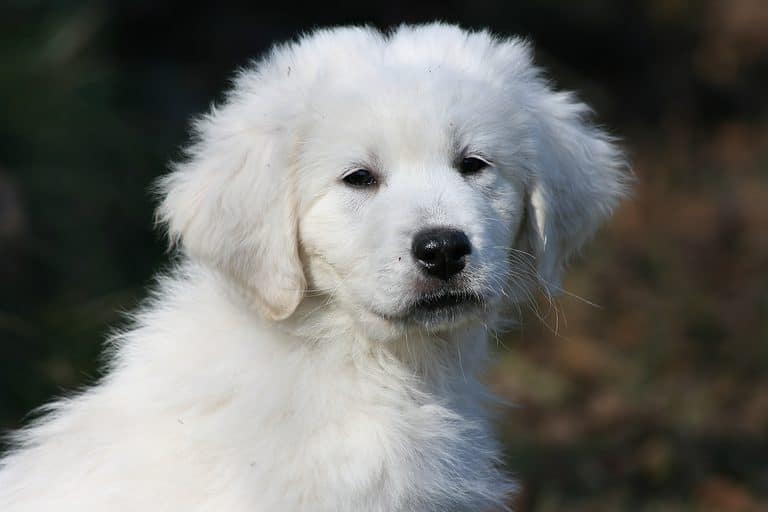
Slovak Cuvac puppy

Owners should train Slovak puppies to accept a grooming routine to manage their fluffy white fur.

Early training is essential with a large breed dog, as they can become unmanageable when full-grown if their training is neglected. Training and socialization should accustom them to small children, other dogs (especially smaller ones), and strangers. Owners should train puppies to accept a grooming routine that includes nail trims, ear cleaning, and teeth brushing.  

Slovak Cuvacs and Children

This breed is suitable for kids, friendly toward pets, and nice to strangers. They are highly protective of small children and playful with older kids and teens. However, they might perceive visiting children as new members of the pack and try to maintain their position by herding or correcting them. They need to be supervised around little ones until these tendencies have been thoroughly brought under control. 

Dogs similar to Slovak Cuvacs

  • Kuvasz: This is a Hungarian breed. It does not take as much grooming as the Slovak cuvac, but it also does not get along as well with kids.
  • Komondor: The fur of this breed grows in long, visually striking dreadlocks. It loves children and doesn’t take a lot of grooming, but it barks a lot.
  • Great Pyrenees: Slovak cuvacs are often mistaken for Great Pyrenees. The Great Pyrenees is easier to groom and better with children, but barks more.

View all 391 animals that start with S

Sources

  1. Petnetid / Accessed December 5, 2022
  2. American Kennel Club / Accessed December 5, 2022
  3. Dog-Learn / Accessed December 5, 2022
  4. Dogbreedslist / Accessed December 5, 2022
  5. Hepper / Accessed December 5, 2022
  6. 101dogbreeds / Accessed December 5, 2022
  7. Dogzone / Accessed December 5, 2022
Drew Wood

About the Author

Drew Wood

Drew is a college professor and freelance writer who graduated from the University of Virginia. His travels have taken him to 25 countries and 44 states, where he has enjoyed learning about wildlife in a wide range of environments. In addition to his love of animals, he enjoys scary movies, landscaping, strategy games, and philosophical discussions over a cup of coffee. He is also an emotional support human to a neurotic Spanish Water Dog and a hyperactive Chihuahua mix.

Thank you for reading! Have some feedback for us?


Slovak Cuvac FAQs (Frequently Asked Questions)

A Slovak cuvac puppy costs $800-$1,200 to purchase and about $950 a year to maintain.