
Turkey is a large country with varied geography that includes mountains, coastlines, and islands. It has a large variety of wild and domesticated animals. There are more than 1500 types of animals in Turkey. Animals native to Turkey include wolves, foxes, boars, wild cats, beavers, bears, gazelles, jackals, hyenas, deer, and mountain goats. The major domesticated animals in Turkey are water buffaloes, Angora goats, and camels.
Although camels are not native to Turkey, they have become an enduring part of the country’s cultural heritage. Historically, camels were used to travel long distances along trade routes that passed through Anatolia, particularly in arid regions where their endurance was especially valuable. While camels were once brought in from Central Asia and the Middle East to support trade and transportation, many are now bred locally to sustain the traditional Turkish pastime of camel wrestling—a practice still celebrated today, especially in the western regions of the country.
Besides these well-known animal species, there are many unusual animals that are endemic to Turkey. These unique animals include the chevrotain. Sometimes called a mouse deer, this small, deer-like creature is the smallest hoofed mammal in the world.
Other animals unique to Turkey are the northern bald ibis, the Asia Minor spiny mouse, and the agali, a wild mountain sheep.
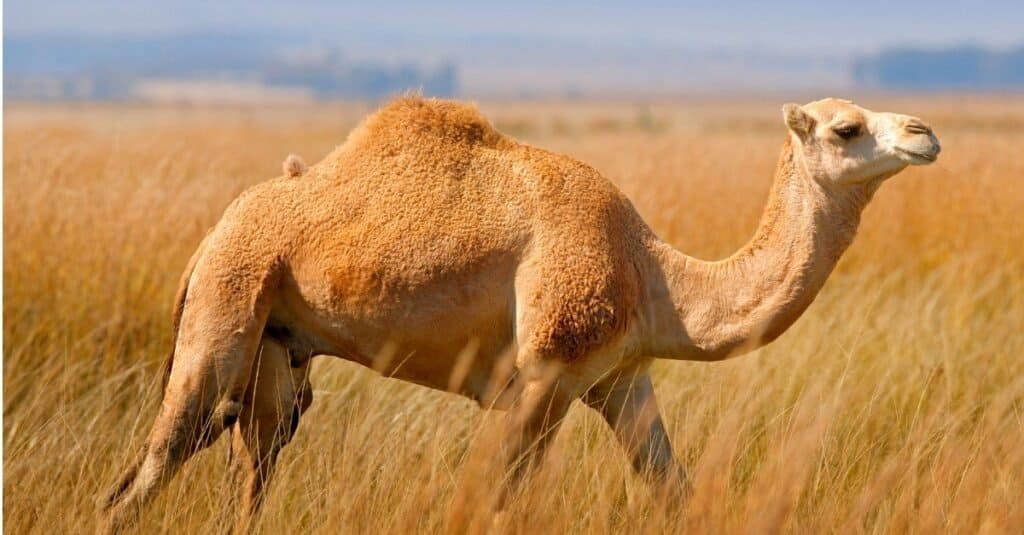
Since the country’s industrialization, camels are no longer Turkish citizens’ main mode of transport. They still serve social functions, however, with the 2,400-year-old sport of camel wrestling being popular in Turkey to this day.
©Ondrej Prosicky/Shutterstock.com
The Official National Animal of Turkey
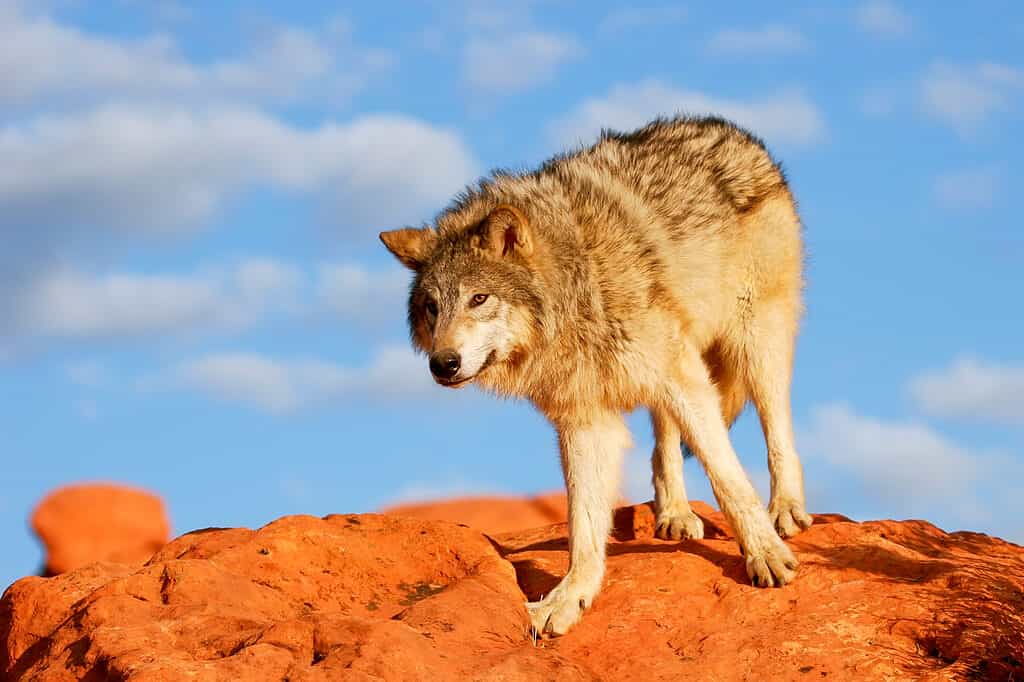
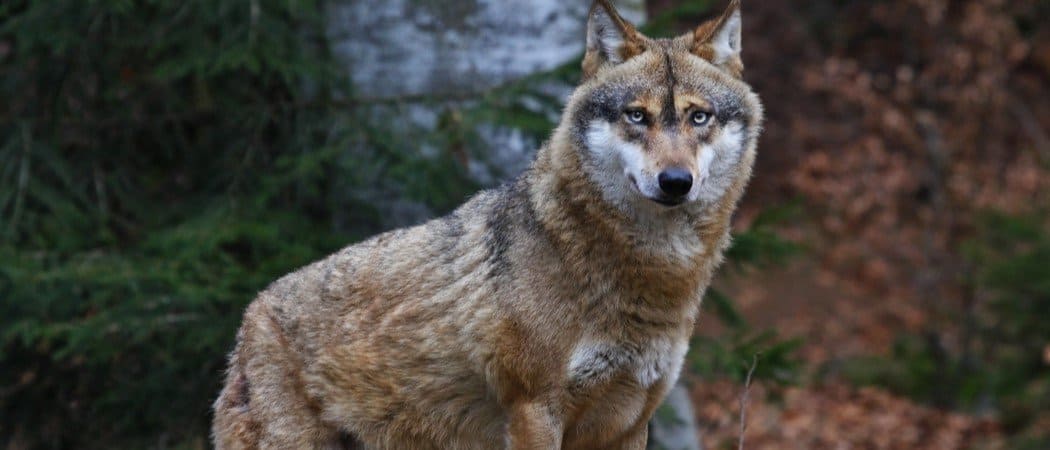
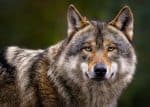
The gray wolf is Turkey’s national animal.
©Don Mammoser/Shutterstock.com
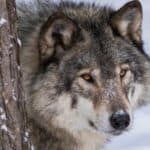
The gray wolf is the national animal of Turkey. In Turkey, gray wolves live mostly in the forests and mountainous areas. Sometimes called timber wolves, gray wolves can weigh up to 98 pounds. They feed on deer, elk, and moose. Wolves travel in family packs that include two mated wolves and their pups.
The country’s national animal symbolizes goodness, courage and strength. According to Turkish mythology, a gray wolf rescued an injured human boy and nursed him back to health. When he grew up, he mated with the wolf and produced a line of half-wolf, half-human children. The descendants of these children became the first and greatest rulers of Turkey.
Turkey’s national breed of cat is the van cat. It is an extremely unique feline, namely because they absolutely love the water, and have even been given the moniker “swimming cats” due to their common practice of paddling about the waters of their namesake Lake Van in Eastern Anatolia. Van cats have an off-white coat sometimes embellished with rust-colored patches and either has amber eyes or display brilliant heterochromia (two different colored eyes, most often green and blue.)
Where To Find The Top Wildlife
Turkey’s rich mix of ecosystems means there are many places to see its native wildlife. Many animal and bird species are unique to Turkey’s fauna.
Hatay mountain gazelles inhabit the forested land between Turkey and Syria. They are only found in this region of the world. This subspecies of the gazelle family was almost extinct when the Turkish government created a gazelle sanctuary in 2019. At the time, there were only around 100 mountain gazelles left. Today, there are more than 1,000 gazelles living in the sanctuary.
Brown bears live in the northern forests. They are also endangered, and many now live in the country’s national parks and wildlife sanctuaries.
Turkey has 33 national parks, and all are excellent places to see the country’s native flora and fauna.
Yozgat Pine Grove National Park was Turkey’s first national park. It is a mixed pine forest with more than 100 plant species. Wildlife in the park includes deer, foxes, snakes, wolves, eagles, and hawks.
Hatila Valley National Park is a mountainous region full of rivers, waterfalls, and pine trees. Mountain goats, wild boars, rabbits, wolves, foxes, gazelles, and squirrels all inhabit this heavily forested park.
Bird Paradise National Park is home to Manyas Bird Lake, where more than 250 bird species find shelter. The bird species native to Turkey include ducks, geese, white pelicans, egrets, purple herons, and nightingales.
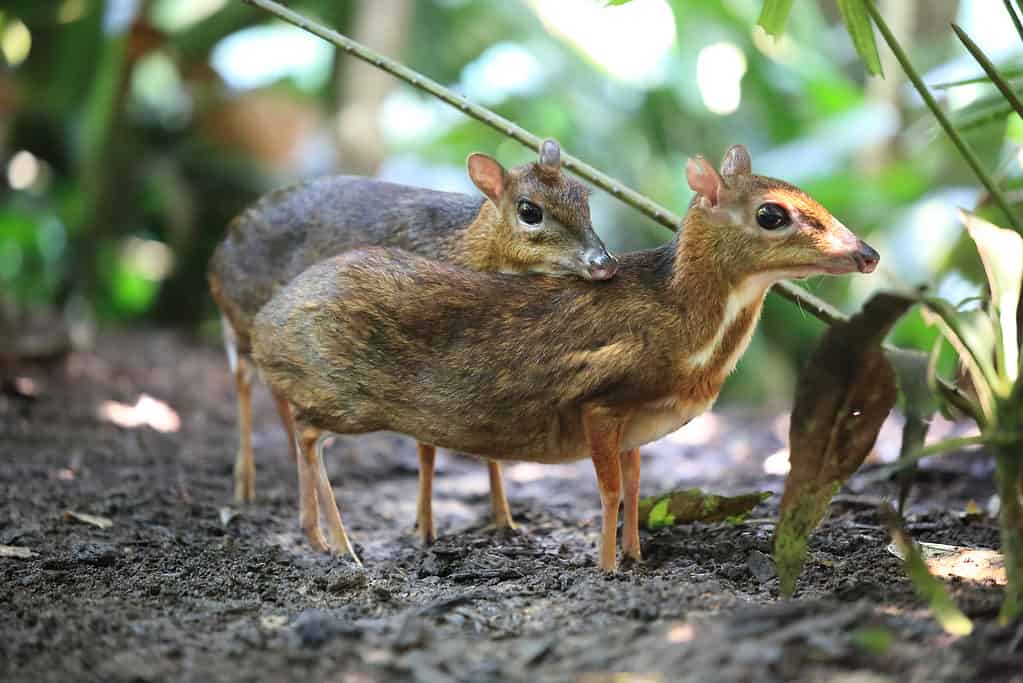
Chevrotains are the smallest hooved mammals on Earth and can be found in the forests of Turkey.
©YAMASA/Shutterstock.com
Native Birds
Turkey’s various environments of steppes, wetlands, and forests provide habitats for many species of avifauna. Not only do many birds reside here year round, but Turkey is an excellent place for avid birders to see multitudes of migratory species. Ideally, spring is the best time of year to visit for to experience breeding season. Around 460 species visit the country each year, including endangered avifauna such as the Dalmatian pelican, greater spotted eagle, and sociable plover. Below are some of the most popular birdwatching places in Turkey.
- Bosphorus and Dardanelles Straits – Migratory birds make their way through these narrow straits on their migration routes, making these ideal places to see some unique species.
- Black Sea Sores of Istanbul – Not only is the ocean scenery unmatched but many bird species can be spotted off these shores. Eastern imperial eagles, black storks, short-toed snake eagles, black kites, and osprey fly the skies.
- Manyas Bird Paradise – Visitors can access observatory towers by connecting hiking trails surrounding the lake. Over 2-3 million birds of around 300 species fly through or rest at the area during migration, quite the spectacle for bird watchers. Species include spoonbills, cormorants, pelicans, swans, and geese.
- Sultan Marshes Bird Sanctuary – A beautiful wetland home to many types of wildlife, waterfowl species here are a must-see. Flamingoes, perc, and cranes hangout in the tall grasses.
There are countless other popular locations for bird watching all over the country. Many of the mentioned areas are highly protected to maintain environments for threatened species and unique species from all over the world.
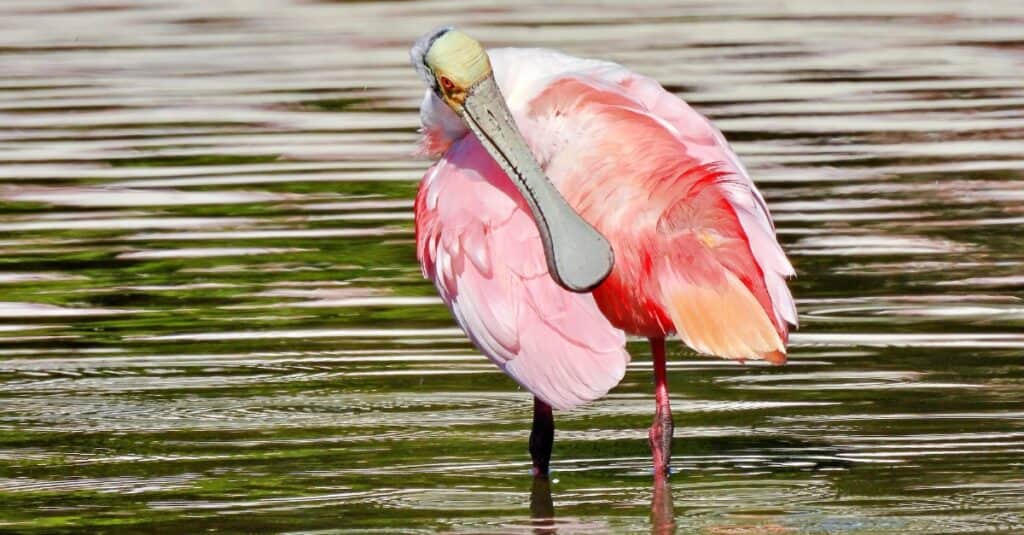
Spoonbills are among many of the vibrant avian species found throughout Turkey.
©iStock.com/passion4nature
Native Fish
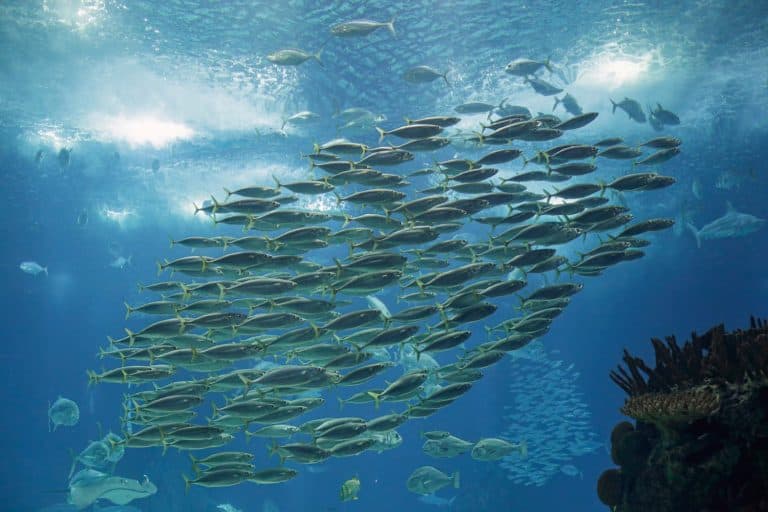
The waters near Turkey are home to a vast array of wildlife, including several exotic or commercially important fish species. You’ll find seahorses, sandbar sharks, red mullets and even swordfish in Turkey.
Turkey is a coastal country, surrounded by multiple bodies of water. Fishing is a popular pastime, sport, and livelihood in the country. Some of the most popular fishing areas include:
- Mediterranean Sea
- Aegean Sea
- Black Sea
- Bosphorus Strait
- Sea of Marmara
Common species caught in these waters include blue fin tuna, bonito, bluefish, sea bass, bream, red mullet, and many more. Unfortunately, overfishing, pollution, and climate change have led native species to become endangered and, therefore, protected. Protected species include cuttlefish, dolphins, sea horses, sandbar sharks, and black coral. It is illegal to fish these types of marine life.
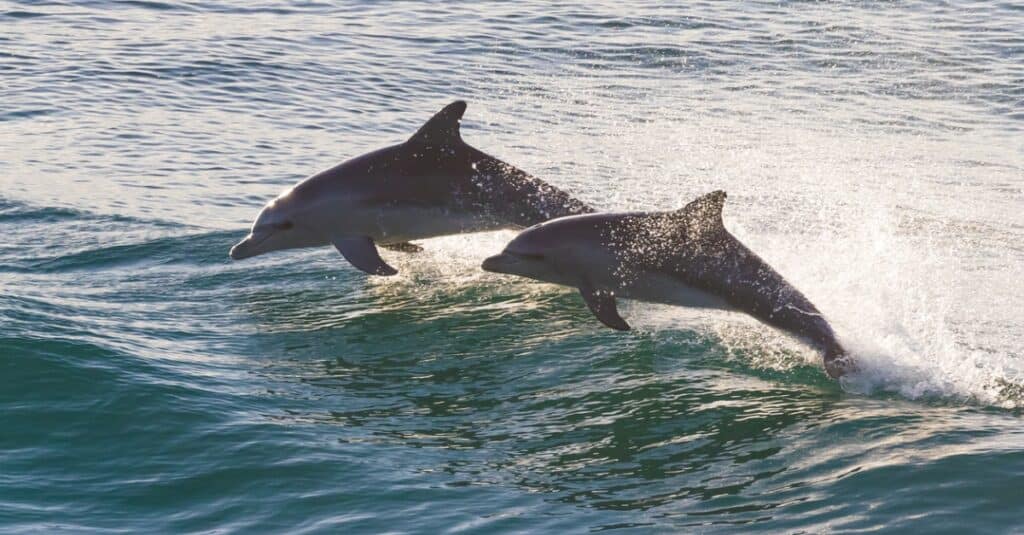
Dolphins are mammals, meaning even though they live in the water since they must breathe oxygen and don’t lay eggs dolphins are not considered fish.
©Sally Hinton/Shutterstock.com
Native Snakes
The ideal environments of Turkey provide habitats to exciting wildlife, including reptiles and amphibians. Around 45 species of snake exist in the country, 12 of which are venomous. Common species include boas, racers, blind snakes, dwarf snakes, etc. While snake bites are not common in Turkey, they do occur. Venomous species to look out for are:
- Ottoman viper
- Anatolian meadow viper
- European adder
- Wagner’s viper
- Black Cobra
Those are only a handful of examples of venomous snakes in Turkey with the Ottoman viper surpassing the others as the most dangerous. If bitten by a snake it is always recommended to seek medical attention regardless of species.
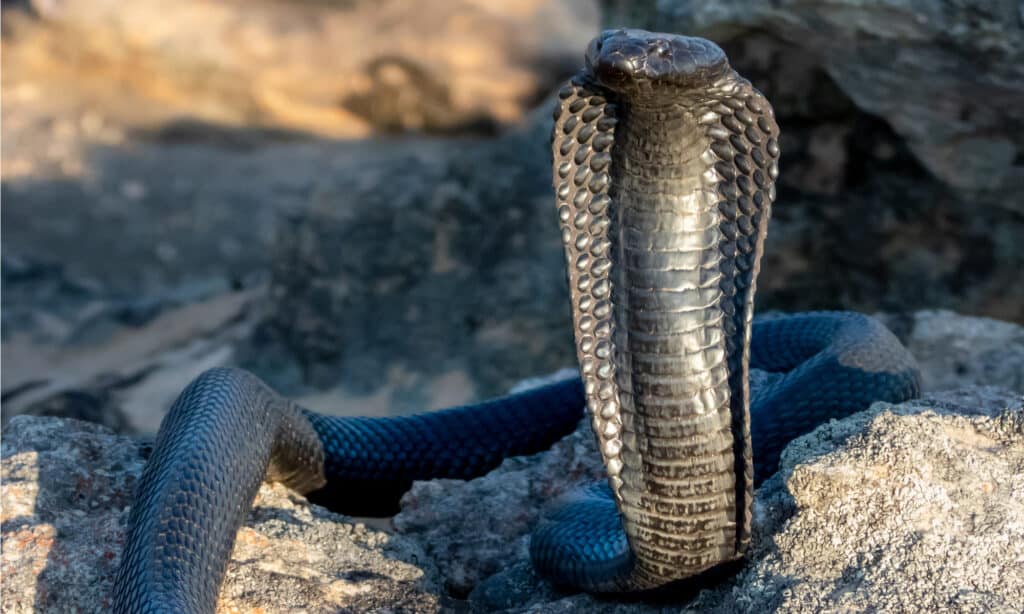
The Zebra Snake or Black Spitting Cobra is one of Turkey’s most feared native serpents.
©Willem Van Zyl/Shutterstock.com
The Most Dangerous Animals In Turkey
Animal attacks on humans are rare in the country, but there are some dangerous types of animals in Turkey’s nature.
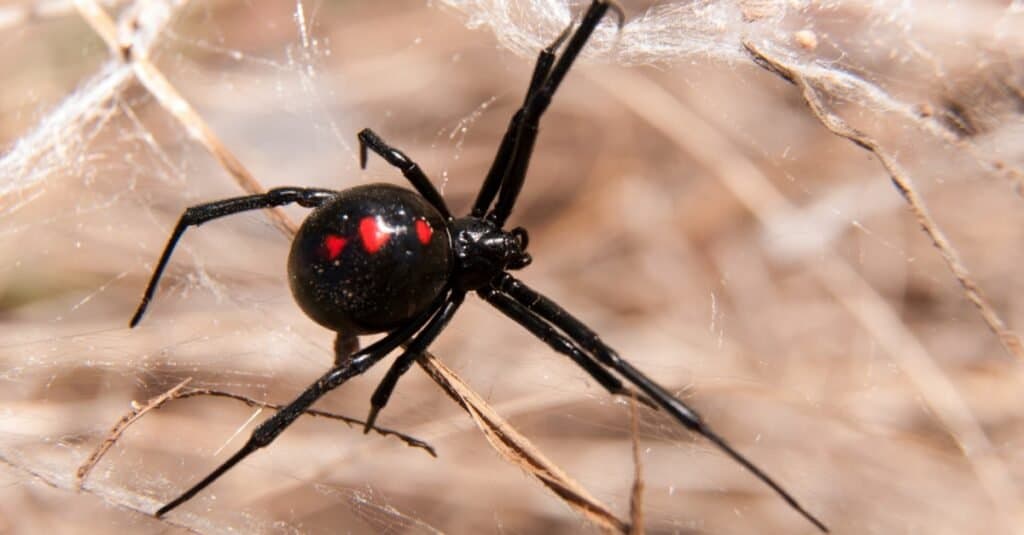
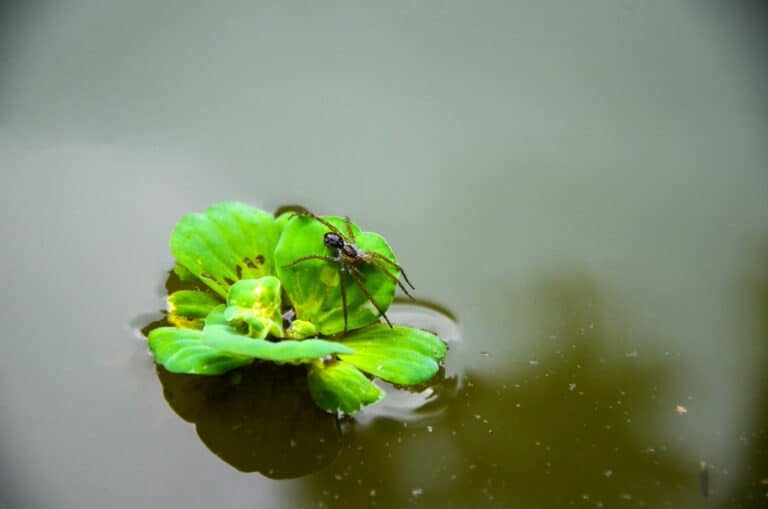
Black widows are one of nine species of venomous spiders found in Turkey.
©Sari ONeal/Shutterstock.com
- Snakes: Turkey has dozens of snake species, and several of them are venomous. One of the most dangerous snakes in Turkey is the Ottoman viper. Also known as the rock viper or coastal viper, this dangerous snake attacks without provocation and injects venom with every bite. Turkey’s other dangerous snakes include the black desert snake, Wagner’s viper, and European adder.
- Spiders: Turkey is home to nine of the world’s most venomous spiders. They include the brown recluse, black widow, and wolf spider. A bite of the segestria spider can cause death in under three minutes. This dangerous spider mostly inhabits dense forests.
- Centipedes: Turkish centipedes can grow a foot long. Primarily found in the desert and scrublands, these bugs will bite humans. Their bite can hurt, but it isn’t deadly and can be treated with antibiotics.
Endangered Animals
- The dhole is an endangered species of wild dog native to Turkey. They are also known as red dogs, red wolves, or mountain dogs. Their population has dwindled down to fewer than 2,500 adults in the wild.
- The loggerhead sea turtle is a huge turtle that can weigh more than 300 pounds as an adult. The largest loggerheads have been recorded at 1,000 pounds. Loggerhead turtles, like most other sea turtle species, are critically endangered.
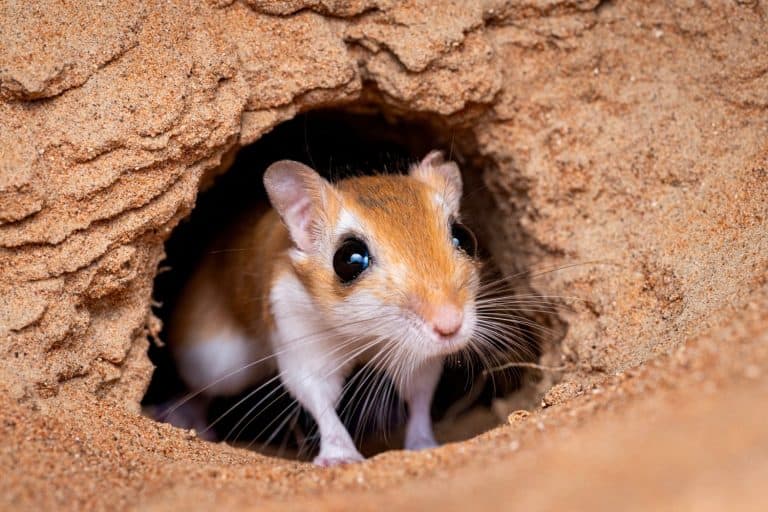
- The Asia Minor spiny mouse is a tiny rodent that lives in large family packs. These endangered rodents primarily inhabit the forests, but some live near human populations.
- The bald ibis is a large migratory bird that is native to Turkey. It is extinct in the wild and only exists in captivity.
- The Anatolian leopard is a big cat that is native to Turkey. Conservationists believed these leopards were extinct, but there have been sightings of them in recent years. The Turkish government included Anatolian leopards on its list of endangered animals that require immediate protection.
Turkey’s Rarest Animal
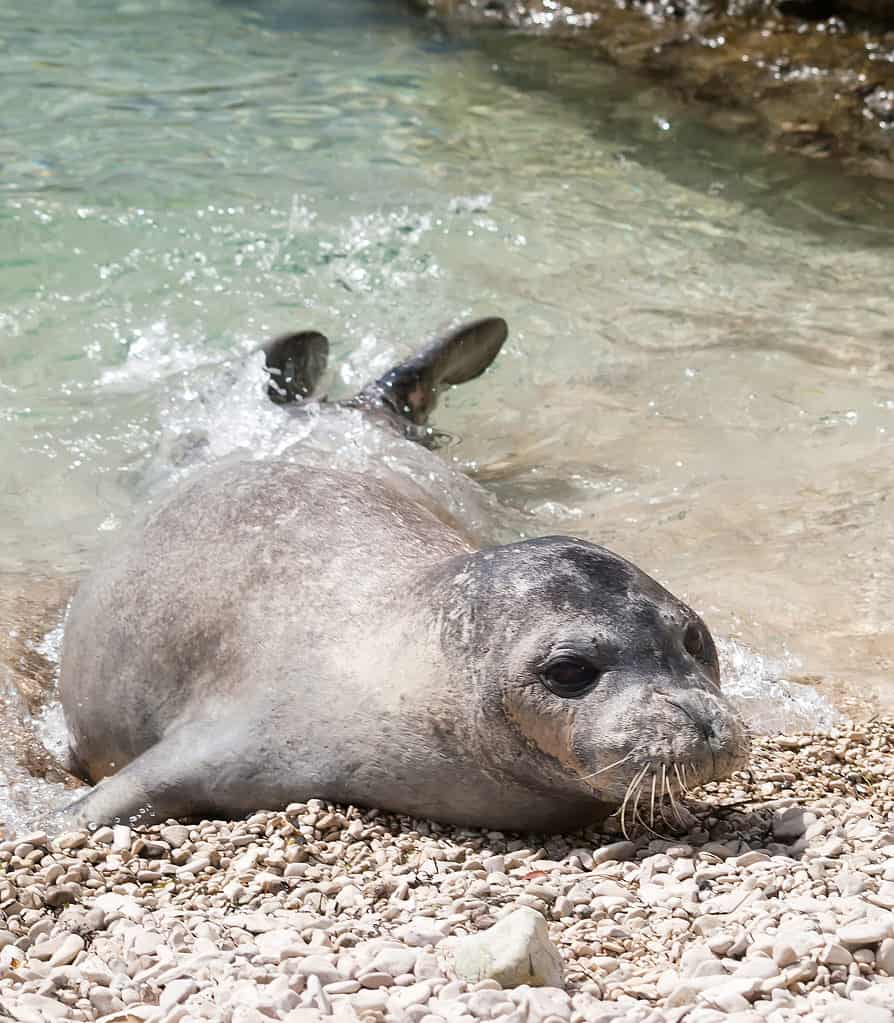
Mediterranean monk seals are the rarest member of the seal family, with fewer than 700 individuals in the wild.
©iStock.com/sewer11
The Mediterranean monk seal is the most endangered species in Turkey. Mediterranean monk seals can grow from 3 to 7 feet. There are only a few hundred of these endangered seals left in Turkey. While monk seals used to enjoy relaxing and raising their pups on the shores of Turkish beaches, centuries of pursuit by humans have led these shy creatures to adapt their lifestyle. Mediterranean monk seals now spend most of their time in distant caves inaccessible to humans and feed on various spiny fishes and octopi found in nearby waters.
Zoos in Turkey
Along with wild animals roaming their natural habitats, Turkish zoos also exhibit exotic animal species and are a fun place for family trips when visiting or on a day off. Listed are some popular zoos in the country. The most popular zoo to visit is Bursa Zoo – a small zoo focusing on animals native to Turkey but still displays exotic species such as baboons, lions, waterfowl, and ostriches. Visitors may also go to the smaller aquariums and zoos of Turkey.
Turkey Has Many Interesting Animals
Turkey has a wide variety of wild animals, including unique birds, wild cats, and marine mammals. Its most famous animals live in remote regions like the forests and mountains. Mountain goats and wild sheep run on the hillsides, and dolphins swim in the rivers and coastal areas. Turkey’s national parks are the best places to see native animals like bears, caracals, and wild boars.
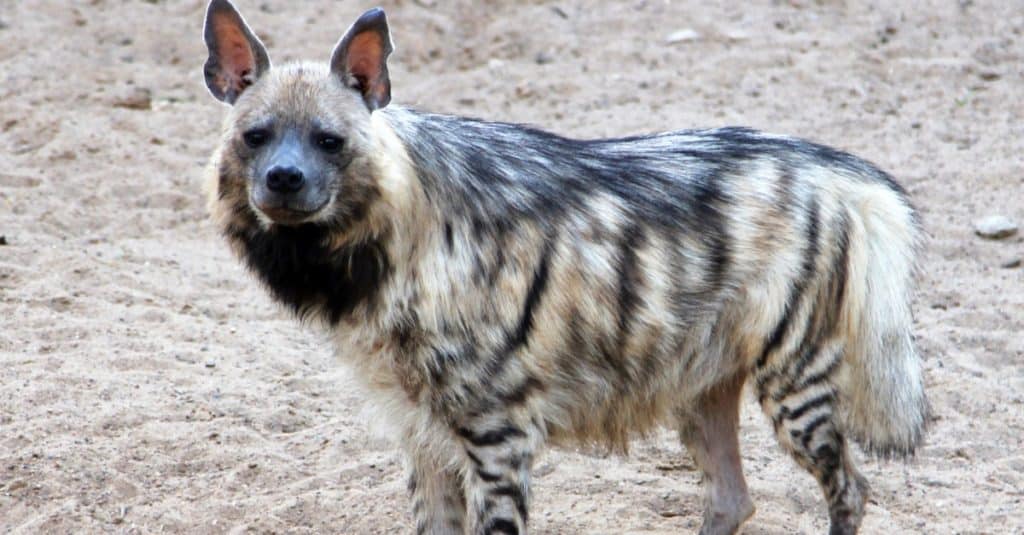
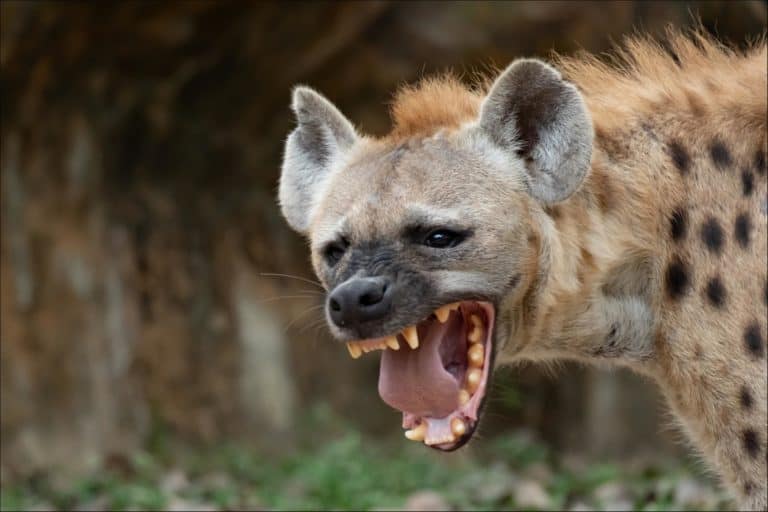
The striking, ashen patterns of the striped hyena are one example of Turkish wildlife’s visual brilliance.
©Katoosha/Shutterstock.com
What is the Largest Animal in Turkey?
The Syrian Brown Bear is Turkey’s most massive native species. These bears have a light beige coat and measure about 40-55 inches from head to tail. They can weigh up to a staggering 550 lbs, and are often illegally hunted for the purpose of utilizing their fat in traditional medicines. Bears are additionally oftentimes treated as pests by local farmers due to the damage they can inflict on vital honeybee populations.
To find an animal weighing more than a typical Syrian Brown Bear within the borders of Turkey you’ll have to go fishing! The record for the largest fish caught in Turkey was set in 2017 when a bluefin tuna weighing a staggering 650 lbs was reeled in during a fishing tournament at Teos Marina in Seferihisar, Izmir, Turkey. This gigantic creature had to be hoisted ashore with the aid of a forklift because of its impressive weight.