
B
Species Profile

Berger Picard

Canis lupus familiaris

Rustic looks, serious herding brains.
Sarah Medway/Shutterstock.com

Berger Picard Distribution

Click a location to explore more animals from that region

Origin Location

This map shows the native origin of the Berger Picard. As a domesticated species, they are now found worldwide.

Loading map...

Found in 1 country

Size Comparison

Human 5'8"
Berger Picard 1 ft 12 in

Berger Picard stands at 35% of average human height.

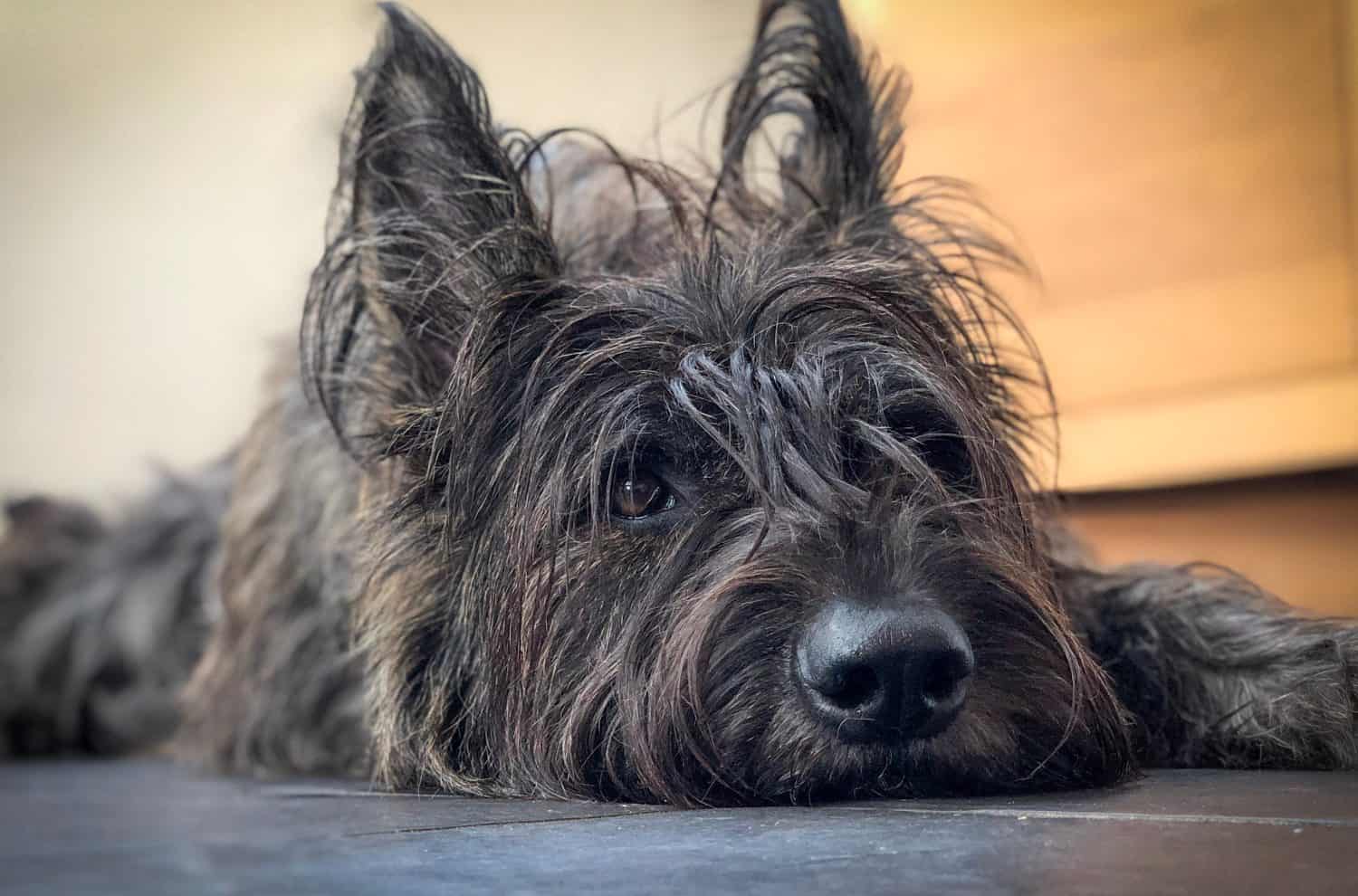
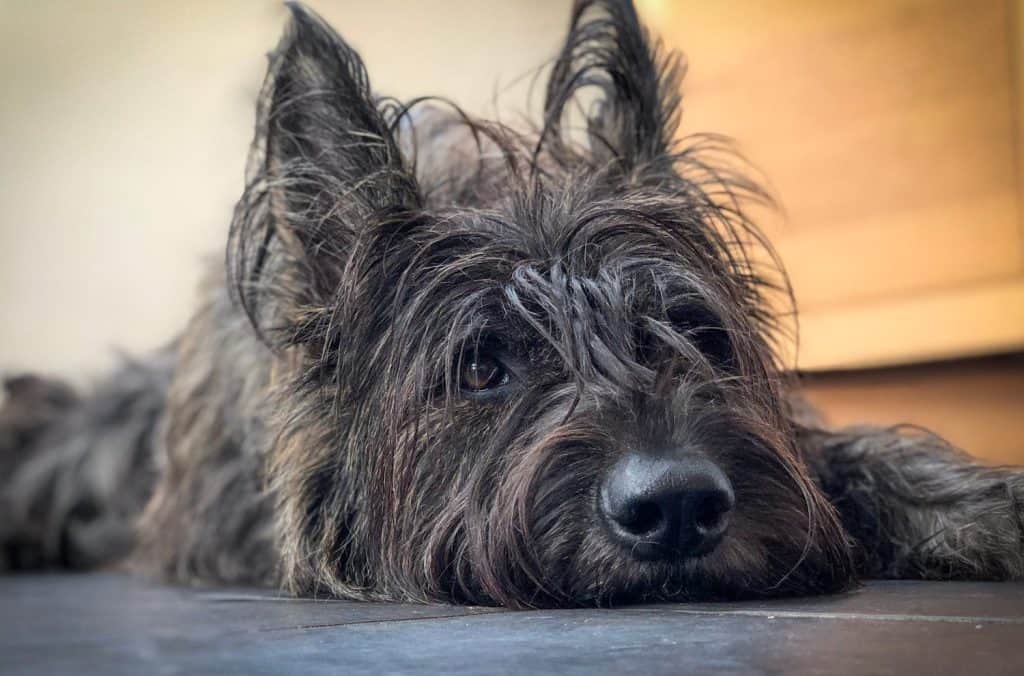
A Berger de Picard / Picardy Sheepdog dog, female, brindle colour with head on ceramic tiled floor indoors

At a Glance

Domesticated
Also Known As Picard, Picard Shepherd, Picard Sheepdog, Picardy Sheepdog
Diet Omnivore
Activity Diurnal+
Lifespan 5 years
Weight 32 lbs
Status Not Evaluated
Did You Know?

The Berger Picard is one of France's oldest herding breeds, tied to the Picardy region's farm traditions.

Scientific Classification

The Berger Picard (Picardy Shepherd) is an old French herding breed from the Picardy region, valued as a versatile farm dog for herding and guarding and now also kept as an active companion.

Kingdom
Animalia
Phylum
Chordata
Class
Mammalia
Order
Carnivora
Family
Canidae
Genus
Canis
Species
Canis lupus

Distinguishing Features

  • Medium-sized, rustic, rough-coated shepherd dog
  • Harsh, wiry coat (often fawn/gray tones) with a natural, tousled appearance
  • Erect, high-set ears and an alert, lively expression
  • Athletic build suited for herding and endurance work

Physical Measurements

Males and females differ in size

Height
♂ 2 ft 1 in (1 ft 12 in – 2 ft 2 in)
♀ 1 ft 11 in (1 ft 10 in – 1 ft 12 in)
Length
♂ 3 ft 7 in (3 ft 3 in – 3 ft 11 in)
Weight
♂ 61 lbs (51 lbs – 71 lbs)
♀ 53 lbs (44 lbs – 62 lbs)
Tail Length
♂ 1 ft 4 in (1 ft 2 in – 1 ft 6 in)
♀ 1 ft 4 in (1 ft 2 in – 1 ft 6 in)
Top Speed
31 mph
High stamina, can sprint

Appearance

Primary Colors
Secondary Colors
Skin Type Domestic dog skin with moderate pigmentation under a harsh, wiry double coat (coarse outer coat with a protective undercoat); skin can be prone to mild sensitivity/allergies in some lines-benefits from gentle grooming and parasite prevention.
Distinctive Features
  • Berger Picard (Canis lupus familiaris) is a herding dog from Picardy, France, bred for herding and guarding. Smaller than wolves, focused on people, with erect ears and a wiry coat.
  • Key identification traits: harsh/wiry, tousled 'rustic' coat; large, naturally erect ears set high; shaggy eyebrows and a subtle beard/mustache that give an expressive, slightly scruffy face.
  • Build: lean, long-legged, rectangular outline with a level topline (typically less sloped than a German Shepherd); athletic but not heavy-boned-made for endurance trotting behind stock.
  • Coat maintenance: low-shed to moderate with a rough feel; weekly brushing/combing usually sufficient, plus occasional hand-stripping or tidying (avoid over-bathing/softening the coat); check behind ears and in feathering for tangles/debris after field work.
  • Activity/temperament needs (breed-typical): high energy and strong working/herding drive; needs daily vigorous exercise plus mental work (training, scent games, herding-style outlets). Without structured activity, may develop nuisance behaviors (barking, digging, chasing).
  • Training/socialization: intelligent and independent; responds best to consistent, reward-based training; early socialization is important to reduce wariness with strangers and prevent over-protective or reactive tendencies.
  • Breed often has hip dysplasia and sometimes elbow dysplasia; eye problems like progressive retinal atrophy (PRA) and cataracts. Regular orthopedic and eye checks advised. Deep-chested dogs risk bloat (GDV); feed and exercise carefully.
  • Working-dog practicality: weather-resistant coat and upright ears suit outdoor farm life; benefits from secure fencing and leash reliability due to potential chase/herding instincts.

Sexual Dimorphism

Sexual dimorphism is moderate: males are typically larger and more robust, while females are often slightly lighter-framed; coat texture and hallmark erect ears occur in both sexes.

♂
  • Generally taller/heavier with a broader head and more substantial bone.
  • May appear more "substantial" through neck and chest while retaining an athletic outline.
♀
  • Typically smaller and more refined in head and body.
  • Often appears slightly lighter and more agile in overall build (still athletic and long-legged).

Did You Know?

The Berger Picard is one of France's oldest herding breeds, tied to the Picardy region's farm traditions.

Its "tousled" wiry coat is intentionally rustic-more weather-shedding than glamorous.

Erect, high-set ears are a signature look, helping it read distant movement while working.

Many Picards have a distinctive "smile" expression created by their head shape and facial furnishings.

After the World Wars, the breed became rare; modern populations were rebuilt from limited stock.

As a breed, it's typically lean and athletic rather than heavy-boned-built for all-day work, not short bursts.

Unique Adaptations

  • Weather-ready coat: harsh, wiry topcoat with minimal grooming needs and good protection from rain, wind, and brambles-suited to outdoor farm work.
  • Efficient, ground-covering gait: a light, economical trot that supports long workdays herding livestock.
  • Pricked ears and alert posture: enhances long-distance sound localization and visual scanning on open fields.
  • Lean, durable build: compared with the base species context (Canis lupus), selective breeding favors endurance and responsiveness to humans over raw size/strength.
  • Human-directed teamwork: unlike wild wolves' pack hunting specialization, Picards are bred for cooperative herding/guarding tasks with people and quick learning in a home environment.

Interesting Behaviors

  • "Loose-eyed" herding style: tends to use body position and forward pressure more than an intense, fixed stare (contrasts with many Border Collies).
  • Independent problem-solving: may pause to assess rather than instantly obey-great for farm work, challenging for novice owners.
  • Watchful guardian habits: commonly patrols property boundaries and alerts quickly to change or strangers.
  • Mouthy/heel-nipping play: a herding-dog carryover, especially in adolescents; benefits from early bite-inhibition and impulse-control training.
  • High movement sensitivity: bicycles, runners, and fast games can trigger chase/herd behaviors without training.
  • Work-to-relax cycle: settles best after purposeful exercise (training, scent work, herding games), not just free yard time.

Cultural Significance

From Picardy in northern France, the Berger Picard (Canis lupus familiaris) was a working farm dog that moved sheep and cattle, watched yards, and lived with families. Its rough look symbolized rural France and post-war recovery; now it is a companion and dog-sports partner.

Myths & Legends

Regional origin lore often links the breed's ancestry to ancient herding dogs brought through northern France centuries ago, with Picardy farmers preserving the rough-coated type for its hardiness and utility.

No well-known myths or old stories are tied to the Berger Picard (Picardy Shepherd, Canis lupus familiaris). Most sources say it is a French herding and farm dog from Picardy, not part of folklore.

During the World Wars Picardy farm dogs suffered displacement and hardship; later breeders rebuilt the Berger Picard, calling it almost a "resurrection" of local heritage, a story told with pride in breed circles.

Naming tradition: The breed's name is derived from the Picardy region of northern France, reflecting a common European practice of naming working dogs after their place of origin.

Conservation Status

NE Not Evaluated

Has not yet been evaluated against the criteria.

Population Stable

Life Cycle

Birth 6 pups
Lifespan 5 years

Lifespan

In the Wild
2–10 years
In Captivity
12–14 years

Reproduction

Mating System Polygynandry
Social Structure Managed Domestic
Breeding Pattern Not Applicable
Fertilization Managed Selective
Birth Type Internal_fertilization

Berger Picard (Canis lupus familiaris) breeding is managed domestically. Main mating system: polygynandry — breeders select mates, multiple males may sire litters, no lasting pair bonds. Breeding is set by humans; internal fertilization with dog copulatory tie.

Behavior & Ecology

Social Pack Group: 4
Activity Diurnal, Crepuscular, Cathemeral
Diet Omnivore Meat-forward complete dog food (kibble or balanced wet/raw-style), often highly motivated by beef or poultry-based rewards during training.

Temperament

Breed-distinguishing traits (vs base species context): rustic, athletic herding/guarding farm dog; typically more independent and observant than many modern companion breeds, with a "think-first" style and moderate-to-high chase/herding drive.
Herding traits: strong learning from rewards, notice motion and handler's position, often try to control animals by stalking, blocking, circling. Individuals vary in barking, friendliness to strangers/dogs, and how strong their herding is.
With family: loyal, steady, often affectionate in a low-key way; tends to follow household members from room to room while maintaining a watchful stance.
With strangers: commonly reserved or cautious at first; benefits from early, broad socialization to prevent suspiciousness or reactive alarm barking.
With other dogs: can be sociable but often selective; may be pushy with rude dogs, and can develop same-sex tension if not managed; does best with structured introductions and clear household rules.
Trainability: intelligent and quick to learn; can be stubborn if training is repetitive or harsh. Best results with short sessions, clear criteria, and work-like tasks (obedience, herding-style games, scentwork, agility).
Care requirements: high daily physical exercise plus mental work (problem-solving, scent games, training). Under-stimulation often shows as pacing, nuisance barking, digging, or chasing moving objects (bikes, joggers, livestock, cats).
Care requirements: coat is low-maintenance but needs routine brushing/hand-stripping of dead hair; check ears and paw pads after field work. Secure fencing recommended due to roaming/curiosity and chase tendencies.
Breed health risks: hip dysplasia; eye problems like progressive retinal atrophy in some lines; risk of bloat (GDV). Keep dogs fit and lean, choose health-tested lines, and get regular vet checks.

Communication

alert/alarm barking Notably when novel stimuli appear
short attention barks during arousal/play
growls for boundary-setting or threat display
whines/warbles for attention, anticipation, or frustration
howl-like vocalizations occasionally Less common than barking
highly expressive ear and facial signaling Ears forward for interest, pinned back for appeasement
body blocking, circling, and stalking posture as herding-derived control signals
intense eye contact/"hard stare" when focusing on movement Can escalate if over-aroused
leaning, nudging, pawing to initiate interaction or request access
scent marking (urine marking) and investigation of scent trails; uses sniffing to regulate arousal
tail carriage and whole-body stiffness/relaxation cues for social negotiation; tends to show subtle early stress signals when uncertain

Habitat

Biomes:
Temperate Forest Temperate Grassland Mediterranean Boreal Forest (Taiga) Tundra Alpine Desert Hot Wetland +2
Terrain:
Plains Hilly Riverine Coastal
Elevation: Up to 9842 ft 6 in

Ecological Role

Domestic, human-associated omnivore/mesopredator substitute: primarily a herding/guarding farm dog and active companion rather than a true wild predator.

Livestock herding and movement control on farms Property and flock guarding/alerting Opportunistic rodent/pest deterrence around human settlements Companionship and working partnership with humans

Diet Details

Main Prey:
Small mammals Ground-nesting birds and eggs Carrion/offal
Other Foods:
Starchy plant foods Vegetables Fruits

Human Interaction

Domestication Status

Domesticated

Berger Picard (Picardy Shepherd) (Canis lupus familiaris) is an old French herding dog from Picardy, shaped by people. Used for moving sheep and cattle and as a watchdog, it has a rustic, weather-resistant build, harsh wiry coat, upright ears, high stamina, and strong human focus. Herding breeds work with people in farm tasks, sport, training, guarding, and companionship.

Danger Level

Low
  • Nipping/heel-targeting behaviors if under-exercised or insufficiently trained (herding instinct expressed toward people, especially children running)
  • Protective barking and territorial posturing if not well socialized
  • Accidental scratches/knocks during high-energy play
  • Any dog can bite if fearful, in pain, or improperly handled-risk increases without training, supervision, and appropriate containment

As a Pet

Suitable as Pet

Legality: Generally legal to own as a domestic dog breed in most jurisdictions. May be subject to standard local animal-control laws (licensing, leash laws) and housing/insurance restrictions that sometimes apply to dogs broadly; not typically targeted by breed-specific legislation.

Care Level: Moderate

Purchase Cost: $1,500 - $3,200
Lifetime Cost: $18,000 - $40,000

Economic Value

Uses:
Livestock management (herding) Property/farm guarding and deterrence Companion animal market Canine sports and events Breeding/show programs
Products:
  • herding services (gathering/driving livestock under handler control)
  • farm utility work (multi-purpose working dog labor)
  • companion/household companionship
  • sport participation (agility, herding trials, rally/obedience)
  • registered breeding stock and show dogs

Relationships

Ecological Equivalents 6

Animals that fill a similar ecological role in their ecosystem

Domestic dog
Domestic dog Canis lupus familiaris Berger Picard — a French herding dog with a wiry, tousled double coat; medium athletic build; independent but trainable temperament; strong herding and guardian instincts; high exercise needs; and health risks such as hip dysplasia and progressive retinal atrophy (PRA).
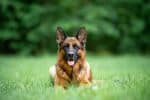
German Shepherd Dog
German Shepherd Dog Canis lupus familiaris Similar working niche — historically herding, now filling versatile service and guard roles; high trainability and athleticism. Differs in coat type (Picard's wiry coat) and often a more independent, rustic farm-dog style.
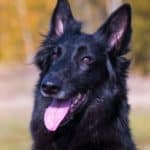
Belgian Shepherd
Belgian Shepherd Canis lupus familiaris Comparable European shepherd lineage and work style (herding, guarding, sport). Shares high energy and responsiveness, with the Picard generally less intense ('drivey') than the Malinois and exhibiting a more weatherproof, rustic coat presentation.
Briard
Briard Canis lupus familiaris Both serve similar French herding/farm roles; they can be protective and require early socialization. The Briard typically has a longer, softer coat that requires more grooming than the Picard's harsh coat.
Beauceron
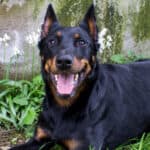
Beauceron Canis lupus familiaris Shares a French pastoral guardian and herder niche; both are alert, athletic, and benefit from firm, consistent training. The Beauceron is typically larger, shorter-coated, and more overtly guarding-oriented.
Border Collie
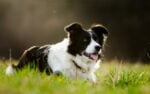
Border Collie Canis lupus familiaris Shared herding specialization and need for daily mental work. Border Collie tends to be more intensely herding-focused and handler-oriented, while Picard is often more of a multipurpose farm dog and guardian.

Quick Take

  • Successful smuggling of taxable goods required this breed to maintain a clandestine profile.
  • The 20th century global conflicts nearly caused the total extinction of the Picardy Shepherd.
  • It is incongruous that the German Shepherd is a close relative to this bearded breed.
  • Trusted breeders must undergo specialist certification to ensure the health of the genetic line.

The Berger Picard, also known as the Picardy Shepherd, is a lanky herding dog with a big, generous spirit. It hails from the region of Picardy in northern France, where the dog plied its trade helping the French farmers and cattlemen herd and guard their livestock. Some of its history is still shrouded in mystery, but it’s thought that this breed descended from the stock of deep antiquity, perhaps brought to the region by the Celts of central Europe thousands of years ago. Some people place its origins even later in the 9th century AD.

By the turn of the 20th century, as the tranquil plains of Picardy became the site of the most ferocious fighting of World War I, this breed was nearly driven to extinction. But thanks to the valiant effort of dedicated breeders, it made a swift comeback in its native France. While less well-known in the United States, the American Kennel Club awarded the Berger Picard full recognition and entry into the Herding Group on July 1, 2015.

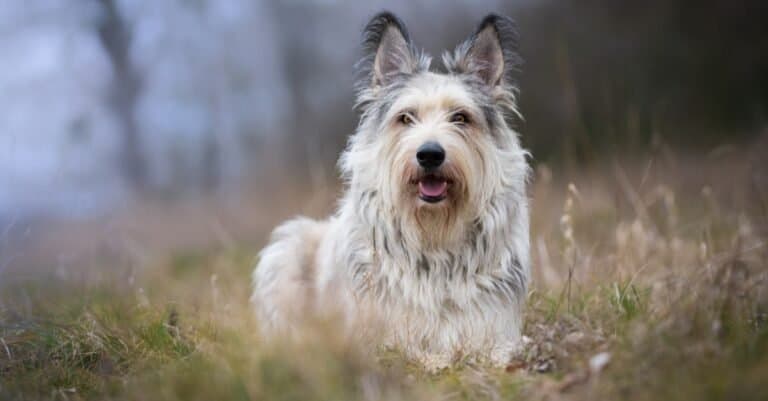
The Berger Picard is one of the more distinctive bearded scruffy dog breeds. It’s characterized by long, slender legs, erect ears, a long snout, and a curled tail. The harsh waterproof coat, which features a very short but dense undercoat, comes in fawn and brindle colors. Brindle means it has dark streaks or flecks all over its body.

An infographic about the Berger Picard dog breed featuring a central illustration of a scruffy, fawn-colored dog with large erect ears. The image includes a timeline of the breed's history in France and various icons representing health, diet, and training needs.
It survived two World Wars and a life of clandestine smuggling only to become a Hollywood star—meet the rarest dog you’ve never heard of. © A-Z Animals

Origins

The clue to its origins lies in its name, which describes its role in the past and the region from which it hailed. That’s right, the Berger Picard, or Picardy Shepherd, once roamed the pastures of northern France keeping flocks of sheep and herds of cattle in check on behalf of shepherds and cowherds.

The seemingly unlikely relative to the German Shepherd also put in time as a contraband smuggler, ferrying taxable goods across borders in plain sight of officials who had no idea what those canines were carrying in pouches disguised to blend in with their fur.

The breed did experience a severe decline in its fortunes along with its home region as a result of World Wars I and II. However, thanks to the robust support of canine enthusiasts, things soon picked up again, and less than two decades after the Second World War, the Berger Picard was recognized by the French Kennel Club.

3 Pros and Cons of Owning a Berger Picard

ProsCons
Easy-going and Mellow
The Berger is good-natured no matter what happens.
Very Demanding
The Berger will demand a lot of your time and effort.
Energetic and Hard-working
Give this breed a task, and it will perform it with gusto.
Grows Bored Easily
If it has nothing to do, this breed may turn destructive.
Watchful and Protective
This breed is a fine watchdog.
Slightly Stubborn
While they’re very trainable, the Berger does require patience and calm.
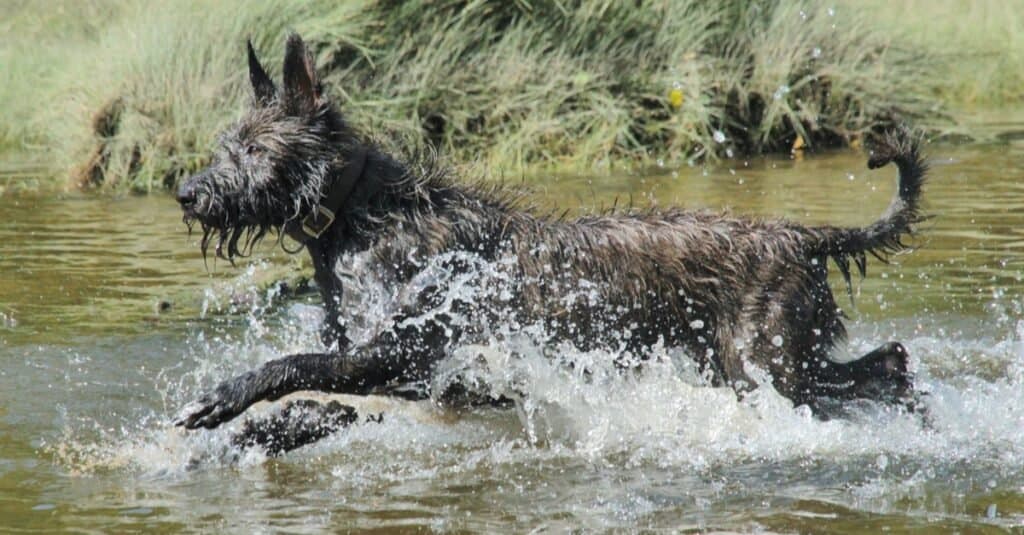
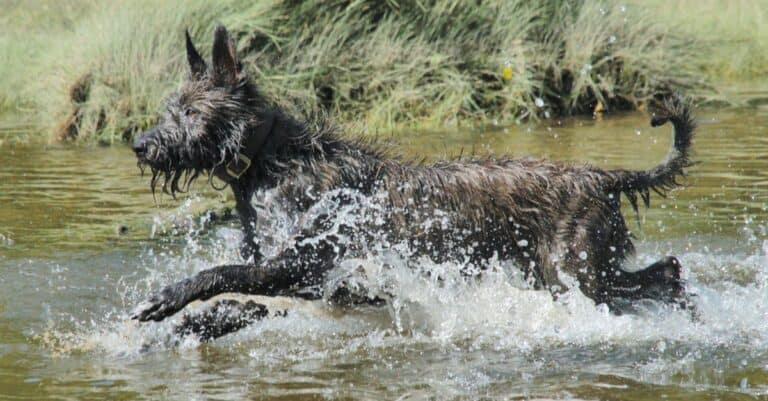
Berger Picard playing in the river.

Berger Picards are also known as Picardy Shepherds, owing to their origins from the northern French region where they served as shepherds.

Size and Weight

The Berger Picard is a medium-sized, muscular dog with an elegant frame. Males tend to be slightly larger than females.

Height (Male) 23.5 to 25.5 inches
Height (Female) 21.5 to 23.5 inches
Weight (Male) 50 to 70 pounds
Weight (Female) 50 to 70 pounds

Common Health Issues

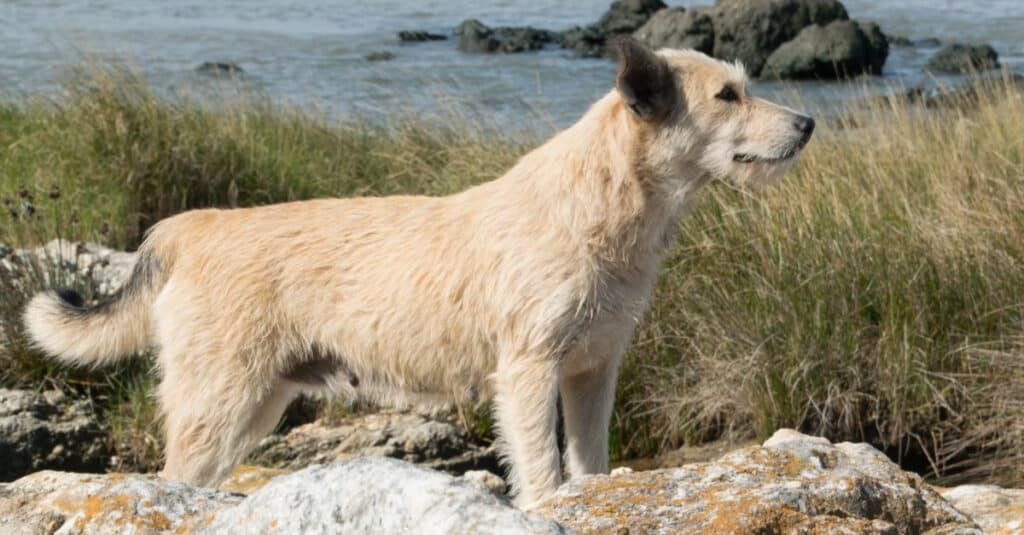
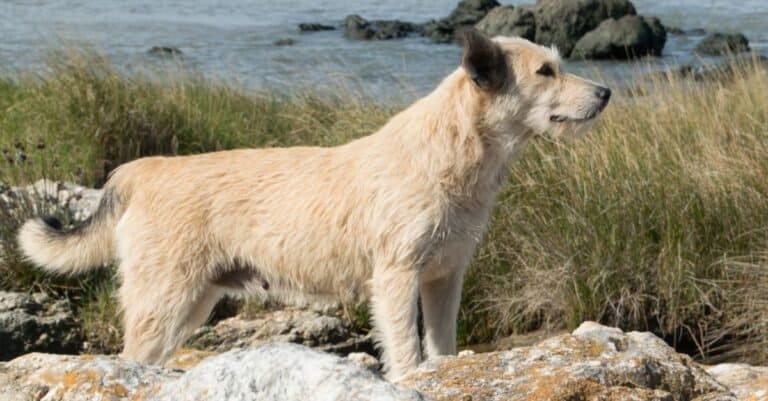
A white Berger Picard at the seaside.

Berger Picards are generally healthy, although they are prone to cancer and hip dysplasia.

Perhaps on account of its herding origins, the Berger Picard is a very healthy breed with a lifespan of 12 to 13 years. It is prone to several diseases, including progressive retinal atrophy, cancer, and a developmental disorder known as hip dysplasia, in which the joint fits poorly in its socket, causing lameness and pain. In order to maintain the health of this line, trusted and reputable breeders will have their dogs certified by hip and eye specialists to prove they’re free of some inheritable issues.

Owners will also need to schedule regular vet visits throughout the entire dog’s lifetime, particularly as it grows older.

Temperament

The Berger Picard has a well-balanced personality. It is simultaneously lively and serious, assertive and obedient, alert and easy-going. They bond deeply with family and like to spend a lot of time with people, though they are wary of strangers. They also like to vocalize and bark, but not excessively so. Keep in mind this is a working dog, not a toy or lap dog.

Owners will need to provide this energetic and intelligent breed with plenty of mental and physical activities throughout the entire day. If they grow bored, then they might engage in destructive behavior, turning your home into a playground.

How to Take Care of the Berger Picard

The Berger Picard is probably not a good choice for casual or inexperienced owners. It will require patient training, lots of activity, and devoted attention. While it was originally bred to work in outdoor rural environments, this breed can do surprisingly well in smaller urban homes, provided it receives enough exercise every day.

The Best Dog Food

The Berger Picard will need around 2 to 3 cups of high-quality dog food every day. Whether homemade or commercially available, make sure the food has enough calories and nutrition to support the dog’s active lifestyle. Both age and size should factor into its diet as well.

Maintenance and Grooming
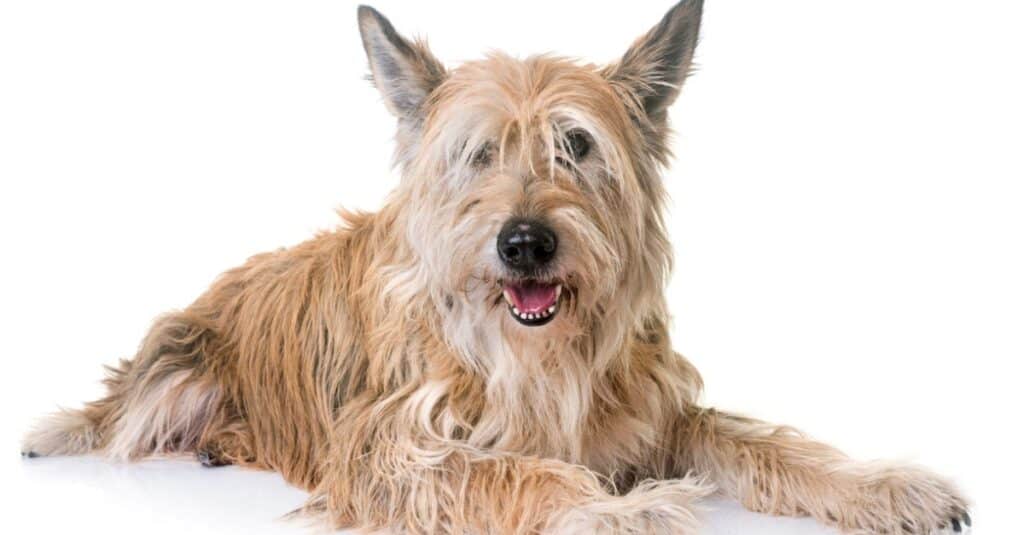
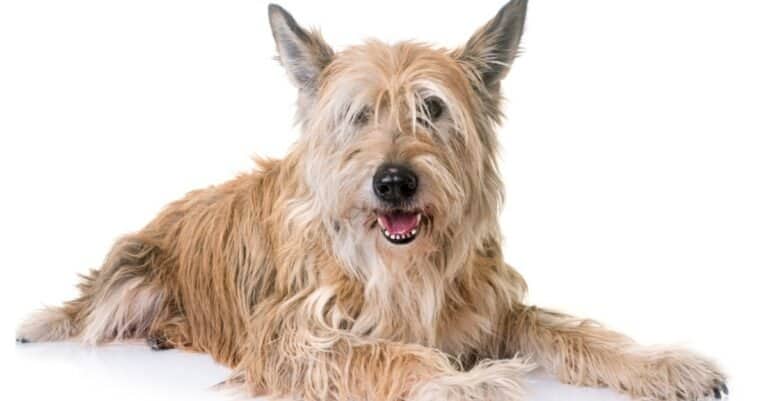
Berger Picard isolated on white background.

The Berger Picard has a weatherproof coat, which does not require any trimming.

The Berger Picard will need to be brushed maybe once a month — more often, perhaps every day or two, in the shedding season — with a rake and slicker brush. Some attention should be paid to the bearded face as well. This should remove most dead and loose hair before it gets on the furniture, clothing, and the floor.

The coat is fairly weatherproof and needs to be bathed only rarely with a special shampoo formulated for coats of this kind. No trimming is necessary, but the long fur on the ears should be hand stripped from time to time. In addition, owners should never neglect other aspects of its care. Brush its teeth often with specially formulated toothpaste. Check the ears every few weeks for signs of infection and wax buildup. Finally, trim the nails regularly so they don’t split or crack easily.

Training
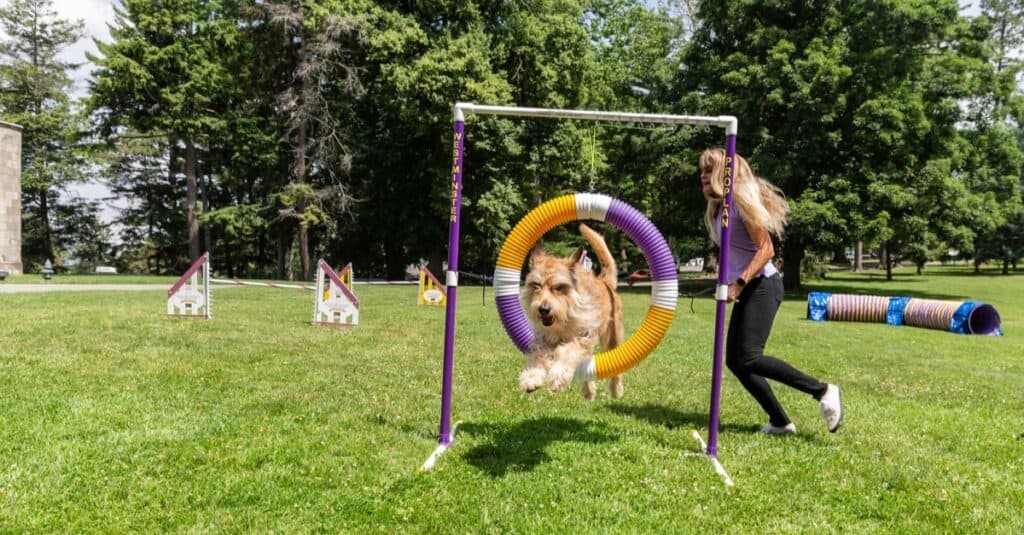
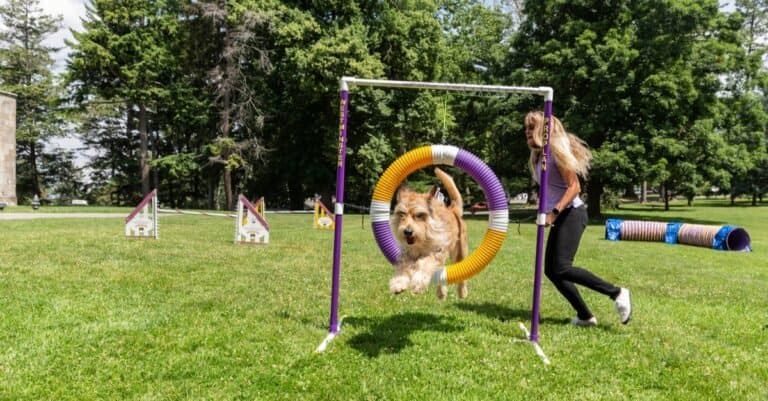
Berger Picard runs through an agility course.

Berger Picard runs through an agility course.

The Berger Picard has a very intelligent and eager nature, making it a highly trainable breed. While it may frustrate trainers a little with its stubborn and independent streak, this breed does respond very well to praise and affection, though slightly less well to food inducements. Keep the dog motivated with consistent but creative training, and it will reward you many times over.

Exercise

The Berger Picard is a gifted athlete with immense reserves of stamina and drive. It probably needs at least 45 minutes of exercise every day. Long walks should satisfy many of its exercise needs. It also enjoys accompanying its owner on hikes and bike rides, as well as swimming, fetching, tracking, agility trials, flyball, and obedience challenges.

Puppies

Berger puppies will need to begin training and socialization as early as possible. Because of their natural wariness of strangers, these puppies will benefit from classes and daycare to help put them at ease around all kinds of unfamiliar people and pets. There is also plenty you can do on your own to socialize your dog, including parks, play dates, and other opportunities.
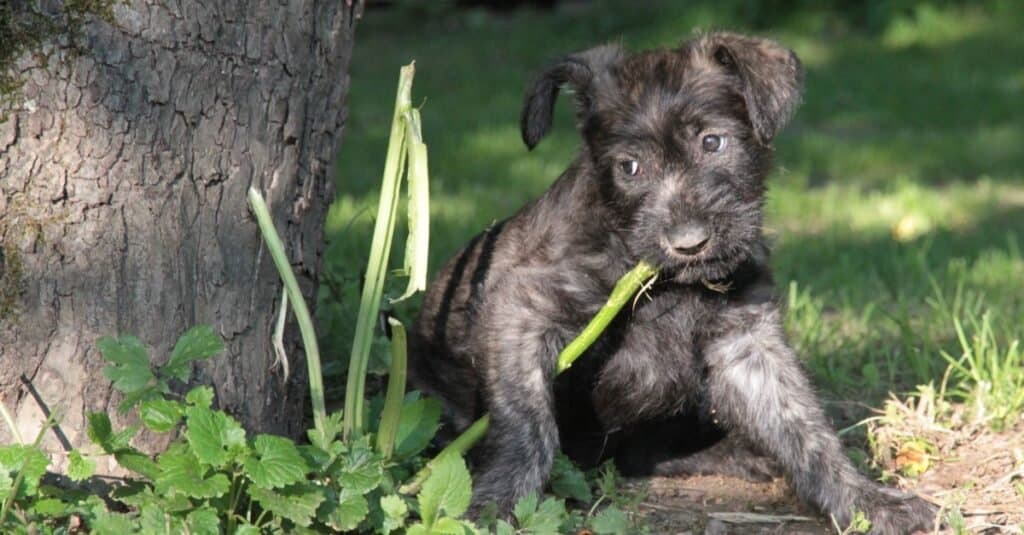
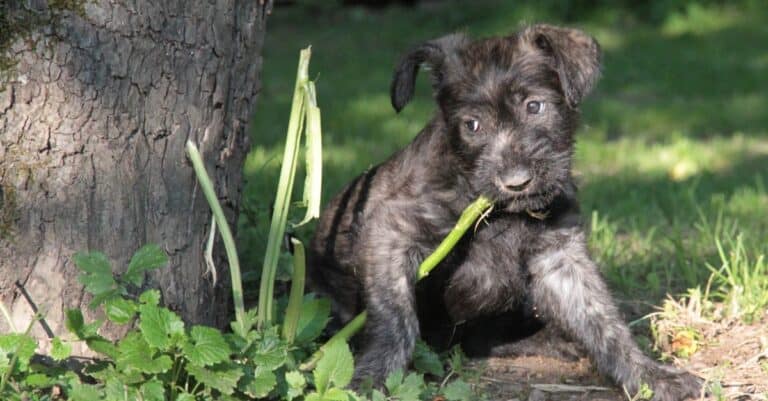
Berger Picard puppy playing with a stick.

Berger Picard puppies do not take easily to strangers and must be socialized early as a result.

Crate training, while not mandatory, can help your dog deal with housebreaking and behavioral issues. Keep in mind, this is a herding dog; it has strong herding instincts that may be managed with proper training but never entirely eliminated.

Children

The Berger Picard gets along fairly well with children of all ages. It has a lively, affectionate, and playful temperament with a well-developed sense of humor and personality. However, because of its strong herding instinct, it may tend to start herding kids. This breed should do best if it’s raised with children from an early age and properly trained to behave well around them.

Dogs Similar to the Berger Picard

The Berger Picard resembles many smooth-haired or scruffy dog breeds from the same region.

  • Beauceron: This medium-sized herding dog from central France is athletic, calm, gentle, intelligent, and fearless. It is characterized by a dense, smooth double coat of black and tan, occasionally blue mottled fur.
  • Briard: This large, shaggy, and bearded shepherd dog, which originated from the Brie region of northern France, shares many similarities with the Berger and other scruffy dog breeds. It is friendly, gentle, but hard-working and determined. This breed has a long, slightly wavy coat of black, fawn, gray, or blue colors.
  • Pyrenean Sheepdog: This medium-sized herder and livestock guardian hails from the mountainous region of southern France, along the border with Spain. It comes in three coat types: long-haired, goat-haired, and smooth-faced. Fawn, brindle, black, and blue are the most commonly accepted colors.

Famous Berger Picard Dogs

The Berger Picard is not very well-known outside of France, but it has appeared in a number of smaller films. The most notable appearance was probably the 2005 film “Because of Winn-Dixie,” starring Anna Sophia Robb and Jeff Daniels. Two dogs named Lyco and Scott took turns playing the role of the main character, Winn-Dixie. Another Berger named Beegee won the Best in Show and herding group awards at the 2020 American Kennel Club National Owner-Handled Series.

View all 453 animals that start with B

Sources

  1. American Kennel Club / Accessed September 28, 2021
  2. American Kennel Club / Accessed September 28, 2021
  3. Dog Lime / Accessed September 28, 2021
  4. Berger Picard Club of America / Accessed September 28, 2021
Dana Mayor

About the Author

Dana Mayor

I love good books and the occasional cartoon. I am also endlessly intrigued with the beauty of nature and find hummingbirds, puppies, and marine wildlife to be the most magical creatures of all.
Connect:

Thank you for reading! Have some feedback for us?


Berger Picard FAQs (Frequently Asked Questions)

The price of a new puppy will depend on the quality of the breeder, the pedigree and heritage of the dog, and the overall availability of the breed. For a typical household pet without any particularly special pedigree, you should probably expect to pay somewhere in the range of $2,000, perhaps more, from a high-quality breeder who really has the health and well-being of the dog in mind.

If you cannot afford this price, then there are still some good options available to you. What you should never do is settle for a dog raised by a puppy mill or untrustworthy breeder. While it might be cheaper upfront, you’re definitely rolling the dice in terms of health issues and breed standards. Instead, you should consider dog adoption. The price is generally reasonable, and these dogs are in need of a good loving home. To help guide you through the process, there are a few good breed-specific organizations willing to assist with rescue and adoptions. For instance, the Berger Picard Club of America offers a service to rehabilitate and rehome rescue dogs.