
S
Species Profile

Super Pastel Ball Python

Python regius

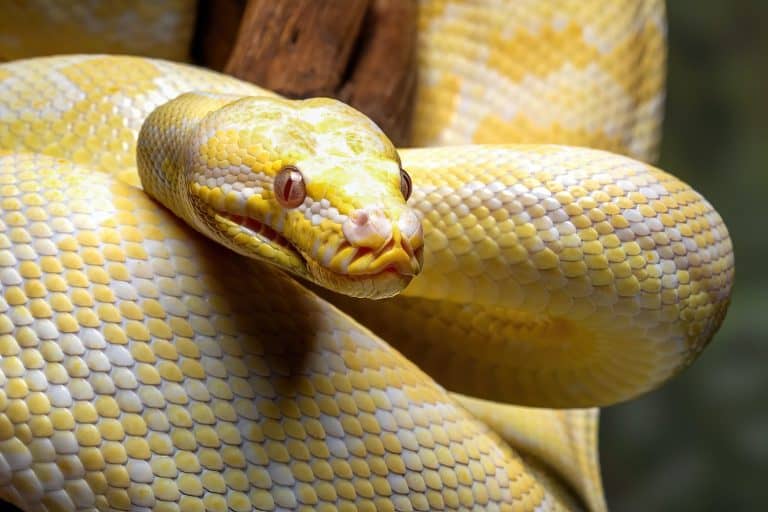
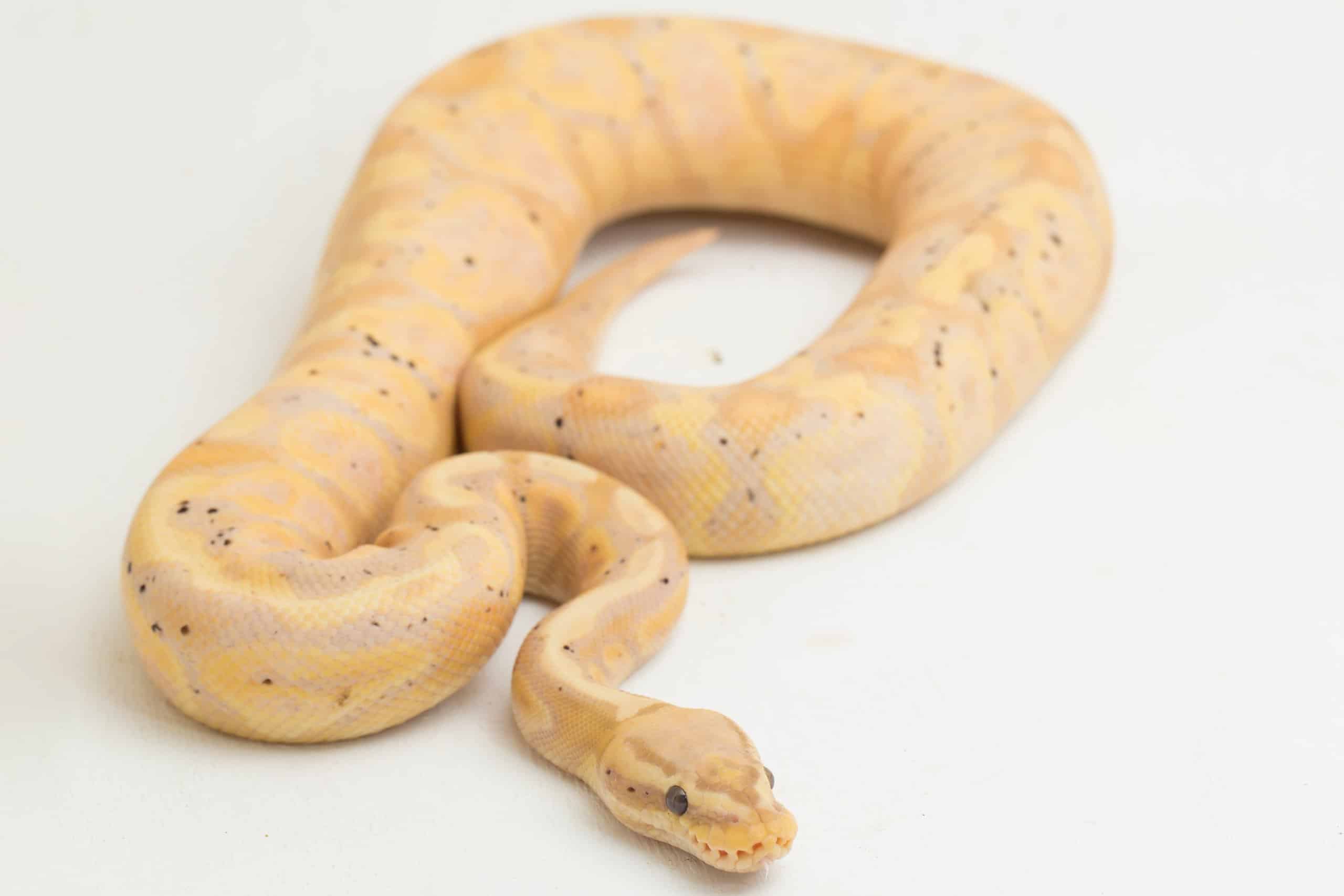
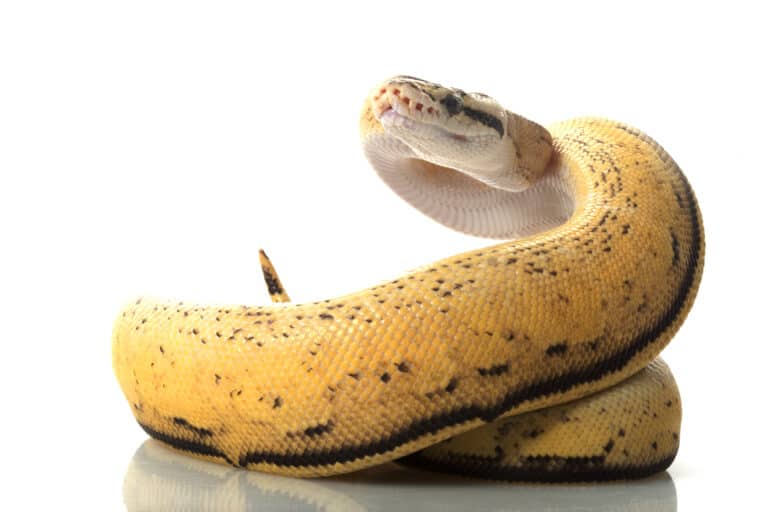
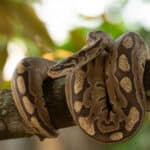
Sunshine in a gentle coil
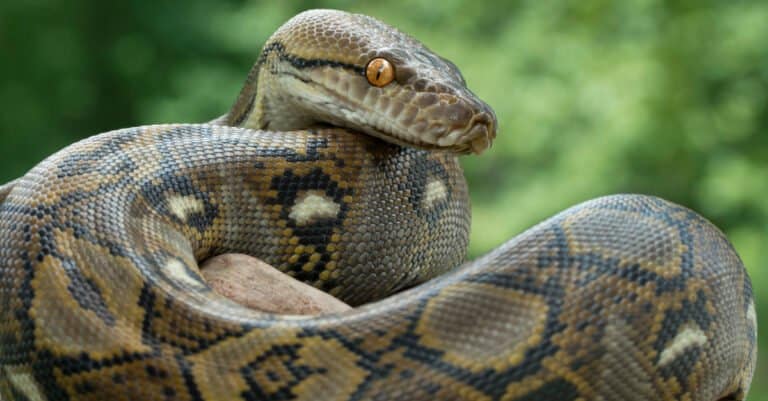
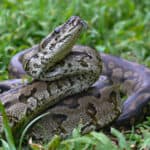
dwi putra stock/Shutterstock.com

Super Pastel Ball Python Distribution

Domesticated Species

Found Worldwide

The Super Pastel Ball Python (Python regius) is a captive-bred color morph with no true wild range. The species itself is native to West and Central Africa, but Super Pastels are bred and kept by private keepers and breeders worldwide through the pet trade rather than living in natural habitats.

super pastel ball python

At a Glance

Domesticated
Also Known As Ball Python, Royal Python, BP
Diet Carnivore
Activity Nocturnal+
Lifespan 10 years
Weight 3.5 lbs
Status Not Evaluated
Did You Know?

"Super Pastel" is hobby shorthand for a Ball Python homozygous for the Pastel trait ("super" = two copies of the gene).

Scientific Classification

The Super Pastel Ball Python is a captive-bred color/pattern morph of the Ball Python (Python regius), a small-to-medium, non-venomous constrictor widely kept as a pet. “Super Pastel” commonly refers to individuals homozygous for the Pastel morph allele, typically showing increased brightness and reduced dark pigmentation compared with the single-gene “Pastel.”

Kingdom
Animalia
Phylum
Chordata
Class
Reptilia
Order
Squamata
Family
Pythonidae
Genus
Python
Species
regius

Distinguishing Features

  • Non-venomous constrictor; typical ball python body plan (stocky build, relatively small head)
  • “Super Pastel” generally indicates two Pastel alleles, often producing a brighter overall appearance with lighter background coloration and reduced dark patterning compared with normal/wild-type
  • Trait is a captive-breeding morph/variety, not a recognized subspecies or separate species

Physical Measurements

Males and females differ in size

Length
3 ft 5 in (2 ft 11 in – 3 ft 11 in)
4 ft 7 in (3 ft 3 in – 5 ft 11 in)
Weight
2 lbs (2 lbs – 3 lbs)
5 lbs (3 lbs – 9 lbs)
Tail Length
6 in (4 in – 7 in)
6 in (4 in – 7 in)
Top Speed
1 mph
slithering

Appearance

Primary Colors
Secondary Colors
Skin Type Smooth, glossy keratin scales; non-venomous constrictor skin with regular shedding cycles
Distinctive Features
  • Captive-bred color/pattern morph of Python regius (Ball Python), not a separate taxon or wild subspecies.
  • "Super" in hobby usage typically indicates homozygosity for the Pastel allele, producing stronger brightening than single-gene Pastel.
  • Noticeably increased brightness and contrast: yellows/golds are intensified and dark tones are reduced.
  • Cleaner, less "busy" pattern edges due to reduced melanin; many individuals show thinner dark borders.
  • Head often appears lighter with a cleaner headstamp and reduced dark shading compared with wild-type.
  • Appearance is variable by lineage and especially when combined with other morph genes.
  • No widely recognized, consistent severe morph-linked neurologic defect for Super Pastel (unlike some other morphs); standard ethical breeding still recommended.
  • Health risks are largely species-typical: obesity from overfeeding, mite infestations, retained shed with low humidity, and respiratory disease from cool/damp conditions.
  • Care mirrors Python regius needs: secure enclosure, multiple tight hides, 31-33°C warm spot, 26-28°C cool side, and ~55-65% humidity (higher during shed).
  • Feeding should prioritize appropriately sized prey and conservative schedules to reduce common captive weight gain.

Sexual Dimorphism

As in typical Ball Pythons, females average heavier-bodied and often longer overall. Males usually have proportionally longer tails with more pronounced cloacal spurs; the Super Pastel morph itself does not create sex-specific color differences.

  • Proportionally longer, thicker tail base past the vent
  • Often more prominent cloacal spurs
  • Typically smaller adult mass than females
  • Heavier-bodied, broader midsection on average
  • Often larger overall adult size and mass
  • Tail proportionally shorter past the vent

Did You Know?

"Super Pastel" is hobby shorthand for a Ball Python homozygous for the Pastel trait ("super" = two copies of the gene).

Super Pastels typically show higher overall brightness and more blushed/lavender-toned dark areas than single-gene Pastels, though exact look varies by lineage and other genes.

Pastel is a foundational morph: Super Pastels are often used to amplify color in multi-gene combos (e.g., with Clown, Mojave, or Lesser lines).

Like all Python regius, Super Pastels are non-venomous constrictors that subdue prey by coiling and squeezing.

Ball pythons earned the name "ball" from their classic defensive posture-curling into a tight ball with the head protected in the center.

Wild-type ball pythons are naturally cryptic browns for savanna edges and forest mosaics; the Super Pastel look is a captive-bred aesthetic, not a wild adaptation.

Unique Adaptations

  • Heat-sensing labial pits: specialized facial pits detect infrared heat, helping locate warm-blooded prey in low light.
  • Highly kinetic skull: flexible jaw and skull joints allow swallowing prey wider than the head.
  • Powerful constriction: rapid coiling and controlled pressure quickly subdue prey without venom.
  • Water-conserving scales and behaviors: compared with many reptiles, ball pythons tolerate moderately dry conditions if given proper hydration and a humid hide for sheds.
  • Color morph genetics (captive context): "Super Pastel" expresses a brighter, reduced-melanin phenotype due to homozygosity for a selected trait-an adaptation in herpetoculture rather than nature.

Interesting Behaviors

  • Balling up when startled: a hallmark ball python defense, often seen in new or shy individuals.
  • Crepuscular exploring: many become most active at dusk/dawn, using slow, deliberate tongue-flicking to "taste" the air.
  • Ambush-style feeding: they often prefer to wait in a hide and strike from cover rather than roam for prey.
  • Selective security: many individuals refuse food if hides are inadequate or if enclosure traffic is high-security matters.
  • Thermoregulation by micro-moves: subtle shifts between warm/cool zones rather than constant basking.
  • Scent-focused investigation: they may follow odor trails and investigate with frequent tongue-flicks, especially during breeding season.

Cultural Significance

The Super Pastel Ball Python, Python regius, is a famous pet snake that helped make keeping reptiles common and improved breeding, care, and color genetics. In West Africa it appears in local beliefs about protection and sacred power.

Myths & Legends

In parts of Benin and Togo, especially around Ouidah, pythons are honored in traditional religion as sacred. Stories and rituals link them to protective spirits and forbid harming them.

Serpents as guardians and messengers: Across many West African oral traditions, large snakes frequently appear as powerful beings tied to the spirit world-guarding places, carrying messages, or enforcing taboos-reflecting respect for their strength and mystery.

The species name Python regius means 'royal.' People have long linked big snakes to power and honor. Keepers often call the royal python a symbol of gentle, noble behavior and small, easy size.

Conservation Status

NE Not Evaluated

Has not yet been evaluated against the criteria.

Population Stable

Life Cycle

Birth 6 hatchlings
Lifespan 10 years

Lifespan

In the Wild
5–15 years
In Captivity
15–35 years

Reproduction

Mating System Polygynandry
Social Structure Managed Domestic
Breeding Pattern Transient
Fertilization Internal Fertilization
Birth Type Internal_fertilization

In captivity, Super Pastel (homozygous Pastel) ball pythons are selectively paired; males may mate with multiple females and females can accept multiple males. Copulation is internal and brief; females alone coil and thermoregulate eggs, with no post-hatch care.

Behavior & Ecology

Social Aggregation Group: 1
Activity Nocturnal, Crepuscular
Diet Carnivore Appropriately sized rats (pre-killed/frozen-thawed in captivity)

Temperament

HUBS: Mostly calm, secretive ambush predators; individual variation in boldness and feeding response.
Typically non-aggressive; defensive behaviors include "balling," hiding, hissing, and slow retreat.
Breed distinction: Super Pastel is a homozygous Pastel color/pattern morph-brighter yellows, reduced dark pigmentation; no consistent behavioral differences from base species.
Captive behavior: prefers tight hides and low disturbance; may become sedentary and prone to obesity if overfed.
Handling tolerance is usually high with consistent, gentle sessions; stress increases with frequent handling or inadequate hiding.
Health/care notes: morph itself has no widely recognized syndrome; prioritize husbandry to prevent respiratory infections, mites, stomatitis, and dehydration.
Care requirements: secure enclosure, multiple snug hides, 28-33°C warm side with ~24-27°C cool side, and moderate humidity with hydration access.
Feeding: some individuals are seasonal/picky eaters; avoid excessive prey size and feeding frequency to reduce regurgitation and obesity.

Communication

Hissing Primary audible signal
Tongue-flicking to sample airborne chemicals Jacobson's organ
Pheromone cues for mate-finding and reproductive readiness
Body posture: coiling/balling, head withdrawal, and freezing as threat displays
Scent deposition and trail following; substrate rubbing during shedding cycles

Habitat

Biomes:
Tropical Dry Forest Savanna Wetland Freshwater Tropical Rainforest Temperate Grassland Desert Hot +1
Elevation: Up to 4921 ft 3 in

Ecological Role

Mid-level predator (small-mammal specialist) in West/Central African savanna-edge and agricultural mosaics; in captivity functions as an obligate carnivorous pet reliant on provided vertebrate prey.

Regulates small-rodent populations, potentially reducing crop damage and rodent-borne disease risk Contributes to energy transfer within terrestrial food webs as both predator (of rodents) and prey (for larger predators) Supports ecosystem balance around human-modified habitats by limiting rodent abundance

Diet Details

Main Prey:
Small rodents African soft-furred rats Gerbil Shrews Small birds and chicks

Human Interaction

Domestication Status

Semi domesticated

Super Pastel Ball Python (Python regius) is a captive-bred color morph of a West/Central Africa species. Super Pastel has two copies of the Pastel gene, giving brighter, yellower, cleaner patterns, less dark pigment and a lighter head mark. Size, behavior, lifespan and care match typical ball pythons. Humans interact via pet keeping, breeding, trade, vet care, rescue, and regulation.

Danger Level

Low
  • defensive bites (usually minor punctures/lacerations; higher risk during feeding response)
  • constriction injury risk is very low in this species/size class but supervision is prudent with any constrictor
  • zoonotic pathogens (e.g., Salmonella) from handling the snake, enclosure, or feces-hand hygiene required
  • allergic reactions to rodent feeders or bedding/substrate dust

As a Pet

Suitable as Pet

Legality: Super Pastel Ball Python (Python regius) is usually legal to keep as a pet if captive-bred, but laws vary by country/state/city; some places ban or require permits, limit feeding live prey, or control reptiles—check local rules and transport laws.

Care Level: Easy

Purchase Cost: $80 - $300
Lifetime Cost: $2,000 - $6,000

Economic Value

Uses:
Companion animal (pet) trade Selective breeding and morph/genetics market Reptile education and outreach Herpetoculture supplies (enclosures/heating/automation) Veterinary services
Products:
  • live captive-bred Super Pastel Ball Pythons (pets and breeding stock)
  • breeding services and hatchlings (including Super Pastel combos with other morphs)
  • genetic lineage/trait documentation (pairing records, trait verification claims)
  • reptile husbandry equipment purchases driven by ownership (terrariums/racks, thermostats, heat panels/mats, hides, substrate, humidity control)
  • feeder rodents (frozen/thawed commonly; live in some areas)
  • educational displays/handling programs using docile morph animals

Relationships

Predators 6

Honey Badger
Honey Badger Mellivora capensis
Egyptian Mongoose Herpestes ichneumon
Nile Monitor
Nile Monitor Varanus niloticus
Secretarybird Sagittarius serpentarius
Bateleur Terathopius ecaudatus
Human
Human Homo sapiens

Ecological Equivalents 5

Animals that fill a similar ecological role in their ecosystem

Ball Python
Ball Python Python regius Same species (Python regius) and same ecological role: a small-to-medium ambush constrictor that is active at night and at dawn and dusk (nocturnal/crepuscular), occurring in West and Central African savannas and forest edges. The Super Pastel is a captive-bred morph with two Pastel genes and displays brighter, more contrasting colors.
Pastel Ball Python Python regius Single-gene Pastel (one copy) is less bright than Super Pastel (two copies). Super Pastel passes a Pastel gene to all offspring. There are no known severe nerve issues associated with the Pastel morph; typical ball python health risks include respiratory infections, shedding problems, and obesity.
Corn Snake
Corn Snake Pantherophis guttatus Similar niche in captivity as a beginner-friendly, non-venomous, small-to-medium constrictor; comparable prey size (mice) and enclosure needs (secure housing and a thermal gradient). Differences: generally more active and less prone to feeding refusals than many ball pythons, and requires lower humidity.
Boa Constrictor
Boa Constrictor Boa constrictor Similar ecological role as a popular pet constrictor and ambush predator. Differences include larger adult size and a stronger feeding response; often requires larger enclosures and may have higher humidity preferences depending on locality.
Carpet Python
Carpet Python Morelia spilota Another widely kept python with comparable constrictor ecology (an ambush predator) but typically more arboreal/active and often more food-driven. Husbandry differs — requires more vertical space and different humidity/temperature targets depending on locality.

Super Pastel Ball Python Summary

“The super pastel morph is the homozygous or ‘super’ form of the pastel morph. It is created by breeding two pastel ball pythons together, resulting in a stunningly bold, brightly-colored snake.”

Characterized by its ultra-bold, clean, warm brown and tan base coloration and extremely bright yellow patterning, the super pastel ball python morph is one of the first true designer morphs ever produced. Originally developed in 1999 by the breeders at New England Reptile Distributors, NERD, it is the result of breeding two pastel ball pythons together.

In addition to its striking sunny coloration and patterning, faded markings around the head are very common. Lots of blushing is also typical throughout the snake’s head and body, which can cause some of its brown patches to have a greyish, almost pale purple tone.

3 Amazing Super Pastel Ball Python Facts

  • As a designer morph, the super pastel cannot occur naturally in the wild. Two pastel ball pythons must be bred together to create super pastel offspring.
  • The super pastel was one of the very first designer morphs to enter the exotic pet trade back in 1999!
  • The super pastel ball python’s head color and patterning are typically extremely faded compared to the rest of its body.

Where to Find Super Pastel Ball Pythons

The standard, wild-type ball python is native to Sub-Saharan Africa, primarily in western and central Africa. It is incredibly hardy despite its small size and can thrive in various habitats. However, it prefers living in grasslands, savannas, and forests.

Ball pythons first became popular in the exotic pet trade in the early-to-mid 1990s. At the time, very few morphs existed, with most being very subtle base morphs. Thanks to careful, repeated selective breeding practices, reptile breeders have managed to produce thousands of unique morphs since, with the pastel morph being one of the earliest varieties. The super pastel morph quickly followed in 1999 and made history as one of the first true designer morphs ever created.

Originally, the super pastel morph was quite rare and expensive, as very few breeders produced and sold them. Today, you can find and purchase super pastel ball pythons from a wide range of reputable breeders, most of which have online shops where they can ship animals directly to the customer’s home.

On average, you can expect to pay around $100 to $300 for a single snake of this particular morph. This can vary depending on the breeder you’re purchasing the snake from, the morph’s current supply and demand, and the snake’s exact color and patterning.

Super Pastel Ball Python Scientific Name

The ball python’s scientific name is Python regius. This translates to “royal python.” Its name is a reference to the common belief that Queen Cleopatra and other Egyptian royals wore live ball pythons around their wrists as jewelry to flaunt their status and wealth.

Because all ball python morphs belong to the same species, they all share the same scientific name.

Super Pastel Ball Python Population & Conservation Status

According to the IUCN Red List, the ball python has been classified as near-threatened since 2012. Although it isn’t currently at risk of becoming endangered, this may change in the future.

Notably, the ball python’s populations within its native range have been slightly decreasing in recent years. This is mainly due to habitat loss caused by the agricultural industry and the common practice of hunting, trapping, and selling these animals.

It is unknown exactly how many ball pythons currently exist in the wild or captivity.

Super Pastel Ball Python Evolution and History

The super pastel morph was developed in 1999 by New England Reptile Distributors, which is owned by reptile breeder Kevin McCurley. NERD is based in Plaistow, New Hampshire. The super pastel was one of the very first designer morphs ever created.

As its name suggests, it is the “super” or homozygous form of the pastel morph. This means two pastel ball pythons must be bred together to produce super pastel offspring because the pastel traits are “incomplete dominant.” Interestingly, the base pastel morph was also developed by NERD in 1994.

Today, various breeders worldwide have their lines of super pastels. It is now a fairly inexpensive and accessible morph. The super pastel has even been used in the development of various other designer morphs, such as the super pastel pied, super pastel puzzle, and super pastel pinstripe varieties.

How to Identify Super Pastel Ball Python: Appearance and Description
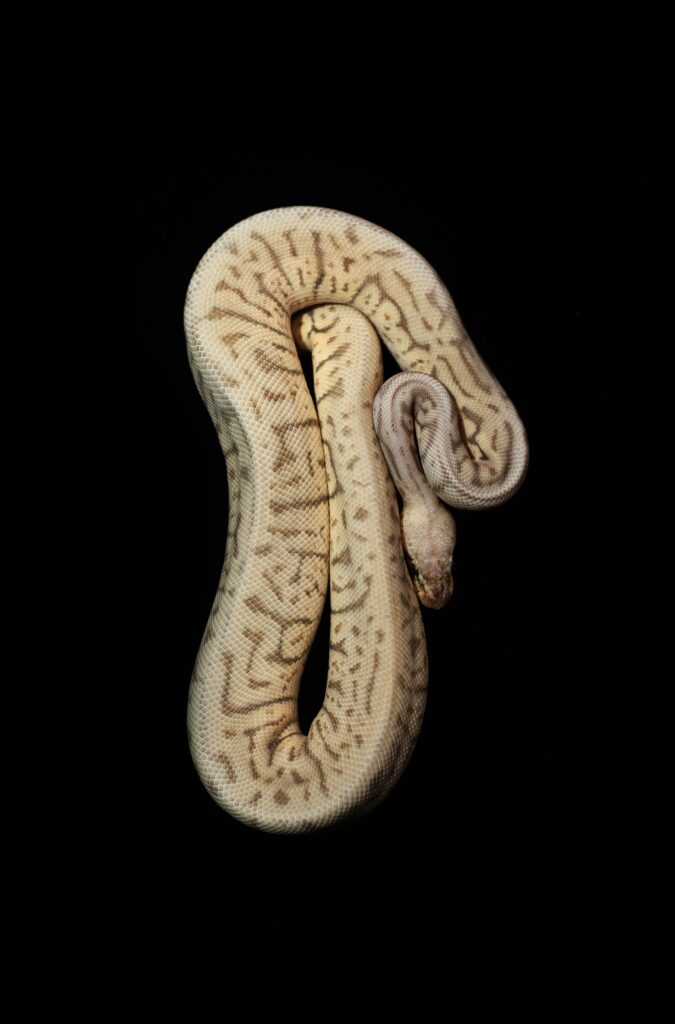
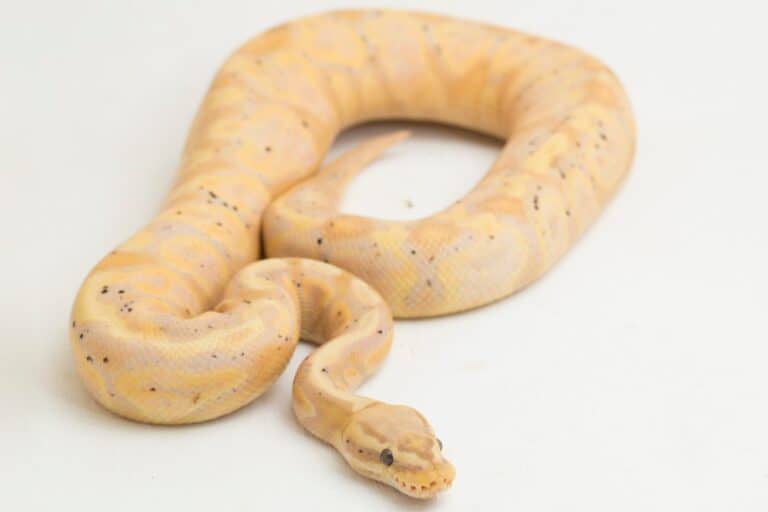
super pastel ball python

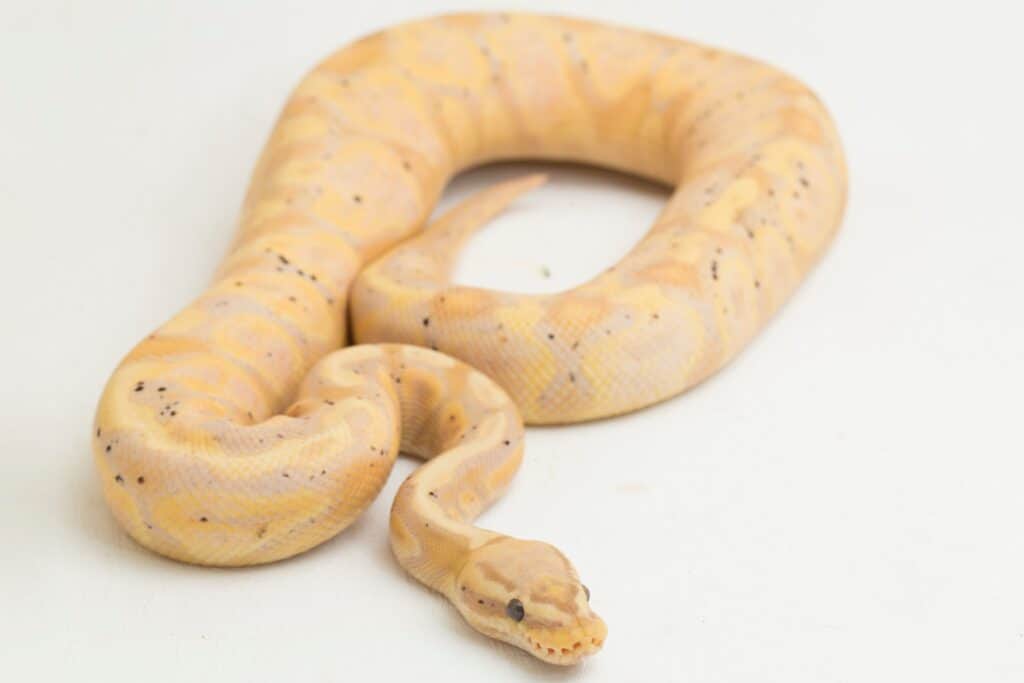
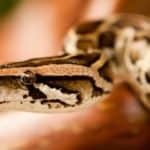
The super pastel ball python’s head color and patterning are typically extremely faded compared to the rest of its body.

The super pastel ball python can be identified primarily by its clean, bold patterning, with a light to dark brown base color accented by extremely vivid yellow markings. Yellow markings can vary from a warm, sunny yellow to a paler, almost off-white tone. 

Also commonly present is extensive blushing throughout the head and body and especially faded markings around the head. This distinct blushing is usually not very prominent in hatchlings but becomes more visible with age. The patterning on the snake’s belly is often significantly blurry because of this blushing. 

Super pastel snakes typically have a pale, off-white spot or blotch atop their heads stretching from the tip of the nose to the base of the neck. Again, this spot is small and often difficult to spot while the snake is a hatchling, but it becomes more prominent with age.

Keep these traits in mind when identifying a super pastel ball python:

  • Bold, clean patterning with very bright yellow markings
  • Lots of blushing throughout the body
  • Pale, off-white spot on top of the head
  • Little to no dorsal (belly) patterning or markings

Super Pastel Ball Python: How Dangerous Are They?

Like all members of the Python family, the ball python is a non-venomous constrictor snake. It is one of the smallest python species at just 3 to 5 feet long on average. It primarily hunts small rodents and birds and is not aggressive toward humans. Lacking fangs, it has small teeth and weak yet flexible jaws.

The ball python gets its common name from its tendency to defensively curl its body into a tight ball when startled or threatened. Rather than attacking, it will simply flee or adopt this defensive position until it feels safe enough to escape. 

All ball python morphs belong to the same species, so they share the same general temperament. Thanks to this docile, hardy, and curious nature, this unique snake has become extremely popular in the exotic pet trade. Over the years, it has even gained a reputation as one of the gentlest, tamest pet reptiles, ideal even for younger, beginner reptile hobbyists.

If a ball python bites you, first ensure the snake has no injury and carefully place it back into its enclosure. Next, clean the wound with warm water and a gentle soap. Bandaging the wound can help to prevent infection and speed up the overall healing process. The vast majority of ball python bites are minor and require very little medical intervention.

Super Pastel Ball Python Behavior and Humans

Starting in the 1990s, the ball python has quickly become one of the world’s most popular and abundant pet reptiles. It has since developed a long and close relationship with humans. Its behavior tends to be slightly timid yet docile, gentle, and intelligent. Thanks to its simple care requirements and small size, it keeps and breeds extremely well in captivity.

It is estimated that more than 4,000 unique morphs exist today, with more being developed all the time.

The super pastel morph has existed since 1999 and remains one of the more popular designer morphs on the market. As a designer morph, it cannot occur naturally in the wild and requires specific conditions (breeding two pastel morph snakes together) to produce them in captivity.

View all 391 animals that start with S

Sources

  1. IUCN Red List / Accessed November 14, 2022
  2. Morph Market / Accessed November 14, 2022
  3. NW Reptiles / Accessed November 14, 2022
  4. Oakland Zoo / Accessed November 14, 2022
  5. San Diego Zoo / Accessed November 14, 2022
  6. World of Ball Pythons / Accessed November 14, 2022
Hailey Pruett

About the Author

Hailey Pruett

Hailey "Lex" Pruett is a nonbinary writer at A-Z Animals primarily covering reptiles and amphibians. They have over five years of professional content writing experience. Additionally, they grew up on a hobby farm and have volunteered at animal shelters to gain further experience in animal care. A longtime resident of Knoxville, Tennessee, Hailey has owned and cared extensively for a wide variety of animals in their lifetime, including cats, dogs, lizards, turtles, frogs and toads, fish, chickens, ducks, horses, llamas, rabbits, goats, and more!
Connect:

Thank you for reading! Have some feedback for us?


Super Pastel Ball Python FAQs (Frequently Asked Questions)

Ball pythons are non-venomous constrictor snakes. They are not considered dangerous to humans.