J
Species Profile

Joro Spider

Trichonephila clavata

Golden web, giant female, tiny male
iStock.com/David Hansche

Joro Spider Distribution

Click a location to explore more animals from that region

Invasive Species
Loading map...
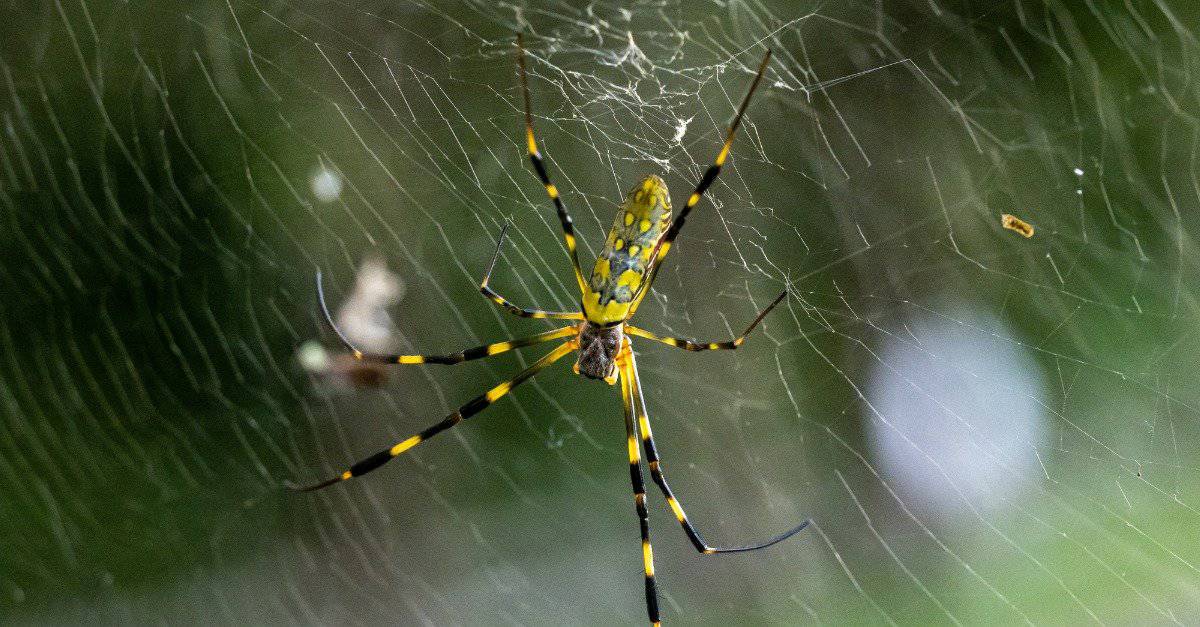
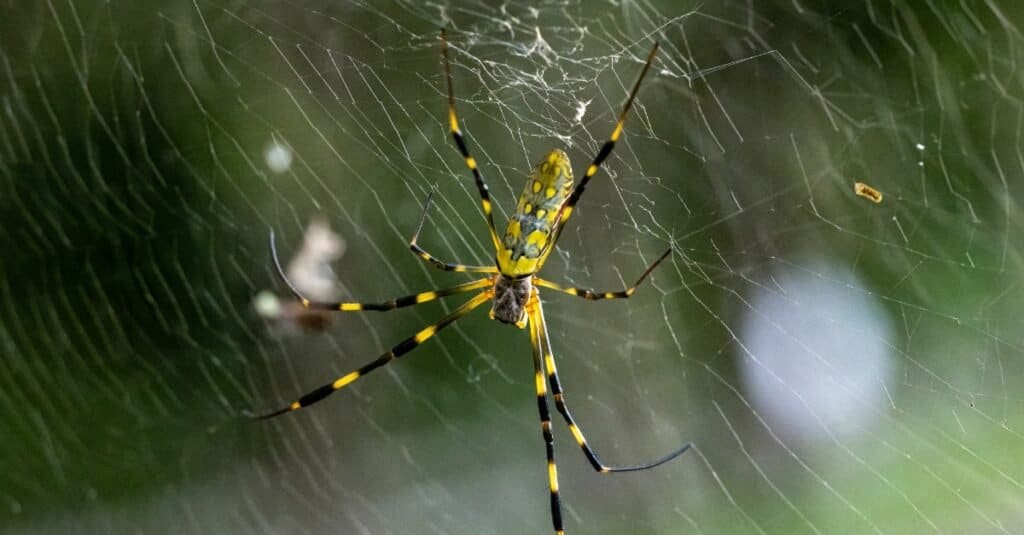
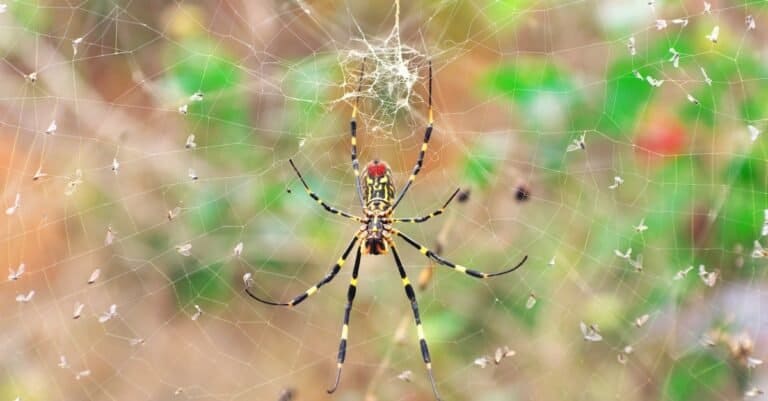
Joro spider in web

At a Glance

Wild Species
Also Known As Jorō-gumo, Jorogumo, Joro-gumo, Joro orb-weaver, Golden orb-weaver, Golden silk orb-weaver, Asian golden orb-weaver
Activity Diurnal+
Lifespan 12 years
Status Not Evaluated
Did You Know?

Scientific name: Trichonephila clavata (formerly Nephila clavata); the genus change was formalized in modern phylogenetic revisions (e.g., Kuntner et al., 2019).

Scientific Classification

A large orb-weaving spider known for building strong, often golden-tinged silk webs; females are much larger and more conspicuously colored than males.

Kingdom
Animalia
Phylum
Arthropoda
Class
Arachnida
Order
Araneae
Family
Nephilidae
Genus
Trichonephila
Species
Trichonephila clavata

Distinguishing Features

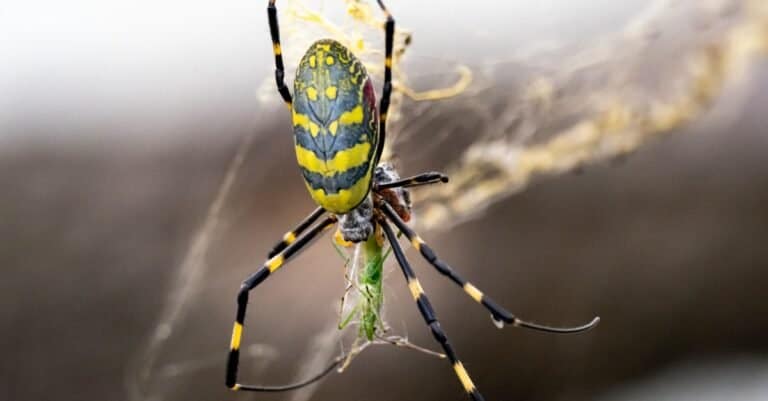
  • Large female with striking yellow-and-black banding and long legs
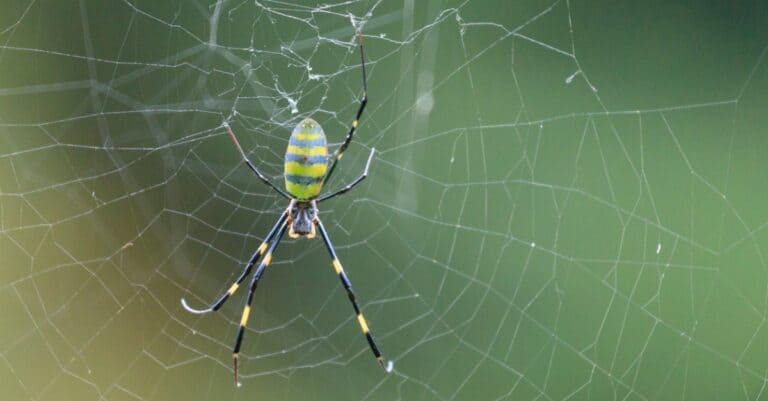
  • Builds a classic orb web that can show a yellow/golden sheen
  • Strong sexual size dimorphism (males much smaller)

Physical Measurements

Length
3 in (2 in – 4 in)
Venomous

Appearance

Primary Colors
Secondary Colors
Skin Type Chitinous arthropod exoskeleton (cuticle) with fine sensory setae; glossy on some sclerotized areas and more matte/velvety where setae are dense (typical for orb-weaving araneids/nephilids).
Distinctive Features
  • Common-name mapping: Joro spider = Trichonephila clavata (formerly placed as Nephila clavata in older literature).
  • Adult female body length commonly reported ~17-25 mm; adult male ~7-10 mm (marked size disparity typical of the genus).
  • Long, slender legs with obvious dark/light annulations; females often appear 'black-and-yellow' at a distance due to strong contrast.
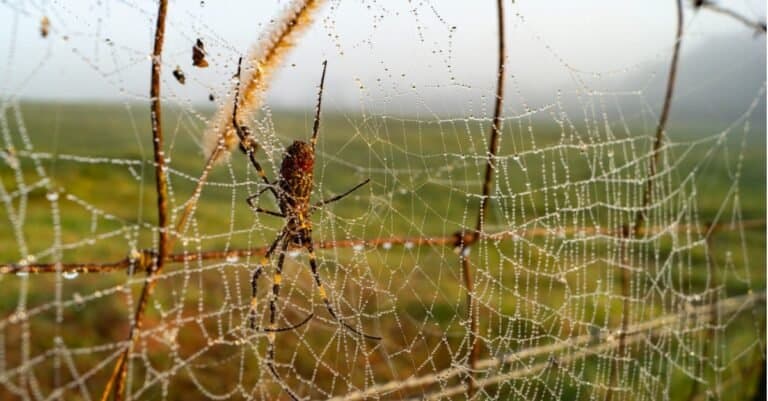
  • Builds a large, vertical orb web whose silk can look golden in sunlight. Webs often have extra messy barrier threads nearby, making them look bigger and more complex than a single flat orb.
  • Females are visually conspicuous (brightly banded abdomen) whereas males are small and cryptically colored and may be found at the periphery of the female's web during breeding season.
  • In temperate areas, Joro Spider (Trichonephila clavata) has an annual life cycle: eggs winter in a sack, young hatch in spring, adults peak late summer–autumn, females usually die after laying eggs.

Sexual Dimorphism

Strong sexual dimorphism in both size and coloration. Females are much larger and brightly patterned; males are much smaller and typically brown/tan and less patterned. This is characteristic of Trichonephila clavata and is often evident when males co-occur on/near a female's orb web during the breeding season.

  • Body length typically ~7-10 mm (much smaller than females).
  • Overall coloration generally brown/tan with darker markings; lacks the female's bold yellow/blue-green dorsal banding.
  • More cryptic appearance; often found on the margins of a female's web rather than occupying the web center.
  • Body length typically ~17-25 mm (commonly cited range); abdomen conspicuously banded with yellow to yellow-green ground color and strong black striping; blue-green areas may be visible between bands.
  • Legs long and distinctly annulated (alternating dark/light bands), giving a high-contrast 'ringed' look.
  • Primary web builder: constructs the large orb web (often with nearby barrier threads) and occupies the hub/center region when active.

Did You Know?

Scientific name: Trichonephila clavata (formerly Nephila clavata); the genus change was formalized in modern phylogenetic revisions (e.g., Kuntner et al., 2019).

Female body length is typically ~17-25 mm; males are ~4-8 mm-an extreme size difference common in golden orb-weavers (Trichonephila/Nephilidae).

Seasonal life cycle is usually annual: eggs overwinter; spiderlings disperse in spring; adults peak in late summer-autumn; females often persist until hard frosts.

Webs are classic orb webs but often paired with "barrier" or "tangle" threads around/above the orb-extra scaffolding that helps intercept fast-flying prey.

Females show conspicuous aposematic-like coloration (black with yellow bands and red markings on the underside), while males are small and brownish-strong sexual dimorphism in both size and color.

In introduced populations (notably the southeastern U.S.), juveniles disperse by ballooning-releasing silk to ride air currents-facilitating rapid spread from a single egg sac.

Unique Adaptations

  • Golden-tinged silk: characteristic of Trichonephila/"golden orb-weavers," likely enhancing web function by balancing strength with some visibility/UV reflectance effects in insect-rich light environments.
  • Barrier-web architecture: beyond the 2D orb, many individuals add 3D "messy" threads that can knock prey into the orb and reduce damage from large impacts.
  • Extreme sexual size dimorphism: tiny, mobile males reduce energetic costs and can search among female webs, while large females maximize fecundity and web-capture capacity.
  • Robust anchoring: long bridge lines and multiple attachment points allow large orbs to persist in breezy, edge habitats (forest margins, roadside vegetation).
  • Conspicuous female coloration: bold patterning may function in predator deterrence and/or species recognition near dense web aggregations.

Interesting Behaviors

  • Orb-web construction and renewal: females rebuild/repair capture spirals and frame lines, typically maintaining a large vertical orb with additional barrier threads that increase prey interception.
  • Sit-and-wait predation: hangs head-down at the hub or slightly off-center; responds to vibration cues to locate and wrap prey with swathing silk.
  • Sexual behavior on the female's web: multiple males may cohabit the periphery of a female's web, attempting opportunistic mating while avoiding the female's predatory responses.
  • Egg sac production: females deposit one or more papery egg sacs in sheltered spots (often under bark/eaves/leaf litter), then die later in the season; egg sacs overwinter.
  • Aerial dispersal (juveniles): spiderlings engage in ballooning shortly after emergence, aiding colonization of new habitats and edges.

Cultural Significance

In Japanese folklore a spider spirit called the “entangling bride” or “courtesan spider” lures people; the common name Joro spider echoes this. Trichonephila clavata is linked to culture and used in studies of sexual dimorphism and orb-web evolution; it was renamed from Nephila clavata.

Myths & Legends

In Japanese folklore the Joro Spider (Trichonephila clavata) is an entangling bride spirit that turns into a woman, lures people near waterfalls or forest paths, traps them in silk, and eats them.

Some folktales describe the spirit binding a victim with threads as if arranging a marriage, turning the orb web into a supernatural bridal trap.

Tales of illusion and music: some traditions describe the spider-woman enchanting travelers with three-stringed lute-like sounds or mesmerizing beauty before the web's threads close in.

Regional cautionary storytelling: these "entangling bride" stories function as warnings about seduction, deception, and the dangers of wandering alone, using the spider's real web-building prowess as a vivid metaphor.

The name Nephila (meaning fond of spinning) helped make them seen as master weavers in art and stories, a view that stuck even after the scientific name changed to Trichonephila.

Conservation Status

NE Not Evaluated

Has not yet been evaluated against the criteria.

Population Unknown

Life Cycle

Birth 800 spiderlings
Lifespan 12 years

Lifespan

In the Wild
6–18 years
In Captivity
8–24 years

Reproduction

Mating System Polygynandry
Social Structure Solitary
Breeding Pattern Transient
Fertilization Internal Fertilization
Birth Type Internal_fertilization

Joro spider (Trichonephila clavata) is an orb-weaver with large females and much smaller males. Mating happens on the female's web; males search and court. System is polygynandry—both sexes mate with multiple partners; females store sperm, brief ties.

Behavior & Ecology

Social Aggregation Group: 1
Activity Diurnal, Crepuscular
Diet Insectivore Small flying insects intercepted by the orb web (commonly Diptera such as flies/mosquitoes).
Seasonal Hibernates

Temperament

Generally non-aggressive toward large animals; bites are uncommon and typically defensive if handled or trapped against skin (field/extension summaries drawing on species observations in invaded range).
Territorial at the web: rapid attack/defensive behaviors toward intruders contacting the web (including conspecifics and other spiders), especially near the hub and prey-impact zone.
Intraspecific tolerance increases when webs are densely spaced (aggregation conditions), but interactions are still primarily competitive (space/prey) rather than cooperative.
Sexual interactions: males approach cautiously with signaling; female aggression/cannibalism risk is managed by male timing/positioning on the web (nephilid-typical pattern; reported for T. clavata in species accounts).

Communication

Web-borne vibration signaling: prey-struggle detection and localization via radiating thread vibrations; individuals at the hub orient/strike based on vibration frequency/amplitude patterns Orb-weaver standard; applicable to T. clavata as an orb-weaving nephilid
Courtship vibrations: males 'pluck'/vibrate specific silk elements during approach to reduce female predatory response and facilitate mating Family/genus-typical; described in nephilid mating literature and consistent with T. clavata species accounts
Chemical cues on silk Contact pheromones): males locate receptive females by following and assessing female dragline/web silk; females likely also assess conspecific presence via silk chemistry (supported broadly in orb-weavers and summarized for nephilids; species-specific experimental data for T. clavata are limited
Tactile signaling: direct leg/tarsal contact and thread manipulation during mating and during web boundary encounters in aggregations.
Visual cues (secondary): high-contrast coloration and body posture at/near the hub may contribute to predator deterrence and conspecific assessment at close range, but web vibration remains the primary information channel.

Habitat

Biomes:
Temperate Forest Temperate Rainforest
Terrain:
Hilly Plains Valley Coastal Island Riverine
Elevation: Up to 3937 ft

Ecological Role

Aerial-insect predator in forest edges, shrublands, and human-adjacent habitats; helps structure local flying-insect communities and serves as prey/host for higher trophic levels.

Biological control of flying insects (suppression of local dipteran/lepidopteran/hemipteran abundances near webs) Energy transfer from aerial insects to predators (birds, lizards, predatory wasps/parasitoids) that consume spiders or their egg sacs Contribution to food-web complexity via intraguild predation (occasional capture of other spiders)

Diet Details

Main Prey:
Flies Mosquitoes Moths and other small flying insects True bugs Small beetles Bees, wasps and other small insects Winged ants and termites Small spiders +2

Human Interaction

Domestication Status

Wild

Trichonephila clavata (Joro spider) has no history of being kept by people. People meet it outdoors—webs on porches, powerlines, shrubs, forest edges, and buildings. It can be a nuisance but helps by eating insects and is used in education. Established in parts of the southeastern United States since the early 2010s (Hoebeke et al. 2015).

Danger Level

Low
  • Bites are uncommon because the species is non-aggressive and typically remains on its web; risk increases mainly with handling or trapping against skin.
  • Venom is not considered medically significant to humans; expected effects from a bite are localized pain, redness, and swelling (typical of many non-dangerous orb-weavers).
  • Secondary risk: nuisance webs across paths/doorways can cause brief startle reactions or minor falls; this is often the most practical 'hazard' in heavily webbed areas.
  • Allergic reactions to bites are possible in sensitive individuals (rare).

As a Pet

Not Suitable as Pet

Legality: Joro Spider (Trichonephila clavata) is usually not regulated as a pet, but local rules may limit collecting, keeping, or moving it, especially where it is invasive. Check state, province, and local laws first.

Care Level: Moderate

Purchase Cost: Up to $20
Lifetime Cost: $50 - $250

Economic Value

Uses:
Ecosystem services (insect predation) Education/outreach Research (silk biomechanics/biomaterials; invasion ecology) Nuisance impact (webs on buildings/infrastructure)
Products:
  • No standard commercial product; value is indirect (pest suppression) and research-oriented (silk studies).

Relationships

Predators 5

Spider-egg parasitoid wasp Tromatobia nipponensis
Parasitoid wasp Reclinervellus nielseni
Spider wasp
Spider wasp Pompilidae
Mud dauber wasp Sceliphron
Orb-weaver-eating birds
Orb-weaver-eating birds Passeriformes

Related Species 7

Golden silk orb-weaver
Golden silk orb-weaver Trichonephila clavipes Shared Genus
Red-legged golden orb-weaver Trichonephila inaurata Shared Genus
Giant golden orb-weaver Trichonephila komaci Shared Genus
Australian golden orb-weaver Trichonephila edulis Shared Genus
Tasmanian golden orb-weaver Trichonephila plumipes Shared Genus
Giant golden orb-weaver Trichonephila pilipes Shared Genus
Hermit spider Nephilengys malabarensis Shared Family

Ecological Equivalents 4

Animals that fill a similar ecological role in their ecosystem

Yellow garden spider
Yellow garden spider Argiope aurantia Similar niche: a large, conspicuous orb-weaver that builds large capture webs at forest edges and in fields and feeds primarily on flying insects. Both often sit at the hub by day and rely on strong orb architecture rather than active hunting.
Banded garden spider Argiope trifasciata Another large orb-weaver that uses open, sunny edge habitats and constructs large aerial capture webs. Functionally similar in prey spectrum (mainly Diptera, Hymenoptera, and other flying insects) and in web-based sit-and-wait predation.
Golden silk orb-weaver
Golden silk orb-weaver Trichonephila clavipes Very close ecological analog. Large-bodied, sexually size-dimorphic golden-silk orb-weaver with strong, often golden-tinged orb webs; employs a similar strategy of building large aerial webs to capture medium-to-large flying insects.
Giant golden orb-weaver Trichonephila pilipes Occupies a similar ecological role in Asia as a very large nephilid orb-weaver, building robust, high-tensile webs and taking a prey base dominated by flying insects; shows comparable web placement (forest margins and clearings) and extreme female-biased sexual size dimorphism.

Joro spiders use the wind current to “balloon” on, trailing their silk threads from their body to catch themselves in the air.

The Joro spider shares its name with a folkloric “spider demon” in Japanese culture. Though it was once exclusive to regions like Japan and Korea, it was likely brought to the United States via shipping containers in 2013 and has become an invasive species with thriving populations in some states. When this spider is not building webs, it can travel on wind currents on a string of its own silk.
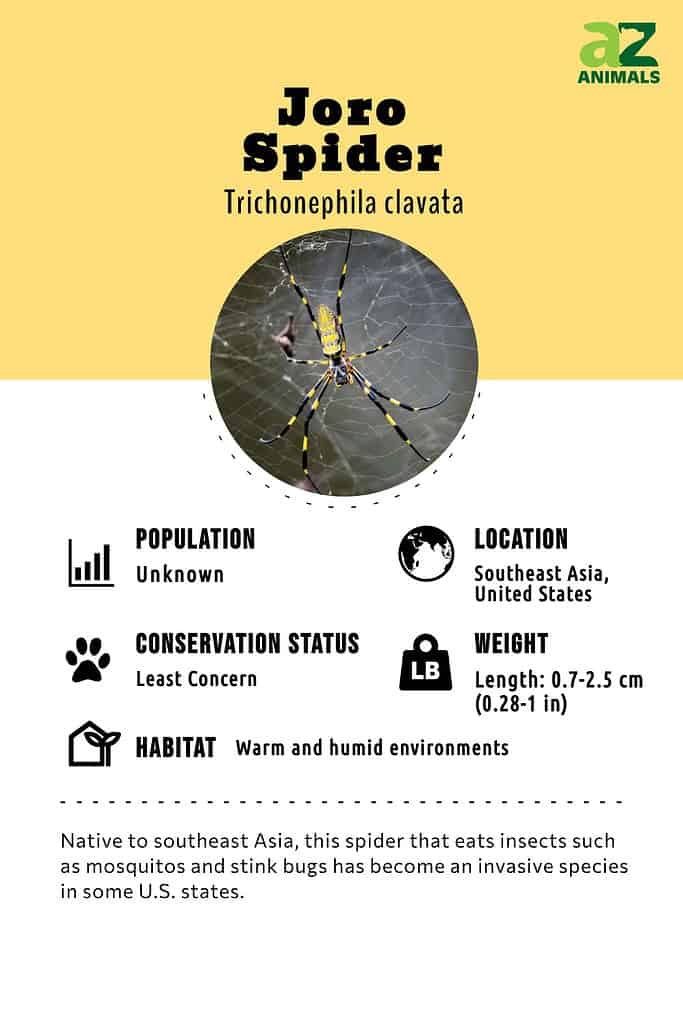
4 Incredible Joro Spider Facts!

Here are a few facts about the Joro spider:

  • Despite being venomous, this spider only poses a threat to humans who are allergic to them. Their bite is relatively harmless.
  • It is an invasive species, meaning that it is not a native animal to the places where it lives. Experts believe that they traveled on cargo ships, growing in mass numbers in Georgia and other areas.
  • While these spiders can look intimidating, they only eat insects such as mosquitos and stink bugs.
  • The largest variations of this species can grow to be up to four inches wide.
Joro Spider Webs

Joro spiders don’t pose a threat to people and only eat insects.

Scientific Name

The Joro spider’s scientific name is Trichonephila clavate. The word Trichonephila was first assigned to the arachnid by Friedrich Dahl in the early 20th century, describing spiders that create woven orbs for their webs. Clavata comes from the modern Latin word clavatus, which means “club.”

It is from the Araneidae family of the Arachnida class. At this time, they have no subspecies.
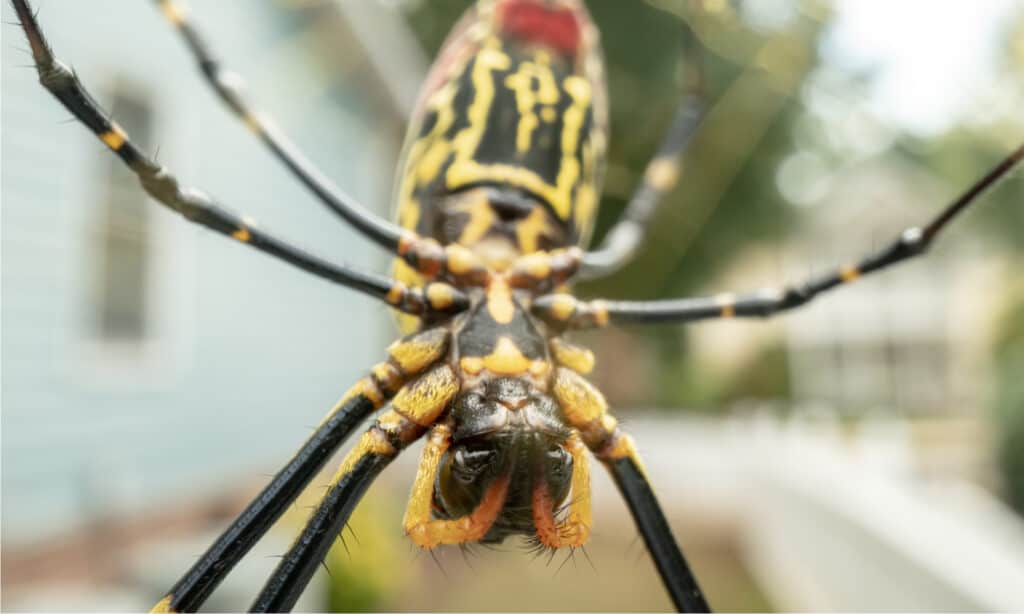
Are Joro Spiders Invasive - Joro Spider Close Up

The Joro spider’s scientific name is Trichonephila clavate.

Evolution and History

In Japan, the Joro spider is called “jorōgumo,” which is also the name of a mythical creature in Japanese folklore from the Edo period. The Jorōgumo (the modern translation is “entangling bride”) is a spider who upon reaching 400 years old is able to become a beautiful woman. She then captures men with her web then eats them — which reflects what some female Joro spiders do to males after mating.

Before the Joro spider was introduced to the U.S., the only other known Trichonephila species in the New World was the golden orb weaver (Trichonephila clavipes), also known as the golden silk orb-weaver. The Joro spider and the golden orb weaver spin the same type of orb-shaped web, and the silk they both produce is gold. However, the main difference between these spiders is their physical appearance. While the Joro spider is decorated in gray and dark blue stripes with a red belly, the golden orb weaver is usually brown or black with a silvery or plum-colored abdomen. Both species prefer warm environments, however the Joro spider is native to southeast Asia, and the golden orb weaver is much more widespread and found in Australia, Asia, Africa, North America, and South America.
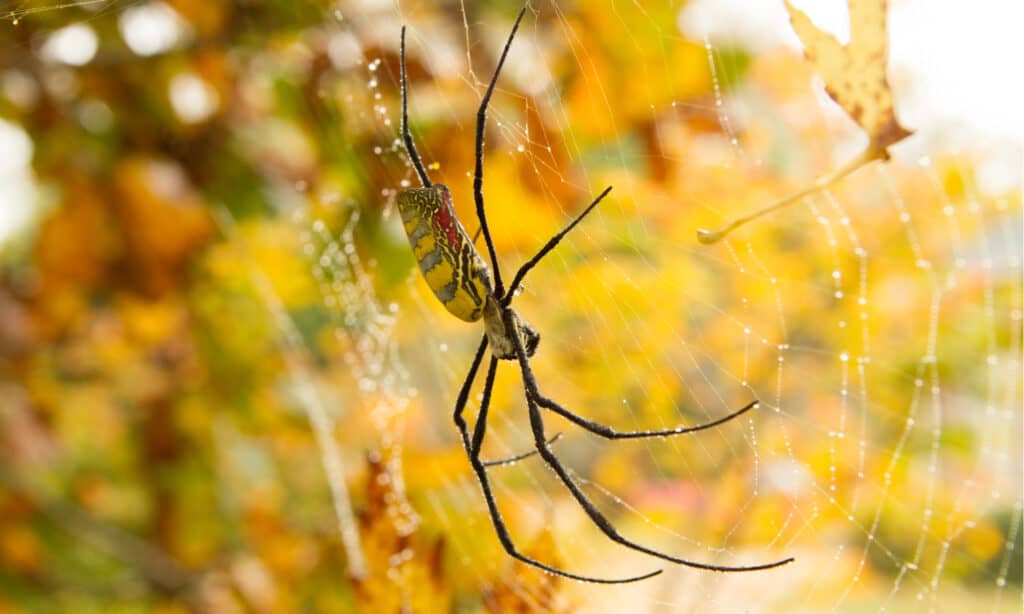
Joro Spider on Web

The Joro spider is closely related to the golden orb weaver.

Appearance

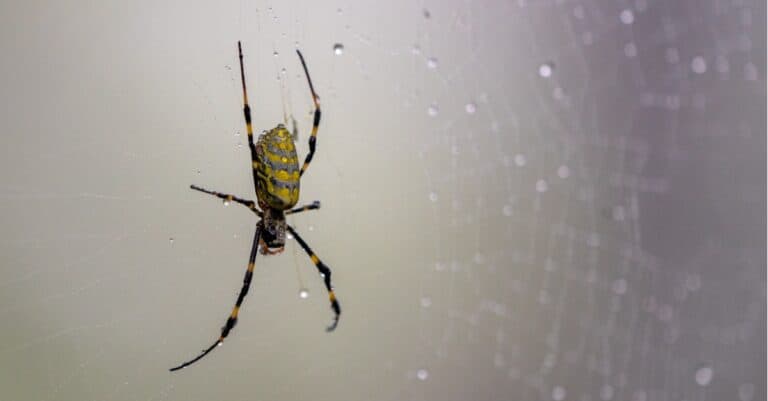
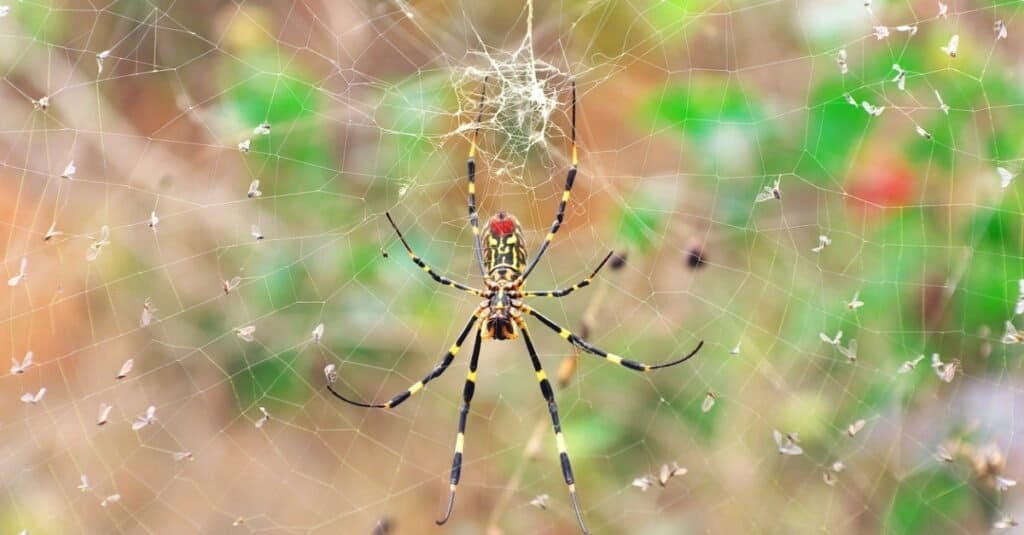
The Joro spider is a quite colorful species. Even though males are often the colorful ones in the animal kingdom, the same is not true of this spider. Males tend to have brown and plain bodies. Females, on the other hand, have asymmetrical patterns along their abdomens in black, red, and yellow, complemented by bands of blue and yellow along the legs.

The males and females are relatively close in size as well, though the females are the larger ones. While males range from 0.7 to 1 cm (0.27-0.39 in), the females typically are more than twice this size at 1.7 to 2.5 cm (0.67-1 in) instead. The largest Joro spiders can get even bigger, measuring 7.6-10.16 cm (three to four inches) in diameter in Georgia. However, its only defense is its ability to bite, which is not life-threatening.
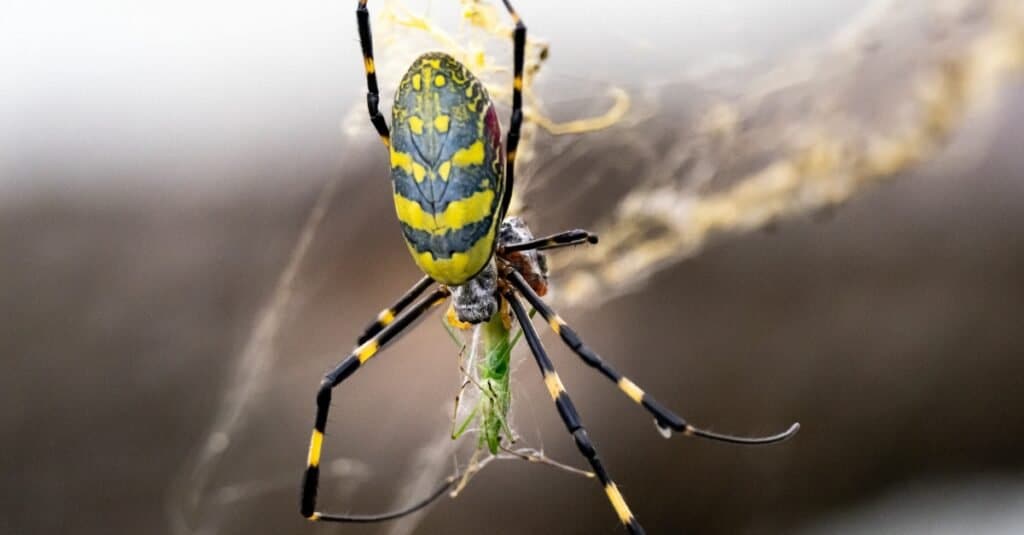
close up of a Joro spider

Female Joro spiders are more brightly patterned than males of the species.

Behavior

While these spiders ordinarily keep to themselves, they have been making headlines since 2013 for their mass numbers collecting around homes and in the woods in 25 different counties in Georgia. Though the Joro spider is a relatively helpful creature to humans, the invasive nature of the species leads many people to become afraid of it.

While the Joro spider can appear rather large and intimidating and its orb-shaped webs tend to take over wherever they are attached, it is relatively harmless. Though it can release venom through a bite (which is different from being poisonous), it is not aggressive. The only time that the spider tends to bite is in an act of protection. For some people, this bite is painful, though the venom is not harmful or life-threatening unless you are allergic to this particular spider species. They’ll only bite as a way to protect themselves from threats — however, these spiders are unafraid to use this defense during mating as well, as the female will often eat the male that she mates with.

Still, these spiders have some sense of peace with other Joro spiders as they are able to live in groups in the same area without any other aggression.

To travel, it will use the wind current to “balloon” on, trailing its silk threads from its body to catch itself in the air and glide on the air currents to go up to 100 miles away. They’ll also use almost anything to travel, even holding onto a car bumper or cargo container.
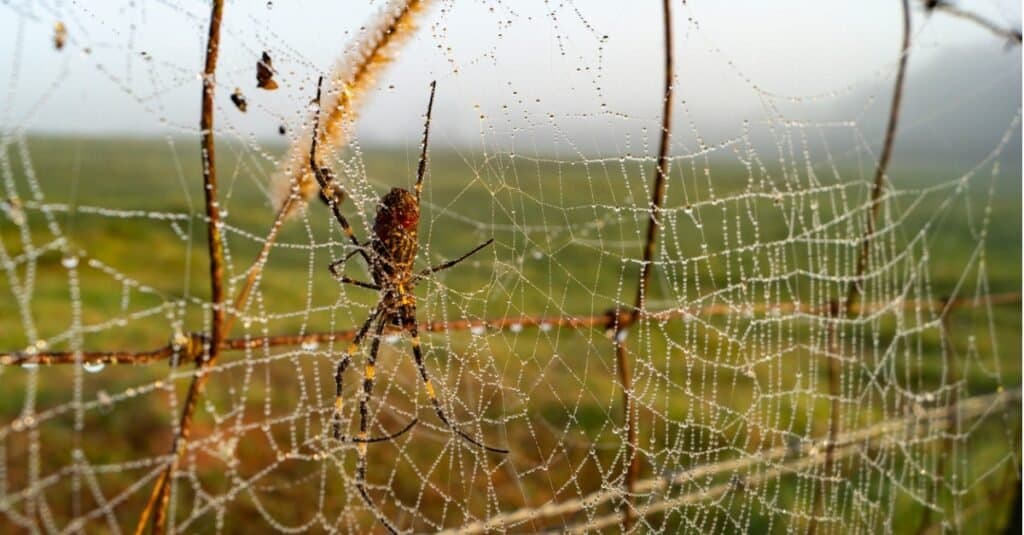
Joro Spider Webs

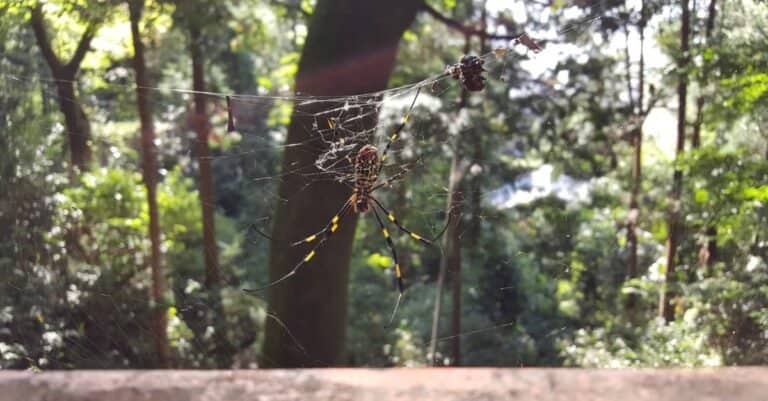
The Joro spider’s webs tend to take over whatever they are attached to.

Habitat

The main area of the world that the Joro spider lives in is within the borders of southeast Asia. They are found in Japan, China, Taiwan, and Korea, though they prefer areas with more humidity. They’ll build their home anywhere they can touch.

Since 2013, the spider has become an invasive species in the United States, primarily present in Georgia and the westernmost areas of South Carolina. They are likely to spread further to the East Coast. They don’t seem to have an adverse impact on the local ecosystems just yet, but the warm and humid environments are perfect for the arachnid to thrive. They consume some of the less beloved species of insects (such as the mosquito), and experts believe that they soon will be naturalized to the area.
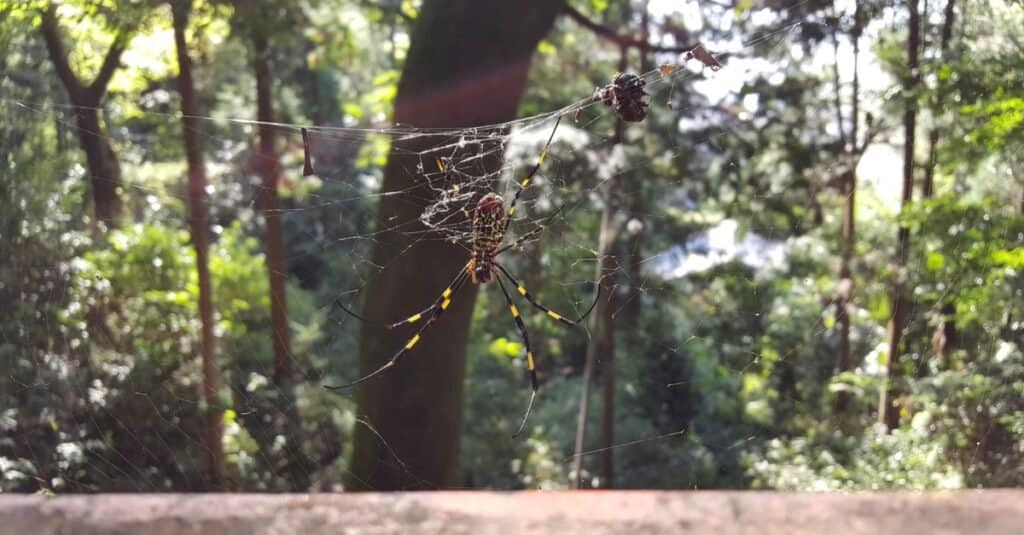
Joro Spider Webs

Since 2013, the Joro spider has become an invasive species in the U.S.

Diet

The diet of a Joro spider is relatively helpful to the people around it. They are carnivorous, requiring the protein and other nutrients of insects to keep them healthy. Not much is known about the quantities they need to eat a day, but the fact that they go after common pests tends to make the public a little more welcoming to them.

Their diet is opportunistic of the warm and humid climate they need. Typically, mosquitos are the insect of choice, though they’ll also eat yellow jackets, stink bugs, and more. Their diet doesn’t impact the native species of spiders in the area, eating the insects that other spiders tend to avoid. The web is how they passively capture prey, though other spiders — like the dewdrop spider — have fallen victim to the appetite of this species of spider.

The only time that the Joro spider will go after a human or something outside of their standard diet is if they feel threatened.
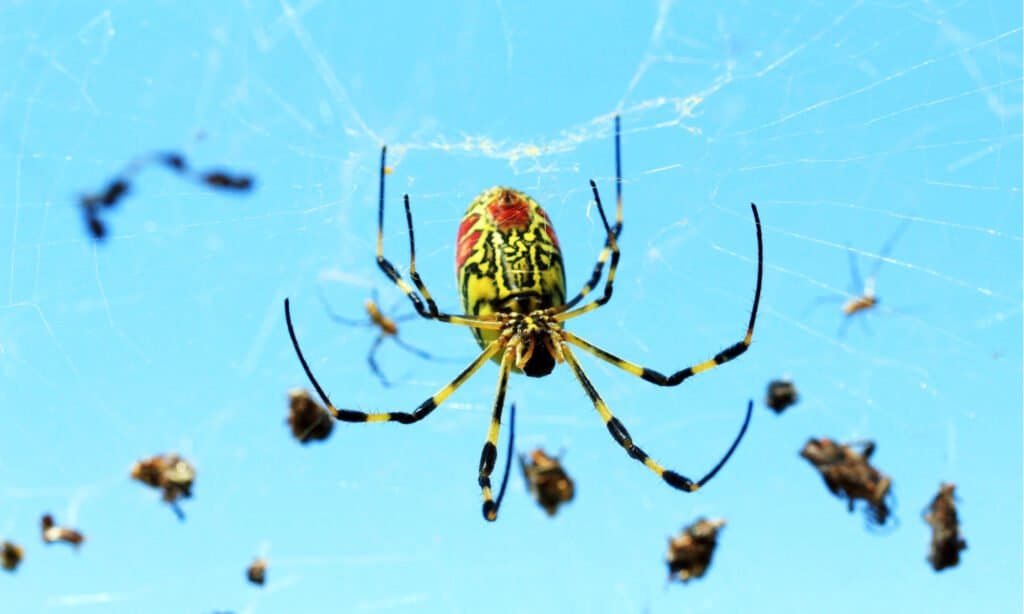
Joro Spider in Web

The Joro spider’s diet includes mosquitos, yellow jackets, and stink bugs.

Predators and Threats

Some birds go after Joro spiders, but there are no particular bird species that prefer them. While they may be eaten by other animals that eat insects and spiders, they don’t have a specific predator that seeks them out. Perhaps because they are an invasive species, there seems to be no natural threat to Joro spiders right now, so they have managed to spread rapidly.
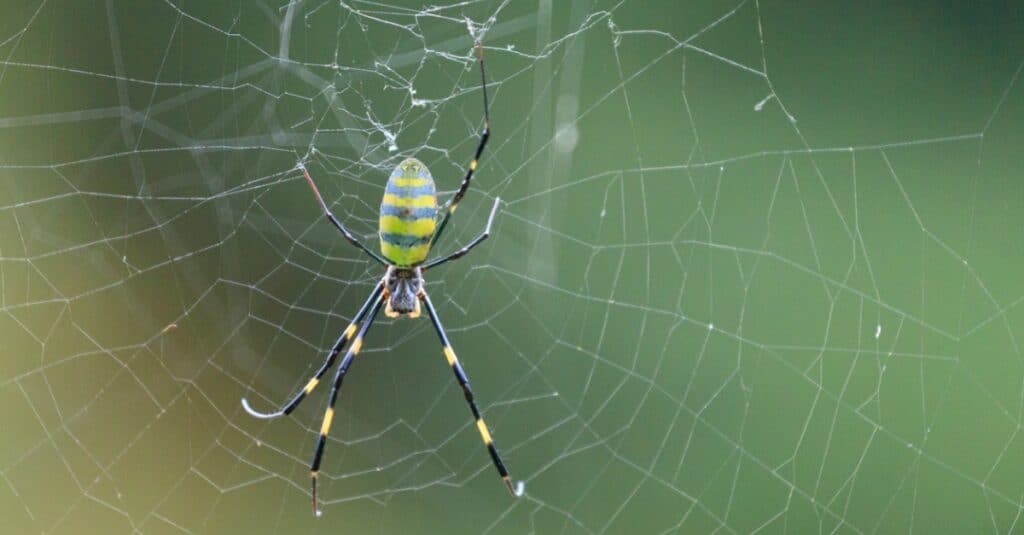
Joro spiders do not seem to have a specific predator that preys on them.

Reproduction, Babies, and Lifespan

Males reach maturity by the end of August when they are about two months old. Females take a little longer, reaching maturity no later than October at three to four months old. The male will join the female on her basket-shaped web, which hangs between tree branches, to mate. Though she may lay between 400-500 eggs, they are all contained within a single egg sac that is constructed from her silk.

When the baby is still within its egg sac with the others, the adults leave them behind and provide no care as they wait to hatch by summertime. Due to the short lifespan, females typically have no mate for life, coming together only for the continuation of the species. Though there are some cases of multiple males fathering the single egg sac or the female guarding the cocoon, these actions are not widespread enough to say whether it is typical of the species.

At birth, the babies can fend for themselves to eat, walking around just after they emerge. There is no specific name for this baby, though some baby spiders are called spiderlings. On average, both males and females live to be one year old. Adults typically cannot survive the winters as the temperatures drop far below their optimal warmth.
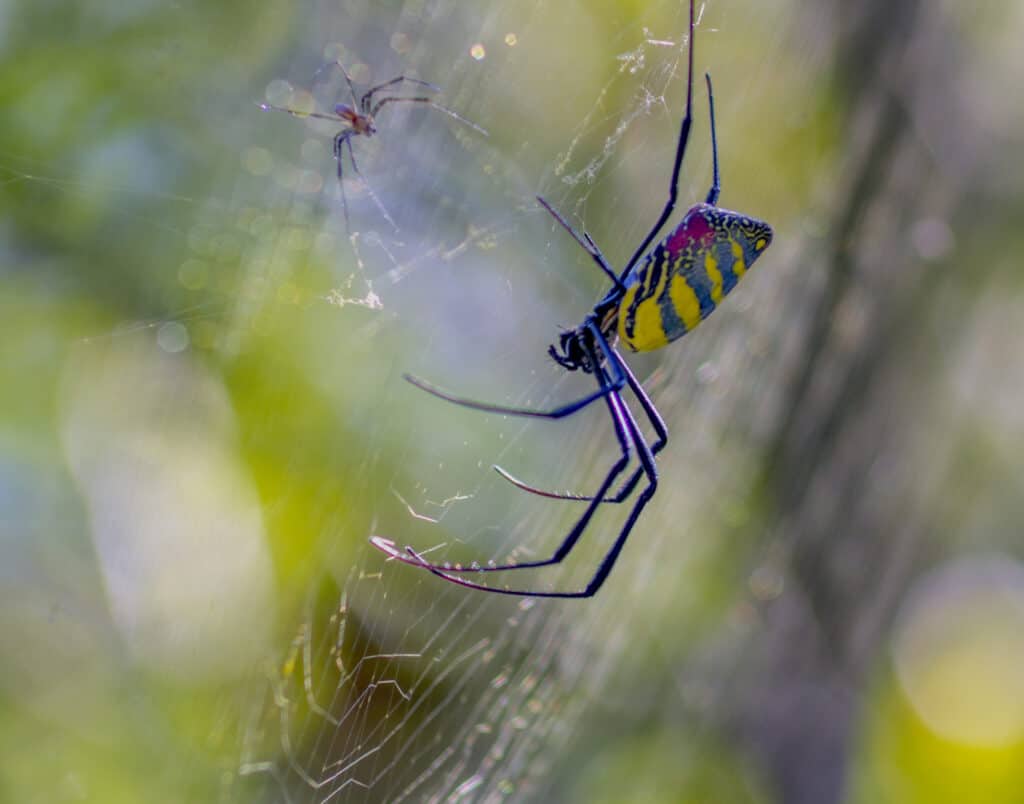
The smaller male Joro spider joins the larger female on her web to mate.

Population

At this time, it is practically impossible to say how many Joro spiders exist in the world. Their recent surge in population in the United States has left many people worried, which is why there are no current efforts to protect them. They are not endangered, and they seem to thrive in warmer regions. Their only threat is humans, but even those encounters have not been enough to bring down the population.
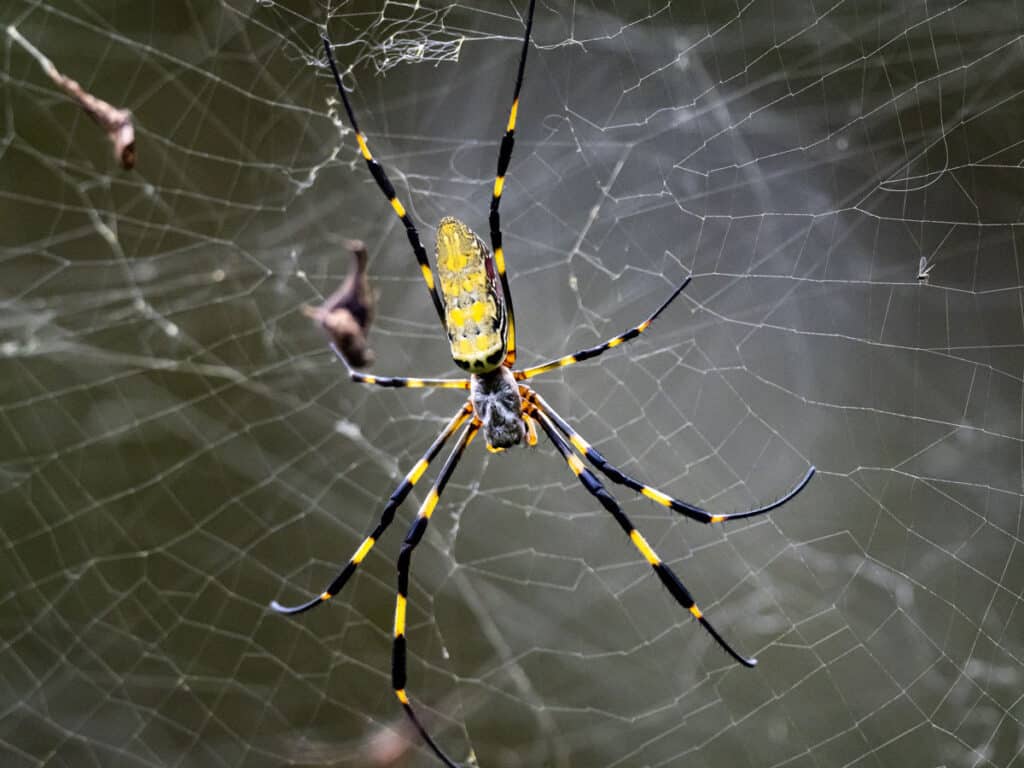
Joro spiders are not endangered and thrive in warmer regions.

View all 52 animals that start with J

Sources

  1. Monroe Country Reporter / Accessed November 13, 2021
  2. Better Homes & Graden / Accessed November 13, 2021
  3. CBS News / Accessed November 13, 2021
  4. The State / Accessed November 13, 2021
  5. The Guardian / Accessed November 13, 2021
  6. Athens Banner-Herald / Accessed November 13, 2021
  7. The Times / Accessed November 13, 2021
  8. gardening soul / Accessed November 13, 2021
  9. Newsweek / Accessed November 13, 2021
  10. Spider ID / Accessed November 13, 2021
  11. OxfordLanguages / Accessed November 13, 2021
  12. PMC / Accessed November 13, 2021
  13. npr / Accessed November 13, 2021
  14. UGATODAY / Accessed November 13, 2021
  15. Wikipedia https://en.wikipedia.org/wiki/Nephila Jump to top / Accessed November 13, 2021
Catherine Gin

About the Author

Catherine Gin

Catherine Gin has more than 15 years of experience working as an editor for digital, print and social media. She grew up in Australia with an alphabet of interesting animals, from echidnas and funnel-web spiders to kookaburras and quokkas, as well as beautiful native plants including bottlebrushes and gum trees. Being based in the U.S. for a decade has expanded Catherine's knowledge of flora and fauna, and she and her husband hope to have a hobby farm and vegetable garden in future.

Thank you for reading! Have some feedback for us?


Joro Spider FAQs (Frequently Asked Questions)

Ballooning in Joro spiders is primarily done by spiderlings. The main reason why is to find new places to live, but this can also help them avoid cannibalism and competition. Smaller adults may balloon if conditions where they live are poor, but this is rare.