S
Species Profile

Squash Beetle

Henosepilachna borealis

A lady beetle with a taste for squash
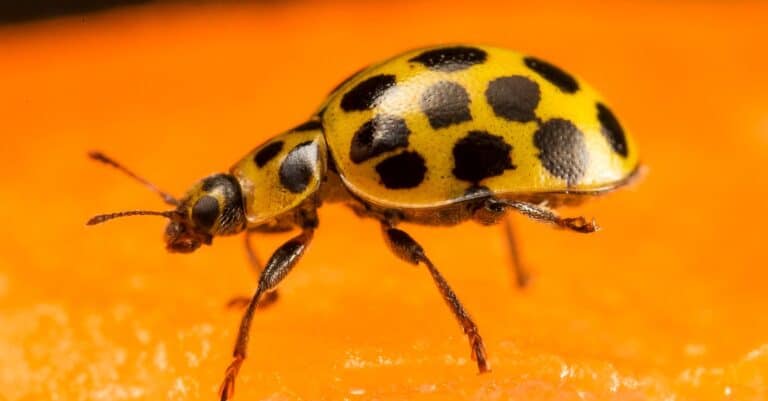
Huw Penson/Shutterstock.com

Squash Beetle Distribution

Click a location to explore more animals from that region

Loading map...

Found in 36 states/provinces

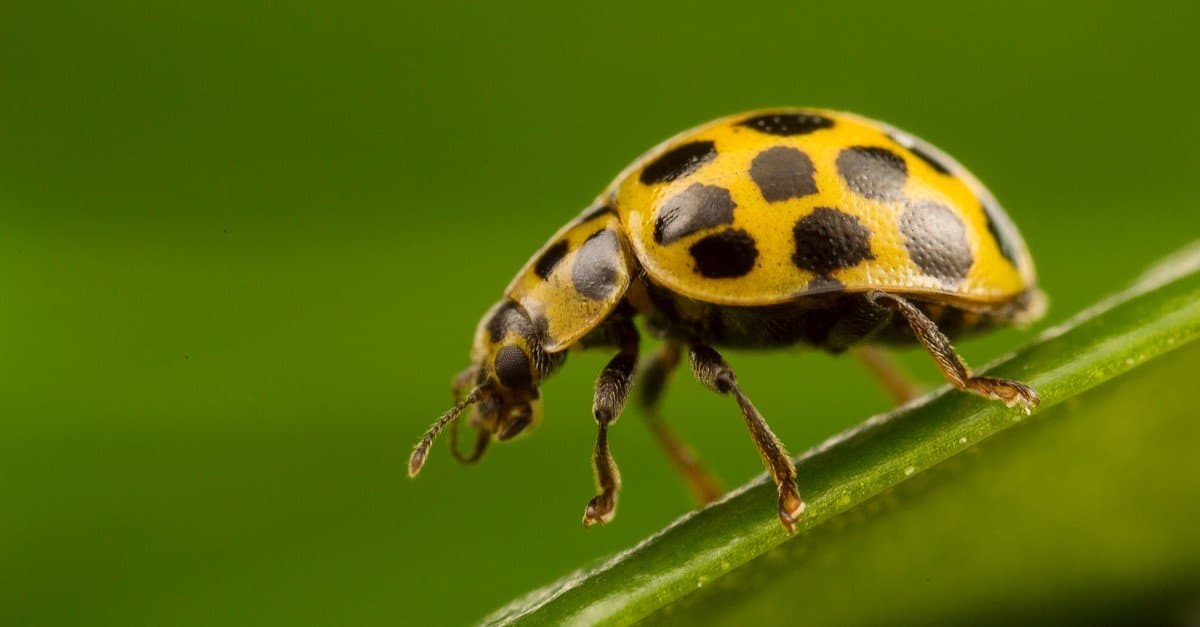
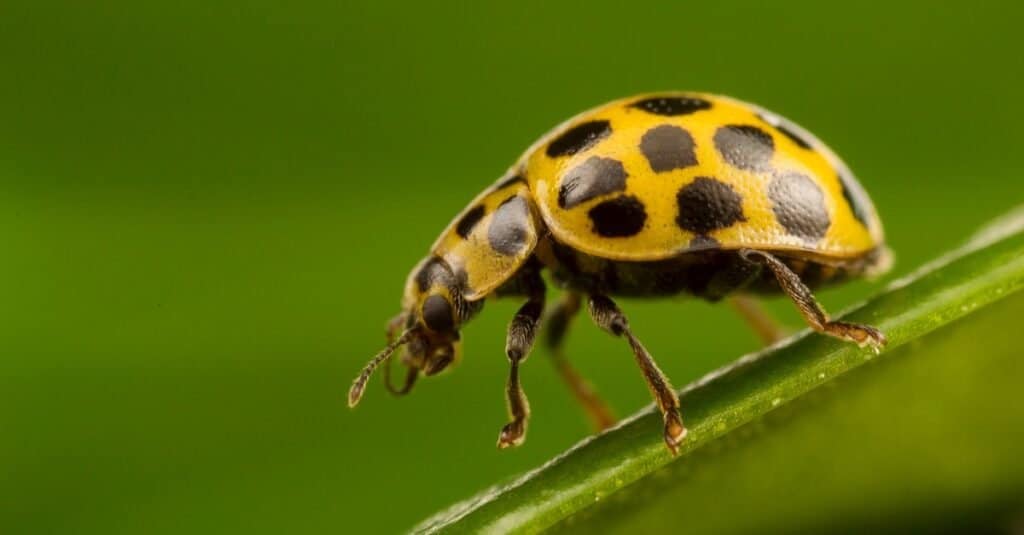
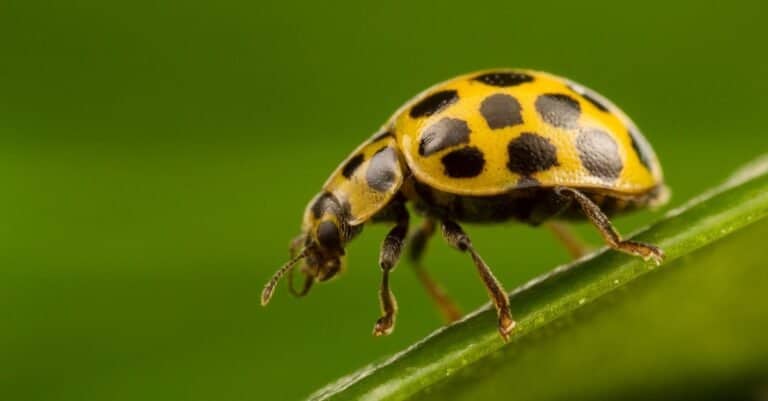
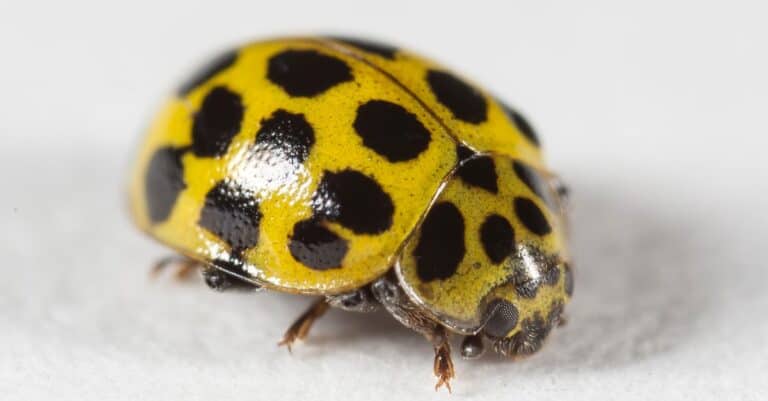
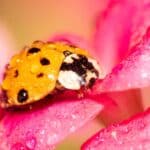
Squash Beetle, Epilachna borealis on a leaf.

At a Glance

Wild Species
Also Known As Squash Ladybug, Squash Ladybird, Squash Beetle
Diet Herbivore
Activity Diurnal
Lifespan 0.75 years
Status Not Evaluated
Did You Know?

Unlike most Coccinellidae (lady beetles) that eat aphids, this species is plant-feeding (herbivorous) and damages cucurbits.

Scientific Classification

The squash lady beetle is an herbivorous ladybird beetle (unusual among Coccinellidae, many of which are predatory). It feeds primarily on cucurbit plants and can be an agricultural/garden pest.

Kingdom
Animalia
Phylum
Arthropoda
Class
Insecta
Order
Coleoptera
Family
Coccinellidae
Genus
Epilachna
Species
Epilachna borealis

Distinguishing Features

  • Lady beetle shape but plant-feeding behavior (skeletonizes leaves)
  • Yellow to orange coloration with dark spotting (pattern can vary)
  • Often found on cucurbit foliage; larvae and adults feed on leaves

Physical Measurements

Length
0 in (0 in – 0 in)

Appearance

Primary Colors
Secondary Colors
Skin Type Hard, glossy chitinous exoskeleton (elytra) with fine surface punctures; larvae are soft-bodied with branched spines.
Distinctive Features
  • Adult body length commonly reported ~0.6-0.75 cm (e.g., Gordon 1985; regional ID keys).
  • Oval, strongly convex lady beetle silhouette; not a leaf beetle.
  • Elytra with black spots on yellow/orange background; spot pattern is variable-avoid relying on a single fixed count.
  • Pronotum typically pale with darker (often black) markings; head usually darker than elytra.
  • Herbivorous (unusual for many lady beetles): adults and larvae feed on squash and related gourd plants.
  • Feeding damage is leaf-skeletonizing: tissue removed between veins, leaving a lace-like leaf.
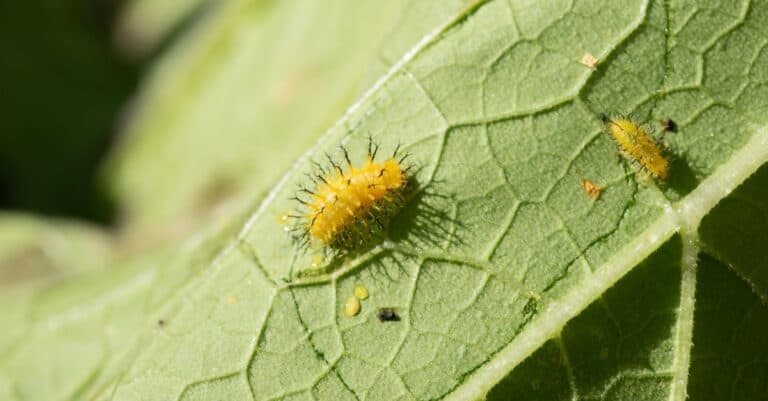
  • Larvae are yellowish with rows of branched, spiny scoli; pupation occurs on host foliage.
  • Phenology/longevity: commonly overwinters as an adult; adult lifespan can extend for months including overwintering (reported in extension/handbook summaries).
  • Common confusion to avoid: it is not the squash bug (a true bug in the order Hemiptera), even though both are often found on squash and related plants.
  • Common confusion to avoid: not the squash bug (a true bug) despite similar host association.

Sexual Dimorphism

Sexual dimorphism is subtle externally. Females average slightly larger and broader-bodied, while reliable separation is typically by terminal abdominal characters/genitalia rather than coloration or spot pattern.

♂
  • Often slightly smaller and narrower-bodied than females in series.
  • Terminal abdominal morphology/genitalia used for confident sexing in collections.
♀
  • Often slightly larger with a broader, more rounded abdomen.
  • Terminal abdominal morphology (sternites/ovipositor region) differs; genitalia most reliable.

Did You Know?

Unlike most Coccinellidae (lady beetles) that eat aphids, this species is plant-feeding (herbivorous) and damages cucurbits.

Adults are small (commonly reported around ~6-7 mm long in extension/USDA-style pest descriptions), with a spotted pattern typical of Epilachninae.

Larvae are spiny "alligator-like" grubs that feed openly on leaf surfaces, often leaving a lace-like (skeletonized) leaf.

It's frequently listed under the genus Henosepilachna; many North American references still use Epilachna-both names appear in the literature.

Host association is strong: it is primarily tied to Cucurbitaceae (squash, pumpkin, gourds, cucumber relatives) rather than a broad range of crops.

It overwinters as an adult in sheltered sites (a common life-history trait reported for epilachnine cucurbit feeders), then reinvades gardens in warm weather.

Unique Adaptations

  • Herbivory within a mostly predatory family: Epilachninae (including the squash lady beetle and relatives like the Mexican bean beetle) evolved plant-feeding mouthpart use and digestive physiology suited to leaf tissues rather than soft-bodied insects.
  • Spiny larval form: prominent branched spines help deter predators/parasitoids while larvae feed exposed on leaf surfaces.
  • Aposematic patterning: contrasting spots and bright background coloration function as a warning signal-common across lady beetles-even though this species is not a beneficial predator.
  • Cucurbit specialization: behavioral and physiological tolerance to cucurbit plant chemistry (notably bitter cucurbit compounds) supports its close association with squash-family hosts.

Interesting Behaviors

  • Leaf-skeletonizing feeding: both adults and larvae scrape leaf tissue, often leaving veins intact and producing a "windowpane" or lacy look typical of epilachnine damage.
  • Clustering: eggs are laid in groups on host leaves; early instars may feed near one another, concentrating damage on particular plants/leaves.
  • Host fidelity: adults commonly remain on cucurbit patches and repeatedly feed, mate, and oviposit on the same host plant species when available.
  • Seasonal dormancy strategy: adults seek protected overwintering sites (leaf litter, field edges, debris) and reappear when cucurbits emerge.
  • Defensive "lady beetle" chemistry/behavior: like many coccinellids, epilachnines can rely on conspicuous coloration plus chemical defenses (often associated with reflex bleeding in the family), reducing palatability to predators.

Cultural Significance

Lady beetles are seen as lucky, but the squash lady beetle (Henosepilachna borealis) is a plant-eating pest that can harm squash and pumpkins. Farm bulletins note it is a cucurbit pest, showing not all Coccinellidae eat aphids.

Myths & Legends

In Europe, ladybirds called Our Lady's beetle after the Virgin Mary are said to bring luck and protect crops. Hurting one is bad luck, though some, like the squash lady beetle (Henosepilachna borealis), eat crops.

The nursery rhyme "Ladybird, ladybird, fly away home" is an old children’s chant about ladybirds. It isn’t about one species but connects to the lady beetle group, including Henosepilachna/Epilachna.

In Europe and North America, folk sayings say ladybirds landing on you mean good weather, a visitor, or a good harvest — a belief that includes lady beetles like Squash Lady Beetle (Henosepilachna borealis).

The species name "borealis" means "northern" and was used by early taxonomists to mark its range. Use of Epilachna versus Henosepilachna in papers shows the history of classifying these plant-eating ladybirds.

Conservation Status

NE Not Evaluated

Has not yet been evaluated against the criteria.

Population Unknown

Life Cycle

Birth 25 larvas
Lifespan 1 year

Lifespan

In the Wild
0.5–1 years
In Captivity
0.33–1 years

Reproduction

Mating System Promiscuity
Social Structure Transient
Breeding Pattern Transient
Fertilization Internal Fertilization
Birth Type Internal_fertilization

Adults mate via internal fertilization during brief encounters on cucurbit host plants; both sexes are expected to mate with multiple partners over the reproductive season. Females oviposit on leaves and provide no post-oviposition care.

Behavior & Ecology

Social Aggregation Group: 20
Activity Diurnal
Diet Herbivore Squash and pumpkin leaves (foliage)
Seasonal Hibernates

Temperament

Herbivorous, non-predatory ladybird; generally non-aggressive toward conspecifics on the same plant.
Sociality is stage- and density-dependent: eggs and larvae are often aggregated; adults are usually solitary except during outbreaks.
Adults readily drop from leaves or fly when disturbed; thanatosis/avoidance responses common in coccinellids.
Overwinters as an adult; spring host-finding concentrates individuals on cucurbits, increasing encounter rates (reported for E. borealis in applied entomology summaries, e.g., Capinera 2001).
Published, species-specific quantitative adult lifespan (days) and stable group-size statistics are limited; most reports describe transient aggregations rather than persistent groups.

Communication

None documented; communication is not known to involve airborne sound in this species.
Chemical cues: likely sex/aggregation pheromones and contact chemoreception via antennae/tarsi As in Coccinellidae; summarized in Gordon 1985; Capinera 2001
Host-plant volatile cues guide attraction to cucurbits; individuals converge on suitable foliage, producing apparent aggregations.
Tactile interactions during courtship/mating: antennation and mounting; brief contact-based assessment typical of lady beetles.
Visual cues at short range on exposed leaf surfaces (day-active), aiding mate/conspecific detection on host plants.

Habitat

Biomes:
Temperate Forest Temperate Grassland
Terrain:
Plains Hilly Valley Riverine Coastal
Elevation: Up to 4921 ft 3 in

Ecological Role

Specialist herbivore (foliage-feeding beetle) on cucurbits (gourd family); agricultural and garden pest of squash, pumpkins, cucumbers, and melons.

Acts as a primary consumer converting cucurbit leaf biomass to insect biomass (prey base for predators/parasitoids) Influences cucurbit plant performance via defoliation (can reduce yield/plant vigor in crops and gardens) Contributes to nutrient cycling through frass deposition on host plants/soil

Diet Details

Other Foods:
Squash and pumpkin leaves Cucumber leaves Melon leaves Cucurbit flowers Cucurbit fruit rind

Human Interaction

Domestication Status

Wild

Wild and not domesticated, the squash lady beetle (Henosepilachna borealis) is mainly a garden and cucurbit crop pest. People deal with it by monitoring, using row covers, hand removal, and insecticides when needed. It also appears in entomology teaching and North American extension guides like UF/IFAS Featured Creatures and regional extension bulletins.

Danger Level

Low
  • Does not possess venom and is not considered dangerous; primary harm is indirect via crop/garden damage.
  • May exude defensive hemolymph when handled (common in lady beetles), which can cause minor skin/eye irritation or staining in sensitive individuals.
  • Potential (low) allergen exposure from handling insects/plant material in dense infestations.

As a Pet

Not Suitable as Pet

Legality: Not usually treated as a pet, but state plant rules often ban moving or releasing live Squash Lady Beetle (Henosepilachna borealis). If kept, only for short-term educational use with a secure enclosure and safe disposal.

Care Level: Experienced

Purchase Cost: Up to $20
Lifetime Cost: $5 - $100

Economic Value

Uses:
Agricultural pest (negative) Home garden pest (negative) Education/outreach (minor positive) Research organism for herbivory/plant-insect interactions (minor positive)
Products:
  • No direct commercial products; economic impact is via foliar damage to cucurbits (e.g., squash, pumpkin, cucumber) and associated management costs (scouting/hand removal/insecticides/row covers).
  • Educational value as a well-known example of a plant-feeding 'lady beetle' used in extension materials and teaching collections.

Relationships

Related Species 5

Mexican bean beetle Henosepilachna varivestis Shared Family
Twenty-eight-spotted ladybird Henosepilachna vigintioctopunctata Shared Family
Spiny lady beetles Epilachna spp. Shared Genus
Seven-spotted lady beetle Coccinella septempunctata Shared Family
Multicolored Asian lady beetle
Multicolored Asian lady beetle Harmonia axyridis Shared Family

Ecological Equivalents 4

Animals that fill a similar ecological role in their ecosystem

Striped cucumber beetle
Striped cucumber beetle Acalymma vittatum Shares the same crop niche (Cucurbitaceae) and is a common defoliating and seedling-damaging herbivore pest in cucurbit plantings; it often co-occurs in gardens and fields where H. borealis feeds on cucurbit foliage.
Spotted cucumber beetle
Spotted cucumber beetle Diabrotica undecimpunctata Another common cucurbit-feeding chrysomelid in North America that overlaps strongly in host plants and timing in cucurbit agroecosystems, contributing to similar leaf-feeding damage.
Squash bug Anasa tristis Key cucurbit pest that overlaps in habitat and host plants. Although it is a piercing-sucking feeder rather than a leaf-chewer, it occupies a similar ecological role as a cucurbit-specialist crop pest.
Squash vine borer Melittia cucurbitae A cucurbit specialist frequently found in the same gardens and fields; it attacks the same host plants but targets different plant tissues (stems/vines), making it an ecological counterpart within cucurbit pest complexes.

Squash beetles are not the same as squash bugs. While the squash bug has a shield-like exoskeleton, the squash beetle looks much more like a ladybug.

The squash beetle, also known as the squash lady beetle or the squash ladybug, has a beautiful orange and yellow shell, featuring a specific arrangement of spots along its back. With an average lifespan of just 2-6 months, you may be surprised at the amount of damage that these insects can impose on your garden. There are a few natural deterrents, especially if you leave bug traps around the common areas where they accumulate. Dealing with their eggs is the easiest prevention method, stopping the insects before they flourish into babies.

Not to be mistaken for a squash bug, squash lady beetles could bring major chaos to your plant life.

Squash Beetle vs. Stink Bug

Knowing certain facts about the squash beetle and the stink bug makes them easier to differentiate. The two insects look almost nothing alike in their coloring, and the stink bug tends to be much larger. These bugs release an odor when threatened, while the biggest threat of the squash beetle is the bacteria left behind by their saliva. A stink bug is much closer to a squash bug, though they are still very different from the squash beetle.

Squash Beetle Species, Types, and Scientific Name

Squash lady beetles are from the Coccinellidae family and the Coleoptera order. They are often mistaken for a ladybug or a cucumber beetle, but they are entirely independent of these other insects. Their scientific name – Epilachna borealis – refers specifically to the squash beetle, not to any other insects.

While “Epilachna” seemingly comes from a combination of New Latin words, it primarily comes from the Greek word “lachnÄ“,” which means woolly hair. “Borealis” has Latin roots, coming from the word “boreal,” which literally translates to mean “northern.” It likely has this name for the main habitat it comes from in the United States.

Appearance: How to Identify Squash Beetle

Proper identification of a squash beetle is crucial to determining the best way to prevent them or kill off existing larvae. The eggs, which are often found in clusters of 30 or more, are yellow and long, found underneath leaves. This is the best stage to remove them before they grow into the full adult insects that they will be.

When the eggs hatch, the babies (or larvae) have spiky black hairs on them, resembling small hedgehogs that are yellow in color. Pupae are yellow grubs, and they have an oily chemical that comes from their body to deter ants and other predators.

Knowing identification facts is crucial to your garden and plant life. While these insects may look similar to certain bugs, they are detrimental to plant life. Identification ensures that you don’t kill off insects that could benefit your garden. Their potentially six-month lifespan allows plenty of time for damage and understanding what they are and how to eliminate them is an important step in preserving your garden.
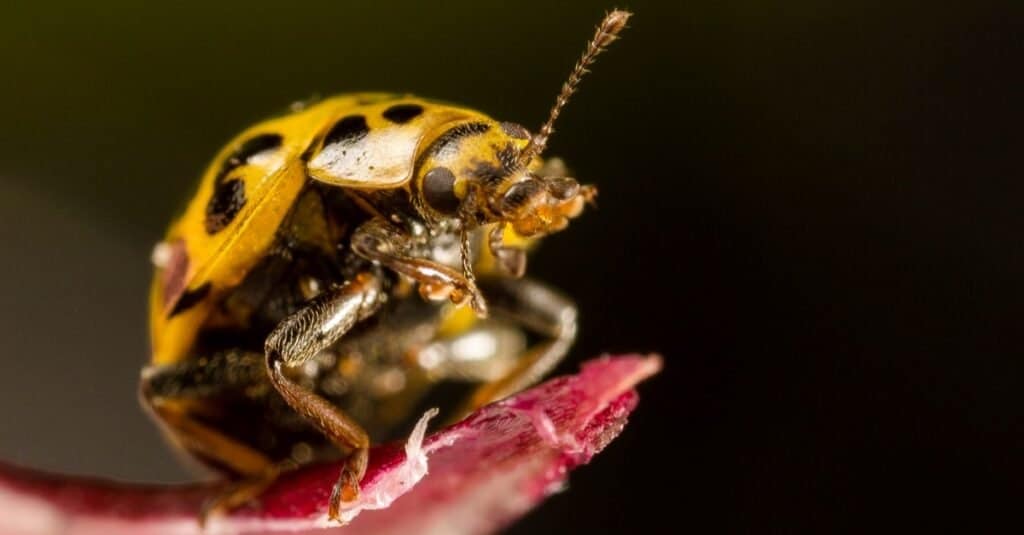
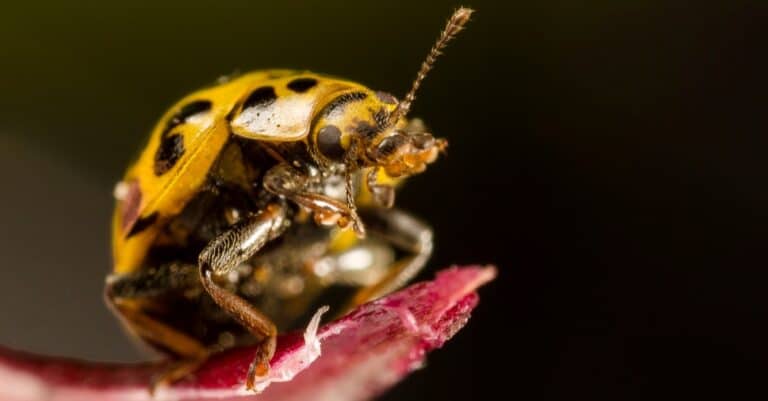
Squash Beetle, Epilachna borealis, on a red leaf with a black background.

Squash Beetle, Epilachna borealis, on a red leaf with a black background.

Habitat: Where to Find Squash Beetles

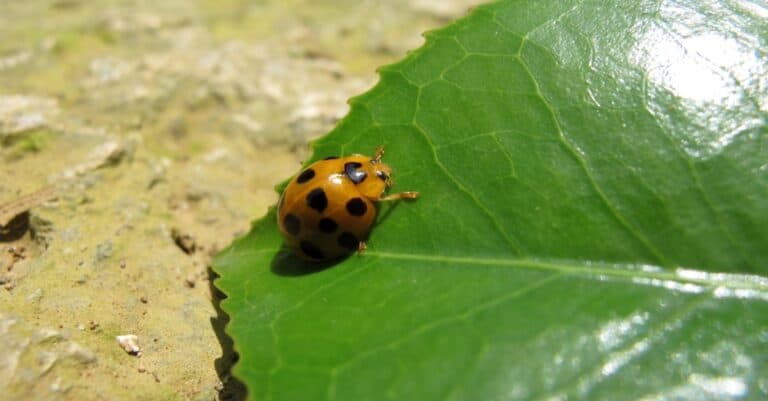
Locating squash beetles and squash lady beetles is relatively easy when you look at the right time of year. Typically, they show up in the middle of the summer, which is when they mate and lay eggs. These eggs are laid underneath leaves, often placed right next to their source of food.

The young larvae find their way onto cucurbit plants, eating them from the bottom. However, it won’t usually stop fruit production. Most of these beetles are found in gardens in North America, primarily in the eastern part of the United States.

Diet: What Do Squash Beetles Eat?

Squash lady beetles are fairly easy to spot because they choose their habitat near their favorite diet – plants in the squash family. Some of their favorite foods include summer squash, cucumbers, and zucchini, but they’ll also go after beans and pea plants. The easiest habitat for them to get these nutrients is a common neighborhood garden.

Sometimes, these insects will feed on leaves and vines as well. Their saliva is incredibly dangerous to any garden because it carries a bacterium that these types of plants cannot handle. It destroys them, leading to a condition called cucurbit yellow vine disease. The vascular system of the plant will turn yellow, the leaves curl, and the root ultimately rots.

Though most lady beetles will eat other insects, the same is not true for squash lady beetles. Their diet is entirely herbivorous with special attention to cucurbit plants.

Prevention: How to Get Rid of Squash Beetles

Having these pests around a garden or home can be frustrating, but there are a few safe and natural prevention methods. Creating a homemade bug trap is relatively simple since they naturally go to areas that are dark and hidden. Setting out boards or pieces of newspaper lures them into a “safe” place, allowing you to collect them in the morning. Some stores have bug traps available to catch and dispose of the beetles.

Getting rid of squash beetles when you see them is the best management. They often collect on plants, but they can be removed with a gloved hand. Placing them in soapy water will drown and kill them relatively fast.

If you don’t have the time for this process, pick up some neem oil. Neem oil is especially effective against the eggs of squash lady beetles, coating the surface and potentially preventing any of the babies from hatching at all. Prevention of the problem is the easiest way to deal with these beetles before you get an infestation. Without the ability to hatch, you stop new insects from invading your garden space. Neem oil can even kill off nymphs and adults, helping with the prevention of spreading and laying new eggs.

View all 390 animals that start with S

Sources

  1. University of California / Accessed January 1, 2022
  2. Insect Identification / Accessed January 1, 2022
  3. Wikipedia / Accessed January 1, 2022
  4. Beetle Identifications / Accessed January 1, 2022
  5. Cooped Up Life / Accessed January 1, 2022
  6. Garden / Accessed January 1, 2022
A-Z Animals Staff

About the Author

A-Z Animals Staff

AZ Animals is a growing team of animals experts, researchers, farmers, conservationists, writers, editors, and -- of course -- pet owners who have come together to help you better understand the animal kingdom and how we interact.
Connect:

Thank you for reading! Have some feedback for us?


Squash Beetle FAQs (Frequently Asked Questions)

A squash beetle is an insect that often goes after squash and pumpkins. They are brown and easy to find in North America. They release an odor when they are disturbed, and they are transmitters of the cucurbit yellow vine disease bacterium.