N S W E
Wildlife Expeditions

Wildlife of
Ontario

From boreal moose country to Great Lakes marshes, Ontario's vast forests, wetlands, and freshwater coasts anchor some of North America's richest wildlife migrations.
266 Species
1,076,395 km² Land Area
Overview

About Ontario

Ontario's wildlife is shaped by great scale and contrast: a wild north of Canadian Shield lakes, conifer forests, and peatlands, and the more fertile Great Lakes–St. Lawrence lowlands in the south. This mix of boreal and temperate zones helps many species live here—moose, wolves, and woodland caribou in the remote north, and deer, foxes, raptors, and many birds near farms, towns, and cities. Key habitats drive this diversity: boreal forest, wetlands, and rivers that feed top predators and wide-ranging mammals; Hudson Bay lowlands peatlands, inland fens and bogs for waterbirds and special plants and insects; and Great Lakes coastal marshes, dunes, alvars, and islands that are crucial stopover and nesting sites for migratory birds. Ontario is rare because it combines huge freshwater shorelines, excellent places for migrating birds, and easy shifts from wild country to urban areas.

Physical Features

Geography

Ontario shows a strong north-south gradient: the Canadian Shield and Hudson and James Bay lowlands in the north have boreal forest, peatlands and tundra-influenced coasts. The south is the Great Lakes-St. Lawrence lowlands with richer soils, many rivers and large wetlands. Long freshwater shores and lakes make migration stopovers, fish-spawning and nursery areas, and wetland complexes that hold many species.

1,076,395 km² (total area) Land Area
2nd-largest province in Canada by total area; 4th-largest Canadian subdivision overall (including territories) Size Rank
Canada Country
Province Type
Elevation Range

Near sea level along Hudson Bay/James Bay to ~693 m (Ishpatina Ridge)

Coastline

Extensive shorelines on the Great Lakes (freshwater) plus a marine/brackish coastline on Hudson Bay and James Bay, with major coastal marshes and tidal-influenced estuaries in the far north

Key Landscapes

Canadian Shield: bedrock-dominated uplands with millions of lakes, conifer/mixed forests, and rocky barrens (core habitat for boreal species) Hudson Bay-James Bay Lowlands: broad peatlands, muskeg, fens, and coastal marshes supporting waterfowl, shorebirds, and large mammals Great Lakes shorelines (Superior, Huron, Erie, Ontario) and associated coastal wetlands/dune systems that concentrate migratory birds and amphibians Niagara Escarpment: cliff-and-forest corridor influencing local microclimates, plant communities, and raptor migration routes Great Lakes-St. Lawrence Lowlands: fertile plains with rivers, forests remnants, and wetlands supporting high species richness and human-adapted wildlife Major river corridors (Ottawa River, Moose River, Albany River, Severn River, Thames River): movement routes and riparian habitat networks
State Symbols

Official Wildlife Symbols

wildflower

White Trillium

Designated 1937

tree

Eastern White Pine

Designated 1984

bird

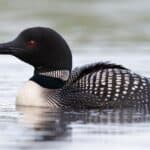
Common Loon

Designated 1994

Parks & Reserves

Protected Areas

Ontario's protected areas include federal and provincial parks, reserves, and National Wildlife Areas/Migratory Bird Sanctuaries for wetlands and migratory birds. They run from Great Lakes coastal wetlands and Carolinian habitats in the south (many species, lots of development) through boreal forest and the Canadian Shield to Hudson Bay Lowlands peatlands; many wildlife-viewing spots are at wetlands, shorelines, and boreal areas.

Protected Coverage

~10-12% of Ontario's land and inland waters are in protected/conserved areas (approximate; varies by accounting method and inclusion of conservation reserves/Indigenous protected areas).

National Parks & Preserves

Pukaskwa National Park

~1,878 km²

Ontario's largest national park protects a rugged Lake Superior shoreline and interior boreal forest, providing critical habitat connectivity for wide-ranging mammals and coastal birdlife in a relatively roadless setting.

Woodland caribou Moose Gray wolf American black bear Peregrine falcon

Bruce Peninsula National Park

~156 km²

Notable for its alvar ecosystems, limestone cliffs, forests, and clear-water nearshore habitats along Georgian Bay and Lake Huron-important for reptiles, amphibians, and migratory birds.

Eastern massasauga rattlesnake Blanding's turtle American black bear Common loon White-tailed deer

Point Pelee National Park

~15 km²

A globally significant migratory bird stopover on the Great Lakes; famous for spring songbird fallout, monarch migration, and wetland-dependent species in a highly biodiverse southern landscape.

Monarch butterfly Warblers (migratory songbirds) Tundra swan White-tailed deer Merlin (migrating raptor)

Georgian Bay Islands National Park

~14 km²

Protects islands, wetlands, and mixed forests in Georgian Bay, supporting a high diversity of reptiles and amphibians and offering excellent viewing of coastal birdlife and freshwater shoreline habitats.

Eastern massasauga rattlesnake Blanding's turtle Beaver Great blue heron White-tailed deer

Thousand Islands National Park

~24 km²

A mosaic of forested islands, wetlands, and shoreline along the St. Lawrence River corridor, important for raptors, turtles, and riverine wildlife at the intersection of major flyways.

Bald eagle Osprey River otter Snapping turtle Mink

Rouge National Urban Park

~79 km²

One of the world's largest urban parks, protecting river valleys, wetlands, and Lake Ontario shoreline habitats; notable for species-at-risk recovery and migratory bird use within a major metropolitan region.

Blanding's turtle Snapping turtle Beaver Coyote Salmon (migrating runs in river systems)

State & Provincial Parks

Algonquin Provincial Park

~7,653 km²

Iconic mixed-forest and lake country that supports strong populations of large mammals and iconic boreal birds; exceptional for canoe-route wildlife viewing and wolf howls.

Moose Gray wolf American black bear Beaver Common loon

Wabakimi Provincial Park

~8,920 km²

A vast boreal wilderness of forests, rivers, and lakes with relatively low road density, important for wide-ranging carnivores and woodland caribou conservation.

Woodland caribou Moose Wolverine Gray wolf Lake sturgeon

Polar Bear Provincial Park

~23,552 km²

Remote Hudson Bay Lowlands coastal and peatland ecosystems; critical for denning and seasonal use by polar bears and for huge concentrations of migratory birds in coastal wetlands.

Polar bear Beluga (coastal waters) Snow goose Arctic fox Caribou

Quetico Provincial Park

~4,716 km²

Large, canoe-access wilderness protecting intact boreal forest and lake ecosystems; valued for predator-prey dynamics, old-growth stands, and dark-sky/low-disturbance habitat.

Moose Gray wolf Woodland caribou Bald eagle American black bear

Wildlife Refuges

Long Point National Wildlife Area

~3,200 ha

Great Lakes coastal marsh and sandspit habitats of international importance for migratory waterfowl, shorebirds, and marsh birds; one of Canada's most significant birding landscapes.

American black duck Canvasback Tundra swan Least bittern Bald eagle

Prince Edward Point National Wildlife Area

~552 ha

Key Lake Ontario shoreline stopover for migrating landbirds and raptors, with shrubland/grassland and coastal habitats that also support species at risk.

Peregrine falcon Monarch butterfly Red-headed woodpecker Bobolink Little brown bat

Wye Marsh National Wildlife Area

~1,200 ha

Large marsh complex important for wetland restoration, amphibians, turtles, and breeding/migrating waterbirds; a stronghold for some reptiles at risk.

Trumpeter swan Blanding's turtle Least bittern River otter Snapping turtle

St. Clair National Wildlife Area

~2,400 ha

Extensive coastal wetland habitat at the St. Clair River-Lake St. Clair system, supporting major waterfowl migrations and wetland-dependent birds and mammals.

Redhead (duck) Canvasback Black tern Muskrat Bald eagle

Wilderness Areas

  • Hudson Bay Lowlands peatlands and coastal marsh complexes (one of the world's largest intact wetland/peatland regions)
  • Wabakimi-Albany River canoe-country roadless expanses (boreal forest, rivers, and lake networks)
  • Temagami backcountry old-growth and lake-country (large tracts of roadless interior accessed by canoe routes)
  • Algoma Highlands and Lake Superior north-shore backcountry (remote highlands, rivers, and coastal habitats)
  • Slate Islands (remote Lake Superior island wilderness supporting unique predator-prey dynamics)
  • Northern Ontario's far-roadless boreal corridors around the Attawapiskat and Albany river systems (important for connectivity and wide-ranging mammals)
Animals

Wildlife

Ontario's wildlife is shaped by a strong north-south gradient: vast boreal forest, muskeg, and tundra-edge habitats in the north; mixedwood forests and the Great Lakes-St. Lawrence lowlands in the south; and globally important Great Lakes shorelines, wetlands, and island systems. This creates a "big mammals + freshwater + migration" wildlife experience-moose, bears, wolves, and (in places) caribou in the north; exceptional spring/fall bird migration along Lake Erie and Lake Ontario; and a high diversity of fish, turtles, and wetland species across the Great Lakes basin.

≈ 90+ species Mammals
≈ 480-500 species recorded Birds
≈ 27 native species (turtles, snakes, and lizards combined) Reptiles
≈ 20-25 species Amphibians
≈ 160-170 freshwater species (often cited as ~165) Fish
Examples

Iconic Species

Moose
Moose A flagship boreal mammal widely sought in Algonquin and northern shield landscapes; Ontario supports extensive moose habitat and some of Canada's best road-accessible viewing in protected areas.
American Black Bear
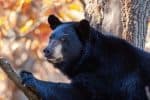
American Black Bear Common across forested Ontario and emblematic of the backcountry; often encountered (at a distance) along northern highways, in parks, and around berry-rich habitats.
Eastern Wolf (Algonquin Wolf) Wolves shape the sound and life in many shield parks. Algonquin Provincial Park is known for wolf howls. The local Eastern Wolf (Algonquin Wolf) sometimes mixes with coyotes and other canids.
Woodland Caribou (Boreal population) A sought-after, remote northern species tied to large intact boreal landscapes; its presence is a key indicator of ecosystem integrity in far-northern Ontario.
Bald Eagle
Bald Eagle A widely recognized raptor strongly associated with Ontario's big lakes and rivers; commonly seen along Great Lakes shorelines and major water bodies where fish and waterfowl are abundant.
Common Loon
Common Loon Iconic on shield lakes; its calls are a defining sound of cottage country and park canoe routes, reflecting Ontario's extensive clear-water lake systems.
Trumpeter Swan A conservation success story in southern Ontario; now a celebrated wetland and bay species and a popular winter/shoulder-season wildlife draw in parts of the Great Lakes region.
American Beaver A keystone wetland engineer that visitors frequently observe via dams, lodges, and flooded forest edges-especially in shield and boreal landscapes.
Lake Sturgeon
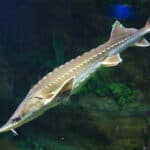
Lake Sturgeon A prehistoric-looking giant of Ontario rivers and the Great Lakes basin; highly prized for its ecological and cultural importance, and increasingly targeted by recovery and monitoring efforts.

Endemic & Rare Species

Lake Erie Watersnake

Nerodia sipedon insularum

Regional endemic subspecies; listed as Threatened in Canada (SARA) historically, with major recovery in parts of its range

Restricted to the Lake Erie island region; a notable conservation turnaround tied to habitat protection and reduced persecution, making Ontario's Lake Erie islands uniquely important.

Massasauga Rattlesnake

Sistrurus catenatus

Threatened in Ontario/Canada (Carolinian and Great Lakes-St. Lawrence populations); habitat loss and road mortality are key pressures

Ontario holds some of the most accessible Canadian populations (e.g., Georgian Bay area); a flagship for reptile conservation in rocky shorelines, wetlands, and open forest mosaics.

Spotted Turtle

Clemmys guttata

Endangered in Canada (SARA/COSEWIC)

A small, wetland-dependent turtle that has declined sharply from habitat loss and collection; Ontario wetlands are critical to its remaining Canadian presence.

Blanding's Turtle

Emydoidea blandingii

Threatened in Canada (SARA/COSEWIC)

Long-lived and slow to reproduce, making it vulnerable to road mortality; Ontario's marshes, shallow lakes, and wetland complexes are central to its Canadian conservation.

Eastern Foxsnake

Pantherophis vulpinus

Threatened in Canada (SARA/COSEWIC)

Strongly tied to southern Ontario wetlands, shorelines, and islands; road mortality and shoreline development have reduced connectivity among populations.

Piping Plover

Charadrius melodus

Endangered in Canada (SARA); Great Lakes breeding population is small and intensively managed

A rare beach-nesting shorebird; Ontario's Great Lakes beaches can be pivotal breeding sites, requiring seasonal protections from disturbance and predators.

Redside Dace

Clinostomus elongatus

Endangered in Canada (SARA/COSEWIC)

A sensitive coldwater stream fish in the Greater Golden Horseshoe watersheds; an indicator of high-quality headwater habitat threatened by urbanization and runoff.

American Eel

Anguilla rostrata

Threatened in Canada (COSEWIC); major declines in the Great Lakes-St. Lawrence system

Historically widespread in Lake Ontario and connected waters; declines are linked to barriers (dams), changing ocean conditions, and mortality during migration-making restoration and passage a major focus.

Notable Populations

  • Great Lakes and associated wetlands (e.g., Long Point, Point Pelee region, Lake St. Clair marshes) support internationally significant concentrations of migratory waterfowl, shorebirds, and songbirds during spring and fall migration.
  • Ontario's boreal region contains some of Canada's largest remaining intact forest landscapes, supporting nationally significant populations of moose, black bear, and boreal wetland birds.
  • Remaining ranges for boreal woodland caribou in northern Ontario are nationally important to Canada's caribou conservation outcomes.
  • The Great Lakes basin in Ontario supports major freshwater fish assemblages (including lake sturgeon recovery rivers) of national significance due to sheer habitat extent and biodiversity.

Recent Changes

  • Elk have been successfully reintroduced and re-established in parts of Ontario (notably the Bancroft/North Hastings area), creating a new large-mammal viewing opportunity in the south/near-north.
  • Wild Turkey has expanded dramatically from reintroduction/management efforts and is now widespread in southern Ontario, becoming a common and visible species even near urban edges.
  • Peregrine Falcon has rebounded strongly in many areas (including cities) following historical pesticide-era declines, aided by bans on harmful chemicals and targeted recovery efforts.
  • Several bat species (e.g., Little Brown Bat) have undergone severe declines due to white-nose syndrome, reducing a formerly common element of night wildlife across much of Ontario.
  • Boreal woodland caribou distribution has generally contracted southward in Ontario due to habitat fragmentation, changing predator-prey dynamics, and cumulative industrial impacts, with ongoing conservation and range-planning responses.
  • Some southern and warm-adapted species (including certain birds and insects) have expanded northward or increased in frequency in response to milder winters and landscape change, while cold-adapted species face increasing pressure at the southern edge of their ranges.
Visit

Wildlife Viewing

Ontario offers varied wildlife viewing, from large boreal forest animals in the north to important Great Lakes wetlands and migration routes in the south. Visitors can see moose by Shield lakes, hear wolves, spot black bears, beavers, otters, turtles, amphibians, and raptors. Marshes, shorelines, and islands host huge seasonal flocks of waterfowl.

Best Seasons

Spring (March-May)

Peak migration and awakening wetlands: massive songbird and raptor movements along the Great Lakes; early wildflowers and amphibian choruses in southern forests; late spring brings excellent shorebird viewing on Lake Erie/Lake Ontario. Black bears begin foraging; moose can be seen feeding in roadside wetlands in northern parks. Expect variable weather and muddy trails; bring layers and waterproof footwear.

Summer (June-August)

Best for remote northern experiences: canoeing and camping in Algonquin/Temagami/Quetico for loons, beavers, otters, and moose; seabird and colonial bird activity on Great Lakes islands; turtles and snakes are active in southern wetlands. Insect activity can be intense in the north-pack head nets/repellent. Warm water and long days suit paddling, photography, and family-friendly boardwalk wildlife.

Fall (September-November)

A top season for big mammals and birds: moose rut (late Sept-Oct) increases sightings and vocal activity in Algonquin and other boreal-edge habitats; spectacular hawk and falcon migration along the Great Lakes (notably Lake Erie); waterfowl build into large concentrations on marshes and bays. Cooler temperatures mean fewer insects and clearer air; nights are cold in the north.

Winter (December-February)

Track-and-travel season: excellent for spotting signs of wolves, lynx, fox, and marten in fresh snow, plus dependable views of deer and winter finches. Northern and east-coast owls occasionally irrupt into southern Ontario. Open-water areas of the Great Lakes host winter ducks; ice conditions can limit access-plan around safety advisories. Ideal for guided snowshoe/track programs and photography of stark landscapes.

Top Wildlife Experiences

  • Moose-spotting from the Highway 60 Corridor, Algonquin Provincial Park (especially at dawn/dusk around marshes like Spruce Bog Boardwalk and nearby wetlands).
  • Paddle-and-camp wildlife route in Algonquin Provincial Park (Canoe Lake-Smoke Lake corridor or quieter backcountry routes) for loons, beavers, otters, bald eagles, and shoreline moose.
  • Bird migration at Point Pelee National Park (Leamington): spring songbird fallout, fall raptor movement, and excellent marsh boardwalk birding.
  • Raptor and waterfowl spectacle at Long Point (Norfolk County)-a UNESCO biosphere reserve: autumn hawk watch, marsh birds, and huge seasonal waterfowl concentrations (view from accessible points and boat-based options where permitted).
  • Boat-based wildlife and seabird viewing on the Bruce Peninsula / Fathom Five area (Tobermory): cliff-nesting birds, coastal ecology, and clear-water shoreline habitats with frequent eagle and waterbird sightings.
  • Black bear and boreal wildlife viewing in the far north at Polar Bear Provincial Park region/James Bay Lowlands (logistically complex-best as a specialized guided trip), with opportunities for waterfowl, shorebirds, and remote wilderness photography.
  • Urban nature wildlife walk in Toronto's ravine system and waterfront (e.g., Tommy Thompson Park/Leslie Street Spit) for migratory birds, raptors, and surprisingly diverse mammals within the city.
  • Canoe Quetico Provincial Park (near Atikokan) for remote boreal wildlife-loons, moose, beavers, wolves (heard more than seen), and exceptional dark-sky night soundscapes.

Wildlife Watching Types

Birding hotspots and migration viewing (spring/fall), including songbirds, shorebirds, waterfowl, and raptors along the Great Lakes. Moose viewing (roadside wetland scanning, canoe-route sightings, rut-season listening/photography). Black bear viewing (best in northern forest-edge habitats; often through specialized tours or remote travel). Wetland wildlife watching (beavers, muskrats, otters, amphibians, turtles, marsh birds) via boardwalks, canoe routes, and viewing platforms. Raptor watching (hawk watches, eagle viewing, falcon migration sites). Canoe-based wildlife safaris (quiet-water paddling for close, low-impact encounters). Winter tracking and owl watching (snowshoe/ski track identification, winter finch and occasional owl irruptions). Island/coastal Great Lakes wildlife viewing (colonial birds, shorebirds, and open-water ducks).

Guided Options

  • Algonquin Provincial Park Natural Heritage Education programs (seasonal interpretive walks, evening programs, and visitor-centre learning-availability varies by season).
  • Point Pelee National Park guided walks and seasonal migration programming (check Parks Canada schedules during peak spring/fall).
  • Long Point Bird Observatory (LPBO) programs and public events focused on migration, bird banding education, and guided outings (seasonal).
  • Ontario Parks interpretive programming in select parks (guided hikes, wildlife talks, junior naturalist-style programs-varies by park and year).
  • Local outfitter-led canoe trips in Algonquin/Temagami/Quetico offering wildlife-focused routes, skills instruction, and photography-friendly pacing.
  • Bruce Peninsula/Tobermory eco-tours and boat cruises (operator offerings vary) that combine shoreline geology with seabird and eagle viewing opportunities.
  • Indigenous-owned and community-led nature experiences in regions like Manitoulin Island and the north shore of Lake Superior (offerings vary; look for wildlife, cultural interpretation, and respectful land-based learning).
  • Conservation authority guided walks in southern Ontario wetlands and forests (e.g., marsh boardwalk birding and seasonal naturalist-led hikes-programs vary by region).
Habitats

Ecosystems

Ontario has varied ecosystems: southern Great Lakes-St. Lawrence lowlands have mixed, deciduous forests and heavy human use; the central Canadian Shield is boreal forest with rocky areas and thousands of lakes; the far north near Hudson and James Bays has peatlands, muskeg and tundra-like coast. Freshwater areas—Great Lakes shores, large inland lakes and wetlands—support migrating birds and many fish.

Biomes

Temperate Forest

Mixed and deciduous-dominant forests in southern Ontario (Great Lakes-St. Lawrence zone), including maple-beech-birch forests and Carolinian-affinity pockets in the southwest.

Primarily southern Ontario; fragmented by agriculture and urbanization but still regionally important.

Boreal Forest (Taiga)

Coniferous and mixed boreal forests across the Canadian Shield and much of northern Ontario, with extensive fire-driven mosaics, black spruce/jack pine stands, and lake-rich landscapes.

Dominant across most of Ontario by area, especially central and northern regions.

Temperate Grassland

Tallgrass prairie and savanna-like openings (often oak-associated) in small southern remnants, maintained historically by fire and now heavily reduced.

Very limited, mostly small remnants in southwestern Ontario and a few localized sites.

Freshwater

Great Lakes (Superior, Huron, Erie, Ontario) plus vast networks of inland lakes and rivers (e.g., Ottawa, Albany, Moose), supporting coldwater and warmwater fisheries and shoreline ecosystems.

Province-wide; extremely high shoreline and lake density, especially on the Shield.

Wetland

Large peatland systems (bogs/fens/muskeg) in the Hudson Bay Lowlands and northern Shield, and marsh/swamp complexes along Great Lakes and major rivers (notably for waterfowl).

Extensive in the north (Hudson Bay Lowlands) and concentrated pockets along Great Lakes coasts and river floodplains.

Tundra

Tundra-like coastal habitats and shrub/lichen-dominated areas near Hudson Bay/James Bay margins where exposure, peatlands, and harsh climate limit tree growth.

Small, mainly along the far northern coast and near-coastal lowlands.

Marine

Saltwater/brackish coastal environments on Hudson Bay and James Bay, including tidal influence in some areas and coastal marshes/shorelines.

Limited to the far north coastlines of Hudson Bay and James Bay.

Habitats

Forest

Broad province-wide forest cover ranging from southern mixedwoods to northern boreal stands; strong disturbance dynamics (fire, wind, insects) in the north.

Deciduous Forest

Southern Ontario hardwood forests (e.g., sugar maple, beech, oak) with high biodiversity and strong fragmentation/edge effects.

Coniferous Forest

Boreal conifer stands (black spruce, jack pine, balsam fir) across the Shield and northern lowlands; important for woodland caribou range in parts of the north.

Woodland

Open-canopy systems in the south (oak woodlands) and sparse treed muskeg transitions in the north.

Grassland

Tallgrass prairie remnants and meadow complexes in the south, often conservation-managed with prescribed fire.

Shrubland

Shrub-dominated peatland margins and regenerating cutover/burn areas, especially in northern Ontario and along hydro corridors.

Mountain

No major alpine mountain systems; rugged uplands and escarpments occur (e.g., Canadian Shield uplands, Niagara Escarpment) but remain largely forested.

Cliff/Rocky Outcrop

Niagara Escarpment cliffs and rocky Shield outcrops provide specialized microhabitats, nesting ledges, and rare plant communities.

Cave

Small karst/cave features occur locally (notably along the Niagara Escarpment and limestone areas), supporting bats and specialized invertebrates.

Lake

Great Lakes shorelines plus countless inland Shield lakes; key habitats include nearshore reefs, embayments, and coldwater lake basins.

River/Stream

Major rivers (Ottawa, French, Nipigon, Albany, Moose) with rapids, floodplains, and migratory fish corridors; hydropower influences some systems.

Pond

Beaver ponds and small kettle ponds are widespread, creating early-successional wetlands and amphibian habitat.

Wetland

Extensive peatlands in the north and coastal/riverine wetlands in the south; critical for carbon storage and migratory birds.

Swamp

Forested wetlands in southern and central Ontario (cedar, silver maple, mixed swamp forests), often along floodplains and lowlands.

Marsh

Great Lakes coastal marshes (e.g., Lake Erie and Lake Ontario bays) and inland marshes; high productivity for fish nurseries and waterfowl.

Bog

Acidic peat bogs with sphagnum, black spruce, and ericaceous shrubs; common in northern Ontario and the Hudson Bay Lowlands.

Estuary

River mouths and deltas along Hudson/James Bay and the Great Lakes (freshwater estuary-like zones) with strong nutrient and sediment dynamics.

Coastal

Great Lakes coasts (beaches, dunes, bluffs, rocky shores) plus Hudson/James Bay coasts with low relief and extensive wetlands.

Beach

Sand and cobble beaches along the Great Lakes (notably Lake Huron, Erie, Ontario) supporting dune and shoreline communities.

Rocky Shore

Rocky Great Lakes shorelines (especially Lake Superior and Georgian Bay) and exposed Canadian Shield bedrock coasts.

Open Ocean

Not present (Ontario is inland), except for marine waters of Hudson/James Bay which are coastal shelf rather than open ocean.

Deep Sea

Not present.

Seabed/Benthic

Marine seabed present only in Hudson Bay/James Bay coastal waters; otherwise lakebeds dominate (Great Lakes and inland lakes).

Urban

Large urban ecosystems in the south (e.g., Greater Toronto Area, Ottawa, Hamilton, London) with ravines, waterfronts, and greenbelts supporting urban-adapted wildlife.

Suburban

Extensive suburban matrices around southern cities, with mixed naturalized habitats, stormwater ponds, and fragmented woodlots.

Agricultural/Farmland

Dominant land use in much of southern Ontario (row crops, mixed farming), interspersed with hedgerows, drainage ditches, and remnant wetlands.

Ecoregions

Eastern Canadian Forests (WWF) Central Canadian Shield forests (WWF) Midwestern Canadian Shield forests (WWF) Northern Canadian Shield taiga (WWF) Hudson Bay Lowlands (WWF) Laurentian Mixed Forest / Great Lakes-St. Lawrence Forest (widely used regional/WWF-aligned designation) Great Lakes freshwater ecoregion (freshwater system context) Hudson Bay-James Bay marine/coastal ecoregion context (marine system context)
Protection

Conservation

Primary Threats

  • Highest in southern Ontario where wetlands, tallgrass prairie, and Carolinian forest remnants have been converted or isolated by development and agriculture. Along the Great Lakes, shoreline hardening, marinas, and cottage development reduce coastal wetland function that supports spawning fish, amphibians, and migratory waterfowl.
  • Rapid growth in the Greater Golden Horseshoe (GTA-Hamilton-Niagara-Kitchener-Waterloo corridor) increases habitat fragmentation, road mortality, stormwater impacts to creeks, and pressure on ravines, kettle lakes, and wetlands. Urban expansion also stresses species at risk that depend on remaining sand barrens, alvars, and meadow complexes.
  • Row-crop agriculture in southwestern and eastern Ontario drives drainage/alteration of wetlands and headwater streams, increases pesticide exposure, and contributes nutrient and sediment runoff to Lake Erie and Lake Ontario nearshore zones-affecting aquatic food webs and water quality.
  • Nutrient loading (notably phosphorus) and sediment from watersheds contribute to harmful algal blooms and hypoxia, especially in western Lake Erie and some inland lakes. Legacy contaminants (e.g., PCBs, mercury) persist in parts of the Great Lakes and some northern watersheds, affecting fish consumption advisories and wildlife health.
  • Great Lakes invaders (zebra/quagga mussels, round goby, sea lamprey, spiny water flea) alter food webs and native fish recruitment. On land, invasive Phragmites degrades coastal marshes (e.g., Lake Erie and Lake Huron shorelines), and forest pests like emerald ash borer reshape riparian and urban forests.
  • Warming winters reduce ice cover on the Great Lakes, intensifying shoreline erosion and altering nearshore ecology; warmer waters stress coldwater fisheries (brook trout, lake trout in some inland systems). In the north, changing fire regimes, thawing peatlands, and shifting insect outbreaks affect boreal habitat stability and carbon storage.
  • In the boreal forest, intensive harvest patterns and associated access can fragment mature conifer habitats and increase predator-prey imbalances, contributing to declines of forest-dwelling woodland caribou. Cumulative effects are amplified where forestry overlaps with roads, energy corridors, and settlements.
  • Mining proposals and development (including in remote northern regions such as the Ring of Fire area) can create new roads, habitat fragmentation, and risks to sensitive peatlands and headwaters. Legacy mine sites and tailings can contribute localized metal contamination without strong remediation.
  • Road networks, hydro corridors, and expanding access in northern Ontario increase linear disturbance that facilitates predators and human access into intact habitats. In the south, roads are a major mortality source for turtles and snakes, and barriers/culverts fragment aquatic habitats.
  • Altered hydrology from drainage, channelization, dams, and water-level regulation affects wetlands and riverine habitats. Fire suppression in parts of the province can reduce early-successional and open-forest structures important for some birds and plants, while water control structures change spawning/nursery habitats for fish.
  • Although many Great Lakes fisheries are tightly managed, localized overharvest risk persists for some populations and species (e.g., sensitive sturgeon populations and some inland lake fisheries) through combined recreational pressure, bycatch, and habitat constraints.
  • Regulated hunting is a major management lever; however, in some regions harvest must be carefully balanced with population stressors (e.g., moose affected by parasites and climate, or localized pressures on waterfowl staging areas). Illegal take can be significant for some reptiles.
  • Illegal collection and trade of Ontario reptiles-especially turtles (e.g., Blanding's, spotted, and other species)-remains a documented threat, compounded by their slow life histories and road mortality.
  • White-nose syndrome has caused major declines in hibernating bats (little brown myotis, northern myotis, tri-colored bat). Additional concerns include ranavirus/chytrid impacts on amphibians and ongoing surveillance/preparedness for chronic wasting disease to protect cervid populations.
  • High visitation at dunes and beaches (e.g., Lake Erie and Lake Huron shorelines) can disrupt nesting of beach-dependent birds and trample dune vegetation. Boating/wakes and nearshore recreation can degrade sensitive coastal wetlands and disturb colonial waterbirds.
  • In southern and near-northern communities, conflicts with black bears, coyotes, deer, and Canada geese drive calls for lethal control and can reduce public tolerance for wildlife. In some northern areas, expanded access increases interactions that affect sensitive species and enforcement capacity.
  • Small, isolated subpopulations-especially of turtles in fragmented southern landscapes and woodland caribou in the southern edge of their range-face reduced connectivity and potential loss of genetic diversity, increasing long-term extinction risk.
  • Localized water withdrawals and groundwater use (e.g., in rapidly growing municipalities and some agricultural regions) can reduce baseflows and stress coldwater streams, wetlands, and dependent species during drought periods.
Fun Facts

Did You Know?

Ontario has a rattlesnake, but only one: the massasauga, found mainly around the Georgian Bay region and the Bruce Peninsula-and unlike most snakes people picture, it gives birth to live young (no eggs).

Some Ontario turtles can overwinter underwater for months in near-freezing ponds by taking in oxygen through specialized tissues (including the cloaca), allowing painted turtles and snapping turtles to survive under ice.

Toronto has become raptor habitat: peregrine falcons now routinely nest on skyscrapers and bridges in southern Ontario after disappearing from much of the province during the DDT era.

Tommy Thompson Park (the Leslie Street Spit) in Toronto-built largely from construction fill-has turned into a major colonial waterbird nesting area on the Canadian Great Lakes, with large, noisy mixed colonies (e.g., cormorants, herons, gulls) using a "new" man-made peninsula.

Lake sturgeon in Ontario waters can live for a century or more, meaning some individuals alive today may have hatched before the First World War-one reason recovery is slow when populations are depleted.

Ontario is home to the world-record brook trout: a 14 lb 8 oz (6.58 kg) "Nipigon strain" brook trout caught in the Nipigon River system in 1915-still recognized as the all-tackle world record for the species.

Ontario borders Lake Superior, the world's largest freshwater lake by surface area (~82,100 km²), and its cold-water fish community (notably lake trout and lake whitefish) is built around that globally unique inland "sea."

Point Pelee National Park (Ontario's Lake Erie tip) has logged 390+ bird species-one of the highest species totals recorded for any Canadian park and a globally known migration bottleneck for warblers and raptors.

Ontario's Hudson Bay Lowlands form part of one of the planet's largest wetland/peatland complexes; the province's far-north coastline supports polar bears as part of the Southern Hudson Bay subpopulation, among the world's southernmost polar bear populations.

The Great Lakes (including Ontario's Lakes Superior, Huron, Erie and Ontario shorelines) hold about 20% of the world's surface fresh water-creating an outsized amount of freshwater habitat that supports major coastal marsh wildlife (e.g., waterfowl, muskellunge, snapping turtles).

Animals Found in Ontario

266 species documented in our encyclopedia

Thank you for reading! Have some feedback for us?