
N S W E
Wildlife Expeditions

Wildlife of
Iowa

Iowa is a prairie-and-river state where restored tallgrass, big wetlands, and the Mississippi flyway turn farm country into a powerhouse for birds, deer, and river wildlife.
187 Species
144,669 km² Land Area
Overview

About Iowa

Iowa’s wildlife comes from the meeting of prairie, rivers, and wetlands in a mostly farmed landscape. Much of the original tallgrass prairie became cropland, but protected prairie remnants, oak savannas, and river corridors still host grassland birds, deer, turkey, and many migratory birds. Wildlife is often found in “islands” of many kinds of plants and animals—prairie remnants, marshes, and wooded bottomlands—where native species gather and put on seasonal shows. Key habitats include tallgrass prairie and prairie pothole wetlands in the north and central state, important for waterfowl, shorebirds, and marsh birds. The Mississippi River and its backwaters support herons, egrets, bald eagles, turtles, amphibians, and many fish. The Missouri and Big Sioux rivers add cottonwood bottomlands and riparian habitat. Oak-hickory woodlands and savanna give food and cover for songbirds and game. Wide river flyways and habitat restoration make migration and winter eagle viewing especially strong.

Physical Features

Geography

Iowa's wildlife follows its rolling prairie and plains cut by big rivers. Much tallgrass prairie became farmland, but small prairie patches, northern wetlands, and long floodplains along the Mississippi and Missouri give key homes for grassland birds, waterfowl, amphibians, and river mammals. Wooded stream valleys and bluffs support forest-edge and woodland species.

144,669 km² (land area) Land Area
26th largest U.S. state by total area Size Rank
State Type
Elevation Range

146-509 m (Mississippi River at the southeast to Hawkeye Point in northwest Iowa)

Coastline

No ocean coastline; extensive shoreline occurs along major rivers (Mississippi, Missouri/Big Sioux) and associated wetlands and reservoirs.

Key Landscapes

Mississippi River corridor and backwaters (riparian forests, islands, wetlands, migratory bird flyway habitat) Missouri River and Big Sioux River floodplains (sandbars, bottomland habitats, wide riparian zones) Interior river networks and valleys (Des Moines, Cedar, Iowa, Wapsipinicon rivers; corridors for movement and high habitat diversity) Tallgrass prairie and agricultural plains (grassland habitat where restored/managed; strong influence on grassland bird distribution) Prairie pothole-influenced wetlands and shallow lakes in northern Iowa (important for waterfowl and marsh wildlife) Loess Hills along western Iowa (wind-deposited soils, steep bluffs, distinctive prairie/woodland mosaics and microhabitats)
State Symbols

Official Wildlife Symbols

bird

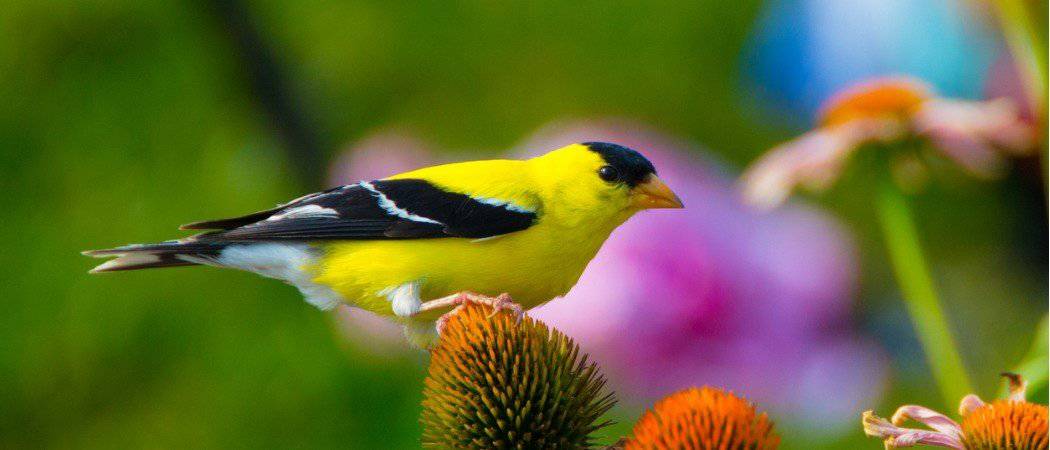
Eastern goldfinch (American goldfinch)

Designated 1933

fish

Channel catfish

Designated 1977

wildflower

Wild prairie rose

Designated 1897

tree

Oak

Designated 1961

Parks & Reserves

Protected Areas

Iowa has one of the lowest shares of public land, so conservation is a patchwork of state, county, and federal parks, forests, and wildlife areas along the Mississippi, Missouri, and Cedar rivers and restored prairies and wetlands. Wildlife viewing is best in Mississippi backwaters and forests, migration wetlands, the Loess Hills, and prairie restorations that support grassland birds and pollinators.

Protected Coverage

~3% of Iowa's land is in public conservation ownership/management (approximate; varies by definition and inclusion of local conservation lands and easements).

National Parks & Preserves

Effigy Mounds National Monument (National Park Service)

~2,526 acres

Protects blufftop oak-hickory forests, Mississippi River valley overlooks, and intact habitat mosaics that support migratory songbirds and raptors; excellent for spring/fall birding and river-bluff wildlife.

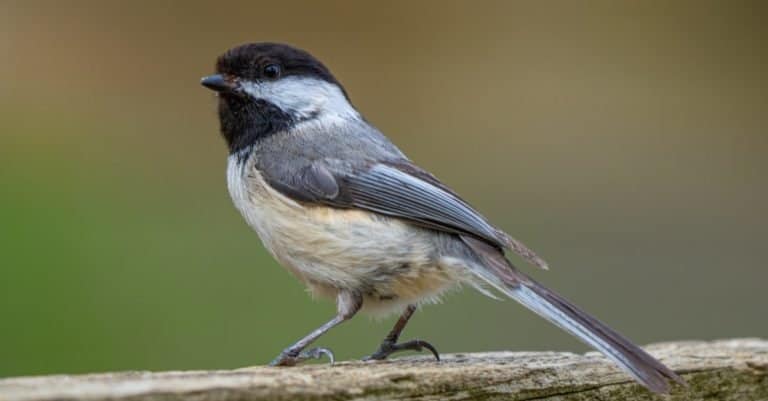
Bald eagle Cerulean warbler Wild turkey White-tailed deer Red fox

Herbert Hoover National Historic Site (National Park Service)

~186 acres

Though small, it preserves prairie/woodland and riparian habitat along Hoover Creek (in the Cedar River watershed) and mature trees/parkland that provide a migrant stopover for songbirds and support turtles, frogs, and common eastern Iowa wildlife.

Great blue heron Belted kingfisher Red-tailed hawk Painted turtle White-tailed deer

Mormon Pioneer National Historic Trail (National Park Service-trail corridor across Iowa)

~300+ miles across Iowa (route/corridor; not a single contiguous park)

Commemorates the route of the 1846 Mormon migration across Iowa. Because the trail corridor crosses river valleys and agricultural/remnant prairie landscapes, wildlife viewing opportunities occur at adjacent public lands along the route (especially riparian and wetland areas).

Sandhill crane (migration) Northern harrier Ring-necked pheasant White-tailed deer Coyote

Lewis and Clark National Historic Trail (National Park Service-Missouri River corridor in western Iowa)

~150-200 miles along/near Iowa's Missouri River corridor (route/corridor)

Follows the Missouri River valley and Loess Hills edge, highlighting floodplain forests, wetlands, and riverine habitat used by migrating waterfowl and large raptors.

Bald eagle American white pelican Snow goose (migration) River otter Great egret

State & Provincial Parks

Waubonsie State Park

~2,000 acres

A prime Loess Hills site with prairie remnants, oak savanna, and ridge-and-valley habitat; strong for raptor watching and grassland birds, especially during migration.

Northern harrier Red-tailed hawk Scissor-tailed flycatcher (occasional/seasonal) Eastern meadowlark Wild turkey

Pikes Peak State Park

~1,000+ acres

Mississippi River bluff forests and ravines provide excellent spring songbird migration viewing and regular bald eagle sightings over the river valley.

Bald eagle Pileated woodpecker Scarlet tanager White-tailed deer Barred owl

Ledges State Park

~1,200+ acres

Sandstone canyon and Des Moines River valley habitats create a diverse woodland-river edge community; good for woodland birds, amphibians, and common mammals.

Louisiana waterthrush Great horned owl Raccoon White-tailed deer Wood frog

Yellow River State Forest (state forest)

~8,500+ acres

One of Iowa's largest, most rugged forested landscapes (Driftless Area) with trout streams, large interior forest blocks, and strong breeding bird habitat.

Wild turkey Black bear (rare/occasional) Pileated woodpecker Brown trout Bobcat

Wildlife Refuges

Neal Smith National Wildlife Refuge

~8,600+ acres

A flagship tallgrass prairie and oak savanna reconstruction that supports grassland bird conservation, pollinators, and large prairie mammals; excellent for wildlife viewing on auto tour and trails.

American bison Elk Henslow's sparrow Bobolink Monarch butterfly

DeSoto National Wildlife Refuge

~8,000+ acres

Major Missouri River floodplain wetland complex important for waterfowl migration and nesting; noted for large concentrations of geese, ducks, swans, and eagles in season.

Snow goose Tundra swan Bald eagle American white pelican Northern pintail

Union Slough National Wildlife Refuge

~7,700+ acres

Large north-central wetland and sedge meadow refuge critical for marsh birds, migrating waterfowl, and wetland-dependent mammals; strong birding in spring/fall.

Trumpeter swan Yellow-headed blackbird American bittern Northern leopard frog Mink

Upper Mississippi River National Wildlife and Fish Refuge (Iowa reaches)

Refuge total ~240,000+ acres across multiple states (Iowa includes extensive river miles, islands, and backwaters)

One of the most important riverine wildlife refuges in North America; Iowa's Mississippi backwaters, islands, and floodplain forests support huge migratory bird use and diverse aquatic wildlife.

Bald eagle Canvasback Tundra swan River otter Blanding's turtle

Wilderness Areas

  • Iowa has no federally designated Wilderness Areas; the most 'wilderness-like' experiences are in large road-light tracts and river backwaters.
  • Loess Hills landform (western Iowa): scattered roadless prairie/woodland tracts and protected preserves with limited development.
  • Upper Mississippi River backwaters and island complexes (within the Upper Mississippi River National Wildlife and Fish Refuge): extensive undeveloped aquatic/forest habitat.
  • Yellow River State Forest backcountry-style areas (northeast Iowa, Driftless Area): large interior forest blocks and stream valleys with minimal roads.
  • White Pine Hollow State Preserve (near Dubuque): steep ravines and old-growth white pine/mesic forest pockets with a strong sense of seclusion.
Animals

Wildlife

Iowa's wildlife character is shaped by a heavily agricultural prairie landscape punctuated by major river corridors (Mississippi, Missouri/Big Sioux), oxbows, marshes, and a patchwork of restored grasslands. The richest biodiversity and most "wild" viewing is concentrated along riparian forests, backwater wetlands, large reservoirs, remnant prairies, and the Loess Hills. Iowa is especially notable for migratory birds using the Mississippi Flyway, large numbers of deer and turkeys, recovering top predators like bobcats, and a diverse native fish fauna in big rivers and coldwater streams in the northeast.

~75-85 species Mammals
~390-430 species recorded (with ~200+ regular breeders or summer residents) Birds
~40-50 species Reptiles
~20-25 species Amphibians
~140-160 species Fish
Examples

Iconic Species

Bald Eagle
Bald Eagle A major conservation success story; Iowa's river corridors (especially the Mississippi) host strong nesting and wintering numbers, making eagle viewing a signature experience.
White-tailed Deer
White-tailed Deer Iowa is nationally famous for its robust deer population, especially in river breaks and mixed agricultural-woodland mosaics.
Wild Turkey
Wild Turkey Once reduced by habitat loss, turkeys are now widespread after restoration and management; common to see in woodland edges and river bottoms.
Trumpeter Swan A restored and increasingly visible species in wetlands and shallow lakes; a standout for birders during migration and in areas with established nesting pairs.
Sandhill Crane
Sandhill Crane A charismatic migrant seen in spring and fall across wetlands, river valleys, and agricultural fields; its calls and staging flocks are a classic Iowa spectacle.
Bobcat
Bobcat An emblem of wilder Iowa-now encountered more often in rugged habitats like the Loess Hills and forested river corridors as populations expand.
North American River Otter
North American River Otter Reintroduced and now established in many watersheds; seeing otters along rivers and marshes is increasingly possible in good habitat.
Greater Prairie-Chicken A grassland icon historically native to Iowa but now presumed extirpated as a self-sustaining wild population; any modern occurrences are tied to reintroduction/management attempts rather than reliable, ongoing lekking opportunities.
Ring-necked Pheasant A culturally iconic upland gamebird (introduced, not native) strongly associated with Iowa's farmland/grassland edge habitats and hunting heritage.

Endemic & Rare Species

Topeka Shiner

Notropis topeka

U.S. Endangered (federally listed); highly localized and sensitive to habitat change

A small prairie-stream fish that has declined across its range; Iowa populations are important for regional recovery in restored or high-quality headwater systems.

Piping Plover

Charadrius melodus

Rare/irregular breeder in Iowa; protected species with limited suitable habitat

Depends on sparsely vegetated sandbars and shorelines; Iowa occurrences are tied to dynamic river sandbar habitat and managed nesting sites.

Least Tern

Sternula antillarum

Rare breeder in Iowa; protected species dependent on sandbar habitat (interior populations of high conservation concern)

A sandbar-nesting bird impacted by river regulation and disturbance; Iowa's large rivers can provide episodic breeding opportunities where habitat persists.

Blanding's Turtle

Emydoidea blandingii

Regionally rare; often state-listed in the Upper Midwest due to wetland loss and road mortality

A long-lived wetland turtle requiring complexes of marshes and uplands; Iowa's remaining populations highlight the importance of intact wetland landscapes.

Eastern Massasauga

Sistrurus catenatus

Highly imperiled in the region; historically present but now very rare or extirpated in much of its former Upper Midwest range

A wet prairie and marsh-edge rattlesnake tied to rare habitats; its historical presence underscores how much wetland prairie has been lost.

Higgins' Eye Pearlymussel

Lampsilis higginsii

U.S. Endangered (federally listed)

A Mississippi River mussel of exceptional conservation concern; Iowa's big-river habitats are part of the species' remaining strongholds where water quality and substrate conditions are suitable.

Notable Populations

  • Mississippi River corridor (including backwaters and islands): one of the state's most important concentrations of nesting and wintering Bald Eagles and a major migratory bird corridor on the Mississippi Flyway.
  • Upper Mississippi River backwaters: regionally significant staging areas for migrating waterfowl, swans, and diving ducks during spring and fall movements.
  • Loess Hills and remnant prairie landscapes: among the most distinctive prairie-associated wildlife areas in the state, supporting concentrations of grassland birds where habitat is large and well-managed.
  • Large reservoirs and managed wetlands (e.g., central Iowa flood-control lakes and wildlife management areas): key stopover and winter habitat for geese, swans, and a wide variety of dabbling ducks.

Recent Changes

  • Bald Eagle recovery: dramatic rebound since late-20th-century lows, with expanded nesting and wintering presence along major rivers and reservoirs.
  • River otter reintroduction and expansion: reintroduced in Iowa (late 20th century) and now established in multiple watersheds, increasing sightings in suitable wetlands and rivers.
  • Wild turkey restoration: successful reintroduction/management has produced widespread populations across much of the state.
  • Bobcat range expansion: increased distribution and reported sightings, especially in more rugged or wooded regions and along river corridors.
  • Grassland bird declines: many prairie/grassland specialists continue to decline due to habitat loss/fragmentation and changing agricultural practices (a major ongoing conservation issue).
  • Greater Prairie-Chicken reintroduction attempts: the species is historically native but is generally considered presumed extirpated in Iowa as a self-sustaining wild population; any restoration work has focused on reintroduction/augmentation efforts that have not produced a stable, long-term re-established population.
  • Pheasant variability and declines in some regions: populations fluctuate with winter severity and habitat availability, with long-term challenges tied to reduced grass cover and landscape change.
  • Aquatic biodiversity pressures: many native mussels and some sensitive fish species face continued stress from altered river hydrology, sedimentation, and water-quality issues, though targeted habitat work benefits select streams and wetlands.
Visit

Wildlife Viewing

Iowa is great for wildlife viewing where prairie, wetlands, and big rivers meet. The Mississippi River flyway brings many spring and fall birds. Restored tallgrass prairie and oak savanna host grassland birds, butterflies, and small mammals. Wetlands and shallow lakes gather waterfowl, while forested river valleys, especially in the Driftless Area, add raptors, songbirds, and white-tailed deer.

Best Seasons

Spring (Mar-May)

Peak migration on the Mississippi River corridor: ducks, geese, swans, shorebirds, and waves of songbirds. Look for early wildflowers and active amphibians in wetlands. Bald eagles linger near open water; wetlands and backwaters are especially productive after ice-out.

Summer (Jun-Aug)

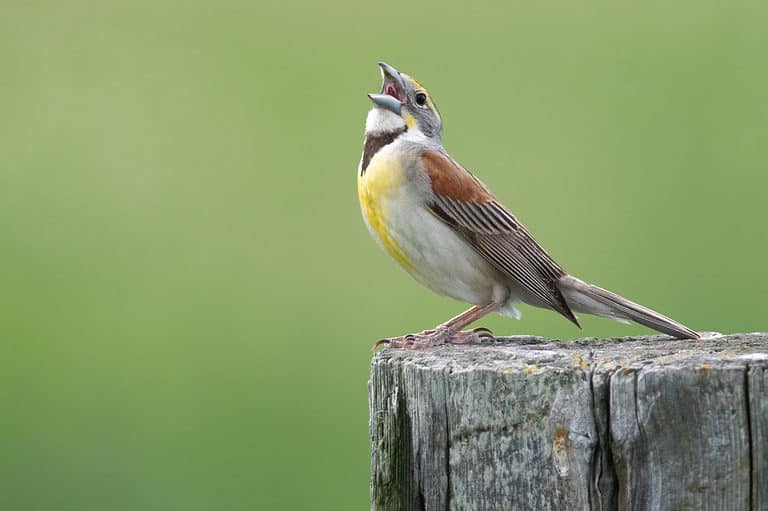
Best time for prairie specialties and nesting birds: bobolinks, meadowlarks, dickcissels, and grassland sparrows in large prairie blocks; excellent butterfly and dragonfly activity. Evening listening for frogs and nightjars, and sunrise hikes for songbird choruses.

Fall (Sep-Nov)

Second major migration pulse: huge flocks of geese and ducks, raptors on the move, and shorebirds where mudflats are exposed. Prairie blooms fade into warm tones; deer activity increases later in the season. Great time for scenic drives along river bluffs and wildlife refuges.

Winter (Dec-Feb)

Best for bald eagles along the Mississippi and open tailwaters, plus winter finches and hardy residents. After cold snaps, open-water areas concentrate birds; crisp visibility makes raptor viewing and tracking wildlife in snow rewarding (where conditions allow).

Top Wildlife Experiences

  • Bald eagle and waterfowl watching along the Mississippi River (northeast Iowa): base around Dubuque/Guttenberg and visit riverfront overlooks, backwaters, and pools for winter eagles and spring/fall migration.
  • Paddling and wildlife viewing in the Upper Mississippi River National Wildlife and Fish Refuge (Iowa-side backwaters): kayak/canoe for quiet looks at herons, egrets, turtles, beavers/muskrats, and migrating waterfowl (go early morning for the most activity).
  • Birding the wetlands at Union Slough National Wildlife Refuge (north-central, near Titonka): scan for marsh birds, shorebirds during migration, and summer wetland songbirds; bring a spotting scope for open-water and mudflat edges.
  • Prairie bird and pollinator day at Neal Smith National Wildlife Refuge (near Prairie City): walk prairie trails for grassland birds and butterflies in summer; watch for bison and elk from designated viewing areas (from roads/overlooks).
  • Driftless Area raptor and forest-bird circuit (Decorah area + nearby public lands): hike wooded valleys and bluff overlooks for hawks, eagles, and spring warblers; combine with river/creek corridors for added diversity.
  • Evening frog and wetland chorus outing at a state park or wildlife area with marsh trails (late spring/early summer): plan a dusk walk for chorus frogs, bullfrogs, and night herons-great for photographers and families.
  • Waterfowl spectacle at lakes and marshes in the Iowa Great Lakes region (northwest, around Spirit Lake/Okoboji): fall migration can concentrate geese and ducks; pair sunrise viewing with shoreline walks for passerines and raptors.

Wildlife Watching Types

Birding hotspots (Mississippi Flyway river pools, marshes, prairies) Raptor watching (bald eagles in winter; hawk migration in spring/fall) Waterfowl and shorebird viewing (wetlands, refuges, and managed lakes) Prairie wildlife watching (grassland birds, butterflies, bison/elk viewing where available) Wetland wildlife viewing by paddle (herons, turtles, beaver/muskrat, amphibians) Wildlife photography (river bluffs, prairie wildflowers/pollinators, winter eagles) Night wildlife listening/watching (frog choruses, nocturnal birds in warm months)

Guided Options

  • Neal Smith National Wildlife Refuge programs (Prairie City): ranger-led walks, educational programs, and seasonal events focused on prairie ecology and wildlife viewing.
  • Union Slough National Wildlife Refuge outreach/interpretive programs (when scheduled): guided bird walks and seasonal wildlife education opportunities (check refuge event calendars).
  • Iowa Department of Natural Resources (DNR) state park naturalist programs: many state parks offer guided hikes, bird walks, and evening programs in peak seasons (varies by park and date).
  • County conservation board (CCB) programs: local guided birding walks, nature center programming, and family-friendly wildlife events across the state (often excellent for spring migration and summer prairie walks).
  • Local birding organizations (e.g., Audubon chapters and bird clubs): field trips during peak migration, Christmas Bird Count-style winter outings, and prairie bird weekends-great for visitors who want local expertise.
  • Guided paddling/ecotour outings on Mississippi backwaters (operator-dependent): seasonal kayak/canoe trips that emphasize birds and wetland wildlife-availability varies, so search by launch area (Dubuque/Guttenberg/Clinton region) and dates.
Habitats

Ecosystems

Iowa lies between tallgrass prairie and eastern deciduous forest, shaped by glaciers and major rivers: Mississippi, Missouri, Big Sioux, Des Moines, Cedar, and Iowa. Much native prairie and many wetlands were turned into row crops, but remnant prairies, oak-hickory woods, riparian forests, loess bluffs, and restored wetlands still host grassland and river wildlife, especially migratory birds on the Mississippi Flyway.

Biomes

Temperate Grassland

Historically dominated by tallgrass prairie across most of the state; today largely converted to corn/soy agriculture with prairie remnants and restorations (e.g., preserves, roadside prairie, state wildlife areas).

Historically the majority of Iowa; now mostly agricultural land with scattered prairie remnants and restorations (small but widespread patches).

Temperate Forest

Eastern deciduous forest influence occurs in riparian corridors and uplands, including oak-hickory forests/woodlands, maple-basswood in the northeast, and bottomland hardwoods along major rivers.

Concentrated in the Driftless Area (NE), along the Mississippi and other river valleys, and in scattered upland tracts; a minority of statewide land cover.

Freshwater

Large river systems (Mississippi, Missouri, Des Moines and tributaries), oxbows, backwaters, natural and artificial lakes, and extensive stream networks; critical for fish, mussels, amphibians, and migratory waterfowl.

Statewide linear network; highest aquatic extent and complexity along the Mississippi and Missouri floodplains and major tributaries.

Wetland

Prairie pothole wetlands (especially in north-central/northwest), river floodplain marshes/backwaters (Mississippi), sedge meadows, and restored wetlands in agricultural landscapes.

Historically extensive; much reduced by drainage, but still regionally important in the Des Moines Lobe and along major floodplains, with ongoing restoration.

Habitats

Prairie

Tallgrass prairie remnants and reconstructions (big bluestem, Indian grass, switchgrass; diverse forbs). Notable remnants include preserves in the Loess Hills and scattered county/state prairie areas.

Grassland

Grazed pastures, CRP grasslands, prairie restorations, and hay meadows that provide habitat for grassland birds (e.g., meadowlarks, bobolinks) where large enough blocks exist.

Agricultural/Farmland

Row-crop plains (corn/soy) dominate; field edges, terraces, grassed waterways, and conservation set-asides create fragmented semi-natural habitat and strong runoff/tiling influences on waterways.

Deciduous Forest

Oak-hickory uplands and maple-basswood forests in the northeast; important for migratory songbirds and woodland wildlife, often in patches connected by river corridors.

Forest

Riparian and floodplain forests (cottonwood, silver maple, willow) along the Mississippi, Missouri, and interior rivers; dynamic with flooding and channel migration.

Woodland

Oak savanna/woodland transitions and brushy draws, especially on steep slopes and loess bluffs; often maintained by fire/management to prevent closed-canopy conversion.

River/Stream

Major rivers and tributaries with sandbars, backwater sloughs, and floodplain connectivity (Mississippi backwaters are especially important for waterfowl and fish nursery habitat).

Lake

Natural glacial lakes are limited; many water bodies are reservoirs and natural/modified lakes in the north (e.g., Spirit Lake/Okoboji system) supporting fisheries and recreation.

Pond

Farm ponds and small impoundments common across agricultural areas; provide localized amphibian and waterfowl habitat but can be affected by nutrient loading and sedimentation.

Wetland

Prairie potholes, floodplain wetlands, wet meadows, and restored basins; key for amphibians, marsh birds, and staging migratory waterfowl.

Marsh

Cattail/bulrush marshes in potholes and floodplains, including Mississippi River backwater marsh complexes; high value for rails, bitterns, and waterfowl.

Bog

Rare, localized peatland/fen-like systems in the glaciated north (more properly rich fens than classic raised bogs), supporting specialized plants where intact.

Cliff/Rocky Outcrop

Limestone/dolomite bluffs and outcrops in the Driftless Area and along parts of the Mississippi valley; create cool microhabitats and nesting/roosting sites.

Cave

Karst features and small caves/sinkholes in northeastern Iowa (Driftless/karst terrain), providing bat habitat and groundwater-connected ecosystems.

Urban

Urban greenspaces, riparian parks, and stormwater wetlands in cities (e.g., Des Moines, Cedar Rapids, Davenport) provide pockets of habitat and corridors along rivers.

Suburban

Mixed residential landscapes with remnant woodlots, small wetlands, and managed parks; important for common wildlife and as connective habitat near larger natural areas.

Ecoregions

Western Corn Belt Plains Central Irregular Plains Driftless Area Loess Hills and Rolling Prairies
Protection

Conservation

Primary Threats

  • Iowa's landscape is overwhelmingly devoted to corn/soy production; conversion pressure and intensive cropping limit remaining native prairie, reduce pasture/hay diversity, and simplify habitat structure needed by grassland birds, pollinators, and prairie specialists.
  • Historic tallgrass prairie and wetland loss (including drainage of shallow wetlands and potholes) has left many species dependent on small, isolated remnants; riparian forests and oxbow wetlands along river valleys have also been reduced or disconnected by levees and land conversion.
  • Nutrient (nitrogen and phosphorus) and sediment runoff from fields and streambank erosion degrade rivers and lakes, contributing to algal blooms and low-oxygen events; pesticides can reduce invertebrate prey and affect pollinators, while legacy contaminants and urban stormwater add localized stress in metro watersheds.
  • Channelization, bank armoring, drainage networks, and floodplain disconnection simplify stream habitat and reduce spawning/rearing areas; fire suppression and altered grazing regimes change prairie structure and can favor woody encroachment or cool-season grass dominance in remnants.
  • Extensive subsurface tile drainage accelerates runoff and reduces wetland hydrology; roads fragment habitat and increase wildlife mortality; levees and dams alter river dynamics; wind and transmission development can add collision risk and disturbance in open landscapes if poorly sited.
  • More intense rainfall events increase flooding, erosion, and nutrient pulses into waterways, while hotter summers and drought periods stress wetlands and small streams; shifting hydrology affects prairie potholes, river sandbar nesting habitat, and coldwater/oxygen-sensitive aquatic species.
  • Aquatic invaders such as bigheaded carp (silver/bighead) threaten plankton-based food webs in the Mississippi River basin; zebra mussels alter lake and river systems; terrestrial and wetland invaders (e.g., reed canary grass, bush honeysuckles) can dominate riparian and wet meadow habitats, reducing native plant diversity.
  • White-nose syndrome has severely impacted hibernating bats (notably the northern long-eared bat), and chronic wasting disease in deer requires ongoing surveillance and management to limit spread and ecological impacts.
  • Recreation and development along major rivers can disturb nesting birds (especially on exposed sandbars and shorelines) and degrade sensitive riparian habitats; heavy boat traffic and shoreline use can increase erosion and disturbance in key river reaches.
  • Growth around Des Moines, Cedar Rapids-Iowa City, and the Quad Cities increases habitat fragmentation, stormwater runoff, and pressure on remaining natural areas; urban stream "flashiness" and warm-water impacts can degrade aquatic habitat.
  • Sand and gravel extraction from river systems and quarrying for construction materials can directly disturb riparian areas, alter channel morphology, and increase localized sedimentation if not carefully managed and reclaimed.
Fun Facts

Did You Know?

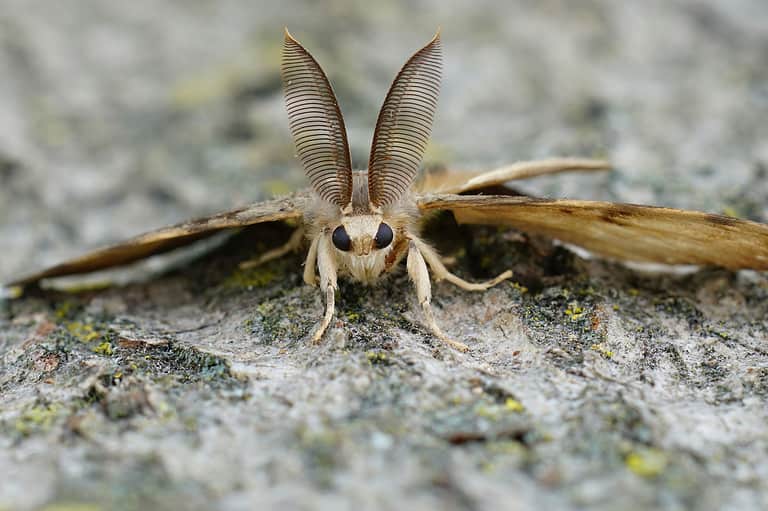
Iowa's Loess Hills in the west have rare dry prairie on windblown silt bluffs. They host plant-and-insect partnerships like soapweed yucca and its special yucca moth pollinator, more like the Great Plains.

Despite its farm-country reputation, Iowa still has naturally cold, spring-fed trout streams in the unglaciated Driftless Area of northeast Iowa-cold enough for trout to reproduce in the wild in certain waters.

Iowa's big rivers hide remarkable biodiversity: dozens of native freshwater mussel species live in Iowa waters, including federally endangered species such as the Higgins eye pearlymussel in the Mississippi system-animals that filter water and can live for decades.

There are flying squirrels in Iowa. Southern flying squirrels occur in wooded parts of the state and are commonly overlooked because they're nocturnal and glide between trees rather than "fly."

Some of Iowa's most "wild" remnants are tiny and unexpected: high-quality native prairie remnants persist in places like old cemeteries, railroad rights-of-way, and steep bluff slopes-often serving as last refuges for prairie-dependent insects and plants.

Iowa has lost almost all its tallgrass prairie—only about 0.1% remains. This extreme habitat loss is among the worst in the U.S. and harms grassland wildlife.

The Upper Mississippi River National Wildlife and Fish Refuge runs along Iowa's east border, covering over 240,000 acres in four states. It's one of the largest river refuges and a key migration route for waterfowl, raptors, and songbirds.

Keokuk's Mississippi River tailwaters are famous for winter bald eagles: midwinter counts in the area have exceeded 1,000 eagles in some years, putting it among the largest winter concentrations of bald eagles in the Lower 48.

By the Boone and Crockett Club's record book, Iowa has been a national leader for decades in the number of record-class "non-typical" white-tailed deer entries-one reason the state is internationally known for exceptionally large-antlered bucks.

Neal Smith National Wildlife Refuge (near Prairie City) is an ~8,600-acre prairie restoration that's among the largest tallgrass prairie reconstruction projects in the United States-big enough to support bison and elk on restored grassland habitat.

Iowa is a midwestern state famous for its corn and its yearly state fair. More than 85% of Iowa’s land is dedicated to agriculture. It borders Minnesota to the north, Wisconsin, and Illinois to the east, Missouri to the south, and Nebraska to the west. Its major rivers are the Mississippi, Big Sioux, and Missouri.

Although much of Iowa is flat farmland, it has some gently rolling hills. Iowa’s weather is continental, which means it gets harsh, cold winters and hot, humid summers. Thunderstorms and tornadoes are common events in the Hawkeye State.
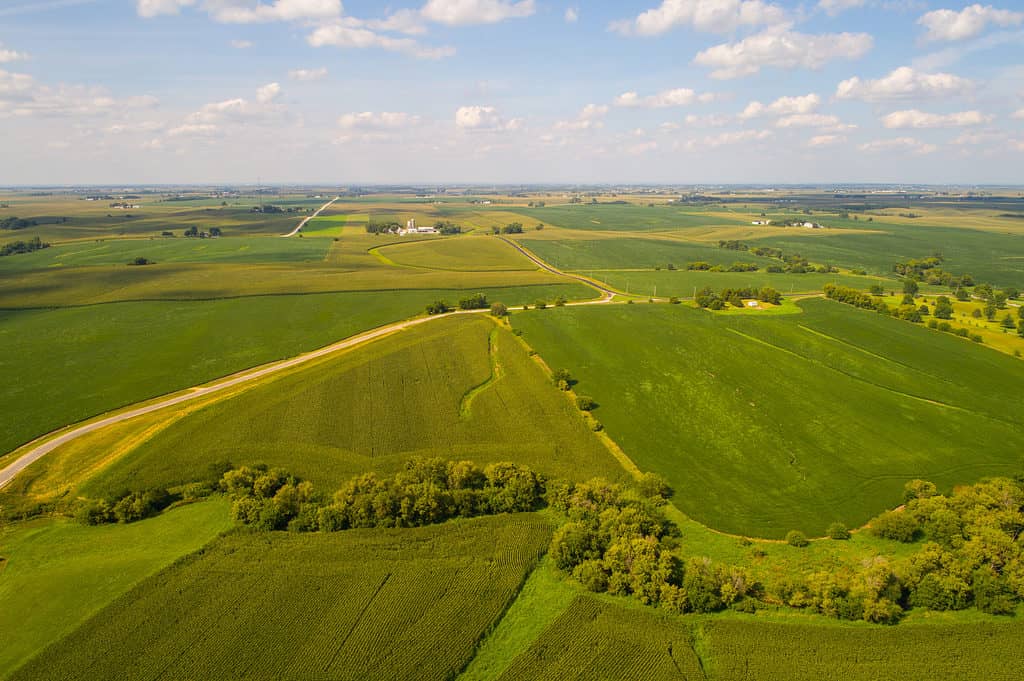
Aerial drone image of farmland landscape in Iowa USA

Much of Iowa’s land is flat farmland.

Wild Animals in Iowa

Iowa has more than 1,100 species of fish and wildlife. The state’s forested areas contain many common forest animals, including white-tail deer, gray foxes, red foxes, coyotes and bobcats. Iowa’s native small mammals include opossums, otters, muskrats and the strange but adorable eastern mole.

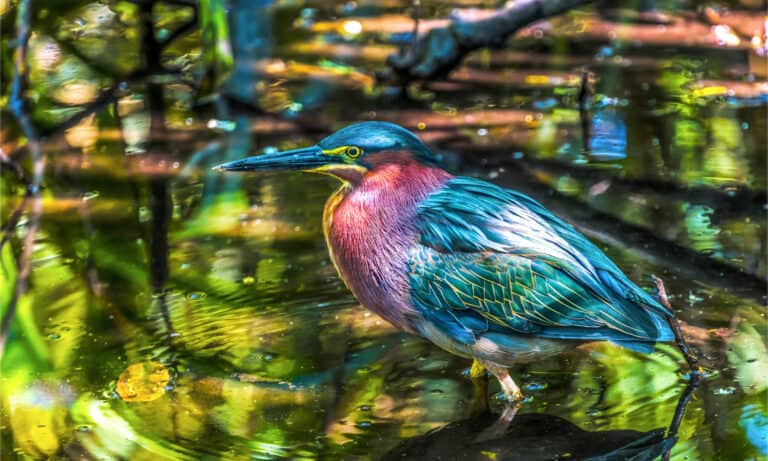
Iowa has many lakes, rivers and streams. It is the only U.S. state completely bordered by two major rivers. Its river shorelines and lakes contain walleye, catfish, and crappies. You will find river otters, turtles, bullfrogs, ospreys, and swans. Iowa is home to several species of waterfowl, including blue-winged teals, mallards, and cranes.

One of Iowa’s famous birds is the bobolink. This grassland prairie bird has striking black and white coloring. It is the only North American land bird with this plumage color, and it is one of the rarest birds in the country.

The state’s chief predators are bobcats, foxes and coyotes. Although mountain lions and moose have been seen in many parts of Iowa, they are not resident species. Biologists say they cross over from neighboring states.

Iowa’s native rodents include the eastern chipmunk, white-footed mouse, eastern squirrel and deer mouse. Its small mammals include the northern short-tailed shrew and the prairie vole. The state has nine bat species, including the little brown bat, which is one of the rarest bat species in the U.S.
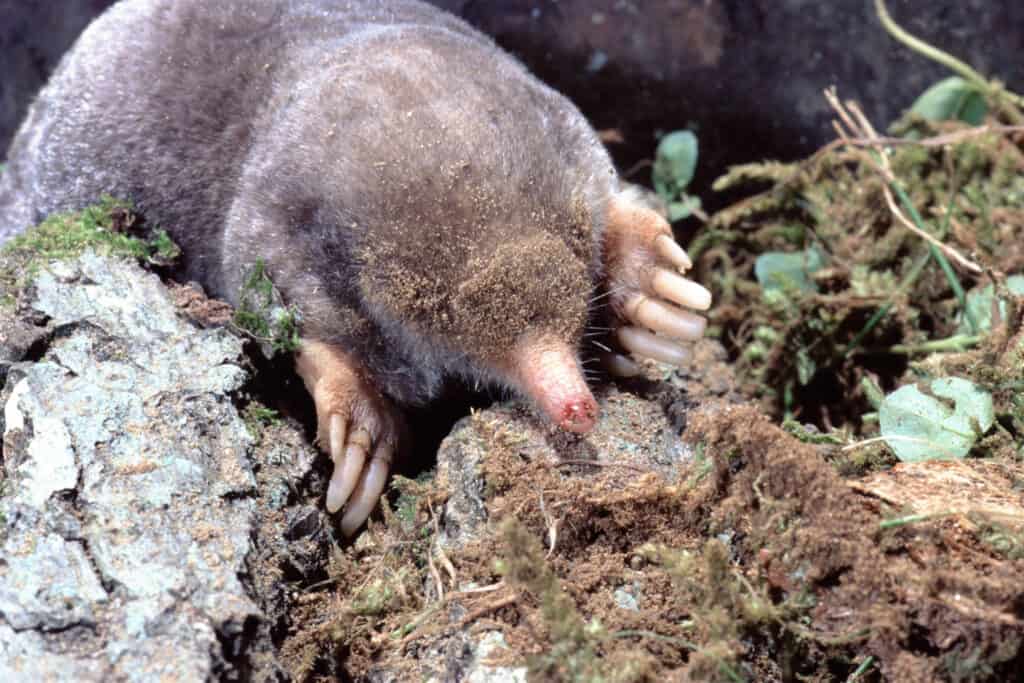
The small Eastern mole is one of the species native to Iowa.

The Official State Animal of Iowa

Iowa’s state bird is the American goldfinch (Spinus tristis), designated by the Iowa Legislature in 1933. It’s likely it was picked as it is commonly found throughout the state.

This lovely, bright yellow bird lives in open woods, orchards, suburban areas and marshy areas. As land that’s been cleared of tress is attractive to this species, it’s understandable why it is prevalent in Iowa. It is a migratory bird, nests in the late summer, and has excellent flying abilities, flying in wavelike patterns when traveling long distances.

The goldfinch’s short and sharp beak assists it to break open seeds, which make up most of its diet as well as the occasional insect. Goldfinches gather in large flocks and are noisy birds, singing solo or as a group, with one of its vocalizations well-known to sound like “po-ta-to-chip.”
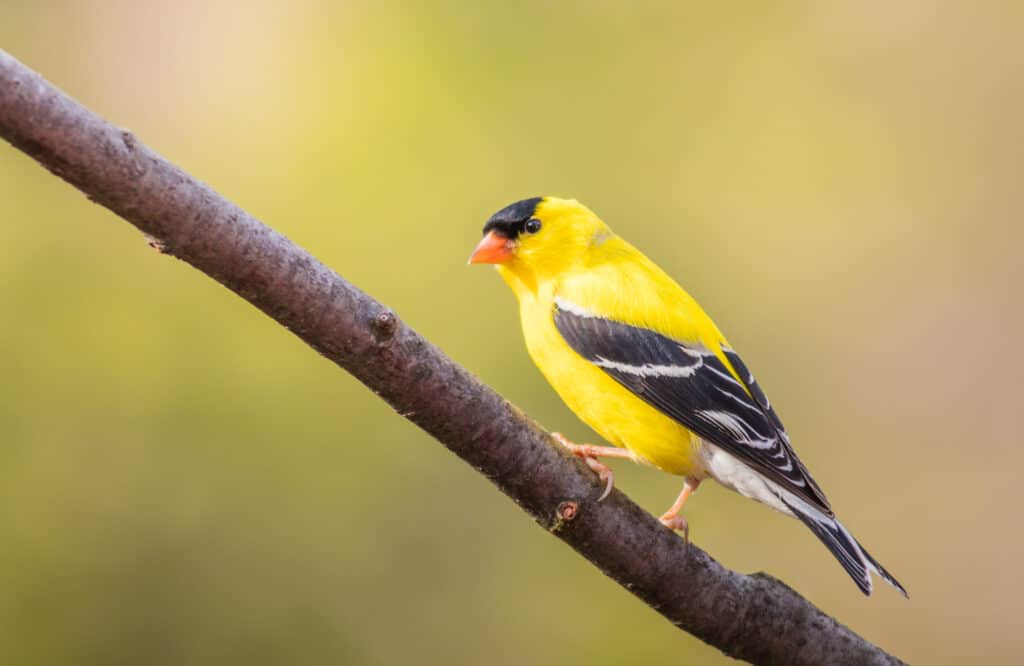
a goldfinches lower frame right, looking left, perched on a small branch. The bird is yellow, with black andd gray wings. The top of the bird's head is black and its beak is orange, Indistinct light green background. T

The American goldfinch is Iowa’s state animal.

Where to Find the Top Wild Animals in Iowa

There are many places where you have the opportunity to see some of the diverse wildlife in Iowa in its natural habitats, including state parks, public parks and designated wildlife areas.

  • Pike’s Peak State Park: Iowa’s first state park is a hiking and wildlife viewing area situated where the Mississippi and Wisconsin rivers meet. With spectacular river views, it is an ideal place to see fish, waterfowl and wildlife.
  • Manawa Lake State Park: This park protects one of Iowa’s largest lakes. It is an excellent location to see pelicans, ducks and geese. The lake is also a favorite nesting site for bald eagles.
  • Goose Lake Wildlife Area: This public park is a 1,300-acre public park that is an ideal location for birders and wildlife watchers. Among the birds you’ll see are sandhill cranes, wild turkeys and pheasants. You can also spot rodents and small mammals, including muskrats, otters and opossums.
  • Wapsi Flats Wildlife Area: Like other midwestern states, Iowa has focused on turning unused cropland into tallgrass prairie ecosystems. These ecosystems once covered most of the midwestern states. Now, only a small percentage remains. Wapsi Flats is a protected tallgrass prairie that is home to pheasants, eastern meadowlarks, bobolinks, northern harriers, grasshopper sparrows, partridges and wild turkeys.
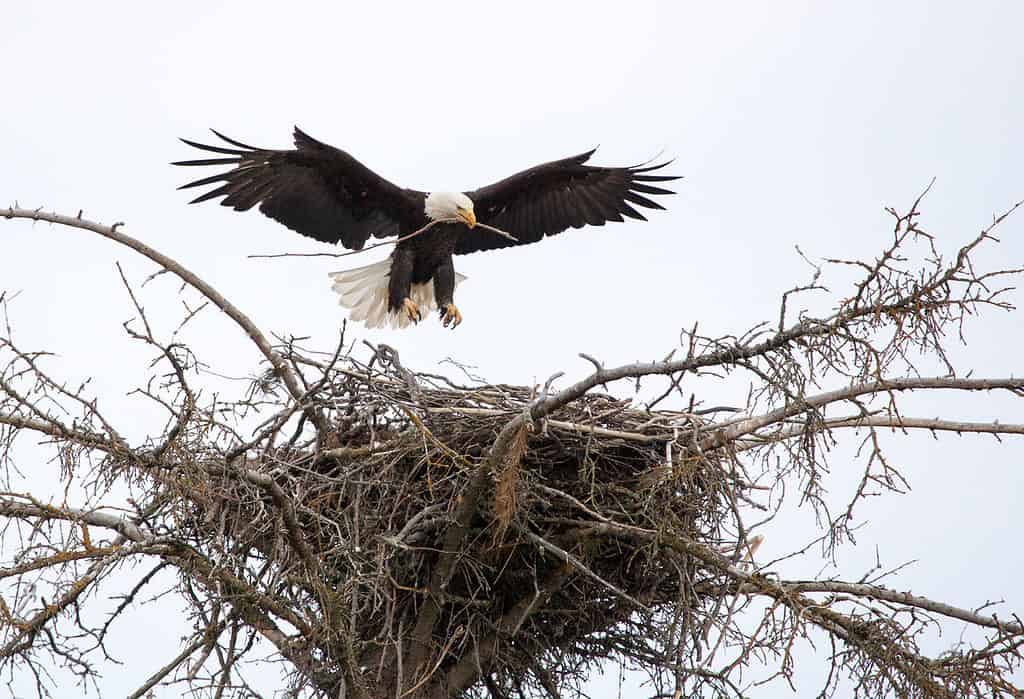
bald eagle nest

Manawa Lake State Park contains a popular nesting site for bald eagles.

Large Animals in Iowa

The largest animal in Iowa is the bison. The largest land mammal in North America, it can can reach about 6 feet, 7 inches at the shoulder and weigh up to 3,000 pounds. Bison were once commonly found statewide, with large herds in northwest and north central parts of Iowa, but were hunted by settlers for their meat and hides and by the 1860s were no longer seen. Bison were reintroduced as captive herds into the state in 2008 starting with a small number at Broken Kettle Grasslands. Other places to see bison are Neal Smith National Wildlife refuge, Hawkeye Buffalo Ranch, Jester Park, and Whiterock Conservancy.

One of the largest animals in Iowa is native to the state but these days is seen only passing through it. The American black bear was once seen as a threat to settlers’ crops, livestock and families and hunted out of Iowa, with no record of any living in the state since the mid-1800s. There have been sightings of bears in eastern counties and as Iowa does not have a current breeding population these bears likely live in surrounding states such as Minnesota, Wisconsin, and Missouri. An adult male black bear can weigh between 130 and 661 pounds, while an adult female weighs on average 90.3-174.2 pounds, with a height range of 4.25-6.5 feet.

Other large visitors to the state include moose, which are usually young bulls from Minnesota that stay only a short time, and mountain lions, often young males chased by older males from their populations in South Dakota and Nebraska who do not settle in Iowa as it does not have suitable habitats.
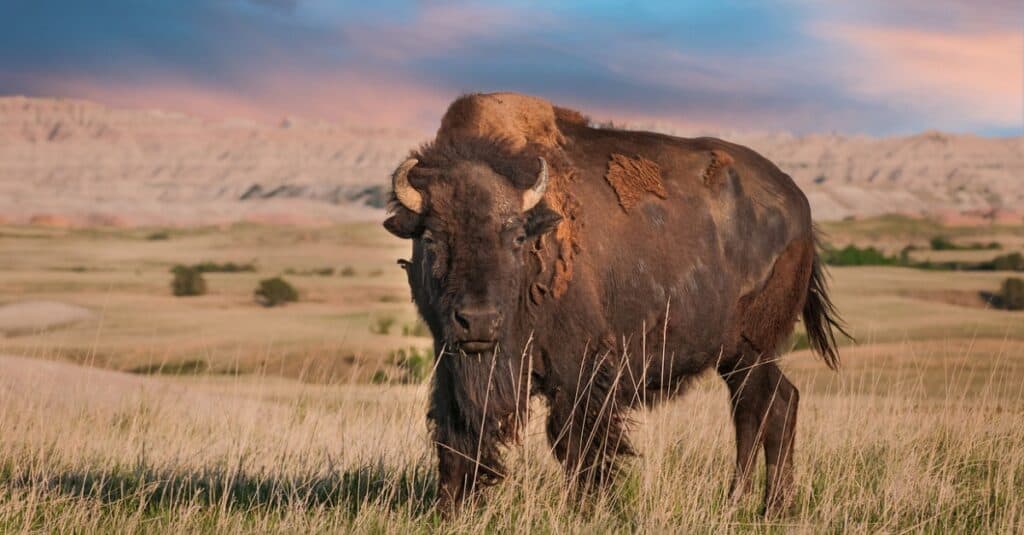
animals unique to North America:American bison

The American bison is the largest animal in Iowa and is found in several captive herds.

Snakes in Iowa

As the state lands include many prairies and corn fields, you might think that Iowa could make a good place for snakes to live. Iowa is home to 28 different snake species. While the vast majority are non-venomous, four different snakes in Iowa have venom and deserve more attention.

The venomous snakes in Iowa are copperheads and three species of rattlesnakes. The rattlesnakes include prairie rattlesnakes, massasauga rattlesnakes, and timber rattlesnakes.

Tru to their name, common garter snakes are common throughout the state and in such large numbers that this is the only type of snake that can be hunted and killed in Iowa. However, garter snakes are completely harmless, with their defensive ability limited to emitting a smelly musk to distract possible predators while they escape. Because of their gentle nature, they are considered a great pet species.

Other non-venomous snakes that are found in Iowa are brown snakes and western fox snakes. For more information on snakes in Iowa go here.
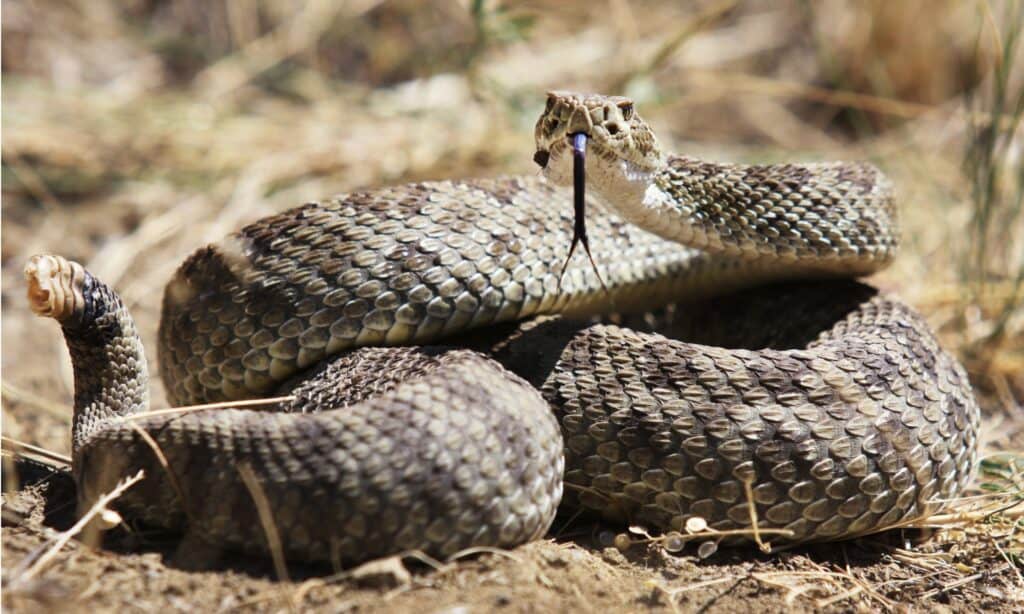
Prairie Rattlesnake

The prairie rattlesnake is one of three types of rattlesnakes in Iowa.

The Most Dangerous Animals in Iowa

Although it has several native predators such as bobcats, coyotes, and foxes, these animals rarely attack humans.

Iowa’s four species of venomous snake almost never attack humans unless provoked. However their venom can harm humans, especially if medical treatment is not immediately sought.

  • Timber rattlesnake: This large pit viper can reach 4 feet and lives in forests and marshy areas. A bite from a timber rattlesnake (Crotalus horridus) can be fatal if it’s left untreated.
  • Copperhead: The most common snake in the U.S., the copperhead (Agkistrodon contortrix) lives near streams and waterways. Its venom is not strong enough to kill an adult human, but it can cause intense pain.
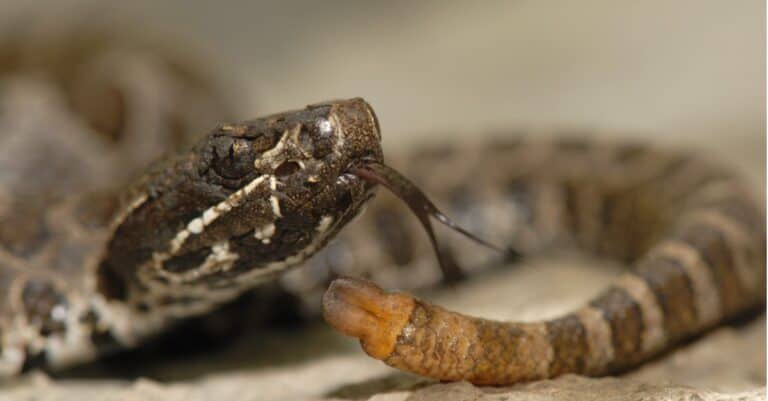
  • Eastern massasauga rattlesnake: This small, secretive snake has strong venom, but attacks are extremely rare. This is an endangered species.
  • Prairie rattlesnake: This snake (Crotalus viridis) has the largest range of any rattlesnake species in the U.S. Like the eastern massasauga, it is threatened by habitat loss.

Iowa’s most dangerous animals are ticks and mosquitoes, which are prevalent throughout the state. These insects cause more deaths and illnesses than venomous spiders and snakes combined.
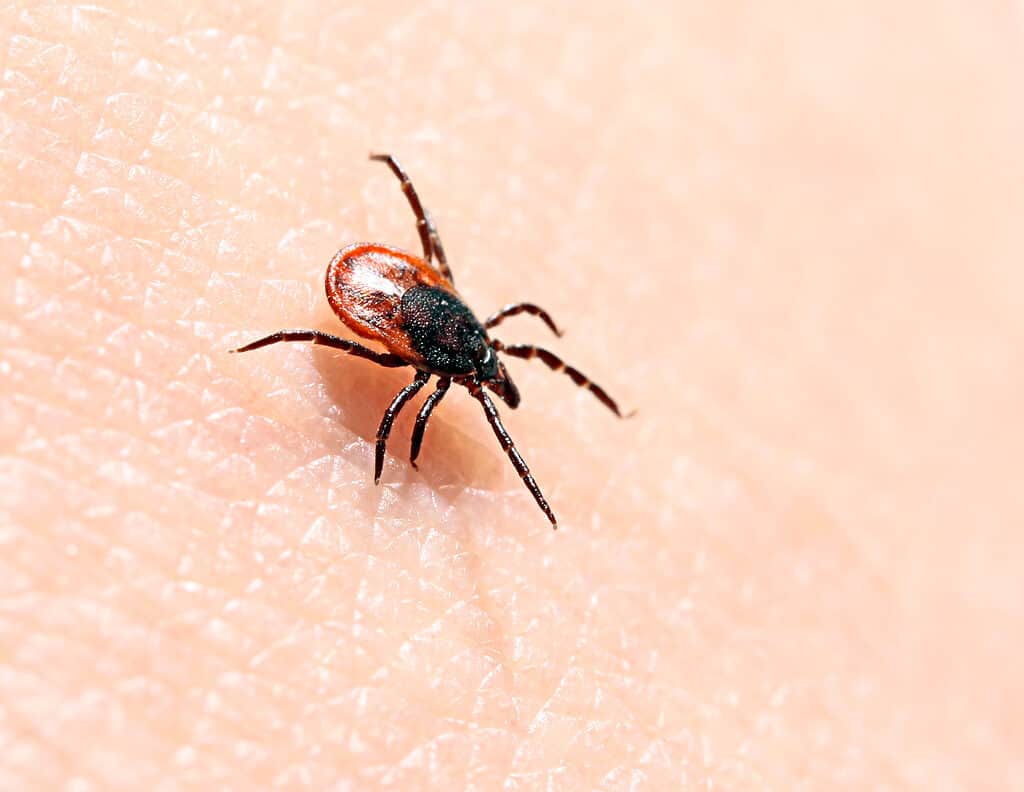
Blacklegged tick

The most dangerous animal in Iowa is the tick.

Endangered Animals in Iowa

Iowa has 47 animals and 64 plants classified as endangered, meaning their populations are low and scientists are concerned the species may become extinct. 89 plants and 35 animals are categorized as threatened, with their populations declining and the species at risk of becoming endangered. The main cause of a species being endangered or threatened is habitat loss.

Some of Iowa’s endangered animals include:

  • Trumpeter swan: These swans (Cygnus buccinator) were once common on Iowa lakes, but hunting and wetlands drainage wiped them out in 1883. In 1993, a program to reintroduce these swans began with just one nesting pair. There are now more than 100 nesting pairs of trumpeter swans in Iowa, and conservation efforts continue.
  • Osprey: These water raptors (Pandion haliaetus) were once prevalent in Iowa, and they were of great cultural importance to the Omaha Nation. Ospreys were greatly harmed by pesticides in the 1950s. With the banning of certain pesticides, their numbers have improved. In recent years, conservation groups have reintroduced ospreys to Iowa’s waterways.
  • Bald eagle: Like ospreys, bald eagles suffered population losses from pesticides and illegal hunting. In 1995, the bald eagle was moved from endangered to threatened by the U.S. Fish and Wildlife Service. Today, the Mississippi River is home to the country’s highest concentration of bald eagle nests. The giant birds spend the winters hunting on the river.
  • Eastern Massasauga Rattlesnake: This small snake lives in wet prairies, grasslands and wetlands. This rattlesnake (Sistrurus catenatus) is considered an indicator species because its health depends on the health of its primary ecosystem. The eastern massasauga is threatened by hunting and habitat loss.

Wolves, bears, mountain lions and elk once roamed freely in Iowa, but these animals no longer have resident populations there.
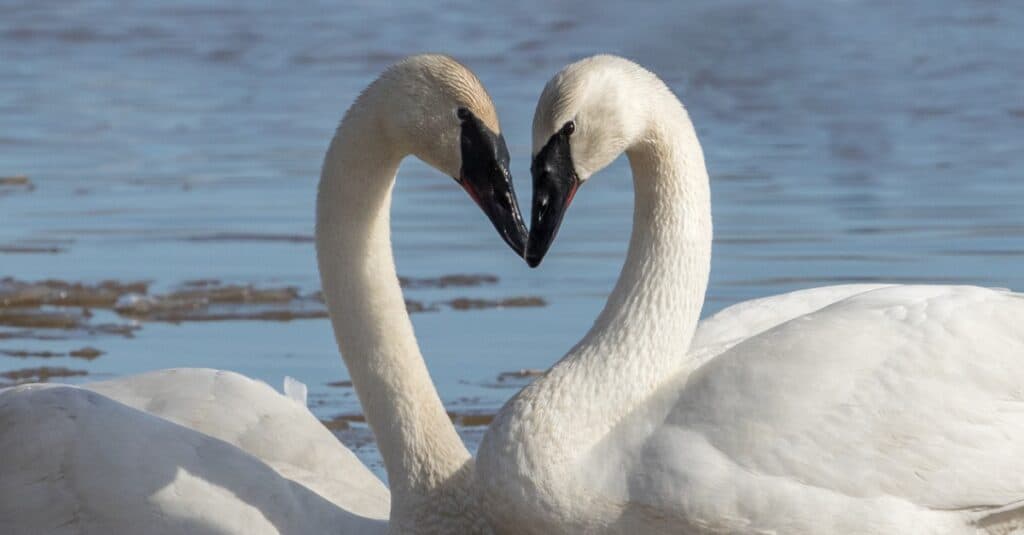
trumpeter swans courting in the water

Conservation efforts have led to more than 100 nesting pairs of trumpeter swans living in Iowa.

Rare Animals in Iowa

Animals can be considered rare in Iowa due to their endangered status or because seeing one in the wild would be a very rare occurence.

The rusty patched bumble bee is one rare, endangered species that is present in Iowa despite their population dropping almost 90% since the 1990s. These bees were once widespread across the eastern U.S. and Upper Midwest and researchers at Iowa State University are part of a multi-state initiative to identify where the remaining bees live and which habitats are most suitable in an effort to save the species from further declining.

Other endangered rare animals in Iowa include the pallid sturgeon, which is one of the rarest of the sturgeons and is rarely seen in the wild, and the Indiana bat, which was on the first list of endangered species created in the U.S. in 1967 and whose population has been devastated by white-nose syndrome, a fungal disease that infects bats during their hibernation, causing them to starve to death.

Until recently, seeing an elk in Iowa would have been so rare it would have broken a 151 year record of the last reported sighting of an elk in 1871. Healthy populations of elk once roamed Iowa prairies until hunting drove them out of the state, with most extirpated by the 1860s. However, the elk has returned now returned. Iowa Department of Natural Resources (DNR) noted in 2023 many sightings of elk had been occurring, being noted every week through trail cams or on social media. While most sightings happen in Western Iowa, there have been sightings in Webster, Boone, Dallas, and Story counties as well. The DNR believes the elk that people are spotting are likely juvenile elk — that could belong to herds in states such as Minnesota, Wisconsin, Missouri, South Dakota, and Nebraska — who are seeking new territory or herds.

While there have been increased sightings of black bears, moose and mountain lions in the state, it is still extremely rare to spot one of these animals in Iowa.
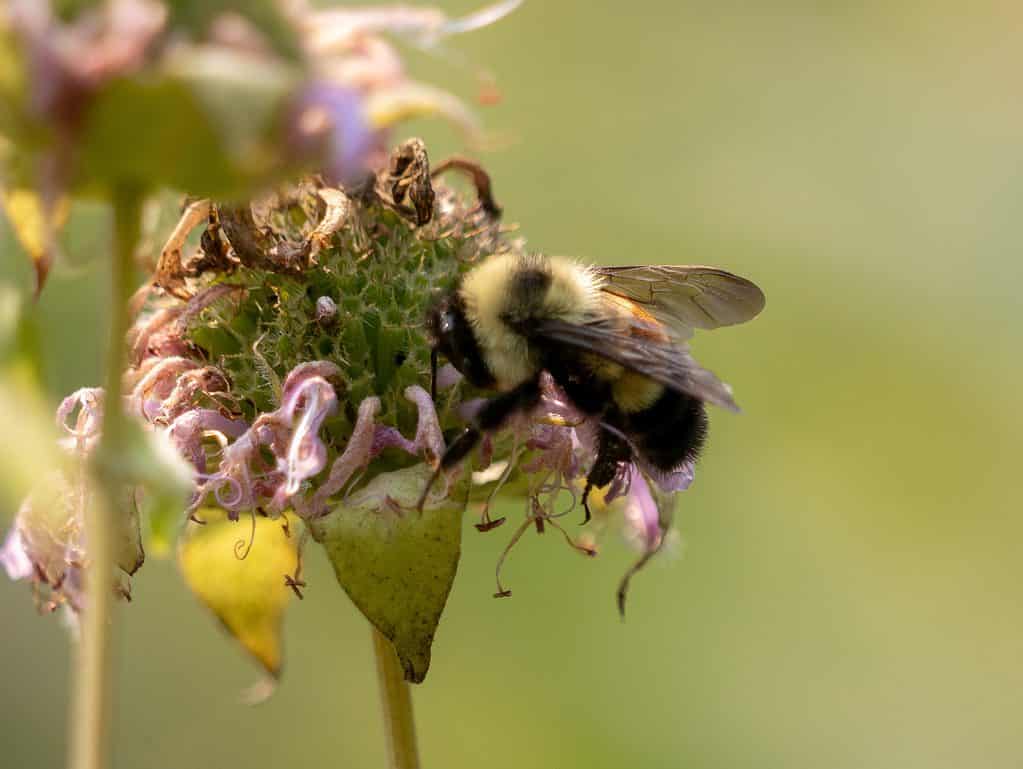
Rusty patched bumblebee

Researchers at Iowa State University are helping to conserve the rare rusty patched bumble bee.

Native Plants in Iowa

Iowa is well known for its humid eastern and northern parts, with the western regions enjoying more of the sun and heat. This has led to Iowa’s vast diversity of plant life. Popular examples of plants found in the state include the columbine, purple coneflower, butterfly milkweed, prairie lily, and yarrow.

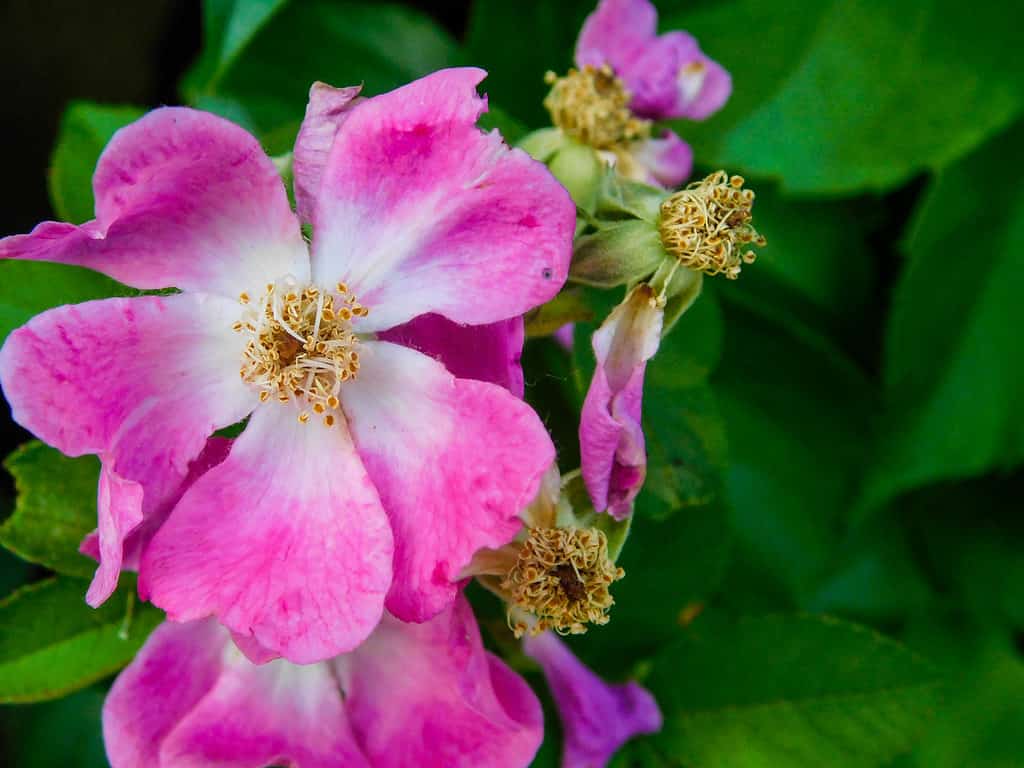
The wild rose was declared the official state flower in 1897, picked as it was one of the decorations used on the silver service that Iowa presented to the battleship USS Iowa that year. Wild roses can be found statewide and bloom from June through late summer. As no specific species of the flower was designated by the General Assembly, the wild prairie rose is frequently referred to as the official flower.

The oak tree was adopted as the Iowa’s state tree in 1961, chosen due to the large numbers growing in the state — most areas of natural woodland contain at least one species of oak. There are 12 species of oak native to the state but one wasn’t specified as the official species. Oaks supply a source of shelter and food for many animals, with their acorns part of the diets of squirrels, chipmunks, raccoons, several kinds of woodpeckers and many more birds.
Beauty, Blossom, Botany, Climbing Rose, Close-up

The wild rose was adopted as Iowa’s state flower in 1897.

The Coldest Place in Iowa

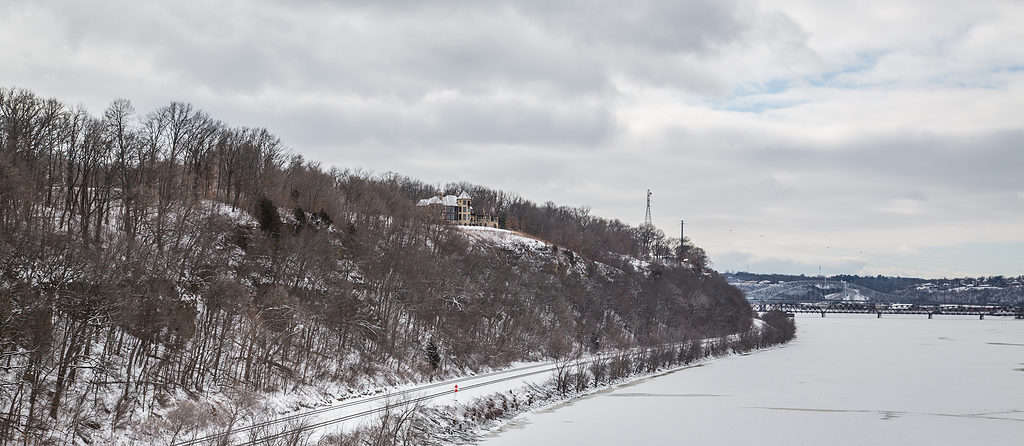
The coldest place in Iowa is Dubuque, which has an average annual temperature of 47.2°F. Dubuque is located on the Mississippi River at the junction of Iowa, Illinois and Wisconsin, an area locally known as the Tri-State Area. It’s the oldest city in the state and acts as the major commercial, industrial, educational, and cultural hub for the region.

The coldest temperature ever recorded in Iowa was in the town of Washta on January 12, 1912. It was a freezing -47°F, during a cold front that ended up creating dozens of record low temperatures.

Snowfall in Iowa is common and as early as October and as late as May. Most of the snow occurs from December to March, and January and February are the months with the heaviest snowfall. The amount of snow can differ significantly depending on the location in the state, with average snowfall totals from 18 to 42 inches every year.
Frozen Mississippi river - Dubuque, Iowa

Dubuque, by the Mississippi River, is the coldest place in Iowa.

Read about:

  • extinct animals that lived in Iowa.
  • the best national parks in Iowa.
  • the longest biking trail in Iowa.
  • the types of hawks in Iowa.
  • the best aquariums in and around Iowa.
  • the best camping in Iowa.

Animals Found in Iowa

187 species documented in our encyclopedia

Thank you for reading! Have some feedback for us?