N S W E
Wildlife Expeditions

Wildlife of
Delaware

Tiny Delaware packs big wildlife: Delaware Bay's shorebird spectacle, vast tidal marshes, and coastal forests create one of the Mid-Atlantic's richest migration stopovers.
197 Species
5,047 km² Land Area
Overview

About Delaware

Delaware's wildlife is shaped by tidal rivers, wide marshes, and the meeting of bay, ocean, and coastal plain. Though small, Delaware is a key stop on the Atlantic Flyway. In spring, huge flocks of shorebirds gather on Delaware Bay; in winter, waterfowl use sheltered estuaries. Productive wetlands support many birds, fish, and invertebrates. Important places include the Delaware Bay shoreline and intertidal flats, where nutrient-rich waters feed dense food webs and big migrations; tidal salt marshes that act as nurseries for fish and blue crabs and hide marsh birds; and coastal plain forests, ponds, and freshwater wetlands that help amphibians, reptiles, and breeding songbirds. Dunes and back-barrier lagoons add beach-nesting sites and food for seabirds, while nearshore waters and rivers link marine and inland life. The state's compact mix of habitats makes it easy to see these seasonal events, especially the world-famous shorebird surge.

Physical Features

Geography

Delaware's low Atlantic Coastal Plain, estuaries, and tidal wetlands shape its wildlife. Large marshes along Delaware Bay and the Delaware River give food and rest stops for migratory birds. Barrier beaches, coastal dunes, and inland bays support shorebirds, horseshoe crabs, and fish nurseries. Small northern Piedmont uplands add hills, forests, and streams.

5,047 km² (land area) Land Area
2nd smallest U.S. state (by total area) Size Rank
State Type
Elevation Range

Sea level to ~137 m (Ebright Azimuth, near the Pennsylvania border)

Coastline

Atlantic Ocean coastline at the state's southeast (barrier beaches and dunes) plus extensive Delaware Bay estuarine shoreline with broad tidal marshes and intertidal flats

Key Landscapes

Atlantic Coastal Plain (dominant statewide; flat to gently rolling terrain) Delaware Bay shoreline (major migratory bird corridor; intertidal flats and beaches) Tidal salt marshes and brackish marshes (especially along Delaware Bay and river estuaries) Delaware River estuary (fresh-to-salt gradient supporting diverse fish and wetland communities) Atlantic barrier beaches, dunes, and nearshore waters (Cape Henlopen-Rehoboth/Lewes area) Inland Bays (Rehoboth Bay, Indian River Bay, Little Assawoman Bay) and associated coastal lagoons/creeks (nursery habitat for fish and shellfish; waterfowl habitat in wintering season)
State Symbols

Official Wildlife Symbols

bird

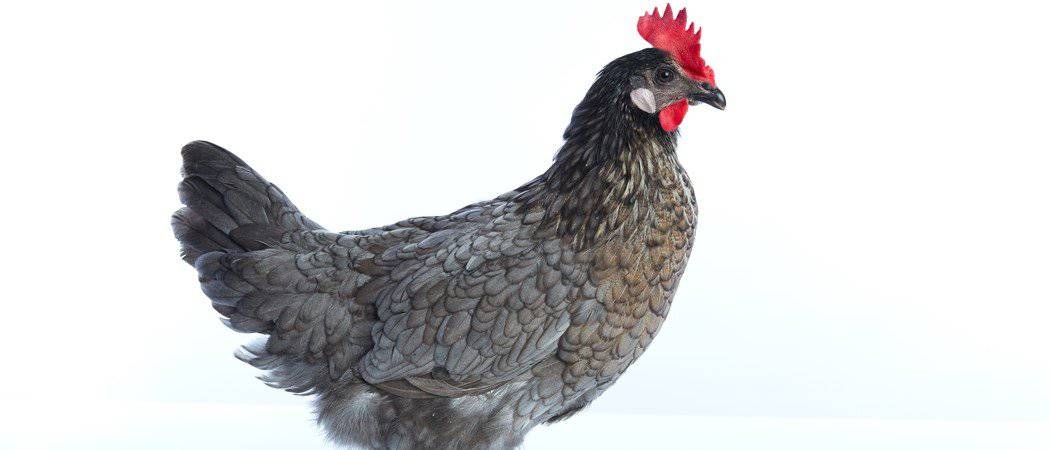
Delaware Blue Hen (Blue Hen Chicken)

Designated 1939

fish

Weakfish (Grey Sea Trout)

Designated 1981

insect

Ladybug (Ladybird Beetle)

Designated 1974

marine

Horseshoe crab

Designated 2002

wildflower

Peach blossom

Designated 1895

tree

American holly

Designated 1939

Parks & Reserves

Protected Areas

Delaware protects coastal and estuary areas: Delaware Bay tidal marshes, Atlantic barrier beaches and dunes, and inland coastal‑plain forests and swamps. Protection comes from federal lands (two major National Wildlife Refuges), DNREC Wildlife Areas, State Parks, and conservation easements focused on migratory bird habitat, coastal resilience, and water quality in key watersheds. No federal Wilderness Areas.

Protected Coverage

Approximately 15-20% of Delaware's land is in protected public ownership or long-term conservation status (varies by definition and data source; coastal marsh protections are especially significant).

National Parks & Preserves

First State National Historical Park (Brandywine Valley / Woodlawn & Beaver Valley tracts)

About 2,600 acres total across multiple units (park-wide; not all acreage is concentrated in the Brandywine Valley tracts).

While best known for cultural history, the Brandywine Valley tracts protect a surprisingly intact mosaic of Piedmont woodlands, streams, and meadow edges that support breeding songbirds, raptors, and forest wildlife near a heavily developed corridor.

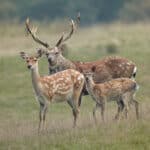
Barred owl Pileated woodpecker Wood thrush White-tailed deer Red fox

Captain John Smith Chesapeake National Historic Trail (Delaware River/Delaware Bay vicinity segments)

Corridor-based water trail (not acreage-defined; regional route spans hundreds of miles across the Chesapeake system, with segments near Delaware's coastal waterways).

A water-based national trail that intersects Delaware's tidal rivers and bays; it highlights and helps interpret (and indirectly incentivize protection of) extensive estuarine habitats used by migratory birds and anadromous fish. Wildlife viewing is best where the trail overlaps marshes and bay shorelines.

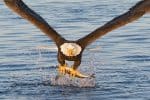
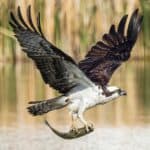
Bald eagle Osprey Red knot Atlantic horseshoe crab Atlantic sturgeon

State & Provincial Parks

Cape Henlopen State Park

About 5,200 acres

One of Delaware's premier wildlife-viewing parks, protecting Atlantic beach, dunes, maritime forest, and Delaware Bay shoreline habitats. It's especially notable for coastal birds, raptor migration, and seasonal concentrations tied to bay ecology.

Piping plover American oystercatcher Osprey Red knot Diamondback terrapin

Delaware Seashore State Park

Roughly 3,500-4,000 acres

A major barrier-island and inlet system with beaches, dunes, salt marsh, and bayside waters that support nesting shorebirds, migratory stopovers, and estuarine nursery habitat for fish and crustaceans.

Least tern Piping plover Sanderling Diamondback terrapin Osprey

Trap Pond State Park

About 3,600-3,700 acres

Protects one of the northernmost natural baldcypress swamp ecosystems in the U.S., a habitat that supports specialized swamp/forest birds, amphibians, and wetland mammals-very different from Delaware's coastal marsh focus.

Prothonotary warbler Barred owl Great blue heron River otter Wood duck

Brandywine Creek State Park

About 900-1,000 acres

A high-quality Piedmont stream valley with mature woods and open fields that supports forest songbirds and raptors; it functions as an important green corridor for wildlife near Wilmington and the Pennsylvania line.

Wood thrush Scarlet tanager Red-tailed hawk White-tailed deer Eastern box turtle

Wildlife Refuges

Bombay Hook National Wildlife Refuge

About 16,000 acres

One of the Mid-Atlantic's most important tidal-marsh and impoundment complexes for migratory birds. It is a top destination for waterfowl and shorebird viewing and a key piece of Delaware Bay's hemispherically significant migration network.

Snow goose Tundra swan American black duck Red knot Peregrine falcon

Prime Hook National Wildlife Refuge

About 10,000 acres

A large back-barrier marsh, freshwater impoundment, and dune system that supports waterfowl, wading birds, and marsh specialists. Its mix of habitats also makes it important for coastal resilience and habitat restoration.

Bald eagle Osprey Great egret Northern harrier Saltmarsh sparrow

Assawoman Wildlife Area (DNREC)

Roughly 3,000+ acres (varies by tract/management unit)

A sizable coastal marsh and forest complex near the Inland Bays that supports waterfowl, wading birds, and secretive marsh birds. It's also a useful complement to nearby state parks by protecting less-developed marsh interiors.

Clapper rail Great blue heron Osprey River otter Seaside sparrow

Little Creek Wildlife Area (DNREC)

Roughly 3,000+ acres (varies by tract/management unit)

A Delaware Bay shoreline complex of tidal flats, marsh, and managed impoundments that can host large concentrations of migrating shorebirds and waterfowl, with excellent seasonal viewing opportunities.

Dunlin Ruddy turnstone Short-billed dowitcher Snow goose Bald eagle

Wilderness Areas

  • No federally designated Wilderness Areas exist in Delaware; the state's most wilderness-like settings are large tidal-marsh complexes and swamp forests.
  • Bombay Hook National Wildlife Refuge tidal marshes and impoundments (broad, roadless-feeling marsh interiors).
  • Prime Hook National Wildlife Refuge back-barrier marsh/dune landscapes (large, low-development wetland blocks).
  • Blackbird Creek watershed (core DNERR marshes and adjacent protected lands) for quiet paddling and marsh-bird habitat.
  • Trap Pond / Cypress swamp interior (swamp forest and quiet-water corridors with a remote feel).
  • Upper White Clay Creek and Brandywine greenway corridors (forested stream valleys with limited road intrusions in places).
Animals

Wildlife

Delaware's wildlife is shaped by its position on the Atlantic Coastal Plain and by the Delaware Bay-Atlantic Ocean interface. Despite its small size, the state has outsized importance for migratory birds because of vast tidal marshes, impoundments, barrier beaches, and the Delaware Bay shoreline. Coastal/estuarine systems (salt marsh, mudflats, bays, inlets) dominate the signature wildlife experience-shorebird spectacles in spring, waterfowl concentrations in fall/winter, and productive nearshore waters supporting anadromous fish and marine life-while inland forests and wetlands support a typical Mid-Atlantic mix of mammals, reptiles, and amphibians.

~45-55 species Mammals
~380-420 species recorded (strongly migratory-driven) Birds
~35-45 species Reptiles
~20-25 species Amphibians
300+ marine and estuarine species recorded; ~60-90 freshwater species (varies by list and survey scope) Fish

Endemic & Rare Species

Delmarva Fox Squirrel

Sciurus niger cinereus

Delisted (recovered) under the U.S. Endangered Species Act in 2015; formerly federally endangered

A Delmarva Peninsula specialty and a marquee example of regional recovery work; Delaware sites have been involved in restoration/management efforts where suitable habitat exists.

Red Knot (rufa population)

Calidris canutus

Federally threatened (U.S.) for the rufa population; long-distance migrant dependent on Delaware Bay stopover

Delaware Bay is a keystone refueling site; population performance is closely tied to food availability (horseshoe crab eggs) and shoreline conditions.

Piping Plover

Charadrius melodus

Federally threatened (Atlantic Coast population)

Breeding and staging birds depend on protected beach habitat; management of disturbance and predators is central to their persistence.

Atlantic Sturgeon

Acipenser oxyrinchus

Endangered/Threatened in U.S. distinct population segments; Delaware River fish are a major conservation focus

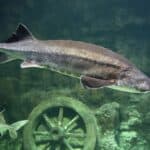
The Delaware River-Bay system supports important spawning and migratory habitat; recovery is tied to water quality, bycatch reduction, and habitat protection.

Bog Turtle

Glyptemys muhlenbergii

Federally threatened; highly habitat-specific and rare

Occurs in specialized spring-fed wetlands and wet meadows; sensitive to hydrology changes, development, and succession.

Northeastern Beach Tiger Beetle

Cicindela dorsalis

Federally threatened; very localized beach specialist

Dependent on open, sparsely vegetated sandy beaches-habitat that is limited and vulnerable to shoreline alteration and heavy recreation.

Saltmarsh Sparrow

Ammospiza caudacuta

Rapidly declining (high vulnerability); conservation priority in tidal marshes

A tidal-marsh obligate whose nesting is increasingly impacted by sea-level rise and increased flooding; Delaware's marshes are part of its core range.

Notable Populations

  • Delaware Bay horseshoe crab spawning aggregation-among the most globally significant, underpinning a famous shorebird migration phenomenon.
  • Delaware Bay spring shorebird stopover-one of North America's most important sites for Red Knots and other Calidris sandpipers during northbound migration.
  • Major concentrations of migratory and wintering waterfowl in tidal marsh/impoundment complexes (e.g., Bombay Hook and Prime Hook National Wildlife Refuges), including large numbers of geese, ducks, and swans.
  • Anadromous fish corridor in the Delaware River-Estuary system supporting species of high conservation concern (notably sturgeon) and broader coastal fish migrations.

Recent Changes

  • Recovery and increased visibility of Bald Eagles and Ospreys following DDT-era declines, supported by improved water quality and protection.
  • Tighter management of horseshoe crab harvest (including bait restrictions and adaptive quotas) has aimed to stabilize crab spawning and improve shorebird foraging conditions; monitoring continues as populations fluctuate.
  • Ongoing conservation and site management for Red Knots and Piping Plovers (beach closures, predator management, habitat protection), with outcomes strongly influenced by shoreline change and food availability.
  • Sea-level rise and increased tidal flooding contributing to declines in tidal-marsh obligates such as Saltmarsh Sparrow; marsh migration/rollover space is increasingly important.
  • Delmarva Fox Squirrel recovery actions (including habitat management and reintroductions within the Delmarva region) have expanded occupancy in some areas where mature forest structure is restored.
  • Range dynamics of large mammals continue to shift regionally (e.g., coyotes now widespread; occasional black bear dispersal into Delaware reported), reflecting broader Mid-Atlantic trends.
  • Continued concern for anadromous fish (including Atlantic Sturgeon) due to bycatch, ship strikes, habitat alteration, and warming waters; restoration and monitoring efforts remain active.
Visit

Wildlife Viewing

Delaware has rich wildlife in a small state: Atlantic beaches and dunes, salt marshes, impoundments, and the Delaware Bay. These habitats offer great birding, especially during migration, seasonal sea life viewing, and chances to see marsh animals like otter, muskrat, wading birds, and raptors. Sunrise shorebird watching, afternoon marsh walks, and evening owl or rail listening are nearby.

Best Seasons

Spring (Mar-May)

Peak migration. Delaware Bay becomes a world-class shorebird stopover (notably in May). Expect huge numbers of red knots, sanderlings, ruddy turnstones, and other migrants along bay beaches; strong songbird migration in coastal woodlands; increasing activity in marshes and at freshwater impoundments (herons, egrets, waterfowl tapering off as breeding begins).

Summer (Jun-Aug)

Breeding season and coastal life. Expect nesting shorebirds and seabirds along the Atlantic coast, wading birds feeding in marsh creeks, and reliable dawn/dusk viewing for marsh specialists. Great for beach naturalist walks, kayak trips through tidal marshes, and dragonflies/butterflies around wetlands; marine wildlife is possible offshore (dolphins more likely than whales).

Fall (Sep-Nov)

Excellent raptor and waterfowl ramp-up. Expect hawk and falcon migration along the coast, increasing ducks and geese at refuges by late fall, and strong songbird movement in September. Cooler temps improve hiking and long birding days; shorebirds continue early fall along the bay and coast.

Winter (Dec-Feb)

Waterfowl and eagles. Expect large concentrations of ducks and geese on protected impoundments and tidal waters, plus frequent bald eagles and wintering raptors over marshes and fields. Coastal birding can be excellent for sea ducks and loons during cold snaps; fewer crowds and great photography light.

Top Wildlife Experiences

  • Witness the Delaware Bay shorebird spectacle in May at Prime Hook National Wildlife Refuge and along nearby bay beaches (sunrise is best for feeding flocks and photography).
  • Take a sunrise-to-midmorning birding loop through Bombay Hook National Wildlife Refuge (auto tour + short trails) for dense concentrations of waterfowl, waders, and raptors.
  • Join an interpretive walk at Cape Henlopen State Park to scan for migrating hawks and falcons in fall and to look for coastal birds along the Point and Gordons Pond areas year-round.
  • Paddle a tidal creek in the Great Marsh (Prime Hook area) or Broadkill region by kayak/canoe for close-up views of egrets, herons, ospreys, and marsh mammals (go on an outgoing-to-low tide for exposed mudflat feeding).
  • Look for horseshoe crabs and shorebirds together during late spring along Delaware Bay shoreline access points (follow local guidance to avoid disturbing wildlife; observe from a respectful distance).
  • Book an ocean-side dolphin and seabird outing from the Delaware beaches area (seasonal), scanning for dolphins, gannets in cooler months, and terns/sheerwaters depending on conditions.
  • Do a winter raptor and eagle day: start at Bombay Hook (morning), then work agricultural edges and marsh overlooks in Kent/Sussex counties for bald eagles, harriers, and short-eared owl possibilities at dusk.
  • Plan a night program (seasonal) for owls and marsh soundscapes at a state park or refuge program-great in spring/early summer when vocal activity is highest.

Wildlife Watching Types

Shorebird migration viewing (Delaware Bay stopover) Waterfowl concentrations and wetland birding (impoundments, tidal marshes) Raptor migration and winter raptor watching (hawks, falcons, eagles, harriers) Beach and dune wildlife walks (shorebirds, nesting species, coastal ecology) Marine wildlife scanning and boat trips (dolphins; seasonal seabirds; occasional offshore whales) Kayak/canoe wildlife viewing in tidal marsh creeks Photography-focused wildlife viewing (sunrise marsh light, massed shorebirds, winter waterfowl) Nature night walks (owls, frogs, insect choruses in warm months)

Guided Options

  • U.S. Fish & Wildlife Service programs at Bombay Hook National Wildlife Refuge and Prime Hook National Wildlife Refuge (seasonal walks, talks, and wildlife observation guidance).
  • Delaware State Parks interpretive/naturalist programs (notably at Cape Henlopen State Park) including bird walks, coastal ecology programs, and seasonal events.
  • Delaware Audubon-area bird walks and field trips (check local chapter calendars for migration outings and refuge trips).
  • Local kayak outfitters offering guided tidal-marsh paddles in Sussex/Kent coastal areas (timed to tides for best wildlife viewing).
  • Seasonal dolphin and nature cruises departing from the Delaware beaches area (trip offerings vary by year; look for 'eco-cruise' or 'wildlife cruise' operators and ask about bird-focused naturalists on board).
Habitats

Ecosystems

Delaware lies mostly on the Atlantic Coastal Plain, with a small Piedmont area in the north. It has coastal-plain forests, large tidal marshes along Delaware Bay and Inland Bays, a shift from freshwater rivers and forested wetlands to brackish estuaries and Atlantic waters. Much land is farmland and suburbs, but refuges and state parks protect migratory-bird and wetland areas.

Biomes

Temperate Forest

Mixed oak-hickory hardwood forests and coastal-plain pine and hardwood mosaics; mature deciduous forests persist in northern Delaware and in protected tracts, while pine-dominated stands and managed woodlots are common in the coastal plain.

Patchy to moderate coverage statewide; most continuous in northern New Castle County and in larger protected blocks, otherwise fragmented by agriculture and development.

Freshwater

Rivers and tidal-fresh reaches (e.g., Brandywine, Christina, Red Clay, Smyrna, Murderkill, St. Jones, Nanticoke headwaters), plus ponds, ditches, and impoundments used for waterfowl management.

Widespread linear network; greatest density across the coastal plain with numerous small streams and managed impoundments.

Marine

Nearshore Atlantic waters off Cape Henlopen and marine-influenced portions of Delaware Bay and the Inland Bays; includes sandy nearshore seabed, surf-zone habitats, and bay waters supporting fisheries and migratory species.

Concentrated along the Atlantic coastline and mouth of Delaware Bay; marine influence extends into the Inland Bays.

Wetland

Extensive tidal salt marshes and brackish marshes along Delaware Bay and the Inland Bays; freshwater swamps, forested wetlands, wet meadows, and pocosin-like coastal-plain wetland complexes in low-lying areas.

High along the Delaware Bay shoreline and Inland Bays; scattered but common in lowlands and floodplains statewide.

Habitats

Forest

Fragmented but ecologically important forest blocks, especially in northern Delaware and protected coastal-plain tracts.

Deciduous Forest

Oak-hickory and mixed hardwood stands (notably in the Piedmont-influenced north and along well-drained riparian terraces).

Coniferous Forest

Loblolly pine stands and mixed pine-hardwood forests on the coastal plain; includes managed pine woodlots and some remnant Atlantic white cedar-associated wetland forests.

Woodland

Edge habitats and secondary growth around agricultural fields and suburban matrices, providing corridors for wildlife.

Grassland

Old fields, rights-of-way, and managed early-successional patches; also includes some agricultural set-asides supporting grassland birds.

Shrubland

Early successional shrub thickets on abandoned fields, wetland edges, and managed wildlife areas.

Agricultural/Farmland

Row-crop agriculture and poultry-associated agriculture dominate much of Kent and Sussex counties; field margins and drainage ditches create additional edge and wet habitats.

Urban

Urban centers and industrial waterfronts (notably along the Christina/Delaware River corridor) with modified shorelines and remnant riparian habitat.

Suburban

Extensive suburban development in northern New Castle County, interspersed with parks, small woodlots, and streams.

River/Stream

Brandywine and Christina systems in the north; St. Jones, Murderkill, Smyrna, and Nanticoke-related tributaries across the coastal plain; many are tidally influenced near their mouths.

Pond

Numerous small ponds, stormwater ponds, millponds, and wildlife impoundments that support amphibians and waterfowl.

Lake

Few natural lakes; mostly small reservoirs/impoundments rather than large lake systems.

Wetland

A statewide mix of tidal and non-tidal wetlands, including managed impoundments and forested wetland complexes.

Marsh

Signature habitat: tidal salt and brackish marshes along Delaware Bay and the Inland Bays, critical for shorebirds and waterfowl (e.g., horseshoe crab-shorebird food-web connections in the bay).

Swamp

Forested swamps and floodplain wetlands along low-gradient streams and in poorly drained coastal-plain depressions.

Bog

Locally rare; small acidic seepage/depression wetlands and peat-accumulating pockets occur but are limited and often embedded within broader wetland mosaics.

Estuary

Delaware Bay estuary and the Inland Bays (Rehoboth, Indian River, Little Assawoman), with strong salinity gradients and productive nursery habitat.

Coastal

Coastal plain shoreline systems including dunes, back-barrier environments, and bay shores (e.g., Cape Henlopen area and bay shoreline preserves).

Beach

Atlantic barrier beaches and bay beaches; dynamic sand habitats shaped by storms and seasonal erosion/accretion.

Rocky Shore

Limited; small areas of riprap, jetties, and hardened shorelines provide artificial rocky habitat rather than extensive natural rocky coasts.

Open Ocean

Nearshore Atlantic waters off Delaware's short ocean frontage, including surf-zone and coastal pelagic influences.

Seabed/Benthic

Sandy nearshore bottom and bay-floor substrates in Delaware Bay and the Atlantic nearshore, supporting benthic invertebrates and demersal fish.

Ecoregions

EPA Level III: Mid-Atlantic Coastal Plain EPA Level III: Northern Piedmont WWF Terrestrial Ecoregion: Middle Atlantic coastal forests
Protection

Conservation

Primary Threats

  • Accelerating sea-level rise and stronger coastal storms are drowning tidal marshes along Delaware Bay and the Atlantic coast, increasing overwash and erosion of beach-dune habitat (critical for piping plovers), and pushing saltwater intrusion into low-lying agricultural lands and forested wetlands (e.g., conversion to 'ghost forests').
  • Loss and fragmentation of wetlands, riparian buffers, and coastal habitat occur through conversion to housing and commercial uses (especially in Sussex County) and through shoreline hardening (bulkheads, revetments) that eliminates intertidal habitat and prevents marsh migration inland.
  • Nutrient and sediment runoff from row crops and poultry-dense agriculture elevates nitrogen and phosphorus loads into tributaries and the Inland Bays, driving harmful algal blooms, seagrass loss, and low-oxygen events; legacy contaminants and emerging pollutants (e.g., PFAS in some watersheds) add stress to aquatic food webs.
  • Continued pressure to maintain or expand intensive poultry-supported cropland increases fertilizer/manure application and ditch maintenance, reduces forested buffers, and can degrade headwater streams that feed the Nanticoke, Indian River, and other estuarine systems.
  • Growth around Wilmington/Newark and coastal resort corridors increases impervious cover, stormwater runoff, and traffic-related wildlife mortality, while driving demand for shoreline stabilization and new infrastructure in flood-prone areas.
  • Road networks and expanding coastal protection/transport facilities fragment habitats and increase mortality for turtles and other wildlife; navigation-channel dredging and associated disposal needs can alter estuarine dynamics, though they can also be managed as restoration opportunities (beneficial use).
  • Historic mosquito-ditching, impoundments, and altered drainage in tidal marshes change hydrology and sediment delivery, reducing marsh resilience to sea-level rise and affecting fish nursery functions; shoreline armoring similarly modifies natural sediment movement along bay and ocean beaches.
  • High recreational use of beaches and nearshore waters (people, pets, boating, and occasional off-road activity) can disrupt nesting and foraging of beach-nesting birds and roosting shorebirds; disturbance is especially consequential during spring shorebird migration on Delaware Bay and during summer nesting season on the Atlantic coast.
  • Harvest pressure on key estuarine species (and bait needs) can ripple through the food web; horseshoe crab harvest-managed but still closely watched-matters disproportionately in Delaware because horseshoe crab eggs fuel the globally important red knot stopover in Delaware Bay.
  • Illegal collection/poaching risks for rare reptiles (notably bog turtles) and other herpetofauna can affect small, localized populations in northern Delaware and the Delmarva region.
  • Invasive plants such as common reed (Phragmites) can simplify marsh vegetation structure, reducing habitat quality for marsh birds and altering hydrology; invasives in aquatic systems can also compete with or prey on native species and complicate restoration outcomes.
  • Outbreaks such as avian influenza can affect concentrations of migratory and wintering waterfowl in refuge marshes; marine and estuarine diseases (e.g., affecting oysters) can hinder shellfish restoration that otherwise improves water quality and habitat complexity.
Fun Facts

Did You Know?

Horseshoe crabs on Delaware's bay beaches aren't true crabs at all-they're more closely related to spiders and scorpions-and their blue, copper-based blood is used to produce tests that detect bacterial contamination in medicines and medical devices.

A rufa red knot can fly from Tierra del Fuego to Delaware Bay, eat horseshoe crab eggs to gain weight in days, then fly to Arctic breeding grounds, making Delaware's beaches an important fuel stop.

Delaware has wild bog turtles (Glyptemys muhlenbergii)-North America's smallest turtle-in a few northern Delaware wetlands; they can fit in the palm of your hand and rely on very specific spring-fed, grassy bog habitats that are easy to overlook.

Diamondback terrapin (Malaclemys terrapin) is the only North American turtle that lives in brackish salt marshes. Delaware’s tidal creeks and marsh edges by the bay and Inland Bays give the right mix of salt and fresh water.

At low tide, Delaware Bay's exposed mud flats gather worms, small clams, and other invertebrates, attracting dense flocks of sandpipers, turnstones, and other shorebirds easily seen from public shore access.

Delaware Bay is a Hemispheric Site in the Western Hemisphere Shorebird Reserve Network, the network's top tier. It often has hundreds of thousands of migrating shorebirds, making it one of the hemisphere's most important stopovers.

Delaware Bay's shoreline is the world's largest known spawning site for Atlantic horseshoe crabs (Limulus polyphemus). Peak spawning happens on May–June high tides at beaches like Slaughter Beach and Pickering Beach.

At Cape Henlopen, where Delaware Bay meets the Atlantic, a migration funnel sends birds of prey past the shore each fall. Hawk watches count tens of thousands of raptors, among the Mid-Atlantic's best sites.

Bombay Hook National Wildlife Refuge (near Smyrna) is one of the Mid-Atlantic's most important tidal-marsh/waterfowl concentration areas, with peak winter and migration counts reaching many tens of thousands of geese, ducks, and shorebirds using its impoundments and surrounding salt marsh.

Though small, Delaware has a lot of Mid-Atlantic tidal marsh, especially along Delaware Bay and the Inland Bays. These marshes have many breeding marsh birds, like rails and marsh sparrows.

Delaware is the country’s second-smallest state after Rhode Island. It is located between Pennsylvania and Maryland and shares the Delmarva Peninsula with both those states. Its coastlines include the Atlantic Ocean and the Delaware Bay. Most of the state is on a coastal plain at sea level. The southern border of the state shares the rolling hills and forests of Pennsylvania. There are large stretches of farmland, and the rest is mostly sandy beaches and coastlines. Delaware is known for its beautiful beaches.

Delaware’s weather is moderate most of the year. It has cool, breezy summers, and its winters are usually mild. The moderate temperature, regular rainfall, and frequent sunshine have created a state with many green, bucolic natural spaces that are perfect for all kinds of animals.

Wild Animals in Delaware

Delaware has forested areas and many rivers, streams, and coastal areas. Common animals in these habitats include white-tail deer, foxes, muskrats, minks, otters, and chipmunks.

Delaware’s rodents include woodchucks, squirrels, and several mice species. Its biggest predators are foxes, bobcats, and wolves. Coyotes have been seen in Delaware, but their numbers are small.

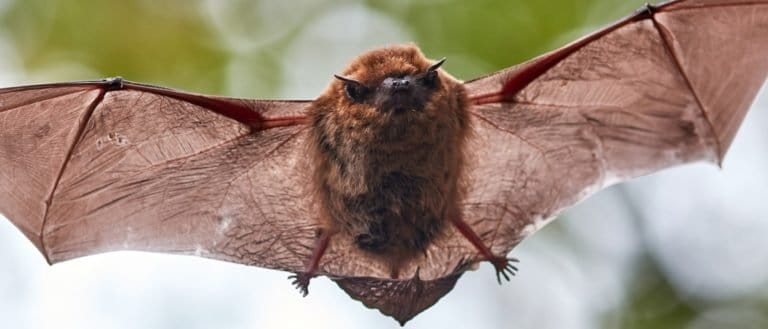
Delaware has many bat species, including rare bats like the hoary bat and silver-haired bat. Porcupines, raccoons, opossums, and rodents round out the common animals. The state does not have any mammals that are particularly strange or exotic.

Delaware has many marine animals and shorebirds, including some of the rarest and most endangered coastal birds in the country. It has 21 snake species, including water snakes, and 10 native turtle species. Delaware has hundreds of bird species that include herons, warblers, songbirds, ducks, and egrets.

The Official Animal of Delaware

Delaware has four official state animals.

The official state animal is the blue hen. This beautiful, unusual chicken is not an official chicken breed. It gets its name from its brilliant blue feathers. Blue hens are native to Delaware and are bred for their coloring. A chicken might seem a strange choice for a state animal, but the bird’s symbolic importance to Delaware goes back to the Revolutionary War. Delaware chose this hen as its official symbol in 1939.

The bird lends its name to the University of Delaware sports teams, who call themselves the “Fighting Blue Hens.” Quarterback Joe Flacco was a Fighting Blue Hen before he signed an NFL contract with the Baltimore Ravens.

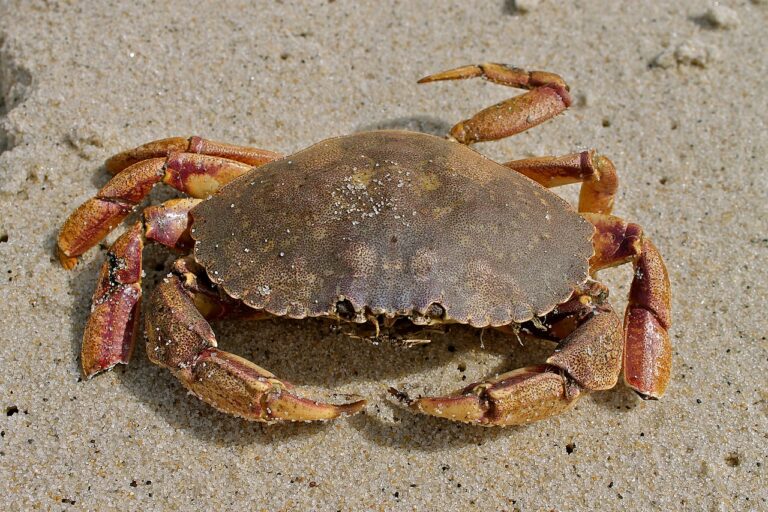
The state marine animal is the horseshoe crab. This strange shoreline creature is not actually a crab. It’s a member of the family Limulidae.

The state insect is the ladybug, and the state mammal is the gray fox.

Where To Find the Top Wild Animals in Delaware

Although it is a small state, Delaware has a high population density. Industrialization, agriculture, and development have destroyed most of Delaware’s wetlands. Today, only 25% of its original wetlands remain. These are mostly swamps, freshwater tidal marshes, salt marshes, estuaries, and non-tidal wetlands. They are home to many important species, and the state has taken steps to preserve its remaining wetlands ecosystems.

Delaware has 34 state nature preserves. Some are not open to the public to avoid disturbing important breeding sites. It also has 19 public wildlife areas that protect more than 62,000 acres of land.

  • Lums Pond State Park is a nature preserve that surrounds the state’s biggest freshwater pond. You can see river turtles, ospreys and blue herons on the pond shoreline.
  • Tulip Tree Woods Nature Preserve is an old growth forest where you can spot many of Delaware’s wild animals.
  • The Great Marsh Preserve in Rehoboth, Delaware, is a 17,000-acre preserve that protects some of Delaware’s remaining wetlands. It is a network of beaches, marshes and wildlife refuges. It is a wonderful place to see marine life and spot some of the country’s rarest endangered shorebirds.
  • Wild Lands Milford Neck Preserve includes three miles of Delaware Bay coastline and 3,500 acres of protected beach, tidal marsh and upland forest. It is a wonderful place to see raptors, migrating waterfowl, horseshoe crabs and the state’s rarest native plants.
  • Prime Hook National Wildlife Refuge is on the western shore of the Delaware Bay. It is an important refuge for migrating and wintering waterfowl. Established in 1963, it is considered one of the best protected wetlands areas on the Atlantic coast. Its grasslands, woodlands and ponds provide habitat for more than 260 bird species, 35 reptiles and amphibians, and 36 species of mammals.

The Most Dangerous Animals in Delaware Today

Delaware does not have many animals that are dangerous to humans. White-tail deer can be dangerous by causing traffic accidents when they wander onto the roads.

Besides deer, these are the most dangerous animals you’re likely to find.

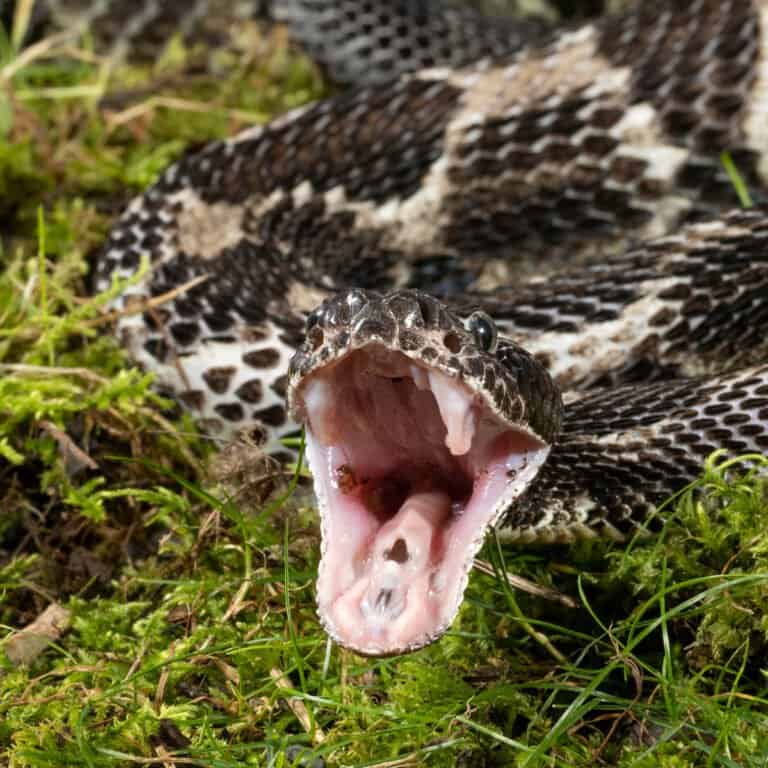
  • Timber rattlesnake: These long, highly venomous vipers hide in the leaves on the forest floor. If you are hiking or visiting a wildlife preserve, wear boots that protect your feet and stay on the trails.
  • Ticks: Like any state with forested areas, Delaware has a lot of deer ticks. When you’re in the outdoors, wear tick and mosquito repellent. Check yourself for ticks when you get home.

Endangered Animals in Delaware

There are several species in danger of going extinct in Delaware.

Endangered birds include:

  • American kestrel (Falco sparverius)
  • Short-eared owl (Asio flammeus)
  • Swainson’s warbler (Limnothlypis swainsonii)
  • Piping plover (Charadrius melodus)
  • Cerulean warbler (Setophaga cerulea)

Endangered mammals include:

  • Little brown bat (Myotis lucifugus)
  • Delmarva fox squirrel (Sciurus niger cinereus)
  • Sei whale (Balaenoptera borealis)
  • Humpback whale (Megaptera novaengliae)
  • Northern long-eared bat (Myotis septentrionalis)

Endangered reptiles and amphibians include:

  • Mud salamander (Pseudotriton montanus)
  • Kemp’s Ridley sea turtle (Lepidochelys kempii)
  • Loggerhead sea turtle (Caretta caretta)
  • Barking tree frog (Hyla gratiosa)
  • Red corn snake (Pantherophis guttatus)

Endangered insects include:

  • Dark stoneroot borer moth (Papaipema duplicatus)
  • Treetop emerald (Somatochlora provocans)
  • Elfin skimmer (Nannothemis bella)
  • Maritime sunflower borer moth (Papaipema maritima)
  • Marbled underwing (Catocala marmorata)

The state’s Division of Fish and Wildlife has created a Wildlife Action Plan to preserve Delaware’s abundant fish, wildlife, and natural habitats.

Birds and Beaches

This small state has a large variety of animal life. With its beaches and protected coastal areas, Delaware is a wonderful place to see rare shorebirds, migratory fowl, and other wildlife. You can find sharks near Delawares’ coasts and beaches.

Native Plants in Delaware

Due to its dedication to the study of plants and chemicals, Delaware is often regarded as the chemical capital of the world. And with around 140 distinct vegetation communities in Delaware alone, plants such as the broadleaf arrowhead and the New Jersey tea plant are all indigenous to the state.

The Flag of Delaware

The flag of Delaware was officially adopted in 1913 and features a blue background as well as a buff-colored diamond with the coat of arms at its center. The coat of arms represents the state’s history while at the same time paying tribute to its agricultural resources as depicted by images of a farmer, ox, corn and wheat. Above the ox is a blue stripe which symbolizes the Delaware river, one of the state’s original transportation routes. Across the bottom of the flag is the date December 7, 1787 which is the date that Delaware became the very first US state.

Read about:

  • extinct animals that lived in Delaware.
  • copperheads in Delaware.
  • the best fish to catch in Delaware in the summer.
  • Deer Season In Delaware: Everything You Need To Know To Be Prepared

Animals Found in Delaware

197 species documented in our encyclopedia

Thank you for reading! Have some feedback for us?