P
Species Profile

Philippine Cobra

Naja philippinensis

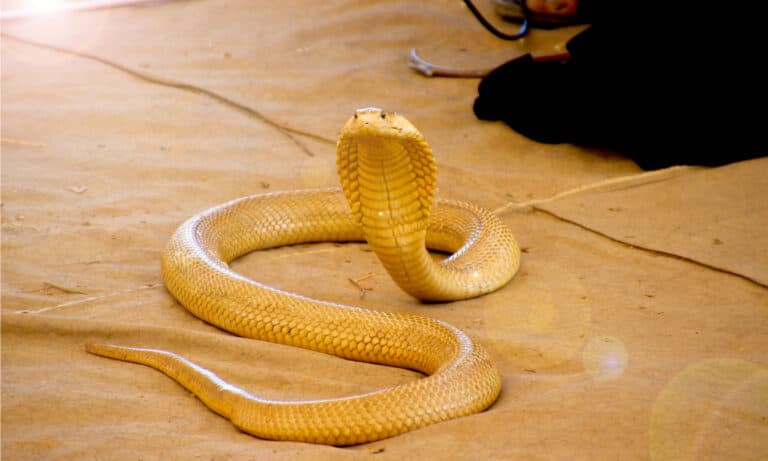
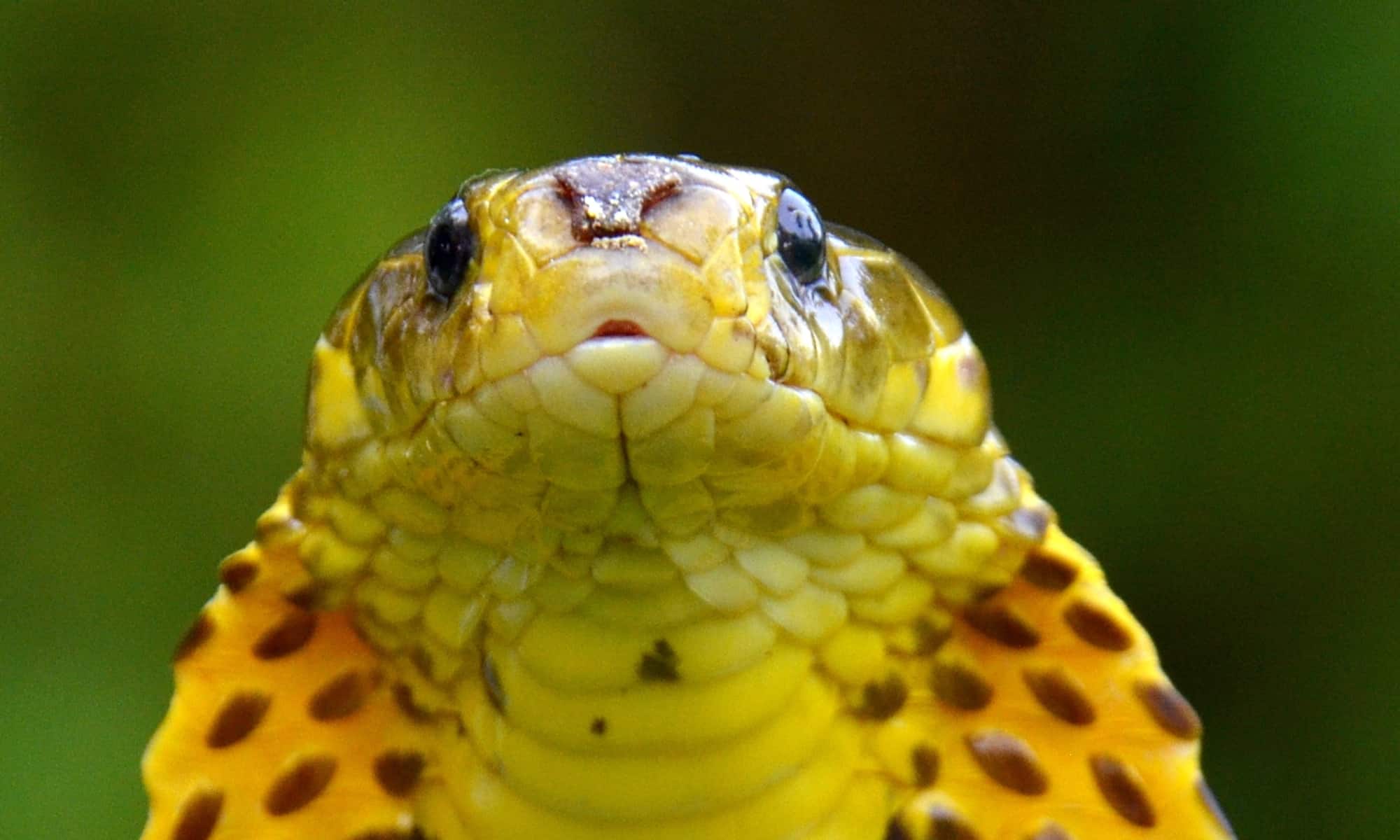
Look, don't stare-spitting cobra!
ccarbill/Shutterstock.com

Philippine Cobra Distribution

Click a location to explore more animals from that region

Endemic Species
Loading map...

Found in 1 country

Samar cobra, Naja samarensis, an endemic cobra from Philippines. This is a snake similar to the Philippine Cobra. The Philippine Cobra has dark brown round eyes, and it is rather stocky.

At a Glance

Wild Species
Diet Carnivore
Activity Nocturnal+
Lifespan 10 years
Weight 1 lbs
Status Least Concern
Did You Know?

It's a true "spitting cobra": it can project venom toward a threat's face, with the greatest danger being eye exposure (pain, inflammation, corneal injury).

Scientific Classification

The Philippine cobra (Naja philippinensis) is a venomous elapid cobra and a medically important species known for defensive hooding and venom-spitting behavior. It is one of the principal cobra species in the Philippines and a significant cause of snakebite envenomation in its range.

Kingdom
Animalia
Phylum
Chordata
Class
Reptilia
Order
Squamata
Family
Elapidae
Genus
Naja
Species
Naja philippinensis

Distinguishing Features

  • Cobra hood display (expanded neck ribs) when threatened
  • Capable of spitting venom defensively toward the eyes of perceived threats
  • Elapid morphology: relatively short, fixed front fangs
  • Strongly neurotoxic venom typical of many Naja species (with cytotoxic/irritant effects especially relevant in ocular exposure)

Physical Measurements

Length
3 ft 7 in (1 ft 12 in – 5 ft 3 in)
Weight
1 lbs (0 lbs – 2 lbs)
Tail Length
7 in (4 in – 12 in)
Top Speed
4 mph
slithering
Venomous

Appearance

Primary Colors
Secondary Colors
Skin Type Smooth, glossy scales; expandable cervical ribs form a broad defensive hood.
Distinctive Features
  • Adult total length commonly ~1.0-1.5 m; maximum reported around ~1.6 m in published accounts (species-specific reports vary by source).
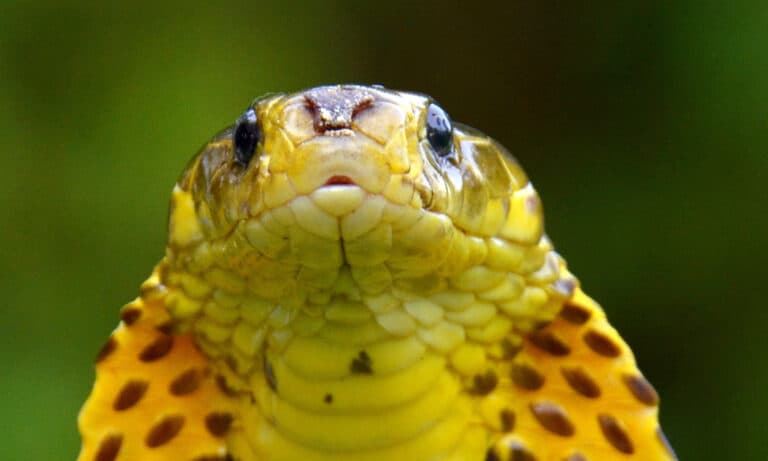
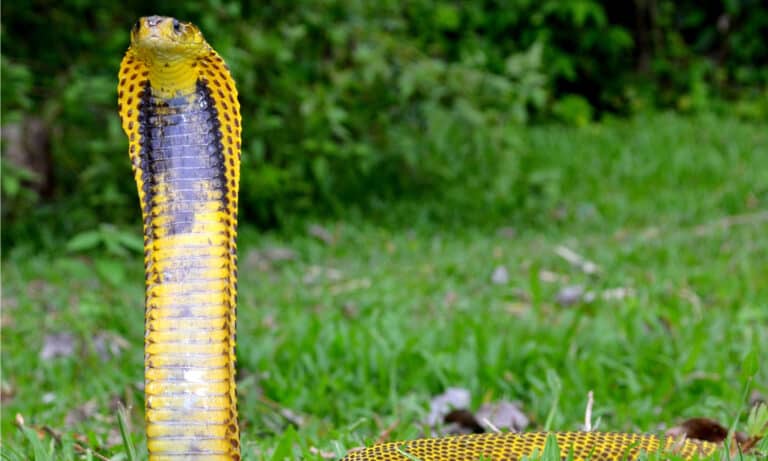
  • Defensive hooding with prominent neck flattening; elevates forebody when threatened.
  • Medically important spitting cobra: can project venom defensively toward eyes, commonly within ~2-3 m; high risk of ocular injury.
  • Head only slightly distinct from neck when not hooded; large eyes with round pupils typical of Naja.
  • Typically encountered in agricultural and peri-settlement areas in northern/central Philippines; coloration often matches soil/leaf litter.

Sexual Dimorphism

Sexual dimorphism is subtle. Males are typically longer with proportionally longer tails, while females may be heavier-bodied when gravid; overall coloration and hood appearance are generally similar between sexes.

  • Often slightly greater maximum total length.
  • Relatively longer tail (hemipenal region) compared with females.
  • Often more robust body mass at similar lengths, especially when gravid.
  • Relatively shorter tail compared with males.

Did You Know?

It's a true "spitting cobra": it can project venom toward a threat's face, with the greatest danger being eye exposure (pain, inflammation, corneal injury).

Adults are commonly ~1.0-1.5 m total length; large individuals are reported to reach ~1.6 m.

Its venom is predominantly neurotoxic (paralysis risk) and this species is a significant cause of cobra envenomation within its range.

It often thrives in human-modified habitats-rice fields, farm edges, irrigation ditches, and peri-urban areas-because rodents are abundant there.

When threatened it typically escalates in stages: freeze/escape → hood display → repeated feints → spitting → bite as a last resort.

It is a Luzon/northern Philippines cobra; populations in parts of the central/southern Philippines are instead represented by other Naja (e.g., Samar cobra, Naja samarensis).

Unique Adaptations

  • Venom delivery flexibility: can use the same venom system for close-range biting and for defensive projection (spitting), depending on threat distance.
  • Specialized "spitting" mechanics: modified fang openings and head/neck control help atomize and direct venom forward in a spray rather than only injecting into tissue.
  • Highly effective warning display: hooding plus elevated posture increases apparent size and creates a strong visual deterrent that can prevent physical conflict.
  • Neurotoxic venom profile: toxins that interfere with neuromuscular signaling can rapidly compromise breathing in severe bites without prompt treatment and respiratory support.
  • Tolerance of disturbed landscapes: ecological adaptability allows persistence in agricultural mosaics, unlike many forest-specialist reptiles.

Interesting Behaviors

  • Defensive hooding: spreads the cervical ribs to form a hood, raising the forebody to appear larger and more intimidating.
  • Targeted venom-spitting: aims at the eyes of a perceived threat; defensive spits are often delivered in rapid bursts and can be effective at short range (commonly within a few meters).
  • Threat "tracking": while hooded, it may follow head movements of an approaching threat to maintain aim before spitting.
  • Human-associated foraging: patrols rodent-rich areas (grain stores, field margins, canal banks), increasing encounter rates around farms and settlements.
  • Crepuscular-to-nocturnal activity in many areas: frequently most active at dusk/night, especially in warm, humid conditions.
  • Egg-laying reproduction (oviparous): like other Naja, females lay a clutch of eggs and may remain near the nest site for some period, increasing defensive encounters if disturbed.

Cultural Significance

In the Philippines, the Philippine Cobra (Naja philippinensis) is feared and respected, common in farms and settlements on Luzon and nearby islands. It shapes safety rules, snakebite education, antivenom use, and first aid—especially rinsing eyes after it spits venom.

Myths & Legends

Eclipse serpent legend (Philippine folklore): a giant sea-and-sky serpent or dragon said to swallow the moon, causing eclipses; people made loud noise to drive it away and restore the moon.

Serpent-spirit motifs (Philippine folklore): serpent beings associated with waters, thresholds, and powerful nature spirits; often linked with guardianship, danger, and awe around snake-like beings.

In some Philippine local stories, big dangerous snakes are said to guard hidden treasure or magic places, and the tale stays alive even when the 'guardian' has no single species name.

Conservation Status

LC Least Concern

Widespread and abundant in the wild.

Population Unknown

Protected Under

  • Republic Act No. 9147 (Philippines Wildlife Resources Conservation and Protection Act)
  • CITES Appendix II (genus Naja listed for regulated international trade)

Life Cycle

Birth 14 hatchlings
Lifespan 10 years

Lifespan

In the Wild
7–15 years
In Captivity
12–20 years

Reproduction

Mating System Polygynandry
Social Structure Solitary
Breeding Pattern Seasonal
Fertilization Internal Fertilization
Birth Type Internal_fertilization

Solitary snakes that congregate briefly to mate; males search widely and can mate with multiple females, and females may accept multiple males. Internal fertilization; females lay ~10-20 eggs and provide no post-oviposition care.

Behavior & Ecology

Social Solitary Group: 1
Activity Nocturnal, Crepuscular
Diet Carnivore Small rodents (especially rats, Rattus spp.)

Temperament

Predominantly solitary; social contact is brief and reproduction-focused; behavior varies with disturbance and prey availability.
Generally wary and avoidance-oriented when undisturbed; rapidly defensive when cornered or handled.
Highly defensive display repertoire: hooding, raised forebody, persistent tracking of threat.
Capable of defensive venom-spitting toward eyes/face at close range; escalates if approached.
No evidence for stable territorial groups; space use overlaps but encounters are usually avoided via retreat.
Medically important species in its range (e.g., listed as a high-priority venomous snake in WHO guidance).

Communication

Hissing during threat display Audible forced expiration
Visual displays: hood expansion, forebody elevation, head orientation toward threat.
Defensive spitting as a directed deterrent signal; often paired with hooding and hissing.
Chemical cues: tongue-flicking to sample substrate/airborne scents for prey and mates.
Tactile/kinesthetic cues during courtship (body alignment and contact); brief and situational.
Vibration sensitivity: responds to nearby movement through ground-borne cues Approach/avoidance

Habitat

Biomes:
Tropical Rainforest Tropical Dry Forest Freshwater Wetland
Terrain:
Island Plains Hilly Coastal Riverine Valley
Elevation: Up to 656 ft 2 in

Ecological Role

Mesopredator (terrestrial venomous predator) in lowland Philippine ecosystems, often synanthropic in farmland mosaics.

Rodent population suppression (potential reduction of crop damage and rodent-borne disease risk) Regulation of amphibian and small reptile populations Energy transfer as prey for higher predators (e.g., raptors, mongooses) in food webs

Diet Details

Main Prey:
Rats and other small rodents Frogs and other amphibians Small lizards Small birds and nestlings Bird eggs Small snakes

Human Interaction

Domestication Status

Wild

Naja philippinensis (Philippine cobra) is wild, not domesticated or bred. People mostly meet it in conflict and medical cases: defensive encounters, killing, and bites; it is a key cause of cobra bites in its range. Adults are about 1.0–1.6 m, show hooding and venom-spitting. Encounters occur in rural and urban areas, handling, illegal pet trade, and venom collection.

Danger Level

Extreme
  • Medically significant envenomation: neurotoxic venom typical of cobras can rapidly cause cranial nerve dysfunction and progressive paralysis leading to respiratory failure without prompt medical care.
  • Venom spitting: defensive projection of venom toward the eyes can cause intense pain, conjunctivitis/keratitis, and potential corneal injury; immediate irrigation and medical evaluation are required.
  • High-risk encounter contexts: bites often occur during farming, walking at night, yard/house perimeter encounters, or attempted killing/handling; risk increases with alcohol use, poor lighting, and lack of protective footwear.
  • Handling risk: even experienced keepers face severe injury risk due to fast strike speed, defensive behavior, and the added hazard of spitting; bites are life-threatening and require urgent hospital care and antivenom/ventilatory support where indicated.

As a Pet

Not Suitable as Pet

Legality: Philippine Cobra (Naja philippinensis) is often banned or needs permits. Philippines requires permission, international trade follows CITES Appendix II, and many countries strictly limit or forbid private keeping. Check local laws.

Care Level: Expert Only

Purchase Cost: $300 - $1,200
Lifetime Cost: $5,000 - $20,000

Economic Value

Uses:
Public health (negative economic impact via snakebite treatment and lost productivity) Research/biomedical (venom for toxinology research; antivenom development inputs) Ecosystem services (rodent control in agricultural landscapes) Wildlife trade (illegal/regulated trade value)
Products:
  • venom (research use; antivenom production inputs)
  • antivenom (produced by specialized labs using regional cobra venoms; not a consumer product but a health-system commodity)
  • education/awareness programs (snakebite prevention and first-aid training in endemic areas)

Relationships

Predators 4

Philippine serpent eagle Spilornis holospilus
Water monitor
Water monitor Varanus salvator
Small Asian mongoose Urva javanica
Human
Human Homo sapiens

Related Species 8

Ecological Equivalents 5

Animals that fill a similar ecological role in their ecosystem

Samar cobra Naja samarensis Closest ecological analog within the Philippines: a lowland, human-tolerant cobra that displays hooding and defensive venom-spitting; overlaps in prey base (small vertebrates) and in conflict and medical importance in settled landscapes.
Equatorial spitting cobra
Equatorial spitting cobra Naja sumatrana Occupies similar disturbed lowland habitats in Southeast Asia and uses a strongly defensive spitting strategy aimed at the eyes, making it a close niche counterpart where ranges differ.
Javan spitting cobra Naja sputatrix Another Southeast Asian spitting cobra with broadly similar foraging (terrestrial hunting of rodents and amphibians) and defensive behavior (hood display and spitting), representing a comparable ecological role outside the Philippines.
King cobra
King cobra Ophiophagus hannah Co-occurs in parts of Southeast Asia and shares areas of human–snake conflict, but specializes in eating other snakes (including cobras); used as a comparison because it is a top snake predator.
Russell's viper
Russell's viper Daboia russelii Medically important, disturbance-tolerant large snake strongly associated with agricultural edges and rodent-rich areas. Not closely related taxonomically, but occupies a similar human-conflict/rodent-linked envenomation niche in other regions.

The Philippine cobra, also known as the northern Philippine cobra or the spitting Philippine cobra, is exclusively found in the Philippine islands.

They usually range from 3 to 5 feet long, depending on the particular snake. They don’t need support from their mother after they are born, even though the baby snakelet is no more than 20 inches long in size.

Though the name often refers to the northern Philippine cobra or the spitting cobra, you might also see the southern Philippine cobra, which is bright yellow and black.

5 Amazing Philippine Cobra Facts

  • The typical diet of the Philippine cobra consists of small mammals, frogs, other snakes, rodents, and more. However, they are often animals of opportunity in their diet, which means that they will also eat small birds and eggs when they can reach them.
  • Even though this cobra is quite a predator in its own right, it isn’t safe from other predators like humans, birds of prey, mongooses, and king cobras. Even though large rats won’t necessarily eat these snakes, they’ll bite and fight back.
  • To blend in with their surroundings, the color of the Philippine cobra’s body is light brown, though the blotches along the body are dark brown in color.
  • The closely related southern Philippine cobra is much bolder in color with yellow and black as the main colors. It is also highly venomous.
  • Baby Philippine cobras are called snakelets. The baby snakelets don’t require any care from their mother.

Where To Find Them

If you’re looking to find the Philippine cobra, there’s only one location to go – the Philippines. It is spread over multiple locations in the northern Philippines, including the islands of Luzon, Mindoro, Catanduanes, and Masbate. There’s a chance that other islands nearby might have these snakes as well, but there aren’t any confirmed cases.

The primary habitat of the majority of these snakes tends to be forested locations and low-lying plains. However, they can also be found in grasslands, jungles, and open fields.

Though they do not like to be approached by humans, they won’t even shy away from human settlements if their diet leads them there. They especially love water, so they can also be found near rivers, ponds, and other areas.

Evolution and Origins

The Philippine cobra (Naja philippinensis), also known as the northern Philippine cobra, is a stout and extremely venomous type of spitting cobra found in the northern territories of the Philippines. The Tagalog term for the Philippine cobra is ulupong, while it is referred to as carasaen in Ilocano and agawason in Cebuano-Bisaya.

In general, Cobras inhabit the regions from southern Africa to southern Asia, as well as the islands of Southeast Asia. In various parts of their range, certain species are popular with snake charmers, who scare them into displaying an upright defensive stance.

Furthermore, the Philippine cobra is an extremely hazardous and venomous species. It is one of the rare 14 types of cobras that are known to spit at their attackers. Studies indicate that this snake is among the most poisonous ones worldwide, and its venom can cause fatality in humans within a mere 30-minute timeframe.

Different Types

Scientific Name

The Philippine cobra sometimes called the spitting Philippine cobra or the northern Philippine cobra, has the scientific name Naja philippinensis. In Tagalog, this cobra is called ulupong, though it is also called agwáson (Cebuano), banákon (Cebuano), or carasaen (Ilocano). The name was originally used by Edward Harrison Taylor, an American herpetologist from 1922, and it is Latin for “cobra from the Philippine Islands.”

Its class is Reptilia, and it belongs to the Elapidae family. Its phylum is Chordata.

Population and Conservation Status

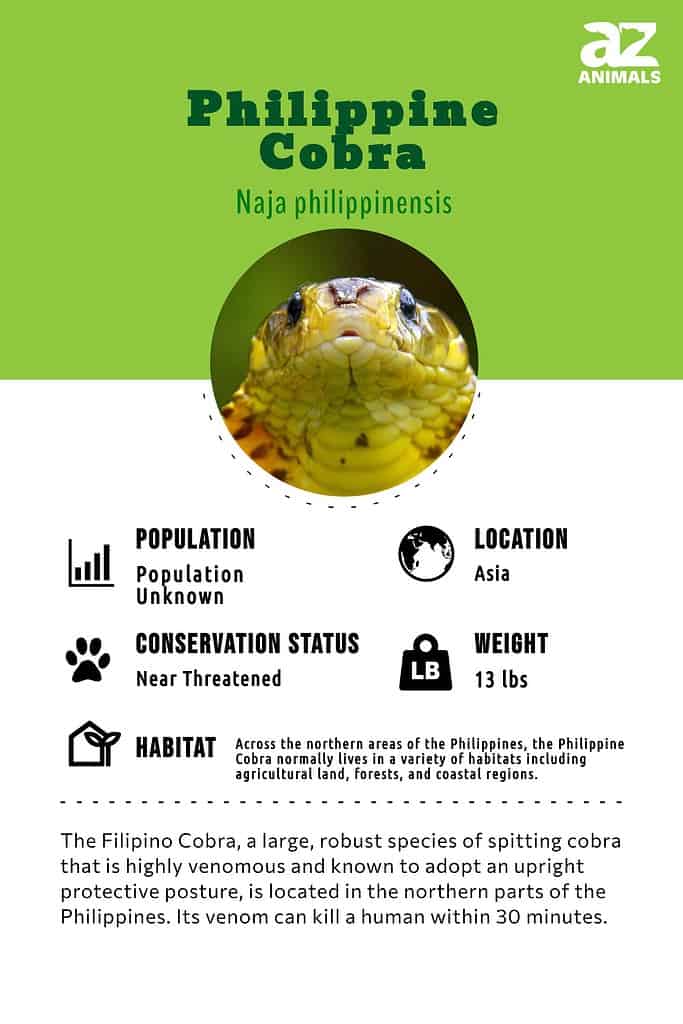
The worldwide population of Philippine cobras is one of the many unknown facts about the species. However, according to the IUCN, this cobra is Near Threatened, and their species is decreasing steadily.

Appearance and Description
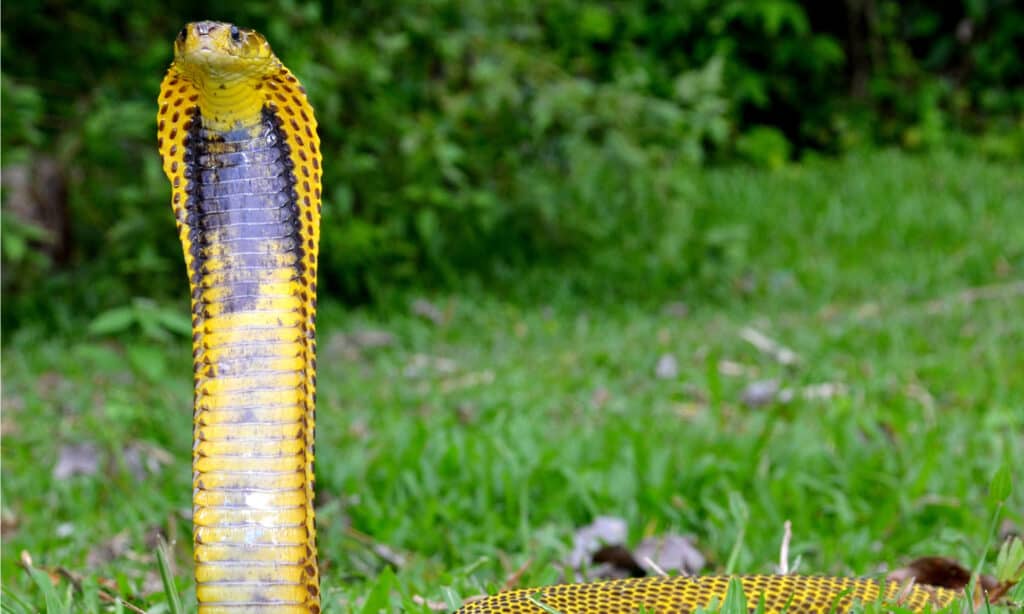
Samar cobra, a snake similar to the Philippine Cobra. The Philippine Cobra has a body that is light brown in color, decorated with dark brown blotches all over.

Samar cobra, is a snake similar to the Philippine Cobra. The Philippine Cobra has a light brown body, decorated with dark brown blotches all over.

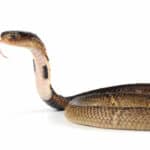
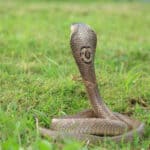
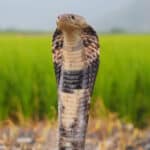
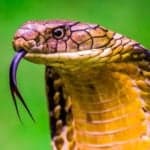
Ranging from 3.3 feet to over 5 feet long in size, the spitting Philippine cobra is a medium-sized snake. With a subtle change from the head to the neck, it has dark brown round eyes, and it is rather stocky. The body is light brown in color, decorated with dark brown blotches all over. This is much different than the southern Philippine cobra, which is bright yellow and black.

How to identify Philippine cobras:

  • Up to 5 feet long in total size.
  • Light brown body with dark brown blotches.
  • Slimmer neck with broader head.

Venom: How Dangerous Are They?
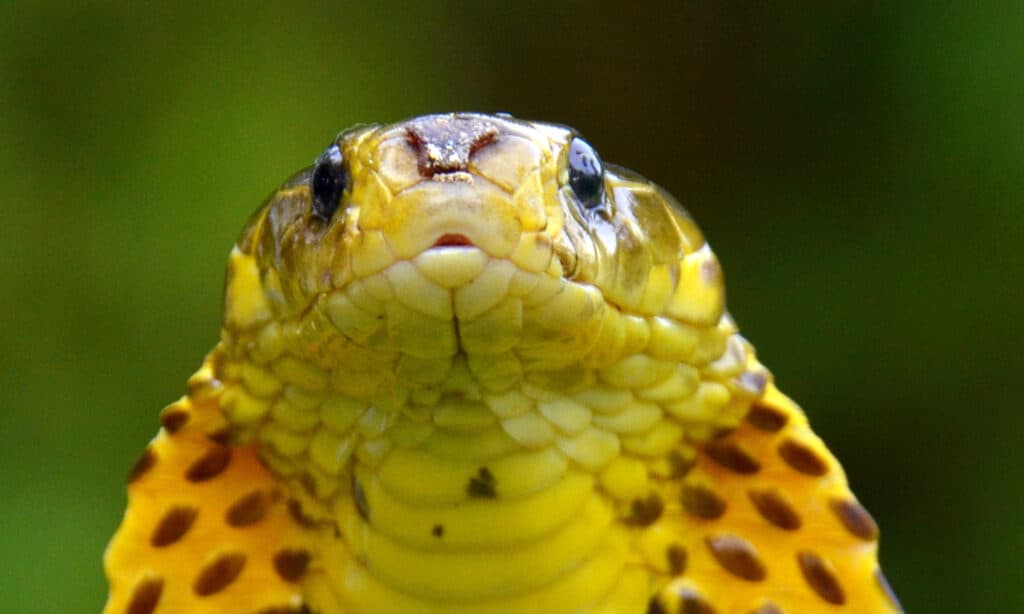
Samar cobra, Naja samarensis, an endemic cobra from Philippines. This is a snake similar to the Philippine Cobra. The Philippine Cobra has dark brown round eyes, and it is rather stocky.

Samar cobra, Naja samarensis, an endemic cobra from Philippines. This is a snake similar to the Philippine Cobra. The Philippine Cobra has dark brown round eyes, and it is rather stocky.

Part of the reason that the Philippine cobra is so dangerous is the venom that it releases. This venom can impact your respiratory function, causing paralysis as it stops the nerve signals from getting to the muscles. The venom is exclusively a neurotoxin, but you don’t have to even be bitten to suffer the consequences. This cobra is capable of spitting their venom nearly 10 feet away.

If a Philippine Cobra bites you, you’ll quickly feel nausea, start to vomit, experience pain, and more. It is important to seek out medical attention quickly because not being treated could lead to death as quickly as 30 minutes after the bite. Even though the actual risk of fatality depends on the particular snake, you need to seek medical attention as soon as the bite happens.

Behavior and Humans

Due to their highly toxic venom, Philippine cobras are dangerous to humans, but they don’t go out of the way to be aggressive. They only become aggressive with humans if they are provoked by threats or by being handled. They are not friendly, and they should not be kept as pets.

Similar Animals

View all 246 animals that start with P

Sources

  1. Wikipedia / Accessed May 9, 2022
  2. Pets on Mom / Accessed May 9, 2022
  3. Owlcation / Accessed May 9, 2022
  4. Kidadl / Accessed May 9, 2022
Rebecca Bales

About the Author

Rebecca Bales

Rebecca is an experienced Professional Freelancer with nearly a decade of expertise in writing SEO Content, Digital Illustrations, and Graphic Design. When not engrossed in her creative endeavors, Rebecca dedicates her time to cycling and filming her nature adventures. When not focused on her passion for creating and crafting optimized materials, she harbors a deep fascination and love for cats, jumping spiders, and pet rats.
Connect:

Thank you for reading! Have some feedback for us?


Philippine Cobra FAQs (Frequently Asked Questions)

These snakes are primarily active during the day for hunting, tasting the air with their tongue to locate potential prey.