


Quick Take
- Spider monkeys have almost no thumbs, yet they grip, swing, and navigate forest canopies better than most primates. How is this possible? See how they grip →
- Their social structure flips the norm, with the sex that usually leaves the group being the one that stays. The reason for this reveals something unexpected about loyalty and kinship. Explore their social structure →
- Their scientific name literally means 'incomplete', and the reason why is surprisingly revealing about their anatomy. Unpack the name →
- Five of seven species are endangered, yet one species stands apart from the rest in a way that may surprise you. See the seven species →
With its long limbs and tail, this species leaps and bounds from one branch to another in a graceful display of aerial control. It is intelligent, caring, and agile, but also loud and aggressive. Because of hunting and habitat loss, the entire genus faces the specter of extinction. Considerable effort has gone into preserving the last of the spider monkey populations.

3 Spider Monkey Facts
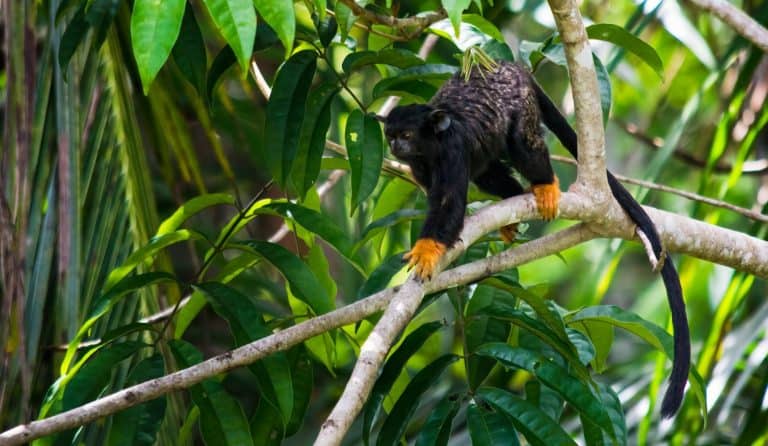
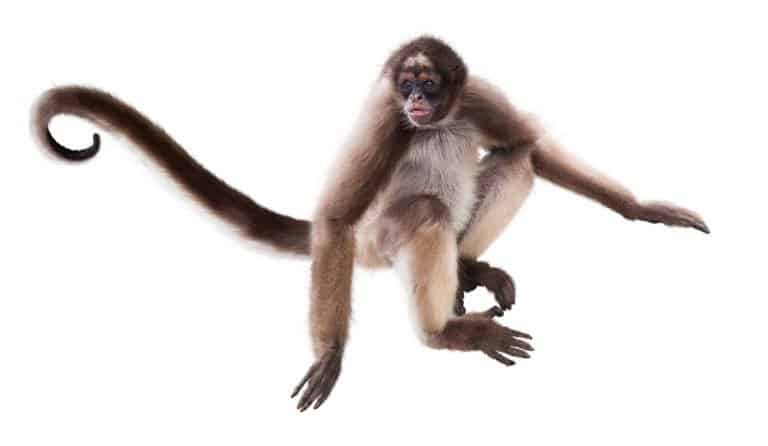
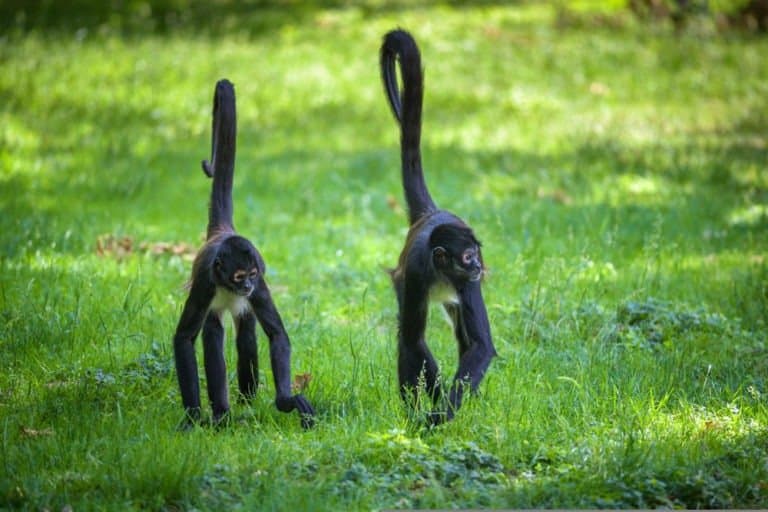
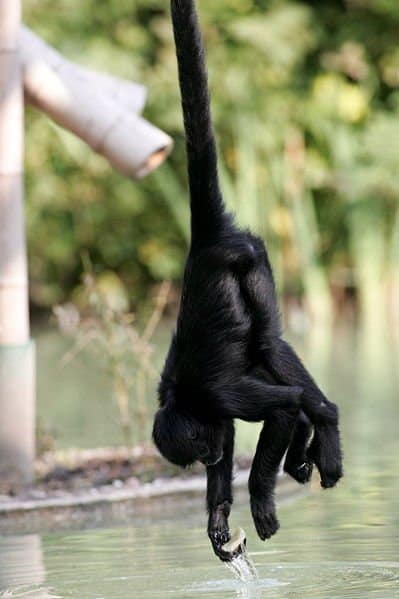
- Although they normally walk on all four legs, spider monkeys have adapted heavily to an arboreal lifestyle. Their movement between trees is a true spectacle. They do not climb carefully up and down trees. Instead, they leap or drop from one tree to another.
- Their prehensile tails have small, hairless tips and grooves that are kind of like fingerprints.
- Spider monkeys breed well in captivity. Many zoos and conservation organizations have their own breeding programs to keep this animal alive.
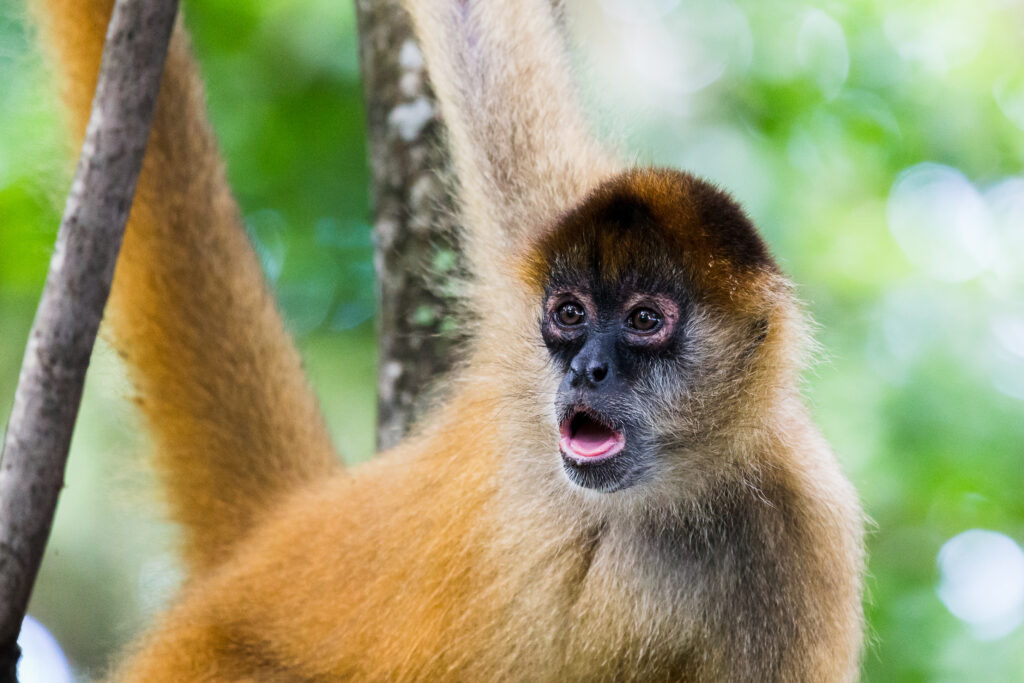
Spider monkeys are adept at leaping or dropping from one tree to another.
©Jason Wells/Shutterstock.com
Evolution and History
The spider monkey’s ancestors are believed to be species alive during the Pleistocene Epoch. Fossils dating back millions of years reveal that they were present in Cuba and Spain.
There are different theories about how spider monkeys evolved, with some believing they are most closely related to woolly spider monkeys (Brachyteles) and that their unique musculoskeletal system was developed after departing from populations of woolly monkeys (Lagothrix) in South America. However, this theory has not been supported by fossil evidence.
Recent molecular evidence supports a theory that during the middle to late Miocene Epoch, New World monkeys in the family Atelidae separated into three lineages: spider monkeys, woolly spider monkeys, and woolly monkeys.
The evolutionary path of spider monkeys is difficult to trace because fossil evidence is inconclusive; for example, the shape and size of their dental elements may reflect their diet rather than evolutionary adaptation.
Classification and Scientific Name
This primate belongs to a genus of animals that goes by the scientific name Ateles. This word roughly translates to “incomplete” in Greek, referring to the monkey’s reduced or incomplete thumbs.
The spider monkey genus belongs to the family Atelidae, which also includes howler monkeys and woolly monkeys. This is the only family of primates in the world with full prehensile tails.
Woolly, howler, and spider monkeys are just a few animals that make up the group known as the New World monkeys. As the name implies, these monkeys evolved and flourished in the New World of the Americas. Compared to the Old World monkeys of Asia and Africa, they tend to be smaller, have flatter noses, and a different skeletal structure. The New World and Old World monkeys last shared a common ancestor some 40 million years ago, when their evolutionary lineages split apart, going their separate ways.
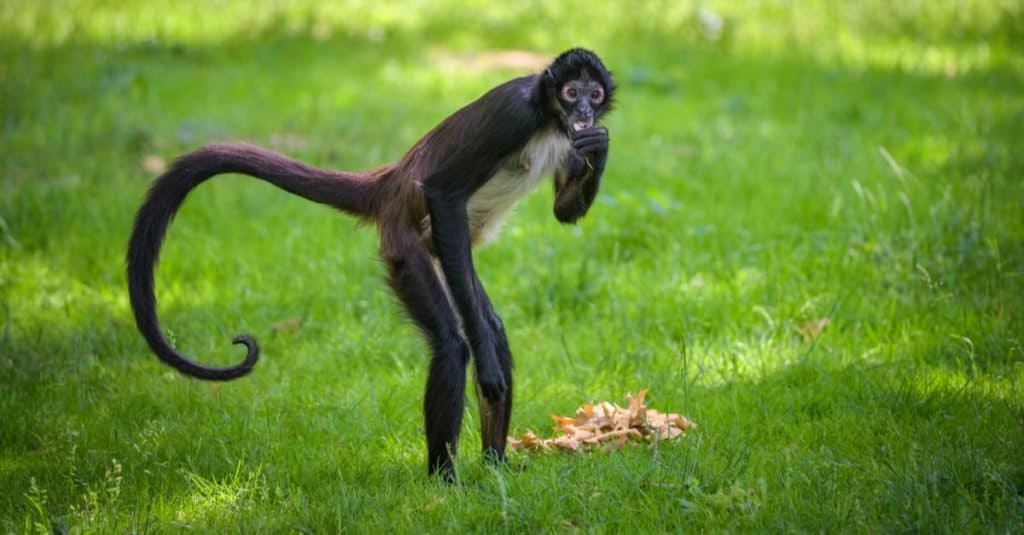
Spider monkeys belong to the world’s only family of primates with full prehensile tails.
©Nick Fox/Shutterstock.com
7 Types of Spider Monkeys
While scientists hold differing beliefs about the exact number and designations of subspecies of spider monkeys, it’s generally understood that this genus contains seven living species, most of which are named for their color or country of origin, and seven subspecies.
- Red-faced spider monkey (Ateles paniscus): Also known as the Guiana spider monkey or red-faced black spider monkey, this species lives in the rainforests in northern Brazil, Suriname, Guyana, French Guiana, and Venezuela. It is under threat from hunting and habitat loss and is classified as Vulnerable on the IUCN Redlist.
- White-fronted spider monkey (Ateles belzebuth): Found in the north-western Amazon in Colombia, Ecuador, Venezuela, Peru, and Brazil, this endangered species is also called the white-fronted or long-haired spider monkey. The Peruvian, brown, and white-cheeked spider monkeys used to be considered subspecies of this monkey but are now classed as different species.
- Peruvian spider monkey (Ateles chamek): As its name indicates, this species, which also goes by the black-faced black spider monkey, lives in Peru, as well as in Brazil and Bolivia, and its main habitat is lowland forests, occupying the canopy and sub-canopy.
- Brown spider monkey (Ateles hybridus): This critically endangered species is notable for its pale blue eyes, an unusual color for spider monkeys. Also known as the variegated spider monkey, it makes its home in forests in Colombia and Venezuela. While some scientists identify this monkey as having two subspecies (Ateles hybridus hybridus and Ateles hybridus brunneus), molecular studies have not supported this and therefore do not recognize any subspecies.
- White-cheeked spider monkey (Ateles marginatus): Found in the Brazilian Amazon, this species has been classified as endangered due to its population declining from habitat loss caused in part by the expansion of soybean agriculture in the region. Some of the indigenous peoples think of this spider monkey as a delicacy, so it also faces the threat of being hunted for food.
- Geoffroy’s spider monkey (Ateles geoffroyi): There are at least five subspecies of this monkey, also known as the black-handed spider monkey and Central American spider monkey. Populations are located in Panama, Costa Rica, Nicaragua, Guatemala, Honduras, El Salvador, Belize, and Mexico. It is endangered due to habitat loss, hunting, and being caught to be sold as pets.
- Black-headed spider monkey (Ateles fusciceps): Some primatologists believe this monkey is a subspecies of Geoffroy’s spider monkey, while others disagree. Present in Colombia, Ecuador, and Panama, it has two subspecies and is listed as endangered due to hunting and habitat loss.
Geoffroy’s spider monkey has five subspecies:
- Hooded spider monkey (Ateles geoffroyi grisescens): Native to Panama and possibly found in a small area of Colombia, this monkey has long, tawny fur.
- Mexican spider monkey (Ateles geoffroyi vellerosus): This endangered subspecies is native to Mexico, Guatemala, Honduras, Nicaragua, and El Salvador.
- Yucatan spider monkey (Ateles geoffroyi yucatanensis): This monkey’s status as a subspecies of Geoffroy’s spider monkey is under dispute, and some classify it as a junior synonym of the Mexican spider monkey. Also called by its Mayan name “Ma’ax,” deforestation of its habitats in Mexico, Guatemala, Belize, El Salvador, and Honduras — driven by livestock farming, palm oil development, and mining — has led to the decline and fragmentation of its population.
- Nicaraguan spider monkey (Ateles geoffroyi geoffroyi): This monkey makes its home in Nicaragua and neighboring regions of Costa Rica, including the Guanacaste peninsula, and is thought by some to be a separate subspecies.
- Ornate spider monkey (Ateles geoffroyi ornatus): Also called the brilliant spider monkey, common spider monkey, and red spider monkey. Other names for this monkey include Panama spider ape and Azuero spider monkey, which were once considered distinct subspecies.
The black-headed spider monkey has two subspecies:
- Brown-headed spider monkey (Ateles fusciceps fusciceps): This monkey can be found in Ecuador’s tropical and subtropical humid forests, 330 to 5,580 feet above sea level. Scientists who do not classify the black-headed spider monkey as a separate species think of this monkey and the Colombian spider monkey as subspecies of Geoffroy’s spider monkey.
- Colombian spider monkey (Ateles fusciceps rufiventris): This monkey can be identified by its coloring, being wholly black with some white on its chin. Its habitats are forests, humid forests, and cloud forests up to 6,600 to 8,200 feet above sea level.
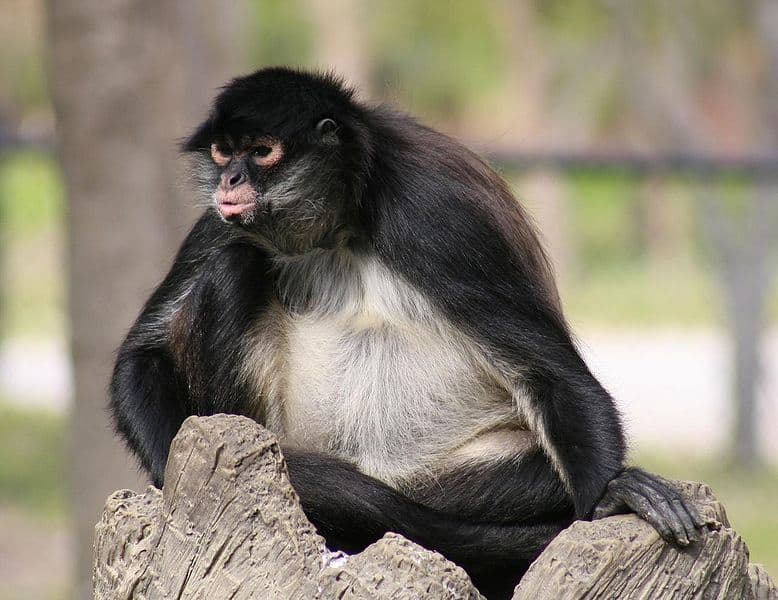
The Mexican spider monkey is a subspecies of Geoffroy’s spider monkey.
Appearance
These animals are among the largest of the otherwise small New World monkeys, with a weight anywhere between 13 and 24 pounds. This is about the weight of a small domesticated dog but with a much longer tail. Males tend to be slightly larger than the females overall.
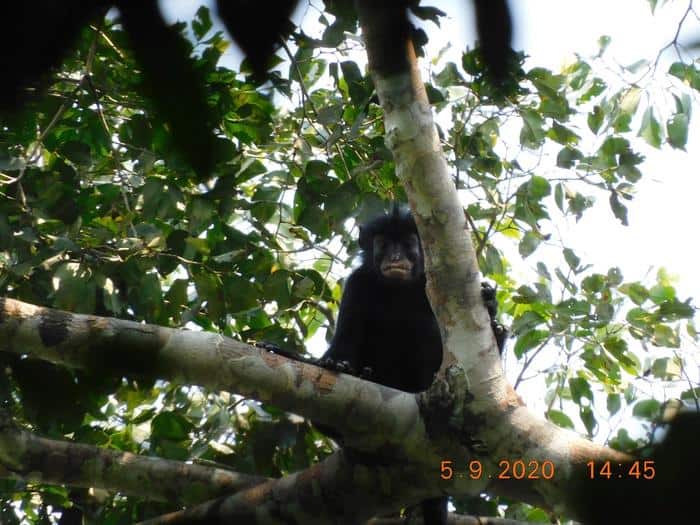
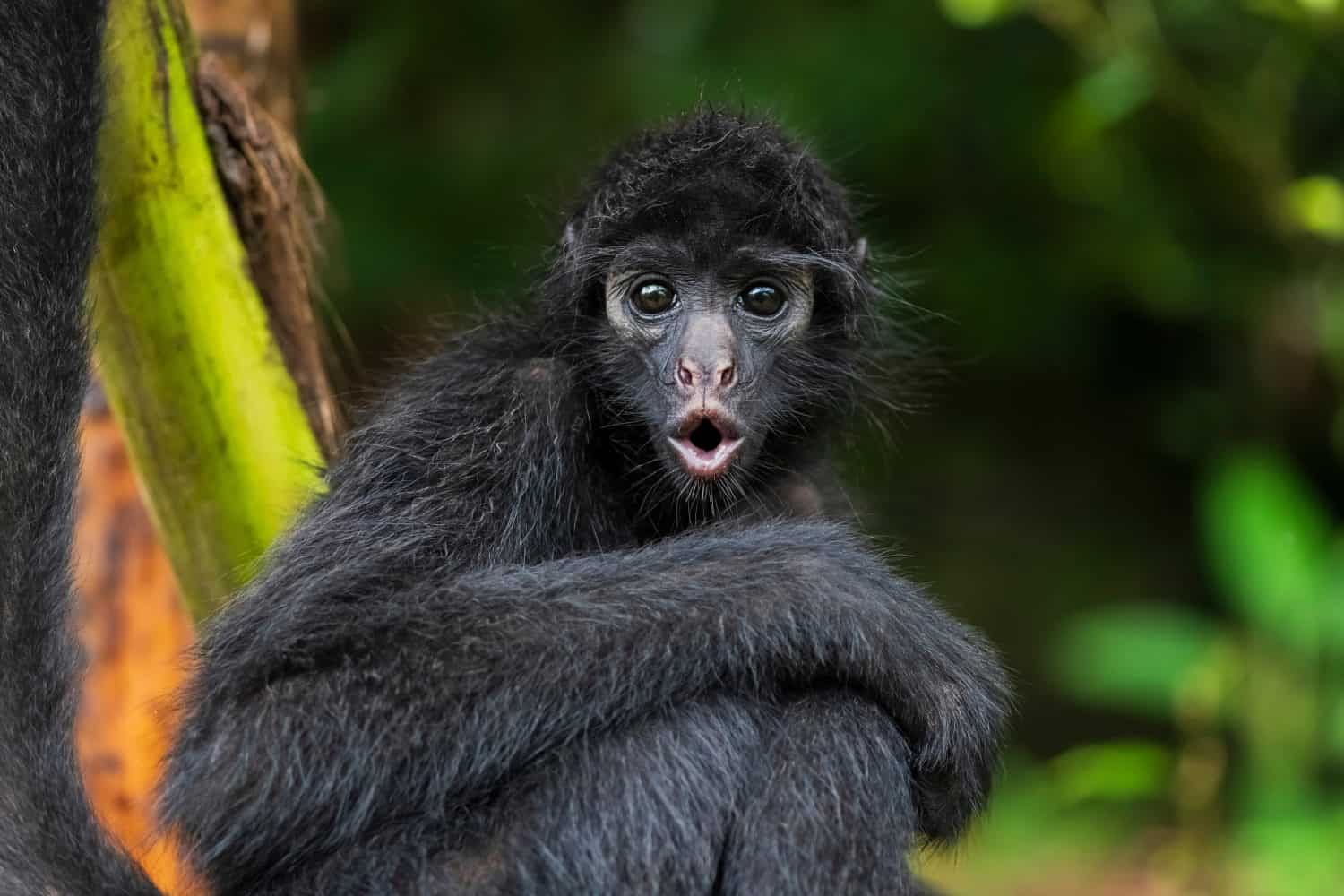
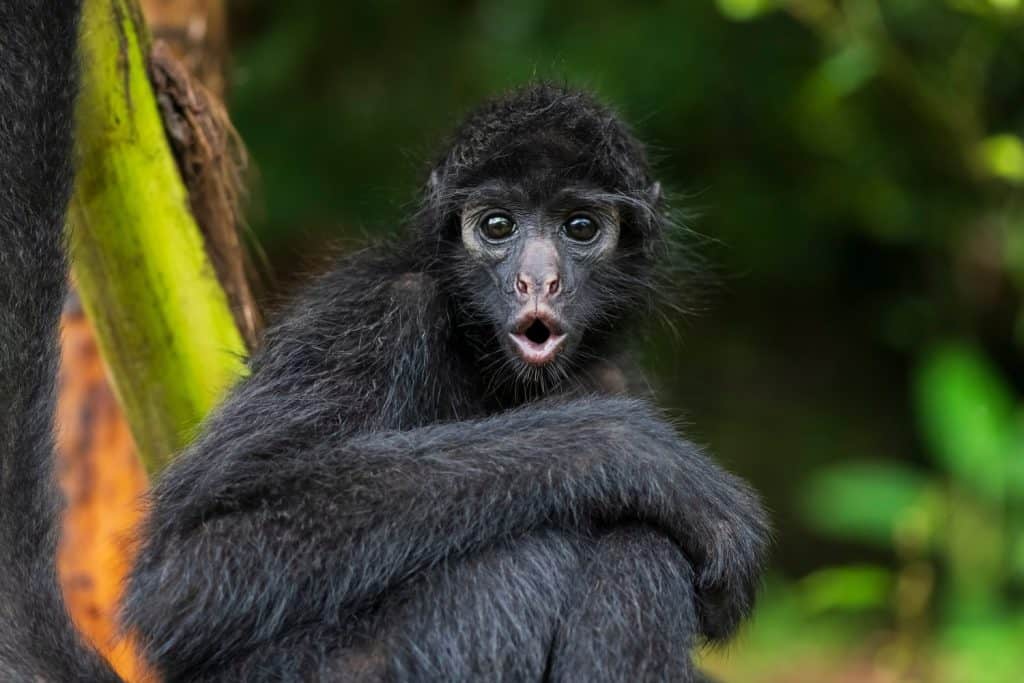
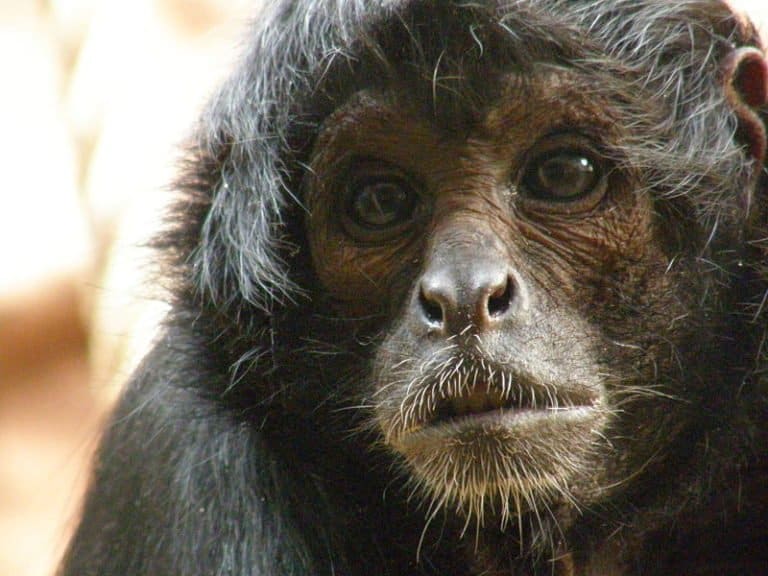
Other important features of the spider monkey include the incredibly long arms, the flat nose, eye rings, and the rough hair, which is usually a combination of black, white, brown, or tan.
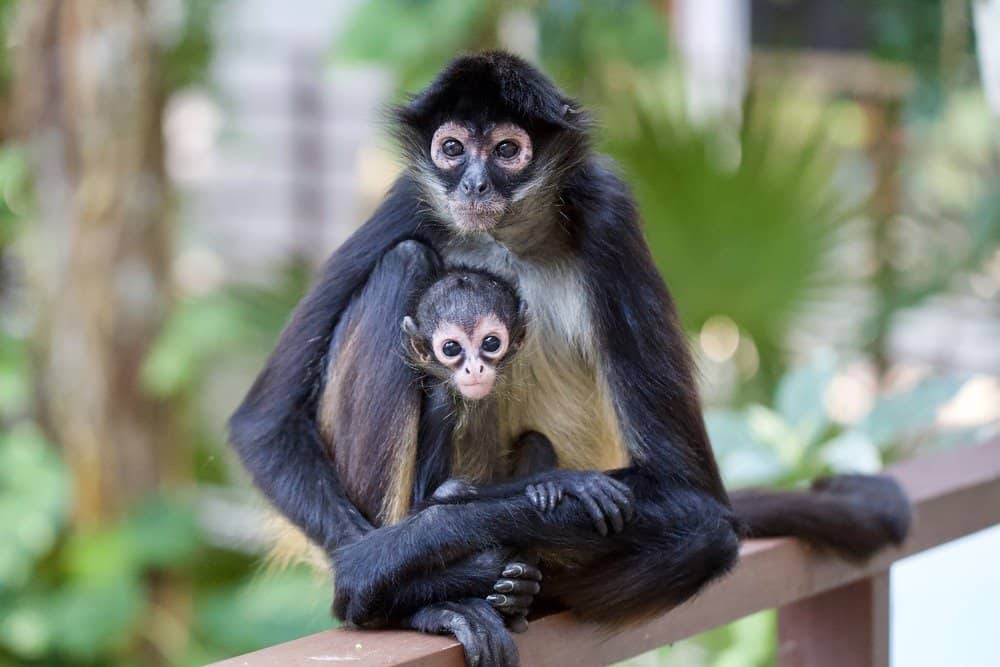
Spider monkeys are recognizable for their flat noses, eye rings, and rough hair.
©StanBullett/Shutterstock.com
Spider Monkey Prehensile Tail
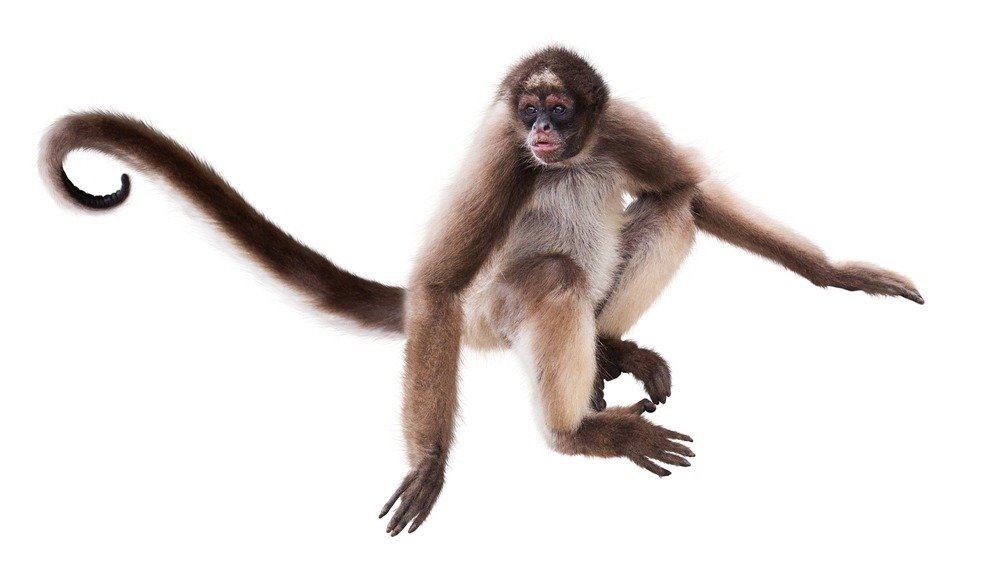
One of the most prominent and important characteristics of this primate is the massive prehensile tail. Despite (or even because of) the nearly non-existent thumbs, the tail provides the main means through which it can cling to branches and grab objects. The tail itself is much larger than the body, reaching between 20 and 40 inches. By comparison, the body stretches about 14 to 26 inches from head to rump.
©BearFotos/Shutterstock.com
Behavior
These creatures are highly social animals that gather together into large troops of somewhat related individuals. These troops tend to be small, but gatherings of around 50 monkeys have been observed. These troops break up into smaller groups throughout the day to forage and sleep, especially when food is scarce, but they are usually close enough within reach to aid each other against threats. Feeding typically starts in the morning hours and continues throughout the day, while they sleep in trees during the night. The troop doesn’t appear to have a definitive structure, but it is believed that a single female plans out the group feeding activities for the day.
Males tend to stay with one group their entire lives, while females leave the group to seek new groups elsewhere. Since many of these male monkeys are related to each other, the bond between them is particularly strong, while the bond between females is comparatively weaker. This is the opposite of many monkey species, in which the female typically stays with the group permanently.
To communicate with each other, these primates have a massive range of vocalizations, including barks, howls, screams, and a kind of whinnying noise that resembles a horse. This is combined with all manner of different postures and facial expressions. For example, spider monkeys make a fierce display of aggression that’s designed to scare off threats and intruders. They do this by shaking the branches with their legs and emitting a screeching sound. A lot of this is just bluster, however, because it’s not backed up by real force. If this gambit doesn’t work, then the troop may split up and run away to divert the attention of the predator.
Grooming, usually an important aspect of primate social behavior, is less critical to spider monkey behavior, possibly due to the reduced thumbs. Instead, they scratch themselves with their hands and feet to remove dirt and parasites.
It is believed that these creatures are among the most intelligent of the New World monkeys. Their brains are larger than those of the closely related howler monkey, at least among monkeys of a similar size. This intelligence may help them with social interactions and foraging behavior. By remembering the exact locations of the many different fruits they regularly consume, they greatly improve their survival odds in the wild.
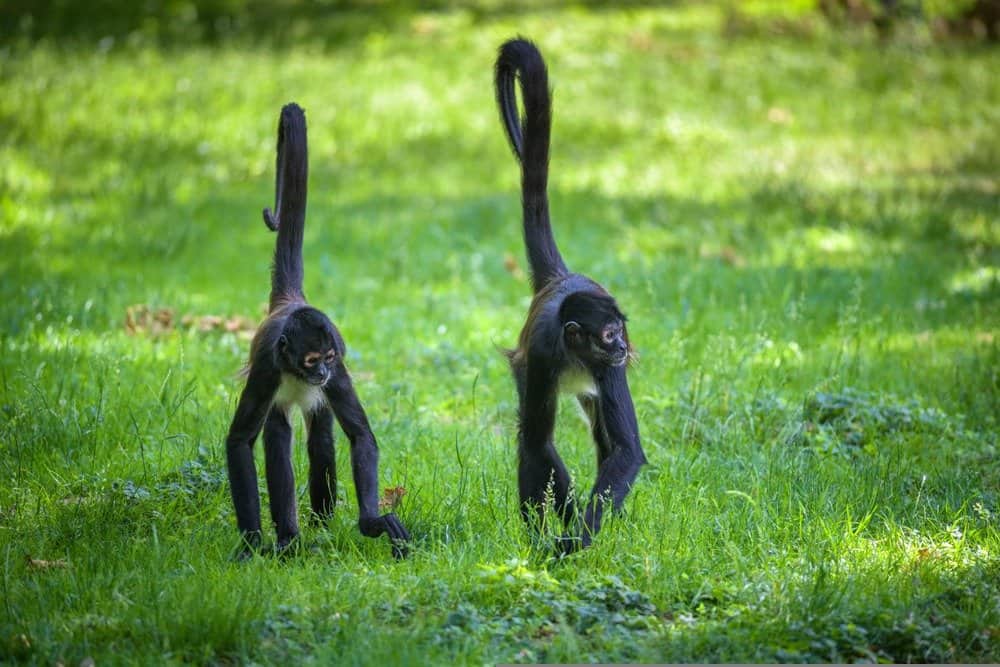
Spider monkeys are highly social animals.
©Nick Fox/Shutterstock.com
Habitat
These primates occupy a large stretch of land between the Amazon rainforest, Central America, and parts of Mexico. Most of the seven species of spider monkeys are largely concentrated in Brazil, Colombia, Venezuela, and bits of Peru. Geoffroy’s spider monkey is the northernmost species, appearing all the way up the coast of central Mexico. Each species generally prefers to reside in the middle layers of rainforests and other woodlands, often near rivers and streams.
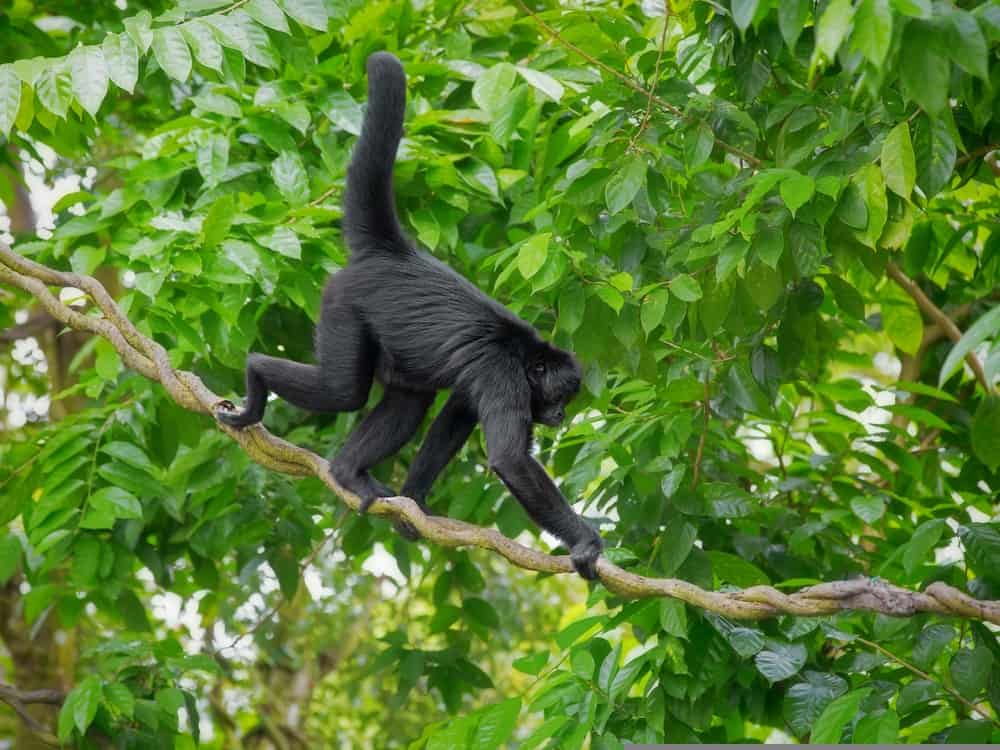
Spider monkeys typically live in rainforests and other woodlands.
©Kjersti Joergensen/Shutterstock.com
Diet
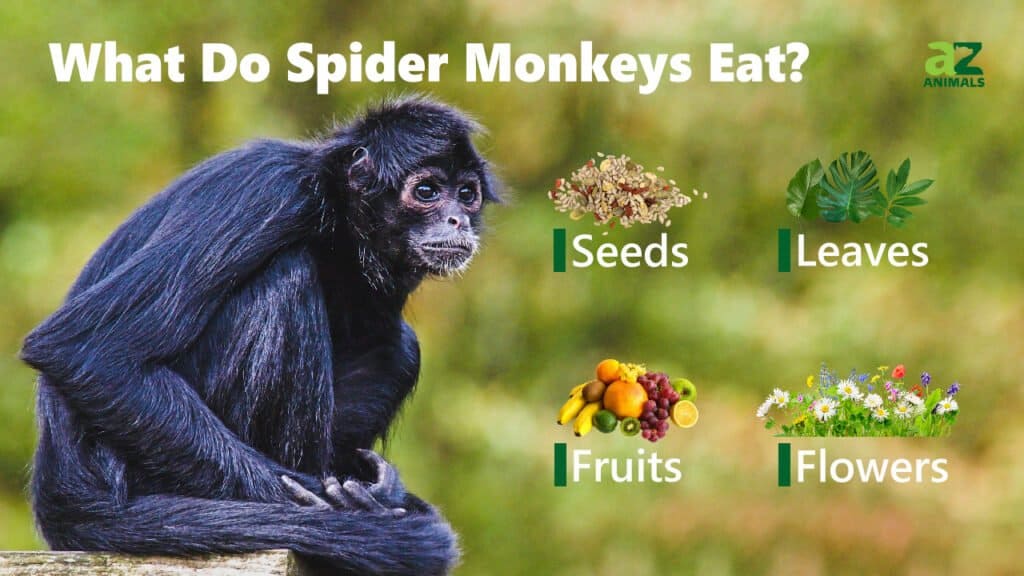
The diet of these creatures consists primarily of fruits, nuts, and flowers. This is supplemented with the meat of spiders and insects. The spider monkey will spend a great deal of the day foraging in small groups. It will pick through the trees, looking for hidden morsels. Some monkeys may eat fruits from more than 100 different species of plants over their lives.
Predators and Threats
The main predators are pumas, jaguars, snakes, and the occasional eagle. The arboreal lifestyle offers a degree of protection against predators, but some of these animals are adept at climbing trees, and birds of prey can sometimes catch an unaware spider monkey from above. If it wanders down to the forest floor, then the spider monkey is far more vulnerable to predation. It has few natural defenses except for its climbing ability.
These creatures have traditionally been hunted as a source of food. Their raucous behavior often makes them easy to find in the dense forests. But habitat loss from logging and agriculture is the main threat endangering what remains of the spider monkey populations. This has wiped out much of the natural forests on which it relies, fragmenting the remaining populations. The spider monkey is also vulnerable to several diseases. The degree to which the spider monkey is susceptible to malaria has made it a valuable subject for human medical researchers.
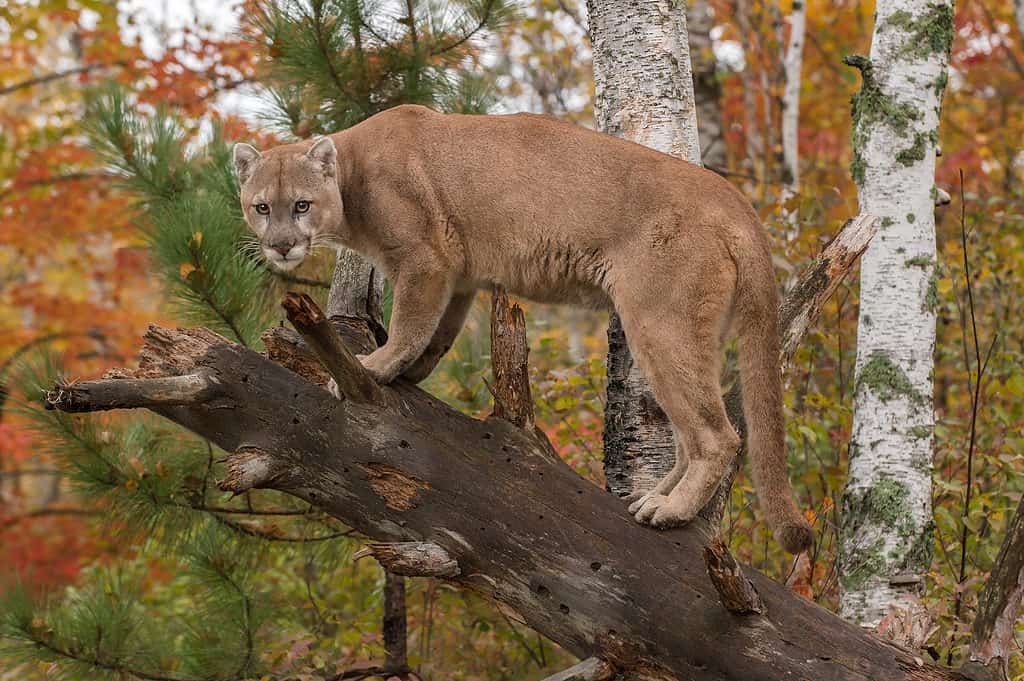
One of the spider monkey’s predators is the puma, which can hunt them in trees due to their climbing abilities.
©Geoffrey Kuchera/Shutterstock.com
Reproduction, Babies, and Lifespan
This animal has a breeding season that lasts all year round. The female monkey has wide latitude to choose which male she wants to mate with. However, males can be quite aggressive, sometimes killing the unrelated offspring of a female they are currently mating with.
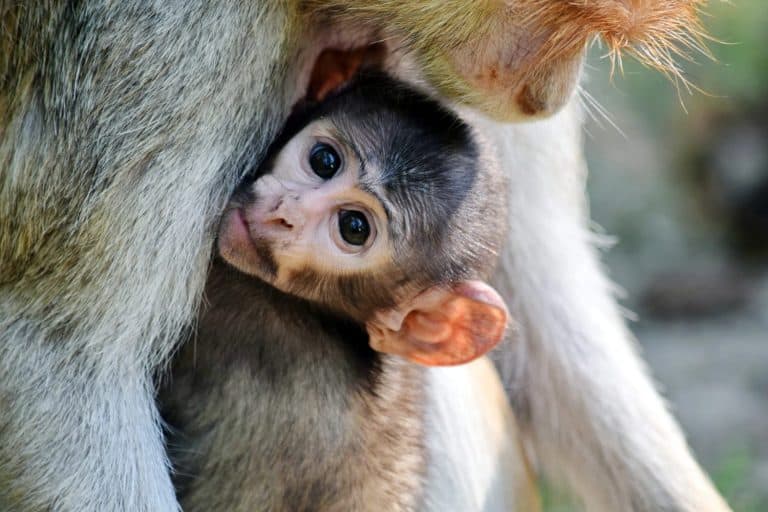
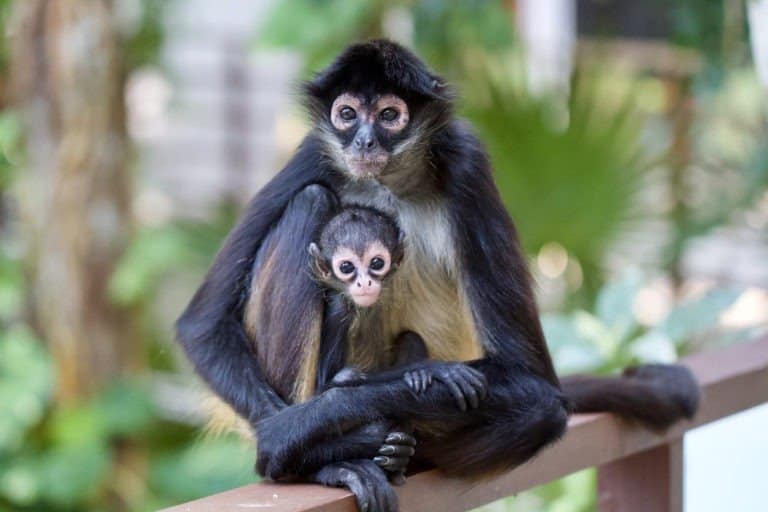
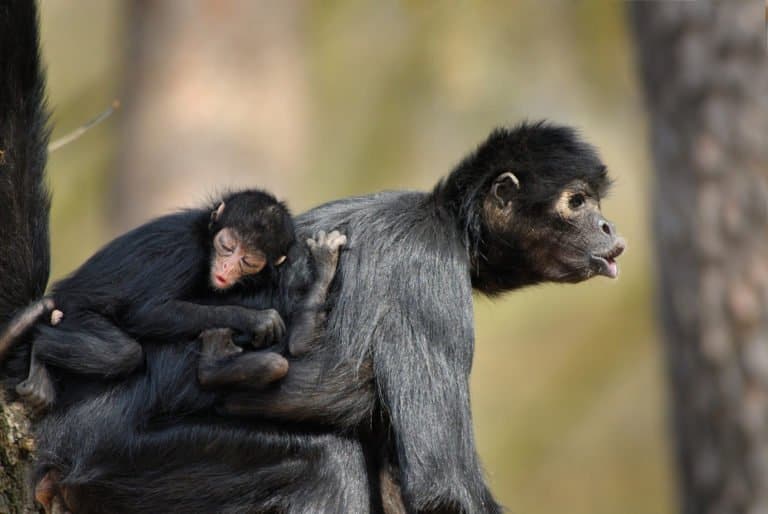
The mother will carry the unborn baby for a gestation period of up to 232 days. Upon giving birth, she will often isolate herself from the rest of the troop. Because this birth and development process is quite taxing on the mother, she will produce only a single baby about every two to five years. Rarely will she produce twins. The baby monkey will rely on the mother for nursing and protection for about a year after birth. She alone is responsible for the care of her offspring and does not receive any help from the other males and females of the troop. The child will cling to her back and wrap its tail around her own tail or body for protection while she is foraging.
Because of the extra development time needed to learn social cues and other valuable information, this animal has a relatively long maturity time. It will not begin breeding until about five years of age. The typical lifespan of the spider monkey is 20 to 27 years. In captivity, where they are largely free from the pressure of predators, disease, and hunting, they can live up to 40 years.
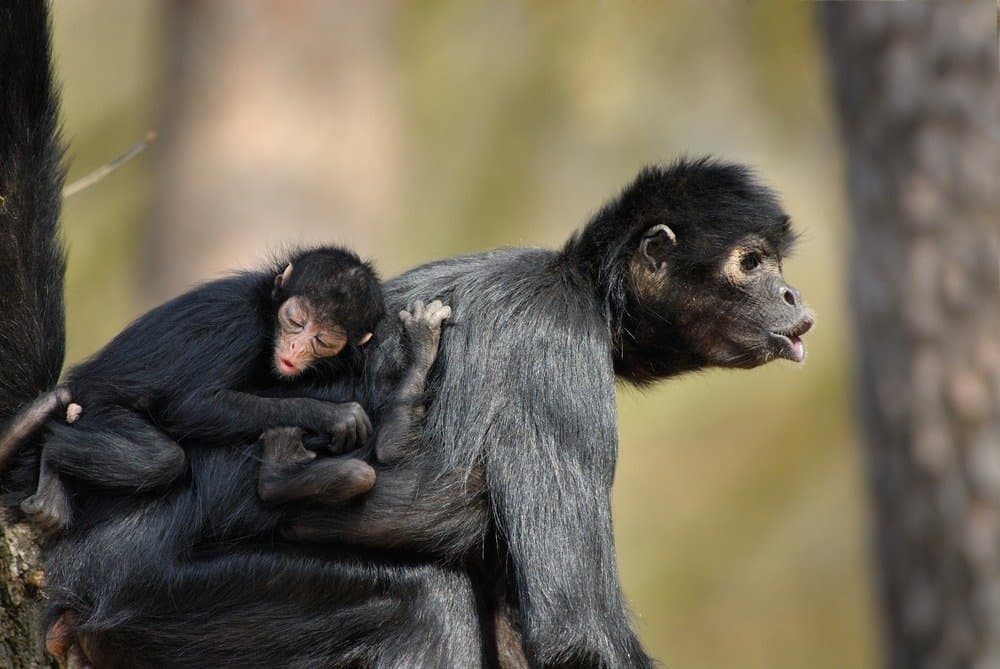
A baby monkey will depend on its mother for nursing and protection for around a year after it is born.
©Eric Gevaert/Shutterstock.com
Population
This primate species is among the most endangered and precarious groups of primates in the world. According to the IUCN Red List, which is perhaps the most comprehensive source for the conservation status of animals in the world, five of the seven species are endangered, while the brown spider monkey is critically endangered. The red-faced spider monkey is in relatively better health compared to the other species. It is only listed as vulnerable to extinction. It is not entirely clear how many mature individuals are left in the wild, but numbers appear to be in decline across the board. Protection of existing forests and reclamation of old habitats will be critical for their continued survival.
Spider Monkeys in Zoos
Because of their loud behavior and playful, energetic nature, these creatures are a popular exhibit in many zoos across the United States. Geoffroy’s black-handed spider monkey is a popular attraction at the Los Angeles Zoo and the St. Louis Zoo. Other species of spider monkeys can be found at the Alexandria Zoo in Louisiana, Connecticut’s Beardsley Zoo, the Central Florida Zoo and Botanical Gardens, Zoo Boise, the Nashville Zoo, the Little Rock Zoo in Arkansas, the Potter Park Zoo in Lansing, Michigan, and many others. Most of these zoos work with wildlife conservation organizations to preserve the spider monkey and rehabilitate numbers. This is helped by the fact that they are relatively easy to breed in captivity.
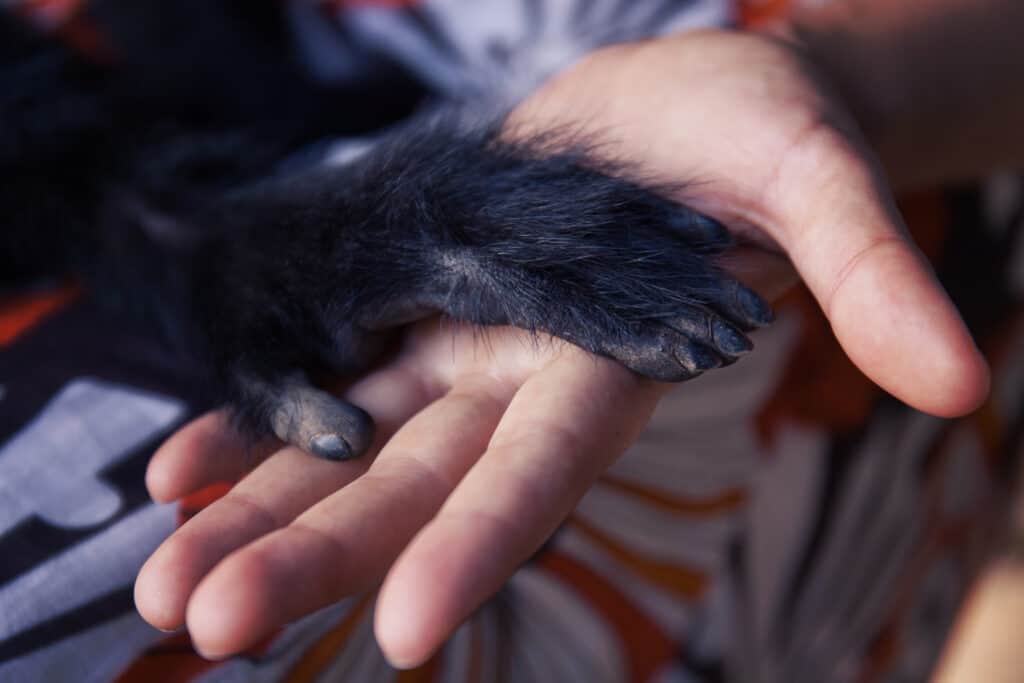
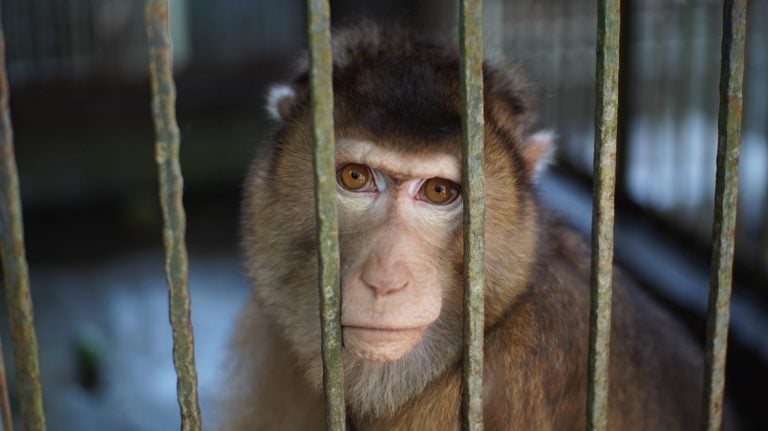
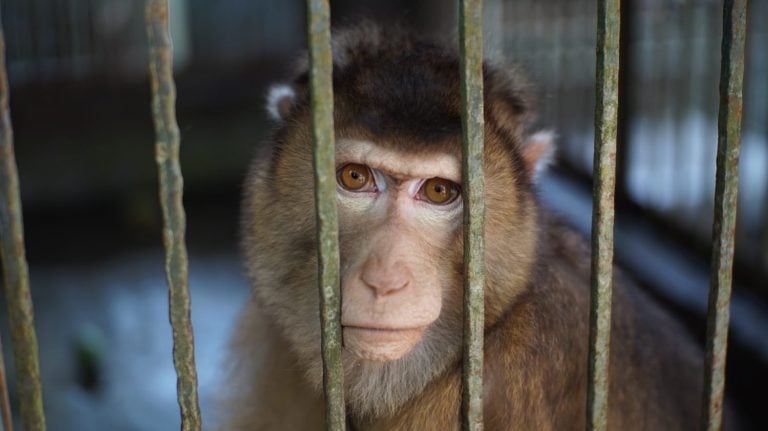
Many zoos work with wildlife conservation organizations to preserve the spider monkey population.
©iStock.com/alexandragl1
Spider Monkey Pictures
View all of our Spider Monkey pictures in the gallery.

StanBullett/Shutterstock.com
Sources
- Britannica / Accessed November 8, 2019
- National Geographic / Accessed November 8, 2019
- Thought Co. / Accessed November 8, 2019