

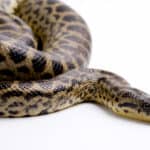
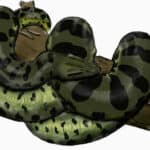
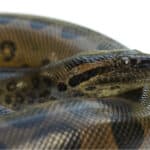
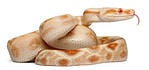
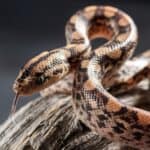
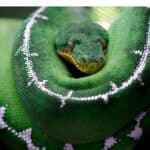
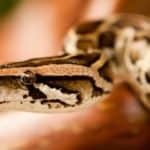
In 2002 herpetologists described a new species of anaconda: The Beni, or Bolivian anaconda.It only lives in a few places in Bolivia and scientists still don’t know much about it.
Amazing Facts About Bolivian Anacondas
- They were first discovered in 2002, and originally believed to be a hybrid between E. notaeus and E. murinus.
- Bolivian anacondas are rare and only found in Bolivia.
- Like other anacondas, this species gets aggressive when cornered.
Where Can You Find Bolivian Anacondas?
Bolivian anacondas are endemic to Bolivia, and live in the Beni, Santa Cruz, and Pando areas. There may be a small population in Brazil, but no one knows yet. Scientists are still in the early stages of studying this new species.
This species is still relatively new to science, and there isn’t much in the way of published research. Yet, a 2017 study did shed a bit of light on it. In the study, researchers captured and implanted nine Bolivian anacondas with radio transmitters. They followed the movements of these nine anacondas over the course of a year and were able to increase scientific knowledge of this rare anaconda in a couple of significant areas.
During the rainy season, these snakes moved around quite a bit but avoided the forested areas and rice fields. The researchers surmised that the rice field’s water was too shallow and the forest didn’t have enough water either. the Beni anacondas seemed to strongly prefer the swamps and patujusal (areas where Heliconia sp., or patujú, are prevalent) over any other habitat.
The snakes tended to not travel far during the dry season, preferring to stay close to a water source. They found some in the forest near a stream during the dry season.
Scientific Name of the Bolivian Anaconda
Anacondas fall under the genus name of Eunectes, which means “good swimmer” in Greek. Beniensis describes the area of Bolivia where scientists first discovered the species – Beni.
They are part of the Boidae family, and cousins to boa constrictors, rosy boas, and other Boidae family snakes. Like the other anacondas, the locals don’t call them anaconda; instead, they use the word sicurí in referring to this large snake.
Bolivian Anaconda Population and Conservation Status
In 2014, the IUCN assessed the Beni anaconda and found that it can be locally abundant, even though its range is very small. The species’ population isn’t known but appears to be stable. As a result, they included it in the Redlist as a “Least Concern” species.
Bolivia considers the Beni anaconda vulnerable due to its limited range and relative rarity.
Identifying Bolivian Anacondas: Appearance and Description
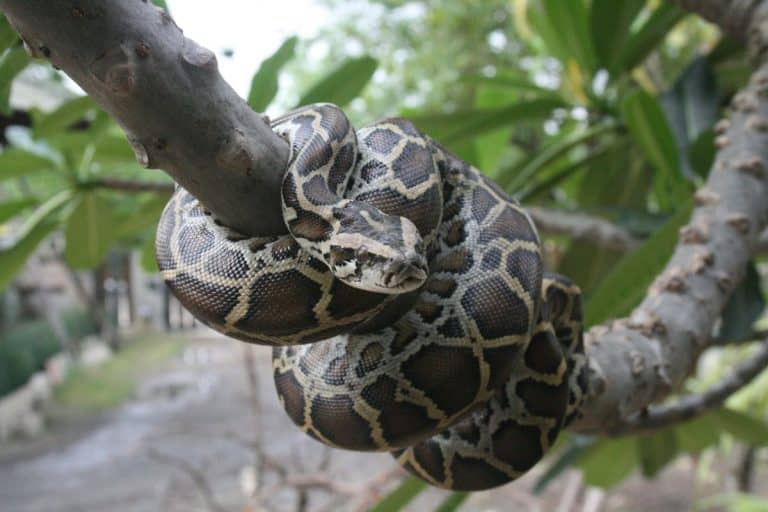
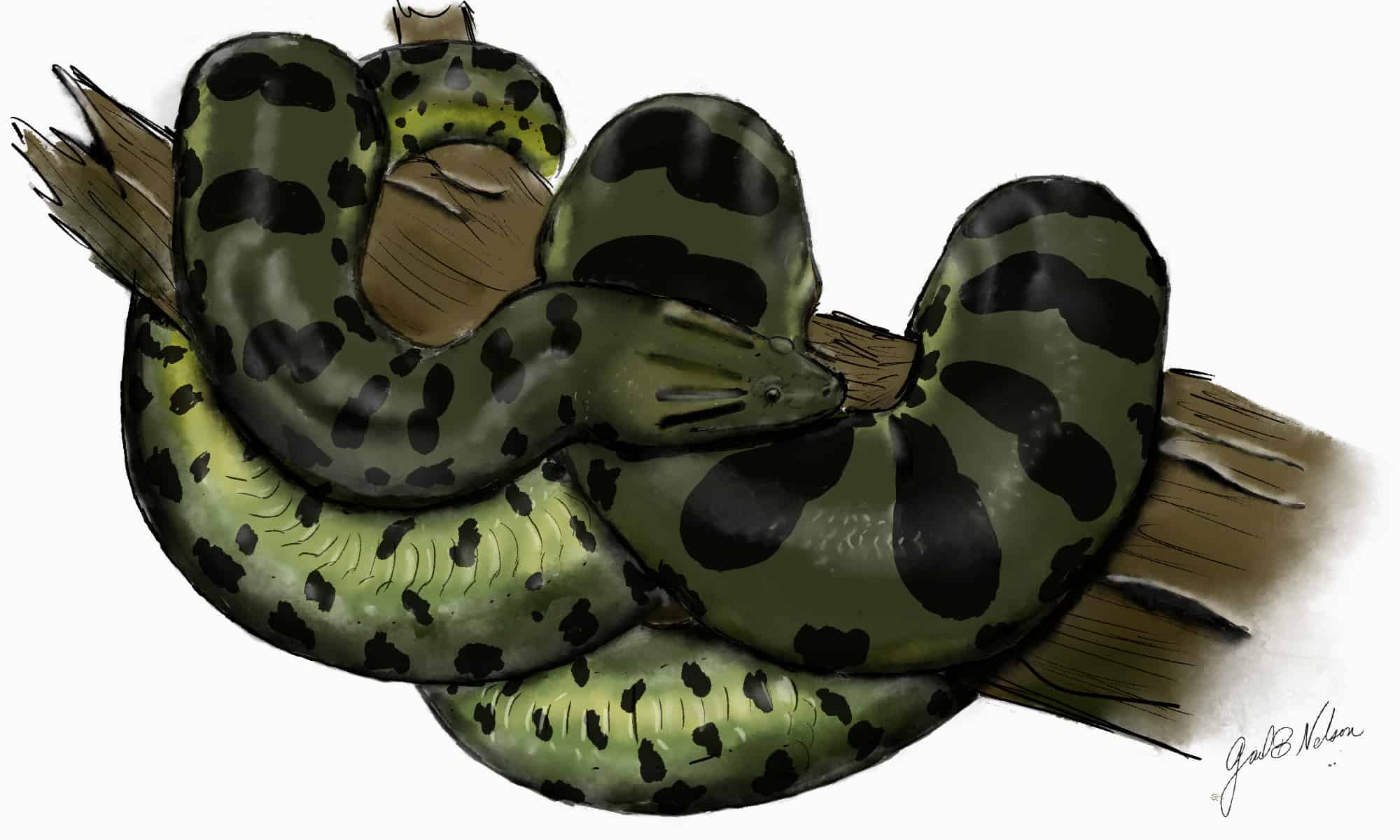
The Bolivian anaconda’s base color ranges from brown to olive-brown. Its side blotches are sometimes shaped like big rings, however, they are much larger in size and fewer in number than other anaconda species. Its dorsal spots are never lighter-colored in the middle.
Like other anacondas, it has a relatively small head in comparison with its thick, muscular body. Its eyes and nostrils are on the top of its head, and the Bolivian anaconda has five head stripes.
During the 2017 study, researchers observed that while the females they caught were bigger than the males, it wasn’t as stark a contrast as in other anaconda species. The females they tracked were only about 1.17 times bigger than the males. Whether or not these were fully grown females is unclear.
Of the snakes tracked, the biggest female was 8.9 feet long, weighing 28 pounds; the biggest male was 7.17 feet long, weighing in at 13.25 pounds. Even though their length wasn’t outrageously different, the females are obviously much heavier-bodied. This is most likely because the body mass required for carrying the babies until they’re born takes more body mass to support.
Scientists do not know much about its mating and reproductive behavior, and they want to do more research.
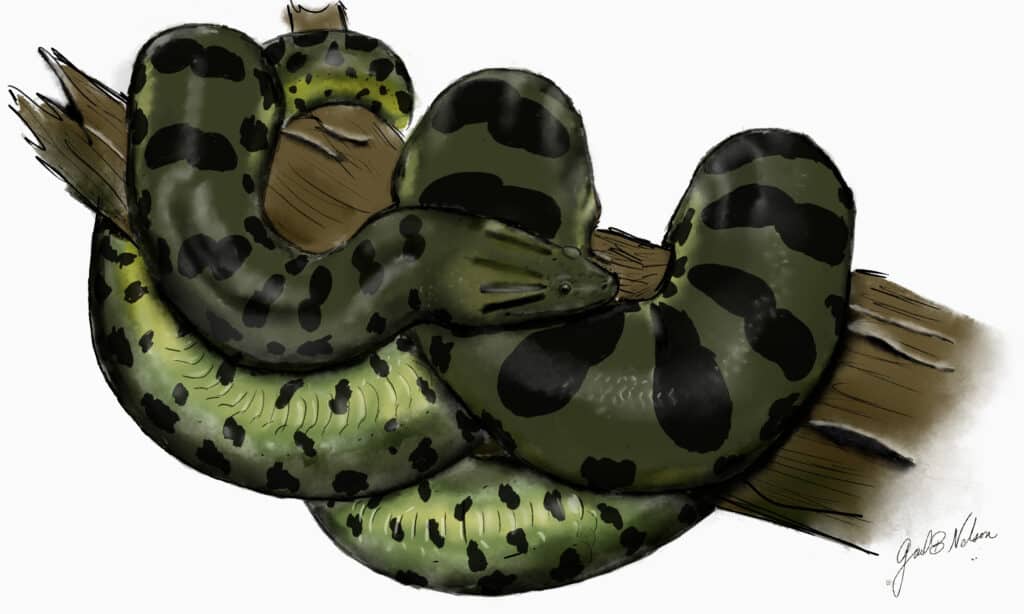
Bolivian anacondas hang out in trees, basking, and waiting for prey.
©©2022 Gail Baker Nelson
Pictures and Videos of Bolivian Anacondas
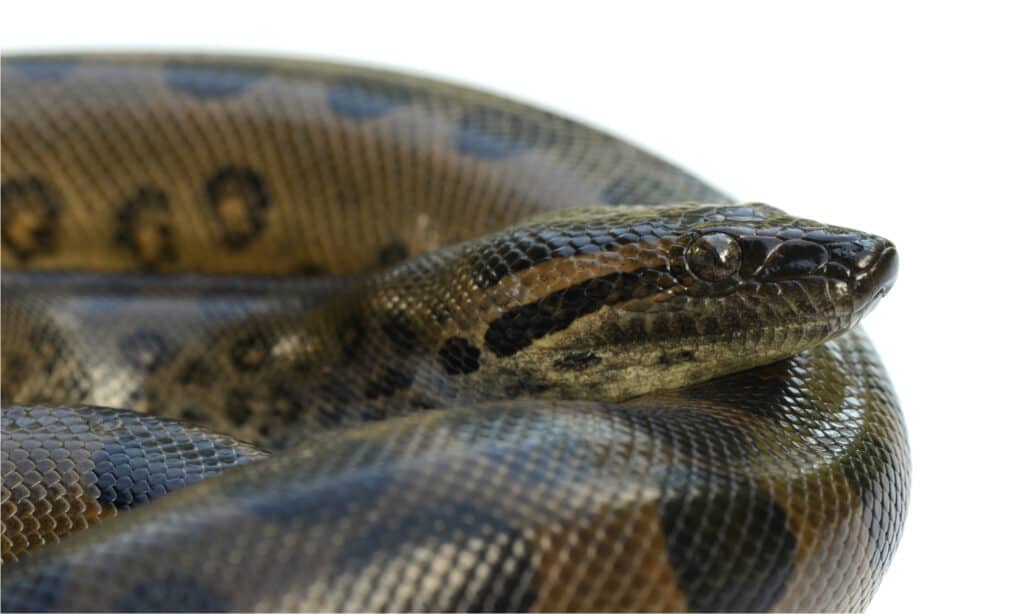
This green anaconda looks similar to a Beni anaconda, but only has three head stripes and its side spots have yellow centers.
©Patrick K. Campbell/Shutterstock.com
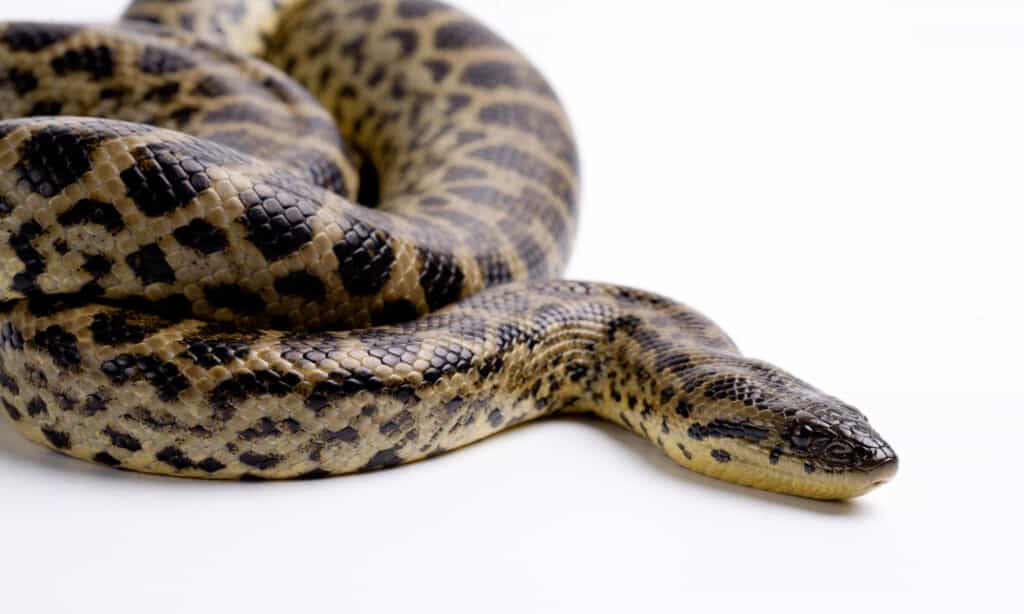
Bolivian and yellow anacondas are closely related, but the Bolivian is more olive-brown than the yellow anaconda.
©cellistka/Shutterstock.com
How Dangerous are Bolivian Anacondas?
Like other anacondas, they’re big and muscular. Their sheer size makes handling them alone a terrible idea; the researchers in the 2017 study noted that they never captured one alone. The researchers also made sure to keep the snakes’ heads immobile to prevent bites and keep them calmer.
While we don’t know a lot about the species, we can make a few educated guesses about them based on what we know about the other anaconda species.
- Anacondas in general are “bitey” and aggressive when cornered.
- They’re big and strong and use that strength to try to overpower threats and prey.
- The snakes are pretty shy and would rather avoid people entirely.
- They probably have similar mating habits to E. notaeus and E. deschauenseei, the two most similar species to the Beni anaconda.
Bolivian Anacondas Behavior and Humans
This species is relatively rare, although it can be abundant in pockets. Most of them try to avoid people, but as with all anaconda species the people they live near often kill larger specimens out of fear. While we need to do more research on this new species,
Sources
- Reptile Database / Accessed April 25, 2022
- De la Quintana, P., Rivas, J. A., Valdivia, F., & Pacheco, L. F. (2017). Home range and habitat use of Beni anacondas (Eunectes beniensis) in Bolivia, Amphibia-Reptilia, 38(4), 547-553. doi: https://doi.org/10.1163/15685381-00003124 / Published November 27, 2017 / Accessed April 25, 2022
- Reptile Focus / Accessed April 25, 2022
- IUCN Redlist / Published February 25, 2014 / Accessed April 25, 2022