





Quick Take
- This mountain animal can leap nearly two stories high and outrun most threats on terrain that would stop almost anything else cold. See the jumping facts →
- The soft cloth in your car-cleaning kit may have a surprising connection to a wild European mountain animal. Discover the leather connection →
- When food disappears under deep snow, chamois don't just struggle. They do something most animals couldn't survive. Explore their winter survival →
- Young male chamois face a brutal social exile at maturity, and this experience goes on to shape the rest of their lives in a way you wouldn't expect. Understand their social exile →
The chamois is a small, hoofed animal that is a goat-antelope species. It is native to Asia Minor and the Eastern, Central, and Western European mountains at moderately high altitudes, and it was introduced to New Zealand. The pronunciation of its name resembles that of the French word, while its pronunciation when referring to the leather is based on “chamy” or “shammy.” Some subspecies of this bovid are protected under the EU’s European Habitat Directive.

5 Incredible Chamois Facts
- The chamois is in the goat-antelope subfamily, the same as goats and sheep.
- It looks like an unusual goat.
- They can jump almost 2 meters (6.5 feet) high and a minimum of 6 meters (19.5 feet) in length, and can run as fast as 50 km/h (31 mph) on uneven ground.
- Chamois or shammy cloth can also refer to split sheepskin or lambskin tanned with fish oil. Alternatively, it can be made of synthetic PVA.
- Shammy cloth is absorbent and sponge-like, featuring a soft texture that is used for car cleaning, drying, polishing, and detailing surfaces, as well as a blending tool by artists blending charcoal.
Evolution
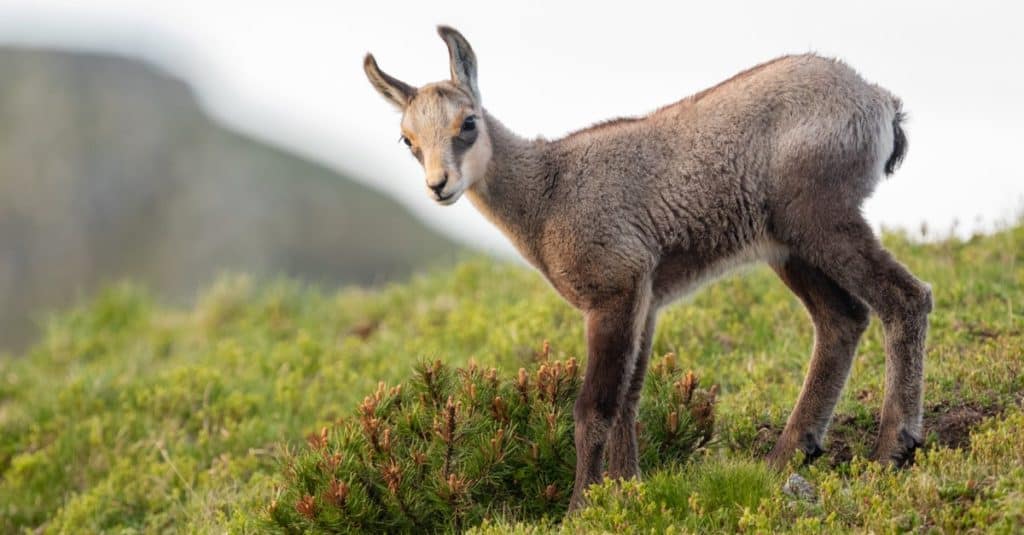
The ancestor of the chamois is believed to have emerged during the Miocene.
©Peter Bino Wild Nature/Shutterstock.com
As a member of the tribe Caprini, chamois occupy a somewhat unique position since they are goat-antelopes. They are also related to goats and sheep, and the earliest ancestor of the tribe is believed to have appeared during the early to middle Miocene, approximately 18 to 15 million years ago.
Scientists believe that it was quite similar to the medium-sized members of the genus Capricornis, serows. During the latest ice ages, this group experienced the greatest diversity it had ever known. It was during these periods that its members developed the qualities that enabled different species to live in harsh climates of extreme cold, heat, and drought.
Classification and Scientific Name
The chamois is an animal in the family Bovidae, which includes cloven-hoofed, ruminant vertebrates such as the bison, American buffalo, water buffalo, antelope, sheep, goats, muskoxen, and domestic cattle. It is further classified into the goat antelope subfamily Caprinae, which contains medium-sized bovids. Called a caprine or goat antelope, it is not a true antelope, which is classified as either cervid-like (true deer in the family Cervidae) or antilocaprid-like (even-toed ungulates in the order Artiodactyla, whose closest relatives are in the superfamily Giraffoidea).
There are two species in the genus Rupicapra, R. rupicapra and R. pyrenaica. Its synonym is the former scientific name Capra rupicapra. The type species R. rupicapra contains 7 subspecies.
Types
The 7 subspecies of R. rupicapra have different habitat ranges, including:
- R. r. asiatica (Anatolian chamois or Turkish chamois): Turkey
- R. r. balcanica (Balkan chamois): Albania, Bosnia and Herzegovina, Bulgaria, Croatia, northern Greece (the Pindus Mountains), North Macedonia, Serbia, Montenegro, and Slovenia
- Abruzzo chamois (R. p. ornata): The Gran Sasso mountain
- R. r. carpatica (Carpathian chamois): Romania
- R. r. cartusiana (Chartreuse chamois): France
- R. r. caucasica (Caucasian chamois): Azerbaijan, Georgia, Russia
- R. r. rupicapra (Alpine chamois): Austria, France, Germany, Italy, Switzerland, Slovenia, Slovakia (Veľká Fatra, Slovak Paradise)
- R. r. tatrica (Tatra chamois): Slovakia (Tatras and Low Tatras) and Poland (Tatras)
Appearance
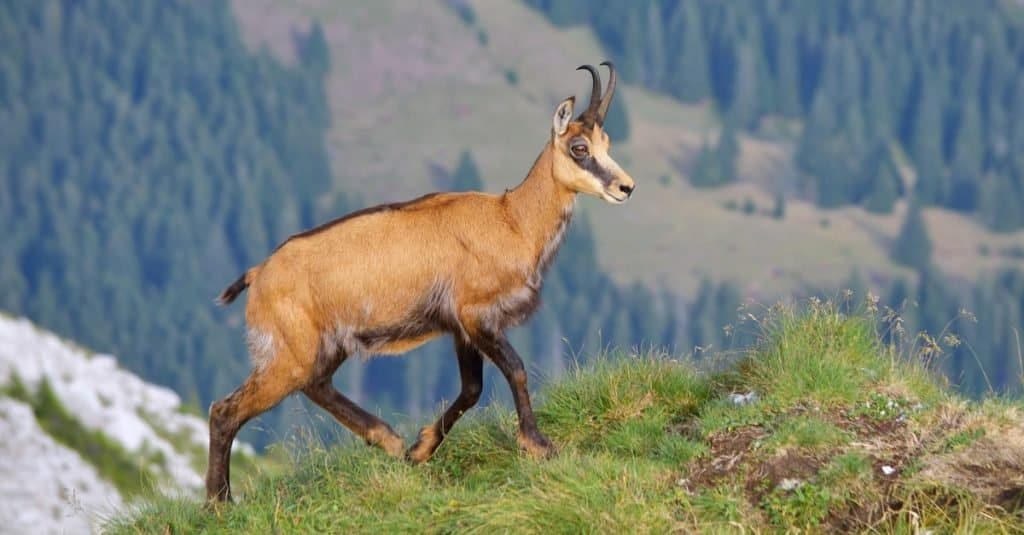
Male chamois are larger than females and are capable of reaching 132 lbs.
©Real PIX/Shutterstock.com
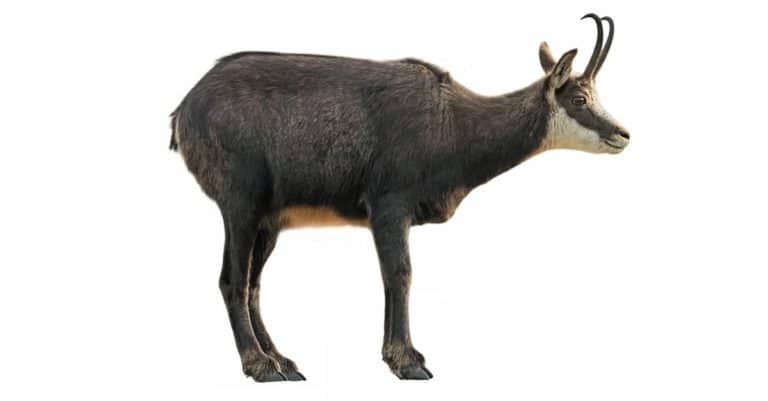
The subspecies of the Rupicapra genus differ by habitat range and certain physical traits, such as color. However, they are all very small bovids. Fully grown adult chamois reach 70 to 80 cm (28 to 31 in) in height and 107 to 137 cm (42 to 54 in) in length. Males are somewhat larger than females. Males weigh 30 to 60 kg (66 to 132 lb) and females weigh 25 to 45 kg (55 to 99 lb).
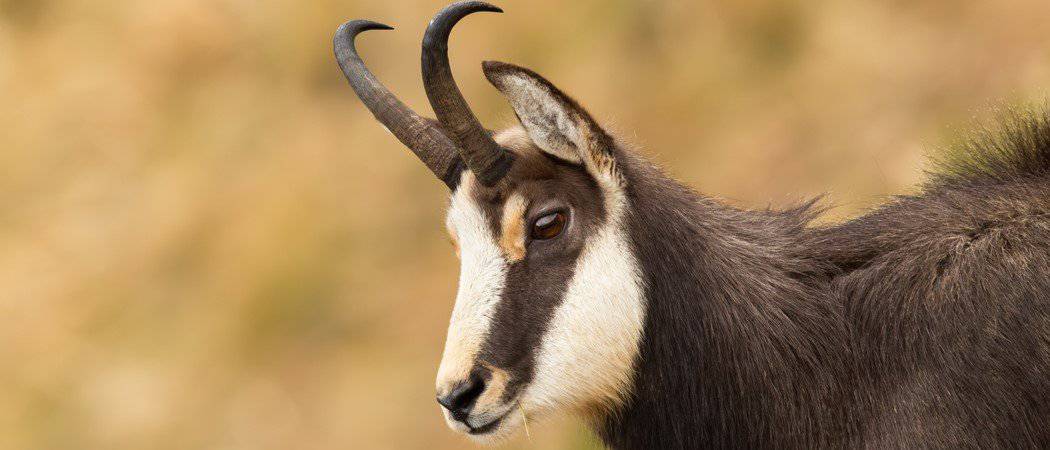
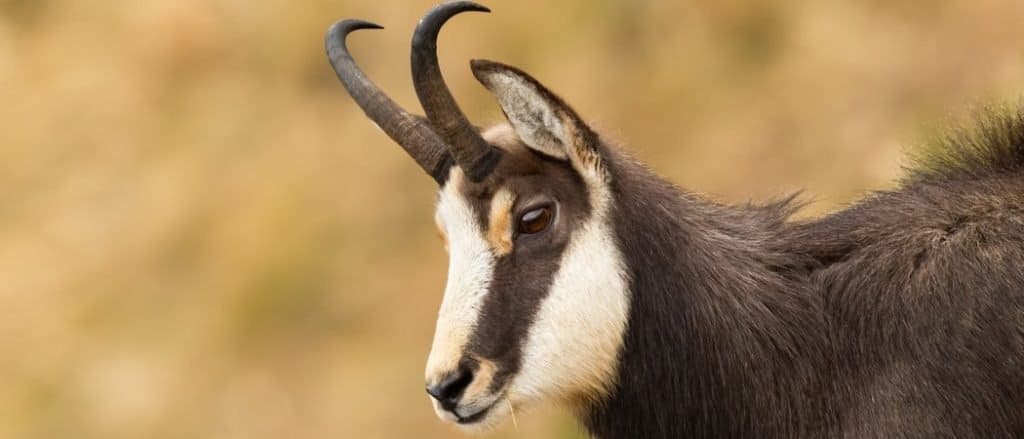
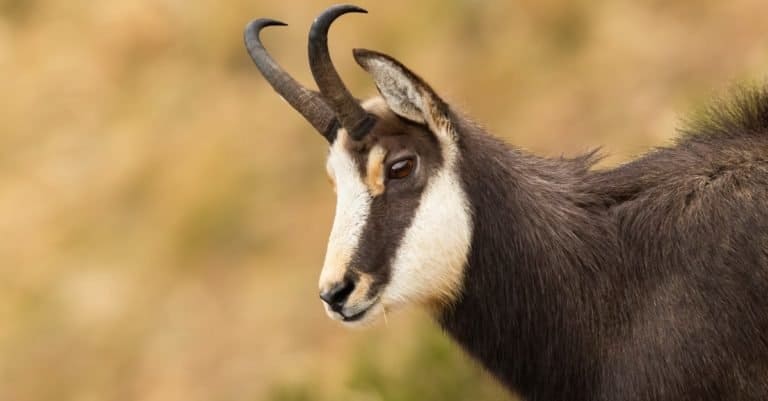
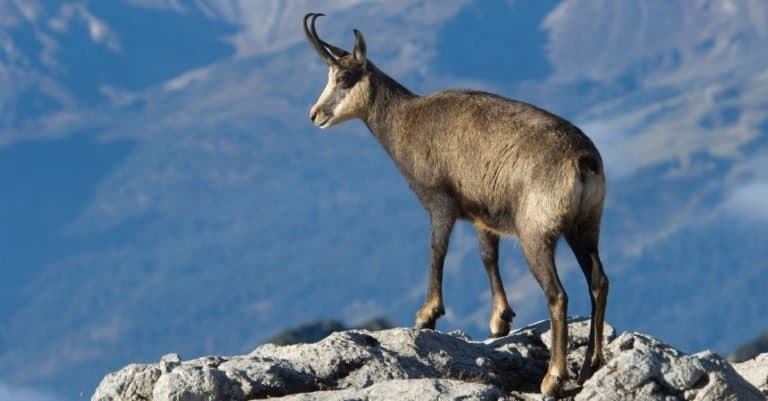
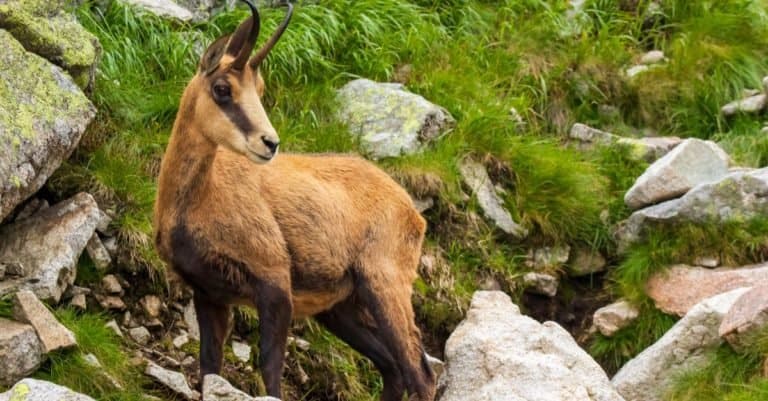
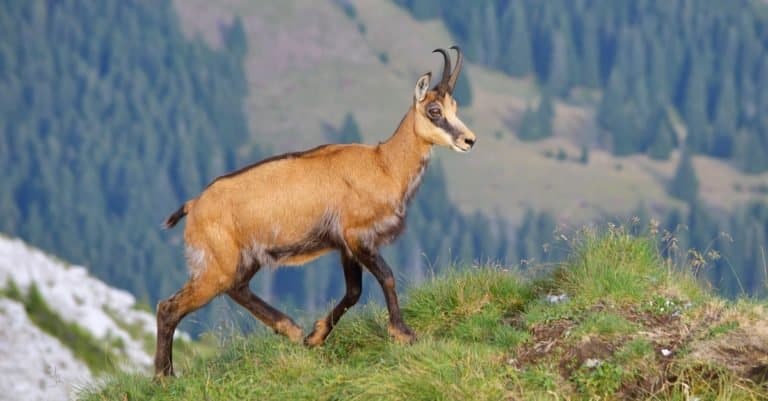
Both sexes have short, mostly straight horns that curve backward near the tip, with male horns being thicker. Both have rich brown fur that turns to a light chestnut color in spring and summer, and long, light grey guard hairs in winter. They have white markings along a black or brown band running from each side of the muzzle to the eyes and ears, white on the rest of the head and throat for contrast, a white rump, and a black stripe along the back. Their hooves are excellent for gripping slippery rock. The tail is not usually visible except when mating.
Behavior
Chamois are mostly diurnal animals but can be active at night. Adult males lead solitary lives for most of the year, while female chamois and their young live in herds of 15 to 30 individuals. Chamois signal danger by stamping their feet and emitting a whistling sound. When alarmed or threatened, they flee to the most inaccessible heights, often by making amazing leaps.
Habitat
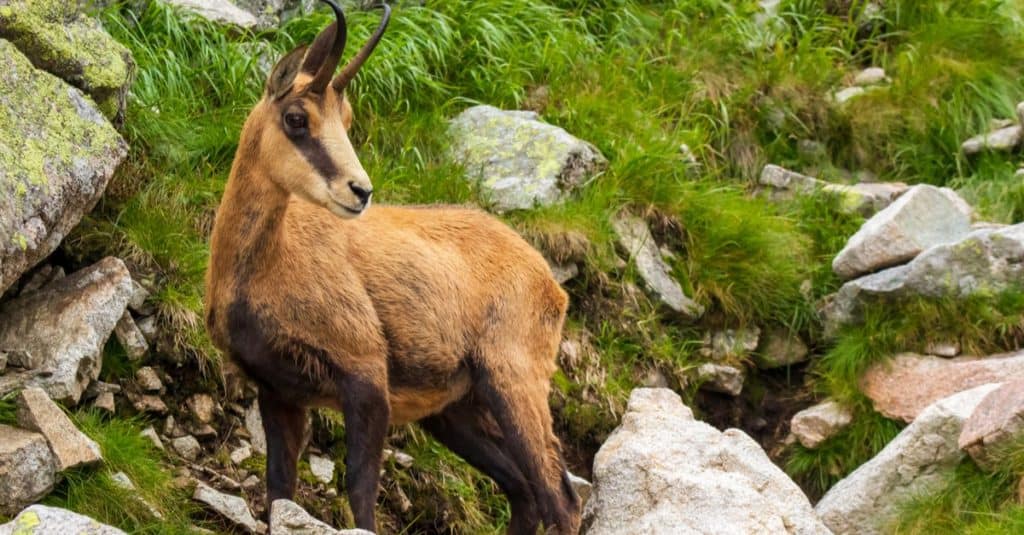
Chamois live in mountain ranges such as the Alps, Apennines, Carpathians, and the Pyrenees.
©Michal Blaho/Shutterstock.com
The habitat of the chamois is the moderately high, very steep, rugged, and rocky mountains of Europe and Asia Minor. It prefers alpine and subalpine meadows above the timberline and both fairly steep and flatter terrain, moving into forested areas and steep slopes during the winter to avoid the accumulation of snow. The animal is often found at elevations of at least 3,600 m (11,800 ft) in summer, moving to pine-tree-dominated areas at lower elevations of around 800 m (2,600 ft) in winter.
The chamois’ native habitat range includes the Alps, Pyrenees, Carpathians, Tatra Mountains, the Balkans, parts of Turkey, the Caucasus, and the Apennines. It was introduced into the South Island of New Zealand.
The other species of the chamois, R. pyrenaica (Pyrenean chamois), lives in the Pyrenees, the Cantabrian Mountains, and the Apennine Mountains.
Diet
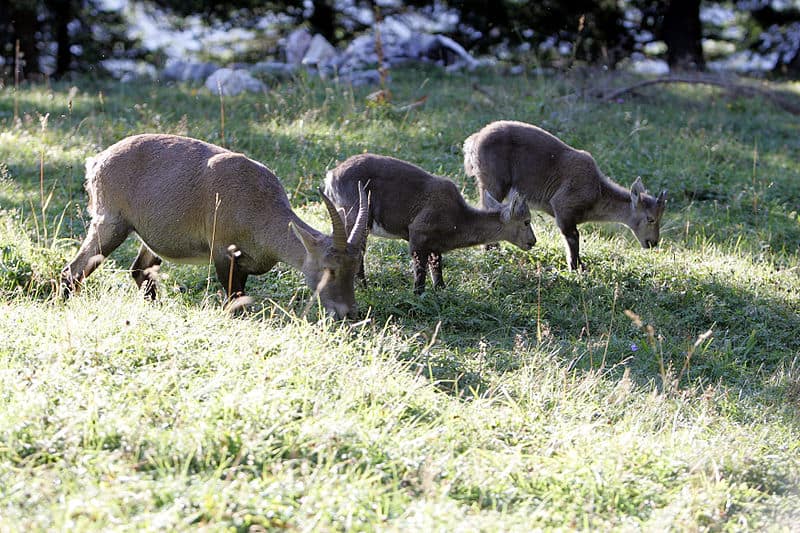
Chamois are capable of going without food for a fortnight.
©Rama / Creative Commons – Original
The chamois has an herbivorous diet. It eats mainly grasses, herbs, and flowers in the summer, and lichens, mosses, bark, needles, and young pine shoots in the winter. When the snow is so deep that it cannot find food, it has been known to fast for two weeks.
Predators and Threats
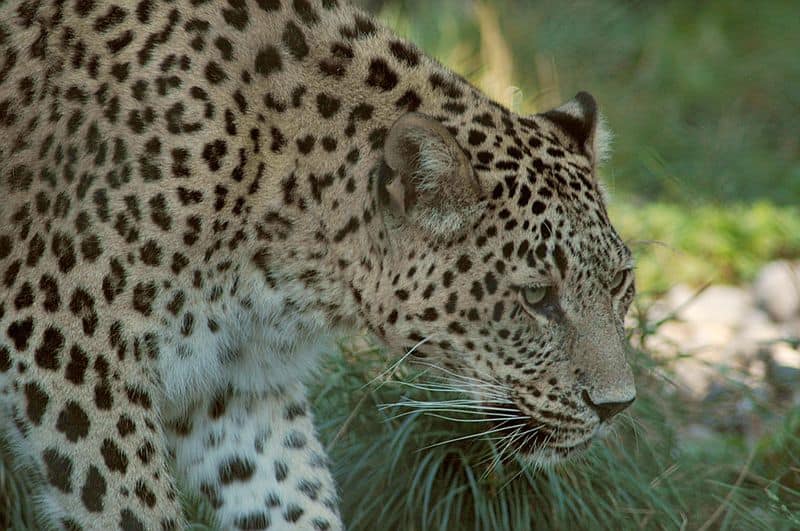
Persian Leopards are known to hunt chamois.
©Marcel Burkhard / Creative Commons – Original
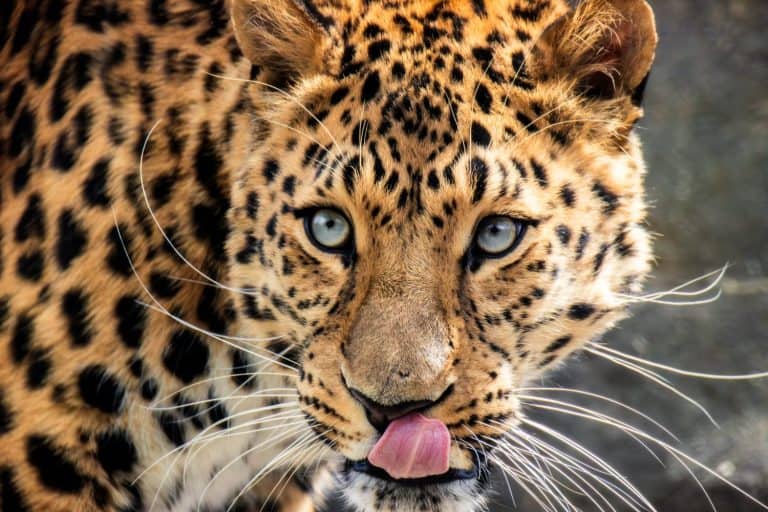
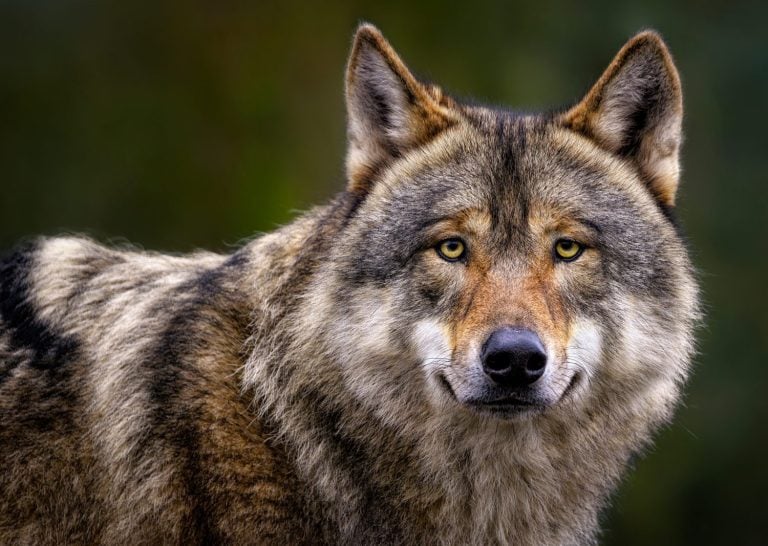
In the past, the common predators of the chamois were grey wolves, Eurasian lynxes, and Persian leopards, as well as some brown bears and golden eagles. Humans have established themselves as their main predators, finding them to be popular game animals with tasty meat. Chamois are also used for the soft, pliable leather made from their skin. Common causes of mortality to chamois include avalanches, epidemics, human disturbance, competition with livestock for food and space, habitat loss, and hybridization with introduced subspecies. Poaching and overhunting are additional threats posed by humans.
Reproduction, Babies, and Lifespan
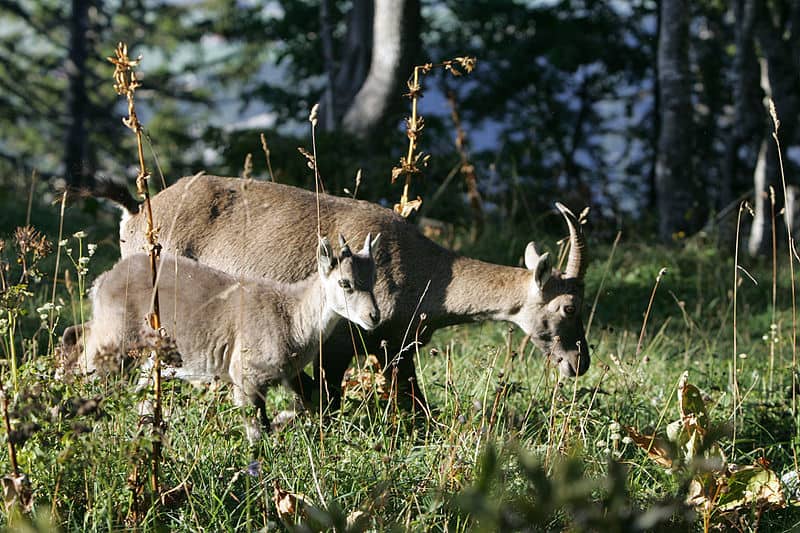
Chamois’ gestation period lasts almost six months, and a mother may give birth to twins occasionally.
©Rama / Creative Commons – Original
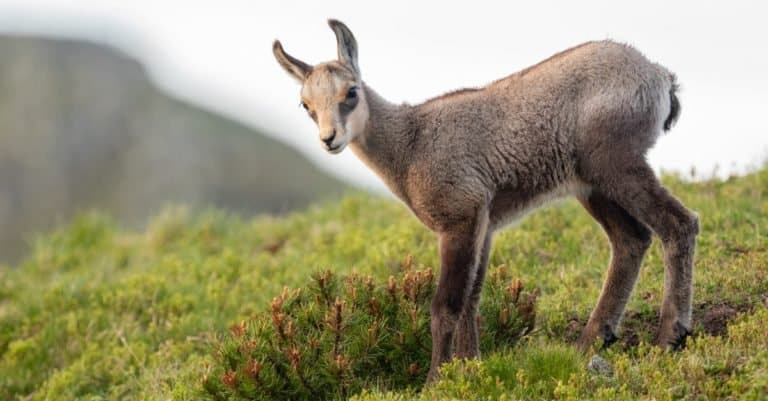
The mating season of the chamois is around late November/early December when males have fierce battles with each other for the attention of unmated females. It is during this time that the tails of both sexes are visible. Pregnant females have a gestation period of 170 days. A baby chamois is called a kid. Females give birth to a single kid or the occasional twins in May or early June.
If the mother dies, other females raise the kids. Kids are weaned at 6 months and are fully grown at one year, but they do not reach sexual maturity until 3 to 4 years of age, with some females ready to mate as early as 2 years old. Once young males reach sexual maturity, dominant males force them out of their mothers’ herds. They then wander nomadically until they establish themselves through breeding at 8 to 9 years of age.
Chamois typically live up to 22 years in captivity and 15 to 17 years in the wild.
Population
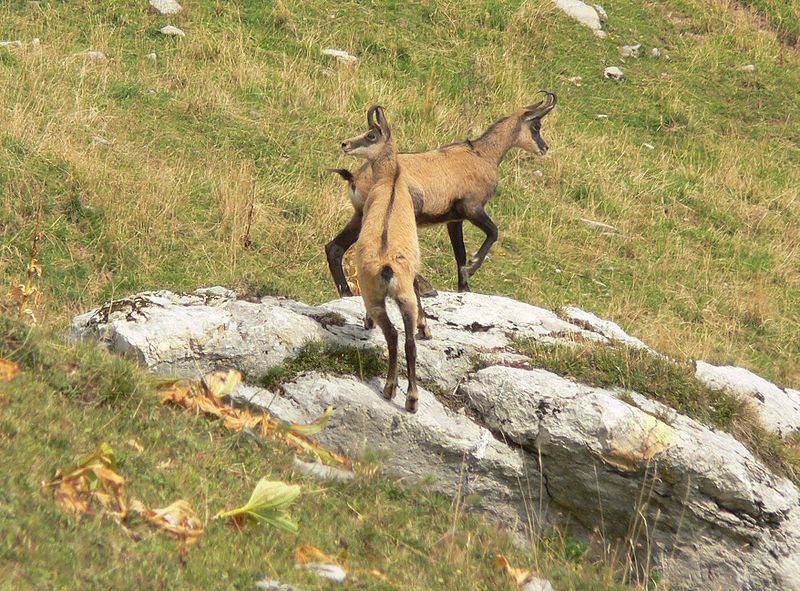
The worldwide population of chamois is just under 500,000.
©Stefan Weigel / Creative Commons – Original
The latest estimated population of these animals in Europe is approximately 400,000. After being introduced into New Zealand in the 20th century, their numbers rapidly increased to almost 100,000 by the 1970s, and they threatened the local vegetation. Since then, the chamois population has decreased by about 20,000.
According to the IUCN Red List, the northern chamois populations have a status of least concern and are remaining stable. The southern chamois populations also have the same status and are increasing.
In the Zoo
These animals are difficult to house in zoos, so they are not a common captive species in game parks and non-scientific institutions in Europe. However, they can be seen at the Toronto Zoo and the Munich Zoo Hellabrunn.
Chamois Pictures
View all of our Chamois pictures in the gallery.

WildMedia/Shutterstock.com
How to say Chamois in ...
Sources
- Animalia / Accessed March 15, 2021
- Wikipedia / Accessed March 15, 2021
- Just Fun Facts / Accessed March 15, 2021