

N S W E
Wildlife Expeditions

Wildlife of
Bosnia and Herzegovina

Bosnia and Herzegovina is notable for "wild Europe" encounters-tracking brown bears, wolves, and elusive lynx through vast Dinaric forests and karst canyons, then shifting to crystal rivers and wetlands packed with birds and endemic fish.
145 Species
51,197 km² Land Area
Overview

About Bosnia and Herzegovina

Bosnia and Herzegovina sits at the heart of the Dinaric Alps, where rugged mountains, deep karst fields, and limestone gorges shelter some of Europe's most intact temperate wilderness. Its natural heritage is defined by extensive beech-fir and mixed mountain forests, remote highland pastures, and a stronghold of large mammals that have disappeared from much of Western Europe. The country's wildlife character feels distinctly "frontier": big, quiet landscapes where tracks in snow, dawn howls, and fresh claw marks on beech trunks are still part of the experience.

Key ecosystems span primeval forest to free-flowing rivers. The Sutjeska National Park area-especially the Perucica primeval forest-represents one of the continent's rare remnants of old-growth temperate woodland, supporting rich birdlife and healthy forest food webs for bears and wolves. Karst landscapes and caves (notably Vjetrenica) harbor specialized subterranean fauna, while river valleys like the Neretva and Drina host globally significant freshwater biodiversity, including endemic and highly localized trout and other cold-water species. Wetlands such as Hutovo Blato form an Adriatic flyway refuge, offering concentrated birding during migration and breeding seasons.

Although not part of African conservation, Bosnia and Herzegovina plays an outsized role in global (and especially European) conservation as a connective core of the Dinaric Arc-one of the last transboundary corridors for large carnivores in Europe. Its forests and mountains help link populations across Croatia, Montenegro, Serbia, and beyond, making cooperation on monitoring, conflict mitigation, and habitat connectivity crucial. The wildlife experience is uniquely varied and close-up: in a single trip you can combine big-carnivore tracking in snowy uplands, rafting or hiking along some of Europe's clearest rivers, and wetland birdwatching-often with far fewer crowds than better-known European nature destinations.

Physical Features

Geography

Bosnia and Herzegovina's wildlife is strongly shaped by its rugged Dinaric Alps, extensive karst (sinkholes, caves, poljes), and a dense network of rivers draining to both the Adriatic (notably the Neretva) and the Black Sea basin (Sava-Bosna-Drina systems). Large elevational gradients create tight habitat turnover from lowland floodplains and oak forests to montane beech-fir-spruce forests and subalpine grasslands, supporting large carnivores (brown bear, wolf, lynx) and rich forest biodiversity. Karst springs, subterranean rivers, and clear, fast-flowing streams provide key freshwater habitats and endemic-rich systems, while narrow river valleys and basins act as movement corridors and localized refugia. The country's short Adriatic coastline is limited in extent, so most wildlife distribution is driven by inland mountains, forests, and river valleys rather than coastal ecosystems.

51,197 km² Land Area
~127th largest country; about the size of West Virginia (USA) Size Rank

Key Landscapes

  • Dinaric Alps (rugged mountains, high plateaus, deep gorges) forming the core of montane and subalpine habitats
  • Karst landscapes (poljes, sinkholes, caves, underground rivers) creating specialized subterranean and spring ecosystems
  • Major river corridors and canyons: Neretva (to the Adriatic), Drina (border river to the east), Bosna and Vrbas, and the Sava floodplain in the north
  • Northern lowlands and floodplains along the Sava (agricultural mosaic, riparian forests, wetlands important for birds and mammals)
  • Large forest complexes (beech, oak, fir-spruce at higher elevations) providing connectivity for wide-ranging species
  • High-elevation meadows and rocky ridgelines (seasonal grazing areas and open habitats for specialized flora and fauna)
  • Short Adriatic coastline around Neum (limited coastal influence; small but distinct marine/brackish habitats compared with inland systems)

Ecoregions

  • Illyrian deciduous forests (WWF)
  • Dinaric Mountains mixed forests (WWF)
  • Pannonian mixed forests (WWF; mainly northern lowlands near the Sava)
Parks & Reserves

Protected Areas

Bosnia and Herzegovina's protected-area network is comparatively small but covers some of the most intact Dinaric Alps forests, karst plateaus, and major river corridors (Una, Drina, Neretva). Formal designations include National Parks (e.g., Sutjeska, Una, Kozara, Drina), entity-level nature parks/protected landscapes, and a handful of strict nature reserves that safeguard primeval/old-growth beech-fir forests and key wetlands. Several sites are internationally recognized under Ramsar (wetlands), and Bosnia and Herzegovina also contributes components to UNESCO's transnational beech-forest World Heritage property.

Protected Coverage

Approximately ~3% of Bosnia and Herzegovina's land area is under formal protection (commonly cited range ~2-4%, varying by entity/canton and depending on whether proposed/older designations are counted). Expansion targets have been discussed but coverage remains low relative to regional biodiversity importance.

Notable Parks & Reserves

Sutjeska National Park (including Perucica Strict Nature Reserve)

National Park; includes Perucica Strict Nature Reserve

The country's flagship mountain-and-forest park, protecting some of the most pristine Dinaric ecosystems, including Perucica-one of Europe's best-known remaining primeval forests. It is a stronghold landscape for large carnivores and high-elevation wildlife across deep valleys and alpine ridges.

Una National Park

National Park

Centered on the emerald Una River and its tufa waterfalls, this park is among the best places in the country for freshwater biodiversity and riverine wildlife viewing. The clean, oxygen-rich river system supports sensitive fish and a healthy riparian fauna.

Eurasian otter
gray wolf
gray wolf
brown bear
brown bear
chamois
chamois
huchen (Danube salmon)
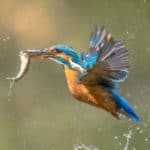
kingfisher
kingfisher

Drina National Park

National Park

Protecting steep, forested canyon landscapes along the Drina, this park conserves continuous habitat important for wide-ranging carnivores and raptors. The river corridor and surrounding mixed forests function as a key connectivity zone in the eastern Dinarides.

Kozara National Park

National Park

A well-known forest park of northern Bosnia with extensive beech-fir and mixed deciduous forests, important for woodland birds and mammals. It is especially valuable as a refuge for forest biodiversity in a more human-dominated region.

Hutovo Blato Nature Park

Nature Park; Ramsar Wetland of International Importance

One of the most important wetland complexes in the Neretva basin, critical for migratory and breeding waterbirds in the Adriatic flyway. Its lakes, channels, and reedbeds support large congregations of birds and rich aquatic life.

pygmy cormorant
ferruginous duck
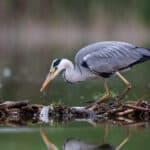
grey heron
grey heron
great egret
great egret
Eurasian otter
marsh harrier

Blidinje Nature Park

Nature Park (protected area at entity/cantonal level)

A high karst plateau with montane forests, grasslands, and Blidinje Lake, supporting a mix of alpine and forest wildlife. The park is notable for large-mammal habitat and raptors over open karst landscapes.

Janj Strict Nature Reserve (Sipovo area)

Strict Nature Reserve; UNESCO World Heritage (component of the serial "Ancient and Primeval Beech Forests..." property)

An exceptionally intact old-growth forest reserve representing primeval beech-fir-spruce ecosystems, important for forest specialists and deadwood-dependent biodiversity. It is a key reference site for natural forest dynamics in the Dinarides.

brown bear
brown bear
black woodpecker
Eurasian three-toed woodpecker
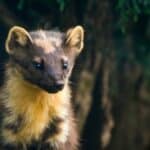
pine marten
pine marten
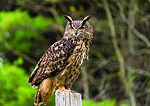
Ural owl
Ural owl
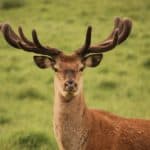
red deer
red deer

Lom Strict Nature Reserve (western Bosnia)

Strict Nature Reserve; UNESCO World Heritage (component of the serial "Ancient and Primeval Beech Forests..." property)

A rare, strictly protected old-growth forest area with high structural complexity, supporting sensitive forest fauna and rich saproxylic (deadwood) communities. It complements other Dinaric old-growth reserves as part of a broader beech-forest conservation network.

UNESCO World Heritage Sites

  • Ancient and Primeval Beech Forests of the Carpathians and Other Regions of Europe (serial natural World Heritage property; Bosnia and Herzegovina components include old-growth beech forest reserves such as Janj and Lom)
Animals

Wildlife

Bosnia and Herzegovina packs high biodiversity into a relatively small Balkan country thanks to strong elevational gradients (lowland floodplains to rugged Dinaric Alps), extensive mixed and conifer forests, wild river canyons (Una, Drina, Neretva), and classic karst landscapes with caves and springs. The wildlife "character" is strongly defined by intact forest ecosystems that still support a full large-carnivore guild (brown bear-wolf-lynx), mountain ungulates, and a notable concentration of freshwater and subterranean (cave/karst) species-especially in the Neretva and Trebisnjica karst basins and associated wetlands such as Hutovo Blato.

~95-110 species (including a high diversity of bats) Mammals
~320-340 species recorded (migrants + breeders) Birds
~30-35 species Reptiles
~18-22 species, with notable karst/cave-associated fauna Amphibians

Iconic Species

Brown Bear
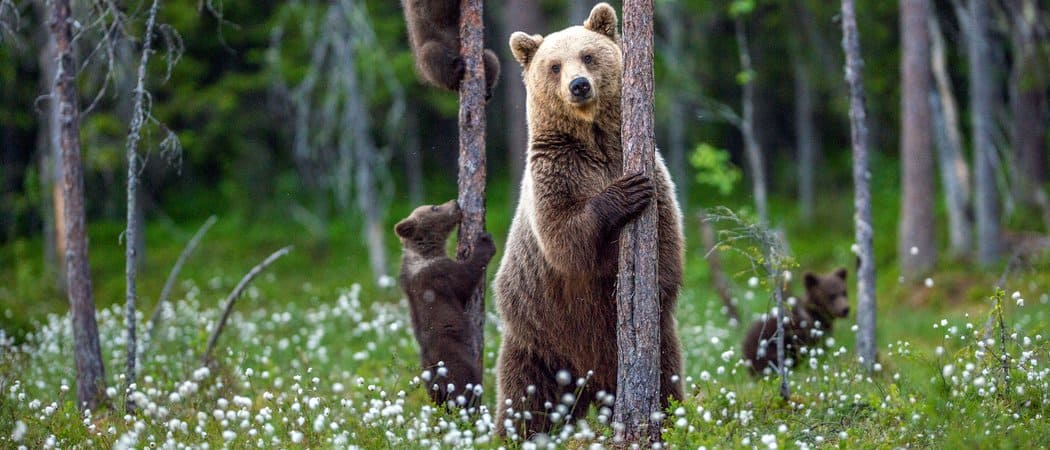
Brown Bear Bosnia and Herzegovina is part of the Dinaric bear stronghold, with bears persisting in large, forested mountain blocks. Best chances are in remote areas of Sutjeska National Park, western Bosnian forests, and the broader Dinaric highlands where human footprint is lower.
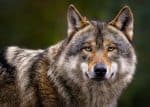
Gray Wolf
Gray Wolf Wolves remain widespread in Bosnia's extensive forest-mountain mosaics, reflecting relatively intact trophic systems. They are most associated with the Dinaric ranges and large wilderness landscapes (e.g., Sutjeska and surrounding highlands), though sightings are typically rare and indirect (tracks/howls).
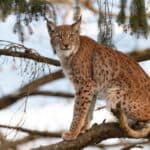
Eurasian Lynx
Eurasian Lynx A flagship and elusive carnivore of the Dinaric forests; Bosnia and Herzegovina sits within the broader Dinaric-Balkan lynx context. Encounters are uncommon, but the species is emblematic of the country's remaining wild forest cores.
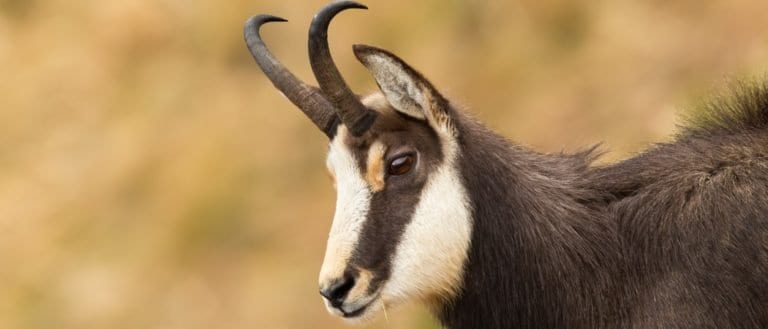
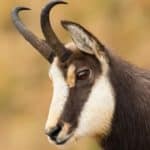
Balkan Chamois Chamois are among the most visible large mammals for visitors in steep alpine and subalpine terrain. Look in rugged massifs and protected mountain areas (e.g., the Prenj-Cvrsnica-Vran mountains and parts of the Sutjeska/Zelengora landscapes) where rocky slopes and open ridgelines provide habitat.
Red Deer
Red Deer A key ungulate of Bosnian forests and a major prey species supporting large carnivores. Best observed at forest edges, clearings, and quieter valleys in larger forest complexes, especially at dawn/dusk.
Wild Boar
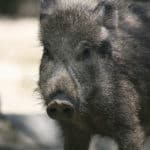
Wild Boar Common and ecologically influential across lowlands to upland forests; frequently detected by rooting signs and tracks. It is a defining species of the country's forest ecosystems and an important prey base for wolves.
Eurasian Otter A signature species of clean rivers and wetlands; Bosnia's fast-flowing rivers and karst springs can support otters where disturbance is low. Prime areas include the Una River system and wetlands/slow waters connected to Hutovo Blato (best seen early/late with patience).
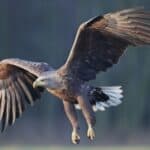
White-tailed Eagle
White-tailed Eagle A top predator of wetlands and large rivers; most likely along major floodplains and reservoirs, including northern lowlands influenced by the Sava River system. It highlights the importance of Bosnia's remaining riverine habitats.
Black Stork A sensitive forest-river species that favors quiet, wooded valleys and gorges. It is an indicator of well-preserved riparian forests and is most plausibly encountered in less-disturbed river canyons and large forest landscapes.

Endemic Species

Olm (Cave Salamander) A celebrated Dinaric karst endemic adapted to life in underground waters (blind, cave-dwelling). In Bosnia and Herzegovina it is tied to karst poljes, springs, and cave systems of the Dinaric/Herzegovinian karst-an emblem of the country's subterranean biodiversity. Endemic
Neretva Softmouth Trout A near-endemic salmonid of the Neretva basin (with strongholds in the upper basin largely within Bosnia and Herzegovina). It represents the global importance-and vulnerability-of the country's cold, karst-fed rivers. Endemic
Marble Trout A distinctive, large trout associated with Adriatic-draining rivers; in Bosnia and Herzegovina it is linked to the Neretva catchment and clear karst tributaries. It is notable both for angling heritage and conservation interest where habitats remain intact. Endemic
Neretva Nase A Neretva-basin endemic/near-endemic cyprinid strongly associated with the karst hydrology of the region. Its restricted range makes Bosnia and Herzegovina central to its long-term survival. Endemic
Dalmatian Spined Loach A range-restricted loach tied to karst streams and springs of the eastern Adriatic drainage, including parts of Herzegovina. It typifies the high freshwater endemism of Bosnia and Herzegovina's karst systems. Endemic

Notable Populations

  • Part of the Dinaric large-carnivore stronghold in Europe, with a still-functional bear-wolf-lynx assemblage across extensive forested mountains.
  • One of the most important karst freshwater biodiversity hotspots in Europe: Adriatic-draining rivers (notably the Neretva system) and underground waters support multiple range-restricted and endemic fish and cave fauna.
  • Wetlands and river corridors (e.g., Hutovo Blato and major lowland rivers) provide regionally important habitat for sensitive waterbirds and raptors such as black stork and white-tailed eagle.
Protection

Conservation

Primary Threats

  • Hydropower and transport infrastructure are major pressures, especially in river valleys. Dozens of small hydropower projects (and some larger schemes) have been proposed or built on tributaries and headwaters, fragmenting river habitats, altering sediment and flow regimes, and disrupting fish migration. Road upgrades and new corridors in mountain areas increase fragmentation and wildlife mortality (vehicle collisions), and open remote forests to extraction and disturbance.
  • River regulation, water abstraction, and damming modify some of the most valuable ecosystems in BiH: free-flowing rivers in karst and alpine catchments. Channelization, diversion pipelines for small HPPs, and altered seasonal flows reduce habitat quality for freshwater invertebrates, salmonids, and endemic species associated with karst springs and cold-water streams.
  • Forests cover a large share of BiH and are central to biodiversity and rural economies, but pressures include illegal logging, overharvesting, and inadequate planning/enforcement in some areas. Intensive harvesting and road building can reduce old-growth structure important for forest specialists, undermine slope stability in steep Dinaric terrain, and increase disturbance in carnivore habitat.
  • Many municipalities have limited wastewater treatment, leading to untreated sewage inputs into rivers. Industrial legacies (including metals and chemical sites), landfill leachate, and agricultural runoff degrade water quality in river basins such as the Bosna, Vrbas, Spreča and Neretva. In karst systems, pollutants can spread rapidly through groundwater and springs, affecting downstream wetlands like Hutovo Blato.
  • Coal and metal mining (and associated tailings, spoil heaps, and acid mine drainage risk) can contaminate soils and waterways and drive localized habitat loss. Quarrying in karst landscapes can directly remove habitat, impact groundwater, and increase sedimentation in nearby streams.
  • Legal hunting is widespread and culturally significant, but weak oversight and illegal killing can affect large carnivores and ungulates. Persecution of predators, improper quotas, and poaching in remote areas can undermine populations, especially for Eurasian lynx in the Dinaric population that depends on connectivity and low human-caused mortality.
  • Conflicts arise where bears and wolves interact with livestock, beehives, and garbage near settlements and seasonal mountain pastures (katuns). Retaliatory killing and negative attitudes can increase when preventive measures (electric fencing, guardian dogs, secure waste systems, compensation schemes) are inconsistent across jurisdictions.
  • Urban expansion around major cities (Sarajevo, Banja Luka, Mostar, Tuzla), conversion/abandonment dynamics in rural landscapes, and river-valley development reduce and simplify habitats. Wetlands and riparian zones face particular loss or degradation due to drainage, construction, and altered hydrology.
  • Warming and shifting precipitation patterns in the Dinaric Alps increase drought risk and reduce summer baseflows, stressing cold-water river species and wetlands. More frequent heatwaves and extreme rainfall events increase wildfire risk, erosion, and flash flooding in steep catchments, compounding impacts where forests are degraded or riverbanks are modified.
  • In freshwater systems, non-native fish introductions and spread (often linked to stocking or altered habitats) can compete with or prey on native species. In riparian and disturbed areas, invasive plants can colonize riverbanks and wetlands, especially where hydrology has been modified.
  • Unregulated tourism and recreation in sensitive mountain and river areas (off-road vehicles, informal trails, rafting pressure in certain reaches, noise) can disturb wildlife, including breeding birds and large mammals. Disturbance also increases where new forest roads enable easier access for extraction and hunting.
Visit

Wildlife Tourism

Bosnia and Herzegovina (BiH) is one of the Balkans' most underrated wildlife destinations, with rugged Dinaric Alps, vast beech-fir forests, karst plains and caves, and some of Europe's cleanest river systems (Neretva, Una, Drina). Wildlife tourism is smaller than in classic safari countries, but it's growing through guided bear/wolf/lynx tracking, birding, river-based nature trips, and adventure operators that combine rafting/hiking with wildlife viewing. Economically, it tends to be high-value and local: small guiding outfits, mountain lodges (seasonal shepherd huts), rafting companies, and rural households benefit directly, especially in areas like Una National Park and the Sutjeska-Zelengora region. Conservation and wildlife management are shaped by a mix of protected areas and hunting concessions; as a visitor, choose reputable guides and community-based providers that prioritize ethics and transparency. Accessibility is straightforward: arrive via Sarajevo, Mostar, or Banja Luka airports (plus easy overland access from Croatia/Montenegro/Serbia). Roads reach most parks, but many prime wildlife zones are remote forest tracks-best done with local 4x4/taxi transfers or guided trips. Expect a "European wilderness" feel: fewer crowds, big landscapes, and the real possibility (with luck and good guides) of seeing signs of bear, wolf, and lynx-plus excellent freshwater wildlife and birds.

Best Time to Visit
  • General rule: late spring-early summer and early autumn give the best mix of animal activity, accessible trails, and comfortable weather.
  • March-April: Spring emergence. Bears become more active after winter; amphibian breeding peaks in wetlands/ponds; raptors begin displaying and migrating. Great for tracking and birding without summer crowds.
  • May-June: Prime for biodiversity. Wildflowers in alpine meadows (e.g., Zelengora), strong bird song/activity (woodpeckers, owls at dusk, raptors), and good chances for mammal signs on soft ground. Rivers run high and clear-excellent for boat/raft-based nature viewing.
  • July-August: Best for high-altitude hikes (cooler in the mountains) and bat/cave visits; wildlife can be quieter in midday heat, but dawn/dusk watching works well. Rivers remain a major draw.
  • September-October: One of the top windows. Deer rut activity increases; bears forage intensively before winter; forests are quieter (fewer hikers), visibility improves as undergrowth thins, and photography is excellent with autumn color.
  • November: Short days but good tracking conditions after first snows at higher elevations; ideal for dedicated wolf/lynx sign-tracking trips.
  • December-February: Niche season. Snow tracking and winter birding possible, but access is weather-dependent in mountain areas; best with guides and flexible plans.

Top Wildlife Experiences

  • Dawn and dusk bear-watching from a purpose-built hide in a managed forest area (with an ethics-focused operator), combining quiet observation with photography.
  • Guided tracking hike for signs of wolf and Eurasian lynx (tracks, scat, scrapes, prey remains) in remote Dinaric forests-realistic focus on evidence and ecology, with sightings as a bonus.
  • Birdwatching the Una River corridor: slow walks and riverside stakeouts for kingfisher, grey wagtail, dipper, herons, and raptors; add early-morning mist sessions for photography.
  • Rafting or packrafting the Una or Neretva with a "nature guide" emphasis-wildlife scanning stops for birds, otter sign, and riparian habitats rather than a purely adrenaline itinerary.
  • High-alpine day hike on Zelengora's lake plateau (Sutjeska region) to look for chamois, raptors (golden eagle potential), alpine butterflies, and wildflower-rich meadows.
  • Night walk or dusk sit for owls and nocturnal mammals on the edge of mixed forest and pasture (listen for tawny/ural owl calls; watch for fox and badger activity).
  • Cave and karst exploration focused on biodiversity: guided visits to bat roost sites (seasonally appropriate and non-disturbing), cave invertebrates, and karst springs-paired with a talk on karst ecology.
  • Fly-fishing "catch-and-release" river day with a conservation-minded guide (Una/Neretva tributaries), paired with riparian wildlife observation and lessons on freshwater ecosystems.
  • Multi-day hut-to-hut or seasonal-shepherd-hut-based trek in the Dinaric Alps with wildlife interpretation-learning how traditional grazing landscapes support birds, pollinators, and large carnivore coexistence.

Safari Types Available

  • 4x4 wildlife tracking excursions (forest roads and remote valleys; focused on signs and habitat, not guaranteed sightings)
  • Walking safaris / guided wildlife hikes (tracking, birding, botany, and ecology interpretation)
  • Hide-based wildlife watching (especially bear; choose ethical, regulated operations)
  • River safaris by raft/packraft/kayak (wildlife and scenery-focused floats on Una/Neretva/Drina sections)
  • Birding-specific tours (river corridors, wetlands, forest edges, migration watchpoints)
  • Night safaris on foot (owls, bats-seasonal-, nocturnal mammals; often combined with acoustic listening)
  • Cave/karst nature tours (bats and subterranean biodiversity with non-disturbance protocols)
  • Photo safaris (autumn color, river corridors, hides, and alpine viewpoints)
Fun Facts

Did You Know?

A 'dragon-like' amphibian lives in Bosnia's underground waters: the olm (Proteus anguinus), recorded in the Vjetrenica system, is blind, lives in total darkness, and is famous for extreme longevity and the ability to survive for years between meals (commonly cited as 5-10 years).

Bosnia and Herzegovina has a well-known free-roaming horse population near Livno: a feral herd formed from released/abandoned working horses now numbers in the hundreds (often estimated roughly 600-1,000), roaming open karst fields at the edge of the Dinaric Alps.

Some of the country's most distinctive 'wildlife' is built by plants: rivers like the Una and Pliva form travertine/tufa barriers-waterfalls and dams literally constructed by algae, mosses, and mineral deposits-creating living habitat structures that can grow or collapse depending on water chemistry and pollution.

The Neretva basin hosts rare, localized salmonids that anglers travel for: the Neretva trout (Salmo dentex) is endemic to the Neretva drainage, while the softmouth trout (Salmo obtusirostris) is restricted to a handful of Adriatic-basin rivers (including the Neretva) rather than being confined to a single river system.

In parts of the Dinaric forests, it's possible (and scientifically documented via monitoring) for the full suite of large carnivores-brown bear, gray wolf, and Eurasian lynx-to overlap in the same landscapes, a combination that has disappeared from much of Western and Central Europe.

Perućica Primeval Forest (inside Sutjeska National Park) is one of the largest remaining tracts of true old-growth/primeval forest in Europe-about 1,434 hectares-where natural processes dominate and logging is prohibited.

Bosnia and Herzegovina sits in the core of the Dinaric-Pindos brown bear range-one of Europe's largest, most continuous brown-bear landscapes-allowing bears, wolves, and Eurasian lynx to persist in the same mountain-forest system.

Vjetrenica Cave (Herzegovina) is widely cited as one of the most biodiverse caves on Earth: surveys have recorded 200+ animal species in the cave system, with a remarkably high share of endemic (found-nowhere-else) subterranean fauna.

Hutovo Blato Nature Park is Bosnia and Herzegovina's largest wetland and its standout bird hotspot: more than 240 bird species have been recorded there, making it a major stopover/wintering area on the Adriatic flyway.

The Trebišnjica (Herzegovina) is often described as one of Europe's longest "sinking" (ponor) rivers-disappearing underground into karst-creating extensive subterranean aquatic habitat that supports specialized cave-adapted invertebrates.

Bosnia and Herzegovina is a small Balkan country located in southeastern Europe that gained its independence in 1992 following the breakup of Yugoslavia. Except for a small 12-mile coast along the Adriatic Sea, it is completely hemmed in by Croatia, Serbia, and Montenegro.

Geographically, most of the terrain in Bosnia and Herzegovina is dominated by vast mountain ranges, including the Dinaric Alps, the Vlasic, the Grmec, and the Cincar. More than half the country is covered by pine, beech, and oak forests, which provide a home to some of the most unique and diverse wildlife in all of Europe.

The Official National (State) Animal of Bosnia and Herzegovina

Bosnia and Herzegovina does not have an official national animal.

Where to Find the Top Wild Animals in Bosnia and Herzegovina

Bosnia and Herzegovina has set aside three national parks to protect its wildlife and natural beauty. Many of these parks contain walking and hiking trails that wind their way through the mountains and forests.

  • The Una National Park, located near the Unac River on the western border with Croatia, is Bosnia’s largest national park. Protecting some 76 square miles of forests, rapids, and brilliant waterfalls, the park is home to a wide diversity of freshwater fish and birds, as well as the more elusive lynx, wolf, chamois, fox, and bear.
  • The Kozara National Park is situated at the convergence of the Una, Sava, Vrbas, and Sana rivers in northern Bosnia. Amid the rolling forested slopes of the Kozara mountains, visitors can find ducks, hares, boars, deer, foxes, and pheasants. The nearby area is a popular hunting ground as well.
  • The Sutjeska National Park, located along the eastern border with Montenegro, encompasses nearly 67 square miles of forests, waterfalls, and glacial lakes near the Maglic mountain, which, at nearly 8,000 feet, is the country’s highest point.
  • The Perucica Forest Reserve, located within the park, is a UNESCO recognized site and one of the few remaining primeval forests left in Europe. Most of the trees date back some 300 years, and the oldest has grown untouched for thousands of years. Bears, foxes, goats, boars, wolves, martens, and wild cats are among some of the mammals found here. There are also more than a hundred species of birds, including the peregrine falcon, blackbird, and rock partridge.

The Most Dangerous Animals in Bosnia and Herzegovina Today

Bosnia is home to three venomous species of snakes and a few large and intimidating carnivores. Anyone who ventures out to the remote areas of the country should look out for the following species:

  • Nose-horned Viper – Easily identified by the grayish-brown color, a dark zigzag pattern around the back, and the unique horn emerging from the snout, the horned viper is perhaps the most dangerous snake in all of Europe, due mostly to the long fangs and the highly toxic venom, which can sometimes result in death. This snake is fairly common to dry, rocky hillsides throughout most of the Balkans.
  • Meadow Viper – Usually found in mountainous or hilly meadows, this species has weaker venom and less aggressive behavior than the nose-horned viper, but it can still cause pain, swelling, and even nausea. If bitten, victims should seek medical attention.
  • Common European Adder – This is one of the most common venomous snakes in all of Europe. Consequently, it’s responsible for more bites than almost any other species. For a healthy adult, there isn’t too much of a risk of its venom besides some pain, swelling, and nausea, as deaths are very rare, but bite victims should always seek medical attention.
  • Brown Bear – Bear attacks are exceptionally rare, even when they’re encountered on foot. Nevertheless, they may become overly aggressive if they feel provoked or threatened in some way. If they’re spotted out in the wild, it is best to stay calm and keep your distance.
  • Gray Wolf – The wolf is not as dangerous as its fearsome reputation suggests. Attacks are probably no more common than the brown bear. But they have been known to occasionally kill a person for food.

Endangered Animals in Bosnia and Herzegovina

Because so much of the country is still covered in forests and mountains, Bosnia has avoided the same loss of wildlife as experienced by other European countries. But habitat loss or overhunting have still put several species in danger.

  • Eurasian Lynx – This big predatory cat still thrives in many parts of Central Asia, but human activity caused it to become completely extinct from Bosnia and most of Europe. Following its reintroduction into the Dinaric Alps in the late 20th century, it is once again seen throughout some parts of the Balkans.
  • Balkan Snow Vole – Found in the mountains and hills of the Balkans, this unique and elusive rodent is the only living member of its genus. It is currently vulnerable to becoming extinct due to its limited range.
  • Illyrian Spined Loach – First discovered in 2007, this freshwater fish is believed to be quite rare, and not much is known about it. The species is currently classified as critically endangered by the IUCN Red List.
  • Adriatic Salmon – This endangered fish is found naturally along four river systems that flow into the Adriatic Sea. Overfishing and damming have put it at risk of becoming extinct.

Animals Found in Bosnia and Herzegovina

145 species documented in our encyclopedia

Thank you for reading! Have some feedback for us?