
















E
Species Profile

English Cream Golden Retriever

Canis lupus familiaris

Cream coat, classic retriever heart.
davisdeatonphotography/Shutterstock.com

English Cream Golden Retriever Distribution

Click a location to explore more animals from that region

Origin Location

This map shows the native origin of the English Cream Golden Retriever. As a domesticated species, they are now found worldwide.

Loading map...

Found in 1 country

Size Comparison

Human 5'8"
English Cream Golden Retriever 1 ft 10 in

English Cream Golden Retriever stands at 32% of average human height.

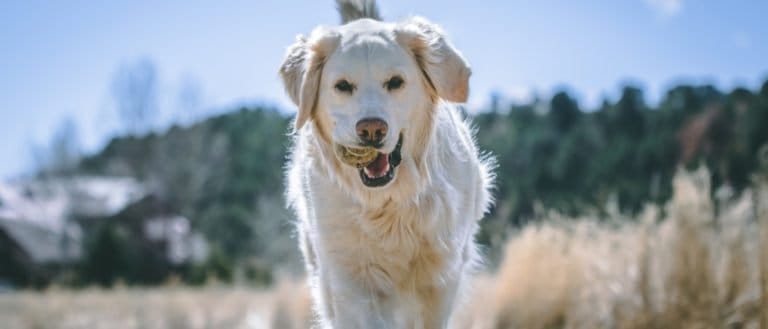
An English Cream Golden Retriever Runs and Plays with a Tennis Ball in Her Mouth

At a Glance

Domesticated
Also Known As English Cream, Cream Golden, Cream Golden Retriever, White Golden, White Golden Retriever, British Cream
Diet Omnivore
Activity Cathemeral+
Lifespan 11 years
Weight 34 lbs
Status Not Evaluated
Did You Know?

"English Cream" isn't a separate breed-it's a marketing term for very pale Golden Retriever lines (often UK/European show lines).

Scientific Classification

A very light-colored variety/line of the Golden Retriever, a domesticated dog breed developed from British retriever stock. Not a distinct species or subspecies; used as a colloquial term in pet markets to describe pale cream-to-near-white coat coloration, often associated with some European (especially UK) show lines.

Kingdom
Animalia
Phylum
Chordata
Class
Mammalia
Order
Carnivora
Family
Canidae
Genus
Canis
Species
Canis lupus

Distinguishing Features

  • Pale cream to very light golden coat (still within Golden Retriever color range in many standards, though extremely pale can be marketed as ‘English Cream’)
  • Dense, water-repellent double coat with feathering typical of Golden Retrievers
  • Friendly, biddable temperament typical of retriever breeds
  • Athletic, medium-large build; broad head and soft expression typical of Golden Retriever lines

Physical Measurements

Males and females differ in size

Height
1 ft 11 in (1 ft 10 in – 2 ft)
1 ft 9 in (1 ft 8 in – 1 ft 10 in)
Length
3 ft 11 in (3 ft 7 in – 4 ft 5 in)
3 ft 7 in (3 ft 3 in – 3 ft 11 in)
Weight
69 lbs (64 lbs – 75 lbs)
64 lbs (51 lbs – 75 lbs)
Tail Length
1 ft 3 in (1 ft 1 in – 1 ft 6 in)
1 ft 2 in (12 in – 1 ft 4 in)
Top Speed
28 mph
Fast, athletic dog

Appearance

Primary Colors
Secondary Colors
Skin Type Thick, water-repellent double coat (outer coat and insulating undercoat) with retriever feathering on neck, chest, legs, belly, and tail. Heavy seasonal shedding; prone to skin irritation and allergies if not dried after swimming.
Distinctive Features
  • English Cream Golden Retriever (Canis lupus familiaris): a Golden Retriever line with very pale cream to near-white coat; 'English Cream' is a common, informal name used for some European/UK show lines, not a separate breed.
  • Retriever morphology: medium-large, sturdy, athletic build; broad skull with defined stop, medium drop ears, and a strong, level topline; long, well-feathered tail; coat designed for water work.
  • Temperament/uses typical of Golden Retrievers: biddable, sociable, gentle mouth; commonly used for retrieving, gundog work, service/assistance roles, therapy work, and active family companionship.
  • Lighter coat than many darker Golden Retriever lines; some show types have broader heads and heavier bones. Keeps the standard Golden coat and feathering, not Samoyed plush or Labrador short coat.
  • Health concerns common to Golden Retrievers (including pale cream lines): hip and elbow dysplasia, cranial cruciate ligament disease risk, cancer predisposition (e.g., lymphoma/hemangiosarcoma), progressive retinal atrophy/cataracts, subaortic stenosis, hypothyroidism.
  • Skin/ear issues: atopy/allergies and hot spots can occur; pendulous ears predispose to otitis (especially with frequent swimming). Ichthyosis and other inherited skin conditions are reported in the breed-screening and reputable breeding practices matter.
  • Care requirements: frequent brushing (often several times weekly; daily during shedding), regular bathing/drying after water exposure, routine ear cleaning, nail trimming, dental care, and consistent exercise/mental enrichment to prevent obesity and boredom-related behaviors.
  • Coat color notes: pale cream is not albinism; normal dark pigment should be present in nose/eye rims. Sun/heat management is still important due to dense coat; provide shade, hydration, and avoid overheating during vigorous activity.

Sexual Dimorphism

Sexual dimorphism is typical for Golden Retrievers: males are generally larger, heavier-boned, and broader-headed; females are typically slightly smaller and more refined in build. Both sexes share the same coat type and color range, including pale cream lines.

  • Larger overall frame with heavier bone and broader skull/muzzle.
  • Thicker neck/forequarters; often a more robust, blocky silhouette (especially in show-line individuals).
  • Slightly smaller, lighter build with a more refined head and neck.
  • Often a more tapered silhouette while retaining the same dense double coat and feathering.

Did You Know?

"English Cream" isn't a separate breed-it's a marketing term for very pale Golden Retriever lines (often UK/European show lines).

The pale coat comes from normal Golden Retriever color genetics; it can range from cream to near-white while still being a Golden Retriever.

Like other retrievers, many have webbed feet and a water-repellent double coat-built for wet, cold retrieving work.

Golden Retrievers were developed in late 1800s Scotland for finding and gently carrying game birds ("soft mouth").

Their feathering (longer hair on tail/legs/chest) is functional: it sheds water and protects skin in brush.

Golden Retrievers are widely used as assistance, therapy, and detection dogs due to strong trainability and people-focus.

Coat color doesn't reliably predict temperament, health, or "calmness," despite common pet-market claims.

Unique Adaptations

  • Double coat suited to cool, wet work: dense undercoat for insulation plus longer guard hairs that shed water.
  • Feathering as protective fringes: helps reduce abrasions from reeds/brush and improves water runoff.
  • Webbing between toes: improves swimming efficiency and traction in mud/silt.
  • Athletic yet moderate build: balanced proportions support endurance fetching and carrying over distance.
  • High social cognition: strong responsiveness to human gestures/voice, aiding cooperative working roles (assistance/therapy).
  • "Soft mouth" selection: mouth pressure control valued in retrievers to carry game without damage.

Interesting Behaviors

  • Retrieving compulsion: many will spontaneously carry toys, socks, or household items and "present" them to people.
  • "Soft mouth" tendencies: they often pick up objects gently, a legacy of gamebird retrieving selection.
  • Water magnet behavior: strong attraction to ponds, puddles, and swimming-often paired with enthusiastic shaking to dry off.
  • Shadowing/velcro behavior: commonly follow family members room-to-room, seeking proximity and social cues.
  • Play bows and "happy tail": high-frequency, whole-body wagging and exaggerated invitations to play.
  • Scent-tracking zigzags: nose-led exploration with side-to-side patterning as they sample odor plumes.
  • Object hoarding in adolescence: collecting multiple items into a "stash" area (often a bed or corner).

Cultural Significance

English Cream Golden Retriever (Canis lupus familiaris) is a well-known, friendly family and working dog. UK show lines helped shape the pale, classic look. Worldwide they serve as guide, therapy, service, search-and-rescue, and detection dogs.

Myths & Legends

Lord Tweedmouth's 'Russian circus dogs' tale said Golden Retrievers (Canis lupus familiaris) came from Russian sheepdogs bought from a circus. The romantic myth lasted for decades until kennel records showed Scottish retriever origins.

Scottish Highlands sporting lore: early Golden Retrievers were celebrated in estate hunting stories as dogs that could bring back birds from icy water with a gentle mouth, cementing their reputation as the ideal gentleman's gundog.

Naming tradition as identity: in some kennel and show circles, "English Cream" became a folk label suggesting an especially "noble" or "old-world" Golden-more a modern cultural legend and branding narrative than a formal classification.

Many owners believe the English Cream Golden Retriever (Canis lupus familiaris) with very light fur is calmer and more family-friendly. This myth spreads by word of mouth from pet markets and breeders.

Conservation Status

NE Not Evaluated

Has not yet been evaluated against the criteria.

Population Stable

Life Cycle

Birth 8 pups
Lifespan 11 years

Lifespan

In the Wild
10–12 years
In Captivity
10–12 years

Reproduction

Mating System Polygynandry
Social Structure Managed Domestic
Breeding Pattern Not Applicable
Fertilization Managed Selective
Birth Type Internal_fertilization

English Cream Golden Retriever (Canis lupus familiaris) are domestic dogs bred by people. Breeding is managed by humans (polygynandry): one male may mate with many females, females may have litters from multiple males. No long-term pair bonds or helper dogs.

Behavior & Ecology

Social Pack Group: 4
Activity Cathemeral, Diurnal, Crepuscular
Diet Omnivore Animal-protein-forward meals (commonly chicken or salmon-based diets), with small amounts of palatable fats (e.g., fish oil)

Temperament

Highly social, people-oriented; typically seeks proximity and contact (leaning, following).
Biddable and trainable; strong food/play motivation is common; excels in obedience/therapy roles when well-socialized.
Gentle, tolerant, and generally low-guarding; often friendly with strangers-distinguishes it from the ancestral wolf's more territorial, wary baseline.
Playful retrieving/chase tendencies; mouthy as juveniles; benefits from structured bite-inhibition and impulse-control training.
Moderate-to-high exercise needs with a 'settle' tendency in many show-line/UK-type (often marketed as English Cream) individuals; field-bred lines typically have higher drive-variation within the 'English Cream' label is substantial.
Sensitivity to harsh handling; responds best to positive reinforcement and consistent routines; can develop noise sensitivity or reactivity if under-socialized.
Common companionship risks: separation anxiety/frustration, overexcitement greeting, jumping, and social over-approach-requires early manners training.
English Cream Golden Retrievers often have hip/elbow dysplasia and joint issues that limit play; they also face higher cancer risk, skin allergies, ear infections, and eye problems. Regular vet checks improve comfort and friendliness.
Needs daily active exercise and play (fetch, scent games), steady training and socializing, regular grooming and ear care, keep a healthy weight for joints; avoid midday heat—exercise in cool mornings/evenings.

Communication

Barking Alert, demand, play invitation
Whining/whimpering Attention, frustration, anxiety
Growling Play growl or discomfort warning; often inhibited but should be respected
Howling/'talking' is less common but can occur in response to sirens or excitement.
Sighs/grumbles Settling, mild protest, contentment
Highly expressive body language: tail wagging (often broad/'full-body'), relaxed ears, soft facial expression.
Play bows and bouncy approach to initiate interaction; frequent use of toys/objects to recruit play Retriever-typical
Licking/nuzzling and physical contact (leaning, pawing) as affiliative signals.
Staring/eye contact with humans for guidance (social referencing); may 'check in' frequently during walks/training.
Scent communication: urine marking and sniffing, typically less territorial than many breeds but present; may roll in scents.
Mouthing/carrying behavior as communication (brings items to greet or solicit attention); training helps prevent grabbing/clothing tugging.

Habitat

Biomes:
Temperate Forest Temperate Grassland Mediterranean Boreal Forest (Taiga) Tundra Alpine Desert Hot Desert Cold Savanna Tropical Rainforest Tropical Dry Forest Freshwater Wetland Marine +8
Terrain:
Plains Hilly Mountainous Coastal Valley Plateau Island Riverine Rocky Sandy Muddy +5
Elevation: Up to 16404 ft 3 in

Ecological Role

Domestic companion/working retriever occupying an anthropogenic (human-supported) niche rather than a wild predator niche; occasional mesopredator/scavenger behavior is largely suppressed/managed through husbandry.

companionship and mental-health support service/assistance and therapy work hunting support as a retriever (fetching downed game rather than killing prey) deterrence/alerting behavior around human dwellings participation in human-managed training/sport activities (search and rescue, obedience), indirectly supporting community services

Diet Details

Main Prey:
Small mammals Ground-nesting birds Fish Animal-based foods provided by humans Eggs Organ meats
Other Foods:
Starches and grains root vegetables Green vegetables Fruits Fermented functional plant ingredients used in kibble

Human Interaction

Domestication Status

Domesticated

English Cream Golden Retriever (Canis lupus familiaris) is a very pale line of Golden Retriever, not a separate breed. Bred for friendliness, trainability, and retrieving. They are social, gentle, need 60–120 minutes daily exercise, and heavy seasonal shedding. Health risks include hip/elbow problems, cancer, ear and eye issues; careful breeding and health screening help.

Danger Level

Low
  • accidental injury from size/enthusiasm (knocking over children or older adults)
  • nips/mouthiness in puppies or undertrained adolescents
  • bites are uncommon relative to many breeds but can occur with fear, pain, guarding, or poor socialization
  • zoonotic risks shared with domestic dogs if unvaccinated/untreated (e.g., parasites, ringworm); mitigated by routine veterinary care

As a Pet

Suitable as Pet

Legality: Generally legal worldwide as a domestic dog; subject to local animal-control rules (licensing, vaccination, leash laws), rental/HOA policies, and occasional insurance restrictions. No special exotic/wildlife permits typically required.

Care Level: Easy

Purchase Cost: $800 - $3,500
Lifetime Cost: $20,000 - $55,000

Economic Value

Uses:
Companion animal market Working/service animal roles Sport and competition Veterinary, grooming, and training services Breeding and kennel operations
Products:
  • puppy sales from registered breeders (including show-line/cream-color marketed litters)
  • professional training (obedience, service-dog preparation, behavior support)
  • therapy/assistance work value (human health and accessibility benefits)
  • sport participation (entry fees, equipment, coaching)
  • pet care services (grooming, boarding, daycare, walking)
  • veterinary care demand (preventive care, orthopedic care, oncology and chronic disease management)

Relationships

Ecological Equivalents 6

Animals that fill a similar ecological role in their ecosystem

Labrador Retriever
Labrador Retriever Canis lupus familiaris Very similar human-directed sporting role (gundog/retriever), cooperative temperament, high trainability, strong retrieving instinct, and comparable exercise and mental-enrichment needs. Commonly cross-compared with Golden Retrievers as family companions.
Flat-Coated Retriever
Flat-Coated Retriever Canis lupus familiaris Shares the retriever niche and handling style: soft mouth and field work in waterfowl and upland contexts; similar coat type and grooming demands, but often a higher-arousal, puppy-like demeanor into adulthood.
Nova Scotia Duck Tolling Retriever
Nova Scotia Duck Tolling Retriever Canis lupus familiaris Occupies a comparable waterfowl-hunting niche, performing retrieving and lure/tolling behaviors; has similar intelligence and training requirements, but is typically smaller and often more intense and vocal.
Standard Poodle Canis lupus familiaris A highly trainable retrieving water dog historically used in similar hunting contexts; shares a similar need for structured exercise and mental stimulation. Coat care differs (requires clipping/coat management rather than seasonal shedding and undercoat maintenance).
Golden Retriever
Golden Retriever Canis lupus familiaris English Cream variety usually has very pale cream-to-white fur, heavier bone structure, and a broader head. Behavior is generally friendly; energy level and working drive depend on breeding line and the individual.
Gray Wolf
Gray Wolf Canis lupus Same species but different lifestyles: wolves are wild, pack predators with large territories, strong prey drive, and independence. English Cream Golden Retrievers (Canis lupus familiaris) are people-kept companion and sporting dogs bred for low aggression, high friendliness, and controlled retrieving.

If you love golden retrievers but want a unique dog breed, the English cream golden retriever is a great consideration. This unofficial dog breed refers to an English golden retriever with a particularly light-colored coat that has become increasingly popular.

As the full name indicates, the English cream is a type of golden retriever, a dog originally bred in Scotland as a gundog. The ancestors of this dog are the (now extinct) Tweed Water spaniel and the Wavy-Coated Golden Retriever. A Lord Tweedmouth was the breeder from 1840-1890. He wanted a dog that would do well in a rainy climate and a rugged terrain. The English Cream received recognition from the British Kennel Club in 1911.

English cream golden retrievers are happy and intelligent dogs that are easy to train. If you use a reputable breeder, you’ll be able to find a beautiful, unique puppy with lots of personality.

The English cream golden retriever isn’t a registered breed, but that hasn’t stopped it from being incredibly popular. You can find light-colored golden retriever puppies being sold under the names of white, silver, and even platinum golden retrievers. Just remember to check the pedigree, and don’t purchase from a breeder who selects for coat color rather than good health.

Owning an English Cream Golden Retriever: 3 Pros and Cons

ProsCons
Intelligent personality: Golden retrievers are known for being smart and loyal dogs that are easy to train, and the English cream variety is no exception.Purchasing issues: Finding a reputable breeder is of prime importance. In general, look for a healthy English golden retriever; then, choose a puppy with a light coat color.
Good health: English golden retrievers have a reputation for being healthier than their American counterparts. True or not, statistics show that the English bloodlines are less prone to cancer.Changing coat: Golden retriever puppies tend to get darker in color as they get older. In some cases, the dog that you thought was an English cream might darken to an equally lovely but less rare golden color.
Unique color: Golden retrievers are known for the richness of their coat colors. The English varieties almost always have lighter coat colors, and a true English cream will be the lightest of all.Separation anxiety: All golden retrievers experience separation anxiety. To keep destructive behavior to a minimum, consider kenneling your dog when you leave the house for an extended period.
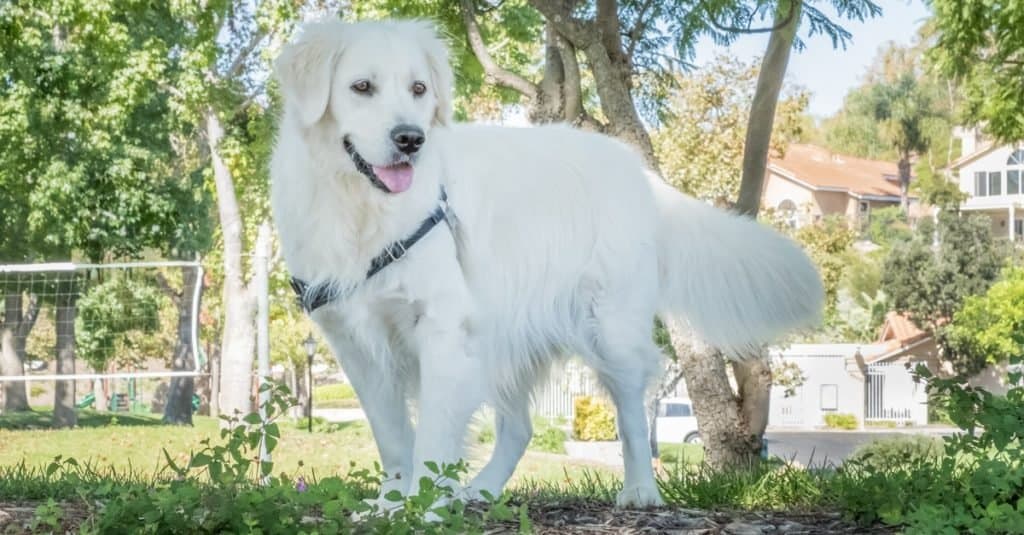
Beautiful English Cream Golden Retriever playing in the park.

The beautiful English Cream Golden Retriever is a medium-sized dog with very light, almost white fur.

Size and Weight

English cream retrievers are medium-sized dogs with fluffy coats of light golden fur. Most English cream male dogs weigh between 50 and 75 pounds and stand between 21 and 24 inches tall. Females weigh between 45 and 70 lbs and are 20 to 23 inches tall. Male golden retrievers are usually taller and heavier than their female counterparts, but the difference is not extreme.

Common Health Issues

Although the English cream retrievers are often healthier than their American counterparts, both bloodlines suffer from the same set of health issues. Most golden retrievers are susceptible to joint dysplasia, eye problems, and cancer. Ask your vet to check for:

  • Hip and elbow dysplasia
  • Retinal problems
  • Cancer
  • Heart problems
  • Food allergies
  • Skin allergies

Temperament

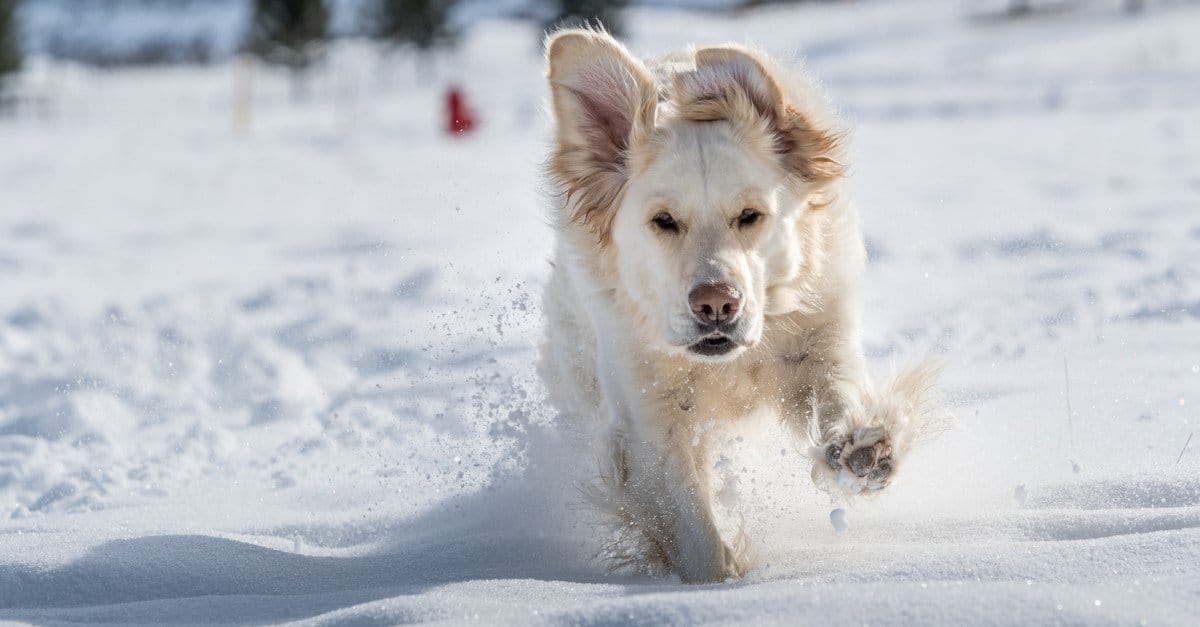
An English Cream Golden Retriever plays outside in the snow.

An English Cream Golden Retriever loves to play and be outside..

The English cream retriever has an intelligent and loyal personality. These dogs are sweet, loving, obedient, and attentive. You can expect your golden retriever to follow your commands and to love joining you for family activities.

Like most golden retrievers, English creams love to play, swim, run, and generally spend time outside. These dogs need space to move around; if they don’t have a way to burn off energy, they may start engaging in destructive behaviors. Make sure that your English cream has access to a yard, and remember to take them for a long walk every day.

Best Dog Food

Golden retrievers love to eat, which means that they tend to gain weight if their diet is not supervised. Find a high-quality kibble with plenty of protein, and feed moderate portions that match your vet’s recommendations. If your dog displays destructive behaviors, it may be consuming too many calories and should have its portions reduced.

English Cream Golden Retrievers can suffer from allergies, so it’s wise to go with a dog food formulated to help dogs with allergies.

Maintenance and Grooming
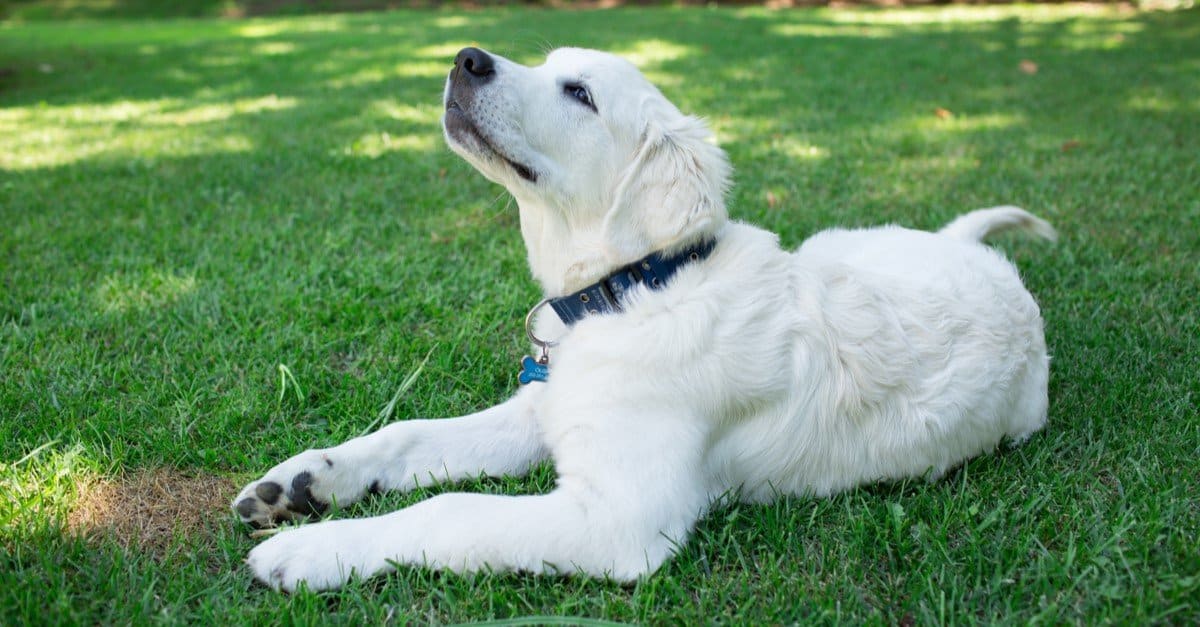
English cream golden retriever outside on the grass, smiling and happy.

English cream golden retrievers need daily brushing and lots of exercise.

Golden retrievers shed a lot, and English creams are no exception. Your dog will shed less if you brush it every day and take it in for regular grooming. You should also bathe your dog once a month, trim the nails, and inspect the ears for signs of infection.

Training

Golden retrievers are easy to train and love learning new commands. Start working with your new puppy as soon as possible to create a strong relationship with it. Once you’ve taught basic commands, look for tricks and activities that will help maintain your dog’s interest. Remember to hold refresher sessions regularly so your dog doesn’t forget everything that it has learned.

Exercise

Golden retrievers are used to having an active lifestyle. If your dog doesn’t get enough exercise, it may end up engaging in destructive behaviors. Start by making sure that your dog has access to a yard or another large space to run around. Then, keep them occupied with long walks, play sessions, and even trips to an area where they can safely swim.

Puppies

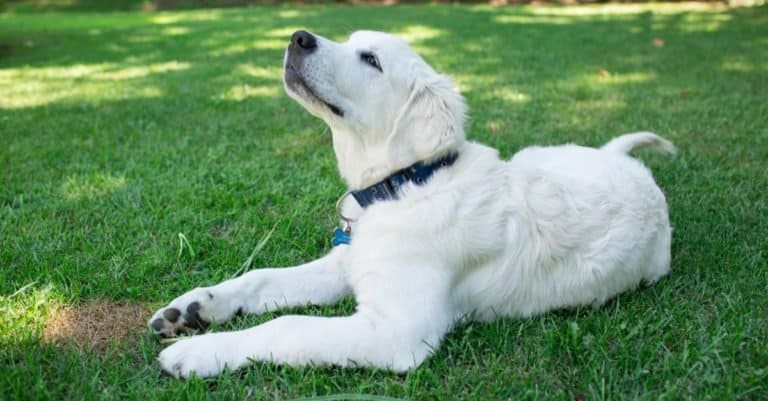
English cream golden retriever puppies posing on a white background.

English cream golden retriever puppies are adorable, but their color may darken as they grow to adulthood.

English cream puppies are sweet and engaging. One thing that many owners notice is that golden retriever puppies tend to darken in color as they get older; even if you choose a puppy with a particularly light coat, you may find that it is no longer a true English cream when it is fully grown. Because of this, you should select a dog with a loving personality, and let genetics decide what color it ends up.

Children

English cream golden retrievers are playful, loyal, and attentive. Although they get along well with older children and are good family dogs, it’s not wise to leave any golden retriever alone with small children, especially if they are too young to understand canine boundaries. Keep an eye on your English cream, and rescue it from the situation if you notice that it is tired or irritated.

Similar Dogs

Many people who want to purchase an English cream golden retriever are interested in the unique coat color or the slightly altered personality traits. If you want a similar dog, consider getting a golden retriever crossbreed or one of the many varieties of Labrador retrievers.

  • Labrador retriever: If you like the English cream golden retriever’s light-colored coat, consider adopting either a white or golden lab.
  • Golden shepherd: The golden shepherd is a majestic crossbreed with an excellent personality.
  • Goldendoodle: Poodle hybrids are usually hypoallergenic, and Goldendoodles are no exception. With beautiful curly coats of golden fur, these pets are both sweet and aesthetically pleasing.

View all 185 animals that start with E

Sources

  1. Pet Helpful / Accessed April 30, 2021
  2. Love Your Dog / Accessed April 30, 2021
  3. Summer Brook Goldens / Accessed April 30, 2021
  4. Golden Retriever Club of America / Accessed April 30, 2021
  5. Golden Hearts / Accessed April 30, 2021
  6. White Golden Retriever / Accessed April 30, 2021
  7. Dog Time / Accessed April 30, 2021

Thank you for reading! Have some feedback for us?


English Cream Golden Retriever FAQs (Frequently Asked Questions)

An English cream golden retriever is a golden retriever descended from an English line with a light-colored coat. This breed is not officially recognized by any kennel club, which means that many breeders may claim to offer English cream golden retrievers for sale without much oversight. However, all English cream golden retrievers can still technically be registered as regular golden retrievers, so be sure to ask for pedigree information before making your purchase.