
Wildlife of
United States Minor Outlying Islands
About United States Minor Outlying Islands
Scattered across the central Pacific and the Caribbean, the United States Minor Outlying Islands are a chain of small atolls, reefs, and rugged islets that act like safe boxes for ocean wildlife. Few people live on most islands, so seabirds, migratory shorebirds, nesting sea turtles, and rich marine life dominate. Natural forces like wind, waves, and seasonal migrations shape these places more than development. Key habitats include coral reefs, lagoons, and outer reef slopes (Palmyra, Kingman, Johnston, Wake) and guano-rich sandy islands with scrub that host breeding colonies (Baker, Howland, Jarvis, Midway). These sites are stepping-stones for pelagic species, nurseries and feeding grounds for reef fish and sharks, and vital nesting areas for seabirds and turtles. In the Caribbean, Navassa’s steep, isolated land and waters offer a similar refuge. Many islands are managed as refuges or monuments with limited access, so ocean life remains strong.
Geography
Tiny, scattered, mostly low-lying ocean islands and atolls across the Pacific, plus Navassa Island in the Caribbean. Isolation, small area, and reef coasts make wildlife mainly marine and coastal—coral reefs, lagoons, intertidal flats, open ocean—plus seabird colonies and sea turtle beaches. Little freshwater and thin soils limit land plants to sparse scrub; most life depends on ocean food.
Elevation Range
Sea level to ~77 m (Navassa Island plateau/high point), with most atolls only a few meters above sea level
Coastline
Entirely oceanic coastlines across the Pacific Ocean (ranging from tropical to subtropical latitudes) and the Caribbean (Navassa); predominantly reef-lined shores with lagoons, sandy/coral beaches, and (on Navassa) rocky/limestone cliffs; no major inland lakes or rivers
Key Landscapes
Protected Areas
The United States Minor Outlying Islands (USMOI) are small, mostly uninhabited U.S.-controlled islands and atolls in the Pacific and Caribbean. Land is mainly U.S. Fish and Wildlife Service refuges (Baker, Howland, Palmyra) that protect seabird colonies and sea turtle nests. Surrounding seas are in large Marine National Monuments (e.g., Pacific Remote Islands, Northwestern Hawaiian Islands including Midway). Access is restricted.
≈95-99% of terrestrial area is under formal federal conservation status (primarily USFWS refuges and/or monument designations); an even larger proportion of surrounding waters is protected via large marine national monuments.
National Parks & Preserves
Pacific Remote Islands Marine National Monument
≈1.27 million km² (marine monument; terrestrial areas are tiny, generally a few km² each)One of the world's largest protected ocean areas, encompassing several USMOI units (Baker Island, Howland Island, Jarvis Island, Johnston Atoll, Kingman Reef, and Palmyra Atoll). It is notable for vast, relatively intact coral reef and pelagic ecosystems, huge seabird breeding concentrations, and important habitat for sharks, tunas, and sea turtles.
Papahanaumokuakea Marine National Monument (includes Midway Atoll)
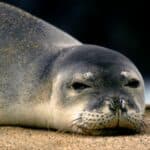
≈1,508,870 km² (582,578 sq mi) marine monument; Midway Atoll land ≈6.3 km² (≈1,548 acres)A vast protected seascape in the Northwestern Hawaiian Islands that includes Midway Atoll-one of the most important seabird sites in the Pacific and a key area for Hawaiian monk seals and sea turtles. Remote, predator-managed breeding habitat supports extraordinary seabird viewing (where access is permitted).
World War II Valor in the Pacific National Monument (Wake Island Unit)
Wake Atoll land ≈6.5 km² (monument unit; surrounding reef lagoon and nearshore waters provide key habitat)A highly restricted-access national monument unit on Wake Atoll; while designated for wartime history, the remote atoll also supports seabird colonies and marine wildlife typical of isolated Pacific atolls, with limited human presence outside military operations.
Wildlife Refuges
Midway Atoll National Wildlife Refuge
Land ≈6.3 km² (≈1,550 acres); also includes extensive surrounding waters within the monumentOne of the planet's most famous seabird refuges, supporting massive albatross nesting densities and serving as important habitat for Hawaiian monk seals and sea turtles. Intensive biosecurity and habitat management help sustain breeding success on these low-lying islands.
Palmyra Atoll National Wildlife Refuge
Land ≈4.6 km² (≈1.8 sq mi) plus surrounding marine watersA premier tropical atoll refuge with largely intact reef communities and important seabird and sea turtle habitat; long-term research and invasive-species management have made it a benchmark site for coral reef ecology and atoll restoration.
Johnston Atoll National Wildlife Refuge
Land ≈2.7 km²; nearshore reef habitats extend well beyond the isletsA remote atoll refuge with important seabird nesting and foraging habitat and productive reef/nearshore ecosystems; notable for supporting wide-ranging marine predators and large seabird roosts far from major human population centers.
Navassa Island National Wildlife Refuge
Land ≈5.2 km²; coastal cliffs and adjacent waters provide key nesting/foraging habitatA steep, remote Caribbean island refuge with significant seabird colonies and surrounding marine habitat; its isolation makes it valuable for protecting nesting seabirds and relatively undisturbed coastal ecosystems (access is typically tightly controlled).
Wilderness Areas
- Baker Island (roadless, uninhabited; managed primarily for seabird nesting and shoreline habitat)
- Howland Island (roadless, uninhabited; important for seabirds and coastal/marine ecosystems)
- Jarvis Island (roadless, uninhabited; major seabird breeding habitat with surrounding reef waters)
- Kingman Reef (no permanent landmass at high tide in many areas; highly intact reef ecosystem with minimal human footprint)
- Palmyra Atoll interior islets and lagoons (largely roadless and managed for ecological integrity and invasive-species prevention)
- Navassa Island interior plateau and coastal cliffs (roadless terrain; seabird nesting and rugged coastal habitat)
Wildlife
The United States Minor Outlying Islands (USMOI) are tiny, remote, and empty Pacific atolls and reefs, plus Navassa Island in the Caribbean. Wildlife is mostly ocean life: large seabird colonies, important sea turtle nesting beaches on some islands, and rich coral-reef fish communities, especially at Palmyra Atoll and Kingman Reef. Land life is low because islands are small, dry, and isolated—exceptions include Navassa’s reptiles and a few land birds and invertebrates. Many islands are National Wildlife Refuges or in big marine protected areas that show healthy tropical marine food webs.
Iconic Species

Endemic & Rare Species
Notable Populations
- Midway Atoll supports one of the largest Laysan Albatross breeding concentrations on Earth (a major share of the global population).
- Midway Atoll also hosts a globally significant breeding population of Black-footed Albatross in the North Pacific context.
- Several USMOI atolls support exceptionally large seabird colonies (e.g., sooty terns and other tropical seabirds), making them regionally important seabird production sites.
- Palmyra Atoll and Kingman Reef are widely cited among the most predator-rich, least-degraded coral reef systems under U.S. jurisdiction, with high shark and large-fish biomass compared with most populated Pacific reefs.
Recent Changes
- Translocation/reintroduction management: Laysan Ducks were established on Midway Atoll to create an additional population and reduce single-island extinction risk.
- Invasive species removal: multiple islands/atolls have undergone eradication/control of invasive mammals (notably rats) and other pests, improving seabird nesting success and native vegetation recovery (e.g., Palmyra and other refuge islands).
- Marine heatwaves and coral bleaching: periodic regional warming events have caused coral stress/bleaching in parts of the central Pacific, affecting reef habitat quality and potentially fish community structure over time.
- Seabird threats persist despite protection: bycatch risk in industrial fisheries, plastic ingestion, and storm/sea-level impacts continue to influence breeding success and adult survival for wide-ranging seabirds.
- Monk seal distribution and use of sites fluctuates: monitoring indicates changing haul-out/foraging patterns at some Northwestern Hawaiian Islands sites, influenced by prey availability, ocean conditions, and local disturbance history.
Wildlife Viewing
Wildlife viewing in the United States Minor Outlying Islands is amazing but access is limited. These remote Pacific and Caribbean islands and atolls protect seabird colonies, coral reefs, sharks and fish, sea turtles, and migrating whales. Most are uninhabited and managed as National Wildlife Refuges, Marine National Monuments, or controlled areas—visits need permits or are via research or monitoring programs.
Best Seasons
Winter (Dec-Feb)
Peak seabird activity in many central Pacific colonies (courtship, nest building, incubation; exact timing varies by species). Around Midway, this is prime time for albatross courtship and nesting behaviors. Seas can be rougher with winter swell; weather windows matter for small-ship operations.
Spring (Mar-May)
Chick-rearing ramps up for many seabirds; high feeding activity near colonies. Reef visibility can be excellent during calmer periods between winter swell and summer storm patterns. Good season for pelagic encounters on offshore transits (dolphins, tuna, seabirds following bait).
Summer (Jun-Aug)
Generally calmer seas in parts of the central Pacific can improve small-vessel operations and snorkeling/diving logistics (location-dependent). Sea turtle nesting and hatchling seasons can occur on some islands/atolls in tropical latitudes (timing varies widely). Heat and humidity are higher; tropical systems begin to influence the region.
Fall (Sep-Nov)
A strong transition season: some seabird species fledge and disperse while others begin returning. Ocean conditions can be variable, with higher tropical cyclone risk in parts of the Pacific (especially Aug-Oct). In good weather windows, this can be excellent for reef time and pelagic birding during migrations.
Top Wildlife Experiences
- Midway Atoll (within Papahanaumokuakea Marine National Monument): Watch Laysan albatross courtship dances and nesting (winter-spring), plus dense seabird colonies across Sand/Spit/Eastern Islands (access is highly controlled; plan around permitted programs).
- Palmyra Atoll: Snorkel or dive lagoon and outer reef habitats to see reef sharks, large schools of jacks, bumphead parrotfish, and intact coral communities; focus on current-swept channels and outer reef drop-offs (typically only via research/partner operations and permits).
- Kingman Reef (remote, mostly submerged): Blue-water and reef-edge wildlife viewing for apex predators and big schools-one of the most intact predator-dominated reef systems on Earth; best experienced from expedition vessels with strict permits and ideal sea state.
- Jarvis, Baker, and Howland Islands: Seabird colony observation (tropicbirds, boobies, terns, frigatebirds depending on island) and shoreline turtle sign surveys; these are classic 'true wilderness' field days usually tied to monitoring teams.
- Johnston Atoll: Combine seabird viewing with reef observation/snorkeling opportunities where allowed; look for nesting/roosting seabirds and clear-water reef assemblages (access restrictions apply).
- Navassa Island (Caribbean): Cliff and coastal seabird watching (e.g., frigatebirds/tropicbirds and other tropical seabirds) and dramatic limestone shoreline landscapes-generally restricted and not set up for tourism; typically only possible for authorized scientific work.
- Wake Island: Lagoon/reef-edge wildlife observation (shorebirds, seabirds, reef fish) during authorized access; it's primarily controlled for operational reasons, so wildlife viewing is usually incidental to permitted travel.
Wildlife Watching Types
Guided Options
- U.S. Fish & Wildlife Service (USFWS) National Wildlife Refuge access via Special Use Permits: Most of these islands are refuges or refuge-like protected units; access is generally permit-only and often limited to research, monitoring, management, or essential operations.
- Papahanaumokuakea Marine National Monument permit pathways (covers the Northwestern Hawaiian Islands region, including Midway Atoll): Authorized activities may include research, education, conservation, and limited operational visits; expect extensive planning lead time and strict biosecurity protocols.
- The Nature Conservancy (TNC) / research partner opportunities at Palmyra Atoll: Access is commonly tied to scientific projects, conservation programs, or affiliated logistics; availability varies by year and program needs.
- Specialized expedition cruise operators (rare and highly variable): Occasional itineraries in the remote central Pacific may include permitted approaches/landings where allowed; verify permits, landing permissions, and whether activities are ship-based only.
- University/NGO seabird and marine ecosystem monitoring programs: Some islands are visited periodically for colony surveys, invasive species prevention, coral reef assessments, and turtle monitoring-participation is typically restricted to qualified staff/volunteers under permits.
- Military/operational access routes (e.g., Wake Island): Not a tourism product; wildlife viewing may be possible only incidentally and under strict access control.
Ecosystems
The United States Minor Outlying Islands are mostly uninhabited coral atolls, reefs, and islands in the central Pacific (e.g., Midway, Palmyra) and Navassa in the Caribbean. Coral-reef and ocean systems (lagoon to deep ocean) dominate, with salt-scrub, herbfields, mangroves, and limited forest. They are key seabird nesting sites and support reef fish, sharks, and sea turtles.
Biomes
Surrounding tropical/subtropical waters, coral reefs, atoll lagoons, and pelagic open ocean dominate; includes reef slopes and offshore deep-water habitats supporting large predator assemblages and migratory species.
Vast majority of the area (>99% by surface area when including surrounding waters); present around all islands/atolls/reefs.
Shallow atoll lagoons, intertidal flats, and brackish/saline wetlands; includes mangrove-lined lagoon margins (notably Palmyra) and seasonally flooded low-lying areas.
Patchy but ecologically prominent on atolls; most developed on Palmyra and parts of Midway/Wake lagoon systems.
Very dry, low-lying equatorial islands with sparse vegetation, salt spray exposure, and limited soils; plant communities often dominated by salt-tolerant shrubs and grasses.
Common on Baker, Howland, and Jarvis; also present as dry strand/scrub zones on several atolls.
Dry limestone/rocky island vegetation with scrub and dry-forest elements where soils are thin and rainfall is seasonal; supports nesting seabirds and reptiles in open-canopy habitats.
Most characteristic on Navassa; also occurs as dry woodland/scrub mosaics on some Pacific islands' interior patches.
Humid lowland tropical forest elements where rainfall and groundwater allow denser canopy and understory; in USMOI this is best expressed as moist tropical forest/thicket on Palmyra's islets.
Localized-primarily Palmyra Atoll (small, fragmented patches).
Freshwater is extremely limited; mostly transient rainwater pools or small freshwater lenses where present, with little to no permanent streams or lakes.
Minimal and ephemeral; not a dominant biome on any island.
Habitats
Fringing reefs, reef flats, and outer-reef slopes with high coral and reef-fish diversity; especially notable at Kingman Reef, Palmyra, Johnston, and parts of the Northwestern Hawaiian Islands (Midway).
Pelagic waters surrounding the islands, important for foraging seabirds (tropicbirds, terns, albatross) and migratory fauna (tunas, billfishes, marine mammals).
Deep pelagic and slope environments beyond reef margins; supports deep-water communities and acts as connectivity corridors among Pacific/Caribbean marine provinces.
Soft-bottom lagoon floors and deeper benthic substrates (sand/rubble) around atolls and reefs; important for invertebrates and demersal fishes.
Narrow coastal strands and storm berms used extensively by nesting seabirds and (in some places) sea turtles; highly exposed to salt spray and wave action.
Coral-sand beaches on atolls and pocket beaches on rocky islands; key nesting/haul-out habitat (where present) and sensitive to erosion and storm overwash.
Wave-cut limestone and basaltic/rocky shorelines (notably Navassa; also some Pacific islands with hardened reef rock), supporting intertidal invertebrate assemblages.
Steep sea cliffs and escarpments (especially Navassa), providing nesting ledges and reducing human/introduced predator access in some areas.
Atoll lagoon margins, intertidal flats, and low-lying saline/brackish wet areas; important for shorebirds and nutrient cycling between seabird colonies and nearshore reefs.
Mangrove stands and mangrove-fringed lagoon edges-most notably on Palmyra-supporting juvenile fishes, invertebrates, and shoreline stabilization.
Small, saline to brackish marshy flats and ponded areas behind beach ridges or within atoll interiors (where geomorphology allows), used by waterbirds and shorebirds.
Salt-tolerant coastal scrub and low shrub/herb communities on arid islands (e.g., Baker/Howland/Jarvis) and dry zones on atolls; often shaped by seabird guano inputs and wind exposure.
Herbfields and grass-dominated open areas, including disturbed/managed grasslands on Midway (legacy of past habitation) and natural strand herb communities on several islands.
Low-stature island forest/thicket where moisture and soils allow denser growth; best developed on Palmyra's islets (often mixed native and introduced species depending on island).
Solution cavities and small caves in limestone terrain (most relevant on Navassa), providing roosting/refuge microhabitats and unique invertebrate niches.
Ecoregions
Conservation
Primary Threats
- Sea-level rise, storm overwash, and shoreline erosion cut nesting and roosting habitat on low atolls (Midway, Palmyra, Wake, Baker/Howland/Jarvis). Ocean warming, heatwaves, and acidification cause coral bleaching and reef loss at Kingman, Palmyra, Jarvis, Johnston, reducing prey for seabirds and marine predators.
- Non-native rats, ants, and other predators/competitors can devastate ground-nesting seabirds and turtle nests; invasive plants can alter native vegetation structure used for nesting. Biosecurity risk is elevated at islands with airstrips/ports and intermittent human presence (notably Wake and Midway), where new introductions can occur via cargo, aircraft, or vessels.
- Marine debris, especially plastics and old fishing gear, piles up on remote beaches and reef flats. It tangles and is eaten by seabirds, sea turtles, and seals. Old military pollution (fuel, chemicals) and site damage are local problems at Johnston Atoll, Wake, and Midway.
- Although large monument protections limit extraction in many waters, migratory and wide-ranging species (tunas, sharks, billfish) are affected by fishing pressure outside protected boundaries and by illegal, unreported, and unregulated (IUU) activity. Reduced apex predator biomass and altered food webs can indirectly impact seabirds and reef health.
- Disturbance is generally low due to minimal habitation, but concentrated where operations occur (military activities on Wake; refuge management, research, and limited visitation on Midway; conservation staff presence on Palmyra). Noise, light, aircraft operations, and ground traffic can disrupt seabird colonies and increase collision risk, especially during peak breeding seasons.
- Runways, seawalls, buildings, and shoreline modification can fragment or compress limited terrestrial habitat on tiny islands. Aging infrastructure increases risks of fuel spills and debris, and adaptation measures (e.g., hardening coastlines) can further reduce natural beach/strand nesting areas for turtles.
- Even without development, effective habitat loss occurs when overwash and erosion remove vegetated nesting areas, when coral reefs shift to algae-dominated states after bleaching, and when invasive vegetation changes open sandy nesting habitat into dense shrub/grass cover unsuitable for some seabirds.
- High-density seabird colonies (notably at Midway) are susceptible to outbreaks such as avian botulism and other mortality events, which can be exacerbated by warming temperatures and changes in freshwater availability. Disease risk is also linked to introduced vectors or pathogens arriving via aircraft/ships.
- Remote island ecosystems depend on intact regional ocean productivity; shifts in prey availability due to warming waters and altered currents can function like resource depletion for seabirds and marine predators, increasing breeding failure and reducing survival.
- Historic and ongoing modifications-dredging, fill, vegetation alteration, and altered hydrology from past military or settlement activities-have reshaped some islands' geomorphology and habitat (e.g., parts of Midway and Johnston). These changes can reduce natural resilience to storms and sea-level rise.
Did You Know?
Some of the most "wild" wildlife on Midway lives right next to people: albatrosses routinely nest beside roads, buildings, and runways-because there are essentially no native land predators on the atoll, even awkward, ground-nesting chicks can fledge in the open.
Kingman Reef is so low-lying that it has almost no dry land most of the time-yet underwater it functions like a packed tropical metropolis, with dense corals and large predator populations despite the near absence of terrestrial habitat.
Removing rats from Palmyra in 2011 let seabirds return. Their guano boosted nutrients and helped native forest plants recover, showing a clear island-wide nutrient feedback rarely seen elsewhere.
These islands can act like "mid-ocean airports" for birds: remote atolls such as Palmyra and Midway provide critical resting and foraging points for long-distance migratory shorebirds and seabirds that may fly nonstop for thousands of kilometers over open ocean.
Wildlife management here often targets tiny, unexpected enemies: on several of these refuges, conservation work has focused on invasive ants and other invertebrates because they can swarm and kill hatchlings or blind nesting seabirds-small invaders with outsized ecosystem effects.
Midway Atoll is home to the oldest known wild bird: "Wisdom," a Laysan albatross first banded there in 1956 and still breeding-making her at least 70+ years old, the longevity record for a banded wild bird.
Midway Atoll is one of the world's biggest albatross nurseries: roughly two-thirds of the global Laysan albatross population nests there in a typical year (on the order of ~1 million+ birds), alongside a major Black-footed albatross colony.
Kingman Reef has recorded some of the most predator-dominated coral-reef fish communities ever measured-field surveys found top predators (including sharks and large jacks) making up the great majority of reef-fish biomass, a global outlier linked to minimal fishing pressure.
Kingman Reef is also noted for exceptionally high live coral cover (often reported in the ~70-90% range in surveys), placing it among the most coral-intact U.S.-affiliated reefs documented in the Pacific.
Palmyra Atoll is one of the very few U.S.-controlled places with a robust native coconut crab population (the world's largest land arthropod), making it a standout U.S. stronghold for this increasingly threatened species in the Pacific.