N S W E
Wildlife Expeditions

Wildlife of
Colorado

From alpine tundra to canyon country, Colorado's dramatic elevation gradient packs iconic megafauna, rare alpine specialists, and prairie wildlife into one state.
192 Species
268,431 km² Land Area
Overview

About Colorado

Colorado's wildlife changes with altitude. In one day's drive you can go from shortgrass prairie and semi-arid basins up to montane forests, subalpine meadows, and alpine tundra above treeline. This vertical range, plus large public lands, supports wide-ranging ungulates (hoofed animals), large carnivores, and cold-adapted specialists like pika and ptarmigan. Key ecosystems shape where animals live: alpine tundra and windswept ridgelines host hardy specialists that survive long winters and short summers; spruce-fir and lodgepole pine forests shelter songbirds, owls, and forest carnivores; and the sagebrush steppe and high plateaus of the Western Slope support mule deer, sage-dependent birds, and pronghorn. Cottonwood-willow corridors along rivers—from the Colorado River headwaters to prairie streams—are hotspots for beavers, raptors, migratory birds, and amphibians. Colorado's close mix of high alpine and arid canyonlands, famed elk country, and returning apex predators makes a lively wildlife calendar of migrations, rutting, and summer blooms.

Physical Features

Geography

Colorado's wildlife patterns come from big elevation changes and moisture differences from the Rocky Mountains. Alpine tundra and subalpine forests cover high peaks and the Continental Divide. Mid-elevation montane forests and foothill shrublands fade into shortgrass prairie eastward. To the west and south, rain-shadow basins, plateaus, and canyonlands hold semi-arid shrublands, pinon-juniper woodlands, and riparian corridors.

268,431 km² (land area) Land Area
8th largest U.S. state Size Rank
State Type
Elevation Range

~1,010 m (Arikaree River in Yuma County) to 4,401 m (Mount Elbert)

Coastline

No ocean coastline; inland waters include major reservoirs and high-elevation lakes (important local aquatic and wetland habitats).

Key Landscapes

Southern Rocky Mountains and the Continental Divide (alpine tundra, subalpine and montane forests) Front Range foothills and hogbacks (ecotones between mountains and plains) High parks and basins (South Park, North Park, San Luis Valley; sagebrush steppe, wetlands, grasslands) Colorado Plateau in western Colorado (mesas, canyonlands, pinyon-juniper woodlands, desert shrublands) Eastern High Plains/shortgrass prairie (prairie ecosystems and prairie river corridors) Major river systems and riparian corridors: Colorado River headwaters; Arkansas, South Platte, Rio Grande, Gunnison, Yampa/Green (migration routes, breeding habitat, wetlands)
State Symbols

Official Wildlife Symbols

animal

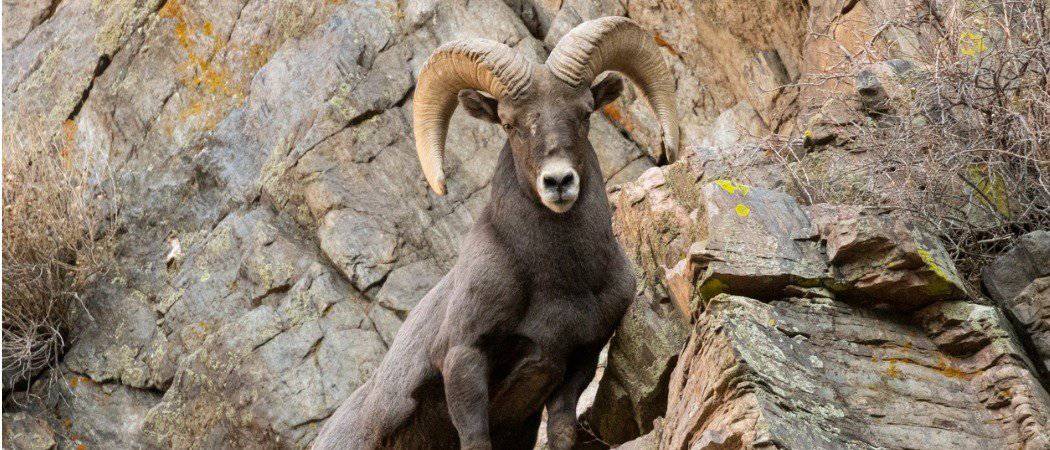
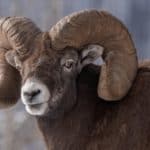
Rocky Mountain bighorn sheep

Designated 1961

bird

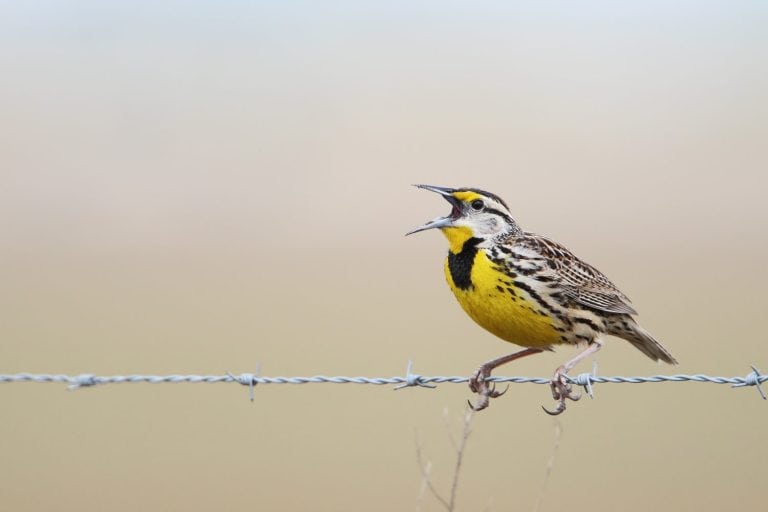
Lark bunting

Designated 1931

fish

Greenback cutthroat trout

Designated 1994

insect

Colorado hairstreak (butterfly)

Designated 1996

reptile

Western painted turtle

Designated 2008

wildflower

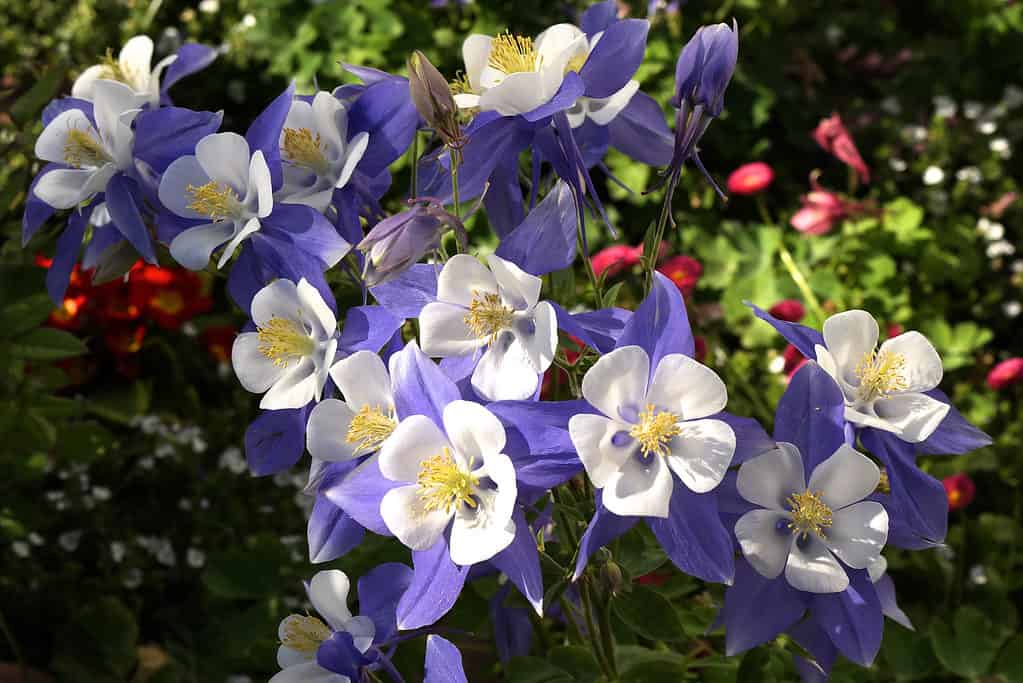
Rocky Mountain columbine

Designated 1899

tree

Colorado blue spruce

Designated 1939

Parks & Reserves

Protected Areas

Colorado's protected areas include large federal lands (NPS, USFS, USFWS, BLM), plus state parks and conservation easements on ranches. They protect many habitats—from alpine tundra and subalpine forest to sagebrush basins, riparian corridors, dunes, and shortgrass prairie—and species like elk, bighorn sheep, moose, and migratory birds, especially in the San Luis Valley and along reservoirs and rivers.

Protected Coverage

≈30-35% (public lands and designated conservation/protected areas combined; varies by definition and includes large federal holdings plus state parks and conservation lands)

National Parks & Preserves

Rocky Mountain National Park

~265,800 acres (~415 sq mi)

High-elevation wildlife viewing across montane forests, subalpine meadows, and alpine tundra; well-known elk rut viewing in fall and strong conservation of intact headwaters and alpine habitats.

Rocky Mountain elk Bighorn sheep American pika Mule deer Black bear

Great Sand Dunes National Park and Preserve

~149,000 acres (park + preserve)

Protects North America's tallest dunes alongside wetlands, grasslands, and alpine watersheds-an unusually diverse mosaic that supports both desert-adapted mammals and large ungulates; important for night-active species and migratory birds in nearby wetlands.

Pronghorn Rocky Mountain elk Mule deer Coyote Kangaroo rat (Ord's/related species)

Black Canyon of the Gunnison National Park

~30,750 acres

Steep canyon walls and cliffs provide prime raptor habitat and rugged terrain for large mammals; the Gunnison River corridor supports riparian wildlife in an otherwise dry landscape.

Peregrine falcon Golden eagle Bighorn sheep Mule deer River otter

Mesa Verde National Park

~52,500 acres

Pinyon-juniper woodlands and canyon systems on the Colorado Plateau support a distinct wildlife community and important habitat connectivity near the Four Corners region.

Mule deer Black bear Mountain lion Wild turkey Bobcat

State & Provincial Parks

State Forest State Park

~71,000 acres

One of Colorado's best places to see moose, with extensive high-country forests, willow wetlands, and mountain meadows that support large mammals and boreal-leaning species.

Moose Rocky Mountain elk Beaver Black bear Canada lynx (regionally present)

Mueller State Park

~5,100 acres

Productive montane habitat (meadows and ponderosa/Douglas-fir forests) known for reliable elk and mule deer viewing; strong bird diversity and healthy predator-prey dynamics.

Rocky Mountain elk Mule deer Black bear Wild turkey Abert's squirrel

John Martin Reservoir State Park

~11,600 acres (park and wildlife area complex; commonly cited around this scale)

Major migratory bird hotspot on the Arkansas River corridor; wetlands and open water attract large concentrations of waterfowl, shorebirds, and raptors.

Bald eagle Sandhill crane American white pelican Snow goose American avocet

Ridgway State Park

~3,100 acres

Reservoir, riparian areas, and surrounding shrublands/foothills support raptors, waterbirds, and large mammals; good multi-season wildlife viewing in the Uncompahgre Valley.

Osprey Bald eagle Mule deer Black bear Red fox

Wildlife Refuges

Rocky Mountain Arsenal National Wildlife Refuge

~15,000 acres

Large protected prairie landscape on the Denver metro edge; exceptional for grassland wildlife recovery and viewing, including reintroduced/managed herds and prairie dog-associated species.

American bison Bald eagle Burrowing owl Black-footed ferret (reintroduction area) Black-tailed prairie dog

Monte Vista National Wildlife Refuge

~14,800 acres

Internationally significant staging area for migratory birds in the San Luis Valley, especially during spring crane migration; extensive wetlands and adjacent agricultural fields managed for waterfowl.

Sandhill crane Snow goose Ross's goose Bald eagle Coyote

Alamosa National Wildlife Refuge

~11,000 acres

Wetlands and riparian habitats in the San Luis Valley supporting waterfowl, shorebirds, and wintering raptors; important complement to nearby refuges and state wildlife areas.

Sandhill crane Pronghorn Elk American avocet Northern harrier

Arapaho National Wildlife Refuge

~1,500 acres

High-elevation wetlands and lakes in North Park critical for breeding and migratory birds; strong habitat value for waterbirds and wet-meadow species in an otherwise dry basin.

Trumpeter swan Sandhill crane Moose Bald eagle Wilson's phalarope

Wilderness Areas

  • Weminuche Wilderness
  • Maroon Bells-Snowmass Wilderness
  • Flat Tops Wilderness
  • Indian Peaks Wilderness
  • Collegiate Peaks Wilderness
  • South San Juan Wilderness
  • Mount Zirkel Wilderness
  • Sangre de Cristo Wilderness
  • Uncompahgre Wilderness
  • Gunnison Gorge (Wilderness/roadless canyonlands along the Gunnison River)
Animals

Wildlife

Colorado's wildlife is defined by extreme elevation gradients and a mix of Rocky Mountain alpine tundra, conifer forests, aspen parklands, sagebrush basins, canyonlands, rivers, and shortgrass prairie. This habitat diversity supports classic big-game communities (elk, mule deer, bighorn sheep), high-elevation specialists (pika, ptarmigan), prairie species (pronghorn, prairie dogs), and imperiled big-river fishes of the Colorado River Basin. Seasonal migrations-especially of elk and sandhill cranes-are a major part of the wildlife experience.

~100-110 species Mammals
~500-520 species (regularly recorded) Birds
~45-55 species Reptiles
~20-25 species Amphibians
~90-110 species (native + introduced) Fish

Endemic & Rare Species

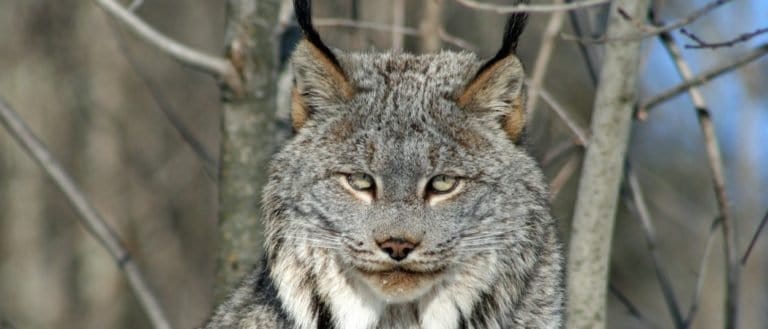
Canada Lynx

Lynx canadensis

Federally Threatened (U.S.); reintroduced and managed in Colorado

A high-elevation boreal forest predator; Colorado's population is a notable restoration success and a focal species for winter forest habitats.

Black-footed Ferret

Mustela nigripes

Federally Endangered; reintroduced at limited sites

One of North America's rarest mammals, dependent on prairie dog colonies; Colorado supports reintroduction efforts and ongoing management.

Gunnison Sage-Grouse

Centrocercus minimus

Federally Threatened; range-restricted Colorado/Utah species

A sagebrush obligate with strongholds in southwestern Colorado; conservation of lekking and sagebrush landscapes is centered here.

Greater Sage-Grouse

Centrocercus urophasianus

State-sensitive/declining in many areas; habitat-dependent

A defining bird of Colorado's sagebrush basins; populations are closely tied to intact sagebrush and are a major conservation priority.

Colorado Pikeminnow

Ptychocheilus lucius

Federally Endangered

A large native predator fish of the Colorado River Basin; recovery efforts in western Colorado rivers are nationally significant.

Razorback Sucker

Xyrauchen texanus

Federally Endangered

An iconic big-river fish of the Colorado River system; Colorado river reaches are important for recovery stocking and habitat work.

Greenback Cutthroat Trout

Oncorhynchus clarkii stomias

Conservation-dependent/at-risk; historically listed under ESA; native lineage managed in headwaters

Colorado's state fish and a symbol of native coldwater conservation; persists mainly in protected headwater streams via intensive management.

Boreal Toad

Anaxyrus boreas boreas

State Endangered (Colorado); regionally imperiled

A high-elevation amphibian impacted by chytrid fungus and habitat pressures; a key species for alpine/subalpine wetland conservation.

Preble's Meadow Jumping Mouse

Zapus hudsonius preblei

Federally Threatened (in portions of its range); locally sensitive

A riparian specialist along Colorado's Front Range corridors; important for conservation of streamside habitat in rapidly growing areas.

Notable Populations

  • Large migratory elk herds and major wintering concentrations in mountain valleys and parks.
  • San Luis Valley sandhill crane migration/staging, one of the best-known crane-viewing areas in the U.S. interior West.
  • Core remaining Gunnison sage-grouse populations concentrated in southwestern Colorado basins.
  • Colorado River Basin endangered fish recovery reaches (e.g., upper Colorado/White/Yampa systems) supporting nationally significant restoration programs.
  • Substantial pronghorn populations on eastern plains and intermountain basins, a defining grassland/sage-steppe wildlife spectacle.

Recent Changes

  • Gray wolf reintroduction initiated by the state (first releases in 2023, additional releases following), reshaping predator-prey management and public interest.
  • Canada lynx reintroduction (late 1990s-early 2000s) resulted in an established population; continued monitoring focuses on habitat and connectivity.
  • Moose have expanded and become more common/visible in many mountain valleys and riparian zones compared with past decades.
  • Chronic wasting disease (CWD) has continued to affect mule deer, white-tailed deer, and elk in parts of the state, influencing management and herd performance.
  • Sage-grouse (both greater and Gunnison) have faced ongoing habitat pressure and localized declines; conservation efforts emphasize sagebrush protection and lek disturbance reduction.
  • Boreal toad declines linked to chytrid fungus and environmental stressors have prompted intensive monitoring and reintroduction/augmentation efforts in some areas.
  • Bald eagles and several large raptors have generally increased and expanded in visibility following long-term protections and improved waterbird/fish resources in many reservoirs and rivers.
Visit

Wildlife Viewing

From shortgrass prairie and canyonlands to subalpine forests and alpine tundra, Colorado offers wildlife watching year‑round. You can see elk, bighorn sheep, mule deer, pronghorn, moose (north/central); black bears, coyotes, and sometimes mountain lions. Birds gather along rivers and reservoirs. Top spots include Rocky Mountain National Park and San Luis Valley; many reached by scenic byways or short trails.

Best Seasons

Spring (Mar-May)

Migration and new life. Look for returning songbirds and raptors, lekking grouse (where accessible), and calves/fawns in lower elevations. Great birding along the Front Range foothills, reservoirs, and riparian corridors. Shoulder-season crowds make parks and wildlife areas easier to explore; expect variable weather in the mountains and muddy trails at times.

Summer (Jun-Aug)

High-country access and peak diversity. Alpine wildflower hikes often pair with sightings of pika, marmot, and ptarmigan in tundra zones; moose are most likely near willow wetlands in cooler morning/evening. Excellent dawn/dusk viewing for elk and mule deer in meadows. Warm-weather birding is strong in mountain valleys and wetlands; afternoon thunderstorms are common at higher elevations.

Fall (Sep-Nov)

Best big-game viewing. Elk bugling and rut activity peaks in September/early October, with dramatic behavior and frequent sightings in mountain parks and valleys. Mule deer and pronghorn activity increases on the plains and foothills. Raptors concentrate along ridgelines during migration. Cooler temperatures and golden aspens make for comfortable, photogenic wildlife drives.

Winter (Dec-Feb)

Wildlife gathers at lower elevations. Bighorn sheep are easier to spot on slopes and canyon edges. Elk and deer use winter ranges. Winter birding is strong for bald eagles and raptors near open water and valleys. Late February sees sandhill cranes arrive in the San Luis Valley. Snow makes tracking and photos rewarding; plan for cold mornings and rough roads.

Top Wildlife Experiences

  • Dawn elk viewing and bugling season in Rocky Mountain National Park (Estes Park side): drive or bike Bear Lake Road corridor and Moraine Park/Upper Beaver Meadows at first light; bring binoculars and keep distance during rut.
  • Bighorn sheep watching in Waterton Canyon (southwest of Denver): walk the canyon road/trail in the morning for frequent sheep sightings; ideal for easy-access viewing and photography.
  • Sandhill crane spectacle in the San Luis Valley: base near Alamosa/Monte Vista; visit Monte Vista and Alamosa National Wildlife Refuges at sunrise/sunset during peak migration for massive fly-ins and calls.
  • Pronghorn and prairie wildlife drive on the northeastern plains: explore Pawnee National Grassland and surrounding county roads for pronghorn, ferruginous hawks, prairie falcons, and prairie songbirds; best in early morning with a scope.
  • Moose-spotting in willow wetlands near Walden (North Park) and along the Colorado River headwaters: look at dawn/dusk near marshy edges and slow water; keep a wide berth-moose can be aggressive.
  • Raptor viewing along the Arkansas River corridor: scan cottonwood bottoms and cliffs near Cañon City/Royal Gorge area in cooler months for eagles, hawks, and falcons; pair with a riverside walk for varied habitats.
  • Mesa and canyon wildlife on the Western Slope: explore Colorado National Monument (near Grand Junction) for desert bighorn sightings (occasional), mule deer, and canyon birds; golden-hour light is excellent.
  • High-alpine mammal and bird hike: in mid-summer, take an early start on a tundra-edge trail in Rocky Mountain National Park or Independence Pass area to look for pika, marmot, and high-country birds; turn around if storms build.

Wildlife Watching Types

Big-game viewing (elk, mule deer, moose, bighorn sheep, pronghorn) Birding hotspots (wetlands, refuges, reservoirs, riparian corridors, mountain meadows) Raptor watching (migration ridgelines, river corridors, winter eagle viewing) Alpine wildlife hikes (pika, marmot, ptarmigan; tundra-edge species) Prairie wildlife drives (pronghorn, grassland birds, coyotes) Canyon and desert-edge wildlife watching (mule deer, ravens, raptors; occasional bighorn) Night-sky + nocturnal wildlife listening/spotting (owls, coyotes; where permitted and ethical) Wildlife photography trips (rut behavior, winter concentration areas, sunrise/sunset refuges)

Guided Options

  • Rocky Mountain National Park ranger-led walks/talks (seasonal): interpretive programs that often include wildlife viewing etiquette and habitat-focused hikes.
  • Colorado Parks and Wildlife (CPW) wildlife area programs and regional events: check CPW listings for guided walks, watchable wildlife days, and seasonal viewing updates for SWAs and state parks.
  • San Luis Valley crane viewing programs: refuges and local organizations often host peak-season viewing days/auto-tour guidance-plan around sunrise/sunset flight times.
  • Local naturalist-led birding tours along the Front Range and in the San Luis Valley: half-day birding outings are ideal for visitors who want reliable species ID and hotspot routing.
  • Private elk-rut photography workshops (Sept-Oct) based around Estes Park/Grand Lake or mountain valleys: focused on ethical distance, behavior, and best light.
  • State park nature centers and guided hikes (e.g., Cherry Creek, Barr Lake, Staunton): accessible options near Denver for waterfowl, raptors, and mammals without long drives.
  • Scenic wildlife-viewing shuttles/van tours (varies by gateway towns): some operators run seasonal wildlife-focused drives at dawn/dusk-useful for visitors who prefer not to drive or want expert spotting.
Habitats

Ecosystems

Colorado has big changes in elevation, from shortgrass prairie on the High Plains to subalpine forests, alpine tundra, and glaciated mountain peaks, plus semi‑arid plateaus, canyonlands, and basins on the Western Slope. This creates cold, snowy high country and warm, dry valleys and supports many ecosystems like grasslands, shrublands, conifer forests, riparian corridors, wetlands, and alpine areas.

Biomes

Temperate Grassland

Shortgrass prairie dominates the eastern plains, with mixed-grass patches and prairie riparian ribbons along streams and rivers.

Primarily eastern Colorado (High Plains); also valley grasslands and parks in intermontane basins.

Temperate Forest

Montane and subalpine forests of ponderosa pine, Douglas-fir, lodgepole pine, Engelmann spruce, and subalpine fir; broadleaf cottonwood/aspen stands occur in patches and along riparian areas.

Widespread across the Rocky Mountains and higher mesas; forest bands increase with elevation and precipitation.

Cold Desert

Semi-arid to arid shrublands, pinyon-juniper woodlands, and badlands/canyon landscapes on the Colorado Plateau and in rain-shadow basins; vegetation includes sagebrush, saltbush, and drought-tolerant grasses.

Common on the Western Slope (plateaus, valleys, canyonlands) and in some intermountane basins.

Alpine

Above treeline: alpine meadows, fellfields, talus slopes, and sparse vegetation adapted to wind, frost, and short growing seasons.

High peaks and ridgelines of the central and northern Rockies; patchy but prominent at highest elevations.

Tundra

Alpine tundra communities (cushion plants, sedges, lichens) on high, cold plateaus and summits with permafrost-like soil processes in places.

Highest elevations statewide, especially the Front Range and central Rockies; localized to above-treeline zones.

Freshwater

Snowmelt-driven headwater streams, major rivers (Colorado, Arkansas, South Platte, Rio Grande), montane lakes, reservoirs, and spring-fed systems.

Statewide along river networks and in mountain watersheds; density highest in the Rockies.

Wetland

Riparian wetlands, willow carrs, wet meadows, fens, and marshes around lakes/reservoirs; many are groundwater-fed and biodiversity-rich.

Scattered statewide; concentrated in mountain valleys, along major rivers, and in select plains playas and floodplains.

Habitats

Grassland

Eastern shortgrass prairie with blue grama and buffalo grass; supports prairie dog colonies and grassland birds.

Prairie

High Plains prairie complexes, including sandier prairie pockets and riparian prairie edges.

Steppe

Sagebrush steppe and mixed shrub-grass communities in basins and lower-elevation valleys, especially on the Western Slope.

Shrubland

Sagebrush, saltbush, mountain shrub (serviceberry, mountain mahogany) and canyon shrub communities across semi-arid regions.

Desert

Cold-desert canyonlands and badlands (e.g., around parts of the Colorado Plateau) with sparse vegetation and biological soil crusts.

Forest

Broad montane-to-subalpine forest zones forming major wildlife habitat and watershed protection areas.

Coniferous Forest

Ponderosa pine woodlands/forests at lower montane elevations; lodgepole pine and spruce-fir forests higher up; frequent fire ecology in many zones.

Deciduous Forest

Quaking aspen groves on montane slopes and parks; cottonwood galleries along rivers and in floodplains.

Woodland

Pinyon-juniper woodlands on foothills and mesas of the Western Slope and some lower montane areas.

Mountain

Rocky Mountain terrain from foothills to high peaks, including glacial cirques, talus, and steep elevational gradients.

Tundra

Alpine tundra on windswept ridges and plateaus above treeline; fragile soils and slow recovery from disturbance.

Alpine Meadow

High-elevation meadows with summer wildflowers and sedge/grass communities; key habitat for pollinators and ungulates.

Cliff/Rocky Outcrop

Canyon walls and alpine cliffs used by nesting raptors; notable in plateau canyons and mountain cirques.

Cave

Limestone and lava-tube cave systems (regionally), providing bat roosts and specialized invertebrate habitat.

River/Stream

Major river corridors (Colorado, Arkansas, South Platte, Rio Grande) with cottonwood-willow riparian forests, floodplains, and warm/cold-water fisheries.

Lake

Natural alpine lakes and numerous reservoirs supporting waterfowl, recreation, and fisheries; many are oligotrophic at high elevation.

Pond

Small beaver ponds, stock ponds, and shallow prairie ponds that support amphibians and waterbirds.

Wetland

Willow carrs, wet meadows, and riparian wetlands across valleys and floodplains; critical for filtration and biodiversity.

Marsh

Shallow emergent marshes around reservoirs and in floodplains, important for migratory birds.

Bog

Peat-forming fens and bog-like peatlands in mountain valleys (often groundwater-fed), with specialized plants and high carbon storage.

Urban

Urban habitats concentrated along the Front Range (e.g., Denver-Boulder-Colorado Springs corridor) with urban wildlife and fragmented riparian remnants.

Suburban

Expanding foothill and Front Range suburbs interfacing with fire-prone wildland areas (wildland-urban interface).

Agricultural/Farmland

Irrigated agriculture in river valleys and plains (hay, corn, wheat, orchards in select areas), with strong dependence on water diversion and reservoirs.

Ecoregions

EPA Level III: Southern Rockies EPA Level III: Colorado Plateaus EPA Level III: Wyoming Basin EPA Level III: High Plains EPA Level III: Southwestern Tablelands WWF: Rocky Mountain alpine tundra WWF: Colorado Rockies forests WWF: Southern Rocky Mountain ponderosa pine woodlands WWF: Colorado Plateau pinyon-juniper woodland WWF: Colorado Plateau shrublands WWF: Wyoming Basin shrub steppe WWF: Western short grasslands
Protection

Conservation

Primary Threats

  • Warming reduces snowpack and shifts runoff, stressing coldwater fish (native trout) and shrinking alpine tundra refuges. Hotter, drier summers cause large wildfires and post-fire floods and debris flows that harm watersheds. Drought raises water competition in Colorado, Gunnison, South Platte, and Arkansas rivers and dries San Luis Valley wetlands.
  • Habitat is lost or broken up along the Front Range (Fort Collins–Denver–Colorado Springs–Pueblo), by energy development in basins (Piceance, DJ Basin), and by scattered housing and recreation in mountain valleys, reducing sagebrush and grassland lekking and nesting for Gunnison sage‑grouse and grassland birds.
  • Rapid population growth concentrates along I-25 and in resort communities, increasing road density, fencing, pets, and edge effects. Urban expansion encroaches on riparian corridors and prairie remnants, reducing habitat for species such as Preble's meadow jumping mouse along Front Range stream systems.
  • Major highways (I-70, I-25, US-50) and secondary roads fragment migration routes for mule deer and pronghorn and raise wildlife-vehicle collisions. Dams, diversions, and water delivery infrastructure block fish passage and alter temperature/sediment regimes in rivers critical to endangered native fishes in the Colorado River Basin.
  • Chronic over-allocation of surface water and heavy groundwater pumping (notably in parts of the San Luis Valley) reduce streamflows, lower water tables, and diminish wet meadows and riparian habitats. Demand for municipal water and agriculture can leave rivers warmer and less connected-conditions unfavorable to native fish and amphibians.
  • Fire suppression and past forest practices have altered historical fire regimes, contributing to dense stands vulnerable to severe wildfire and beetle outbreaks. River channelization, bank armoring, and wetland drainage simplify habitats and reduce floodplain function; in-river flow regulation changes seasonal cues and nursery habitat for native Colorado River fishes.
  • Old and active mining add metals and acid mine drainage to headwaters, hurting aquatic life. Farm and urban runoff sends nutrients and sediment to Front Range streams and reservoirs. Oil-and-gas spills, produced water, air deposition, and PFAS near military and industrial sites harm local plants and animals.
  • Aquatic invasives (e.g., zebra/quagga mussel risk via trailered boats; invasive warmwater fishes) threaten reservoirs and connected waterways. Non-native riparian plants such as tamarisk and Russian olive alter habitat structure in western river corridors. Non-native trout (brook, rainbow) and whirling disease interactions complicate native cutthroat trout conservation in mountain streams.
  • Chronic wasting disease is widespread in Colorado's deer and elk populations, creating long-term population and management challenges. Amphibians face chytrid fungus pressures in high-elevation habitats. White-nose syndrome threatens bat populations, with implications for insect control and cave ecosystems.
  • High recreation intensity (ski areas, backcountry travel, off-highway vehicles, and river recreation) can displace wildlife, degrade fragile alpine tundra, and disturb nesting/lekking areas (notably in sagebrush country). Increasing visitation to high-use public lands elevates trail proliferation, noise, and seasonal disturbance during breeding and wintering periods.
  • As people expand into foothills and mountain valleys, conflicts rise with black bears, mountain lions, and increasingly with wolves (livestock depredation concerns) and with ungulates in suburban interfaces (property damage, collision risk). Conflict can drive lethal control and reduce social tolerance for carnivore conservation.
  • Hardrock mining legacies in the Rockies (tailings, adits, waste rock) continue to impair some watersheds; reclamation is costly and long-term. New/expanded extraction proposals can fragment habitat and increase road networks in otherwise intact landscapes.
  • Fuel-reduction and salvage logging following beetle outbreaks and fires can reduce canopy cover and alter microclimates if not carefully designed, affecting species that depend on mature forest structure. Conversely, lack of strategic thinning in some areas can elevate severe-fire risk-making forest management a complex tradeoff in Colorado.
  • While much agriculture is longstanding, conversion and intensification (irrigated hay, corn, and pasture systems) can reduce native grassland and wet meadow habitats, increase fencing barriers, and add nutrient/sediment loads to waterways. Water withdrawals for irrigation also compound low-flow stress during drought.
  • Colorado's regulated hunting is a key management tool and funding source, but localized overharvest risks can occur if quotas and habitat conditions are misaligned. Illegal take (poaching) remains a concern, especially for high-value species (e.g., trophy ungulates) and can undermine population objectives.
  • Wildlife trafficking pressure is lower than in many regions, but illegal collection/possession of raptors, reptiles, and other native wildlife occurs and can affect small, localized populations. Trade and transport pathways also increase risk of introducing invasive species and wildlife diseases.
  • Recreational fishing pressure-especially in heavily stocked or popular waters-can stress sensitive native fish populations when combined with warming, low flows, and habitat fragmentation. Illegal introductions of sport fish can be more damaging than harvest, altering food webs and predation pressure on natives.
Fun Facts

Did You Know?

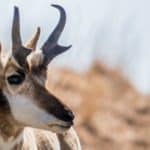
Colorado's pronghorn aren't "antelope" at all-they're the only surviving species in the family Antilocapridae, and they can sustain speeds near 60 mph, faster than any predator currently living in the state (a legacy of now-extinct Ice Age predators).

Bald eagles are often easier to see in Colorado in winter than summer: many individuals move in to feed on open water and winter-killed fish along rivers and reservoirs when northern waters freeze.

American pikas-icons of frigid talus slopes-have been documented using surprisingly human-altered habitats in Colorado (like rock piles and old mine tailings) when the rocks provide cool, insulated crevices, challenging the idea they only survive in pristine alpine zones.

Colorado's state bird, the lark bunting, is a shortgrass-prairie specialist. Breeding males turn black with a white wing patch; outside breeding season they molt to brown and can look like a different bird.

Some of Colorado's rattlesnakes survive harsh winters by returning to the same communal dens year after year; a single den can shelter dozens (sometimes more) of snakes, creating a long-lived, traditional winter refuge on the landscape.

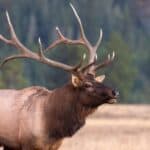
Colorado has the largest elk (wapiti) population of any U.S. state-often estimated around 280,000 animals-making it the country's biggest elk stronghold by sheer numbers.

About 90% of the world's remaining Gunnison sage-grouse live in Colorado (the species is a Colorado-Utah endemic), so the state effectively holds the global "center of gravity" for the bird's survival.

Colorado's highest alpine basins host breeding brown-capped rosy-finches at some of the highest nesting elevations recorded for any North American songbird (often near/above 12,000 ft), putting them among the continent's top-elevation passerine breeders.

In spring migration, the San Luis Valley (especially around Monte Vista NWR) can concentrate tens of thousands of sandhill cranes at once-Colorado's largest crane gathering and one of the biggest high-elevation crane staging areas in the U.S. interior.

Colorado is the world's southernmost stronghold for white-tailed ptarmigan; its isolated Rocky Mountain populations represent the species' farthest-south natural range anywhere on Earth.

Colorado may be most known for having some of the most towering peaks in the Rocky Mountains, but the Denver Museum of Natural History has identified eight distinct ecosystems within the state that vary from grasslands and forest to wetlands and semi-desert shrub-lands that evoke the deserts of neighboring New Mexico.
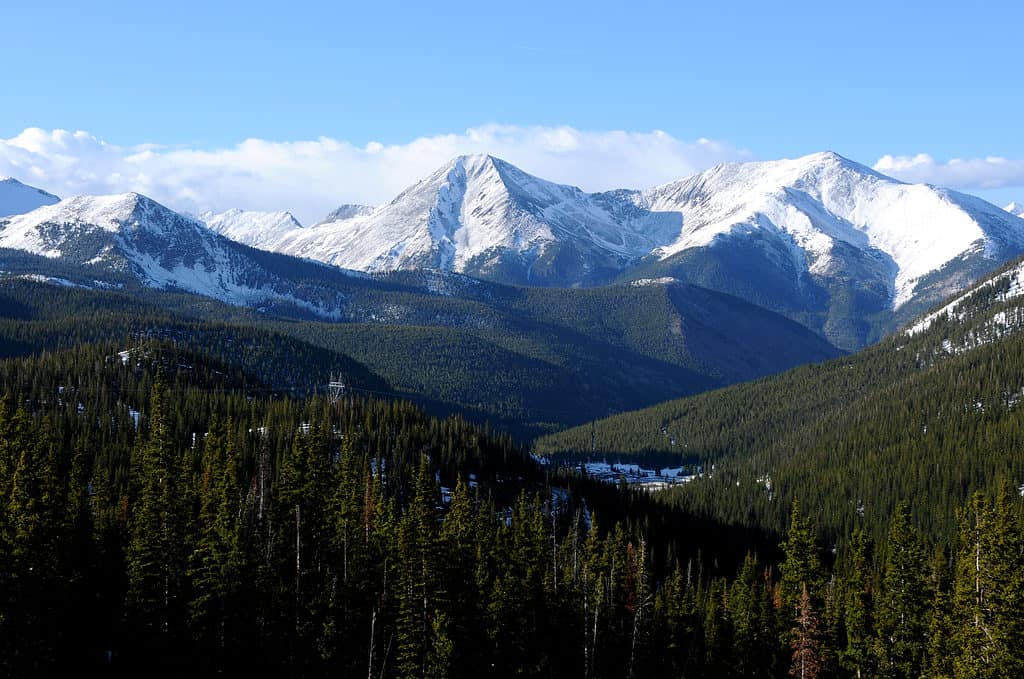
Salida

There are eight distinct ecosystems in the state of Colorado.

The native wildlife here is as diverse as the ecosystems. There are roughly 750 invertebrate species that call Colorado home — and that includes large grazers like the bison and bighorn sheep as well as vicious predators like mountain lions and bears. From the Rocky Mountains all the way down to the grasslands, these wild frontiers allow for very diverse ecosystems to flourish.

The Official Animal of Colorado
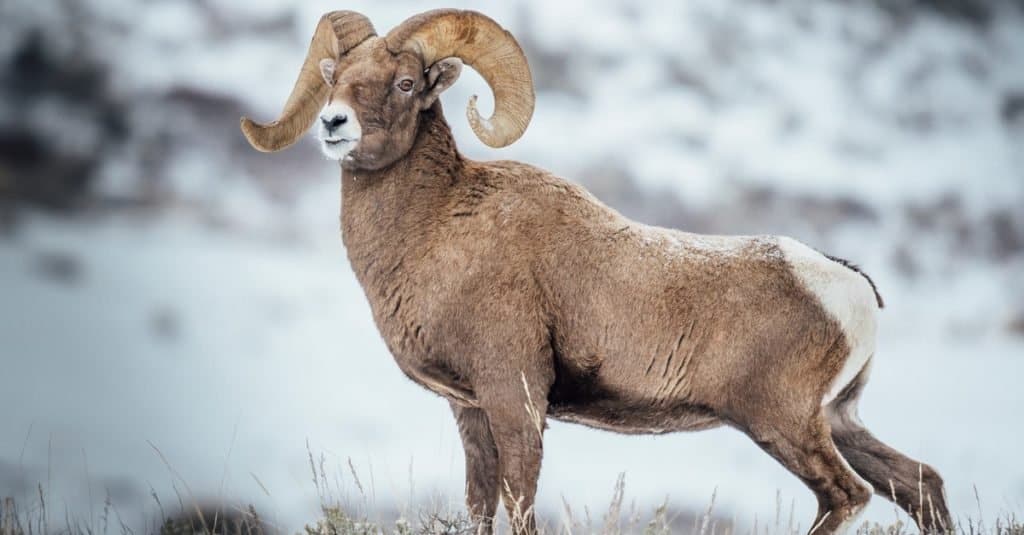
Beautiful rocky mountain bighorn sheep ram in the snow.

The bighorn sheep is the official national animal of Colorado.

Colorado’s official animal is understandably an animal that’s emblematic of the Rocky Mountains. The Rocky Mountain bighorn sheep was declared the national animal in 1961. These sociable creatures only exist in the Rockies, but they’ve unfortunately been reduced to endangered status thanks to their appeal to big game hunters.

Colorado’s state bird was actually declared 30 years before the state animal. The lark bunting is migratory and can be widely seen throughout the state from April until September. They call both the plains of Colorado and elevations of up to 8,000 feet their home.

Where To Find The Top Wild Animals in Colorado

Fitting its diverse variety of ecosystems, Colorado is home to some excellent camping and houses 42 state parks and four national parks — while each of them is beautiful in its own right, there are a few that are worthy of the particular spotlight.
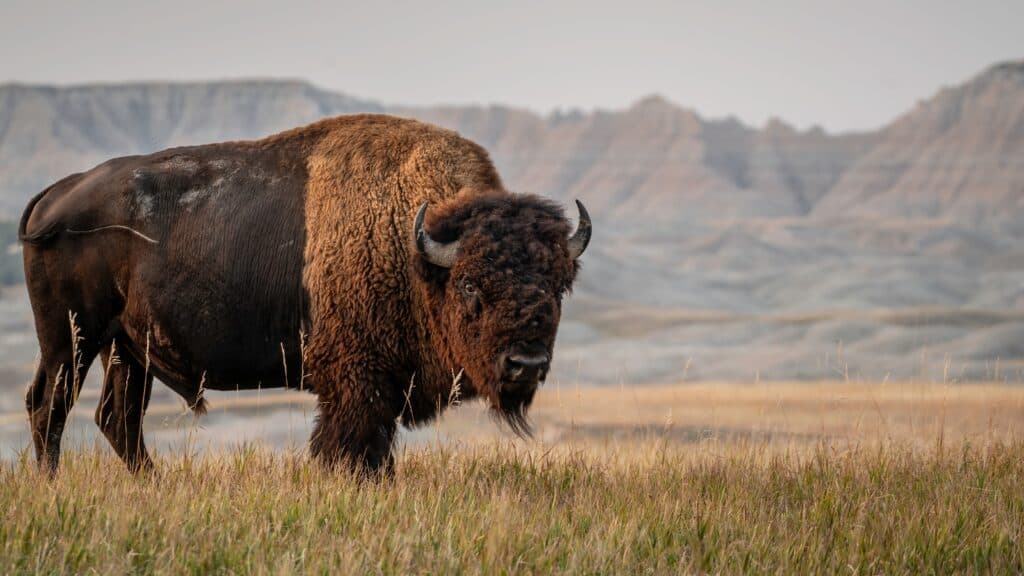
Bison can be seen at the Rocky Mountain Arsenal National Wildlife Refuge outside of Denver, Colorado.

  • The Horseshoe and Morain sections of Rocky Mountain National Park are the best places for seeing elk, but these majestic animals are common all throughout the park. This national park offers some of the best places to camp in Colorado.
  • Bison were once among the rarest and most endangered animals in Colorado, but you can now find them just outside of Denver at Rocky Mountain Arsenal National Wildlife Refuge. It’s also home to coyotes, mule deer, and even bald eagles during the winter season.
  • South Platte River Trail in the winter is going to offer the best opportunity to see bald eagles, but it’s a respectable place for bird-watching all year long. Notable species include kestrels and red-tailed hawks.
  • The state parks in Denver can be a great opportunity to spot wildlife. State Forest State Park is recognized as the “Moose Capital” of Colorado, but these large herbivores aren’t the only wildlife here. Beavers, foxes, and black bears can also be found.
  • Great bighorn sheep are becoming one of the rarest species in Colorado, but they’re most common at the Great Sand Dunes National Park. Coyotes and bobcats are some of the most common predators, but small rodents like ground squirrels are also easy to spot.

Wild Animals in Colorado
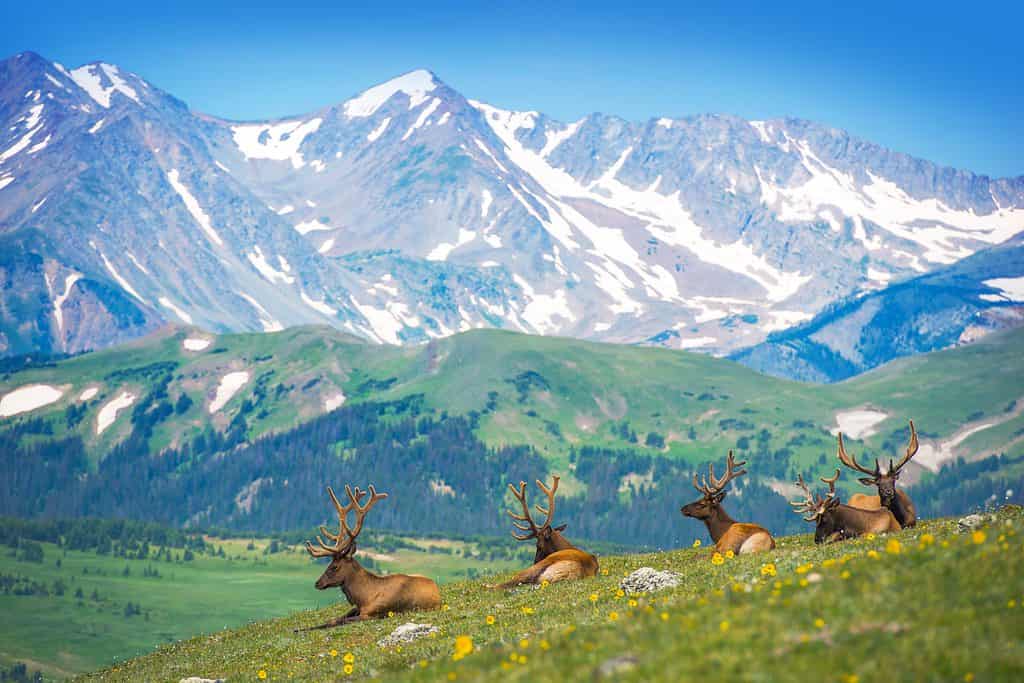
Herd of American Elk

Elk are native to Colorado and can be seen in mountainous regions.

The wildlife of Colorado is similar to the wildlife found in many other Mountain States like Montana and Wyoming. The most notable large herbivores are the bighorn sheep, elk, bison, and moose. Major predators in these ecosystems include mountain lions, black bears, and foxes.

Small creatures constitute some of the most critical wildlife in many Colorado ecosystems. Prairie dogs are considered a keystone species because the tunnels they dig are used by roughly 150 different animals. The beaver plays a similarly critical role in Colorado’s wetlands ecosystems — and they’re becoming an increasingly common sight in urban areas as well.

Largest Animal in Colorado
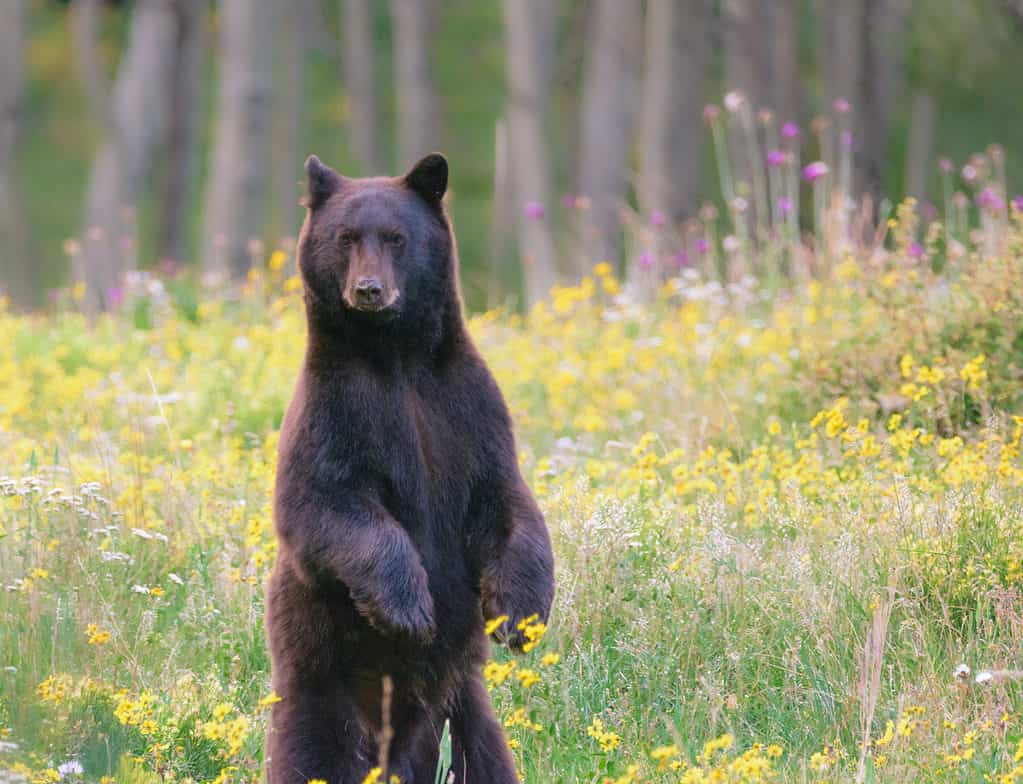
Black bear standing straight up on two back legs

The black bear is the largest animal in Colorado.

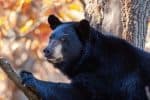
The black bear is the largest animal in Colorado today – inhabiting most of the forested areas of the state, including the Rocky Mountains. The average black bear stands at five feet on its back legs and walks on all fours at three feet. Males weight up to 600 pounds while females are much smaller at 200 pounds.

Black bears are omnivores whose diet consists of 80% plants, 15% insects, and 5% animal matter. Fruits, nuts, honey, and other plants are their favorites – but they sometimes eat fish, mice, squirrels, and other small mammals.

The Most Dangerous Animals In Colorado Today
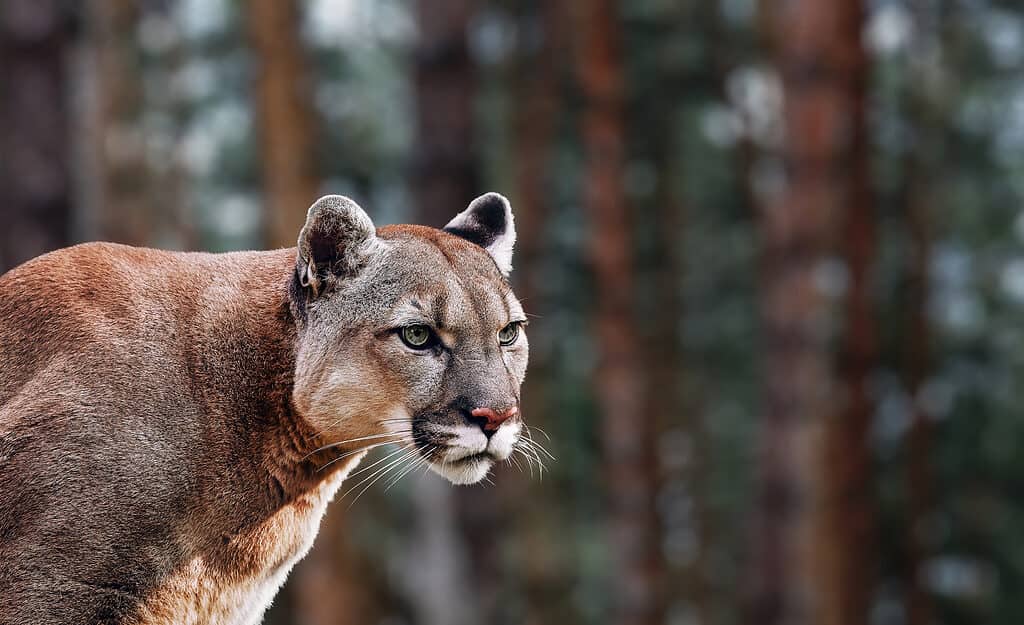
Mountain lion with forest background

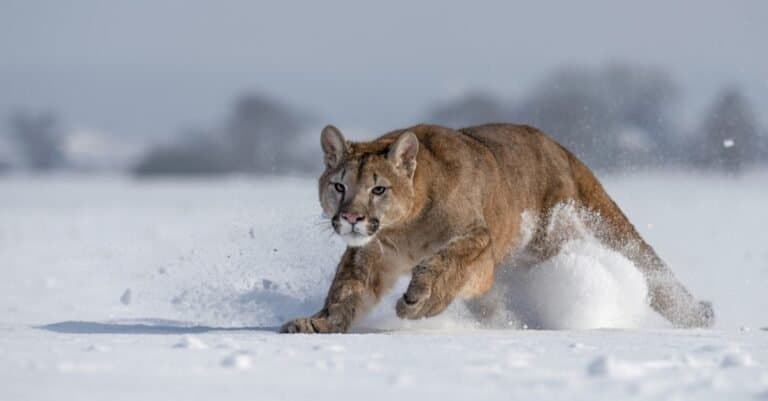
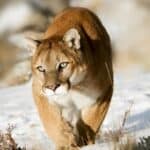
Mountain lions are among the most dangerous animals in Colorado.

  • Mountain goats are relatively common sights in the mountains — and while they’re not predators, they’ve been known to gore hikers with their horns when they feel threatened.
  • Black bears also don’t actively pursue humans, but they’re known for being aggressive if they feel like their cubs are being threatened.
  • Mountain lions are one of the rarer predators, but they’ve been spotted all over the state. Encountering them out on a hiking trail isn’t uncommon, but there were only 25 Colorado mountain lion attacks documented between 2000 and 2021.

Rarest Animal in Colorado
What Eats Snakes

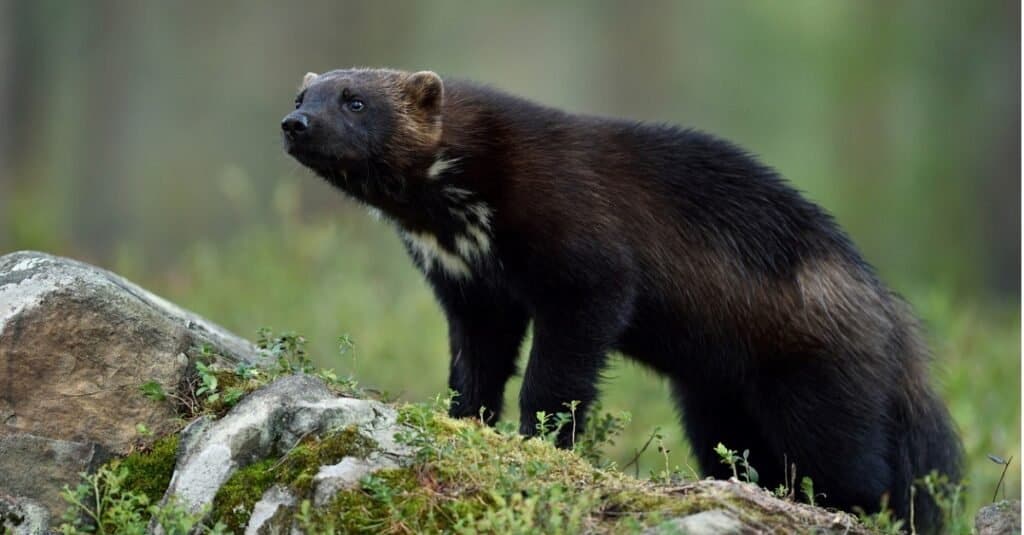
The Wolverine is one of the rarest animals in colorado.

The wolverine is the largest member of the weasel family with short, rounded ears, a broad head, and a stocky body – these animals resemble little bears with long bushy tails. Males are larger than females and weigh up to 35 pounds. They are solitary creatures who eat a variety of animals including small rodents, rabbits, porcupines, ground squirrels, birds, eggs, fish, carrion, and some plants.

The last documented sighting of a wolverine in Colorado occurred in 2009 but there may be a few living in the state. The animals require so much habitat that 100 animals would probably be at full capacity. After the successful reintroduction of elk, bighorn sheep, and river otters, the wolverine is a candidate for reintroduction even though some experts believe they are making their way back to the state without human intervention.

Endangered Animals In Colorado
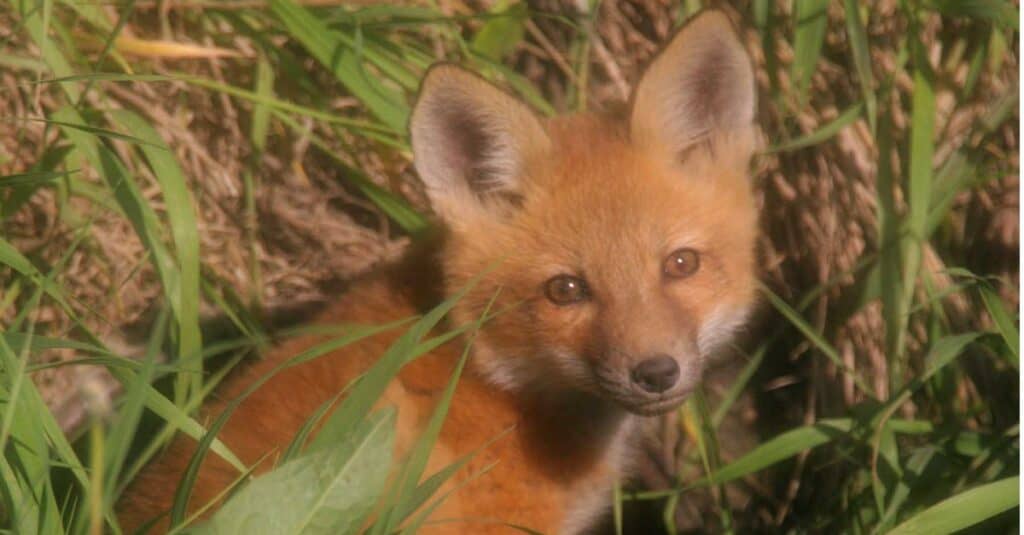
close up of kit fox in bush

The kit fox is native to Colorado and is currently endangered.

Colorado is home to multiple endangered species. Big game like the bighorn sheep and bison were once endangered but are now recovering. Some of the most notable endangered wildlife include:

  • Black-footed ferret: The only federally endangered mammal in Colorado, they rely on prairie dogs for both housing and food.
  • Humpback chub: Native to the Colorado River, they’ve adapted to survive incredibly turbulent currents.
  • Wolverine: It’s strange to see a wolverine in Colorado, and they were once believed to be extinct in the state. One of the rarest native species, it’s believed that as many as 100 might be surviving in the state unnoticed.
  • Kit fox: A strange native species of fox most notable for its small frame and strange, deep-set eyes.

Zoos in Colorado
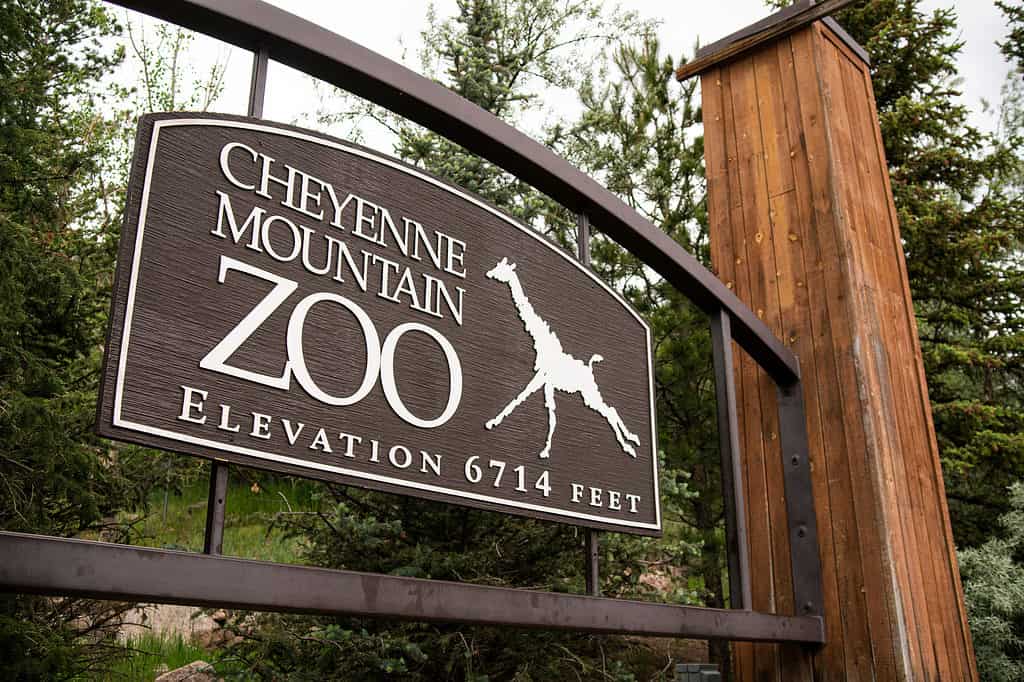
The Cheyenne Mountain Zoo is the highest zoo in the United States.

The Cheyenne Mountain Zoo is the highest zoo in the United States.

The Cheyenne Mountain Zoo in Colorado Springs is a beautiful zoo situated on a hilly, 146-acre site. 800 animals can be viewed in the Australia Walkabout, All About Giraffes, Encounter Africa, Rocky Mountain Wild, and more. There is a sky ride that offers a birds-eye view from a chairlift. Other notable Colorado zoos include:

  • Denver Downtown Aquarium is home to many attractions that capture the thrill of the natural world. The aquarium sustains more than 500 animal species in over one million gallons of water.
  • The Wild Animal Sanctuary is a 1,214-acre animal sanctuary in Keenesburg, Colorado which specializes in animal rescue. The sanctuary cares for large predators which have been ill-treated or which might have been euthanized.
  • Denver Zoo is an 80-acre zoological garden featuring 4,000 animals from 700 species from all over the world. The Denver Zoo is notable for its efforts to restore bison to tribal lands.
  • Pueblo Zoo is a 25-acre zoo that is home to over 420 animals of more than 140 species. This facility, located in Pueblo, Colorado, is also known for the five original historic buildings featuring beautiful craftsmanship and masonry work of the 1930s.
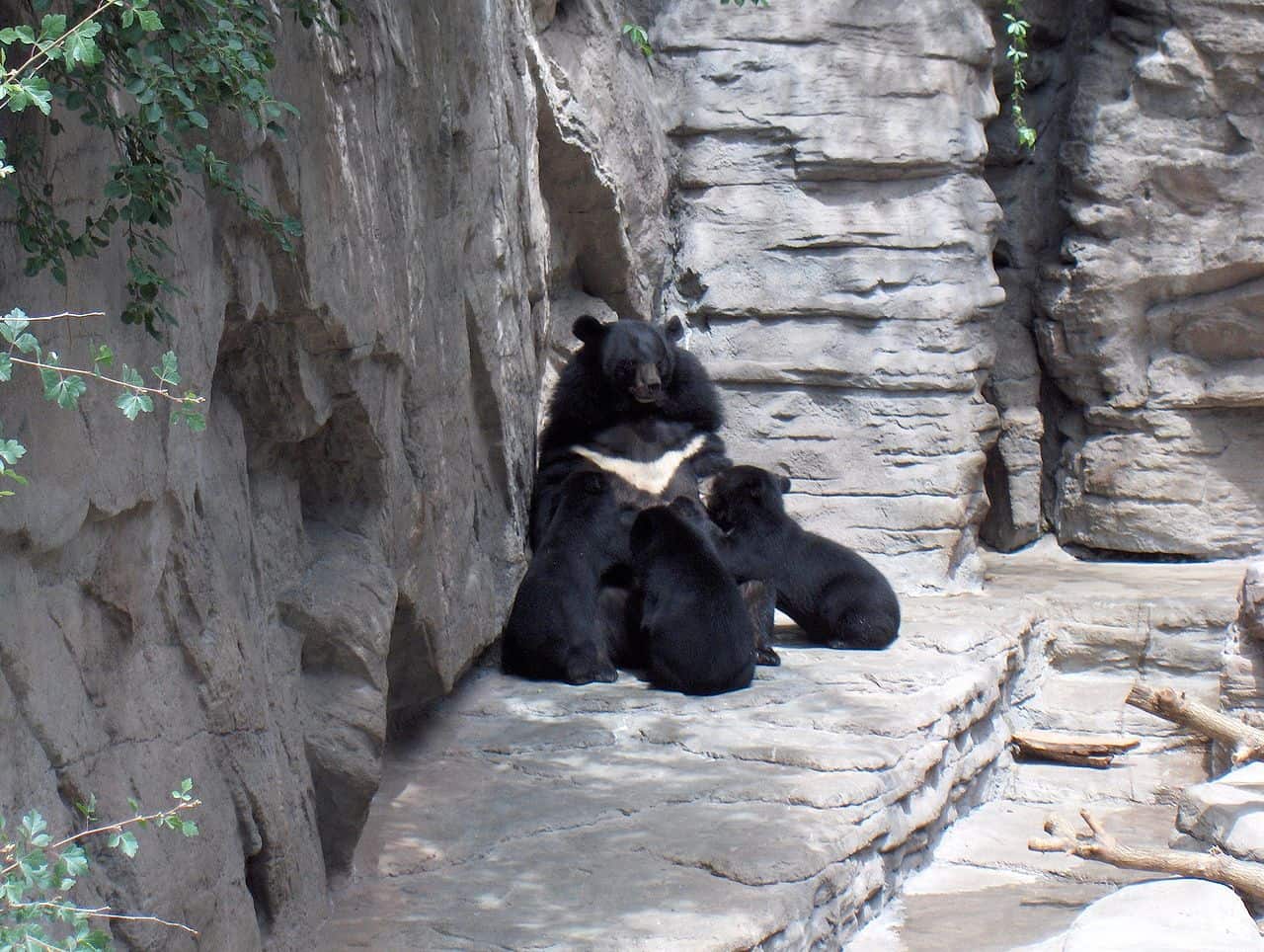
Asiatic Black Bear with young at Denver Zoo

Native Plants in Colorado

Colorado blue columbine (Aquilegia caerulea)

Colorado blue columbine (Aquilegia caerulea) is the state flower of Colorado.

Colorado may be known for its mountainous landscape, but there’s no shortage of beauty when you look at the plants and flowers found in the state. The state flower is the Colorado blue columbine, a species of flowering plant in the buttercup family and native to the Rocky Mountains.

From black-eyed Susans to Colorado blue columbine, explore this list of native plants in Colorado, and then go exploring to spot as many as you can.

Beetles in Colorado

Colorado is a state of soaring heights, deep snow drifts, farmland and windy days. Its airy and haunting beauty is only matched by its diversity in wildlife. If you’re interested in unique and fascinating beetles, Colorado’s the place to go!

Read about:

  • Extinct animals that lived in Colorado
  • Ticks in Colorado
  • The snowiest place in Colorado
  • The most common roaches in Colorado
  • The best national parks in Colorado
  • Amazing waterfalls in Colorado
  • The highest point in Colorado
  • Ten clear lakes in Colorado
  • The largest flathead catfish ever caught in Colorado
  • The largest common carp ever caught in Colorado
  • The largest King salmon ever caught in Colorado
  • The best fishing spots in Colorado in the summer
  • The deepest lake in Denver, Colorado
  • The best dog parks in Aurora, Colorado
  • The best dog parks in Colorado Springs, Colorado
  • The largest and most dangerous snakes in Colorado
  • The largest black bear ever caught in Colorado
  • The largest pronghorn ever caught in Colorado
  • The largest lake trout caught in Colorado
  • The largest American eel ever caught in Colorado
  • The Largest Snake River Cutthroat Ever Caught in Colorado

Animals Found in Colorado

192 species documented in our encyclopedia

Thank you for reading! Have some feedback for us?