N S W E
Wildlife Expeditions

Wildlife of
Northern Mariana Islands

A volcanic island arc where pristine reefs, open-ocean giants, and endemic island birds meet in one of Micronesia's most wildlife-rich seascapes.
1 Species
464 km² Land Area
Overview

About Northern Mariana Islands

The Northern Mariana Islands have wildlife shaped by isolation, volcanic islands, and the wide Pacific Ocean. Many native species evolved on small islands separated by deep water, creating unique island birds and bats plus rich coastal and marine life. In one day you can go forest birding, see turtles in lagoons, and watch big ocean animals offshore. Key ecosystems include fringing and barrier reefs, lagoons, seagrass, and steep drop-offs that lead quickly to the open Pacific. Coral reefs and nearshore areas support reef fish, invertebrates, and foraging sea turtles, while offshore waters host whales, dolphins, and other wide-ranging animals. On land, limestone forests and volcanic slopes shelter native birds and Pacific flying foxes, and coastal strand plants support seabird nesting. The chain’s less developed shores, “reef-to-deep” seascape, and mix of volcanic and uplifted limestone islands give a strong sense of wildness and Micronesian endemism.

Physical Features

Geography

Northern Mariana Islands are a chain of steep volcanic and limestone islands that form many small, isolated habitats, shaping where animals live and leading to endemic species. Lowland limestone forests, volcanic slopes, coastal strand, wetlands, and coral reefs support land and sea life. Little surface freshwater and strong ocean influence concentrate birds, bats, and reptiles near uplands, wetlands, and groundwater-fed areas.

464 km² Land Area
3rd largest of the five major inhabited U.S. territories by land area (after Puerto Rico and Guam) Size Rank
Territory Type
Elevation Range

Sea level to ~965 m (Mount Agrihan, highest point in the Northern Mariana Islands)

Coastline

Western Pacific Ocean (Philippine Sea); highly indented island shorelines with extensive fringing reefs and steep offshore drop-offs, with the Mariana Trench system nearby to the east

Key Landscapes

Volcanic island arc with rugged slopes and active/young volcanoes in the northern islands (important for elevational zonation and pioneer habitats) Limestone (karst) plateaus and uplifted coral-limestone terraces on Saipan, Tinian, and Rota (supporting distinct limestone forest and cave habitats) Coastal strand, sandy beaches, rocky headlands, and sea cliffs (nesting/roosting habitat and coastal foraging areas) Fringing coral reefs, reef flats, and outer reef slopes with clear oceanic waters (major driver of marine biodiversity and fisheries habitat) Lagoons and nearshore seagrass/algal beds in protected bays (nursery areas for fish and invertebrates) Limited freshwater wetlands and ponds (e.g., small marsh/pond systems) that can be critical for resident and migratory birds in an otherwise water-limited landscape)
Parks & Reserves

Protected Areas

Protected areas in the Northern Mariana Islands (CNMI) include the large Mariana Trench Marine National Monument that protects seabirds, coral reefs, open-ocean and deep-sea habitats; a small National Park Service unit on Saipan; and conservation areas and marine protected areas (MPAs) managed by CNMI that protect reefs, seabird colonies, and forest watersheds, especially on Rota.

Protected Coverage

Land: roughly ~15-25% has some form of conservation designation (territorial parks, conservation areas, limited NPS acreage), varying by island and data source. Ocean: if CNMI waters within the Mariana Trench Marine National Monument are included, the protected share of surrounding marine area is extremely high (monument-scale), but most of that protection is offshore/deep-sea rather than nearshore recreation areas.

National Parks & Preserves

American Memorial Park (National Park Service)

~133 acres (~0.54 km²)

A small but wildlife-rich coastal park on Saipan with a lagoon/reef edge and shorebird/seabird habitat; it's one of the easiest places in CNMI for accessible wildlife viewing tied to nearshore marine ecosystems.

Green sea turtle (Chelonia mydas) Hawksbill sea turtle (Eretmochelys imbricata) White tern (Gygis alba) Reef fish assemblages (e.g., butterflyfish, surgeonfish) Migratory shorebirds (seasonal)

State & Provincial Parks

Managaha Marine Conservation Area (Saipan)

Small islet with surrounding reef reserve (nearshore MPA; size varies by local boundary definitions)

A flagship CNMI nearshore MPA around Managaha Islet-high-visibility snorkeling/diving with coral reef habitat, making it notable for reef-fish diversity and turtle sightings close to shore.

Green sea turtle (Chelonia mydas) Hawksbill sea turtle (Eretmochelys imbricata) Parrotfish (Scaridae) Butterflyfish (Chaetodontidae) Giant clams (Tridacna spp.)

Bird Island Wildlife Conservation Area / Sanctuary (Saipan)

Small coastal/cliff sanctuary area (site-scale)

A coastal seabird hotspot where cliff/nearshore habitats support nesting and roosting seabirds; one of the best-known wildlife-viewing sites on Saipan for birding.

Brown noddy (Anous stolidus) Sooty tern (Onychoprion fuscatus) White-tailed tropicbird (Phaethon lepturus) Great frigatebird (Fregata minor) Micronesian starling (Aplonis opaca)

Sasanhaya Bay Fish Reserve (Rota)

Bay-scale nearshore reserve (site-scale)

A locally managed marine reserve valued for coral/reef fish conservation and as a calmer bay habitat that can support juvenile fish and foraging turtles.

Green sea turtle (Chelonia mydas) Reef sharks (occasional) Surgeonfish (Acanthuridae) Groupers (Serranidae) Hard corals (reef-building coral species)

Talakhaya Conservation Area / Watershed (Rota)

Large watershed-scale conservation area (one of Rota's biggest protected terrestrial landscapes)

A major terrestrial conservation and restoration landscape on Rota important for native forest, erosion control, and habitat for CNMI's most imperiled land birds and bats.

Mariana crow (Corvus kubaryi) Mariana fruit bat (Pteropus mariannus) Rota white-eye (Zosterops rotensis) Mariana swiftlet (Aerodramus bartschi) Micronesian starling (Aplonis opaca)
Animals

Wildlife

The Northern Mariana Islands (CNMI) lie where tropical island forests, limestone karst, volcanic slopes, seabird cliffs, coral-reef, and deep-ocean habitats meet. Wildlife includes a small but very distinct native land fauna—especially endemic forest birds and bats that are very sensitive to invasive predators and habitat loss. The marine life is very rich, with sea turtles, reef fish, and seasonal cetaceans around steep drop-offs and offshore seamounts. Many signature species are endemic to the Marianas or have key populations on only one or two islands, notably Rota.
~25-35 species (few native land mammals-mostly bats-plus a couple dozen regularly occurring whales/dolphins) Mammals
~140-170 species recorded (roughly ~35-50 regular residents/breeders; many migrants and seabirds) Birds
~25-35 species (skinks/geckos plus sea turtles and sea snakes; several species are introduced or cryptogenic) Reptiles
~2-4 species, largely introduced (no confirmed native amphibians) Amphibians
~1,000+ coastal/reef fish species (regional inventories for the Marianas commonly exceed a thousand; deep-sea fauna adds substantially more) Fish
Examples

Iconic Species

Mariana fruit bat (Mariana flying fox) A flagship native bat of the Marianas; dusk fly-outs and forest foraging are a classic CNMI wildlife experience, and its conservation status makes sightings especially meaningful.
Mariana crow One of the rarest birds in U.S. territories; Rota is a key stronghold, making birding on Rota notable worldwide.
Micronesian megapode A distinctive ground bird that incubates eggs using environmental heat (soil/compost mounds); a memorable, unusual behavior visitors hope to observe in native forests.
Mariana swiftlet Cave- and cliff-associated swiftlet endemic to the Marianas; evening flights near roost areas are a hallmark of Saipan-area nature outings.
Green sea turtle Frequently encountered on reefs and seagrass areas and at some nesting beaches; CNMI waters are important foraging and breeding habitat.
Hawksbill sea turtle A globally threatened reef-associated turtle; divers value sightings because the species is less common and strongly tied to healthy coral habitat.
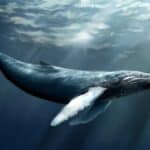
Humpback whale
Humpback whale Seasonal winter-spring visitors; whale sightings and songs highlight CNMI's position along wider Pacific migration/breeding routes.
Spinner dolphin Commonly seen in nearshore waters; acrobatic behavior and predictable coastal presence make it a signature marine mammal for boat trips.
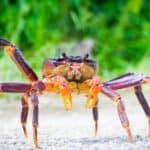
Coconut crab
Coconut crab The world's largest land-dwelling arthropod; iconic on islands where it persists, and a strong symbol of intact coastal forest and reduced overharvest.
Humphead (Napoleon) wrasse A charismatic, large reef fish of conservation concern; divers seek it out on deeper reef slopes and drop-offs.

Endemic & Rare Species

Mariana crow

Corvus kubaryi

Critically Endangered (IUCN); federally listed as Endangered in the U.S.

Rota supports the last major wild population; invasive predators and habitat pressures make CNMI conservation actions pivotal.

Rota white-eye

Zosterops rotensis

Endangered (U.S. ESA); Critically Endangered (IUCN)

A single-island endemic largely restricted to Rota; one of the most range-restricted birds in U.S. jurisdiction.

Nightingale reed-warbler (Mariana reed-warbler)

Acrocephalus luscinia

Endangered (U.S. ESA)

A Marianas-endemic songbird group with small, fragmented populations; a key species for native thicket/forest restoration efforts.

Mariana swiftlet

Aerodramus bartschi

Endangered (U.S. ESA)

Dependent on secure roost sites and insect-rich landscapes; vulnerable to disturbance and predation near roosting areas.

Mariana fruit bat (Mariana flying fox)

Pteropus mariannus

Regional conservation concern; status varies by island and assessment (historically heavily impacted by hunting and storms)

A culturally and ecologically important pollinator/seed disperser; CNMI populations are closely watched and managed.

Hawksbill sea turtle

Eretmochelys imbricata

Critically Endangered (IUCN); Endangered (U.S. ESA)

CNMI reefs and nesting areas contribute to a species declining across much of its global range.

Green sea turtle

Chelonia mydas

Threatened (U.S. ESA; Central West Pacific DPS); globally Endangered (IUCN)

CNMI supports both foraging and nesting; protection of beaches and nearshore waters directly influences regional recovery.

Humphead (Napoleon) wrasse

Cheilinus undulatus

Endangered (IUCN); CITES Appendix II

Highly vulnerable to overfishing; presence indicates relatively intact reef systems and effective management.

Notable Populations

  • Rota hosts the most important remaining wild population of the Mariana crow (one of the rarest birds under U.S. jurisdiction).
  • Rota supports globally significant populations of single-island endemics such as the Rota white-eye, making the island a high-priority conservation and birding destination.
  • CNMI beaches and nearshore habitats contribute regionally important nesting and foraging areas for green and hawksbill sea turtles.
  • The surrounding Marianas region (including protected offshore areas) is globally notable for deep-ocean biodiversity associated with the Mariana Trench, seamounts, and hydrothermal systems, complementing CNMI's rich coastal reefs.

Recent Changes

  • Native forest birds on some islands have experienced long-term declines driven by habitat loss, invasive predators (especially cats and rats), and extreme weather (typhoons), increasing reliance on intensive management.
  • Ongoing recovery programs (e.g., predator control, habitat restoration, and targeted monitoring) have been central for the Mariana crow on Rota and for other restricted-range endemics.
  • Sea turtle protections (reduced take, nest/bathing-beach protections, and fishery/bycatch mitigation where applicable) have supported localized improvements in nesting success in parts of the Marianas region, though trends vary by site and year.
  • Coral-reef communities have faced increasing stress from marine heatwaves/bleaching and storm damage; shifts in coral cover can affect reef-fish assemblages and turtle foraging habitat.
  • Biosecurity remains critical: the broader Marianas have suffered severe impacts from invasive species elsewhere (e.g., Guam), and prevention/rapid response in CNMI is a continuing conservation priority.
Visit

Wildlife Viewing

The Northern Mariana Islands (CNMI) are a compact wildlife destination for warm-water marine life, coral reefs, seabirds, and a few island endemics. Snorkel with turtles and reef fish; seasonal humpback whales appear offshore. Birding in coastal wetlands, limestone forests, and seabird colonies is strong. Saipan and Tinian are easier to reach; Rota and the northern islands are wilder.

Best Seasons

Dec-Apr (Dry season + whale season)

Best overall conditions for wildlife-focused travel: clearer skies, calmer seas (most days), and peak chances for humpback whale sightings offshore. Excellent visibility for snorkeling/diving and comfortable hiking for birding. Sea turtles and reef life are active year-round; winter seas can still have occasional swell on exposed coasts.

May-Aug (Warmest water, peak reef time, nesting activity)

Very warm water and generally good underwater life-great for long snorkel sessions and diving. Many seabirds are active around colonies; sea turtles may be encountered frequently on reefs and near sandy beaches. This period can be humid, with increasing rain and variable winds.

Sep-Nov (Shoulder season, fewer crowds, weather variability)

Often quieter and good value, with strong marine life viewing still possible. Expect more changeable weather and higher tropical-storm risk; plan flexible itineraries, choose leeward beaches for snorkeling on windy days, and build in backup birding/forest walks for rough-sea days.

Year-round (Anytime highlights)

Reef snorkeling/diving with high fish diversity, sea turtles, rays, and occasional pelagics; sunrise/sunset bird activity in wetlands and coastal forest edges; night walks can reveal geckos and other native/introduced reptiles. Local conservation rules and site access can vary-check current guidance before visiting sensitive areas.

Top Wildlife Experiences

  • Humpback whale watching offshore (Jan-Mar peak) from Saipan-join a licensed boat tour timed for calm mornings and bring binoculars for blows and breaches.
  • Snorkel the Grotto (Saipan): a famous limestone cavern/blue hole system where you can see dense reef fish schools at the entrance and occasional turtles-go in calm conditions and follow local safety advice.
  • Spend a wildlife-focused day around Lau Lau Bay (Saipan): snorkel the reef for turtles and reef fish, then do an early-morning bird walk on nearby trails/forest edges for island birds.
  • Birding in Saipan's wetlands (e.g., the Lake Susupe area): look for waterbirds, shorebirds (seasonal migrants), and raptors; best at first light and late afternoon.
  • Rota birding for endemic specialties-seek the Mariana fruit dove and other forest birds in limestone forest habitats with a local guide; combine with coastal viewpoints for seabird spotting.
  • Tinian coastline and reef exploration: snorkel protected coves/reef flats for turtles and colorful reef fish, and scan offshore waters for dolphins/large fish when seas are calm.
  • Night nature walk in coastal forest/park areas on Saipan or Rota: watch for geckos, skinks, land crabs, and listen for nocturnal bird calls (use red light and keep noise low).
  • Seabird viewing from coastal cliffs and headlands (Saipan/Rota): bring a spotting scope/binoculars for terns and other seabirds riding updrafts-best on breezy mornings with good visibility.

Wildlife Watching Types

Whale watching (seasonal humpback whales) Dolphin/porpoise watching (opportunistic, boat-based) Snorkeling and scuba diving for reef biodiversity (turtles, rays, reef fish, coral ecosystems) Seabird viewing from cliffs, headlands, and offshore waters Wetland and shorebird watching (including seasonal migrants) Forest birding for island endemics and resident species Night wildlife walks (reptiles, crabs, nocturnal activity) Tidepool and intertidal exploration (best on low tides; observe without collecting)

Guided Options

  • Licensed humpback whale-watching boat trips operating seasonally out of Saipan (ask operators about marine-mammal viewing etiquette and minimum approach distances).
  • Local dive and snorkel operators on Saipan (and limited options on Tinian/Rota) that can tailor trips for turtle-friendly reef routes and safe timing at sites like the Grotto.
  • Rota-based birding/nature guides who specialize in locating endemic forest birds and navigating access to key habitats responsibly.
  • Community or conservation-led beach/reef cleanups and interpretive activities (availability varies) that combine wildlife viewing with stewardship.
  • Private nature tours that combine Saipan wetland birding (e.g., Lake Susupe area) with coastal seabird lookouts and sunset wildlife viewing.
Habitats

Ecosystems

The Northern Mariana Islands (CNMI) are a volcanic island arc with heavy rain, creating dry to moist tropical forests, karst vegetation, and coastal strand habitats. Land is small and often hit by typhoons and development. Nearby waters host rich marine life—reefs, lagoons and deep ocean by the Mariana Trench. Freshwater is scarce: short streams, springs, groundwater lenses, wetlands and mangroves.

Biomes

Tropical Dry Forest

Dominant native terrestrial biome on many lowland and leeward areas, often as limestone forest/woodland on karst and coastal terraces; includes secondary dry forests and mixed native-introduced stands shaped by typhoons, fire, and past agriculture.

Widespread across the main southern islands (Saipan, Tinian, Rota) and many smaller islands; much of remaining native terrestrial vegetation outside wetter uplands.

Tropical Rainforest

Moist evergreen forest in wetter windward and higher-elevation zones, with locally more humid ravines and ridge forests; often transitions into cloudier, stunted ridge vegetation on the highest points.

Patchy and limited-most notable on wetter uplands (especially Rota) and sheltered valleys; small overall area.

Savanna

Open grasslands and fern/grass-dominated areas that function as savanna-like systems, frequently maintained by disturbance (fire, grazing, clearing) and occurring alongside scrub and secondary woodland.

Localized, mainly on disturbed lands on Saipan and Tinian and some coastal/plateau areas; generally smaller than forest/woodland cover.

Wetland

Small coastal wetlands including mangrove pockets, marshy depressions, and lagoon/estuary margins; important for shoreline protection and nursery habitat despite limited extent.

Scattered and small, mostly on southern islands in protected bays/lagoon edges.

Freshwater

Short, flashy streams, springs, seeps, and small ponds; freshwater availability is strongly tied to rainfall and groundwater lenses in volcanic/limestone substrates.

Very limited areal extent; mostly intermittent/short drainages and small freshwater features.

Marine

Coral reef, lagoon, and outer-slope ecosystems around islands, transitioning rapidly to pelagic waters, seamounts, and deep ocean habitats; high diversity of reef fish, corals, and invertebrates.

By far the largest biome by area-surrounds all islands and extends into deep ocean waters within CNMI's EEZ.

Habitats

Forest

Native limestone and mixed evergreen forests on Saipan, Tinian, and Rota; includes secondary forest recovering from historical clearing and storm impacts.

Rainforest

Wetter evergreen forest patches on windward slopes and uplands (notably Rota), with humid ravines and denser canopy structure than lowland dry forest.

Woodland

Open-canopy dry woodland on limestone terraces and ridges, often with drought- and salt-tolerant species and a grassy or shrubby understory.

Shrubland

Coastal and disturbed scrub, including typhoon-pruned thickets and regrowth on cleared lands; can grade into woodland or grassland mosaics.

Grassland

Disturbance-maintained grasslands (often with invasive grasses), especially on more developed islands; can increase fire risk and reduce forest regeneration.

Cliff/Rocky Outcrop

Limestone sea cliffs and volcanic escarpments with specialized crevice vegetation and seabird use in less disturbed areas.

Cave

Karst caves and lava-related cavities in limestone/volcanic substrates; can support bats and unique cave invertebrates and provide cultural resources.

Coastal

Coastal strand vegetation and littoral zones exposed to salt spray and storms, forming a narrow but ecologically important fringe around many islands.

Beach

Sandy beaches and back-beach dune/strand habitats important for coastal dynamics and occasional turtle nesting where conditions permit.

Rocky Shore

Wave-exposed rocky coastlines and intertidal benches, common where volcanic rock or limestone platforms meet the sea.

Mangrove

Small mangrove stands in sheltered bays and lagoon margins; limited compared with larger Micronesian archipelagos but locally important as fish nurseries.

Estuary

Brackish lagoon-edge and stream-mouth mixing zones; often small and seasonal but important for nutrient exchange and juvenile fish habitat.

Wetland

Fresh-brackish marshy depressions and lagoon-adjacent wetlands; sensitive to filling, invasive species, and storm overwash.

Coral Reef

Fringing reefs, patch reefs, and lagoon reefs with high coral and reef-fish diversity; vulnerable to bleaching, crown-of-thorns outbreaks, and storm damage.

Seabed/Benthic

Soft-sediment bottoms in lagoons and shelves plus hard-bottom reef slope substrates; includes seagrass is limited/patchy compared to many regions but benthic habitats are diverse.

Open Ocean

Pelagic waters supporting tuna, billfish, sharks, marine mammals, and seabirds; productivity influenced by currents and island-associated upwelling/eddy effects.

Deep Sea

Steep island slopes dropping to abyssal and hadal-adjacent depths near the Mariana Trench; includes seamount and trench-influenced deep communities.

Urban

Built environments concentrated on Saipan (and smaller centers elsewhere), with associated coastal modification and runoff pressures.

Agricultural/Farmland

Former and current agricultural lands (including small-scale cropping and grazing), contributing to a patchwork of secondary vegetation and erosion-prone areas.

Plantation

Areas historically converted to plantation agriculture; legacy land use has shaped soils, invasive species patterns, and present-day secondary forest structure.

Ecoregions

Marianas tropical dry forests (WWF terrestrial ecoregion) Mariana Islands (WWF/MEOW marine ecoregion)
Protection

Conservation

Primary Threats

  • On Saipan, Tinian, and parts of Rota, coastal and lowland development (resorts, housing, roads) fragments native limestone forest and wetlands. Land clearing and quarrying/soil exposure increase erosion that degrades adjacent reefs and seagrass beds.
  • Airports, ports, road upgrades, and military-related construction/training needs (notably on Tinian and Saipan) can directly remove habitat, increase noise/light near nesting or roosting areas, and expand secondary impacts such as erosion and invasive species spread along new access routes.
  • Small-scale agriculture and associated clearing/burning can reduce native vegetation cover and increase sediment and nutrient runoff into nearshore waters, affecting coral reefs and lagoon habitats.
  • Wetland alteration (drainage/filling), altered fire regimes on dry grasslands, and watershed changes (e.g., channel modification) reduce freshwater-dependent habitats used by native waterbirds and increase flash runoff that smothers corals.
  • Introduced predators (rats, feral cats, pigs) and invasive ants and plants reduce nesting success and survival of native birds (e.g., Mariana crow) and can alter forest structure. CNMI also faces ongoing biosecurity risk of new arrivals such as the brown treesnake, which devastated bird populations on nearby Guam.
  • Marine heatwaves drive coral bleaching and disease susceptibility; sea-level rise narrows sandy nesting beaches used by sea turtles; and projected increases in extreme rainfall and typhoon intensity accelerate erosion and infrastructure damage, compounding land-based pollution to reefs.
  • Land-based runoff (sediment, nutrients, occasional wastewater overflows) affects Saipan Lagoon and other nearshore areas; marine debris and lost fishing gear impact turtles and reef wildlife. Post-typhoon debris pulses can be especially acute.
  • Near populated coasts, fishing pressure can reduce key reef herbivores and predators, undermining reef resilience to bleaching and algae overgrowth. Localized depletion of culturally and commercially important reef fish and invertebrates is a recurring concern.
  • Targeted take of nearshore resources (reef fish, invertebrates) and occasional sand/aggregate demand can degrade habitat structure and reduce ecological functions that support fisheries and coastal protection.
  • Recreation and tourism (boating, snorkeling/diving, beach use) can disturb turtle nesting/haul-out areas and sensitive seabird sites; anchoring and trampling can damage corals in heavily visited spots without strong mooring/visitor management.
  • Historical overharvest contributed to declines of the Mariana fruit bat; although protections exist, any illegal take can have outsized impacts on small island populations with slow reproductive rates.
  • Avian diseases and parasites (facilitated by introduced mosquitoes and high-density edge habitats) pose risks to small, isolated bird populations; warming and coral stress can also elevate marine disease outbreaks.
  • Illegal or informal trade in protected species/products (e.g., sea turtle shell/curios) is a low-frequency but high-impact risk; aquarium/ornamental collection pressures can also affect select reef species where enforcement capacity is limited.
  • Fruit bats may be perceived as crop pests in orchard areas, creating conflict that can drive persecution or pressure to relax protections, despite their ecological role as pollinators and seed dispersers.
Fun Facts

Did You Know?

Some of CNMI's most unusual birds outsource incubation: the Micronesian megapode (Mariana scrubfowl, *Megapodius laperouse*) buries its eggs in warm sand/soil-often heated by sun or geothermal activity-so the parents don't sit on the nest like most birds.

Inside the flooded caldera of Maug (a northern CNMI volcano), hydrothermal/CO₂ venting creates naturally more acidic seawater right next to coral habitat-one reason scientists study Maug as a real-world preview of future "ocean acidification" reef conditions.

Rota is one of the few places in the Mariana region that stayed free of the invasive brown treesnake that devastated Guam's birds-making Rota a critical "lifeboat island" for native forest-bird conservation.

CNMI's northern islands are largely uninhabited and have few land predators, so seabirds can nest on open ground in dense colonies-places like Farallon de Medinilla are especially important regional breeding sites for boobies and terns.

The waters around the Northern Marianas drop from shallow coral reefs to the deep abyss quickly, so tropical reef animals live near some of Earth’s deepest sea ecosystems in the same island chain.

The Mariana Trench off the Northern Marianas contains Challenger Deep-the deepest known point in Earth's oceans (~10.9 km down), making it the planet's most extreme known marine wildlife habitat.

Hadal amphipods (notably *Hirondellea gigas*) have been collected from the Mariana Trench at depths beyond 10,000 meters-among the deepest-dwelling crustaceans ever recorded.

The trench is famous for hosting giant xenophyophores-some of the largest known single-celled organisms-documented from Mariana Trench depths and used as a benchmark example of "supersized" life in the deep sea.

Rota (CNMI) holds the last remaining wild population of the Mariana crow (*Corvus kubaryi*)-the species' only surviving natural stronghold after its disappearance from the wild on Guam.

Thank you for reading! Have some feedback for us?