N S W E
Wildlife Expeditions

Wildlife of
Washington

From orcas in Puget Sound to wolves in the Cascades and sagebrush wildlife on the Columbia Plateau, Washington packs a continent's worth of habitats into one state.
235 Species
172,119 km² Land Area
Overview

About Washington

Washington's wildlife is shaped by sharp changes—from saltwater and rainforests to glacier-fed peaks and the dry Columbia Plateau. This creates marine coasts, temperate rainforests, salmon rivers, and alpine areas. Large mammals like black bear, elk, and mountain goat live here; wolves return in parts of the Cascades.

Key places include the Pacific coast and offshore waters (seabird colonies, seals and sea lions, and migrating whales); the Puget Sound estuary (eelgrass beds, kelp forests, and fish nurseries); and the Olympic Peninsula rainforests (mossy trees, amphibians, Roosevelt elk, and the Olympic marmot). The Cascade Range has subalpine meadows and conifer forests. East of the crest, the Columbia Plateau’s shrub-steppe and river corridors support sagebrush birds, raptors, desert mammals, and waterfowl movements on the Columbia River.

Washington is unique because you can move from ocean to dry interior, all tied by salmon rivers—offering whale watching, rainforest walks, and high-desert birding in a trip.

Physical Features

Geography

Washington's wildlife is shaped by west–east climate shifts from the Pacific, Puget Sound lowlands, and Cascade rain shadow. Wet coastal and temperate-rainforest habitats support marine and forest species. Higher Cascades and Olympic Mountains offer alpine and subalpine zones and glacier-fed headwaters. East of the Cascades, drier shrubsteppe, grasslands, and riparian corridors along the Columbia and Snake rivers concentrate wildlife.

172,119 km² (land area) Land Area
18th largest U.S. state Size Rank
State Type
Elevation Range

Sea level to 4,392 m (Mount Rainier)

Coastline

Pacific Ocean coast plus extensive inland saltwater shoreline along Puget Sound/Salish Sea (including the Strait of Juan de Fuca and island archipelagos such as the San Juan Islands)

Key Landscapes

Pacific Ocean coastline (rugged outer coast with beaches, dunes, sea stacks, and nearshore kelp habitats) Puget Sound and Salish Sea lowlands (estuaries, tidal flats, eelgrass beds, and coastal wetlands) Olympic Peninsula and Olympic Mountains (temperate rainforests, glaciated peaks, and high-rainfall watersheds) Cascade Range (major north-south mountain barrier creating strong habitat and climate gradients; extensive conifer forests and alpine meadows) Columbia River system (including major reservoirs, islands, and riparian zones that function as key movement corridors and wintering habitat) Snake River corridor (deep canyons, cliffs, and riparian habitats in the southeast; important for raptors and river-dependent species)
State Symbols

Official Wildlife Symbols

bird

American goldfinch

Designated 1951

fish

Steelhead trout (steelhead)

Designated 1969

insect

Green darner dragonfly

Designated 1997

marine

Orca (killer whale)

Designated 2005

wildflower

Pacific rhododendron (coast rhododendron)

Designated 1892

tree

Western hemlock

Designated 1947

Parks & Reserves

Protected Areas

Washington’s protected areas cover the Pacific coast and estuaries, Puget Sound lowlands, Cascade Range, and Columbia Plateau shrub‑steppe. They include three large national parks (temperate rainforest, alpine glaciers, volcanic areas), Forest Service wilderness in the Cascades and Olympics, plus state parks and National Wildlife Refuges protecting estuaries, tidal flats, islands and wetlands for migratory birds, salmon and marine mammals.

Protected Coverage

Approximately ~20-25% of Washington's land area is under some form of durable conservation status (national parks, wilderness, wildlife refuges, and other protected public lands).

National Parks & Preserves

Olympic National Park

~922,000 acres (1,442 sq mi)

A globally significant temperate rainforest-to-alpine-to-wild coast gradient that supports intact predator-prey systems, major salmon rivers, and coastal wildlife; one of the best places in the Lower 48 for rainforest wildlife viewing.

Roosevelt elk Northern spotted owl American black bear River otter Bald eagle

Mount Rainier National Park

~236,000 acres

Glaciated volcano with extensive subalpine meadows and old-growth forests; important habitat for montane mammals and birds and for headwater ecosystems that support salmon downstream.

American pika Mountain goat Black-tailed deer Black bear Clark's nutcracker

North Cascades National Park

~504,000 acres

One of the most biodiverse and least-developed mountain landscapes in the U.S., with rugged peaks, glaciers, and deep valleys supporting wide-ranging carnivores and sensitive alpine wildlife.

Gray wolf Grizzly bear (rare/occasional) Mountain goat Wolverine Hoary marmot

State & Provincial Parks

Deception Pass State Park

~4,100 acres

One of Washington's best all-around wildlife parks for shoreline and nearshore habitats-kelp forests, tidepools, and seabird-rich headlands-plus frequent marine mammal sightings from shore.

Harbor seal River otter Bald eagle Black oystercatcher Harbor porpoise

Cape Disappointment State Park

~2,000 acres

Protects a biologically rich meeting point of the Columbia River and Pacific Ocean, with coastal forests, estuary edges, and prime viewpoints for seabirds and migrating whales.

Gray whale (seasonal offshore) Bald eagle Steller sea lion Peregrine falcon Harbor seal

Lime Kiln Point State Park

~42 acres

World-renowned shore-based whale-watching site in the San Juan Islands; protects rocky shoreline and nearshore waters used by marine mammals and seabirds.

Southern Resident killer whale (seasonal/variable) Harbor seal Harbor porpoise Bald eagle Pigeon guillemot

Sun Lakes-Dry Falls State Park

~3,800 acres

A standout shrub-steppe and lake oasis in the Channeled Scablands, valuable for raptors, waterfowl, and steppe-adapted wildlife in Washington's arid interior.

Mule deer Great horned owl Golden eagle Western meadowlark American white pelican (seasonal)

Wildlife Refuges

Billy Frank Jr. Nisqually National Wildlife Refuge

4,151 acres

A premier Puget Sound estuary refuge protecting tidal marshes and mudflats that fuel huge concentrations of migratory birds and support salmon recovery in the Nisqually Delta.

Dusky Canada goose (wintering) Bald eagle Great blue heron Chinook salmon (watershed-linked) River otter

Willapa National Wildlife Refuge

~11,000 acres (plus extensive intertidal influence)

Protects portions of Willapa Bay-one of the Pacific Coast's most productive estuaries-critical for shorebirds, waterfowl, and coastal forest wildlife.

Marbled murrelet Roosevelt elk Peregrine falcon Dunlin Bald eagle

Ridgefield National Wildlife Refuge

~5,300 acres

Columbia River floodplain wetlands and grasslands that host major wintering waterfowl and provide habitat for raptors and native amphibians.

Sandhill crane (seasonal) Cackling goose Bald eagle Northern harrier Beaver

Turnbull National Wildlife Refuge

~18,000 acres

A mosaic of wetlands, ponderosa pine, and prairie in the Channeled Scablands near Spokane-excellent for breeding waterfowl and amphibians in eastern Washington.

Trumpeter swan (seasonal) Moose Red-necked grebe Bald eagle Western toad

Wilderness Areas

  • Olympic Wilderness
  • Alpine Lakes Wilderness
  • Glacier Peak Wilderness
  • Pasayten Wilderness
  • Henry M. Jackson Wilderness
  • William O. Douglas Wilderness
  • Goat Rocks Wilderness
  • Norse Peak Wilderness
  • Boulder River Wilderness
  • Salmo-Priest Wilderness
Animals

Wildlife

Washington's wildlife diversity is shaped by a steep west-east gradient: temperate rainforests and rugged Pacific coastline (including the Salish Sea/Puget Sound), high-elevation Cascade and Olympic alpine habitats, and the semi-arid shrub-steppe and river corridors of the Columbia Plateau. This mix supports rich marine mammal and seabird communities on the coast and inland waters, iconic large mammals in forest and alpine zones, and specialized steppe species in the east-alongside globally important salmonid migrations linking ocean and mountain headwaters.

~140-160 species (including marine mammals such as whales, seals, and sea otters) Mammals
~480-520 species recorded (high due to Pacific Flyway migrations, coast-to-mountains habitat variety) Birds
~20-25 species Reptiles
~30-35 species (notably diverse salamanders and frogs in moist western forests) Amphibians
~250-350+ species total when combining freshwater and marine fishes (freshwater ~80-100; marine hundreds) Fish
Examples

Iconic Species

Southern Resident Killer Whale The Salish Sea (Puget Sound/Strait of Juan de Fuca) is world-famous for orca viewing; the Southern Resident community is culturally iconic and tightly linked to Chinook salmon availability.
Bald Eagle
Bald Eagle Commonly seen along coasts, large lakes, and rivers; winter concentrations occur near salmon runs, making eagle viewing a classic Washington experience.
Roosevelt Elk
Roosevelt Elk A flagship animal of Olympic Peninsula rainforests and river valleys (the local Roosevelt elk form is especially celebrated), often visible in and around Olympic National Park.
American Black Bear
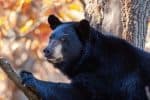
American Black Bear A defining large mammal of Washington's forests, from coastal rainforest to Cascade foothills; frequently associated with berry and salmon-season foraging.
Gray Wolf
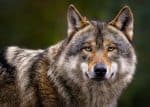
Gray Wolf Symbolic of wilderness recovery and a major wildlife-watching draw in parts of eastern Washington; recolonization has made wolves an increasingly discussed and sought-after species.
Mountain Goat
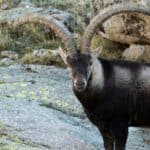
Mountain Goat An iconic alpine mammal of the Cascades and Olympics; seen on cliffs and high ridgelines, especially in North Cascades terrain.
Harbor Seal
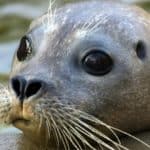
Harbor Seal One of the most commonly observed marine mammals in Puget Sound and along the outer coast; haul-outs and nearshore foraging are visible from many shorelines.
Tufted Puffin A charismatic seabird associated with rocky coastal waters and offshore islands; puffin viewing is a hallmark of Washington's marine wildlife experience.
Chinook Salmon
Chinook Salmon The state's most culturally and ecologically influential salmon-central to Indigenous traditions, fisheries, and predator-prey dynamics (especially for orcas and eagles).
Northern Spotted Owl A globally recognized old-growth-associated owl of western Washington forests; emblematic of conservation conflicts and late-successional forest ecosystems.

Endemic & Rare Species

Olympic Marmot

Marmota olympus

Endemic to Washington (Olympic Peninsula); conservation concern due to climate and habitat pressures

Found only in Olympic National Park and nearby high country, it is one of Washington's few true endemic mammals and a signature alpine species.

Southern Resident Killer Whale

Orcinus orca

Endangered (U.S. ESA distinct population segment); small, declining population

This uniquely salmon-dependent orca community is strongly associated with the inland waters of Washington and is a focal point for regional conservation.

Marbled Murrelet

Brachyramphus marmoratus

Threatened (U.S. ESA) in Washington

A seabird that nests in large mossy branches of older coastal forests-linking marine food webs to intact old-growth habitat.

Northern Spotted Owl

Strix occidentalis

Threatened (U.S. ESA)

A rare old-forest specialist facing long-term decline from habitat loss and competition with barred owls; a defining species of western Washington conservation.

Canada Lynx

Lynx canadensis

Threatened (U.S. ESA) in the contiguous U.S.

A high-elevation, snow-adapted cat of the Cascade crest and northeastern mountains; naturally low-density and difficult to observe.

Columbia Basin Pygmy Rabbit

Brachylagus idahoensis

Highly imperiled in Washington (state-listed and conservation-dependent in remaining habitats)

A sagebrush-steppe specialist strongly tied to intact big sagebrush; its rarity highlights the vulnerability of eastern Washington shrub-steppe ecosystems.

Bull Trout

Salvelinus confluentus

Threatened (U.S. ESA)

A cold-water char dependent on connected, clean, cold mountain streams and lakes; a key indicator of watershed health in many Washington basins.

Western Gray Squirrel

Sciurus griseus

Threatened (Washington State)

A localized oak and ponderosa pine associate in south-central Washington; declines track habitat fragmentation and loss of oak woodlands.

Notable Populations

  • Southern Resident killer whales in the Salish Sea: one of the most intensively monitored and nationally significant marine mammal populations in the U.S.
  • Pacific Flyway concentrations: major seasonal gatherings of waterfowl and shorebirds in places like the Skagit Delta/Valley and Grays Harbor.
  • Roosevelt elk on the Olympic Peninsula: among the most prominent and visible populations of this coastal rainforest elk form in North America.
  • Puget Sound harbor seals: large, widely distributed nearshore populations that strongly shape local marine food webs.
  • Columbia River Basin anadromous fish runs (salmon/steelhead): nationally significant migrations linking Pacific marine ecosystems to inland watersheds, with major ecological and cultural importance.

Recent Changes

  • Gray wolf recolonization and expansion (since the late 2000s), with increasing pack presence in eastern Washington and periodic movement toward the Cascades.
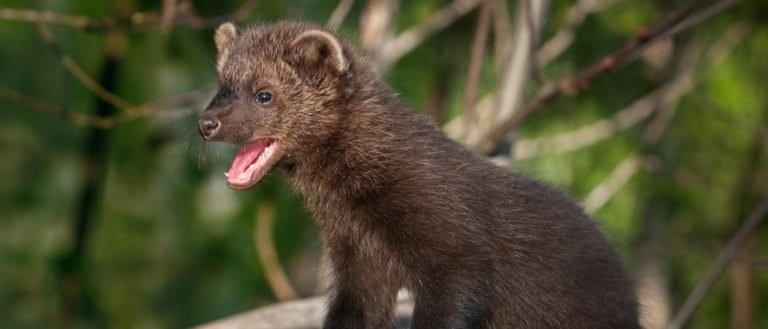
  • Fisher reintroductions (Cascade Range and Olympic Peninsula) have re-established populations in parts of their historic range after earlier extirpation.
  • Sea otter recovery on the outer coast following reintroduction; numbers increased over decades but remain vulnerable to localized threats.
  • Humpback whale sightings have increased in the Salish Sea and along the outer coast compared with past decades, reflecting broader North Pacific recoveries.
  • Southern Resident killer whales and several Chinook salmon populations continue to face declines/limits driven by prey availability, noise/disturbance, contaminants, and habitat pressures.
  • Northern spotted owl numbers continue to drop in many areas due to habitat change and strong competition from barred owls.
  • White-nose syndrome and related bat disease concerns have added new pressure to cave- and roost-dependent bat species in the region.
  • Shrub-steppe wildlife in eastern Washington faces ongoing stress from large wildfires, invasive plants (e.g., cheatgrass), and habitat conversion/fragmentation, affecting sagebrush-dependent species.
Visit

Wildlife Viewing

Washington has many wildlife habitats: Pacific coast and sea stacks, Puget Sound and San Juan Islands, Olympic temperate rainforests, glaciated Cascades, and Columbia Plateau shrub-steppe. Visitors can see orcas, humpbacks, gray whales, sea otters, seabirds, raptors, Roosevelt elk, black-tailed deer, mountain goats, marmots, pronghorn, and sagebrush birds, often on one trip.

Best Seasons

Spring (Mar-May)

Prime migration season for birds (shorebirds, waterfowl, songbirds) across Puget Sound, Skagit, and the Pacific coast. Gray whales pass the outer coast (especially March-April). Elk and deer are active in low elevations; wildflowers bring pollinators and high visibility on many trails before summer crowds. Great shoulder season for Olympic Peninsula rainforests and coastal stormy-seas wildlife scanning.

Summer (Jun-Aug)

Best all-around season for accessibility: high-elevation Cascade trails open for mountain goats, pikas, marmots, and alpine birds. San Juan Islands/Salish Sea peak for resident orcas and frequent humpback sightings; abundant harbor seals/sea lions. Coastal seabird colonies and nesting activity (view from overlooks). Warm, dry conditions in Eastern Washington improve viewing in shrub-steppe (early mornings/evenings).

Fall (Sep-Nov)

Spectacular elk rut in the Olympic Peninsula (bugling, sparring) and increased activity for many mammals. Strong raptor movement and salmon runs that draw bald eagles (especially along major rivers and lakes). Late fall begins "winter eagle" concentrations in places like the Skagit. Cooler temps improve hiking and wildlife comfort; fewer visitors than summer.

Winter (Dec-Feb)

Bald eagle viewing peaks along the Skagit River during salmon spawning seasons, while waterfowl gather in estuaries and bays. Puget Sound and coastal waters host wintering seabirds and diving ducks. Watching storms on the outer coast can be dramatic, with occasional gray whales offshore. Snow season wildlife tracking is possible in some areas with proper safety and road planning.

Top Wildlife Experiences

  • San Juan Islands whale watch (Friday Harbor/Roche Harbor departures): target resident orcas in summer, with frequent humpback sightings; pair with shoreline scanning at Lime Kiln Point State Park ("Whale Watch Park") on San Juan Island.
  • See elk on the Olympic Peninsula in Olympic National Park at sunrise or sunset in the Hoh Valley and Hurricane Ridge foothills. In fall watch the Roosevelt elk rut in Hoh or Quinault, and stay a safe distance.
  • Coastal seabird and sea stack wildlife day on the Olympic Coast: Rialto Beach to Hole-in-the-Wall (tidepooling at low tide), plus overlooks at Kalaloch and Ruby Beach for seabirds, harbor seals, and occasional offshore whales.
  • Skagit Valley birding circuit: winter bald eagles and massive waterfowl flocks around the Skagit River/Baker River area; spring brings snow geese and raptor activity-combine with farmland viewpoints and river pullouts (respect private land).
  • Hike alpine areas in the Cascades. Artist Point (Mount Baker) offers easy scenery and chances to see mountain goats and ptarmigan. Or go to high country in North Cascades National Park for marmots, pikas, and raptors. Check seasonal road openings.
  • Columbia River Gorge & shrub-steppe wildlife in Eastern Washington: McNary National Wildlife Refuge and the Hanford Reach National Monument area for waterfowl, shorebirds, raptors, and sagebrush-steppe specialties; best light is early morning/evening.
  • Urban-to-wild Puget Sound wildlife: kayak or shoreline-watch for harbor seals, porpoises, and seabirds near areas like Deception Pass State Park and the Padilla Bay shoreline (choose calm conditions and watch currents).

Wildlife Watching Types

Whale watching (orca, humpback, gray whale) and marine wildlife cruises Shore-based whale watching and marine mammal spotting (headlands, parks) Birding hotspots (waterfowl, seabirds, shorebirds, raptors, songbird migration) Raptor watching (eagles, hawks, falcons; winter concentrations and migration) Tidepooling and intertidal ecology walks (anemones, sea stars, crabs-seasonal conditions apply) Rainforest mammal viewing (Roosevelt elk, black-tailed deer, black bear-season dependent) Alpine wildlife hiking (mountain goats, marmots, pikas, ptarmigan) Shrub-steppe and desert-edge wildlife (sagebrush birds, pronghorn in select areas, reptiles in warm seasons) Salmon-run wildlife watching (eagles, otters, bears in some regions-maintain strict viewing distances) Wildlife photography trips (boat-based, blinds, and scenic pullouts)

Guided Options

  • San Juan Islands whale watching operators (departures from Friday Harbor, Anacortes, and surrounding ports) offering naturalist-led trips focused on responsible viewing in the Salish Sea.
  • Puget Sound Express (Edmonds) whale watching trips into the Salish Sea with onboard interpretation (seasonal schedules).
  • Olympic National Park ranger-led programs (seasonal) and visitor center talks; check current schedules for guided walks and evening programs in park areas.
  • Washington State Parks interpretive programs (seasonal) at parks such as Deception Pass and others-often include tidepool/natural history walks and junior ranger-style activities.
  • U.S. Fish & Wildlife Service programming at National Wildlife Refuges (varies by refuge/season), including wildlife observation opportunities and occasional guided events.
  • Audubon Society field trips (e.g., Birds Connect Seattle (formerly Seattle Audubon) and other regional chapters) offering guided birding outings to hotspots like Skagit, coastal estuaries, and migration sites.
  • Local naturalist-led tidepool walks on the Olympic Coast and Puget Sound beaches (often run through community organizations, parks, or tour companies; timing depends on low tides).
Habitats

Ecosystems

Washington spans a steep west-east moisture gradient from Pacific coastal waters and the Salish Sea to the Cascade Range and the semi-arid Columbia Plateau. This produces globally notable temperate rainforests (Olympics), extensive conifer forests, high-elevation alpine environments, large river systems (Columbia-Snake), rich wetlands/estuaries, and cold-desert shrub-steppe and grasslands in the rain shadow east of the Cascades.

Biomes

Temperate Rainforest

Maritime, high-precipitation rainforests with massive conifers, lush moss/fern understories, and high biomass; concentrated on the Olympic Peninsula and other wet coastal-facing slopes.

Localized but iconic; primarily Olympic Peninsula (west side) and other very wet coastal mountain zones.

Temperate Forest

Evergreen-dominated temperate forests from lowland Douglas-fir-western hemlock-western redcedar in western Washington to drier ponderosa pine/Douglas-fir forests on east-side slopes; includes mixed riparian hardwoods in valleys.

Widespread; dominant across much of western lowlands and montane zones, and as extensive dry forests along eastern Cascade/NE WA uplands.

Alpine

High-elevation subalpine parkland, krummholz, heather communities, talus, glaciers/snowfields, and alpine tundra-like meadows on the Cascades and Olympics; short growing seasons and strong elevation-driven climate gradients.

Patchy but prominent along the Cascade crest and Olympic high country; increases with elevation above treeline.

Temperate Grassland

Bunchgrass prairies and grass-dominated rolling landscapes, including the Palouse and remnant prairie/oak-prairie mosaics in parts of the Puget Trough; often heavily converted to agriculture.

Fragmented; larger extents in the Palouse and scattered remnants west of the Cascades.

Cold Desert

Cold semi-arid shrub-steppe and sandy/rocky basins in the Columbia Plateau rain shadow; sagebrush, bitterbrush, rabbitbrush, bunchgrasses, and biological soil crusts; hot summers/cold winters.

Extensive across central and much of eastern Washington lowlands (Columbia Basin/Plateau).

Freshwater

Large river networks (Columbia, Snake, Yakima, Skagit, Snohomish, Spokane), glacial and volcanic lakes, reservoirs, and headwater streams supporting salmonids and other aquatic communities.

Statewide; highest density of perennial streams in wetter west and mountain watersheds; major river corridors traverse the state.

Marine

Pacific coastal waters plus the inland marine waters of the Salish Sea (Puget Sound, Strait of Juan de Fuca) with strong tidal exchange, kelp beds, forage fish habitat, and productive upwelling-influenced systems.

Along the outer coast and throughout Puget Sound/Straits; marine influence extends into estuaries and nearshore zones.

Wetland

Coastal estuarine marshes, river floodplain wetlands, peatlands/bogs (notably in glaciated lowlands), beaver-influenced wetlands, and seasonally flooded basins; critical for waterfowl and amphibians.

Scattered statewide; especially common in Puget Lowland, coastal margins, and major river valleys/floodplains.

Habitats

Rainforest

Olympic Peninsula temperate rainforests (e.g., Hoh, Quinault, Queets) with towering spruce/hemlock/cedar and dense epiphytes.

Forest

Extensive forest cover ranging from wet lowland forests west of the Cascades to mixed montane forests statewide.

Coniferous Forest

Dominant forest type: Douglas-fir-hemlock-cedar west; ponderosa pine and Douglas-fir east; includes subalpine fir and mountain hemlock at higher elevations.

Deciduous Forest

Riparian and valley-bottom hardwoods (black cottonwood, alder, bigleaf maple) and localized oak woodlands near the Puget Trough rain shadow.

Woodland

Oregon white oak and mixed woodland-prairie mosaics (south Puget Sound and other dry lowland pockets), plus open pine woodlands east of the Cascades.

Grassland

Bunchgrass communities and remnant prairies; important for ground-nesting birds and pollinators; often fragmented by development or farming.

Prairie

Palouse prairie (now largely cropland) and Puget Sound prairies (notably south Sound), with high conservation value remnants.

Steppe

Sagebrush/bunchgrass steppe across the Columbia Plateau, including scablands and dune/sandy areas.

Shrubland

Sagebrush, bitterbrush, and shrub-dominated slopes and basins; also chaparral-like shrub patches on very dry sites (not a true Mediterranean biome).

Desert

Arid and semi-arid landscapes of the Columbia Basin with sparse vegetation on dunes, badlands, and rocky outcrops (cold-desert context).

Mountain

Cascades and Olympic Mountains with strong elevation zonation, volcanic peaks (e.g., Rainier, St. Helens, Adams), and steep watersheds.

Alpine Meadow

Subalpine and alpine meadows (e.g., Paradise/Chinook Pass areas) with short-season wildflowers and snowmelt-fed seeps.

Cliff/Rocky Outcrop

Sea cliffs on the outer coast, basalt cliffs in the Columbia Gorge area, and alpine rock faces supporting specialized plants and nesting birds.

Cave

Lava tubes and basalt caves in volcanic terrains (notably in the Cascades and basalt provinces), supporting bats and specialized invertebrates.

River/Stream

Major salmon-bearing rivers and large regulated systems (Columbia/Snake) plus steep coastal and Cascade rivers with high sediment/wood dynamics.

Lake

Glacial and tectonic lakes (e.g., Lake Washington, Chelan) and many alpine lakes; key for recreation and aquatic biodiversity.

Pond

Beaver ponds, prairie pothole-like depressions in some lowlands, and small seasonal ponds important for amphibians.

Wetland

Peatlands, floodplain wetlands, and wet meadows; high value for water storage, filtration, and migratory birds.

Swamp

Forested wetlands with cedar/alder and seasonally flooded stands in lowlands and river valleys.

Marsh

Freshwater and brackish marshes in floodplains and estuaries; includes bulrush/cattail systems and tidal marsh edges.

Bog

Peat-accumulating sphagnum bogs and fens in glaciated lowlands and depressions, especially in western Washington.

Estuary

Large estuaries and deltas (e.g., Skagit, Nisqually, Dungeness, Grays Harbor systems) critical for juvenile salmon and shorebirds.

Coastal

Outer Pacific coast with dunes, headlands, nearshore upwelling influence, and storm-driven disturbance regimes.

Beach

Sandy/gravel beaches on the outer coast and Puget Sound that provide forage fish spawning habitat in places.

Rocky Shore

Rocky intertidal habitats on the outer coast and many Puget Sound shorelines with high invertebrate/algal diversity.

Kelp Forest

Bull kelp and other kelp beds in the Salish Sea and outer coast nearshore, supporting fish nurseries and marine food webs.

Open Ocean

Washington's adjacent Pacific waters beyond the nearshore, used by migratory seabirds and marine mammals.

Deep Sea

Offshore deeper waters beyond the continental shelf edge (adjacent to Washington's coast) influencing regional marine productivity and species distributions.

Seabed/Benthic

Soft-sediment and rocky benthic habitats in Puget Sound and coastal margins supporting clams, crabs, demersal fish, and eelgrass-associated communities (where shallow).

Urban

Major urban ecosystems centered on the Seattle-Tacoma-Everett corridor and Spokane, with greenbelts and heavily modified shorelines.

Suburban

Expanding suburban mosaics in Puget Sound lowlands and around secondary cities, interacting strongly with streams and nearshore habitats.

Agricultural/Farmland

Intensive irrigated agriculture in the Columbia Basin, dryland wheat in the Palouse, orchards/vineyards in central WA, and dairy/row crops in western valleys.

Ecoregions

EPA Level III: Coast Range (incl. Olympic Peninsula) EPA Level III: Puget Lowland EPA Level III: North Cascades EPA Level III: Cascades EPA Level III: Eastern Cascades Slopes and Foothills EPA Level III: Okanogan Highlands EPA Level III: Columbia Plateau EPA Level III: Blue Mountains WWF: Olympic Peninsula temperate rain forests WWF: Cascades mixed forests WWF: Eastern Cascades forests WWF: Puget lowland forests WWF: Columbia Plateau shrub steppe WWF: Palouse grasslands (prairie) WWF: Blue Mountains forests WWF (marine): Puget Trough/Georgia Basin WWF (marine/coastal): Oregon, Washington, Vancouver Coast and Shelf
Protection

Conservation

Primary Threats

  • Clearing and breaking up lowland forests, prairies, wetlands, and riversides—especially around the Puget Sound metro crescent (Bellingham–Seattle–Tacoma–Olympia) and in farm valleys—reduces breeding and migration places for salmon, amphibians, and prairie species. Hardened shores and lost estuaries (Skagit, Snohomish, Puyallup) hurt nearshore nursery habitat for young salmon.
  • Less snow and earlier spring melt in the Cascades lower summer stream flows and raise water temperatures, stressing salmon and trout. More wildfires damage sagebrush-steppe and forests. Marine heatwaves and ocean acidification hurt forage fish, shellfish, and food webs for salmon and Southern Resident killer whales.
  • Stormwater runoff (metals, petroleum byproducts, tire-derived chemicals), wastewater, and legacy industrial contaminants in Puget Sound and connected rivers accumulate in sediments and biota, affecting fish, orcas, and seabirds. Agricultural nutrients and pesticides in some basins contribute to water-quality impairment; toxics and sediment from disturbed lands can smother spawning gravels.
  • Invasive plants (e.g., knotweeds in riparian areas, invasive grasses in shrub-steppe) change habitat and fire patterns. Aquatic invasives (weeds, nonnative fish) compete with or eat native species. Zebra and quagga mussels from trailered boats would harm hydropower and aquatic life.
  • Disease pressures include pathogens affecting amphibians (e.g., chytrid fungus risk in suitable habitats) and fish diseases that can be exacerbated by warmer water and crowding near barriers. Shellfish and marine organisms may see increased harmful algal bloom exposure as waters warm and stratify.
  • Regulated hunting is generally managed sustainably, but localized pressure and compliance issues can affect sensitive populations, and predator management debates (especially around wolves) influence conservation outcomes and public tolerance in rural communities.
  • Illegal take/possession is not a dominant statewide driver but can affect certain taxa (e.g., reptiles/amphibians, birds, and marine species) through poaching or illicit collection; enforcement is complicated by proximity to major ports and interstate corridors.
  • Salmon, steelhead, and some marine stocks face tight constraints; mixed-stock fisheries and depleted runs require careful co-management (state-tribal-federal). Forage fish and other prey dynamics are important for higher trophic species, including Southern Resident killer whales, making sustainable harvest and bycatch reduction critical.
  • Recreation pressure in alpine and subalpine areas (North Cascades, Mount Rainier, popular trail systems) can disturb wildlife and degrade fragile habitats. Vessel traffic and noise in Puget Sound disturb marine mammals, particularly Southern Resident killer whales, and shoreline recreation can affect seabird nesting sites.
  • Wolf-livestock conflicts in northeastern Washington and the east slopes of the Cascades drive lethal control debates and influence pack persistence. Crop depredation and property conflicts with elk, black bears, and cougars occur in agricultural-forest interface zones; urban-adjacent conflicts are increasing as development expands into foothills and islands.
  • Small, isolated populations (e.g., some salmonid stocks, pygmy rabbit in the Columbia Basin, and certain amphibians) face reduced genetic diversity and inbreeding risk. Hatchery-wild interactions can also influence the genetic integrity and fitness of wild salmon and steelhead where hatchery production is used to support fisheries or supplementation.
  • Water withdrawals for agriculture and municipal use-especially in parts of Eastern Washington-can reduce instream flows needed for fish and riparian ecosystems. Declines in key prey resources (e.g., salmon availability for Southern Resident killer whales) function as a form of ecological resource limitation.
  • Dams and culverts block fish passage and alter flow, temperature, and sediment transport in many basins. Roads and expanding transportation networks fragment habitat, increase runoff, and raise wildlife-vehicle collision risk; ferry and shipping infrastructure contributes to underwater noise and spill risk in Puget Sound.
  • Hydrologic alteration from flood control, channelization, and hydropower operations changes river morphology and floodplain connectivity, reducing side channels and wetlands crucial for salmon rearing. Fire suppression has altered forest structure in many areas, increasing vulnerability to high-severity fires, particularly east of the Cascade crest.
  • In the Columbia Basin and other productive valleys, irrigation-supported agriculture has replaced shrub-steppe and altered wetland and riparian systems; pesticide use and field drainage can affect amphibians, pollinators, and water quality. Remaining native prairie and steppe patches are often small and isolated.
  • Rapid growth around Puget Sound increases impervious surfaces, stormwater pollution, shoreline armoring, and habitat fragmentation. Development pressure also increases demand for water and expands the wildland-urban interface, complicating fire management and wildlife coexistence.
  • While much forestry is managed under modern rules, timber harvest and associated road networks can reduce older-forest structure, simplify habitat, increase sediment delivery to streams, and affect species reliant on mature forests (e.g., northern spotted owl, marbled murrelet) when harvest occurs in or near suitable habitat.
  • Hard-rock mining is less extensive than in some western states but legacy and localized mining impacts can contribute heavy metals and acid drainage to watersheds; aggregate extraction and quarrying can also disturb riparian and upland habitats if poorly sited or managed.
Fun Facts

Did You Know?

Olympic National Park's mountain goats were historically not native there-many were introduced in the 1920s, and their unexpected impacts on fragile alpine plants later triggered large-scale relocation/removal efforts.

The "killer whales" most people see in the Salish Sea are often the Southern Resident population, which is unusually picky: they primarily eat salmon (especially Chinook), unlike many other orca populations that hunt marine mammals.

You can watch salmon return in the middle of a major city: in fall, chum salmon regularly run in several Seattle-area urban creeks (for example, Longfellow Creek in West Seattle), sometimes within sight of roads and neighborhoods.

Washington's dry interior has a twist: the Columbia Basin pygmy rabbit, the smallest rabbit in North America, disappeared from the wild in the early 2000s and has been bred in captivity for release back to the wild with sagebrush-steppe restoration.

A tiny amphibian found across much of Washington, the Pacific chorus frog can quickly change color—often green to brown—to match temperature, moisture, and background, like a tiny "mood ring".

The Columbia River Basin once supported the largest salmon runs on Earth-historically estimated at roughly 10-16 million adult salmon and steelhead returning each year, making Washington a former global epicenter for migratory fish biomass.

Puget Sound is home to the giant Pacific octopus (Enteroctopus dofleini), the world's largest octopus species-individuals can exceed 100 lb and span well over 10 feet tip-to-tip.

Washington's coastal waters and tidelands are famous for geoduck (Panopea generosa), the world's largest burrowing clam; they can live well over a century (often cited at 100-150+ years).

The Dungeness Spit at the Dungeness National Wildlife Refuge is the longest natural sand spit in the United States (about 5.5 miles), creating an outsized intertidal and lagoon habitat that concentrates shorebirds, waterfowl, and marine life.

Roosevelt elk (Cervus canadensis roosevelti)-native to Washington's Olympic Peninsula-are the largest elk subspecies in North America, with big-bodied coastal animals adapted to wet temperate rainforest conditions.

Located in the Pacific Northwest, Washington is a state full of contrasting environments. Graced with relatively dry summers and wet, mild winters, the landscape is covered by soaring volcanoes and high mountain peaks, dense forests, vast prairies, marine waters, and plenty of wetlands and grasslands. Washington shares a border with Oregon to the south, Idaho to the east, British Columbia, Canada to the north, and the Pacific Ocean to the west.

The largest mountain range in the state – the Cascade Range, which includes the highest point, Mount Rainier, at 14,400 feet – runs north to south through the center of Washington. To the east is the Columbian Plateau, the Columbia River (the largest river in the state), and a small segment of the Rocky Mountains. The western part contains the Puget Sound area, the Olympic Peninsula, and Mount Olympus itself. Together, they provide a home for a diverse range of different wildlife.

The Official Animal of Washington
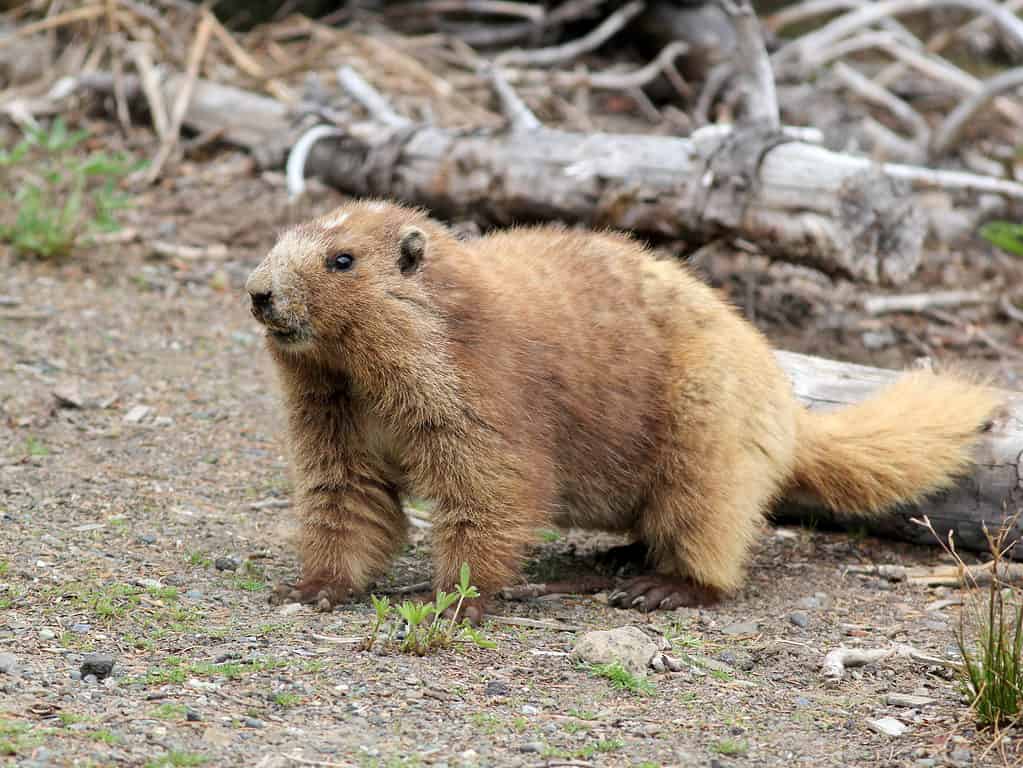
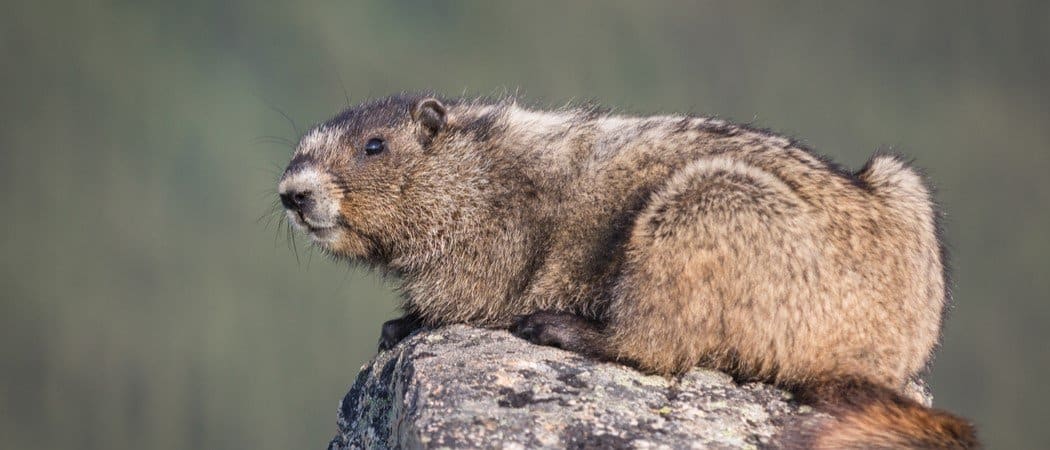
The Olympic marmot (Marmota olympus)

The Olympic marmot can only be found at Washington’s Olympic Peninsula

The Olympic marmot (Marmota olympus) is Washington’s state animal. This tubby cousin to the squirrel is also closely related to the hoary and Vancouver Island marmots.

Its main claim to fame is the fact that it can only be found in the Evergreen State, at the Olympic Peninsula to be precise. The gregarious mammal lives in groups of up to 40 and communicates with family and neighbors with a series of whistles when not engaged in play fighting or munching on dry grass.

The willow goldfinch (Spinus tristis) is the state bird. It is a beautiful avian with mostly bright yellow plumage, black wings crossed with narrow white and gray bands, a cap of black feathers, and a conical golden beak. In addition to being highly sociable, it is also especially adaptable and loves residential areas which often promise a charmed pampered existence thanks to the presence of birdfeeders.
Other wildlife species elected to represent the state include the green darner dragonfly, the Pacific chorus frog, the steelhead trout, and the orca, in the capacities of state insect, amphibian, fish, and marine mammal, respectively.

Where to Find the Top Wild Animals in Washington
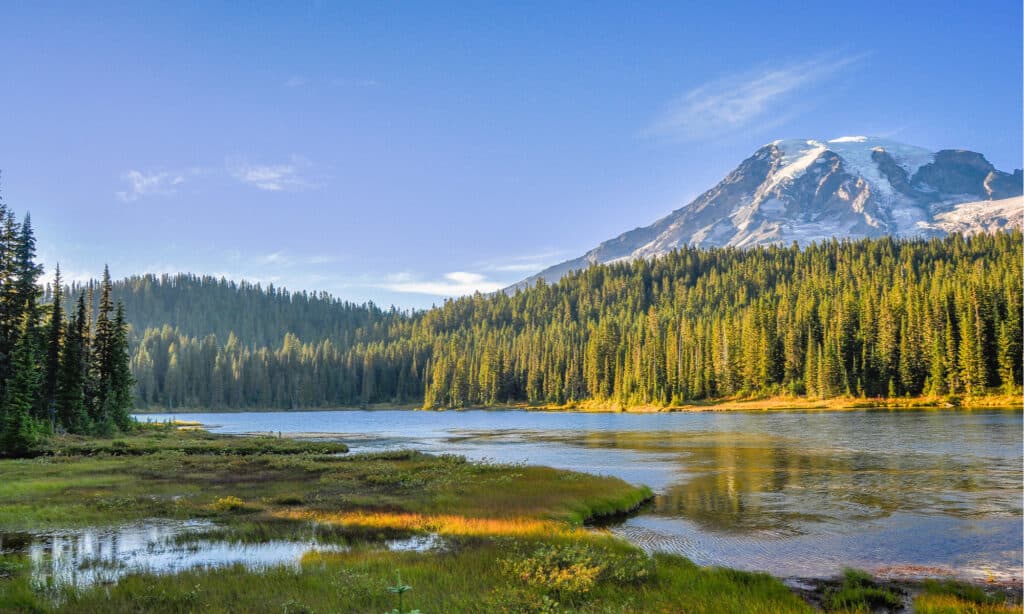
Best National Parks to Visit in October - Mount Rainier National Park

Mount Rainier National Park was one of the first national parks established in the United States

The state of Washington still retains large stretches of pristine landscape where visitors can find some of the best natural ecosystems and wildlife in the region. Much of this land is protected by dozens of different parks and reserves, which you can read about here.

  • The Olympic National Park, situated to the north of the Olympic Peninsula, is a UNESCO World Heritage Site and one of the most popular destinations in the state. Amid nearly a million acres of temperate rainforests, coastlines, and glaciated mountains, visitors can sometimes catch a glimpse of bobcats, whales, dolphins, seals, lynxes, grizzly bears, wolverines, rodents, ticks, bald eagles, thrushes, owls, and numerous other kinds of wildlife.
  • Mount Rainier National Park, which covers around a quarter of a million acres near the city of Tacoma, was one of the first national parks ever established in the United States. Encompassing the famous volcano of Mount Rainier, the park is home to elk, coyotes, bobcats, beavers, foxes, marmots, pikas, mountain goats, rodents, falcons, eagles, owls, finches, and others.
  • Discovery Park, located directly on the Puget Sound waterfront, is the largest green space in Seattle. Apart from being a rich cultural center, the 20-acre park is also home to some 270 species of birds, as well as seals, coyotes, and other large mammals.
  • Flaming Geyser State Park, located along the Green River in King County, is a popular destination for kayakers, rafters, and canoeists. It’s actually named for a persistent flame, fueled by a methane gas pocket around a thousand feet deep. From October to December, people can catch or just observe the large Chinook, which migrate upstream to their spawning grounds.
  • San Juan Islands National Monument, located in the Salish Sea right next to the Canadian border, was created in 2013 to protect the local marine biodiversity, including minks, river otters, and seals, plus many species of birds. The park is also a prime destination for whale watchers. Grey, minke, and humpback whales, as well as dolphins, all roams the waters of the Salish Sea. Three pods of killer whales also appear between April and October to stake out their hunting grounds.
  • Sun Lakes-Dry Falls State Park is situated between the rich freshwater lakes in central Washington. The landscape was created around 13,000 years ago by flooding from the last Ice Age. Visitors may be able to find bobcats, coyotes, marmots, elk and deer, hawks, ospreys, owls, pheasants, trout, and much more here.

The Most Dangerous Animals in Washington Today
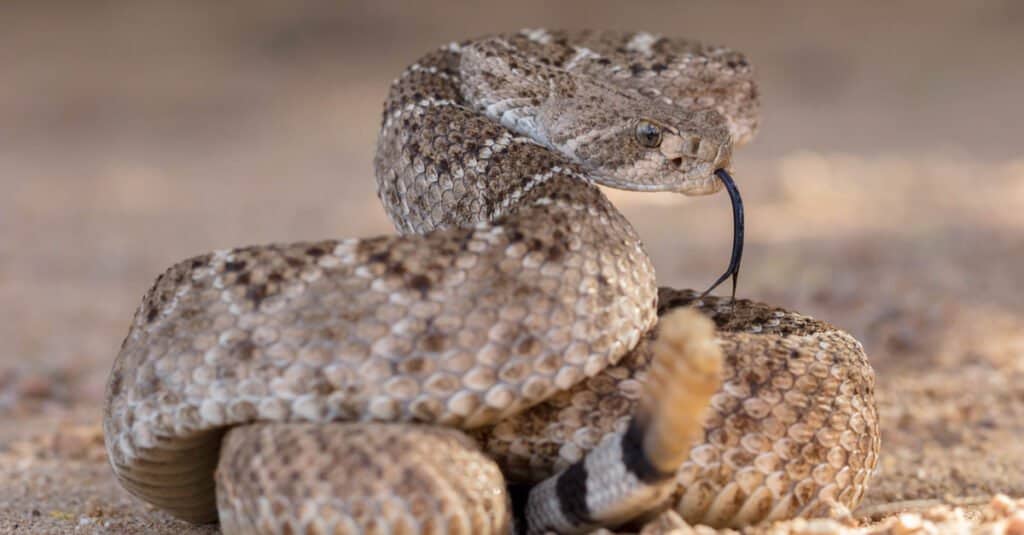
Western Diamondback Rattlesnake (Crotalus atrox)

The western rattlesnake is one of Washington’s few snakes and tends to conceal itself using rocks and logs

The Washington wilderness is home to several animals that may pose a danger to human life. Most of these animals live in remote landscapes and are rarely encountered by people. This list will focus on the most venomous or fearsome animals in the state over animals that may kill people due to the spread of disease or from an allergic reaction.

  • Western Rattlesnake – Native to eastern Washington and usually hiding around logs and rocks, this is one of the few snakes in the state of Washington with enough venom to pose a danger to humans. While they will usually give a warning rattle with their strange-looking tail and attempt to flee from people, they may bite if they feel threatened in some way. Symptoms of its venom can include nausea, vomiting, increased heart rate, numbness, blurred vision, and breathing difficulties. If you’ve been bitten by one, then you should seek immediate medical attention. The vast majority of people who receive care will suffer no long-term effects.
  • Northern Pacific Rattlesnake – This species is closely related to the western rattlesnake. Except for the darker skin color, it can be hard to tell them apart. Even the symptoms of their bite are generally similar. In some cases, when it feels threatened, this snake may deliver a dry bite, but you should seek medical attention anyway.
  • Black Widow Spider – Mostly native to eastern Washington. One of many spiders in Washington, the female black widow spider is relatively easy to identify from the large black body and red hourglass figure or markings on the underside of the abdomen. She resides in dark, undisturbed areas and usually does not bite unless protecting her eggs. While the venom can cause itching, pain, cramping, nausea, headaches, high blood pressure, and difficulty breathing, it usually won’t cause any life-threatening symptoms unless one is already sick or has an allergic reaction. Either way, bite victims should seek immediate medical care.
  • Grizzly Bear – The grizzly is among the largest and most aggressive bears in the United States. Because it’s unable to climb trees very well, the grizzly is more likely to stand its ground when it feels threatened or provoked. While bear attacks are exceptionally rare, one should nevertheless try to avoid contact with a grizzly at all costs.
  • Asian Giant Hornet – While less dangerous than its reputation suggests (the ominous nickname of “murder hornet” is most certainly exaggerated), multiple stings from the invasive Asian giant hornet, the largest hornet species in the world, can be lethal even to people who are not necessarily allergic to its venom. Fortunately, the death rate is quite low. It’s responsible for only a few known deaths per year.

Endangered Animals in Washington
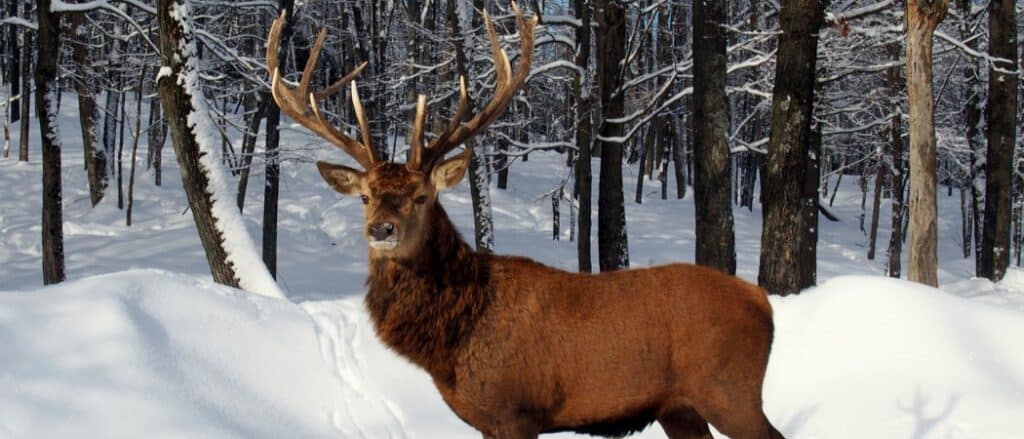
Caribou Buck in the snow

Populations of the boreal woodland caribou have plummeted owing to the loss of its boreal habitat

This is a list of endangered or threatened species specifically from the state of Washington. Even if the animal is common elsewhere, anything on Washington’s states endangered species list will count. Many of these species are currently under protection by the state or federal government, or they’ve been the target of rehabilitation efforts.

  • Sea Otter – These agile marine mammals, which seem to spend much of their day swimming placidly on their backs, became a target of hunters for their exceptionally thick fur. By the early 20th century, only about a thousand or two sea otters remained. While numbers have rebounded considerably, they’re still threatened by pollution, poaching, and entanglements in nets.
  • Boreal Woodland Caribou – This endangered subspecies of caribou has disappeared from much of the United States due to the loss of its preferred boreal habitat. It’s one of the rarest mammals in the entire state of Washington.
  • Pygmy Rabbit – As the name suggests, the pygmy rabbit is one of the smallest species of rabbits in the world. The Columbia River basin has its own unique subpopulation, distinct from the rest of the species, but the loss of sagebrush habitat for agriculture and oil and gas development caused a precipitous fall in numbers. This decline was further reinforced by slow reproduction due to inbreeding. They had to be crossbred with nearby populations and then reintroduced back into the wild.
  • Snowy Plover – This small wading bird, which breeds on the Washington coast and travels south for the winter, is currently threatened by habitat degradation.
  • Marbled Murrelet – This small seabird inhabits the Pacific coast of North America. Reasons for its decline include high rates of predation, climate-driven changes, and the loss of mature forests for its nesting sites.
  • Northern Spotted Owl – The destruction of Washington’s old growth forests has caused a rapid decline of northern spotted owl populations. It is estimated that only about 500 pairs remain in the entire state, making it one of the rarest birds.
  • Sea Turtles – Both the leatherback and loggerhead sea turtles frequent the waters and shores near the state of Washington. Unfortunately, pollution, net entanglements, and the loss of suitable nesting sites have caused a precipitous decline in the number of sea turtles both in Washington and around the entire world.
  • Oregon Spotted Frog – Native to the Columbia River region in Washington, the spotted frog is currently threatened by dam construction, excess water usage, and the introduction of other amphibious species.
  • Taylor’s Checkerspot – This strange looking butterfly can be identified by the alternating bands of orange and white spots, surrounded by a black outline, on its wings. It has been significantly impacted by both pesticide use and the loss of prairie habitat.
  • Pinto Abalone – This large marine snail, which grows a sloping, iridescent shell, is currently threatened by disease, overharvesting, and predation from recovering sea otter populations.

The Largest Animal in Washington
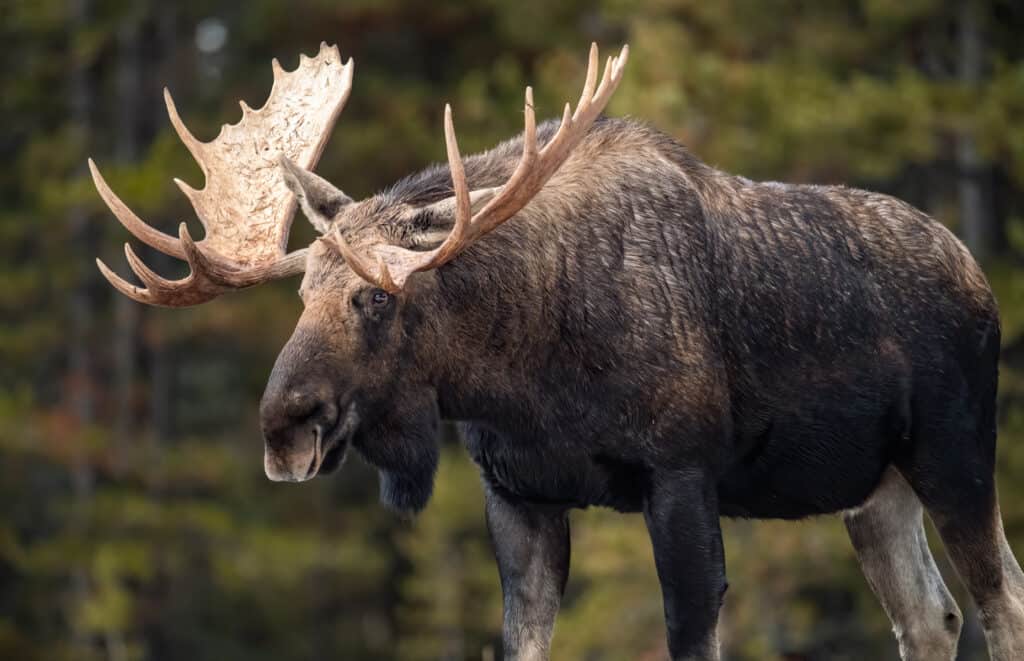
bull moose

About 5,000 moose live in Washington

The moose (Alces alces) is Washington’s largest animal. Its shoulder is the height of a human at six feet, and likely higher, if it reaches a height of seven feet.

This cervid known for its broad antlers, its aversion to hay, and its ability to graze underwater is also capable of reaching a whopping 1,300 lbs and of outsprinting a human with a maximum speed of 35 mph (for a bit of perspective humans are capable of reaching 27.5 mph).

About 5,000 such giant ungulates call the Evergreen State home, an impressive number placing it ahead of Colorado, Utah, and Vermont which each have populations numbering 3,000 even if that figure is far below the impressive numbers found in Idaho (10,000), Maine (70,000), or Alaska (200,000).

The majority of these imposing herbivores can be found in the Selkirk Mountains in the eastern part of the state while small groups can also be found in the Blue Mountains, north Cascades, and Okanogan.

The Rarest Animal in Washington
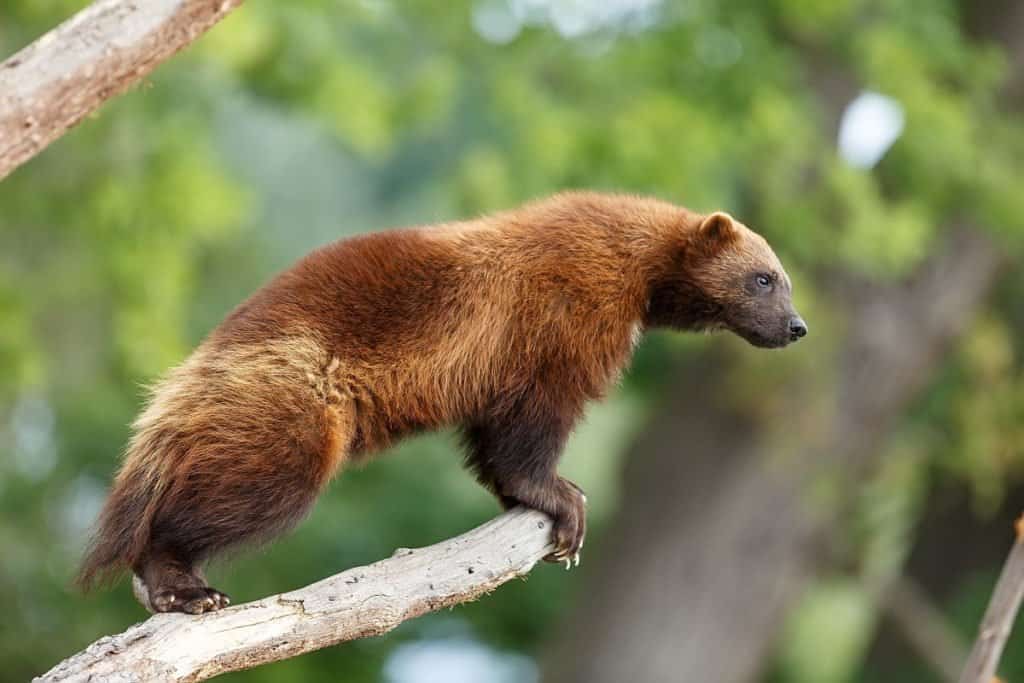
Most wolverines in Washington live in the Cascades

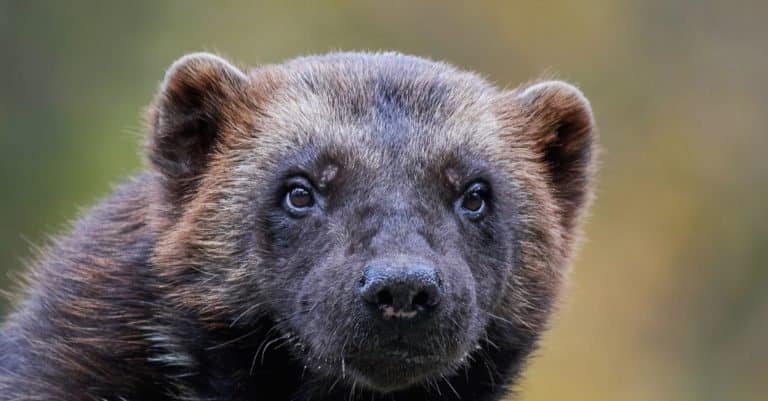
The wolverine (gulo gulo) happens to be the rarest animal in Washington.

Compared to Alaska where the world’s largest mustelid happens to be thriving, Washington is believed to be home to only 50 of these voracious carnivores.

The elusive mammal which was hunted to extinction in the region by the mid-twentieth century staged a comeback in the 1990s when populations sprang up in the North Cascades (and the South Cascades during the following decade).

And while litters of kits have recently been spotted (in areas close to Mount Rainier National Park) as well as denning sites in areas where the snow lasts right into summer, conservationists have also noted that the weasel’s stockier cousin has to contend with threats such as bears, cougars, wolves, and even other members of the species. Vehicle collision is also another issue and three such incidents are believed to have occurred between 2018 – 2022. A third factor serves as a cause for concern with regards to wolverines’ wellbeing is habitat loss.

In addition to the state’s Cascades’ population which is believed to number 25 bruin-like mustelids, and to be pretty stable for the time being, wolverines can also be found in Washington’s northeastern region.

Native Plants in Washington
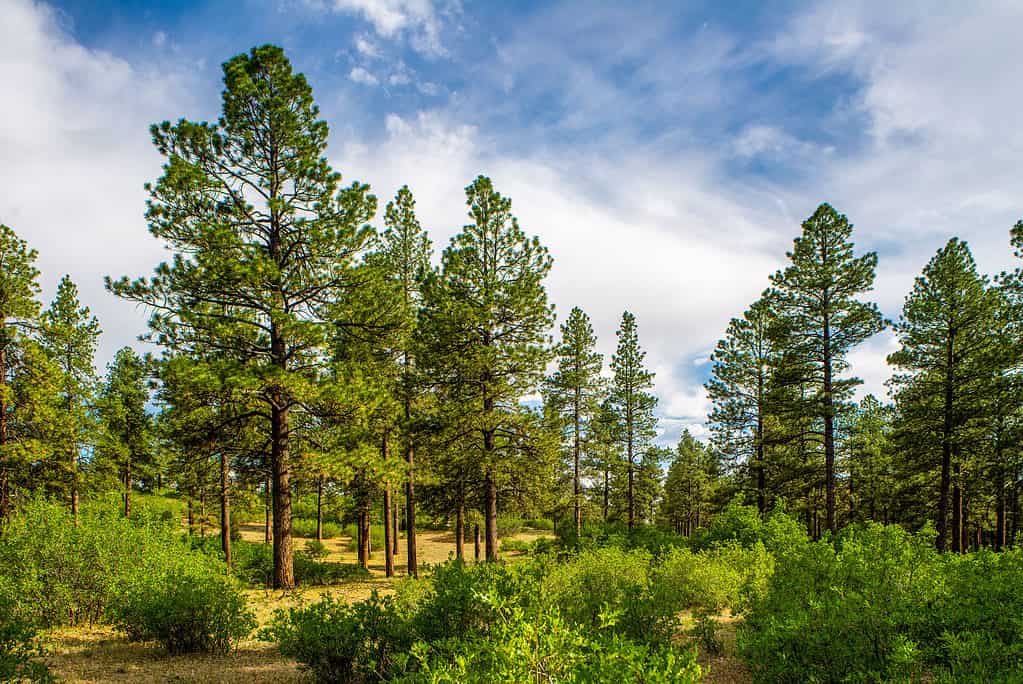
Pinus ponderosa

The ponderosa pine, along with the black cottonwood is native to Washington

Washington is a state of flora, and it is naturally helped by its temperate climate. The state is known for its vast flora – sagebrush, tumbleweeds, Russian olive trees, and many more species. Some native plants in Washington include red baneberry, fairy slipper, and white pasqueflower, among others.

Also, Washington is one of the most forested states in the United States, with a wide range of tree species that thrive in its diverse climate. Some towering trees native to the State of Washington include the ponderosa pine, black cottonwood, and shore pine.

The Flag of Washington
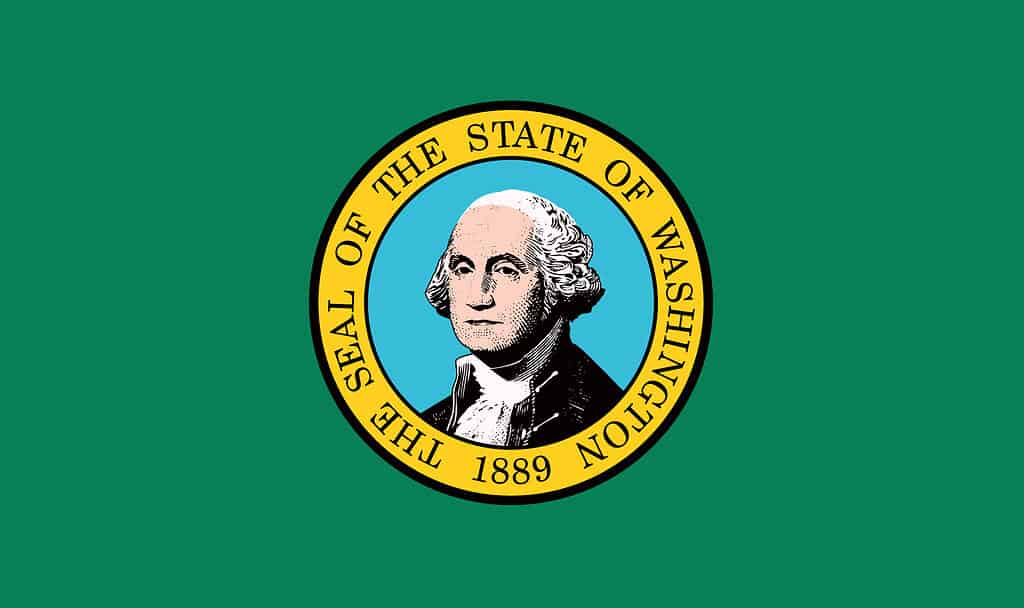
Flag of Washington state

The flag of Washington is the only state flag to include a historical figure,

The flag of Washington is the only state flag to include a historical figure, in this case George Washington for whom the state is named. Surrounding the image of George Washington is a yellow circular seal with the phrase “The Seal of the State of Washington” and the year 1889 which is the date the state was founded. The yellow border of the seal represents wheat which is an important aspect of Washington’s agriculture. The background of the flag is all green which symbolizes the natural beauty of Washington including its vast number of evergreen trees and fields and serves as a reminder to protect the nature and land that surrounds them.

Read about:

  • extinct animals that lived in Washington.
  • incredible sharks in Washington State waters.
  • types of blue birds In Washington State to watch
  • amazing waterfalls in Washington.
  • the best national parks in Washington.
  • best places to camp in Washington.
  • the longest biking trail in Washington.

Animals Found in Washington

235 species documented in our encyclopedia

Thank you for reading! Have some feedback for us?