N S W E
Wildlife Expeditions

Wildlife of
Utah

From Great Basin deserts to alpine Wasatch peaks and Colorado Plateau canyons, Utah packs the West's biggest habitat contrasts into one wildlife-rich state.
168 Species
219,882 km² Land Area
Overview

About Utah

Utah's wildlife comes from big elevation changes and many land types: salt flats and sagebrush basins, forested mountain ranges, and red‑rock canyons. This vertical mix lets desert animals (reptiles, small mammals, raptors) live near mountain and subalpine groups like elk, moose, marmots, and boreal birds. Migration and seasonal moves shape what you see.

Main habitats include the Great Basin's sage‑steppe and desert playas, important for pronghorn, ground‑nesting birds, and wide‑ranging raptors; the Wasatch and Uinta mountains' conifer forests and alpine zones, which hold large ungulates and high‑elevation birds; and the Colorado Plateau's canyons, slickrock, and riparian corridors that gather songbirds, amphibians, bats, and predators near water. Parks like Zion, Bryce Canyon, Arches, and Canyonlands show how small water corridors and pinyon‑juniper woodlands support wildlife in dry country. Utah's close mix of Great Basin, Rocky Mountain, and Colorado Plateau means you can see desert and mountain species in one day.

Physical Features

Geography

Utah has sharp west–east differences: Great Basin deserts and salty basins in the west, the Wasatch–Uinta mountains in the center and north, and Colorado Plateau canyonlands in the south and east. Large elevation and moisture changes create habitats from salt flats and shrub‑steppe to forests, alpine meadows and Great Salt Lake wetlands, hosting reptiles, bighorn sheep, ungulates and migratory waterbirds.

219,882 km² (total area) Land Area
11th largest U.S. state (by total area) Size Rank
State Type
Elevation Range

~610 m (Beaver Dam Wash) to 4,123 m (Kings Peak)

Coastline

No ocean coastline; major interior waters include the Great Salt Lake (hypersaline), Utah Lake, and the Lake Powell reservoir on the Colorado River.

Key Landscapes

Great Basin (salt flats, playas, cold desert basins; e.g., Great Salt Lake Desert) Great Salt Lake and associated wetlands/mudflats (major migratory bird habitat on the Pacific Flyway) Wasatch Range (montane forests, steep elevational gradients, urban-wildland interface along the Wasatch Front) Uinta Mountains (high-elevation alpine and subalpine habitats; east-west trending range) Colorado Plateau (canyonlands, slickrock, mesas, and desert shrublands; Zion/Bryce/Arches/Canyonlands region) Major rivers and riparian corridors: Colorado River system (Colorado, Green, San Juan) plus Sevier River (critical linear habitat in arid landscapes)
State Symbols

Official Wildlife Symbols

animal

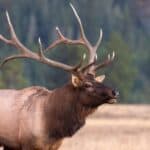
Rocky Mountain elk

Designated 1971

bird

California gull

Designated 1955

fish

Bonneville cutthroat trout

Designated 1997

insect

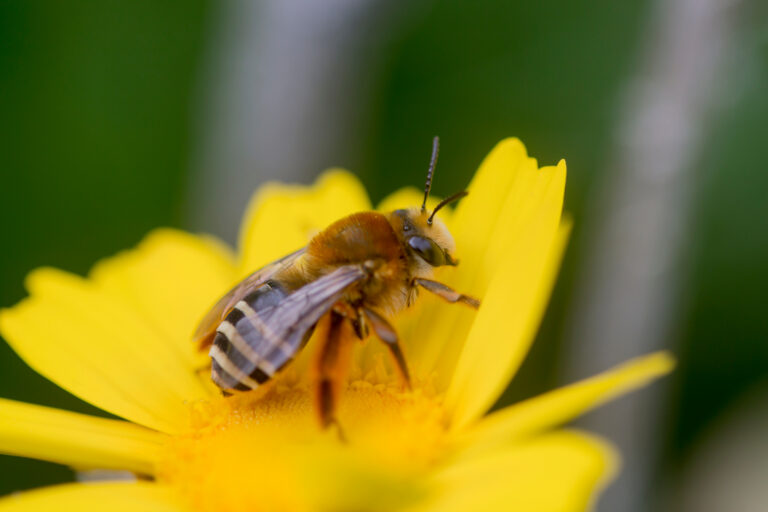
Honeybee

Designated 1983

wildflower

Sego lily

Designated 1911

tree

Quaking aspen

Designated 2014

Parks & Reserves

Protected Areas

Utah’s protected lands are federal (NPS, BLM, USFS, USFWS) across the Great Basin deserts and wetlands, Wasatch–Uinta montane forests, and Colorado Plateau canyonlands. They focus on desert ecosystems (bighorn sheep, desert tortoise, raptors), river corridors (Colorado/Green), high alpine areas (mountain goats, elk), and wetlands like the Great Salt Lake. State parks and wildlife areas guard shorelines, islands, dunes, and wetlands.

Protected Coverage

Approximately 20-25% of Utah's land is in formal protected/designated conservation units (e.g., national parks/monuments, national wildlife refuges, designated wilderness, state parks), with a much larger share managed as public land under multiple-use mandates.

National Parks & Preserves

Zion National Park

~147,000 acres (595 km²)

A steep elevational gradient from low desert to ponderosa pine and mixed conifer creates exceptional habitat diversity in a compact area. Riparian corridors along the Virgin River support high bird diversity, while cliffs and slickrock provide nesting and refuge for raptors and desert specialists.

California condor Desert bighorn sheep Peregrine falcon Mule deer Mexican spotted owl

Bryce Canyon National Park

~35,800 acres (145 km²)

High-elevation amphitheaters and conifer forests function as an island of cooler, wetter habitat on the Colorado Plateau. The park is notable for nocturnal wildlife and forest-associated species, plus extensive habitat for small mammals that support raptors.

Utah prairie dog Golden eagle Mule deer Pinyon jay Mountain lion

Canyonlands National Park

~337,600 acres (1,366 km²)

Vast, rugged canyon country with relatively low development pressure protects wide-ranging desert and riparian species across the Colorado and Green river systems. Large tracts of remote habitat support sensitive raptors and intact predator-prey dynamics.

Desert bighorn sheep Bald eagle Peregrine falcon River otter Mountain lion

Arches National Park

~76,500 acres (310 km²)

Iconic slickrock, shrub-steppe, and cryptobiotic soil landscapes support specialized desert wildlife and important raptor nesting habitat on cliffs and towers. Seasonal water sources and rock crevices are critical for reptiles and small mammals.

Desert bighorn sheep Canyon wren Kit fox Western rattlesnake Golden eagle

Capitol Reef National Park

~241,900 acres (979 km²)

A long north-south 'reef' of cliffs and domes creates connected habitat for desert and upland species, with productive riparian and orchard/wash corridors that concentrate birds and mammals. Remote backcountry provides strongholds for wide-ranging predators.

Desert bighorn sheep Bobcat Gray fox Golden eagle Mexican spotted owl

State & Provincial Parks

Antelope Island State Park

~28,000 acres (113 km²)

A globally significant Great Salt Lake island ecosystem with excellent, reliable wildlife viewing. The island's grassland and shrub habitats support large ungulates and abundant birds along shoreline wetlands.

American bison Pronghorn Mule deer Coyote Burrowing owl

Dead Horse Point State Park

~5,300 acres (21 km²)

High Colorado Plateau overlooks and pinyon-juniper habitat support raptors and desert-adapted mammals. Cliff and canyon environments provide nesting and hunting habitat for birds of prey, especially during migration.

Golden eagle Peregrine falcon Mule deer Rock squirrel Common raven

Coral Pink Sand Dunes State Park

~3,700 acres (15 km²)

Rare dune ecosystem with specialized insects, reptiles, and small mammals adapted to shifting sands. Night and shoulder-season visits often yield the best wildlife encounters in this heat-limited habitat.

Side-blotched lizard Zebra-tailed lizard Kangaroo rat Kit fox Loggerhead shrike

Wildlife Refuges

Bear River Migratory Bird Refuge

~74,000 acres (about 299 km²)

A major Great Salt Lake wetland complex that supports large concentrations of migratory and nesting birds.

American white pelican Tundra swan Northern pintail Western grebe American avocet

Fish Springs National Wildlife Refuge

~18,000 acres (about 73 km²)

A Great Basin desert spring oasis with extensive marshes that provides crucial habitat for migrating and breeding waterbirds.

Cinnamon teal American avocet Black-necked stilt White-faced ibis Peregrine falcon

Ouray National Wildlife Refuge

~12,000 acres (about 49 km²)

Green River riparian and managed wetland habitats important for waterfowl, shorebirds, and other wildlife in an arid region.

Sandhill crane Canada goose Bald eagle American bittern Mule deer

Cedar City National Wildlife Refuge

~100 acres (about 0.4 km²)

A small wetland refuge near Cedar City managed for migratory birds and other wetland-dependent wildlife.

Canada goose Mallard American coot Great blue heron Red-winged blackbird

Wilderness Areas

  • High Uintas Wilderness (Uinta-Wasatch-Cache & Ashley NFs)
  • Dark Canyon Wilderness (Manti-La Sal NF/BLM)
  • Desolation Canyon Wilderness (Green River corridor)
  • Paria Canyon-Vermilion Cliffs Wilderness (Utah-Arizona border)
Animals

Wildlife

Utah's wildlife is defined by sharp transitions between the Great Basin's cold deserts and saline wetlands (Great Salt Lake), the forested Wasatch and Uinta mountains, and the canyon-and-mesa landscapes of the Colorado Plateau. This habitat diversity supports everything from desert-adapted reptiles and bighorn sheep on slickrock to high-elevation carnivores and migratory bird super-concentrations around the Great Salt Lake-one of North America's most important inland shorebird/waterbird hubs.

about 120 species (roughly 120-125) Mammals
about 470 species (roughly 460-470 recorded) Birds
about 50 species (roughly 49-52) Reptiles
about 18 species Amphibians
about 50-55 species (about mid-50s total; native diversity concentrated in the Colorado River basin) Fish
Examples

Iconic Species

Desert Bighorn Sheep A signature canyon-country mammal; commonly sought in places like Canyonlands, Arches vicinity, and the Colorado Plateau's rugged river corridors.
Rocky Mountain Bighorn Sheep A flagship mountain ungulate of the Wasatch/Uinta region; visible on steep alpine and foothill terrain and a major conservation and viewing success story in parts of the state.
Mule Deer
Mule Deer Perhaps Utah's most defining big-game species, famous for large seasonal migrations between high summer ranges and lower-elevation winter ranges.
Pronghorn
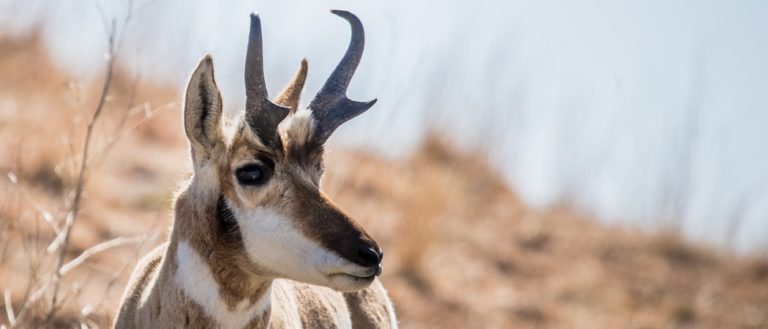
Pronghorn An emblem of Utah's open basins and sagebrush steppe; prized for views of speed and herd behavior on wide desert valleys.
American Elk
American Elk Common in many mountain and plateau habitats; fall rutting behavior (bugling) makes it a standout visitor experience.
Mountain Lion
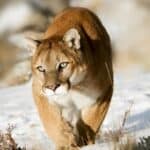
Mountain Lion A top predator spanning desert-to-alpine habitats; rarely seen but central to Utah's wild character and ecosystem function.
Bald Eagle
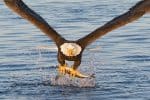
Bald Eagle A winter and migration highlight, especially around reservoirs and river corridors; reliable seasonal viewing in parts of northern and central Utah.
Greater Sage-Grouse A defining bird of sagebrush ecosystems; spring lek displays are iconic (and a strong indicator of sagebrush habitat health).
California Condor
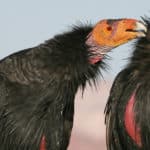
California Condor A conservation icon occasionally observed soaring over southern Utah's canyonlands due to regional reintroduction efforts.
Gila Monster
Gila Monster A sought-after desert reptile of the Mojave-influenced southwest corner; one of the few venomous lizards in the world.

Endemic & Rare Species

Utah Prairie Dog

Cynomys parvidens

Threatened (U.S. ESA); Utah endemic

Found only in southwestern/central-south Utah high-elevation valleys; a keystone burrowing species influencing soils, vegetation, and predator communities.

June Sucker

Chasmistes liorus

Endangered (U.S. ESA); Utah Lake endemic

A uniquely Utah fish restricted to Utah Lake and tributaries; restoration is tightly linked to lake/river habitat quality and water management.

Bonneville Cutthroat Trout

Oncorhynchus clarkii utah

Regionally sensitive; conservation-dependent in many waters

Native to the ancient Lake Bonneville drainage; a flagship native trout for Utah's mountain streams and a major focus of watershed restoration and nonnative removal in some drainages.

Desert Tortoise (Mojave)

Gopherus agassizii

Threatened (U.S. ESA)

Occurs in Washington County's Mojave Desert habitats; vulnerable to habitat fragmentation, subsidized predators, disease, and road mortality.

Humpback Chub

Gila cypha

Threatened (U.S. ESA)

A big-river specialist of the Colorado River system; its presence reflects rare remaining pockets of suitable warm, turbulent canyon-river habitat.

Razorback Sucker

Xyrauchen texanus

Endangered (U.S. ESA)

A large-bodied native fish of the Colorado River basin; recovery depends on protecting backwaters and limiting impacts from flow alteration and nonnative predators.

Colorado Pikeminnow

Ptychocheilus lucius

Endangered (U.S. ESA)

One of the Colorado River's iconic native fishes, requiring long connected river reaches for migration and spawning-making it highly sensitive to dams and altered flows.

Southwestern Willow Flycatcher

Empidonax traillii extimus

Endangered (U.S. ESA)

A riparian obligate that depends on dense willow/cottonwood along rivers in southern Utah; threatened by riparian loss and altered river hydrology.

Notable Populations

  • Great Salt Lake waterbird and shorebird concentrations (including major staging/stopover numbers for species such as Wilson's phalarope and eared grebe), making the lake one of North America's most significant inland bird sites.
  • Large mule deer migratory herds and well-known seasonal winter ranges along the Wasatch Front and adjacent basins (migration ecology is a defining statewide wildlife phenomenon).
  • Colorado River basin native fish recovery strongholds in eastern/southeastern Utah (Green/Colorado River system), of national importance for endangered big-river fishes.

Recent Changes

  • Ongoing concern and measurable impacts from Great Salt Lake decline (lower water levels and higher salinity/dust) affecting wetland-dependent birds and brine-based food webs; restoration and water-conservation efforts are expanding but risks remain.
  • California condor regional reintroduction (Arizona/Utah region) continues to produce periodic sightings in southern Utah; ongoing threats include lead exposure and other mortality factors.
  • Continued reintroductions/augmentations and translocations of bighorn sheep in suitable habitats to rebuild or stabilize herds; disease management remains a key challenge.
  • Native cutthroat trout restoration projects (including Bonneville cutthroat) have expanded in select waters via habitat improvement and removal/control of nonnative trout.
  • Greater sage-grouse and other sagebrush obligates continue to face long-term pressure from habitat fragmentation, invasive annual grasses, and wildfire; lek trends vary locally but overall conservation concern persists.
  • Mexican wolf and gray wolf presence remains largely sporadic/rare in Utah (mostly dispersers), but regional range dynamics and monitoring continue to evolve.
Visit

Wildlife Viewing

Utah has very diverse wildlife across desert canyons, alpine peaks, wetlands, and sagebrush steppe. Visitors can see desert bighorn sheep on red-rock rims, pronghorn on open basins, elk and moose in mountain valleys, and large numbers of migratory birds at the Great Salt Lake and along the Bear River.

Best Seasons

Spring (March-May)

Migration and courtship season: peak birding on/around the Great Salt Lake (shorebirds, waterfowl, grebes), active raptors, and amphibians in wetter areas. Desert parks warm up for lizard/snake activity and bighorn sheep viewing on canyon walls. Higher elevations may still hold snow into May, but valley trails open and elk/moose become more visible as they move to greener forage.

Summer (June-August)

Best for high-elevation wildlife: alpine meadows and Wasatch/Uinta forests bring chances for moose, elk, marmots, and raptors. In desert parks, go early/late to see bighorn sheep and foxes; reptiles are common but midday heat limits comfort. Wetlands can be productive at dawn (herons, ibis, terns), though mosquitoes and heat can be factors.

Fall (September-November)

Prime big-game viewing: elk rut bugling (especially September), mule deer activity increases, and moose are visible in mountain valleys. Cooler temperatures improve desert wildlife watching and hiking. Fall migration ramps up along the Great Salt Lake and reservoirs-raptors, ducks, and shorebirds concentrate as water levels shift.

Winter (December-February)

Excellent for birds and concentrated mammals at lower elevations: wintering bald eagles and waterfowl at open-water areas, plus easy-to-spot pronghorn and mule deer on snow-dusted basins. Some canyon country remains accessible and quiet, offering chances for bighorn sheep and raptors with fewer crowds. Mountain wildlife viewing depends on road access and avalanche/snow conditions.

Top Wildlife Experiences

  • Bird the Great Salt Lake shoreline and causeways (Antelope Island State Park; Farmington Bay WMA): look for huge flocks of eared grebes (seasonal), American avocets, Wilson's phalaropes, pelicans, and raptors over the marshes.
  • Visit Bear River Migratory Bird Refuge (near Brigham City): drive the auto loop and stop at observation points for dense waterfowl, shorebirds, and marsh birds-especially during spring/fall migration.
  • Wildlife-and-scenery combo at Antelope Island State Park: hike or drive for bison, pronghorn, coyotes, and exceptional sunset birding over the lake (bring binoculars and plan around biting gnats in warm months).
  • Watch bighorn sheep in red-rock country: scan cliff bands and river corridors in Canyonlands (Island in the Sky overlooks) and along the Colorado/Green River corridors where sheep often forage-best in cooler parts of day.
  • Go owl and raptor spotting in Bryce Canyon National Park: search forest edges and canyon overlooks for great horned owls, ravens, and seasonal raptors; combine with dawn/dusk viewing when animals are most active.
  • Moose and beaver watching in the Wasatch (e.g., Mirror Lake Highway area in season; Big Cottonwood/Silver Lake area when accessible): focus on wet meadows and willow-lined streams at dawn for moose, beaver sign, and songbirds.
  • Elk rut listening and viewing in mountain valleys (September): target accessible high meadows and forest edges in the Wasatch Plateau or Uinta foothills; arrive pre-sunrise to hear bugling and watch herd movement from a distance.

Wildlife Watching Types

Birding hotspots and migration viewing (Great Salt Lake, Bear River Migratory Bird Refuge, state WMAs, reservoirs) Big game viewing (elk, mule deer, moose; bighorn sheep in canyon country) Bison and pronghorn viewing (notably Antelope Island and open basin habitats) Raptor watching (hawks, eagles, falcons; strong in fall migration and winter around open water) Desert wildlife and herpetology (lizards, snakes, desert-adapted mammals; best in spring/fall and at cooler times of day) Nocturnal wildlife watching (owls, foxes, bats-best on guided night walks where offered) Wildlife photography and spotting from scenic drives (refuges, park roads, and overlook-rich canyon routes)

Guided Options

  • Utah Division of Wildlife Resources (DWR) Watchable Wildlife resources and local programs: use DWR's site-specific recommendations for viewing areas, seasonal closures, and ethical viewing tips.
  • Bear River Migratory Bird Refuge programs (USFWS): seasonal interpretive events, visitor center info, and guided activities (availability varies by season).
  • Antelope Island State Park naturalist programs: periodic guided walks/talks focusing on bison ecology, birds, and island natural history (check the park event calendar).
  • National Park Service ranger programs (Zion, Bryce Canyon, Arches, Canyonlands): ranger-led walks/talks that often include wildlife tracks, ecology, and best-practice wildlife viewing; schedules are seasonal.
  • Local birding and nature guides around the Great Salt Lake: half-day/full-day private tours focusing on shorebirds, waterfowl, and photography (especially productive during peak migration windows).
  • Licensed river outfitters on the Green/Colorado River corridors: multi-day rafting or day-float trips can provide quiet, low-angle wildlife viewing opportunities (bighorn sheep, birds, beaver sign) combined with canyon scenery.
Habitats

Ecosystems

Utah ranges from dry basins and canyonlands (Great Basin, Colorado Plateau) to high mountain areas in the Wasatch and Uinta Mountains. This creates a mix of hot and cold deserts, sagebrush steppe, grasslands, pinyon‑juniper woodlands, montane conifer and aspen forests, small alpine tundra, rivers, lakes, and saline wetlands at the Great Salt Lake.

Biomes

Cold Desert

Dominant across the Great Basin portion of western Utah and much of the Colorado Plateau uplands: sagebrush flats, salt-desert shrub, and cold semi-arid basins with winter snow and large temperature swings.

Widespread; largest biome by area (especially west and central Utah).

Hot Desert

Hotter, lower-elevation desert in the far southwest (Mojave influence) including creosote bush, blackbrush, and warm desert washes around the St. George area and Zion vicinity.

Localized to southwestern corner and warm lowlands.

Temperate Grassland

Grassland and steppe openings embedded within shrublands/woodlands, including valley benches and some higher plateaus; often transitions with sagebrush and grazing lands.

Patchy; scattered across basins, plateaus, and foothills.

Temperate Forest

Montane forests on higher slopes of the Wasatch, Uinta, and isolated 'sky island' ranges (e.g., La Sal, Abajo): mixed conifers (Douglas-fir, fir, spruce) and extensive aspen stands; riparian cottonwood forests in some valleys.

Common at mid-to-high elevations, especially northern/central mountain ranges.

Alpine

Above treeline in the Uintas and highest Wasatch peaks: alpine meadows, talus, fellfields, and short growing seasons with snowpack-driven hydrology.

Small; restricted to highest elevations (primarily Uinta Mountains).

Tundra

Alpine-tundra-like communities (low shrubs, sedges, cushion plants) in the highest, coldest exposed areas near and above treeline.

Very limited; highest peaks and ridgelines (mainly Uintas).

Freshwater

River corridors, reservoirs, mountain lakes, and spring-fed systems; critical biodiversity corridors through arid landscapes (e.g., Colorado/Green river systems, Bear River, Virgin River).

Linear and patchy; statewide along major drainages and in mountains.

Wetland

Saline and freshwater wetlands, notably around Great Salt Lake (mudflats, marshes) and in river floodplains and mountain valleys; key for migratory shorebirds and waterfowl.

Localized but ecologically significant; especially Great Salt Lake margins and major floodplains.

Habitats

Desert

Cold desert basins and canyonlands with salt-desert shrub, slickrock, and dune fields; includes much of the Great Basin and the Colorado Plateau's arid lowlands.

Shrubland

Sagebrush steppe and saltbush/greasewood flats; widespread in basins and plateaus, often forming the matrix between forests and deserts.

Steppe

Sagebrush-grass steppe and open, semi-arid uplands; common in transition zones between shrubland and woodland/forest.

Grassland

Valley and plateau grasslands (often mixed with shrubs), plus higher-elevation parks/meadows used by elk and pronghorn in some regions.

Woodland

Pinyon-juniper woodlands extensive on the Colorado Plateau and foothills, forming a broad mid-elevation belt between shrublands and montane forests.

Coniferous Forest

Montane conifers (spruce-fir, Douglas-fir, ponderosa in places) on Wasatch/Uinta and isolated high ranges; important for snowpack and headwaters.

Deciduous Forest

Aspen-dominated stands and riparian cottonwood-willow corridors; especially prominent after disturbance in montane zones and along larger rivers.

Mountain

Wasatch Range and Uinta Mountains create steep climate gradients, high-relief watersheds, and diverse aspect-driven vegetation mosaics.

Alpine Meadow

High Uinta alpine meadows and wet turf near snowmelt zones; short growing season, rich wildflower displays in summer.

Cliff/Rocky Outcrop

Sheer sandstone cliffs, alcoves, and canyon walls (Zion, Bryce, Canyonlands, Arches) providing nesting sites and specialized plant niches.

Cave

Lava tubes and limestone caves (including parts of the Great Basin and karst areas) supporting bats and specialized invertebrates; some sites are sensitive/seasonal.

Lake

Great Salt Lake (hypersaline) and numerous mountain lakes (e.g., Uinta lake basins) plus large reservoirs; strong salinity and water-level gradients at GSL.

River/Stream

Major river systems (Colorado, Green, San Juan, Virgin, Sevier, Bear) with riparian forests, backwaters, and critical fish/wildlife corridors.

Pond

Small ponds, stock ponds, beaver ponds, and high-elevation tarn-like waters that provide amphibian and waterfowl breeding habitat where water persists.

Wetland

Freshwater and saline wetlands, including Great Salt Lake marshes, river oxbows, wet meadows, and spring-fed marsh complexes.

Marsh

Extensive emergent marsh around Great Salt Lake (e.g., Bear River Migratory Bird Refuge) and along river floodplains.

Swamp

Limited; occurs as small, wooded wet areas and riparian thickets in floodplain pockets where groundwater is high.

Bog

Rare high-elevation peat-forming wetlands/fens in mountain valleys (more typical in the Uintas), sensitive to hydrologic change.

Agricultural/Farmland

Irrigated cropland and pasture concentrated in valleys (e.g., Cache Valley, Utah Valley) and along rivers; strongly tied to water availability.

Urban

Urban corridors along the Wasatch Front (Salt Lake City-Ogden-Provo) and regional hubs (e.g., St. George) with fragmented foothill habitats.

Suburban

Expanding suburban development along the Wasatch Front and in southern Utah valleys, increasing wildland-urban interface and fire pressure.

Ecoregions

Colorado Plateaus (EPA Level III) Wasatch and Uinta Mountains (EPA Level III) Central Basin and Range (EPA Level III) Northern Basin and Range (EPA Level III) Mojave Basin and Range (EPA Level III) Wyoming Basin (EPA Level III)
Protection

Conservation

Primary Threats

  • Rising temperatures, less snow, and earlier runoff in the Wasatch and Uinta mountains lower late-summer stream flows and warm waters, hurting native trout and Colorado River basin fishes. Hotter, drier conditions shrink Great Basin and Colorado Plateau wetlands, forcing wildlife to a few water spots.
  • Loss and degradation are most acute in riparian corridors, spring-fed wetlands, and valley bottoms. Conversion and degradation of wetlands around Great Salt Lake and along the Wasatch Front reduce habitat for shorebirds and waterfowl, while water withdrawals and channel modifications reduce habitat complexity needed by endangered Colorado River fishes.
  • Rapid expansion along the Wasatch Front (Salt Lake-Ogden-Provo corridor) and in Washington County (St. George area) fragments foothill and desert habitats, increases road mortality, and constrains migration routes for mule deer and other big game. Growth also increases recreation pressure on nearby public lands.
  • Roads, fences, transmission lines, and energy corridors fragment sagebrush and desert habitats and can increase direct mortality (vehicle collisions) and predation risk. Water infrastructure (dams, diversions, canals) alters flow regimes and blocks fish movement in the Colorado River basin and other watersheds.
  • Water withdrawals for cities and agriculture, plus upstream regulation, reduce flows and floodplain connectivity in rivers that sustain native fishes and riparian cottonwood-willow habitats. Declining lake levels (including Great Salt Lake) expose playa and reduce brine fly/brine shrimp production that supports globally significant bird migrations.
  • Dust from exposed lakebeds and disturbed drylands can increase particulate pollution and deposit salts/metals onto surrounding ecosystems. Nutrient and sediment inputs from urban and agricultural runoff degrade streams and wetlands, while legacy and active industrial sites can contribute localized contamination affecting aquatic life.
  • Invasive plants like cheatgrass raise fire risk in Great Basin and Colorado Plateau shrublands, turning diverse shrubs into annual grasslands. Aquatic invasives and nonnative sport fish disrupt food webs and eat native fish in the Colorado River; tamarisk alters channel shape and habitat.
  • Altered fire regimes (more frequent fires driven by invasive grasses), fire suppression in some forest types, and widespread river regulation (reduced peak flows, stabilized channels) shift ecosystem structure. These changes reduce cottonwood recruitment in riparian zones and simplify habitats needed by native fish and riparian birds.
  • Hard-rock mining and energy mineral extraction can fragment habitat through roads and pads, increase dust, and pose spill/contamination risks. In parts of the Colorado Plateau and Uinta Basin, development footprints overlap with sensitive desert and sagebrush habitats and can increase disturbance to nesting raptors and other wildlife.
  • High visitation in and around Utah's national parks and popular BLM recreation areas (e.g., Moab region, Zion gateway areas) increases disturbance to nesting raptors, desert bighorn sheep, and sensitive soil crusts. Off-highway vehicle use can damage fragile desert surfaces and widen informal trail networks.
  • Conflicts include livestock depredation issues with large carnivores and competition for forage/water in arid rangelands. In urban-wildland interfaces along the Wasatch Front, deer, black bears, and mountain lions generate safety and property concerns, sometimes leading to lethal control or reduced tolerance.
  • Chronic wasting disease affects deer populations in Utah and complicates long-term management. In warm, low-flow years, fish diseases and parasites can be more problematic in stressed aquatic systems; avian disease risks can increase where birds concentrate at shrinking wetlands.
  • Regulated hunting helps manage big game, but too much local hunting can happen if seasons and quotas don't match population changes during droughts or severe winters. Illegal killing is still a problem, and lead from ammo harms scavenging birds in some areas.
Fun Facts

Did You Know?

Great Salt Lake's main body is too salty for fish to survive-yet it's a globally important bird buffet because brine shrimp and brine flies thrive there in huge numbers.

Eared grebes that stop at Great Salt Lake typically become temporarily flightless: they molt their flight feathers all at once and spend weeks swimming, sometimes doubling their body mass before departing.

Many shorebirds you see at Great Salt Lake aren't "lake birds" in the usual sense-they're targeting swarms of brine flies along the shoreline, where the flies' larvae graze on algae mats.

Kangaroo rats found in Utah's deserts can live without drinking liquid water; they generate "metabolic water" internally from digesting dry seeds and avoid daytime heat by staying in burrows.

Utah's only native tortoise-the Mojave desert tortoise-reaches its northernmost natural range in southwestern Utah, meaning some of the U.S.'s most "desert" wildlife lives at the edge of snow-country mountains.

Great Salt Lake is the largest salt lake in the Western Hemisphere-an outsized "engine" for wildlife that can host millions of migrating birds despite having no fish.

Utah's Great Salt Lake supports the world's largest commercial brine shrimp (Artemia) fishery; its harvested cysts (eggs) are shipped worldwide as a staple feed for aquaculture.

During migration, Great Salt Lake can host more than half of the global population of Wilson's phalaropes at once-one of the most concentrated shorebird gatherings on Earth.

Great Salt Lake is one of the largest known staging areas for eared grebes; in peak years, millions can raft together on the open water to molt and refuel.

"Pando," a quaking aspen clone in Fishlake National Forest, is widely cited as the world's largest single organism by mass-one genetic individual expressed as ~40,000 tree stems across ~100+ acres.

Utah, whose name comes from the word Ute (meaning “people of the mountains” in an indigenous language), has a long and fascinating history, dating back to the pre-Columbian Pueblo, Utes, and Navajo people, then for a time as a part of the Spanish and Mexican empires, then as a destination for Mormon settlers, and finally as an official American state in 1896. While much of the land is quite hilly and arid, Utah still furnishes quite a lot of ecological and geographic diversity. Its borders encompass dry deserts, deep canyons, massive pine forests, vast wetlands, and towering mountains. Read on to learn more about the animals in Utah.
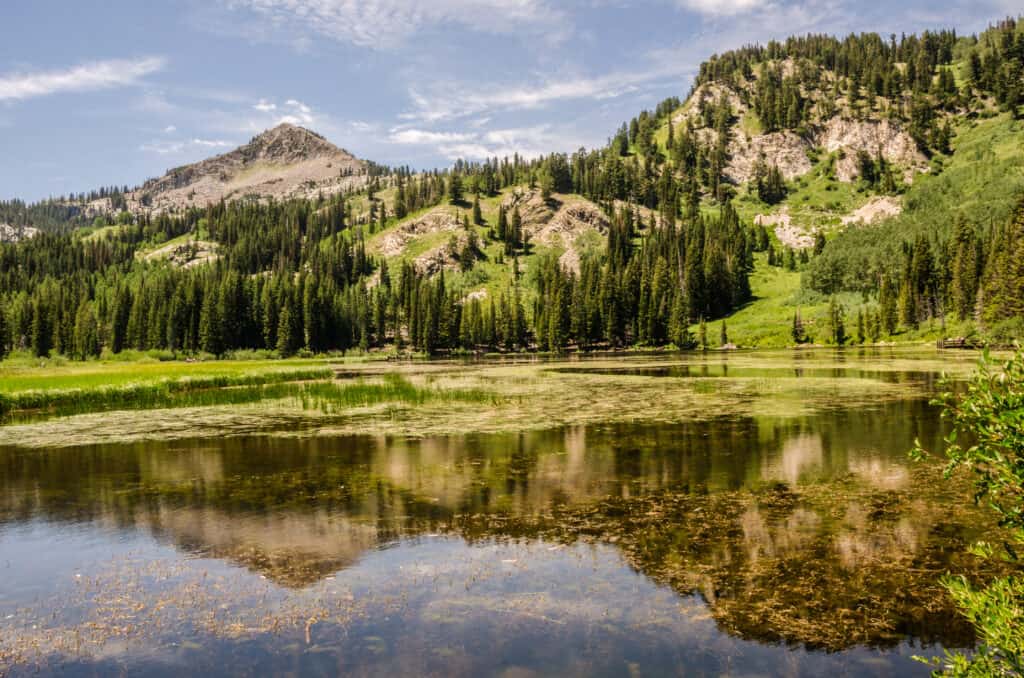
The Wasatch Mountains reflected in Utah's Silver lake.

The state of Utah features a diverse ecology and landscape.

Utah is comprised of three main geographical regions: the Rocky Mountains (which cut through the northeast border near Idaho and Wyoming), the Great Basin along the border with Nevada and Arizona, and the Colorado Plateau near the eastern border with Colorado. The Great Salt Lake, located in the north, is the largest saltwater lake in the entire Western Hemisphere and perhaps the most interesting geographical feature in the entire state; it’s actually the remnant of a more ancient lake called Bonneville. But the state ecology is diverse enough to accommodate many different kinds of wildlife.

The Official Animal of Utah
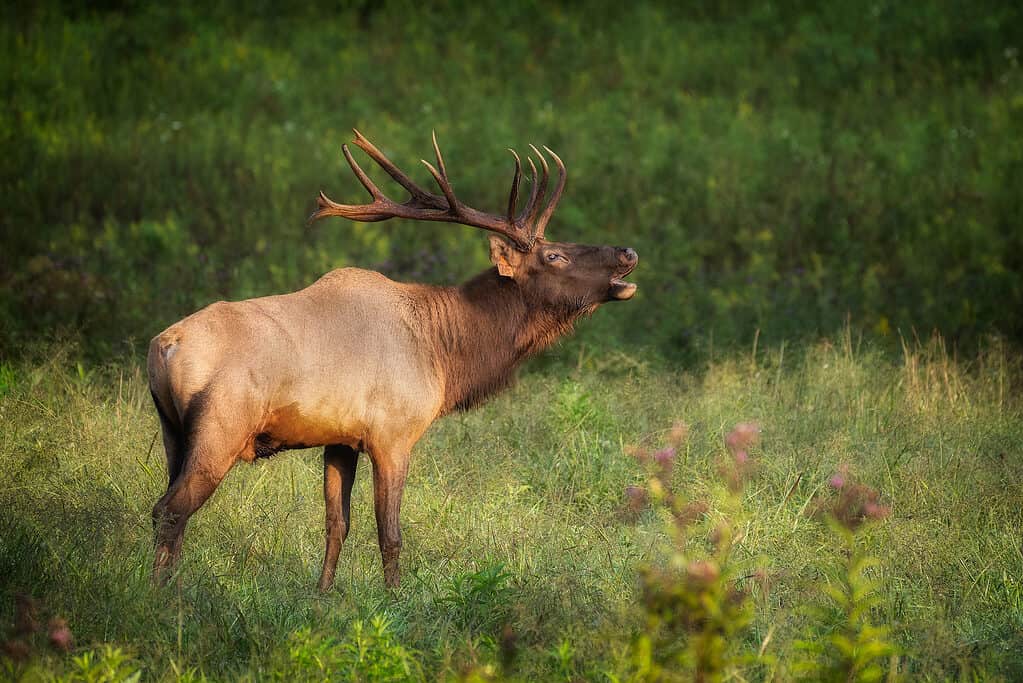
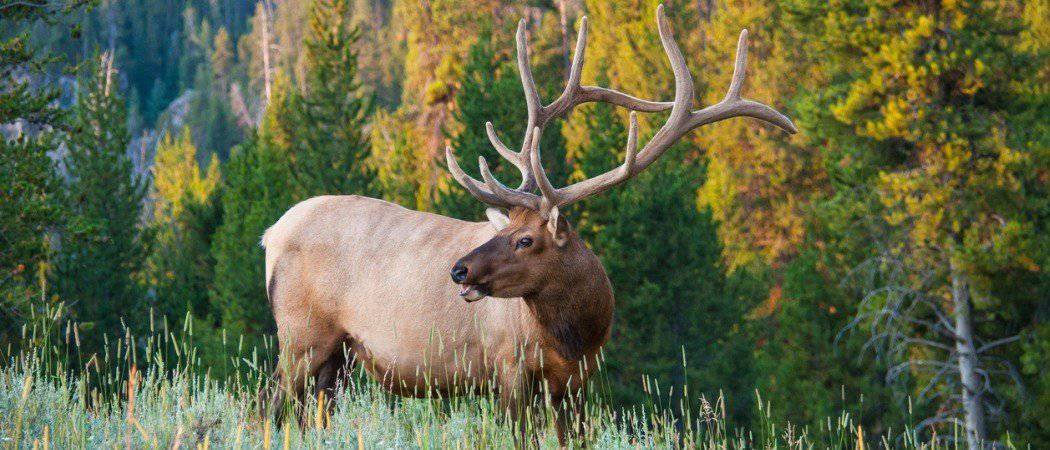
Rocky Mountain elk

The Rocky Mountain elk is the official state animal of Utah.

The state of Utah is represented by four distinctive animals. The official state insect is the honey bee, which synergizes well with the state emblem, the beehive, to signify the early state industry. The official state fish is the Bonneville cutthroat trout, an important source of food for early pioneers and Native Americans. The official state bird is the California gull, which has its own monument in Salt Lake City because it helped to consume crickets, which were destroying the crops of the early settlers.

The official state animal of Utah is the Rocky Mountain elk, a subspecies of the elk, which has provided people with meat and leather for many centuries. The elk was once found across most of the state, but it’s now mostly restricted to the mountains.

Where to Find the Top Wild Animals in Utah

Some of the most interesting wildlife in the entire state can be found in the five national parks (representing more than almost any other state in the country) and dozens more state parks and refuges. These state and national parks will cover just about every major geographical area in Utah.
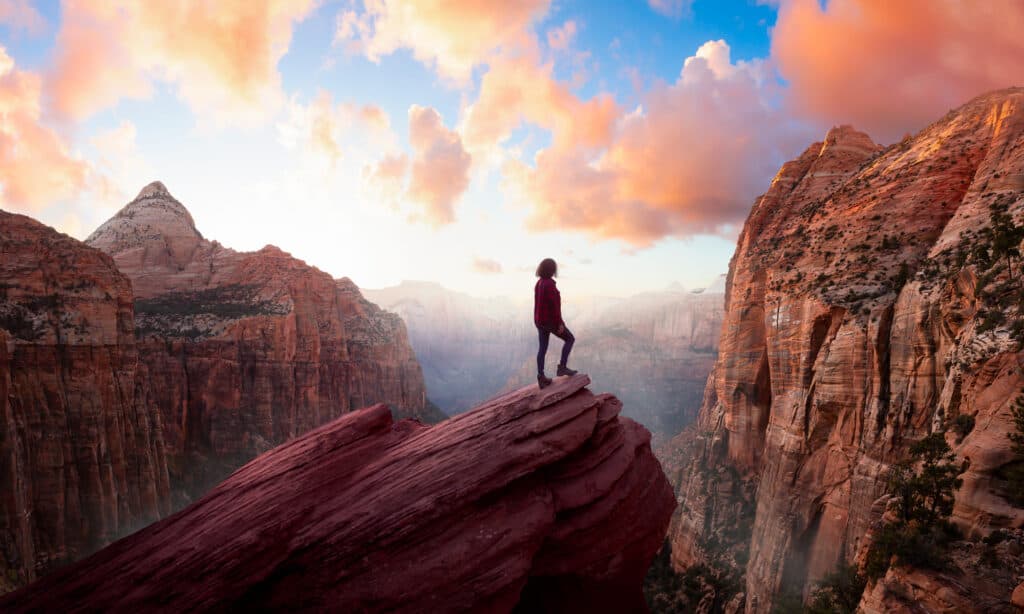
Zion National Park - Canyon

Zion National Park features 229 square miles of unique natural sandstone formations with sightings of bighorn sheep, cougars, and many more animals.

Zion National Park, located near the southwestern town of Springdale, encompasses 229 square miles of strange natural sandstone formations in Zion Canyon. Visitors can find cougars, bobcats, badgers, bighorn sheep, ring-tailed cats, rodents, and deer. A successful breeding program for the condor, one of the rarest birds in the country, is also present nearby. If you are interested in the arid ecology of Zion Canyon, then you may also want to check out the Canyonlands and Bryce Canyon National Parks, both of them also located in southern Utah.

Antelope Island State Park, located close to Salt Lake City, is the largest island on the lake itself. Although named for the pronghorn antelope, it is most famous for its herd of bison, brought over when the species was nearly extinct. It’s also home to bobcats, mule deer, coyotes, wild sheep, and migratory birds.
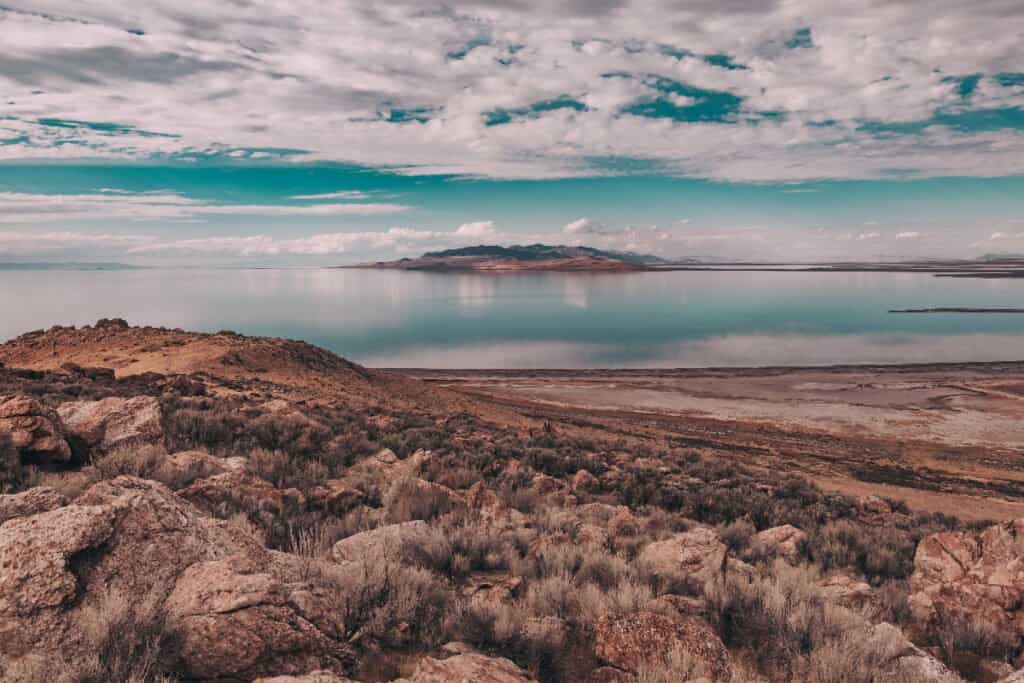
Utah Lake

The Great Salt Lake may be drying – but it is still the destination for millions of migratory birds and waterfowl.

While the high salt content of the water makes it inhospitable for many freshwater animals, the Great Salt Lake is nevertheless a great destination for millions of migratory birds and waterfowl, including stilts, plovers, gulls, sandpipers, ducks, and geese.

The Flaming Gorge National Recreation Area, which straddles the border between Utah and Wyoming, is a 91-mile reservoir and a popular destination for freshwater fishing, including trout, salmon, bass, and burbot. Other types of wildlife include cougars, eagles, elk, moose, bears, antelopes, and other mammals.

The Red Fleet State Park, located just to the south of the Uinta Mountains (a sub-range of the Rocky Mountains), features red slick rock formations and a fossil track of dinosaur footprints. Visitors can also catch a glimpse of hawks, golden eagles, vultures, ospreys, owls, bobcats, coyotes, and deer.

The Dixie National Forest, located in south-central Utah, is the largest national forest in all of Utah. The pinyon and pine forest, interspersed with sparse desert-type plants, provides a habitat for cougars, bobcats, antelopes, prairie dogs, eagles, turkeys, and much more.

Largest Animal in Utah
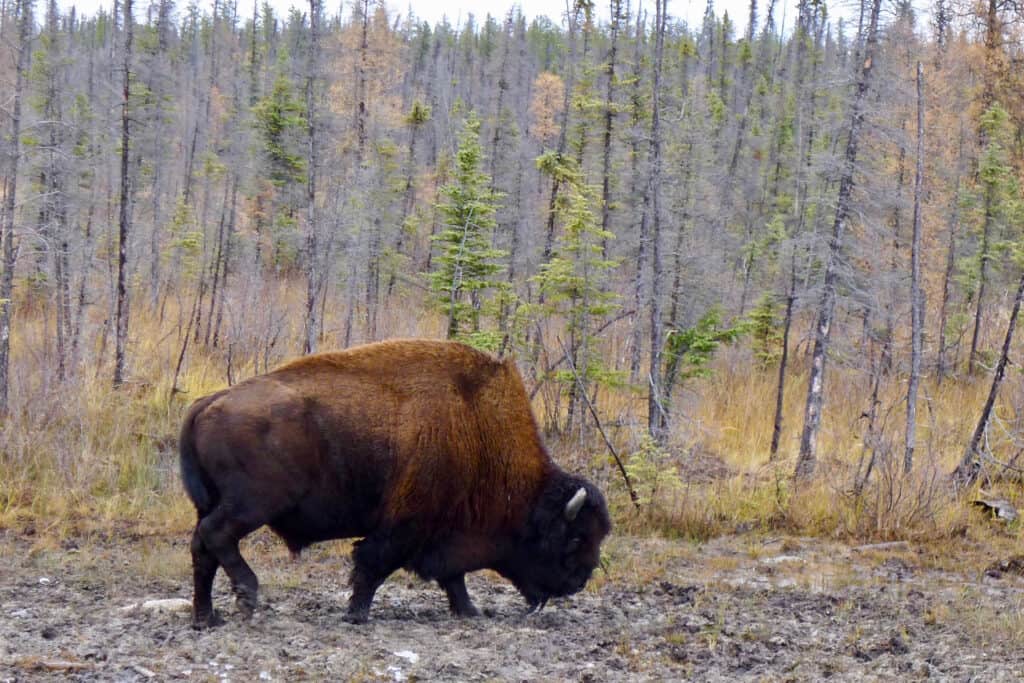
Mountain bison

The mountain bison is the largest animal in Utah.

The mountain bison, sometimes known as the wood bison, is the largest mammal in Utah, with males weighing around 2,000 pounds. These giants are greater in size than plains bison and have less hair on their forelegs and beards. Because of hunting and the potential for degradation of the breed from mating with plains bison, state officials are taking action to preserve their existence.

Utah’s Henry Mountains is home to one of four pure bison herds that graze freely in North America. 250 – 400 bison, ancestors of the original Yellowstone bison, can be seen there at any given time. The mountain bison herd has 1.2 million acres to roam between Utah and Colorado.

Rarest Animal in Utah
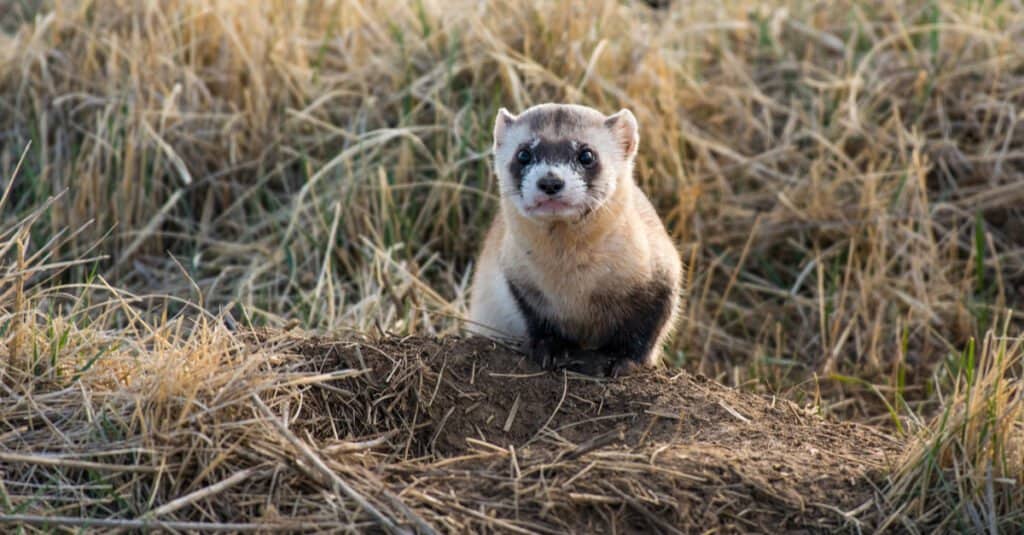
Animals That Stay Up All night - Black footed Ferret

The Black-footed ferret is the only ferret species native to the United States and the rarest mammal in Utah.

The black-footed ferret is a member of the weasel family and the only ferret species native to the United States. Easily recognizable by the black mask that makes it look like a bandit, this ferret is the only mammal with habitat in Utah on the Endangered Species List. Ferrets are about the same size as a mink, 18 – 24 inches long and weighing less than three pounds. Their coats are yellow-beige with distinctive black markings on their face, feet, legs, and tails that help the animals to blend into their environment.

Ferrets prey on prairie dogs and take over their burrows for themselves. Prairie dogs make up 90% of their diets, with squirrels, mice, and other rodents making up the rest. Except for the breeding season, ferrets are mostly solitary creatures who spend most of their time underground. This nocturnal animal is known to be vocal and hisses, chatters, and whimpers.

Today, only about 1,000 wild ferrets exist in controlled reintroduction areas. They once roamed 12 American states including Utah – with a range that extended into Canada to the north and Mexico to the south. The ferrets nearly vanished when farmers and ranchers began the wide-scale elimination of prairie dogs, the ferret’s main prey. In 1987, 18 black-footed ferrets were captured to become part of a breeding and reintroduction program.

The Most Dangerous Animals in Utah Today

The state of Utah, and particularly its remote desert and mountainous areas, is home to several dangerous wildlife; some of them have dangerous toxins, others have sharp teeth and claws, while some are just large and aggressive. This list will only include animals that cause direct harm, as opposed to those that spread diseases to people.
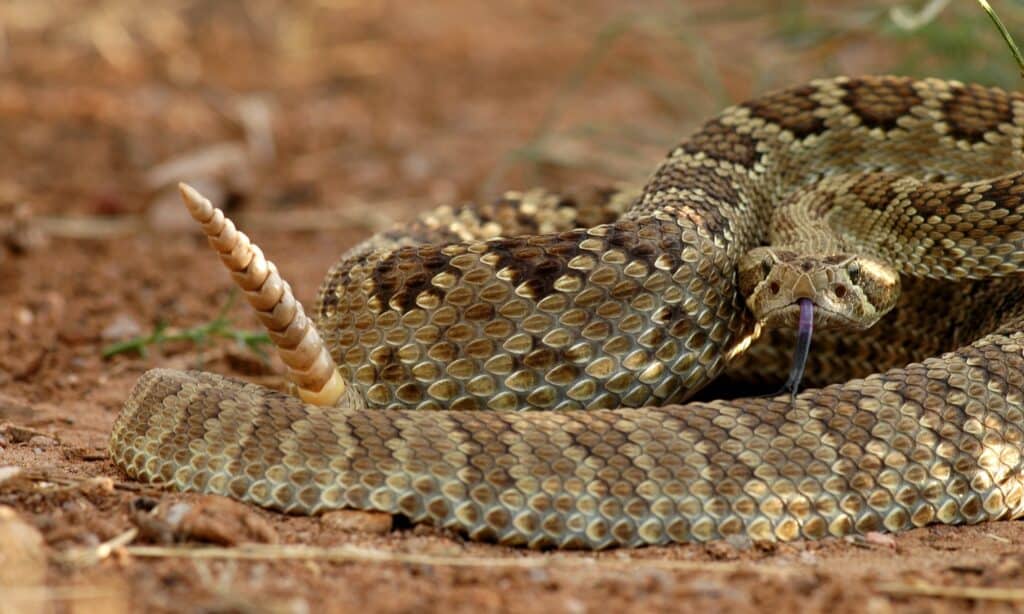
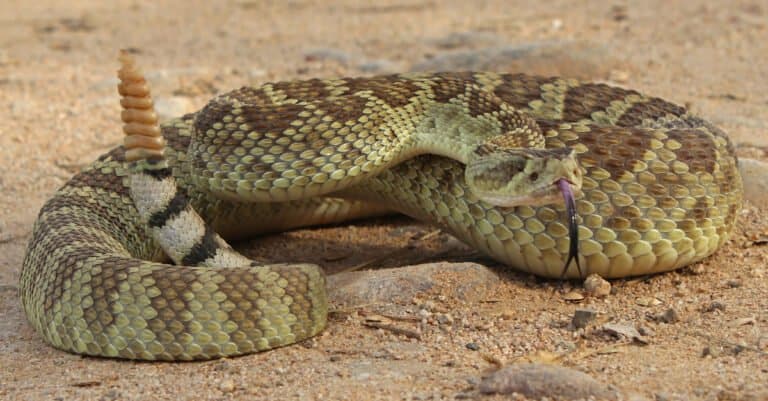
The Mojave rattlesnake is just one of many dangerous rattlesnakes in Utah.

  • Rattlesnakes: Utah is home to seven different species of rattlesnakes: the specked rattlesnake, the sidewinder rattlesnake, the Mojave rattlesnake, the western rattlesnake, the midget-faded rattlesnake, the Hopi rattlesnake, and the Great Basin rattlesnake. These snakes are often found in sagebrush, pinyon, and juniper woodlands, sand dunes, grasslands, rocky hillsides, and mountain forests. They can be identified at a quick glance by the elliptical pupils, the presence of a pit above the nostrils, and of course, the rattle on the tail. If you hear a warning rattling, you should stand completely still and try to locate where the sound is coming from first before backing away. The venom itself is quite dangerous because it can lead to pain, swelling, and neurological symptoms. Fortunately, with proper medical care, recovery is normal.
  • Black Widow Spider: The adult female of this species, which can be identified by the black body and red markings, has particularly potent venom. Symptoms can include muscle pain, swelling, spasms, nausea, and even mild paralysis, but death is exceptionally rare.
  • Recluse Spider: Utah is home to both the desert recluse spider and the brown recluse spider, which have long, thin legs. While generally non-aggressive, their potent venom can destroy tissue and produce lesions on the skin.
  • Scorpions: Utah is home to several species of scorpions, including the giant desert hairy scorpion, the black hairy scorpion, the northern scorpion, and the Arizona bark scorpion. While the scorpion’s venom can cause pain, vomiting, and numbness, death does not occur in healthy adults; instead, the very old, young, or immunologically compromised are at the greatest risk of death.
  • Wasps and Bees: Utah is home to several types of stinging insects, including hornets, yellow jackets, mud daubers, honeybees, bumblebees, and carpenter bees. While generally producing only pain and swelling, a small number of people may have an allergic reaction to their sting. These people should have epinephrine available just in case of a severe reaction.
  • Moose: Because of their non-threatening appearance, people often make the mistake of trying to approach these large deer-like animals. But their massive size, aggressive nature, and huge antlers mean they could potentially kill a person if they decide to charge.
  • American Black Bear: The black bear is the largest predator in the entire state (though not necessarily the most dangerous animal). While attacks from these predators are exceptionally rare, you will want to exercise caution in noted bear territory. They may become particularly aggressive in defense of their cubs or their food supply.
  • Cougars: While cougars are sometimes feared as dangerous predators, they rarely attack people except in cases where they feel threatened or they’re starving. When they do strike, it’s usually with a bite to the neck.
  • Gila Monster: The Gila monster is a relatively large lizard, measuring some 2 feet long. It’s also one of the few poisonous lizards in the world. While the danger of this creature has often been exaggerated, the venom itself is about as toxic as some rattlesnakes. Symptoms can include pain, swelling, nausea, vomiting, weakness, and fainting. Fortunately, they tend to live in underground burrows, and even when encountered, they are not overly aggressive and do not normally bite.
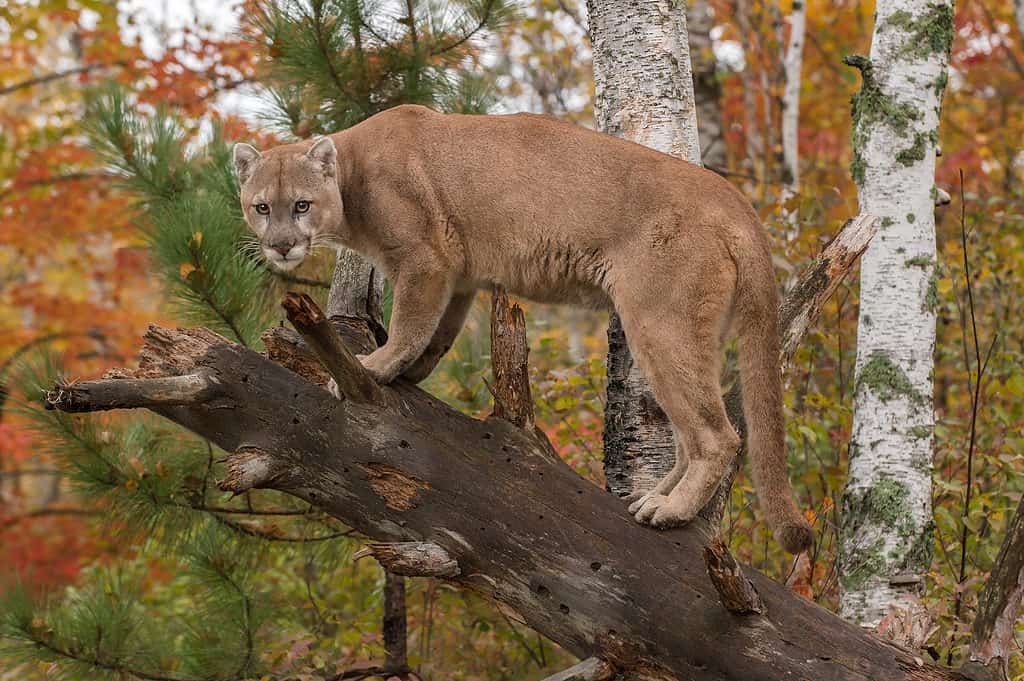
Mountain lion standing on thick tree branch

Cougars rarely attack people but they are considered dangerous and could prey on pets.

Endangered Animals in Utah

The state of Utah maintains its own list of threatened and endangered species, independent of the federal list. Population numbers of these species appear to be falling across the entire state.
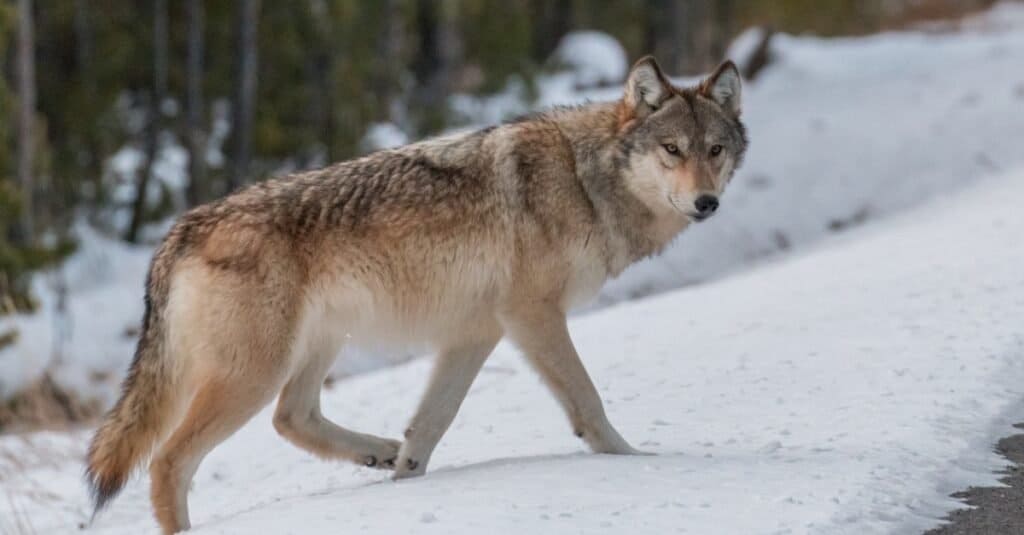
Types of Wild Dogs

Grey wolves are among the rarest animals in Utah.

  • Prairie Dogs: The Utah prairie dog (and to a lesser extent the white-tailed prairie dog and Gunnison’s prairie dog) is an endangered species in the state of Utah. The main reasons for the decline of these mammals include the loss of suitable prairie habitats and deliberate poisoning by farmers in retaliation for digging holes and eating crops. Only about 3,000 members of this species still remain in the wild.
  • Black-footed Ferret: This nocturnal member of the weasel family, which can be identified by the black mask around the eyes and the feet, is now endangered from the decline of its main food source, prairie dogs, and the fur trade.
  • Gray Wolf: This is one of the rarest animals in the entire state. While there are no known established packs in Utah, there are occasional sightings as they pass through from the surrounding states.
  • Canadian Lynx: The Canadian lynx is a medium-sized feline with long ear tufts, dense fur, and big padded feet. While it’s quite common further north, sightings in Utah are incredibly rare. The closely related bobcat is much more common.
  • California Condor: Sporting a massive wingspan and a strange bald head, this is one of the largest and rarest birds in all of North America. Although it nearly became extinct in the late 20th century from habitat destruction, poisoning, and poaching, condors have survived in southwestern Utah thanks to strong conservation efforts.
  • Southwestern Willow Flycatcher: This small migratory bird, which can be identified by its green body, darker wings, and lighter underside, is vulnerable to habitat loss and a decline of its native nesting trees. It’s estimated that only a few hundred breeding pairs currently remain in the wild.
  • Mexican Spotted Owl: Identified by the white spots covering its body, this is a subspecies of the spotted owl. It is currently threatened by habitat loss from the logging industry across parts of its range.
  • Desert Tortoise: Native to the arid Mojave Desert of southwestern Utah, the desert tortoise spends most of its life in burrows and rock shelters to keep cool and reduce water loss. It is vulnerable to extinction from the combined effects of human activity and diseases.
  • Greenback Cutthroat Trout: Characterized by a red throat and a green back, this is the easternmost subspecies of the cutthroat trout. Because of overfishing, water diversion, and toxic runoff, it now occupies only a fraction of its former habitat.
  • Kanab Ambersnail: Native to wetlands, springs, and seeps near the city of Kanab, this subspecies of amber snail has a strange translucent shell, which appears amber when empty. It is currently threatened by habitat loss and limited populations.
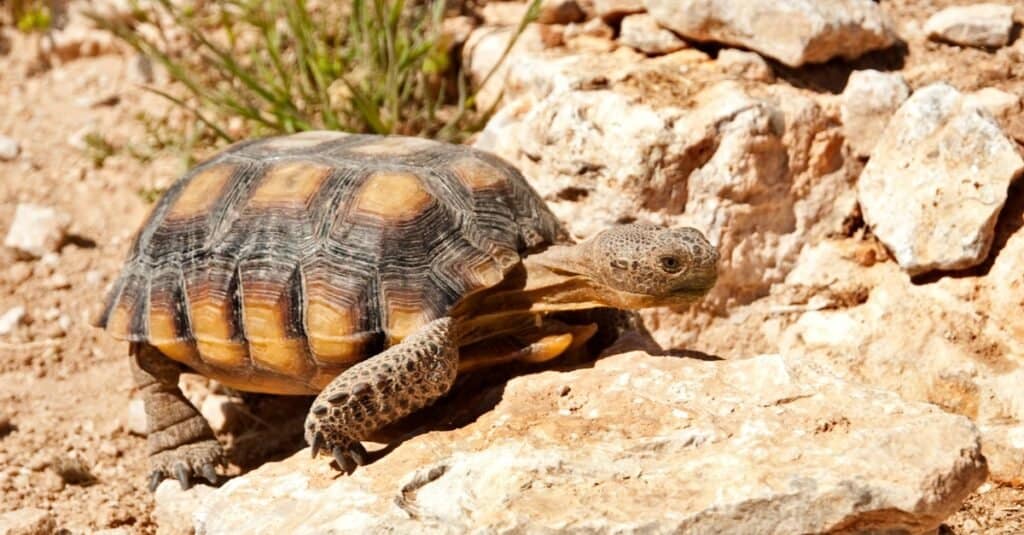
Slowest Animals In North America

The desert tortoise is native to the desert regions of Utah and is among the rarest animals in the state.

Native Plants in Utah

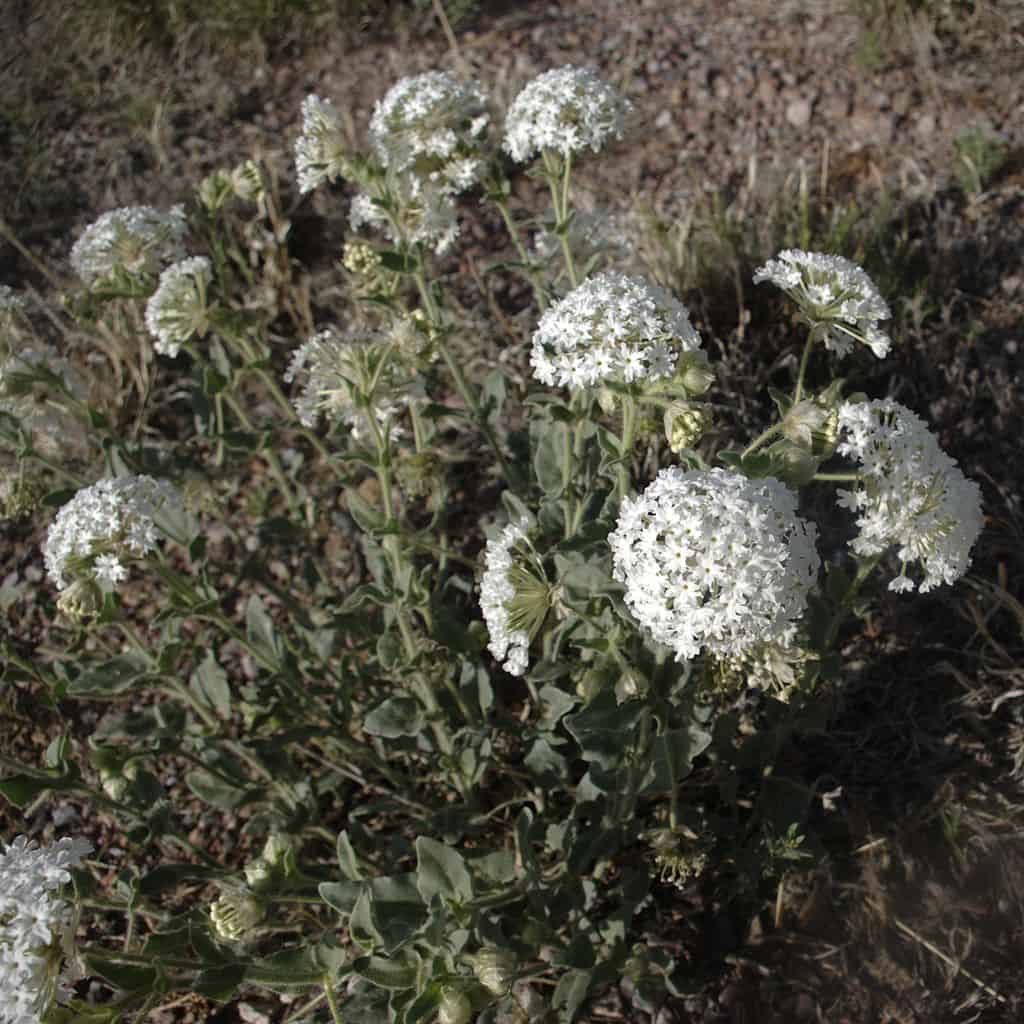
Abronia fragrans habitus

Fragrant sand verbena is native to Utah and often called Four O’clocks because its flowers open in the evening and close in the morning.

Utah is diverse in terms of geography and climate, and the state exhibits a variety of regions and ecosystems. Several thousand plants are native to the state of Utah. Some native plants in Utah include mountain lover, creeping barberry, and fragrant sand verbena, among others.

Also, Utah is home to over 240 species of trees, many of which are native to the area. Some beautiful trees native to the state of Utah include Gambel oak, chokecherry, and ponderosa pine, among others.

The Utah State Flag

The flag of Utah features some of the official state animals. It also features the official Utah motto and other state symbols.

Read about:

  • extinct animals that lived in Utah.
  • the highest point in Utah.
  • the top waterfalls in Utah.
  • the common species of ticks in Utah.
  • the coldest place in Utah.

Animals Found in Utah

168 species documented in our encyclopedia

Thank you for reading! Have some feedback for us?