A
Species Profile

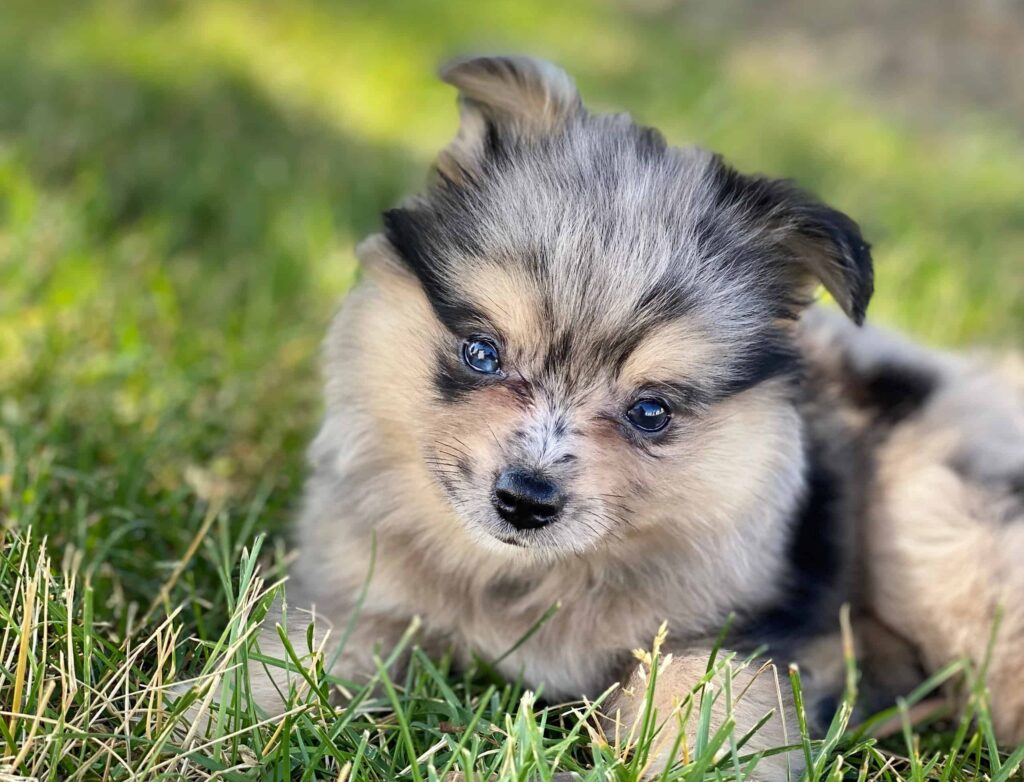
Aussiepom

Canis lupus familiaris

Small body, big herder-brain.
amucha4/Shutterstock.com

Aussiepom Distribution

Click a location to explore more animals from that region

Origin Location

This map shows the native origin of the Aussiepom. As a domesticated species, they are now found worldwide.

Loading map...

Found in 1 state/province

Size Comparison

Human 5'8"
Aussiepom 12 in

Aussiepom stands at 17% of average human height.

AussiePom

At a Glance

Domesticated
Also Known As Aussie Pom, Aussie-Pom, AussiePom
Diet Omnivore
Activity Diurnal+
Lifespan 3 years
Weight 12 lbs
Status Not Evaluated
Did You Know?

Aussiepom is a designer cross (Australian Shepherd x Pomeranian), not a standardized kennel-club breed - looks and temperament can differ a lot between littermates.

Scientific Classification

Aussiepom typically refers to a small-to-medium companion dog produced by crossing an Australian Shepherd with a Pomeranian. As a mixed/designer type, appearance and temperament can vary widely by individual and by which parent breed traits dominate.

Kingdom
Animalia
Phylum
Chordata
Class
Mammalia
Order
Carnivora
Family
Canidae
Genus
Canis
Species
lupus

Distinguishing Features

  • Mixed-breed (designer cross) combining herding-dog (Australian Shepherd) and toy spitz (Pomeranian) ancestry
  • Often a fluffy double coat; coloration may reflect Australian Shepherd patterns (including merle) or solid/spitz-like colors
  • Size typically smaller than an Australian Shepherd, often larger than a typical Pomeranian, but highly variable
  • Temperament commonly described as alert, energetic, and people-oriented; variability is expected

Physical Measurements

Males and females differ in size

Height
1 ft 1 in (10 in – 1 ft 5 in)
1 ft 1 in (10 in – 1 ft 3 in)
Length
1 ft 12 in (1 ft 2 in – 2 ft 6 in)
2 ft 2 in (1 ft 10 in – 2 ft 7 in)
Weight
22 lbs (11 lbs – 35 lbs)
18 lbs (11 lbs – 24 lbs)
Tail Length
Up to 10 in
9 in (7 in – 12 in)
Top Speed
25 mph

Appearance

Primary Colors
Secondary Colors
Skin Type Skin usually normal; nose and eye rim color varies with coat genetics. Often prone to dry skin, hot spots, or skin allergies if grooming or parasite control is inconsistent; double coat can trap moisture.
Distinctive Features
  • Designer cross (Australian Shepherd × Pomeranian): a domestic dog mix (Canis lupus familiaris), not a standardized kennel-club breed; appearance, size, and temperament can vary significantly by individual and by which parent traits dominate.
  • Compared with the base species concept (general domestic dog), Aussiepoms are typically small-to-medium, compact, and plush-coated with a spitz-like ruff/tail tendency from the Pomeranian and herding-dog expression/markings from the Australian Shepherd.
  • Coat: often thick double coat; can be medium to long, straight to slightly wavy; usually high-shedding and may seasonally "blow" coat (especially if more Pom-like).
  • Head/face: may range from a foxlike Pom muzzle with small triangular ears to a slightly broader Aussie-like muzzle; ears can be erect, semi-erect, or tipped.
  • Tail: frequently plumed; may curl over the back (Pom influence) or be carried lower/straight (Aussie influence).
  • Movement/build: agile and quick with potential herding drive; many are energetic and alert, sometimes vocal (Pom influence).
  • Possible health issues: patellar luxation (kneecap), hip dysplasia, tracheal collapse in very small dogs, dental crowding/periodontal disease, allergies and eye problems (cataracts/PRA). Merle-to-merle breeding raises hearing/vision defect risk.
  • Care requirements (typical): daily/near-daily brushing during shedding periods; routine de-matting behind ears/ruff; regular bathing with thorough drying to prevent skin irritation. Consistent dental care (brushing + professional cleanings as advised).
  • Aussiepoms do best with daily walks, play, and short training. They are smart and can act out if bored. Early socializing and reward training reduce barking, being too alert, herding, and nipping.
  • Climate/comfort: dense coats can overheat-provide shade/water, avoid intense exercise in heat, and do not shave double coats as a default (can impair insulation and coat regrowth in some dogs).

Sexual Dimorphism

Sexual dimorphism is generally mild, as in most domestic dogs: males often average slightly larger/heavier with broader heads/neck ruff; females often appear a bit finer-boned. Because this is a mixed (designer) cross without a fixed standard, individual variation often exceeds sex-based differences.

  • Often slightly taller/stockier with a broader chest and head; may show a more pronounced neck ruff in long-coated individuals.
  • May develop more territorial marking behaviors unless neutered/trained (behavioral tendency varies by individual).
  • Often slightly smaller with a lighter frame and narrower head/muzzle.
  • May appear more compact/fine-boned; coat fullness can still be substantial depending on genetics.

Did You Know?

Aussiepom is a designer cross (Australian Shepherd x Pomeranian), not a standardized kennel-club breed - looks and temperament can differ a lot between littermates.

Many inherit a thick, northern-type double coat from the Pomeranian along with the Australian Shepherd's shedding, so regular brushing is often necessary.

Coat colors can be surprisingly diverse because Australian Shepherd lines carry merle and other patterns; some pups may show dramatic marbling.

They often combine big-dog energy with a small-dog body - mental work (training games, puzzles) can matter as much as walks.

Some Aussiepoms show strong 'shadowing'/velcro tendencies from the Aussie side, staying close to their people.

Despite their companion-dog image, many excel in trick training or beginner agility due to high responsiveness and quick learning.

Their bark/alertness can lean Pom; their work ethic and need for structure can lean Aussie - early training helps balance both.

Unique Adaptations

  • Domestic-dog flexibility: as the domestic dog, this mix is adapted to human environments - reading human gestures and thriving on cooperative tasks more than wild canids.
  • Double coat insulation (often): many inherit weather-resistant undercoat/guard hairs that buffer temperature swings - helpful but increases shedding and grooming needs.
  • High trainability potential: Australian Shepherd heritage often contributes biddability and responsiveness to cues, enabling advanced trick/obedience work.
  • Compact companion build (often): Pomeranian ancestry can produce a smaller frame than a pure Aussie, making 'sporty companion' lifestyles feasible in smaller homes if exercise is met.
  • Sensory reactivity: many dogs from herding/spitz backgrounds are quick to notice movement and sound-an adaptation for work/alert roles, but requires calm exposure training in busy areas.

Interesting Behaviors

  • Herding-style nudging or 'circling' kids/pets (Aussie influence), especially when excited or overstimulated.
  • Vocal alerting (barking) at unfamiliar sounds or sights, reflecting common watchdog tendencies seen in Pomeranians and Australian Shepherds.
  • High engagement with moving objects-fetch, flirt poles, and motion-based games can become favorite activities.
  • 'Velcro dog' behavior: follows one person room-to-room, seeking cues and contact.
  • Quick pattern learning: may invent routines (e.g., sitting by the leash) and try to "train" owners with attention-seeking behaviors.
  • Toy guarding or resource sensitivity can appear in some individuals - benefits from early positive reinforcement and trading games.
  • Zoomies in short bursts; many do well with multiple mini-sessions of exercise rather than one long outing.

Cultural Significance

Aussiepoms (Australian Shepherd × Pomeranian) show 'designer' dog culture: families want a small companion with Aussie energy, Pomeranian charm, and that is easy to train. They can be unpredictable in size, coat, and temperament, fitting urban living with exercise.

Myths & Legends

There are no well-known myths about the Aussiepom, a modern mixed breed (Australian Shepherd x Pomeranian). Most reliable background comes from the histories of its parent breeds, not old folktales.

A story in breed lore says Queen Victoria's love of small Pomeranians, especially a dog named Marco, helped make the tiny 'Pom' style popular in late-19th-century Britain and a fashionable companion.

Despite the name, many old stories say the Australian Shepherd rose doing ranch work in the American West. "Australian" came from imported sheep and handlers, giving the breed a world-traveling, cowboy-era mystery.

There are no well-known myths or legends about the Aussiepom. As a recent mixed breed (Australian Shepherd × Pomeranian), it has no old folklore tied to the breed.

No established myths or legends: The Aussiepom is a modern mixed-breed (designer cross) and does not have documented historical folklore comparable to long-established pure breeds.

Conservation Status

NE Not Evaluated

Has not yet been evaluated against the criteria.

Population Stable

Life Cycle

Birth 4 pups
Lifespan 3 years

Lifespan

In the Wild
1–8 years
In Captivity
10–17 years

Reproduction

Mating System Promiscuity
Social Structure Managed Domestic
Breeding Pattern Transient
Fertilization Internal Fertilization
Birth Type Internal_fertilization

Aussiepom (Australian Shepherd × Pomeranian mix) (Canis lupus familiaris): Dogs may mate with more than one partner and litters can have mixed sires. As pets, breeding is usually controlled or stopped by humans. Mating is internal and often includes a 'tie' with no lasting pair bond.

Behavior & Ecology

Social Pack Group: 3
Activity Diurnal, Crepuscular
Diet Omnivore Lean poultry (e.g., chicken or turkey) as a primary protein in a complete, AAFCO-complete diet.

Temperament

Companion-oriented and people-focused; often bonds strongly to a primary person and seeks close contact
Intelligent and trainable with a strong reinforcement history; can become pushy/attention-seeking if boundaries are inconsistent
Playful, energetic bursts with moderate endurance; needs daily exercise plus problem-solving to prevent nuisance behaviors
Alert and watchful; Pomeranian influence commonly increases watchdog barking and noise sensitivity
Can be reserved or reactive with unfamiliar people/dogs if under-socialized; early, positive exposure is important
May display herding-style control behaviors (following, blocking, chasing fast movement, occasional nipping) that require redirection and impulse-control training
Variation is high across individuals (designer mix): some skew 'Aussie' (higher drive, more intense engagement), others skew 'Pom' (smaller, more vocal, more companion-lap oriented)
Watch for dental disease (small dog), patellar luxation, hip dysplasia (Aussie line), tracheal sensitivity in small dogs, eye problems (PRA/cataracts), epilepsy, and possible MDR1 drug sensitivity, test and use medicines carefully.
Care requirements impacting social behavior: consistent training to manage barking/herding habits, daily mental enrichment, structured socialization, and regular grooming for double-coat shedding/matting; weight management and dental care are especially important for small-to-medium mixes

Communication

Alert barking Often frequent; triggered by door sounds, strangers, novel noises
Demand barking (attention/food/play), especially if inadvertently reinforced
Whining Attention-seeking, frustration, separation-related distress
Growling Boundary-setting or resource guarding in some individuals; requires behavior support rather than punishment
Howling Occasional, individual-dependent
Body language: ear set, tail carriage, freezing/side-eye for discomfort; play bows and bouncy movement for solicitation
Mouthy/herding signals: light nips or 'heel' targeting, shoulder bumps, and circling-more likely when over-aroused
Pawing/nudging and shadowing to initiate interaction; leaning against people for contact
Scent marking and investigative sniffing during walks; may mark more if intact or in multi-dog homes
Eye contact and rapid orientation to handler cues; tends to check in frequently when well-bonded/trained

Habitat

Biomes:
Temperate Forest Temperate Grassland Mediterranean Temperate Rainforest Tropical Dry Forest Savanna Desert Hot Desert Cold Boreal Forest (Taiga) Tundra Alpine Wetland Freshwater +7
Terrain:
Plains Hilly Mountainous Coastal Valley Plateau Island Riverine +2
Elevation: Up to 16404 ft 3 in

Ecological Role

Domesticated companion omnivore/mesopredator analog living in close association with humans; primarily a consumer of human-provided foods with limited opportunistic predation.

companionship and social support to humans localized rodent deterrence/occasional pest control (free-roaming context) alerting/guard-barking function motivates human outdoor activity (walking/play)

Diet Details

Main Prey:
Poultry Cattle Lamb Fish Eggs Small mammals and birds
Other Foods:
Pumpkin and squash Sweet potato Carrot Green beans Blueberry Apples and pears Rice or oats Grasses and plant matter +2

Human Interaction

Domestication Status

Domesticated

Dogs (Canis lupus familiaris) were domesticated from gray wolves by humans for friendliness, trainability, and work. The Aussiepom (Australian Shepherd × Pomeranian) is a modern companion cross, not a formal breed. It often mixes Aussie herding drive, energy, and trainability with Pom small size, alertness, and spitz coat; traits vary by parent. They are usually pets or sport dogs.

Danger Level

Low
  • Nips/bites if under-socialized, fear-reactive, or handled roughly (risk can be higher around small children due to the dog's small-to-medium size and sensitivity).
  • Herding-derived behaviors (from Australian Shepherd lineage) may include chasing/heel-nipping at running children if not trained.
  • Noise/alert barking (common in spitz/toy lines) can create neighborhood conflict rather than physical danger.
  • Zoonotic/household risks common to pet dogs if neglected: fleas/ticks, roundworms/hookworms, and bite wound infection; minimized with routine veterinary prevention.

As a Pet

Suitable as Pet

Legality: Aussiepom is usually legal where pet dogs are allowed. Owners must follow local dog rules (license, leash, shots/rabies, breeding). Rarely singled out by breed laws, but housing or insurance can limit size, noise, or pets.

Care Level: Moderate

Purchase Cost: $200 - $2,500
Lifetime Cost: $15,000 - $45,000

Economic Value

Uses:
Companion animal ownership Breeding (designer cross puppies) Veterinary services (preventive care, genetics-informed screening, dentistry) Grooming and coat-care services Training, daycare, and boarding Pet supplies (food, crates, enrichment, harnesses)
Products:
  • Puppy sales/adoptions and related services (microchipping, initial vaccines)
  • Grooming (deshedding, brushing, trimming/sanitary trims)
  • Training packages (basic manners, impulse control, recall)
  • Preventive veterinary care (vaccines, parasite prevention, spay/neuter)
  • Health screening (hips/patellas, ophthalmology exams, MDR1 testing where indicated)

Relationships

Ecological Equivalents 6

Animals that fill a similar ecological role in their ecosystem

Australian Shepherd
Australian Shepherd Canis lupus familiaris As a parent breed, Australian Shepherds impart herding traits: easy trainability, a strong focus on people, and a tendency to herd or chase moving objects. Aussiepoms have extra mental energy and require structured training to prevent excessive barking, nipping, or causing damage.
Pomeranian
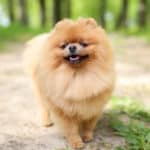
Pomeranian Canis lupus familiaris As a parent breed of the Aussiepom, it contributes smaller size, a companion nature, a thicker spitz-like coat and ruff, and a more vocal, alert disposition; many individuals are small-to-medium and tend to bark more without firm training.
Shetland Sheepdog
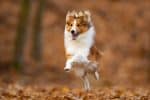
Shetland Sheepdog Canis lupus familiaris Often compared because it is a smaller herding-type companion dog with high responsiveness, frequent vocalization, and a substantial double coat. Similar niche: an active, trainable family companion that benefits from daily exercise, regular grooming, and calm exposure to reduce reactivity.
Miniature American Shepherd Canis lupus familiaris Ecologically similar as a compact, energetic, highly trainable household companion with herding ancestry. Like many Aussiepoms, may thrive with sport-style outlets (nosework, agility foundations, trick training) and predictable routines.
Papillon
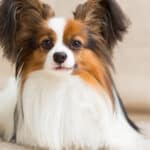
Papillon Canis lupus familiaris Comparable small companion dog that can be extremely intelligent and athletic for its size; occupies a similar household niche where mental enrichment and positive-reinforcement training are as important as physical exercise.
Schipperke
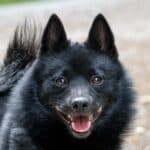
Schipperke Canis lupus familiaris Similar niche as a small, alert, high-energy companion with a tendency toward watchdog barking and strong curiosity/prey interest—traits that can also appear in Aussiepoms, especially when under-stimulated.

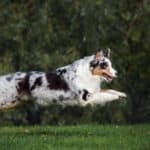
Aussiepoms (or Aussie Poms) are a mixed breed dog that is a hybrid of the Australian Shepherd and the Pomeranian. They are a relatively recent “designer dog” mix developed in the United States in the 2000s as a small and aesthetically pleasing companion animal. Aussiepoms inherit intelligence and herding instincts from the Aussie side of their ancestry and the stubbornness and soft but high-maintenance coat of their Pom mom or dad. They are highly social, energetic, and affectionate. This mixed breed enjoys an active family and room to run and play. They do like to herd people and animals and bark a lot when they play or when left alone for too long. Aussipoms make adorable family pets but need some training, attention, and grooming. If you want a dog to pamper and love, this may be the choice for you!

3 Pros and Cons of Owning an Aussiepom

Pros!Cons!
Playful and energetic. This is a breed with a lot of energy. Although in terms of size, they can do fine in a small living space, they do bark and run around a lot. A house with a yard is better for them — and for your neighbors — than an apartment.Shedding monsters. They shed quite a bit throughout the year. They should be brushed frequently to remove loose hair and prevent mats and tangles from forming. You’ll have to vacuum your house frequently.
A choice of sizes. Aussiepoms come in medium, small, and toy sizes. The smaller “travel-sized” dogs can be convenient for people who want to see the world with a furry friend.Unpredictable temperament traits. As a hybrid breed, Aussiepoms inherit traits from their parent breeds unevenly. Individual puppies must be observed to see which side of their family tree they are most like.
Super Smart! Australian Shepherds are considered one of the smartest breeds of dogs in the world. Aussiepoms inherit much of this intelligence, making them quick to understand what their owners want them to do.  Can be stubborn. Pomeranians have a strong independent streak and can be challenging to train. Aussiepoms combine some of these tendencies with the intelligence of Australian Shepherds, making them doubly challenging to train.

The Best Dog Food for an Aussiepom

All dogs should have a high-quality diet, for the health of the dog and for your pocketbook. In the long run, your dog will have fewer health issues and expensive vet bills if you invest proactively in a dog food that meets their nutritional needs with natural products, free from unnecessary additives or low-quality fillers.

Note that Aussiepoms are subject to obesity, so be sure to limit their feeding to the portions recommended by your veterinarian and avoid giving too many treats. People food that causes so many of us to struggle with our own weight should be a strict no-no for your little furbaby.

Aussiepom Size and Weight

Aussiepoms come in three manageable sizes: medium, small, and toy. Both males and females may range in height from 10-17 inches and in weight from 8-30 pounds. They’re conveniently sized for a small living space or traveling around the country in an RV.

Aussiepom Common Health Issues

A hybrid breed such as the Aussiepom inherits not only its parents’ strengths, but some of their flaws as well. This type of dog is susceptible to some of the same issues that plague Australian Shepherds and Pomeranians.

Overall, the Aussiepom is considered a healthy breed with a relatively long lifespan of 12-15 years. However, these are a few of the possible health problems of this breed that you and your vet should keep an eye out for:

Aussiepom Temperament and Behavior

These are high-energy dogs that love to run, play, and bark. They are social and will want to spend as much time as possible with their owners. If left alone too long, they will suffer from separation anxiety and act out with even more barking and destructive behaviors.

As a very new breed, their temperament is not uniform. Individual puppies may inherit different proportions of the tendencies of their Australian Shepherd and Pomeranian backgrounds. Owners will need to watch puppies closely to identify their unique blend of characteristics and make sure to provide an appropriate environment and training for them.

They are suitable for all sorts of families, but do best in a home where someone will be in the house most of the day. Older children are a better fit for them than younger ones, as their tendency to nip and herd will not be as potentially harmful to them, and older children are better able to participate in training the dog responsibly.

How to Take Care of an Aussiepom   

Maintenance and Grooming

The coat of an Aussiepom, like the rest of the dog, is a mixture of their Australian shepherd and Pomeranian ancestry. Their fur may be shaded red, blue, or tri-color or may have a solid color with small random marks of other colors. One of the most common color combinations is a white or cream base coat with brown or beige markings.

They have long, fluffy coats and shed frequently, so they are not the best choice for people with allergies. The coat needs to be brushed a couple of times a week to remove loose hair and keep it from matting. It will tend to gather up twigs, bits of leaves, and insects from outdoor play, so it needs to be checked over when the dog comes back into the house.

Training

This breed is both intelligent and stubborn at times. This can make training a little tricky. It’s best to approach training as a bonding opportunity and use praise and positive reinforcement to encourage the desired behaviors, while ignoring and redirecting them from undesirable behaviors.

The breed does tend to nip at children and other pets during play and as an expression of their herding instincts. Training them out of this behavior should be a high priority and requires firmness, but not harshness. A heavy-handed approach can create an overly submissive dog that will not feel like the joyful and enjoyable pet you would want.

Exercise

Aussiepoms have huge stores of energy out of all proportion to their diminutive size. They’re likely to still be ready to play after even the most active day. Plan on taking your Aussiepom on long daily walks and giving it time to run and play in a fenced area. They can fit through small openings, so check your fences carefully for areas where they can squeeze underneath or through small gaps. As highly social dogs, they don’t do well with just being left to entertain themselves. They’ll want to play games with their family that challenge them mentally and physically. Agility and obedience lessons will feel like a game to them if you approach them with patience and love. Realize that your goal is to build a relationship with your animal, not just to get compliance by any means possible.

Aussiepoms and Children

Aussiepoms do well with children and other pets if trained and socialized with them from puppyhood. Their herding instincts will kick in when they see children running around and screaming. They’ll chase them down, nip at them, and try to force them all into a nice little group of distressed toddlers and an unhappy cat or two.

Obviously, it’s essential to train them out of this behavior early on. They should be corrected firmly and consistently and redirected to an alternative activity, such as chasing a ball. It’s very important with this highly intelligent and potentially stubborn breed not to be too harsh, as this will cause them to resist further training or become cowering and fearful animals.

This breed is much less of a problem with older children. These kids should be thoroughly a part of the training process, both to know how to respect the animal’s space when they’ve had enough interaction, and how to use the positive training techniques recommended by people experienced with the breed.

Dogs Similar to the Aussiepom

  • Australian shepherd: This breed is larger and more friendly to kids, other pets, and strangers than the Aussipom.
  • Pomeranian: These dogs are temperamentally similar but smaller and fluffier than Aussiepoms. Both breeds need a lot of grooming to keep their coats from getting tangled.
  • Poodle: These come in a greater variety of sizes, from toy to large standard poodles. Unlike Aussiepoms, they shed hardly at all and are a good choice for people with allergies.

View all 327 animals that start with A

Sources

  1. DogBreeds911 / Accessed November 24, 2022
  2. K9web / Accessed November 24, 2022
  3. Happy Doggo / Accessed November 24, 2022
  4. BarkingRoyalty.com / Accessed November 24, 2022
  5. Wag! / Accessed November 24, 2022
  6. Dogtime / Accessed November 24, 2022
  7. Love Your Dog / Accessed November 24, 2022
Drew Wood

About the Author

Drew Wood

Drew is a college professor and freelance writer who graduated from the University of Virginia. His travels have taken him to 25 countries and 44 states, where he has enjoyed learning about wildlife in a wide range of environments. In addition to his love of animals, he enjoys scary movies, landscaping, strategy games, and philosophical discussions over a cup of coffee. He is also an emotional support human to a neurotic Spanish Water Dog and a hyperactive Chihuahua mix.

Thank you for reading! Have some feedback for us?


Aussiepom FAQs (Frequently Asked Questions)

The initial purchase of an Aussiepom puppy is usually around $1000-$1200. Annual food, veterinary bills, and maintenance is about $650.