
B
Species Profile

Bed bugs

Cimex

Flat hitchhikers of the night
Pavel Krasensky/Shutterstock.com

Bed bugs Distribution

Click a location to explore more animals from that region

Origin Location

This map shows the native origin of the Bed bugs. As a cosmopolitan species, they are now found worldwide.

Loading map...

Size Comparison

Human 5'8"
Bed bugs 0 in

Bed bugs stands at 0% of average human height.

Types of Bed Bugs - Cimex lectularius

At a Glance

Genus Overview This page covers the Bed bugs genus as a group. Stats below are general traits shared across the genus.
Also Known As bedbug, common bedbug, common bed bug, tropical bed bug, bedbug insect
Diet Sanguivore
Activity Nocturnal+
Weight 1.2E-5 lbs
Status Not Evaluated
Did You Know?

Across Cimex, adults are typically ~3-9 mm long, with oval, reddish-brown bodies that swell after feeding.

Scientific Classification

Genus Overview "Bed bugs" is not a single species but represents an entire genus containing multiple species.

Bed bugs in the genus Cimex are small, wingless, blood-feeding true bugs that hide in crevices near hosts and feed mostly at night. The two main species associated with humans are Cimex lectularius (common) and Cimex hemipterus (tropical).

Kingdom
Animalia
Phylum
Arthropoda
Class
Insecta
Order
Hemiptera
Family
Cimicidae
Genus
Cimex

Distinguishing Features

  • Flattened, oval, reddish-brown body
  • Piercing-sucking mouthparts (rostrum)
  • Wingless with reduced wing pads
  • Nymphs resemble smaller adults
  • Hide in tight crevices near beds

Physical Measurements

Males and females differ in size

Height
♂ 0 in (0 in – 0 in)
Length
♂ 0 in (0 in – 0 in)
♀ 0 in (0 in – 0 in)
Weight
♂ 0 lbs (0 lbs – 0 lbs)
♀ 0 lbs (0 lbs – 0 lbs)
Top Speed
0 mph
crawling

Appearance

Primary Colors
Secondary Colors
Skin Type Chitinous exoskeleton
Distinctive Features
  • Adults generally ~3-8.5 mm long across the genus.
  • Broad, oval, strongly dorsoventrally flattened body; easily hides in cracks.
  • Wingless externally; only small wing pads, no functional wings.
  • Short beak (rostrum) for piercing skin and blood-feeding.
  • Abdomen expands markedly after feeding; engorged individuals look swollen.
  • Antennae 4-segmented; eyes prominent; pronotum with lateral margins.
  • C. lectularius: pronotum more flared/wider at sides than C. hemipterus.
  • C. hemipterus: pronotum comparatively narrower, less laterally expanded.
  • Most species feed at night; day spent in tight harborages near hosts.
  • Common indoor harborages: mattress seams, bed frames, baseboards, furniture joints.
  • Genus includes human-, bat-, and bird-associated species; host choice varies.
  • Eggs laid in crevices; nymphs pass ~5 molts before adulthood.
  • Lifespan commonly ~2-18 months; varies with temperature and feeding.
  • Signs near harborages include black fecal dots and pale shed skins.

Sexual Dimorphism

Dimorphism is usually subtle: females average slightly larger with a more rounded posterior abdomen, while males tend to be smaller with a more pointed abdominal tip. Degree of size difference can vary among Cimex species and feeding state.

♂
  • Posterior abdomen more pointed due to genital segments.
  • Often slightly smaller-bodied at the same life stage.
♀
  • Posterior abdomen broader and more rounded when unfed.
  • Often slightly larger and more robust-bodied.

Did You Know?

Across Cimex, adults are typically ~3-9 mm long, with oval, reddish-brown bodies that swell after feeding.

Most species feed on bats or birds; a few readily exploit humans, especially Cimex lectularius and Cimex hemipterus.

C. lectularius is common in temperate regions; C. hemipterus is more tropical/subtropical and increasingly found via travel.

A key ID clue: C. hemipterus tends to look more elongated with a narrower pronotum margin than broader C. lectularius.

Life cycle is egg → 5 nymph stages → adult; each nymph stage generally needs a blood meal to molt.

Typical signs are dark fecal spots, pale shed skins, glued-on eggs in seams/crevices, and a sweet-musty odor in heavy infestations.

Depending on temperature and feeding, Cimex can live many months; adults may persist ~6-12+ months, longer in cool conditions.

Unique Adaptations

  • Extreme body flattening lets them squeeze into crevices as thin as a credit-card edge.
  • Piercing-sucking mouthparts (hemipteran beak) with stylets that find blood vessels through skin.
  • Saliva includes anticoagulant and numbing components, helping many bites go unnoticed until later itching.
  • High starvation tolerance: many species can endure long periods without feeding, especially at cooler temperatures.
  • Tough eggs cemented into hidden seams help populations persist through intermittent host access.
  • Populations often evolve insecticide resistance-levels and mechanisms vary by species and region.

Interesting Behaviors

  • Hide by day in tight harborages: mattress seams, bed frames, headboards, baseboards, and behind wall hangings.
  • Mostly feed at night, guided by heat and carbon dioxide; some will feed in daytime if hungry or disturbed.
  • Aggregate in groups using odor cues, leaving clusters of fecal spotting and cast skins near preferred cracks.
  • Disperse by "hitchhiking" in luggage, furniture, and clothing; movement between rooms often follows human activity.
  • Traumatic insemination (common in Cimicidae): mating involves piercing the female's body wall rather than a typical genital route.
  • Host use varies widely: many Cimex specialize on bats or nesting birds, but can bite humans when hosts are absent.

Cultural Significance

Bed bugs have followed humans for centuries, shaping household habits, public-health policy, and stigma. They appear in medical histories (folk remedies), urban lore, and modern pest-management culture tied to travel and dense housing.

Myths & Legends

Pliny the Elder recorded old medicinal uses for bedbugs-an example of Roman-era belief in their curative powers despite their nuisance.

The Latin names echo long cohabitation: "Cimex" (bug) and "lectularius" (of the bed), a linguistic fossil of domestic life.

Traditional bean-leaf trapping (notably in parts of Eastern Europe) used rough leaf hairs to snag bedbugs-folk practice preserved into modern research.

Conservation Status

NE Not Evaluated

Has not yet been evaluated against the criteria.

Population Unknown

You might be looking for:

Common bed bug

55%

Cimex lectularius

Temperate-region bed bug most commonly associated with human dwellings; classic indoor pest in homes and hotels.

Tropical bed bug

45%

Cimex hemipterus

More common in tropical/subtropical regions; increasingly reported via travel and global movement, similar habits to C. lectularius.

Life Cycle

Birth 1 nymph

Lifespan

In the Wild
0 years
In Captivity
6–30 years

Reproduction

Mating System Promiscuity
Social Structure Aggregation Group
Breeding Season Year-round indoors; spring-summer outdoors
Breeding Pattern Transient
Fertilization Internal Fertilization
Birth Type Internal_fertilization

Across Cimex, adults mate repeatedly within shared harborages near hosts; both sexes can have multiple partners. Copulation uses traumatic insemination (hypodermic injection) with internal fertilization, and there are no pair bonds or parental care beyond egg-laying.

Behavior & Ecology

Social Aggregation Group: 50
Activity Nocturnal, Crepuscular
Diet Sanguivore Blood

Temperament

Cryptic
Gregarious
Opportunistic
Host-seeking

Communication

none Silent
aggregation pheromones
alarm pheromones
cuticular hydrocarbons
thigmotaxis Touch cues
CO2 and heat cues
host-odor tracking
substrate vibration sensing

Habitat

Biomes:
Tropical Rainforest Tropical Dry Forest Savanna Desert Hot Desert Cold Mediterranean Temperate Grassland Temperate Forest Temperate Rainforest Boreal Forest (Taiga) Tundra Alpine Wetland Marine Freshwater +9
Terrain:
Plains Hilly Mountainous Plateau Valley Coastal Island +1
Elevation: Up to 13123 ft 4 in

Ecological Role

Nocturnal sanguivorous ectoparasites (≈3-8 mm); lifespan months to ~2 years, depending on host/temperature.

host-parasite regulation prey for arthropod predators energy transfer from hosts

Human Interaction

Domestication Status

Wild

Wild, non-domesticated ectoparasites; across Cimex, adults are ~3-9 mm and typically live ~2-18 months (temperature/feeding dependent). Mostly nocturnal, crevice-hiding blood feeders; host use varies (humans, bats, birds).

Danger Level

Moderate
  • Itchy bites/welts; reactions vary widely
  • Allergic reactions (rare, sometimes severe)
  • Secondary skin infection from scratching
  • Psychological stress/sleep disruption
  • Possible anemia in heavy infestations (rare)
  • Infestations spread via travel/secondhand items

As a Pet

Not Suitable as Pet

Legality: Not regulated as pets; possession strongly discouraged.

Care Level: Expert Only

Purchase Cost:
Lifetime Cost:

Economic Value

Uses:
Pest-control Research Public-health

Relationships

Related Species 6

Swallow bug
Swallow bug Oeciacus vicarius Shared Family
Mexican chicken bug
Mexican chicken bug Haematosiphon inodorus Shared Family
Bouet's bug Leptocimex boueti Shared Family
Common bed bug Cimex lectularius Shared Genus
Tropical bed bug Cimex hemipterus Shared Genus
Bat bug
Bat bug Cimex adjunctus Shared Genus

Ecological Equivalents 5

Animals that fill a similar ecological role in their ecosystem

Kissing bugs (triatomines)
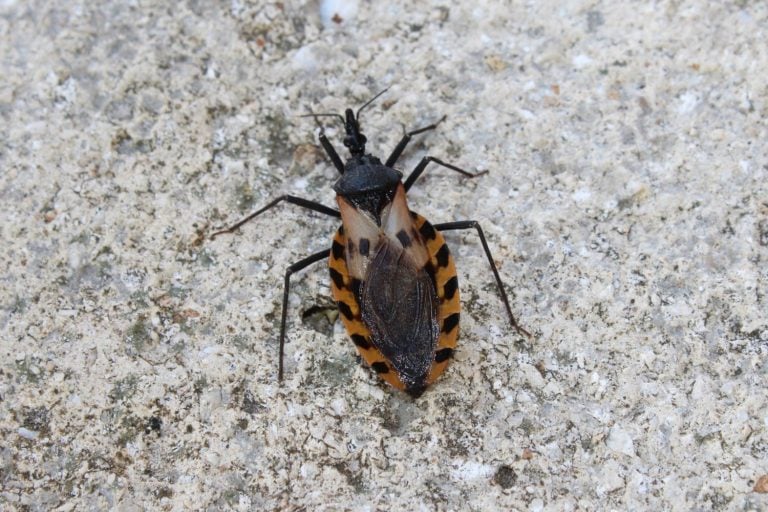
Kissing bugs (triatomines) Triatoma infestans Nocturnal blood-feeding hemipterans that hide in crevices near hosts
Fleas Ctenocephalides felis Obligate hematophagous ectoparasites; infest hosts and nearby resting sites
Hard ticks Ixodes ricinus Blood-feeding ectoparasites with prolonged fasting between meals
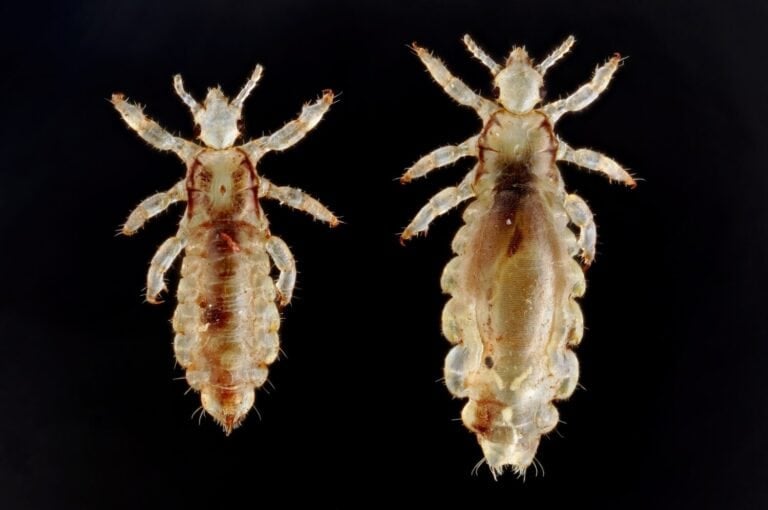
Sucking lice Pediculus humanus Host-associated blood feeders causing itchy bites and dermatitis
Mosquitoes
Mosquitoes Culex pipiens Blood-feeding insects; host-seeking mainly at night in many species

Types of Bed bugs

8

Explore 8 recognized types of bed bugs

Quick Take

The bed bug is an insect that feeds on blood and is most active at night. True to its name, the bed bug is most common in beds. These insects are notoriously difficult to get rid of. These parasitic insects are members of the genus Cimex. Their bites cause skin rashes, but may also cause psychological effects and allergic reactions.

Educational infographic about bed bugs showing their evolution from bats to humans, their life stages from egg to adult, and tips for prevention and treatment.
They’ve survived millions of years and jumped from bats to humans—now they’re nearly impossible to evict. Master the science of spotting their early signs before an infestation takes over your home. © A-Z Animals

History and Evolution

When it comes to evolution, it is always important to factor in what the animal ate and what was in its diet. This is because survival ability dictates adaptation and supports evolution towards being more successful at obtaining that food source. It is especially important for animals like bed bugs that require a host to feed.

Specific species of bed bugs are generally known to feed on four different types of hosts: humans, bats, water birds, and other birds. This is because they have evolved to become very adept at feeding off them. As researchers are finding, however, the history of the bed bug ancestry dates back many millions of years and predates some of their current hosts, like humans. Scientists are working on solving the puzzle of how these insects were able to make the jump between different types of hosts over their evolution.

Species, Types, and Scientific Name

Of the insects in the family Cimicidae, three species cause infestations of bed bugs:

  • Cimex lectularius: Also known as the common bed bug. While these can be in the same location as the tropical bed bug, they typically are not in the same warm areas. But bed bugs can be found wherever their hosts can be found.
  • Cimex hemipterus: Also known as the tropical bed bug. These are very similar in appearance to the common bed bug and have similar characteristics, and they obviously live in tropical climates.
  • Leptocimex boueti: Populations of this type of bed bug are contained in South America and West Africa. This is partially due to the fact that humans actually aren’t the primary prey for this species of bed bug. Most members of Leptocimex boueti feed off of bats rather than humans, although they’re not choosy eaters.

There are 23 described species of the genus Cimex. Only four out of 90 species of bed bugs feed on humans, with the aforementioned two preferring humans. The others are bat bugs.

Appearance

Proper identification of bed bugs rules out confusion with other insects such as fleas, ticks, carpet beetles, and cockroaches. It also depends on the life stage of the bed bugs.

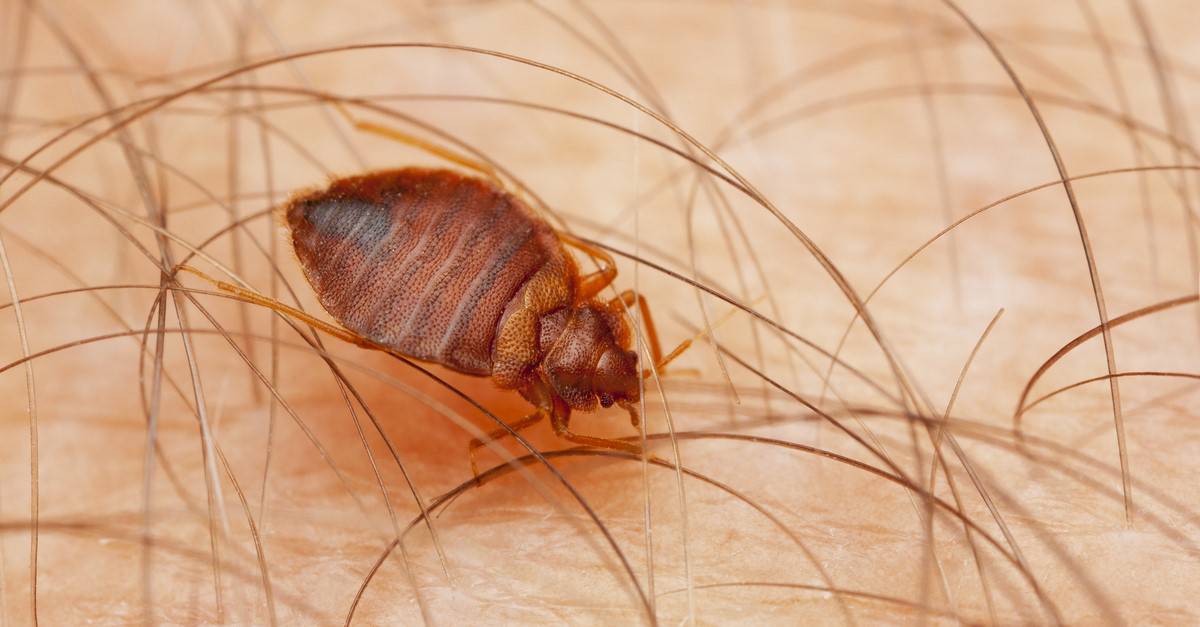
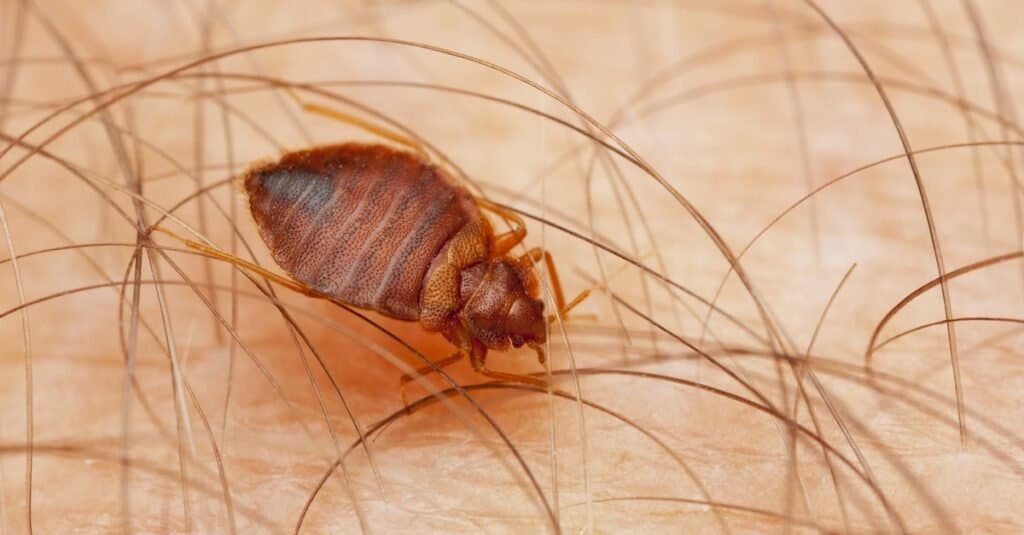
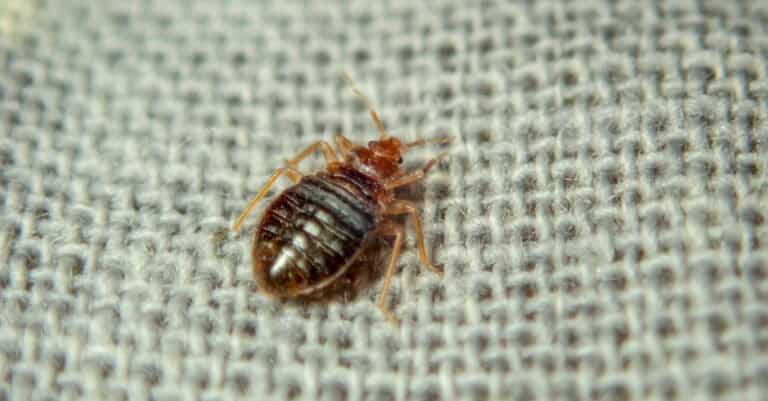
Adult bed bugs are five to seven millimeters long — about the size of an apple seed — and visible to the naked eye. They are brown and long with an oval-shaped, flat body unless they’ve recently fed. If it’s fed, its body is round, reddish-brown in color, and longer. As true insects, they have beaks with three segments, an antenna with four parts, wings that aren’t for flying, short, golden hairs, and a sweet, musty odor coming from glands on their undersides.

These insects have five immature or young life stages called nymphs before they become adults. Nymphs are smaller and either whitish-yellow or translucent depending on whether they’ve fed recently or not.

Bed bug eggs are pearly-white and tiny, about the size of a pinhead. If more than five days old, they have an eyespot marking.

Rather than the identification of live bed bugs, however, identification may instead mean recognizing an infestation. This is usually from early signs such as bites or spots of human blood. You may also see rusty stains from crushed bed bugs, dark spots from excrement, or pale yellow eggs and eggshells.

Early signs of bed bugs are uncomfortable, itchy nights in bed, marks on arms and shoulders, and an unpleasant odor resembling a wet towel. Symptoms of bed bug bites are skin rashes of red, itchy, flat welts in zigzag lines or clusters. The bites have a darker red spot in the middle. Some people may have allergic reactions and develop fever, severe itching, blisters, or hives. They can also cause secondary bacterial infections such as impetigo, lymphangitis, and ecthyma, as well as symptoms of psychological issues such as insomnia and anxiety.

Bed bugs feed on human blood.

Habitat

The habitat of these insects is worldwide, never in nature. Instead, they live in mattresses, fabrics, furniture, luggage, and pieces of wood. They hide from light and movement during the day and come out at night, so they wait in seams of furniture, curtain folds, electrical appliances, the junction of the wall and ceiling, loose wall hangings and wallpaper, and even in heads of screws. They can live singly but come together in clusters in their habitat.
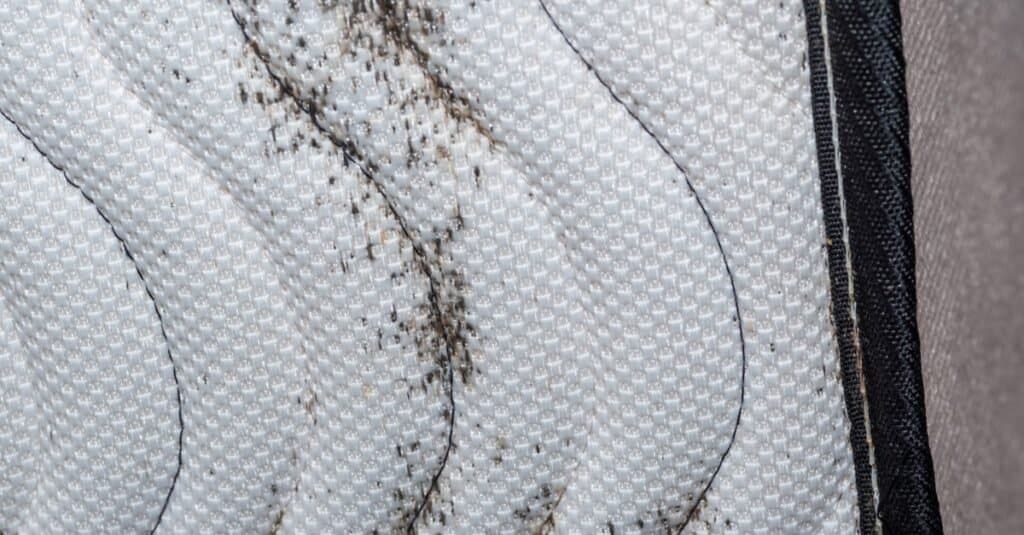
Bed bugs - signs on mattress

Bed bugs live in mattresses and fabrics.

Diet

The diet of bed bugs is blood. Some species prefer the blood of one mammal over another in their diet, while others absolutely need the blood of a specific mammal to survive and lay viable eggs. Those that humans deal with as pests in homes, apartment buildings, and offices feed on human blood. Their bites don’t hurt at first because they inject an anesthetic while they are feeding, which takes three to 12 minutes. Plus, they feed during the night, when it is dark and humans are asleep. Their bites most often appear on the neck, face, arms, and hands.

Prevention

To get rid of these insects more easily and quickly, noticing the early signs of bed bug infestation or symptoms of bed bug bites is important. Professionals first use visual inspection, then sniffing dogs, interceptor cups, and insect monitor cards. Ordinary people, however, need methods that don’t require a lot of money.

To get rid of them, laundering and drying with heat is one method. Vacuuming and steam treatment are others. Commercial heating services offer whole-room heat or cold treatments to kill them. You can either heat a room at 140 degrees Fahrenheit for two hours or 130 degrees Fahrenheit for three hours. Cold treatment can also work at home for small items placed in a freezer set to 0 degrees Fahrenheit. If you’re getting rid of infested furniture, make sure it’s unusable so other people won’t spread bed bugs to their own homes.

Finally, there are chemical treatments. Pesticides can be effective but need to be handled very carefully, and bed bugs can become resistant. They cannot be used on items that people come into contact with. Liquid and dry formulas should only be applied to cracks and crevices. They may include insect growth regulators as well as desiccants, which dry out these insects. They must be registered by the EPA and labeled specifically for bed bug control.
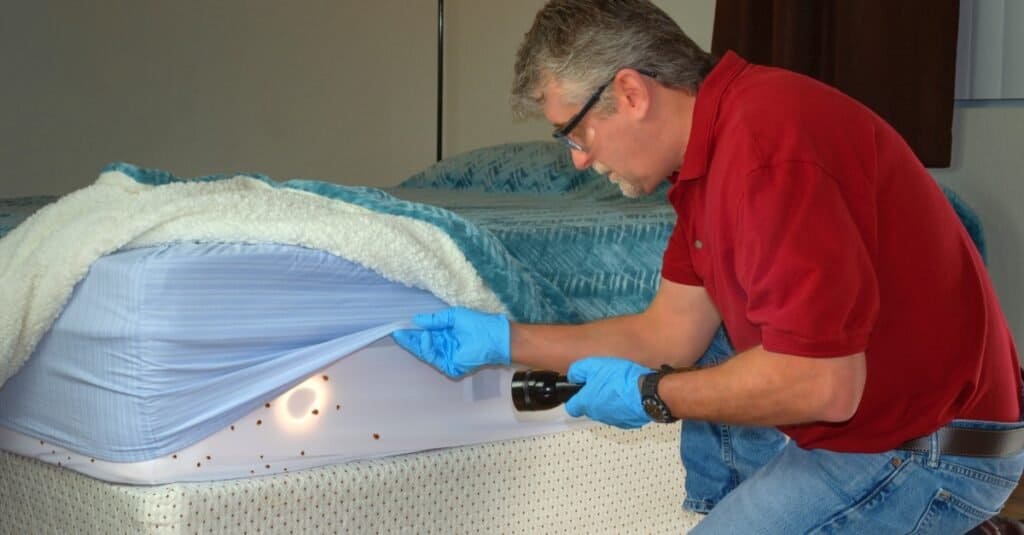
Bed Bugs Exterminator - professional

Bed bug exterminators use gloves and safety glasses to inspect infected mattress sheets and blanket bedding.

An alternative is the use of botanical oils, which are plant-based insecticides. Certain neem oil insecticides are registered for bed bug control.

As for how to prevent them in the future, a mattress encasement will protect your bed. It covers both the mattress as well as the box spring. Diatomaceous earth and pheromone traps work on everything else. It is difficult to find how to prevent bed bugs with just one method, though, so it’s best to use them together.

View all 459 animals that start with B

Sources

  1. Bed Bug Lawyers / Accessed January 1, 2022
  2. WhatKillsIt / Accessed January 1, 2022
  3. Wikipedia / Accessed January 1, 2022
  4. Wikipedia / Accessed January 1, 2022
  5. Terminix / Accessed January 1, 2022
  6. USEPA / Accessed January 1, 2022
  7. Terminix / Accessed January 1, 2022
  8. Mayo Clinic / Accessed January 1, 2022
  9. Thermal Bedbug Heat / Accessed January 1, 2022
  10. Treating Bruises / Accessed January 1, 2022
  11. Dominion Pest Control / Accessed January 1, 2022
  12. Terminix / Accessed January 1, 2022
  13. PetSeek / Accessed January 1, 2022
  14. DoMyOwn / Accessed January 1, 2022
  15. Penn State Extension / Accessed January 1, 2022
  16. Bed Bug Lawyers / Accessed January 1, 2022
  17. Bed Bug Lawyers / Accessed January 1, 2022
  18. Pestivate.com / Accessed January 1, 2022
  19. Terminix / Accessed January 1, 2022
  20. Pest Stop Solutions / Accessed January 1, 2022
  21. USEPA / Accessed January 1, 2022
  22. Terminix / Accessed January 1, 2022
  23. TreatingBruises / Accessed January 1, 2022
Heather Ross

About the Author

Heather Ross

Heather Ross is a secondary English teacher and mother of 2 humans, 2 tuxedo cats, and a golden doodle. In between taking the kids to soccer practice and grading papers, she enjoys reading and writing about all the animals!

Thank you for reading! Have some feedback for us?


Bed bugs FAQs (Frequently Asked Questions)

Adult bed bugs can be seen with the naked eye. They are small, long, and brown, about the size of apple seeds.