







Quick Take
- Redcaps break a near-universal rule of chicken biology, and the exception involves one of their most striking physical features. See the egg color exception →
- Fewer than 1,000 of these birds exist worldwide, a crisis that one major shift in farming is almost entirely to blame for. See the population crisis →
- Redcap hens are notoriously bad mothers, which creates a breeding problem that owners must solve in an unexpected way. Solve the brooding problem →
- Letting Redcaps roam freely does more than just keep them happy. It can eliminate a significant recurring cost for owners entirely. Explore free-range benefits →
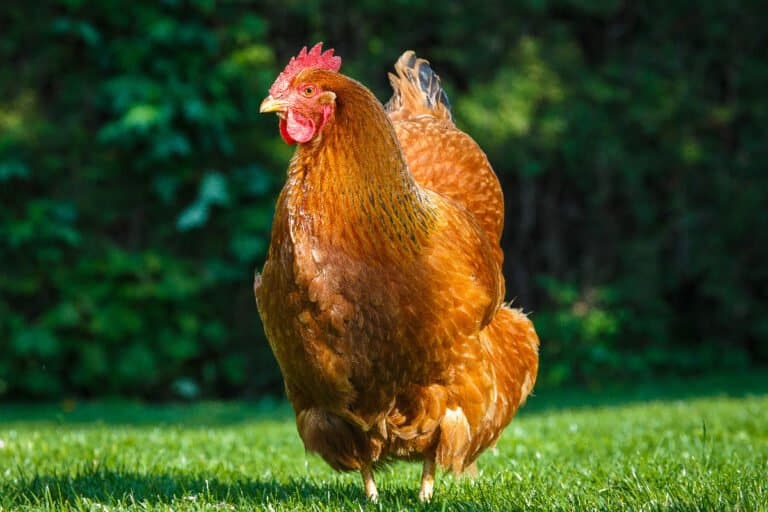
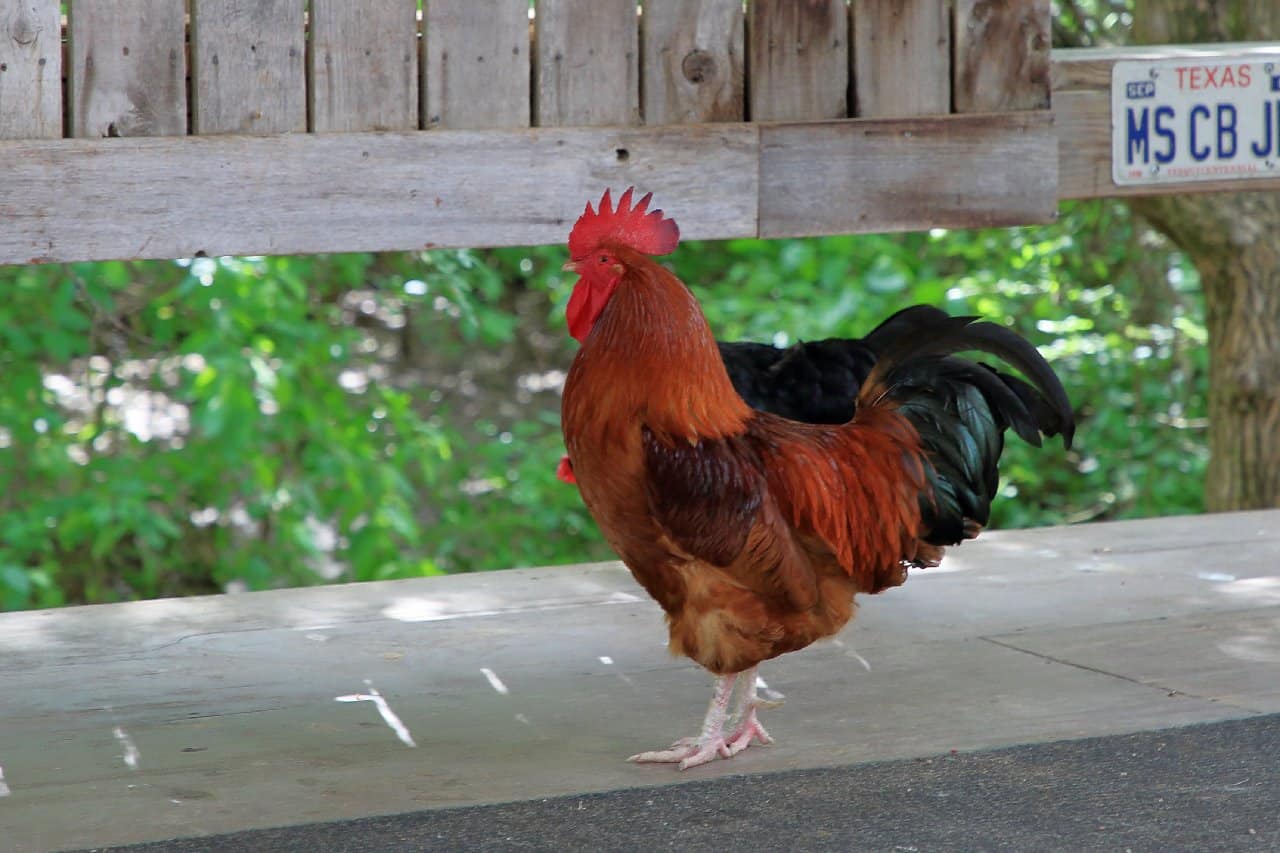
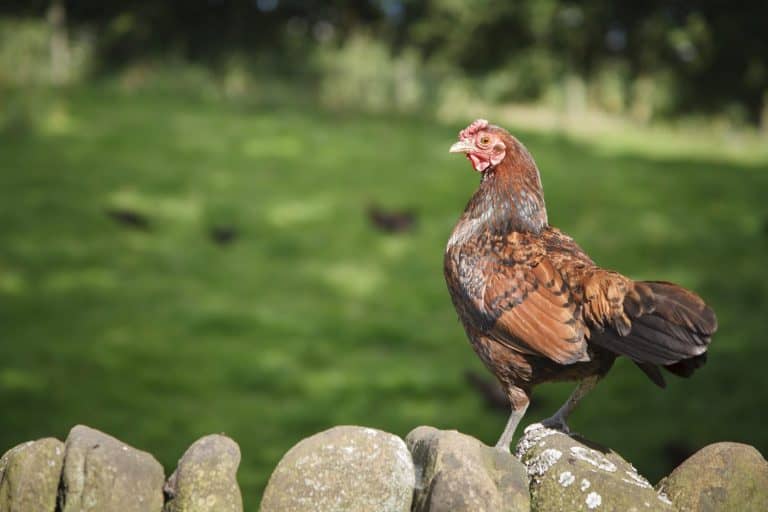
Redcaps, or Derbyshire redcaps, are a rare breed that first appeared in Derbyshire, England. They derive their name from the large rose comb on their heads, resembling a red cap. These chickens have combs that can grow up to 3.2 inches tall and have brown feathers with black tips.
Redcaps are good layers and can produce at least 160 eggs annually. However, they rarely go broody. Furthermore, they are excellent table birds but don’t grow quickly enough, so they are mainly kept for eggs. Additionally, they are great foragers and enjoy a free-range environment. Redcaps can have a wild temperament, so they are not suitable for smaller runs and can be flighty, which means the fencing around their enclosures must be higher than average.

Redcap Chicken History
Redcaps originated in Derbyshire, England, hence the name Derbyshire redcap. They can be traced back all the way to the early 19th century, but there are no records of the exact year. The Redcap was admitted to the American Poultry Association’s Standard of Perfection in 1888, several years after its introduction to the USA. However, at present, they are listed as critical by the Livestock Conservancy and considered endangered. Unfortunately, this means there are fewer than 500 breeding birds in the USA and an estimated global population of less than 1,000 breeding birds.
Derbyshire redcap chickens were mainly kept for meat and egg production and occasionally used in bird shows. People would pay high prices for their outstanding eggs and meat. However, their popularity significantly decreased when modern industrial chickens took over, and now they are almost unheard of.
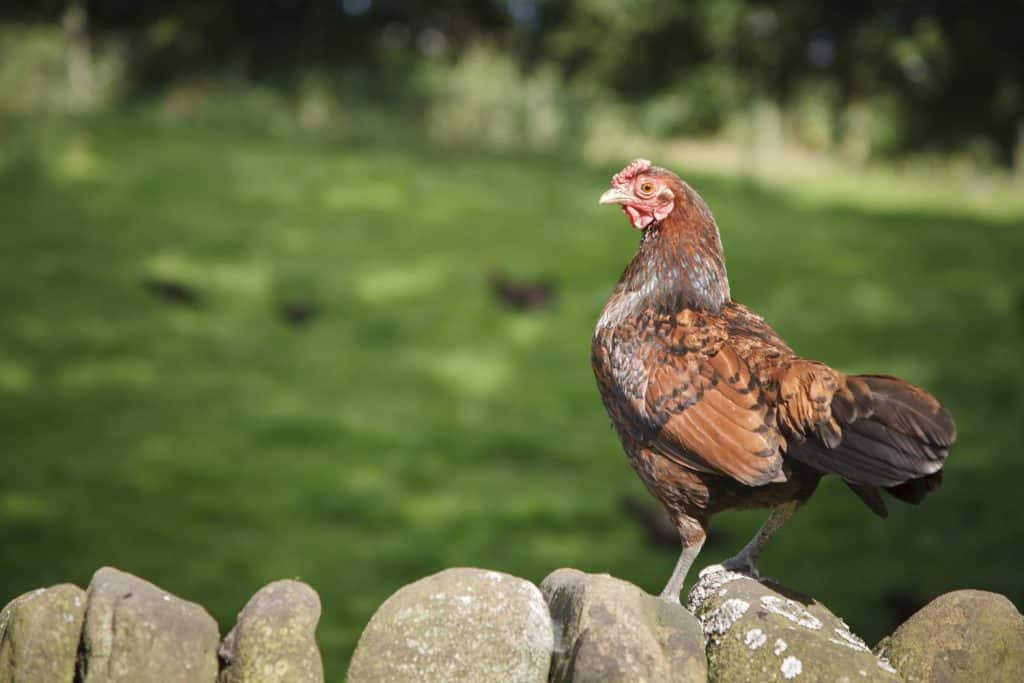
Redcap Chickens are good flyers, so care should be taken with their enclosure.
©Paul Maguire/Shutterstock.com
Redcap Chicken Amazing Facts
- Redcap chickens are slow-maturing birds, but they typically develop their adult plumage within their first year.
- Unfortunately, redcap hens are not good mothers, as they are not broody and unenthusiastic about sitting on their eggs.
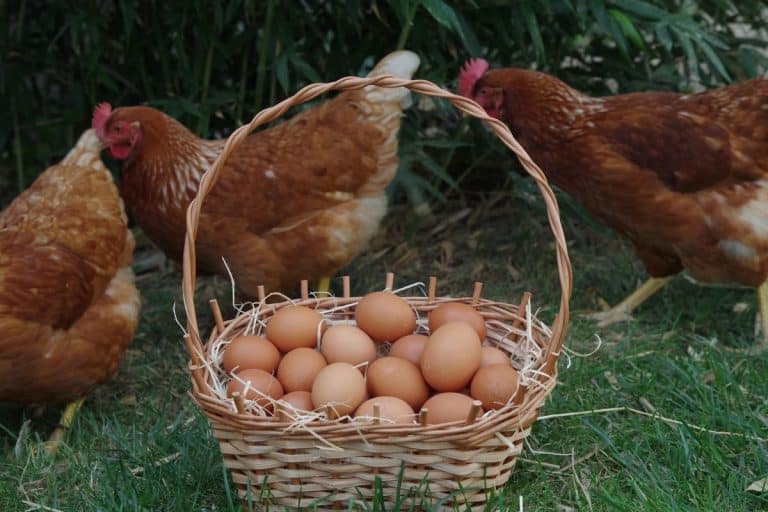
- Even though they have red earlobes, redcaps lay white-shelled eggs, which is strange because a chicken’s egg is usually the same color as its earlobes.
Redcap Chicken Scientific Name
The redcap chicken’s scientific name is Gallus gallus domesticus, and they form part of the Galliformes order. These chicken-like birds are distinguished by their small heads, stocky build, short bills and wings, and strong feet. Additionally, roosters have a sharp, horny spur behind each leg. There are many well-known species in this order, like quails, chickens, turkeys, pheasants, and grouse.
Redcaps are members of the Phasianidae family. This family contains species like partridges, pheasants, peacocks, quail, and jungle fowl, from which the domestic chicken descends. Some scientists believe turkeys also belong to Phasianidae, but many place them in the Meleagrididae family.
Size and Appearance
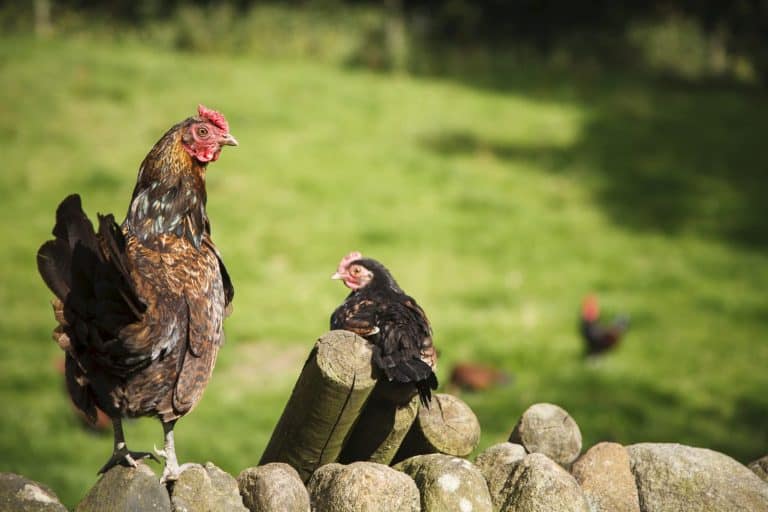
This stunning chicken is well-known for its famous comb, which is large, bright red, and has many points, making it look like a crown. Additionally, they have bright red ears and wattles, and their plumage is generally a combination of light brown and black, with one color being more dominant.
Redcap chickens are slow-growing birds, so their plumage is only fully formed when they are 2 to 3 years old. Furthermore, they have white skin and small brown beaks. They are large birds, with roosters weighing around eight pounds and hens weighing six pounds.
Because these chickens are so beautiful, they are often kept as ornamental birds. However, since they have decreased in popularity, you don’t see many in bird shows these days.
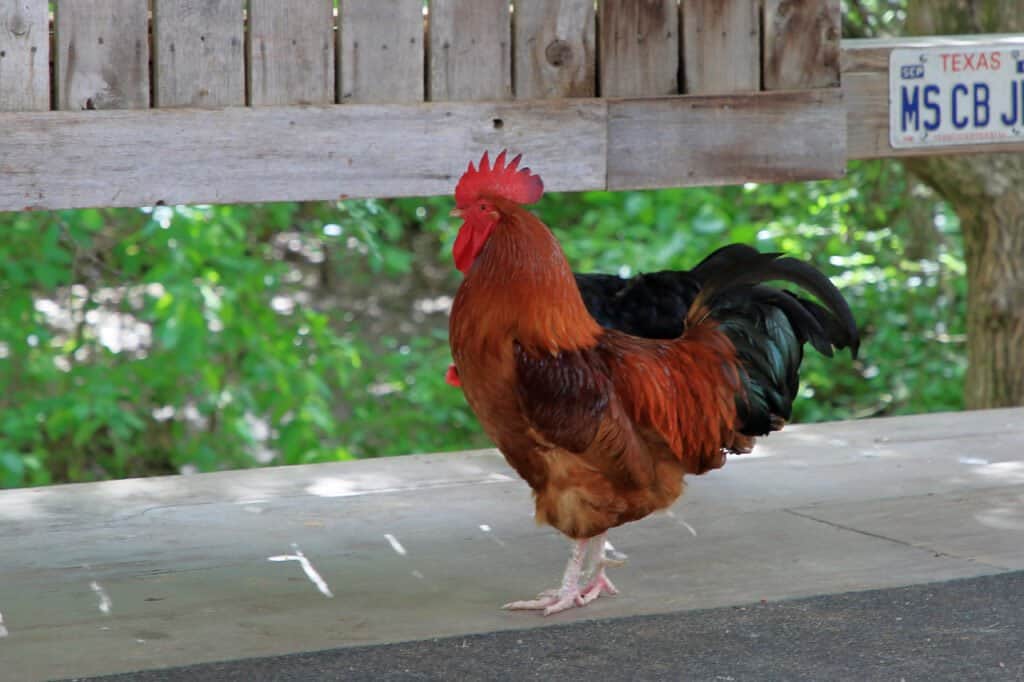
Redcaps are large birds, with roosters weighing around eight pounds and hens weighing six pounds.
©JustPixs/Shutterstock.com
Behavior
Don’t let Redcap’s stunning appearance fool you; they are not the friendliest chickens. However, they are not that aggressive either, but, unfortunately, they are very loud birds. While these chickens adapt to many climates, they thrive in warmer weather and need a toasty coop for those cold winter nights. In addition, redcaps are lively and active, so they need a lot of space. They are excellent free-range birds because of their restless and curious nature.
Unfortunately, redcap hens are not good mothers, as they are not broody and unenthusiastic about sitting on their eggs. Therefore, breeders must buy incubators or use other broody hens from the flock. While they might be aloof, they can exhibit friendly behavior towards humans when socialized properly.
Redcaps generally get along with other chicken breeds as long as they are introduced at a young age. In addition, they are good fliers, and owners need to have high fences to prevent them from escaping.
Diet
The most important part of owning redcap chickens is feeding them healthy and nutritious food. Not only does high-quality food help the chickens grow better, but it also aids in their egg production and keeps them healthy. There are commercial poultry foods available, or you can make your own feed to ensure it’s filled with the correct nutrients. Always provide them with fresh water. While the redcap chicken is fine in containment, they thrive in a free-range environment, which not only helps them but also reduces your costs as they are more than capable of foraging for food. It will also increase the quality of their meat and eggs. If your chickens eat contaminated food, call your veterinarian immediately.
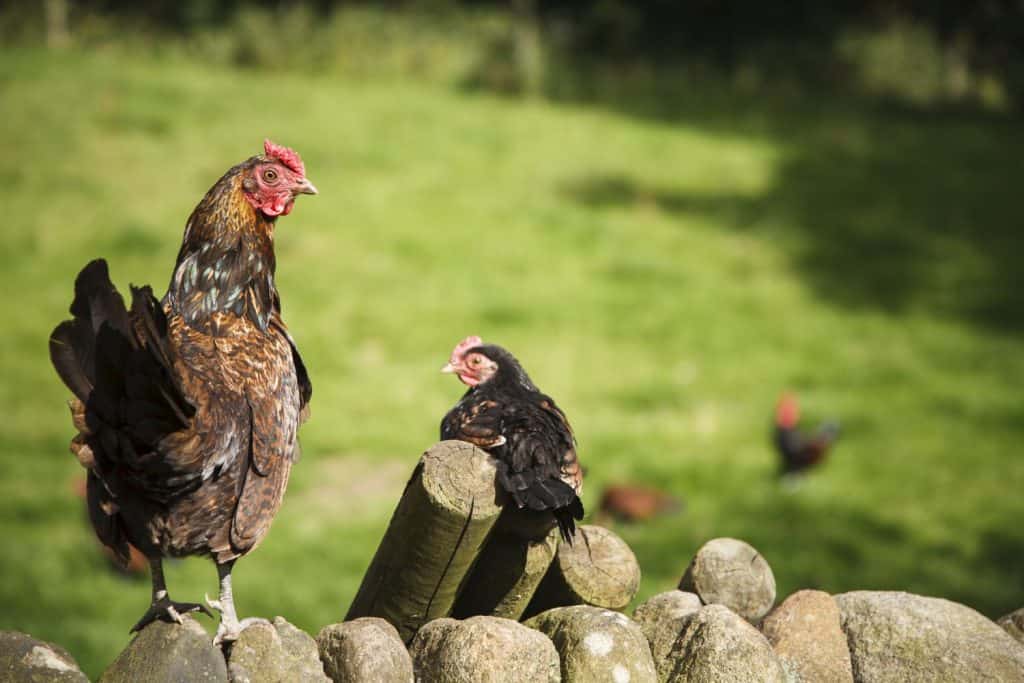
Chickens, especially free-range chickens, can fall prey to a variety of predators.
©Paul Maguire/Shutterstock.com
Predators and Threats
Redcap chickens can fall prey to many predators like foxes, weasels, mountain lions, leopards, birds of prey, and even domesticated pets. However, most dogs and cats will ignore them, but it’s best to always supervise any interaction. If you are worried about predators, call your local animal shelter, zoo, animal control, or vet to find out what predators are in your area.
The American Livestock Conservancy lists the redcap chicken as “critical.” In addition, the Rare Breeds Survival Trust in the United Kingdom has recorded them as “threatened.”
Reproduction, Babies, and Lifespan
The redcap chicken, like other domestic chickens, is a good breeder. As long as you have a good ratio of roosters to hens in a flock, they will produce fertile eggs. One sexually mature rooster among 10 hens is ideal.
Even though they have red earlobes, redcaps lay white-shelled eggs, which is strange because a chicken’s egg is usually the same color as its earlobes. Furthermore, they can lay between 150 to 200 eggs annually, producing eggs for many years. This means they lay up to four eggs per week, and they take 21 days to hatch.
Once the redcap chicks hatch, they are yellow with a dark stripe down their backs and some black on their heads. It takes adults two to three years to fully develop color patterns and combs.
These chickens have relatively long lifespans. They can live up to 10 years old.
Population
There is no data available on the redcap chicken’s population size, but because they are listed as Critical by the American Livestock Conservancy, there are less than 500 individuals in the USA and under 1000 redcaps worldwide.
Raising Redcap Chickens
Taking care of redcap chickens is not difficult. These birds have no specific food requirements or grooming needs. However, they are prone to a few health conditions and need extra security to prevent them from escaping.
Health Issues
While redcaps are relatively healthy and not particularly sensitive, they do fall victim to some of the most common chicken diseases, like:
- Fowl pox
- Parasites
- Bird flu
- Newcastle disease
Unfortunately, most of these diseases spread quickly, but you can prevent your chickens from getting some of these conditions by vaccinating them. It’s best to act fast if you see one of your chickens acting strange because leaving it too long can infect the entire flock.
Parasites are a huge problem, but keeping the coop clean and properly ventilated can prevent many infestations. In addition, keep an eye out for slugs and snails, as they are big transmitters of parasites.
To keep your hens in tip-top shape, provide them with calcium-rich food or supplements that aid egg production. However, redcaps are fairly easy to maintain, considering how difficult it is to care for other chicken breeds.
Socialization is Key
Redcap chickens are not the friendliest breed, but they can be great additions to the family if socialized from a young age. Therefore, if you want these chickens to get along with humans, you need to interact with them from the moment they hatch. You can do this by putting your hands into their box when they are a few days old. Ensure to move slowly, as any sudden movements could scare these tiny chicks. Do this every day for a week, and then move on to holding them. Additionally, talk to them and win their love with tasty treats, so they start associating your voice with positive stimuli. Building a bond with these chickens is very similar to getting to know your dog or cat.
Have a Broody Chicken
Unfortunately, redcap hens are not the best mothers, so if you want to breed these chickens, ensure to have a broody chicken breed in your flock that will incubate their eggs. Alternatively, you could invest in an incubator that will aid in hatching the eggs. However, you will have a higher success rate with a live chicken.
Free-Range
Because the redcap chicken is so active and curious, it’s best to let them roam and explore. They are excellent foragers and will likely be able to catch all their own food. By allowing them free range, you are providing them with healthy stimulation that will increase their productivity and keep them happy. However, remember they are flighty, so ensure there is no way they can get out if spooked. Therefore, you need to create a stress-free environment for these chickens and install a higher fence.
If your yard has good environmental conditions, you won’t have to buy any feed for your redcaps; they will be able to forage for all their food, so allowing them to roam will save you money in the end and result in more products. Furthermore, free-range chickens are less likely to become obese as they know when to stop eating.
Redcap Chicken Pictures
View all of our Redcap Chicken pictures in the gallery.

JustPixs/Shutterstock.com
Sources
- Livestock Conservancy / Accessed February 14, 2023
- Roys Farm / Accessed February 14, 2023
- Murry McMurray Hatchery / Accessed February 14, 2023