
Quick Take
- A bearded dragon's sex isn't locked in at birth. One environmental factor during incubation can flip it entirely. Incubation details →
- Something sitting in your kitchen right now is quietly toxic to bearded dragons, even though it is considered healthy food for humans. Toxic foods to avoid →
- Bearded dragons predate the dinosaurs, and their evolutionary backstory is far stranger than their modern look suggests. Their ancient origins →
- The beard serves a real purpose. Bearded dragons use it to send messages that other dragons understand precisely. How the beard communicates →
Bearded dragons live in central and eastern Australia. They are omnivores that can live to be 15 years or older. This animal uses the beard of spines under its chin to communicate its moods to other animals. A bearded dragon is cold-blooded, so it needs to live in warm temperatures. This reptile is a popular pet because it’s affectionate and curious.

5 Bearded Dragon Facts
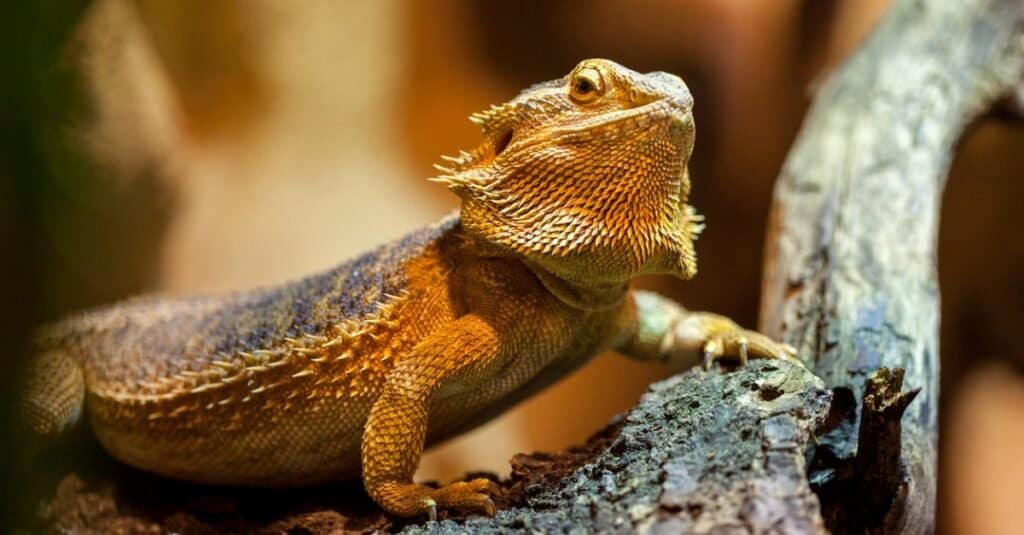
Some bearded dragons can grow up to 2 feet long.
©iStock.com/huettenhoelscher
- A bearded dragon can grow to be 2 feet long.
- Some bearded dragons go into a type of hibernation in cold weather.
- Bearded dragons live in woodlands, deserts, and savannas.
- These reptiles lie on rocks to sun themselves and raise their body temperature.
Evolution and Origins
Bearded dragons are a type of lizard whose lineage diverged from the archosaur line — the branch that would eventually lead to the dinosaurs and birds — around 250 million years ago, with reptiles themselves having originated even earlier, approximately 300 million years ago.
In fact, one ancestor, Pogona barbata, had a lot of yellow pigment in its mouth, so any Pogona today with the same characteristic has at least some P. barbata bloodline.
These days, bearded dragons are found in many deserts and other dry climates in Australia.
Classification and Scientific Name
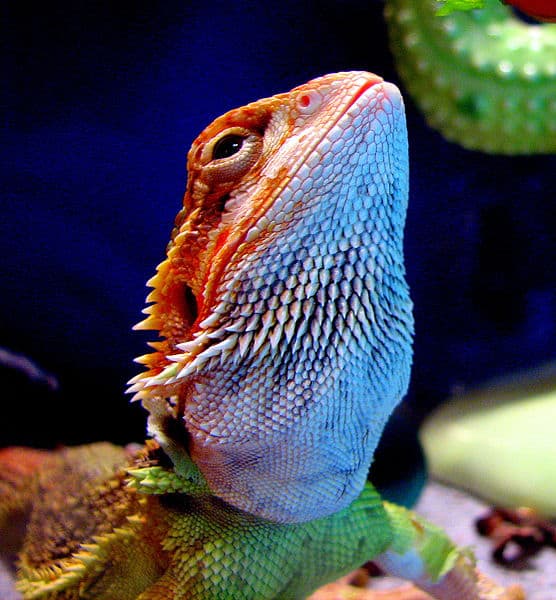
The bearded dragon’s scientific name is Pogona vitticeps.
©Jan Tik / Creative Commons – Original
The bearded dragon belongs to the Agamidae family, and its classification is Reptilia. There are 8 to 9 species of bearded dragon. All of them are found in Australia. The genus name of this animal comes from the Greek words Pogona (Pogon), meaning beard.
Species of bearded dragon include:
Central Bearded Dragon (Pogona vitticeps): The most popular pet species, known for its gentle nature and size.
Eastern Bearded Dragon (Pogona barbata): A larger species found across eastern Australian forests and woodlands.
Rankin’s Dragon / Lawson’s Dragon (Pogona henrylawsoni): A smaller, black-soil-dwelling dragon gaining traction in the pet trade.
Western Bearded Dragon (Pogona minor): Includes subspecies like the Dwarf (minor), Abrolhos Dwarf (minima), and Mitchell’s (mitchelli) bearded dragons.
Kimberley Bearded Dragon (Pogona microlepidota): A slender, small-scaled lizard from the northern savannas.
Nullarbor Bearded Dragon (Pogona nullarbor): Found in the dry shrublands and grasslands of South and Western Australia.
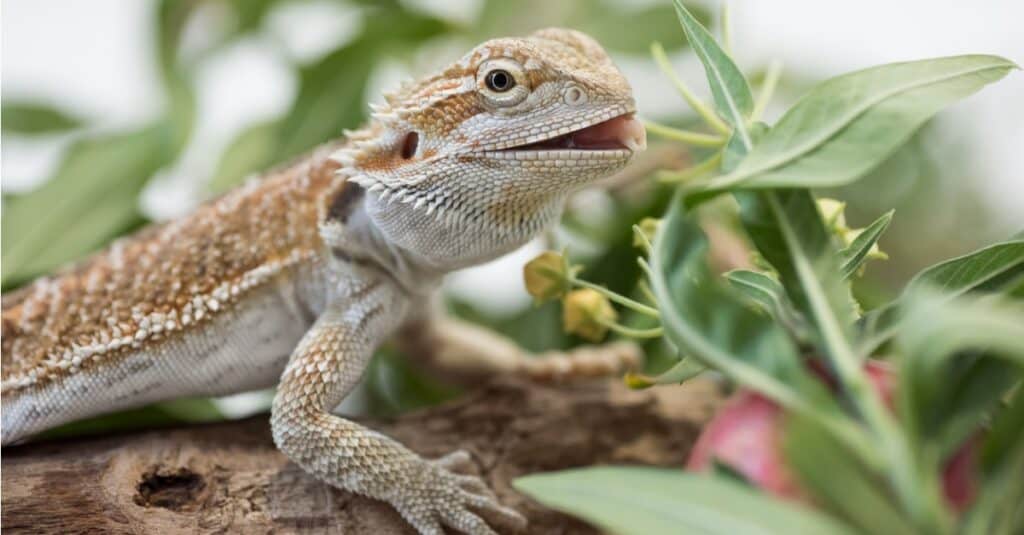
The central bearded dragon.
©iStock.com/JeannetteKatzir
Appearance and Behavior
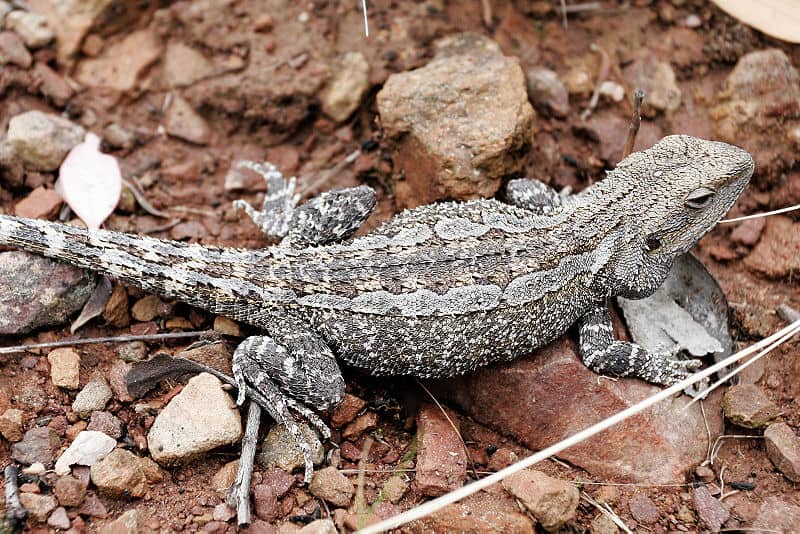
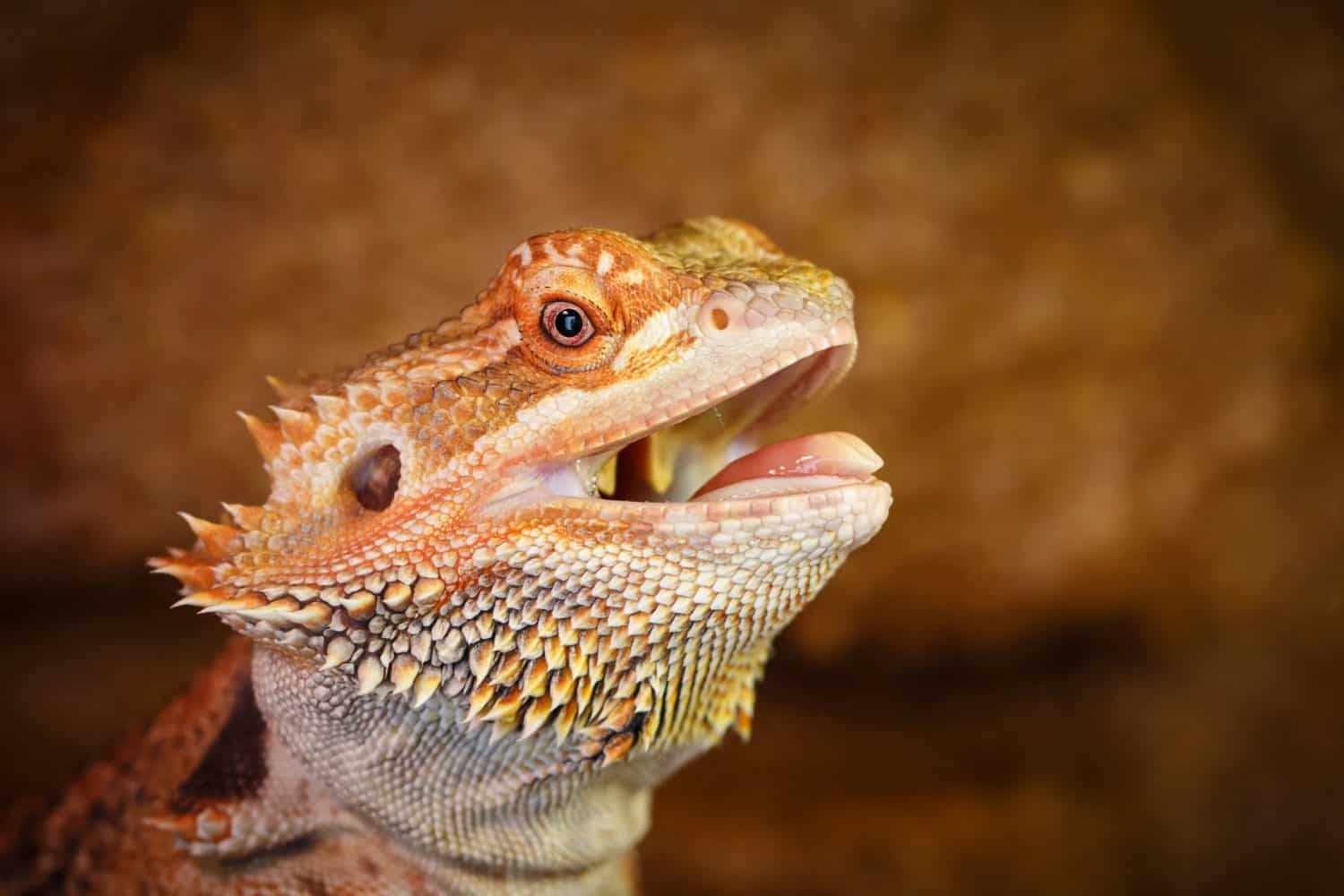
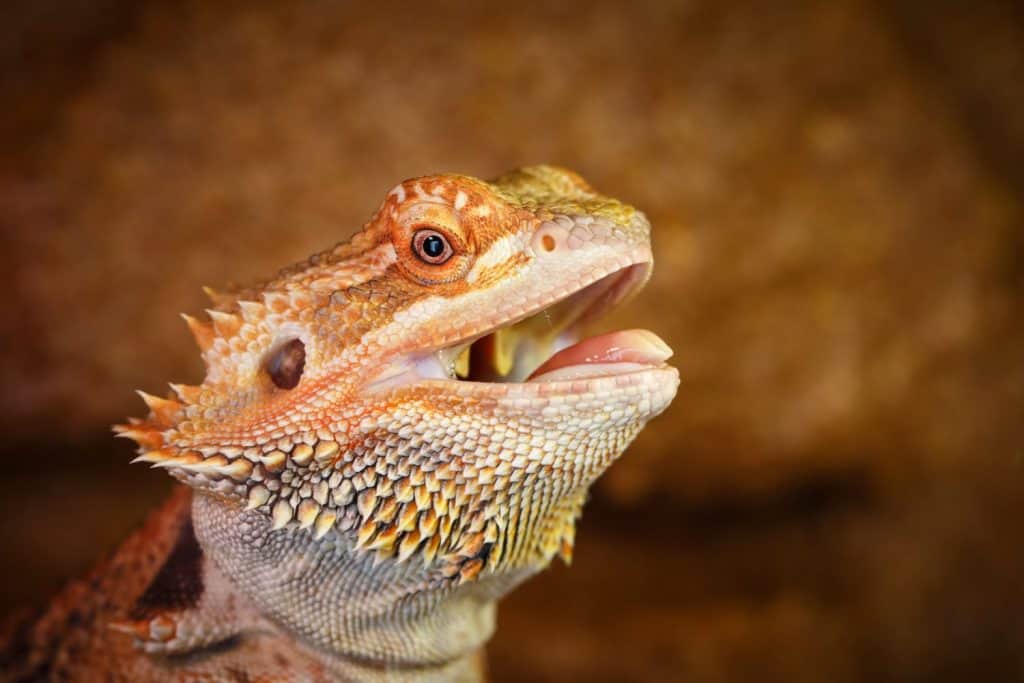
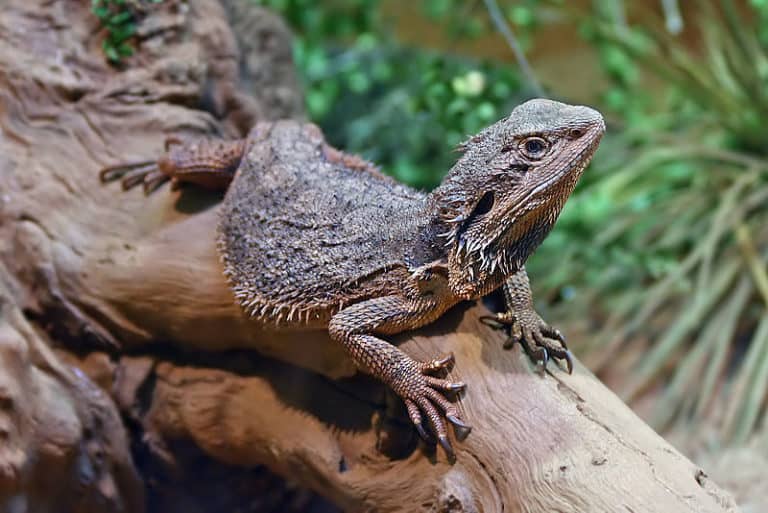
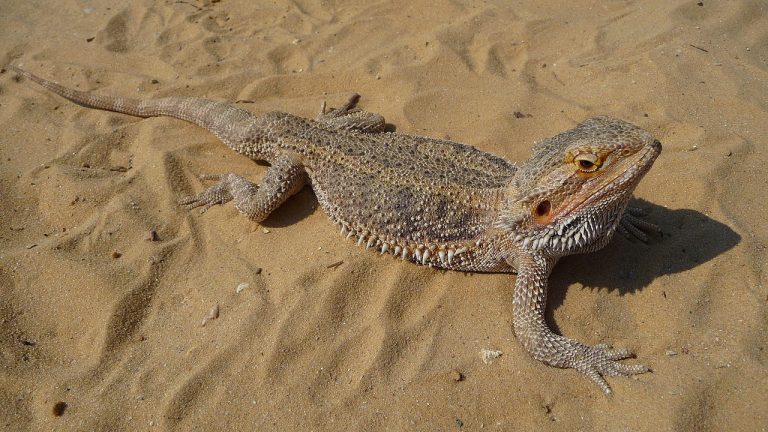
Bearded dragons have ear holes on the sides of their triangular head.
©Fir0002/Flagstaffotos / Creative Commons – Original
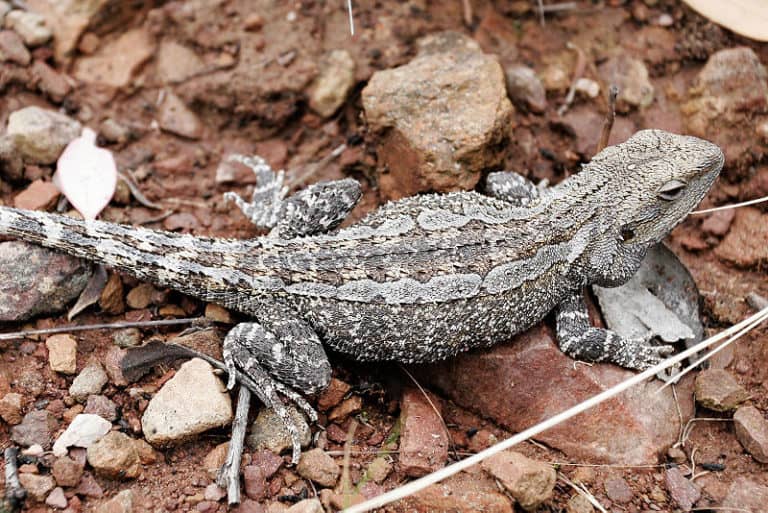
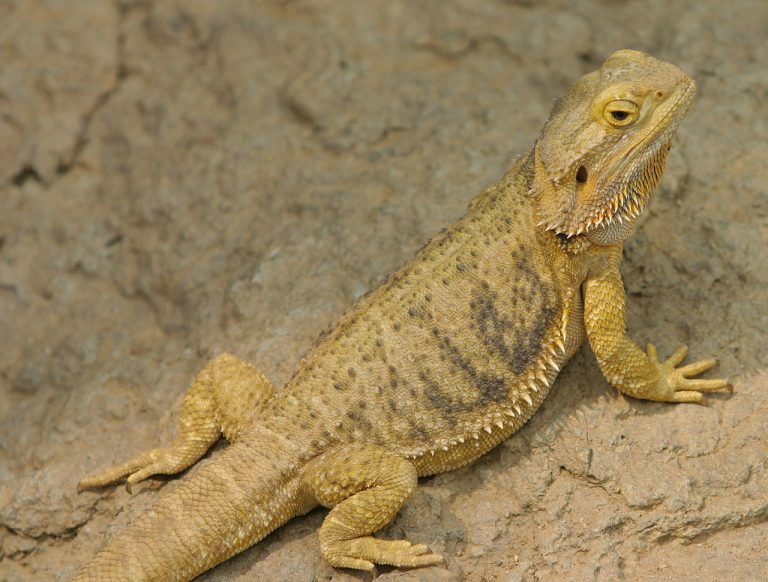
A bearded dragon has yellowish, tan skin. It has a long body with a tail measuring more than half of its total length. A bearded dragon can measure up to 2 feet in length, including its tail. An adult bearded dragon can weigh up to 700 grams (roughly 24 ounces). For perspective, a bearded dragon weighs about as much as one and a half cans of soup.
This reptile has spines under its chin and along the sides of its body. Also, it has ear holes on the sides of its triangular head. A bearded dragon has four sturdy legs and sharp claws that help it to climb trees.
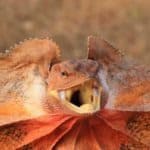
A bearded dragon protects itself from predators by changing color and blending into its environment. Plus, its scales and spiny skin help to protect it when a predator like a snake or a hawk tries to grab it. When this animal feels threatened, it puffs up its spiny beard and opens its mouth to make itself appear larger to enemies.
Bearded dragons are shy, solitary animals except during mating season. They can be aggressive only when they feel their territory is being threatened. Also, males can be aggressive while choosing a mate.
The spiny beard of a bearded dragon helps it to communicate in many ways. When this reptile changes the color of its beard and quickly bobs its head, it is trying to show dominance over another male. When a bearded dragon bobs its head slowly and raises one of its legs, it is showing that it’s not a threat to another dragon in the area.
Habitat
Bearded dragons live across the continent of Australia. They live in arid and subtropical environments, including savannas, woodlands, and deserts. Lots of bearded dragons climb into trees and sit on branches to sun themselves.
Being up so high allows them to be on the lookout for predators in the area. Plus, they can change skin color, blending in with the branch they’re sitting on. Other bearded dragons sun themselves on rocks. If this reptile sees a predator while sunning itself on a rock, it scurries into a crack between rocks to hide underground.
When the cold weather season starts in the autumn, bearded dragons go into a type of hibernation called brumation. While in brumation, this reptile is not completely asleep like a bear would be. The difference is that it doesn’t eat during this period but drinks water to stay hydrated.
Diet
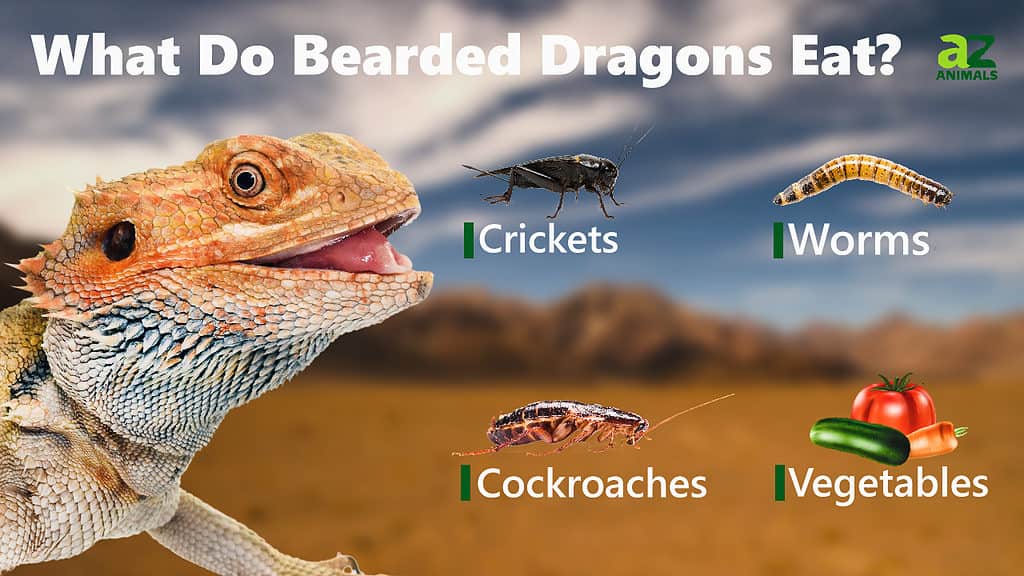
Bearded dragons are omnivores. They are not picky about their diet. They eat insects such as cockroaches, crickets, and locusts. In addition, they will snack on flowers, fruit, and leaves. Some bearded dragons eat lizards and small rodents such as mice.
These reptiles eat about once a day. If an adult bearded dragon is hunting crickets, it may eat 2 or 3 large ones. A baby bearded dragon that is growing quickly is likely to eat more than an adult reptile.
Fireflies and other insects that glow in the dark are poisonous to bearded dragons. The chemical in a firefly’s body that makes it glow is harmful to a bearded dragon. Although bearded dragons do eat fruit, avocados are poisonous to them.
Predators and Threats
Snakes, birds, dingoes, goannas, and crocodiles are all predators of a bearded dragon. An owl may fly down to a branch to grab a bearded dragon that’s sunning itself. Or, a dingo may capture a bearded dragon that’s lying on a rock to get some sun in the afternoon. Though a bearded dragon can run up to 9 miles an hour, it isn’t as fast as some of its predators.
The habitat of bearded dragons is threatened. When trees are cut down or land is cleared, bearded dragons have no place to live. Also, some bearded dragons are caught and sold as exotic pets in other countries. This reduces the population in the wild. Fortunately, there are preserves in Australia where bearded dragons are cared for and protected from both of these threats. Their official conservation status is Least Concern.
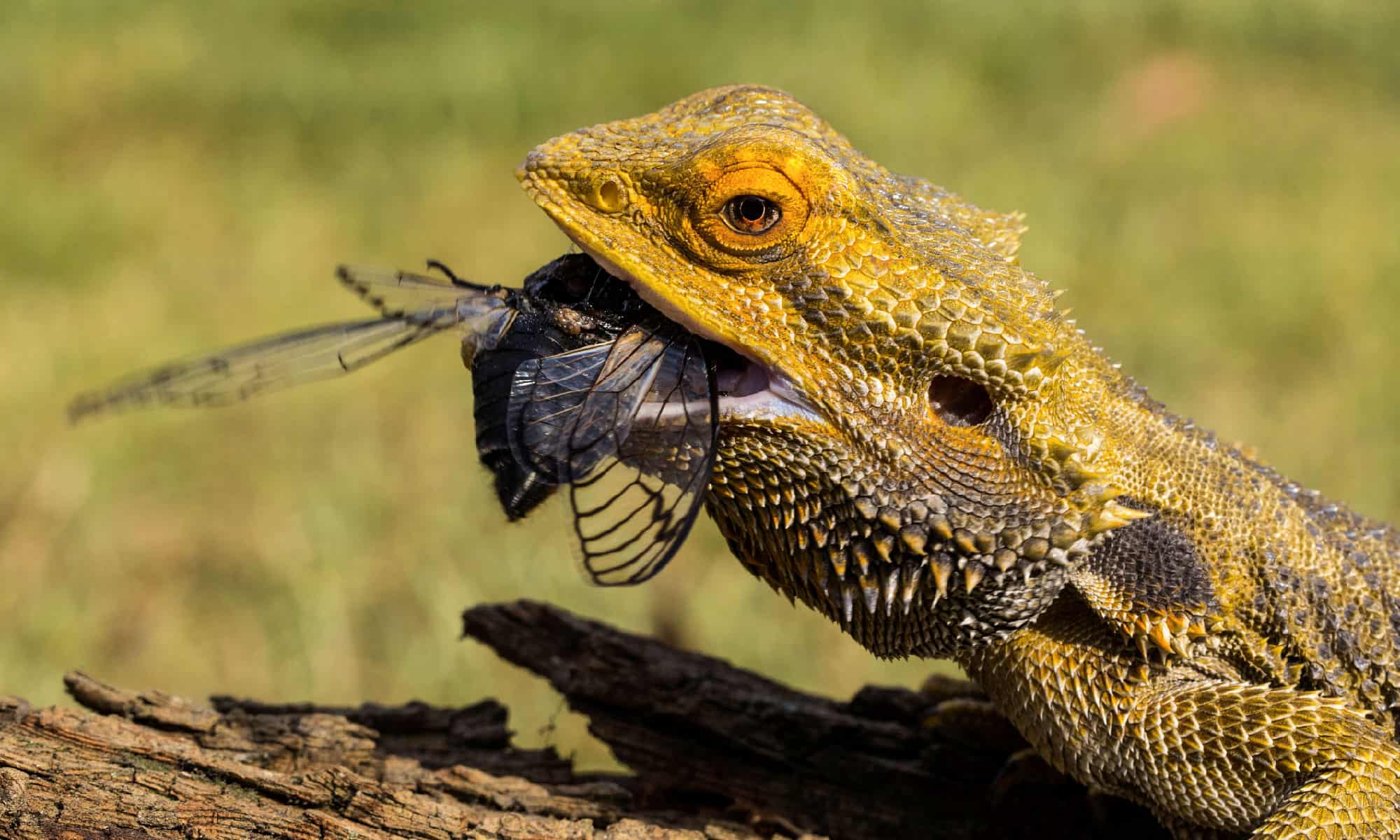
A bearded dragon feasting on a cicada.
©iStock.com/Ken Griffiths
Reproduction, Babies, and Lifespan
Bearded dragons mate in the spring and summertime. During mating season, a male bearded dragon bobs its head and stamps its feet to attract a female.
A female can lay from 11 to 30 eggs at a time. After mating with one male, a female may lay two or three different groups of eggs, each of which numbers 11 to 30. A female bearded dragon may lay 9 groups or clutches of eggs in one year. The gestation period of this reptile is 55 to 75 days. This is a lot shorter than an iguana’s, which is 90 to 120 days.
The sex of a bearded dragon can change while it is incubating: a developing male can become a female if the incubation temperature is especially high.
It takes about three days for a baby bearded dragon to break out of its egg. Its birth weight is around one ounce, and it’ll be about 3 to 4 inches long. A baby bearded dragon that is 4 inches in length is just a little longer than a crayon.
Baby bearded dragons are sometimes called hatchlings. Once a female bearded dragon lays her eggs, she doesn’t see them again. They are on their own immediately after they hatch.
Bearded dragons live for about 15 years, though pet bearded dragons may live a little longer due to reduced predator threats. These reptiles are sometimes vulnerable to respiratory infections and parasites, but otherwise live healthy lives if they take in enough nutrition. The oldest bearded dragon is listed in the Guinness Book of World Records. This bearded dragon named Sebastian lived to be 18 years old. He died in 2016 in England.
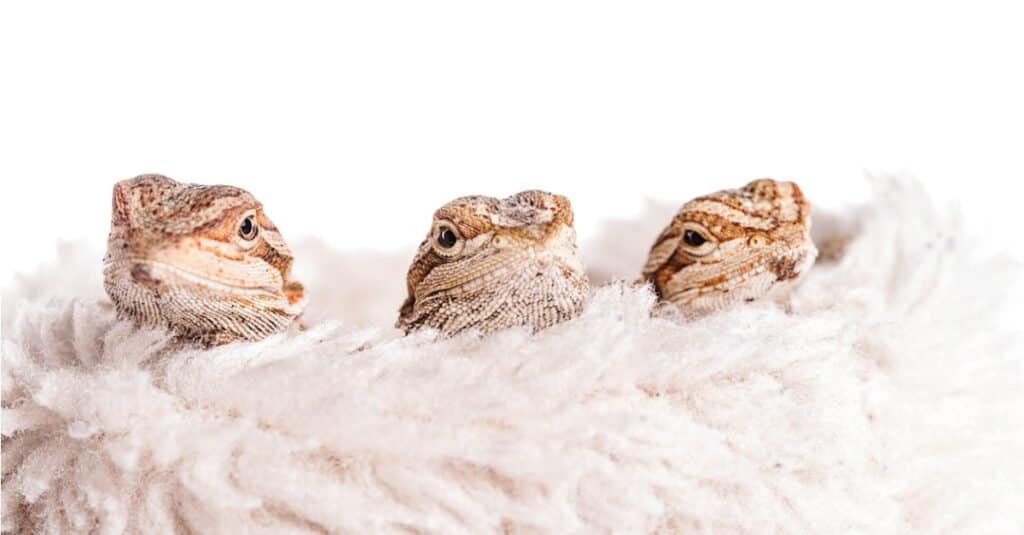
Baby bearded dragons.
©iStock.com/Kaan Sezer
Male vs. Female
There are several key differences between male and female bearded dragons. Males are typically about 20% larger in terms of weight. Most importantly, male bearded dragons will have two hemipenal bulges. That is where the sex organs of male bearded dragons are kept. In females, there will be a single bulge that’s centered on their bodies.
Population
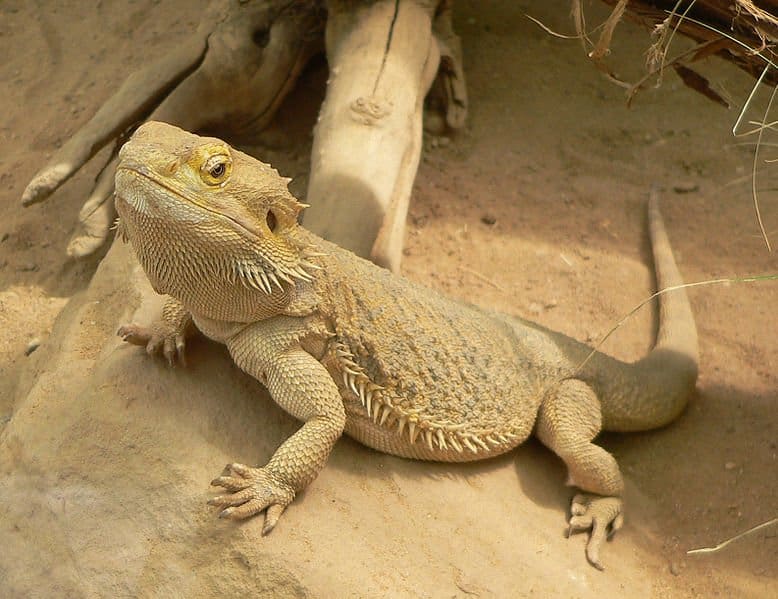
The official conservation status of the bearded dragon is Least Concern.
©Frank C. Müller, Baden-Baden, CC BY-SA 2.5, via Wikimedia Commons – Original / License
The official conservation status of the bearded dragon is Least Concern. The population of these reptiles remains steady in Australia. Plus, over 900 bearded dragons are living in zoos throughout the world. There are laws in Australia protecting bearded dragons from poachers who capture them and try to ship them out of the country. Today, many bearded dragons are bred outside of Australia.
Bearded Dragon as a Pet
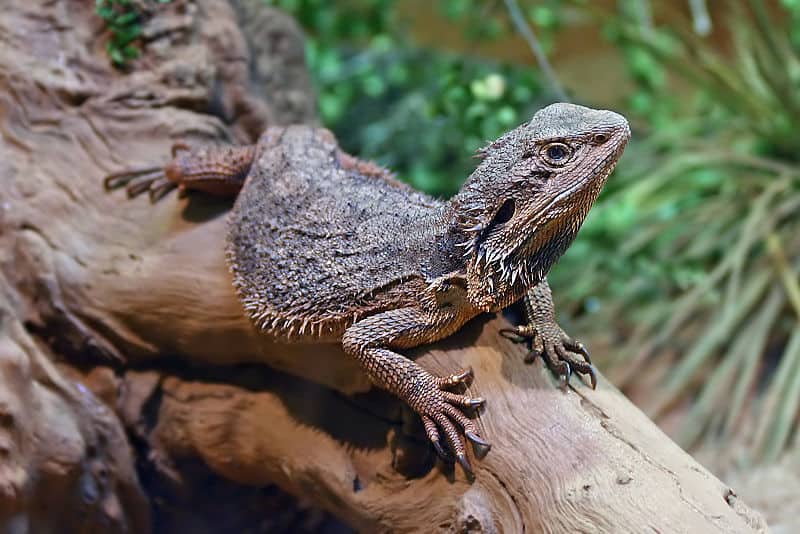
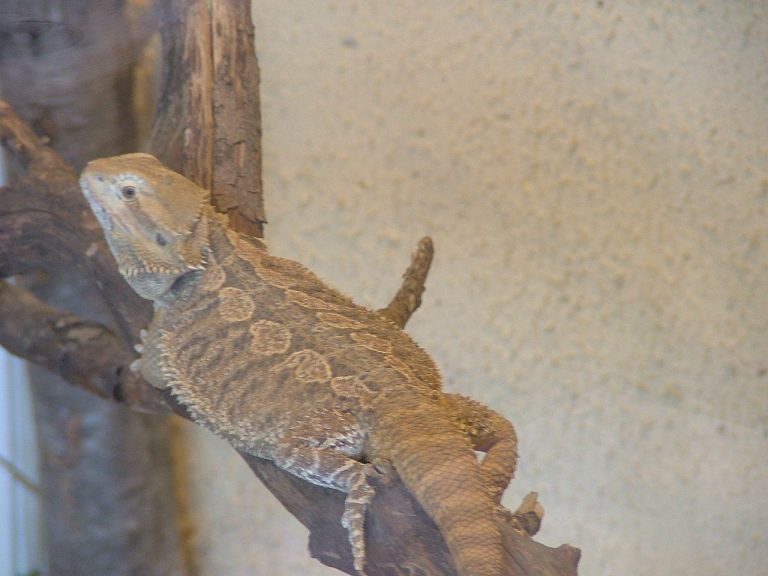
A pet bearded dragon makes a great family addition.
©John O'Neill / Creative Commons – Original
Bearded dragons are one of the more popular choices for pet lizards. In captivity, they generally grow up to 24″ long and live 10 years on average. When young, they eat an even mix of plants and insects, and as they mature, their diet goes heavily plant-based, with only about 10% insects.
A terrarium of at least 40 gallons is needed to create a good habitat for your pet; factors to consider include: heating, substrate, lighting, humidity, temperature, and decor.
Bearded dragon Pictures
View all of our Bearded dragon pictures in the gallery.

How to say Bearded dragon in ...
Sources
- David Burnie, Dorling Kindersley Animal, The Definitive Visual Guide To The World's Wildlife / Accessed November 25, 2008
- Tom Jackson, Lorenz Books The World Encyclopedia Of Animals / Accessed November 25, 2008
- David Burnie, Kingfisher The Kingfisher Animal Encyclopedia / Accessed November 25, 2008
- Richard Mackay, University of California Press The Atlas Of Endangered Species / Accessed November 25, 2008
- David Burnie, Dorling Kindersley Illustrated Encyclopedia Of Animals / Accessed November 25, 2008
- Dorling Kindersley Dorling Kindersley Encyclopedia Of Animals / Accessed November 25, 2008