









Quick Take
- Owners must prepare for a growth phase that lasts up to 2.5 years to reach 90 pounds.
- A Von Willebrand’s protein deficiency creates a specific technical risk during clotting events for this breed.
- Surprisingly, Mini and Tiny variations require significantly more daily activity than Standard-sized dogs.
- The 2003 breeding event was specifically triggered to overcome the short lifespan of purebred companion dogs.
Bernedoodles were bred to be companion dogs. They have one Poodle (or Miniature/Toy Poodle) parent and one Bernese Mountain Dog parent. The mix of traits from their Poodle and Bernese Mountain dog genes gives these dogs a very playful, loving, and gentle personality. They are also very intelligent and love being given a job to do.
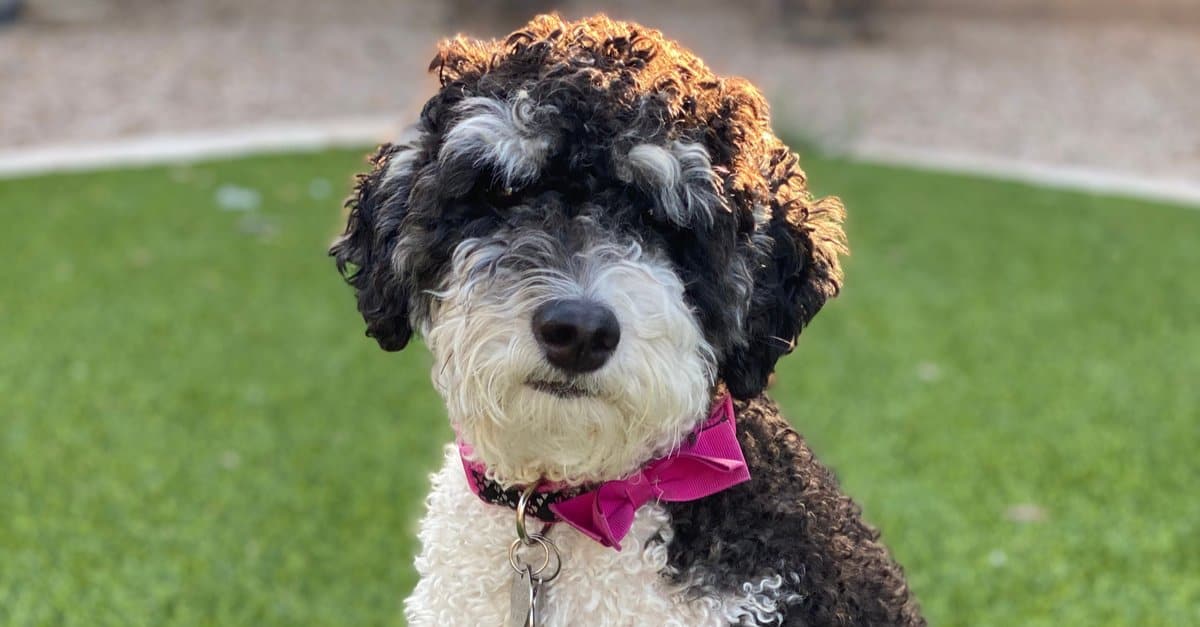
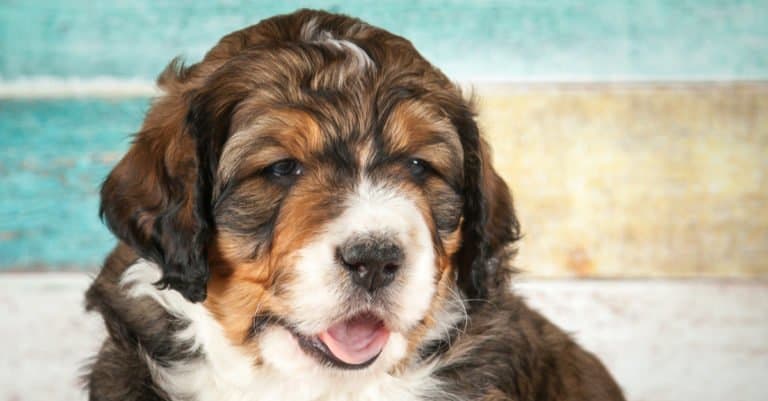
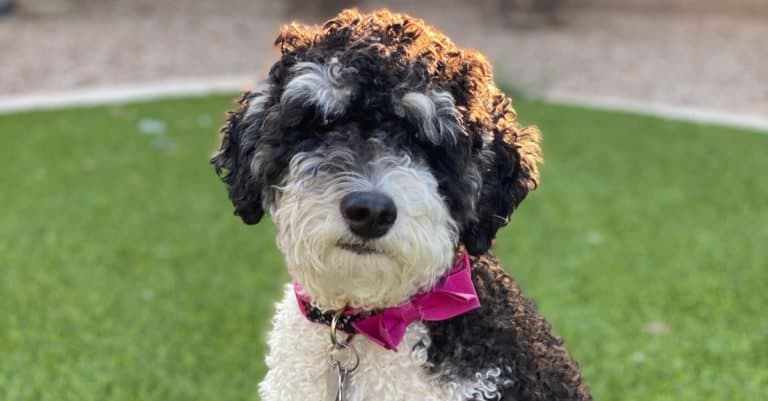
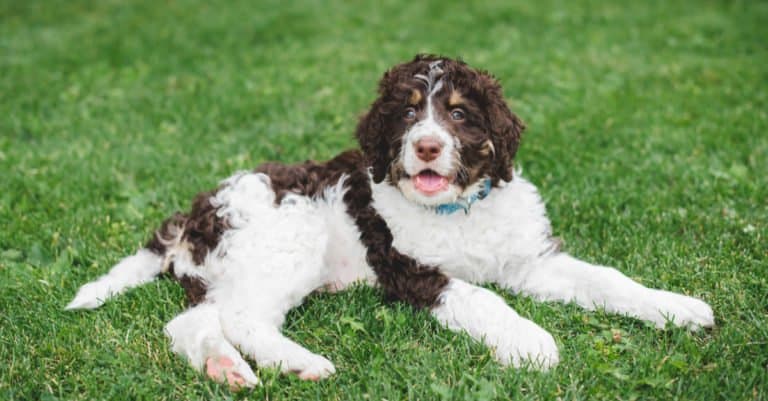
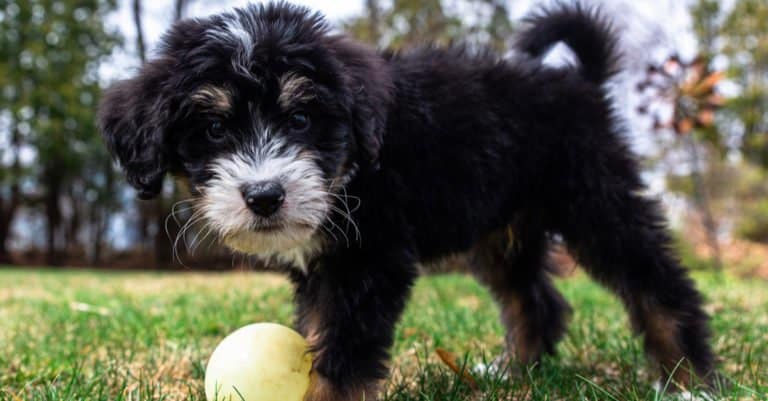
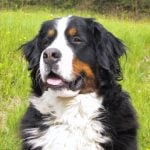
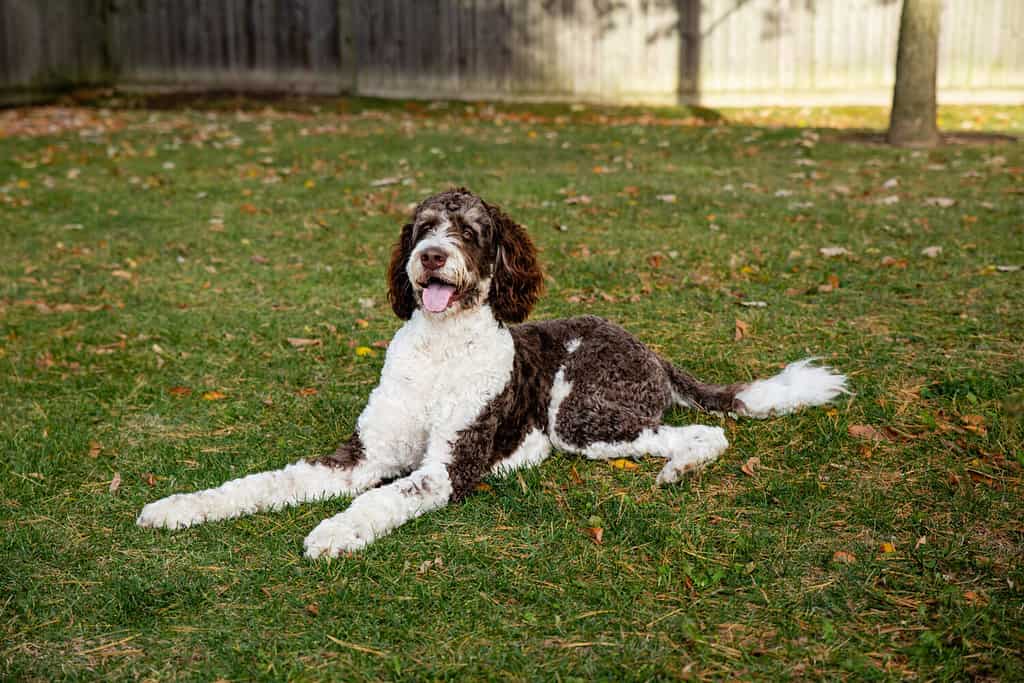
Also known as the Bernese Mountain Poo, this breed’s appearance may vary depending on the genes it inherits. The breed can weigh up to 90 pounds or more when full-grown. They may be black and white, black and brown, straight black, or tri-color (black, white, and brown). Most Bernedoodles have a wavy coat, though some may also have a straight or curly coat.
In general, Bernedoodles are hypoallergenic dogs because they shed minimally to none at all. Those with straighter coats may shed more, however, and are not an optimal choice for allergy sufferers.

3 Pros and Cons of Owning a Bernedoodle
| Pros | Cons |
|---|---|
| Hypoallergenic: Most shed minimally or don’t shed at all, making them a good fit for allergy sufferers. | Variability: As a mixed-breed dog, their temperament and final appearance are more challenging to predict than those of a purebred. |
| Excellent Family Pet: They are loving, gentle, and playful with children. They can make a great family dog. | Can be stubborn: Some dogs inherit stubbornness from their Bernese Mountain Dog parent. Dogs with this trait will be more challenging to train. |
| Easy to Train: They are intelligent, and most are relatively easy to train. | Doesn’t like being alone: They were bred to be companion dogs and do not do well when they are left alone. They may become destructive. |

A Bernedoodle makes a great family dog. They are gentle and loving with children and can also be a fun playmate.
©Maria Bell/Shutterstock.com
Evolution and Origins
The Bernedoodle was first bred in 2003 to create a dog with a similar temperament to the Bernese Mountain Dog that would have a longer lifespan.
They have one Poodle (or Miniature/Toy Poodle) parent and one Bernese Mountain Dog parent. They come in three size ranges based on the exact mix of breeds used: Standard Bernedoodle (Standard Poodle and Bernese Mountain Dog parents), Miniature Bernedoodle (Miniature Poodle and Bernese Mountain Dog parents), and Tiny Bernedoodle (Toy Poodle and Miniature Bernedoodle parents).
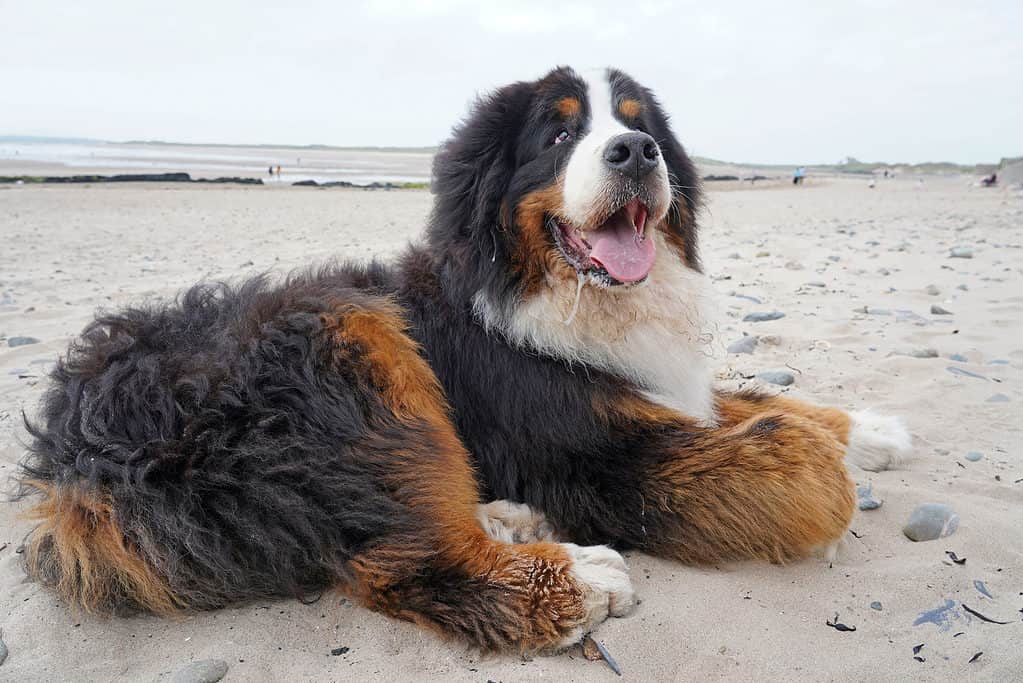
Bernedoodles were bred to create a dog with a similar temperament to the Bernese Mountain Dog.
©iStock.com/Kriste Sorokaite
Size and Weight
The size of a Bernedoodle can vary. Varieties with a Standard Poodle parent and a Bernese Mountain Dog parent will be the largest. Males and females of this mix typically weigh between 50 and 90 pounds and are up to 29 inches tall.
Some dogs have a Miniature Poodle as a parent, instead of a Standard Poodle. Dogs with this mix of genes weigh between 25 and 29 pounds and are up to 22 inches tall.
Finally, Tiny Bernedoodles have one parent that is a Toy Poodle and one that is a Mini Bernedoodle. Dogs with this mix are the smallest and only weigh between 10 and 24 pounds and are between 12 and 17 inches tall.
The exact mix of genes will determine the age at which Bernedoodles will be full-grown. Most Bernedoodles won’t reach their full height potential until they are older than 12 months and could continue gaining weight until they are up to 2.5 years old.
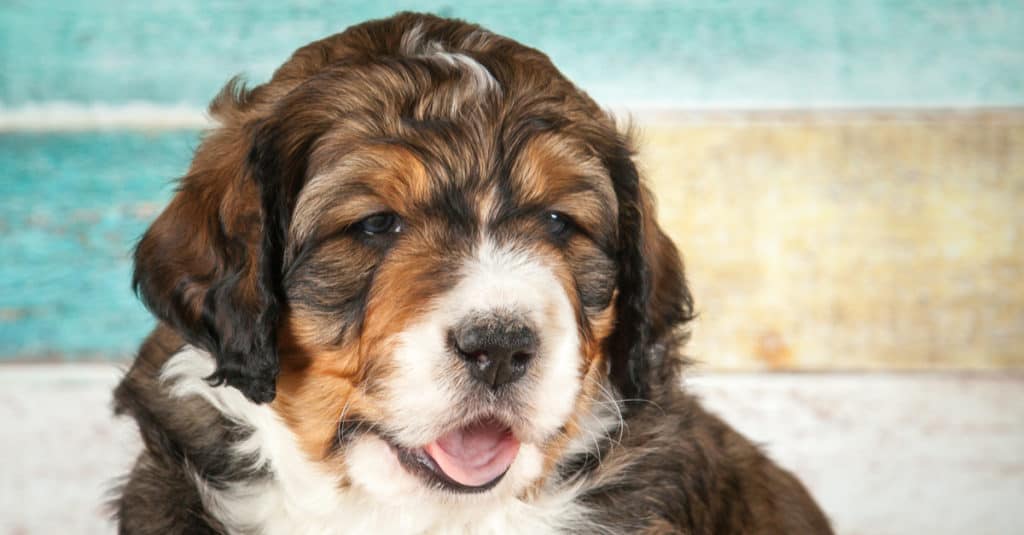
The exact mix of genes will determine the age at which Bernedoodles will be full-grown.
©Philip Steury Photography/Shutterstock.com
Common Health Issues
As a mixed breed, Bernedoodles are healthier than many purebred dogs. However, there are still a few potential health concerns you’ll want to be aware of so you can know if you should bring your dog to the vet.
One potential concern, particularly for Standard Bernedoodles, is bloat. Bloat is a condition where the stomach swells with food or gas. It is a life-threatening condition, and you’ll want to seek immediate attention if you suspect your dog is suffering from bloat. Slowing down the pace at which your dog eats, feeding them smaller meals, and limiting activity following a meal can reduce the chances of bloat.
Another potential health issue for this breed is hip dysplasia. Hip dysplasia is a condition where the hip bone doesn’t form properly and the bones at the joint rub against one another, causing pain and discomfort. Dogs may need surgery if they develop hip dysplasia.
Von Willebrand’s disease is an inherited bleeding disorder. Dogs that have this disease have a deficiency in the protein that is needed for the platelets to clot broken blood vessels. Your veterinarian can perform a screening test and recommend any necessary treatments.
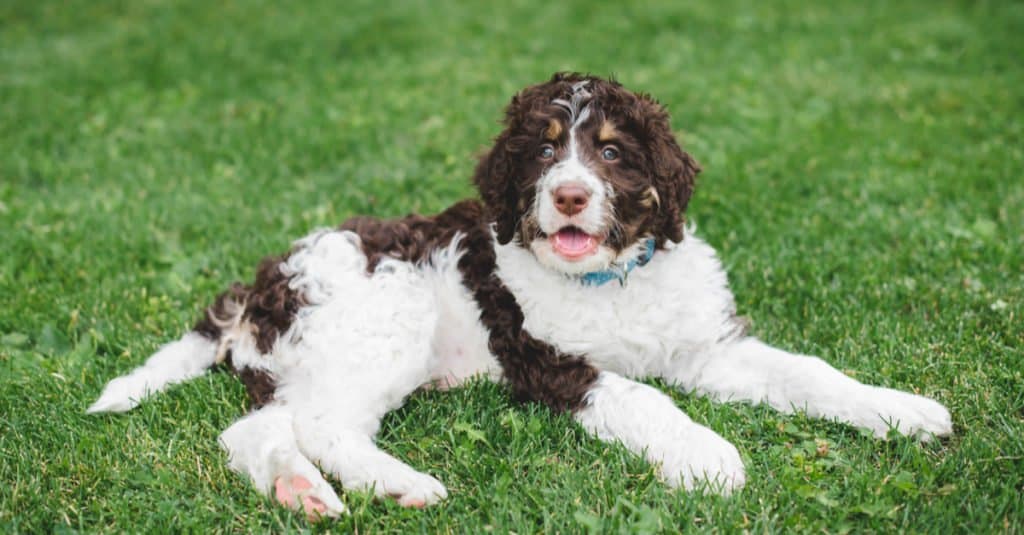
Potential health issues for Bernedoodles include bloat and hip dysplasia.
©Cavan-Images/Shutterstock.com
Temperament and Behavior
While the exact personality of this variety will vary based on the specific mix of genes it inherits from its Poodle and Bernese Mountain Dog parents, in general, this breed is loyal, hardworking, and intelligent. They may also display some goofy behaviors from time to time. Bernedoodles can also be very playful.
A Bernedoodle’s traits make this breed a great family dog. They are gentle and loving with children and can also be a fun playmate. The breed is often selected as a therapy dog because of their friendly personality and the fact that it enjoys being given a job.
However, this breed was designed to be a companion dog, and they definitely do better when they are in the company of their family. Bernedoodles do not like being left alone and may become destructive if left for too long.

Bernedoodles are very intelligent and love being given a job to do.
©Maria Bell/Shutterstock.com
How to Take Care of a Bernedoodle
The Bernedoodle has its own set of needs that make caring for it unique from other breeds. As you plan to care for your pet, consider the breed’s temperament, nutritional needs, activity needs, and potential health concerns. However, it is also important to note that every animal is different, so you may need to make adjustments to your plan as you learn more about your dog’s specific needs.
The Best Dog Food
Always select high-quality food for your pet. Since this breed can vary quite a bit in size based on whether the dog is a Standard, Mini, or Tiny Bernedoodle, you may need either a large-breed formula (Standard) or a small-breed formula (Mini and Tiny). The exact serving of food that is appropriate for your dog will also vary based on their exact size, age, weight, health needs, metabolism, and other factors. Most dog foods list a serving size suggestion on the bag for different weights, and you can also check with your veterinarian for more tailored advice for your pup.
Standard Bernedoodles may be prone to bloat, which is when the stomach fills with air and twists to trap it there. This is a life-threatening concern, and while the exact cause is not known, there is an association between eating large meals and engaging in vigorous exercise. For this reason, you’ll want to split the daily recommended food amount into two smaller servings for Standard Bernedoodles and consider using paced feeder bowls or food puzzles. Mini and Tiny Bernedoodles may also do best when offered two meals each day.
Puppies have a smaller stomach than full-grown adults. They will need to eat between three and four smaller meals each day until they are at least six months old.
Maintenance and Grooming
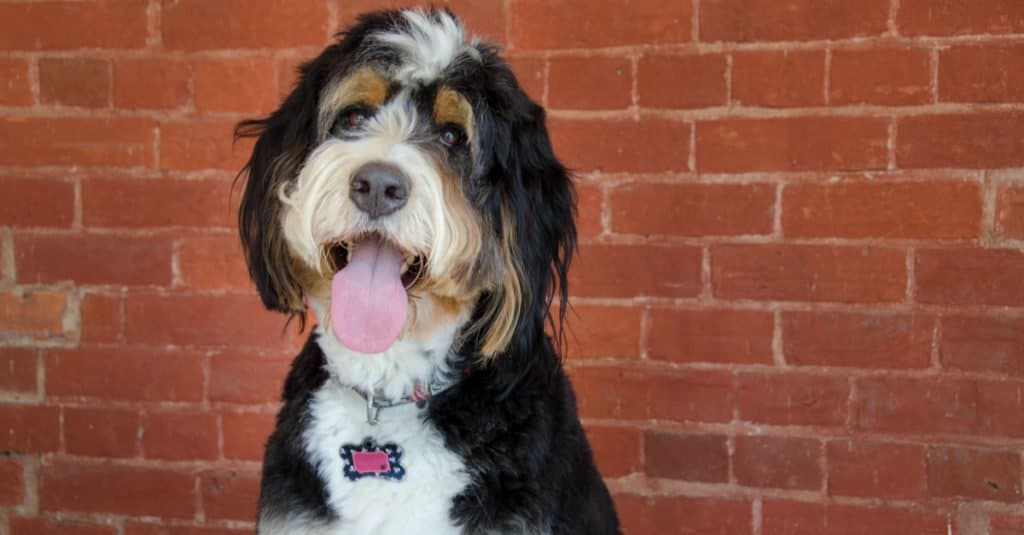
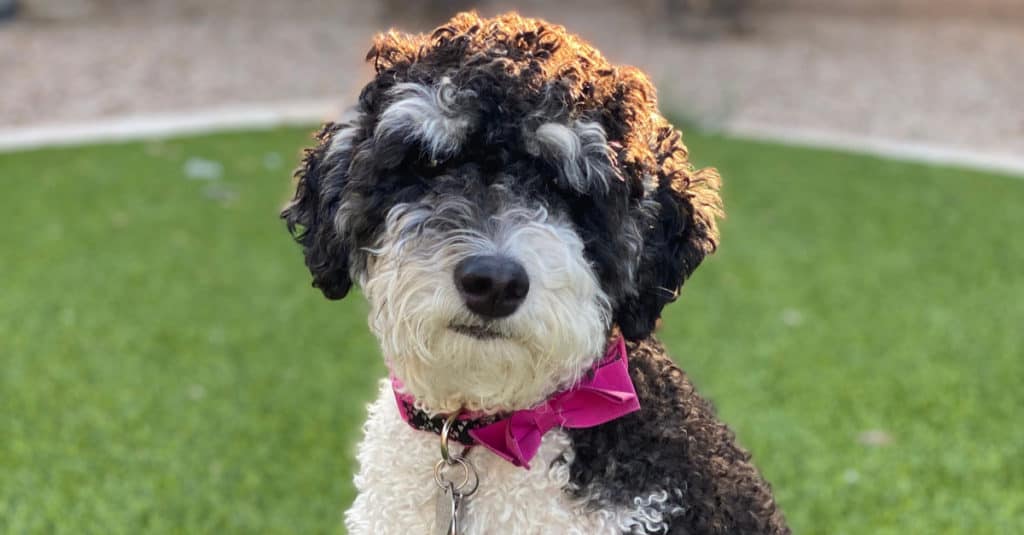
Bernedoodles are hypoallergenic dogs because they shed minimally to none at all.
©Maria Bell/Shutterstock.com
The maintenance needed to keep a Bernedoodle’s coat looking its best can vary based on its specific coat type. Dogs with a curlier coat will need more regular brushing to keep their coat from becoming too matted, while Bernedoodles with wavier coats will need a bit less brushing. However, the curlier the coat on the variety, the less they will shed, which can be a positive for allergy sufferers.
A Bernedoodle’s teeth, nails, and ears will also need care. Brush your dog’s teeth a few times a week to prevent the buildup of plaque or tartar, trim their nails to keep them from getting too long, and keep their ears clean to protect against infections.
Training
In general, Bernedoodles are easy to train. Some are a bit more headstrong, like the Bernese Mountain Dog parent, and this seems even more true with the Mini and Tiny Bernedoodles. Training should start from a very early age for the best results. Bernedoodles are very intelligent and eager to please, which can help simplify the training process. Early socialization is also important, so your dog will begin to learn how to act around different people and in different situations.
Bernedoodles are eager to please, which can help simplify the training process.
©Cavan-Images/Shutterstock.com
Exercise
Bernedoodles need daily exercise; however, their exercise needs are not as demanding as those of some other breeds. Take your dog for a daily walk and fit in time to play with them indoors or outdoors each day. It is also important to note that Tiny and Mini Bernedoodles are more active than Standard Bernedoodles, so they may require a bit more activity.
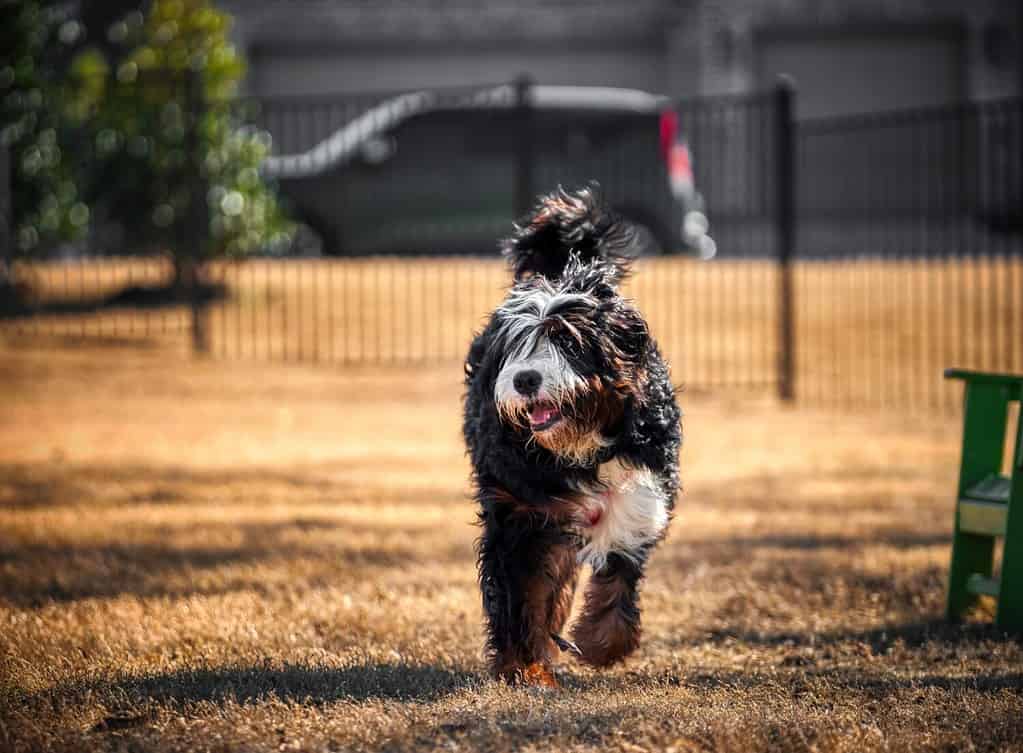
Take your Bernedoodle for a daily walk and fit in time to play with them indoors or outdoors daily.
©CobraNicole/Shutterstock.com
Bernedoodle Puppies
A puppy can be more stubborn than some other breeds. Many inherit this stubbornness from their Bernese Mountain Dog parent. Starting to train and socialize your dog as soon as you bring them home will be important to achieve ideal results. While puppies may be mischievous as they are younger, they will calm down some with age. Be prepared to be a bit more patient with your puppy than you might need to be with other breeds.
Your dog will need a safe space to relax and play. Before bringing home your new puppy, make sure your home is ready by removing anything that could be dangerous or that you wouldn’t want a pet to destroy. Also, make sure you purchase food, a crate, a dog bed, a leash and collar, toys, and other supplies your pup will need so they are all ready.
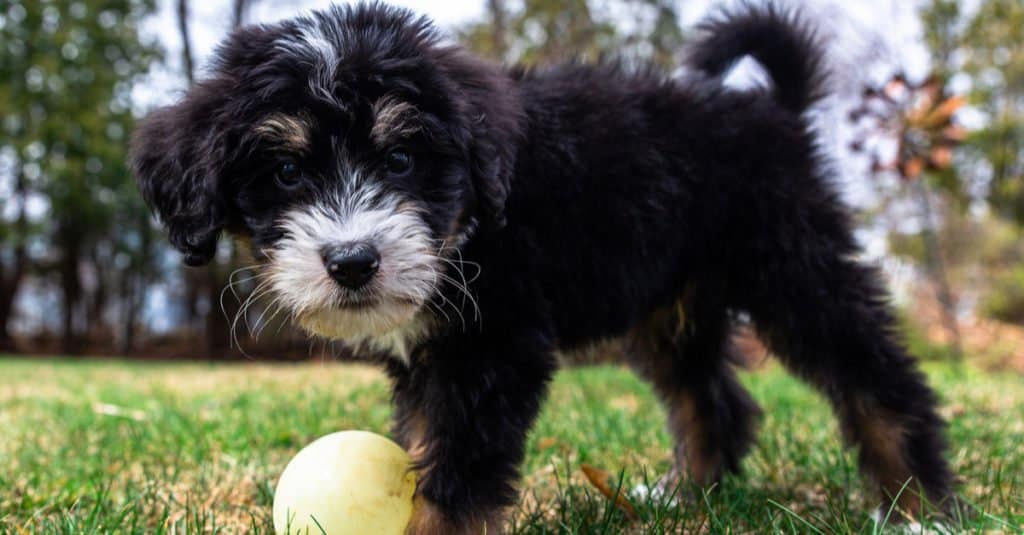
Bernedoodle puppies may inherit some stubbornness from their Bernese Mountain Dog parent.
©jcburke/Shutterstock.com
Bernedoodles and Children
Bernedoodles do very well with children. They are very loving, gentle, patient, and playful; the perfect mix to make an excellent companion and playmate for a child. Tiny and Mini Bernedoodles are smaller and could be injured more easily by an over-exuberant child, so take care to closely supervise children when they are playing with your dog or wait until the children in the house are a bit older to bring home a new pup. Even older children should still be supervised with a Bernedoodle, like any other dog breed, to prevent accidental injury to either the dog or the child.
Dogs Similar to Bernedoodle
Sheepadoodles, Maltipoos, and Havapoos are three breeds that are similar to Bernedoodles:
- Sheepadoodle: Sheepadoodles and Bernedoodles both have one parent that is a Poodle. They both share a high intelligence level and can be very calm and gentle with children. Sheepadoodles tend to have more energy and need more exercise than Bernedoodles. Sheepadoodles may also be a bit more likely to nip because of the herding genes passed down from their English Sheepdog parent.
- Maltipoo: Maltipoos are also half Poodle, like Bernedoodles. Maltipoos are small dogs weighing less than 20 pounds, while a Bernedoodle can weigh 80 pounds or more. Both breeds shed minimally to none at all. They are both also intelligent, affectionate, and social.
- Havapoo: Like Bernedoodles, Havapoos have one parent that is a Poodle. Havapoos and Bernedoodles can both be black, white, or brown, but Havapoos may also be tan or gray. Both breeds are hypoallergenic and do well with kids. Havapoos can weigh up to 23 pounds, while Bernedoodles can weigh 80 pounds or more, depending on their specific mix.
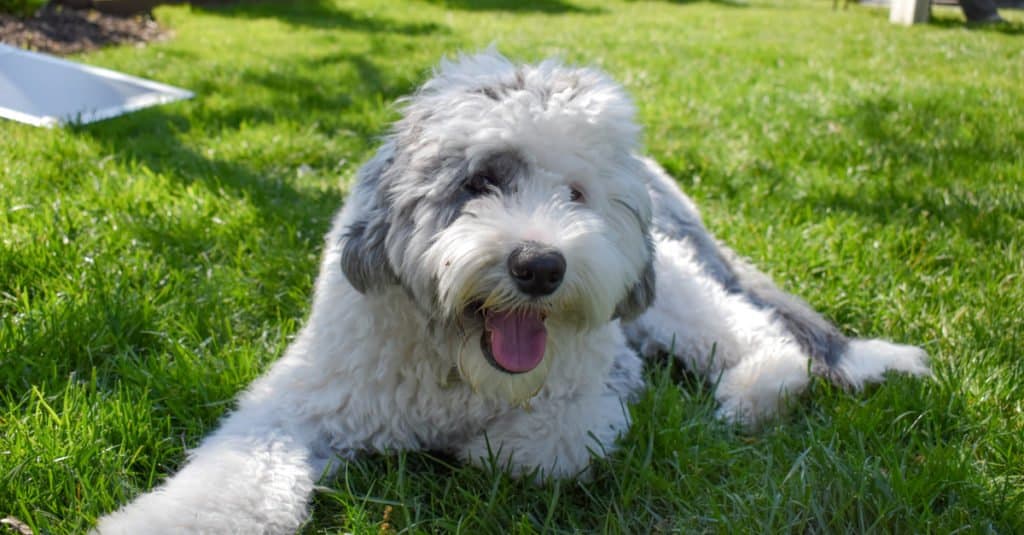
Sheepadoodles tend to be more energetic and need more exercise than Bernedoodles.
©Logan Swenson/Shutterstock.com
Famous Bernedoodles
Bernedoodles have a fun personality and a very cute appearance. There are a few ‘famous’ Bernedoodles on Instagram you can follow if you want to learn more about this breed.
- Hamilton is a brown and white Bernedoodle on Instagram.
- Timber is a tri-color Bernedoodle on Instagram.
- Andy is a black and white Bernedoodle on Instagram.
Bernedoodle Pictures
View all of our Bernedoodle pictures in the gallery.

Maria Bell/Shutterstock.com
Sources
- Dogtime / Accessed February 15, 2021
- Swingridge Kennels / Accessed February 15, 2021
- Great Pet Care / Accessed February 15, 2021
- Petguide / Accessed February 15, 2021
- Oodle Life / Accessed February 15, 2021
- Trending Breeds / Accessed February 15, 2021
- Petland Florida / Accessed February 15, 2021
- Labradoodle Home / Accessed February 15, 2021
- The Paws / Accessed February 15, 2021
- The Fresh Toast / Accessed February 15, 2021
- Crocket Doodles / Accessed February 15, 2021
- Dogell / Accessed February 15, 2021