

T
Species Profile

Teacup Poodle

Canis lupus familiaris

Big brain, tiny frame.
Eloine Chapman/Shutterstock.com

Teacup Poodle Distribution

Click a location to explore more animals from that region

Origin Location

This map shows the native origin of the Teacup Poodle. As a domesticated species, they are now found worldwide.

Loading map...

Size Comparison

Human 5'8"
Teacup Poodle 8 in

Teacup Poodle stands at 12% of average human height.

Teacup Poodle

At a Glance

Domesticated
Also Known As Teacup Poodle, Pocket Poodle, Toy Pooch, Micro Poodle
Diet Omnivore
Activity Diurnal+
Lifespan 5 years
Weight 2.5 lbs
Status Not Evaluated
Did You Know?

"Teacup" isn't an official breed or kennel-club size-it's an informal marketing term for very small Toy Poodles.

Scientific Classification

A very small domestic dog marketed as a “teacup” version of the Toy Poodle; “teacup” is not an official taxonomic or breed designation but a size descriptor within/to the margins of the Toy Poodle variety.

Kingdom
Animalia
Phylum
Chordata
Class
Mammalia
Order
Carnivora
Family
Canidae
Genus
Canis
Species
Canis lupus

Distinguishing Features

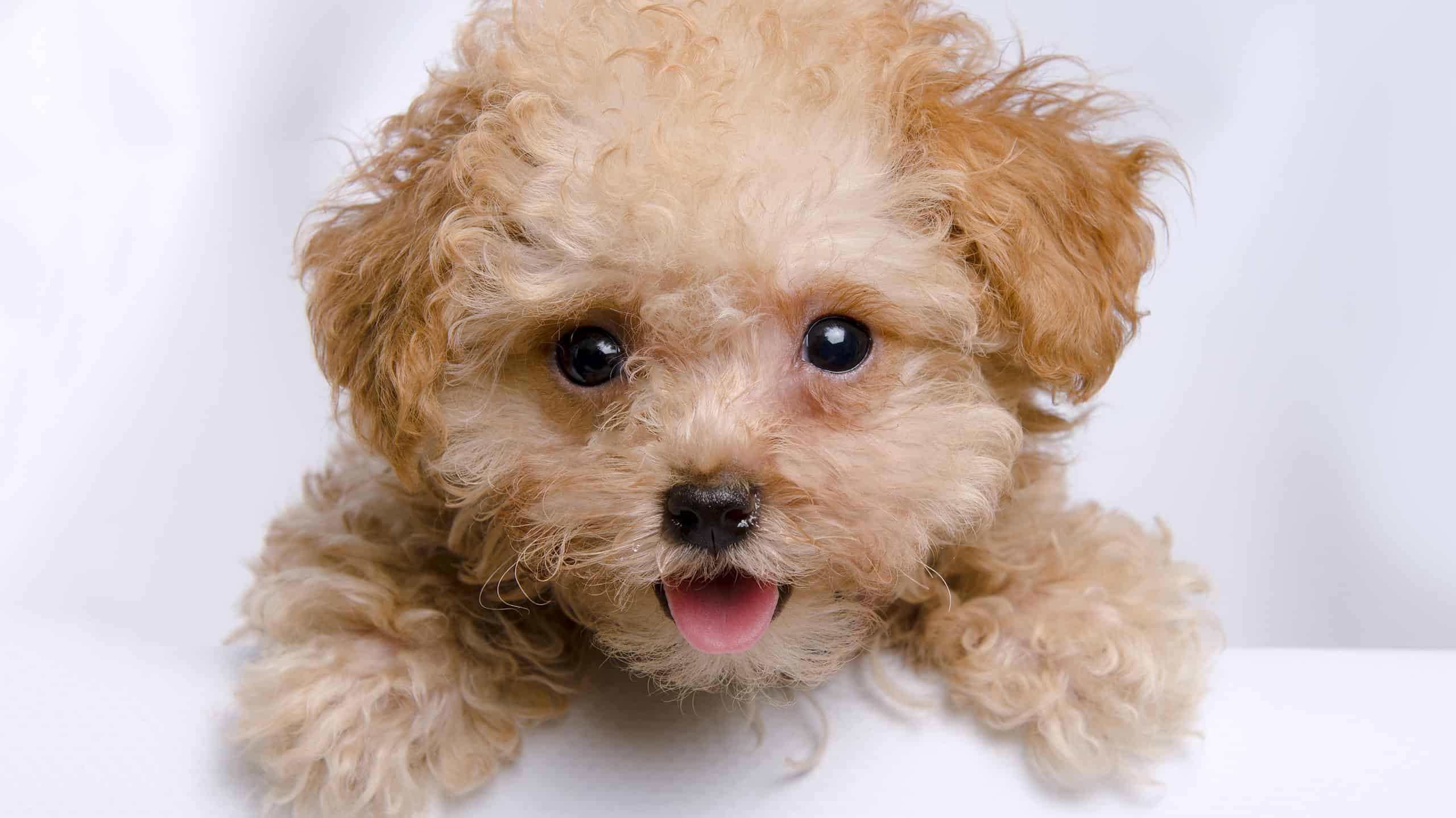
  • Curly, dense coat typical of Poodles
  • Very small body size relative to standard Toy Poodle ranges (term varies by seller)
  • Poodle-type head and muzzle; high intelligence and trainability typical of the breed

Physical Measurements

Males and females differ in size

Height
♂ 9 in (7 in – 10 in)
♀ 8 in (7 in – 9 in)
Length
♂ 1 ft 1 in (12 in – 1 ft 3 in)
♀ 1 ft 1 in (11 in – 1 ft 4 in)
Weight
♂ 5 lbs (3 lbs – 7 lbs)
♀ 5 lbs (3 lbs – 7 lbs)
Tail Length
♂ 4 in (3 in – 5 in)
♀ 4 in (3 in – 5 in)
Top Speed
15 mph
running

Appearance

Primary Colors
Secondary Colors
Skin Type Mammalian skin under a dense, continuously growing, low-shedding curly coat; can be sensitive and prone to dryness if over-bathed.
Distinctive Features
  • Domestic dog (Canis lupus familiaris) selectively bred from the base species for companionship, extreme small size, and trainability rather than wild survival traits.
  • "Teacup" describes very small Toy Poodles; it is not a recognized taxonomic or formal breed designation and may reflect breeding to the margins of size norms.
  • Compact, fine-boned frame with a relatively narrow muzzle, high-set ears, and alert, dark, oval eyes.
  • Single-layer, curly coat that grows continuously; requires routine clipping, brushing, and mat prevention.
  • Low-shedding coat can reduce environmental dander spread, but is not truly hypoallergenic for all people.
  • High intelligence and responsiveness; often energetic, people-focused, and sensitive to harsh handling.
  • Health concerns increased by very small size: hypoglycemia risk, fragile bones, and higher injury risk from falls or rough play.
  • Common small-dog issues: dental crowding/periodontal disease, patellar luxation, and possible tracheal irritation/collapse tendencies.
  • Breed-associated concerns to monitor: progressive retinal atrophy, cataracts, ear infections from hair in canals, and orthopedic issues.
  • Care requirements: frequent gentle grooming, regular ear cleaning, proactive dental care, and controlled exercise on safe surfaces.
  • Feeding/care: consistent meal schedule (especially in very small individuals), careful temperature protection, and avoidance of unsafe jumps or stairs.

Sexual Dimorphism

Sexual dimorphism is mild. Males are often slightly larger with a broader head and heavier bone, while females may appear finer-boned and lighter-framed; coat type and coloration are typically similar between sexes.

♂
  • Often slightly larger overall with marginally broader skull and chest.
  • May show more pronounced neck/shoulder musculature when fit.
  • Occasionally more territorial marking behavior (not an appearance trait).
♀
  • Often slightly finer bone and a narrower head profile.
  • May appear more lightly built through the chest and neck.
  • Body outline may look more delicate at very small ("teacup") sizes.

Did You Know?

"Teacup" isn't an official breed or kennel-club size-it's an informal marketing term for very small Toy Poodles.

All Poodles (Standard, Miniature, Toy) descend from water-retrieving dogs; the iconic clip began as a practical swimming trim.

Poodles are among the most trainable dog breeds, excelling at obedience, trick work, and scent games despite their small size.

That curly coat grows continuously like human hair, which is why routine grooming is a must.

Coat colors can change as a Toy Poodle matures (many lighten, especially apricot/red/graying lines).

Toy Poodles have a long history as performers-circuses and street acts favored their intelligence and biddability.

In many people with dog allergies, Poodles can be easier to live with, but no dog is truly hypoallergenic (dander/saliva matter).

Unique Adaptations

  • Continuously growing, curly coat: traps loose hair and sheds less into the environment, but mats easily without brushing.
  • Athletic, springy gait: compact build supports agile turning and jumping (yet jumps should be limited in extra-small dogs to protect joints).
  • High human-directed attention: selectively bred as companions/performers, they readily orient to people for guidance.
  • Efficient thermoregulation needs: very small bodies lose heat faster; sweaters/coats may be needed in cool weather.
  • Fine-boned "miniaturization margin": in "teacup"-marketed dogs, reduced body reserves make them less tolerant of fasting, dehydration, and trauma.

Interesting Behaviors

  • "Velcro dog" shadowing: tends to follow a favorite person room-to-room and seeks lap contact.
  • High frequency learning: quickly links cues to outcomes; can invent attention-getting behaviors if bored.
  • Alert barking: small size + keen hearing often produces watchdog-style vocalizing at doorbells/novel sounds.
  • Play-hunt patterns: pounces, quick spins, and toy "retrieves" echo the breed's retrieving ancestry.
  • Sensitivity to handling: many very small individuals startle more easily; gentle, predictable interactions help.
  • Precision potty habits: thrives on consistent schedules; may be prone to stress accidents if routines change.
  • Social mirroring: closely watches human faces and gestures, responding well to positive reinforcement and marker training.

Cultural Significance

Toy Poodle ("teacup" size variant) (Canis lupus familiaris) became popular companions in European courts, especially France, seen as fancy and smart. Toys are indoor pets and entertainers; teacup trend makes very small apartment dogs, but breeders and vets warn of health risks.

Myths & Legends

French court lore celebrated the poodle as a clever salon dog-pampered, perfumed, and trained to perform tricks that amused aristocrats.

In European folk belief about "water dogs," curly-coated retrievers were sometimes regarded as lucky for travel near rivers and marshes, believed to 'sense' danger in bad weather.

Circus and street-performing traditions in 19th-20th century Europe and America elevated the Toy Poodle as a near-magical "little professor," famed for seemingly humanlike comprehension.

The word 'poodle' is commonly linked to German 'Pudel'/'pudeln' (to splash), a naming origin story that ties the breed's identity to water work even in its tiniest forms.

Modern urban pet culture has created a popular 'teacup' narrative-tiny poodles as handbag companions-often told as a status tale, despite not being an official standard size.

Conservation Status

NE Not Evaluated

Has not yet been evaluated against the criteria.

Population Stable

Life Cycle

Birth 2 pups
Lifespan 5 years

Lifespan

In the Wild
2–10 years
In Captivity
8–15 years

Reproduction

Mating System Polygynandry
Social Structure Managed Domestic
Breeding Pattern Serial
Fertilization Managed Selective
Birth Type Managed_selective

In "teacup" Toy Poodles, mating is usually human-arranged: selected sires are paired briefly with a female in estrus (or via AI). Very small dams face higher dystocia/C-section risk and require close prenatal and neonatal monitoring; no lasting pair bond forms.

Behavior & Ecology

Social Pack Group: 2
Activity Diurnal, Crepuscular, Cathemeral
Diet Omnivore Lean poultry (especially chicken or turkey), offered as part of a complete, balanced small-breed diet

Temperament

Highly human-oriented companion; distinguishes from wild canids by dependence on people for security.
Teacup-size variant: very delicate body; elevated injury risk from jumps, rough play, handling.
Affectionate, eager-to-please, and biddable; excels with positive reinforcement and routine.
Alert and sometimes vocal; can develop nuisance barking if under-stimulated or anxious.
Playful but tires quickly; benefits from multiple short sessions rather than long strenuous exercise.
Intelligent and sensitive; harsh corrections can increase fearfulness and reactivity.
Stranger-aware; early socialization reduces skittishness and defensive barking in new environments.
Separation distress risk: thrives with frequent contact, enrichment, and gradual alone-time training.
HUBS pattern: most individuals seek lap contact and follow caregivers; variation from bold to timid.
Health-linked behavior considerations: hypoglycemia can cause lethargy/irritability; frequent small meals may be needed.
Care requirement: indoor safety management (stairs, high furniture, larger dogs) to prevent trauma.
Dental disease risk common in tiny dogs; handling tolerance training for brushing and vet care is important.
House-training can be slower in very small dogs; consistent schedule and frequent outdoor/pad opportunities help.
Grooming-dependent coat: regular brushing and clipping reduce discomfort-driven irritability and skin issues.

Communication

High-pitched barking for alerting, attention-seeking, or anxiety signaling.
Whines/whimpers to solicit proximity, comfort, or assistance E.g., obstacles, stairs
Soft grumbles or growls when startled, resource-guarding, or handled roughly.
Play vocalizations during games; intensity varies widely by individual.
Body language: tail carriage, ear set, lip licking, yawning to show stress or appeasement.
Proximity seeking: leaning, pawing, following closely; common attachment display in this breed size.
Jumping up or "dance" behaviors to initiate interaction; may replace herding/predatory displays.
Scent marking and sniffing during walks; reduced ranging compared with wild gray wolves.
Touch-based communication: nudging, chin-resting, lap settling; strong tactile bonding typical.
Facial engagement: sustained eye contact to request help/attention; reinforced by human responses.
Freeze-and-startle responses more common due to fragility; needs gentle consent-based handling cues.

Habitat

Biomes:
Temperate Forest Boreal Forest (Taiga) Tundra Temperate Grassland Mediterranean Desert Hot Desert Cold Alpine Tropical Dry Forest Tropical Rainforest Wetland +5
Elevation: Up to 18044 ft 8 in

Ecological Role

Domesticated companion animal; unlike wild Canis lupus, Toy Poodles (including very small "teacup" marketed individuals) are primarily human-fed and function ecologically as commensals in human environments with limited predatory impact.

companionship and social/mental health benefits for humans alert/watch behavior (auditory warning of disturbances) minor pest deterrence/occasional opportunistic rodent/insect control participation in therapy/assistance roles when trained (individual-dependent)

Diet Details

Main Prey:
Small rodents Small birds Insects and other small invertebrates
Other Foods:
Starchy plant ingredients Vegetables Fruits Grass

Human Interaction

Domestication Status

Domesticated

Danger Level

Low
  • Bites/scratches (typically minor; more likely if fearful, in pain, or poorly socialized)
  • Allergies (dander/saliva can still trigger allergies despite low-shedding coat)
  • Zoonotic risks shared by domestic dogs if unvaccinated/untreated (e.g., parasites, rare bite-wound infections)
  • Trip hazard due to very small size underfoot

As a Pet

Suitable as Pet

Legality: Toy Poodle ("teacup" size) is usually legal to own. Rules cover dog licenses, shots (rabies), leash laws, and housing or HOA rules. "Teacup" is not a legal term; some places limit breeding or need health papers for travel.

Care Level: Experienced

Purchase Cost: $2,000 - $8,000
Lifetime Cost: $20,000 - $60,000

Economic Value

Uses:
Companion animal market (purchase/adoption, resale/rehoming) Veterinary care (preventive care, dentistry, emergency care) Professional grooming (high-frequency coat maintenance) Pet supplies (food, treats, hygiene, clothing for warmth) Training services (puppy classes, obedience, behavior) Pet care services (sitting, daycare, boarding)
Products:
  • Companion/household pet value
  • Service offerings: grooming, training, boarding, pet sitting
  • Consumer goods: specialty shampoos/conditioners, brushes/combs, clippers, dental products
  • Health-related spend: vaccines/parasite prevention, dental cleanings, diagnostics
  • Breed-associated market goods: accessories, carriers, winter wear

Relationships

Quick Take

  • Reaching a maximum of 4 pounds is a necessary achievement for this specific designer classification.
  • Hypoglycemia triggers severe metabolic instability that makes the dog’s internal schedule extremely fragile.
  • Establishing a hierarchy is mandatory to prevent the teacup poodle from assuming a dominant alpha role.

The teacup poodle is a designer/toy variety of the standard poodle that so many dog owners know and love. The origins of the poodle are shrouded in mystery, but it has been known for over 400 years in Western Europe. When many think of the poodle, they think of France, but the AKC believes that the breed originated in Germany as a type of water retriever. Regardless of its origin, the breed is known as a highly trainable and trustworthy dog that has been used for various tasks, from retrieving to actual circus work in France.

As the popularity of the standard poodle grew, so did the desire for a smaller version of the dog suitable for families and small homes; this led to the development of miniature and then toy poodles. The teacup poodle is just a smaller version of the toy poodle. Breeders in the United States just bred smaller versions; the American Kennel Club (AKC) does not recognize the teacup poodle as an official breed or variety; only standard, miniature, and toy poodles are recognized. Apart from its size, the teacup poodle shares the same temperament as the other poodle varieties and is highly intelligent, fun, and people-loving.

A detailed infographic about Teacup Poodles featuring sections on health, size, and care with various dog icons and green and white color blocking.
They may weigh less than four pounds, but the stakes of owning a Teacup Poodle are massive. Discover why this 'designer' variety demands a strict hierarchy and a precise feeding schedule to survive. © A-Z Animals

3 Pros and Cons of Owning a Teacup Poodle 

ProsCons
Of course, the teacup poodle is extremely cute! It is bred specifically for that purpose. This is the primary function of the teacup variety.The teacup poodle’s small size makes it a fragile dog, and while they can be more prone to injury than larger poodles, their lifespan can vary widely depending on health and care
The teacup poodle is alert and can be vocal, making it a good watchdog for its size. A teacup poodle that is not shown its place in the hierarchy through training can develop small dog syndrome. This dog will assume the alpha role with improper boundaries, causing behavior problems.
Like the standard poodle, the teacup likes to be with people. This makes it an excellent companion or lapdog.Its love of people and its sense of vulnerability can give the teacup poodle separation anxiety. Don’t own one if you don’t plan on spending much time at home.

The Best Dog Food For Teacup Poodles

Though teacup poodles don’t require much food, they should eat multiple meals throughout the day as they are prone to issues with low blood sugar.

Size and Weight

The teacup poodle is the smallest poodle breed. Males and females stand only 5 to 8 inches tall and seldom weigh more than 2 to 6 pounds.

Common Health Issues

Teacup poodles are subject to a variety of disorders that can occasionally affect poodles of all sizes, including:

  • IMHA (immune-mediated hemolytic anemia)
  • dysplasia
  • diabetes
  • epilepsy
  • heart disorders
  • PRA (progressive retinal atrophy)
  • runny eyes
  • ear infections
  • digestive tract problems
  • skin conditions, possibly as a result of improper clipper use
  • allergies to shampoos or dyes

Apart from conditions common to poodles, there are some issues associated with toy and teacup breeds that owners should be aware of. One common issue is hypoglycemia: the teacup poodle’s metabolism and feeding schedule need to be in sync, or they may experience episodes of low blood sugar. That’s why it’s so important to feed them on a schedule. The second issue is their vulnerability due to their size. The lifespan of teacup poodles can be similar to that of other poodle varieties, but their small size makes them more vulnerable to accidental injury, which can impact their overall health and longevity. Finally, these smaller dogs can be vulnerable to patellar luxation or kneecap dislocation. This is due to stress on the joints being greater than usual.
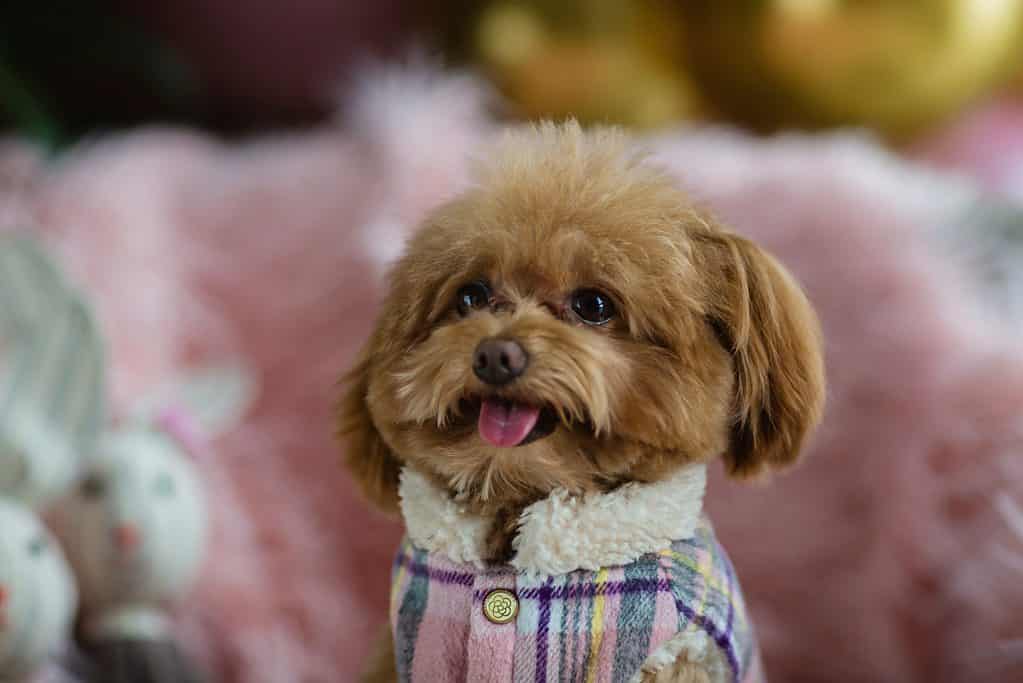
teacup poodle

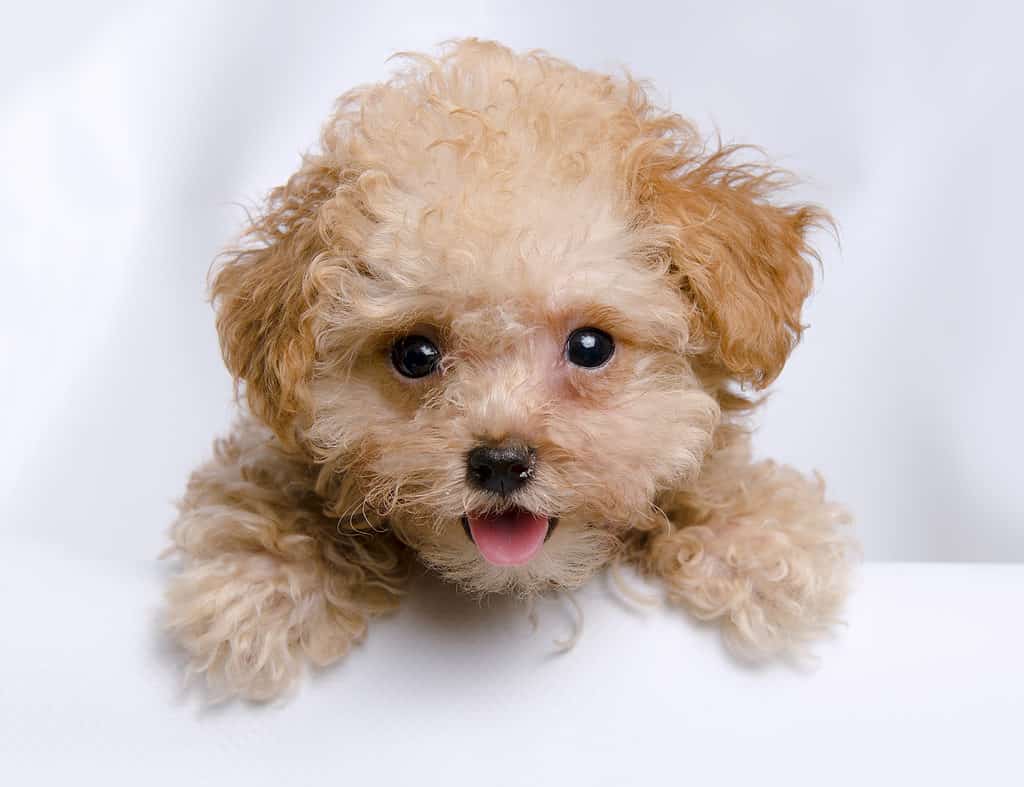
Teacup poodles are the smallest poodle breed.

Temperament

The teacup poodle is an intelligent, loving, and playful dog by nature. Its intelligence makes it highly trainable, which is fortunate because, like all small dogs, the teacup poodle is susceptible to small dog syndrome. This can occur when the owner does not train the dog properly and does not set boundaries to let the poodle know it is not the alpha. Apart from this, the teacup can be a lovable, obedient companion.

Given its size and temperament, the teacup poodle makes an ideal apartment and family dog, though it is not suitable for small or rambunctious children as it is somewhat fragile. Only children with training or experience in dog behavior or handling should interact with the dog.

How To Take Care of a Teacup Poodle  

Maintenance And Grooming

As their coats are the same as those on standard and miniature poodles, groom and maintain the teacup poodle the same as you would a standard. Brush the dog daily, bathe the dog regularly, and clip the coat every 6 to 8 weeks.

Brushing the dog’s teeth a few times a week, at least, is necessary, as is yearly dental scaling at the vet’s. Also, check the dog’s ears regularly for mites and wax buildup, and trim the nails regularly.

Training

Poodles are among the most trainable dog breeds, and the teacup is no exception. Its diminutive size makes it challenging to perform some of the activities that later breeds excel at, but obedience training is a worthwhile activity. This may help to stave off some of the most annoying behaviors displayed by small dogs that develop “small dog syndrome.”

Exercise 

Teacup poodles need a 30-minute walk daily. It is ideal if this is broken up over 2 to 3 walks. Additional play is good for their demeanor and development, preferably indoors or in a safe, enclosed yard. Be aware that the teacup’s small size makes it vulnerable to predatory animals, and never leave it outside unsupervised.

Puppies

Teacup poodle pups should be obtained from reputable breeders with health and genetic information on the sires. Immunize them at the appropriate stages, and socialize them with other dogs and people as soon as possible. Establish training and boundaries early on to avoid the demanding, alpha behaviors sometimes shown by small dogs with lenient training.

Teacup Poodles And Children

Due to the fragility and small size of the teacup poodle, they are usually unsuitable for households with children. Older children who are conscientious and trained in dog handling may be okay with this dog. The teacup is not a breed capable of rough play and needs to be handled with extreme care.

Dogs Similar to the Teacup Poodle

  • Toy Poodle: The teacup poodle is just a miniaturized version of the toy poodle. As such, they share all of the main characteristics of the standard poodle apart from size.
  • Chinese Crested Dog: The Chinese Crested Dog is a toy breed that shares a tendency to have a stylish haircut. It is a bit larger than the teacup poodle, though.
  • Shih Tzu: The Shih Tzu is a toy breed that shares the cuteness factor of the teacup poodle. It also has a zest for life and a sense of fun that compares well with the teacup.
View all 608 animals that start with T

Sources

  1. Dog Breed Info / Accessed January 9, 2023
  2. Animal Corner / Accessed January 9, 2023
  3. Dog Pregnancy Calendar / Accessed January 9, 2023
  4. Wag / Accessed January 9, 2023
  5. Wikipedia / Accessed January 9, 2023
Rob Amend

About the Author

Rob Amend

Rob Amend is a writer at A-Z Animals, primarily covering meteorology, geology, geography, and animal oddities. He attained a Master's Degree in Library Science in 2000 and served as reference librarian in an urban public library for 22 years. Rob lives in Cincinnati, Ohio, and enjoys spending time with his family, hiking, photography, woodworking, listening to classic rock, and watching classic films—his favorite animal is a six-foot-tall rabbit named Harvey.

Thank you for reading! Have some feedback for us?


Teacup Poodle FAQs (Frequently Asked Questions)

An adult teacup poodle will reach a maximum weight of 5 pounds, and will be under 9 inches tall.