




Quick Take
- Ferrets have a dance that looks exactly like their threat display, and telling the two apart requires knowing one subtle difference. See the dook dance →
- There's an actual sport involving ferrets and a pair of pants, and the world record holder's age makes it even stranger. Find the ferret sport →
- Owning a female ferret and skipping one specific decision can silently put her life at risk. Unspayed female health risks →
- Genghis Khan, Ancient Egyptian sailors, and World War II engineers all relied on ferrets, though not for the reason most people assume. Explore historical working roles →
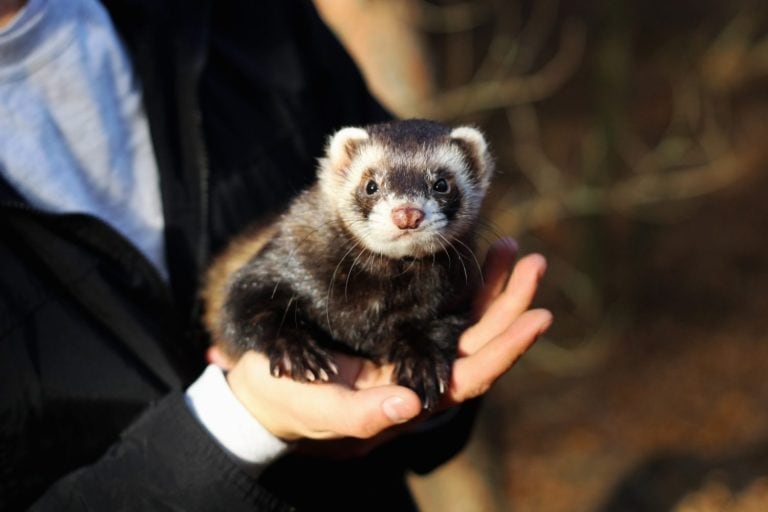
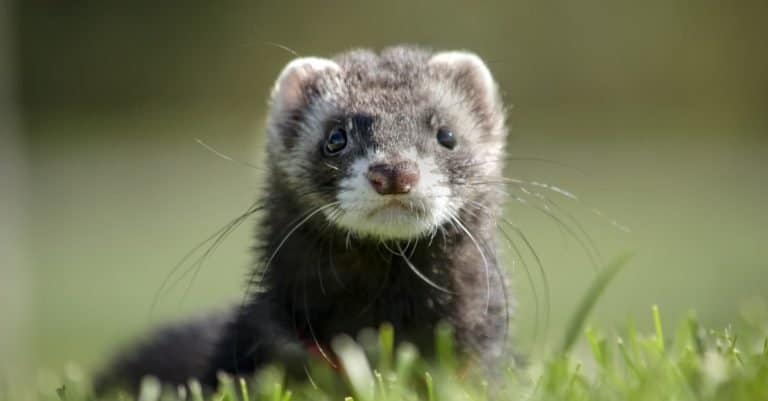
The ferret is a small domesticated mammal in the weasel family Mustelidae whose name comes from the Latin word furittus, meaning “little thief.” If you’ve ever heard of someone “ferreting away” or “ferreting out” something, it’s thanks to the ferret’s curious and hoarding behavior, in which it finds and hides items.
The domestication of this miniature predator began over 2,500 years ago. It has historically been used for hunting mice, rabbits, and gophers and became a popular pet in the US in the 1980s. Today, the long, slender carnivorous animal makes an endearing, intelligent, playful, mischievous, and lively pet, that is, when it’s not sleeping. However, check your local state laws, as they are illegal to own in many states, one of which happens to be California.

Incredible Ferret Facts
- Ferrets can be trained to do tricks like dogs.
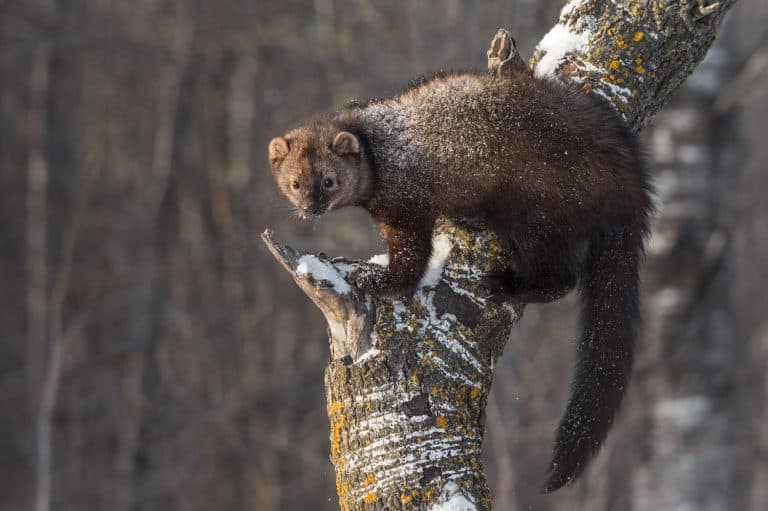
- In their wild form, they are called fitchet, fitchew, or fitch.
- Ancient Egyptians took these animals with them on sailing ships to hunt rodents, and by around 6 BC, ferrets or mongooses were being used to help control rabbit populations on the Balearic Islands.
- Ferrets were used to protect grain stores during World War II.
- Genghis Khan hunted with them circa 1221.
- They were named official mascots of the Massachusetts Colonial Navy in honor of their service.
- A ferret’s normal heart rate is 180 to 250 beats per minute.
- The longest record for the sport of ferret legging was set in 1981 by Reg Mellor, a retired English miner, at 5 hours and 26 minutes.
Evolution
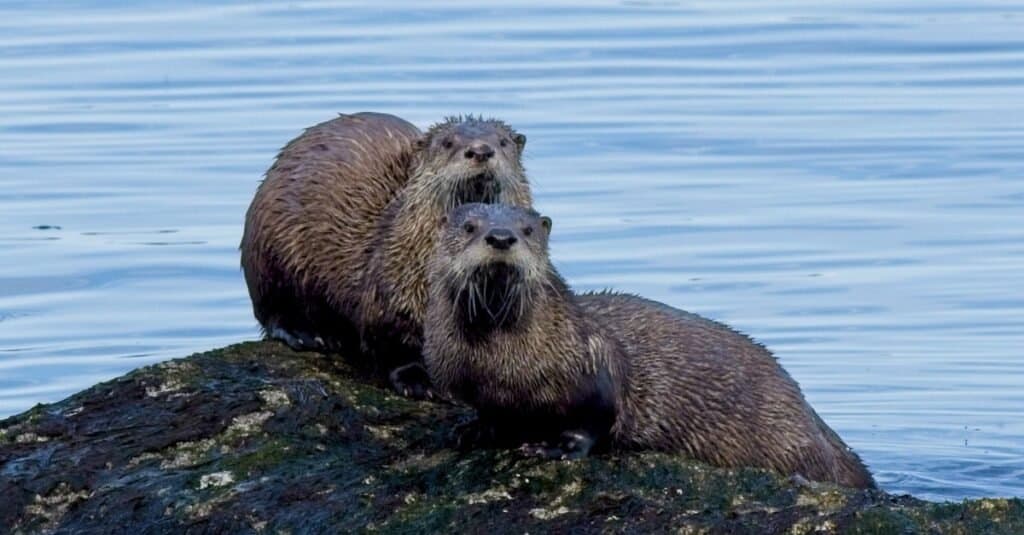
Ferrets are related to otters and several other mammals that belong to the Mustelid family.
©iStock.com/pr2is
According to experts, mustelids, the genetic family ferrets belong to, first appeared on the evolutionary scene around 40 million years ago. They were able to make their way to the Americas from Eurasia, where they originated, via the Bering land bridge. Except for Antarctica and Australia, they were also able to spread to every other continent.
The total of these evolutionary processes, which took place over the course of millions of years, gave rise to nine subfamilies and 66 species. Included in this large family are badgers, ermines, ferrets, fishers, marten, mink, otters, sable, tayras, weasels, and wolverines.
Classification and Scientific Name
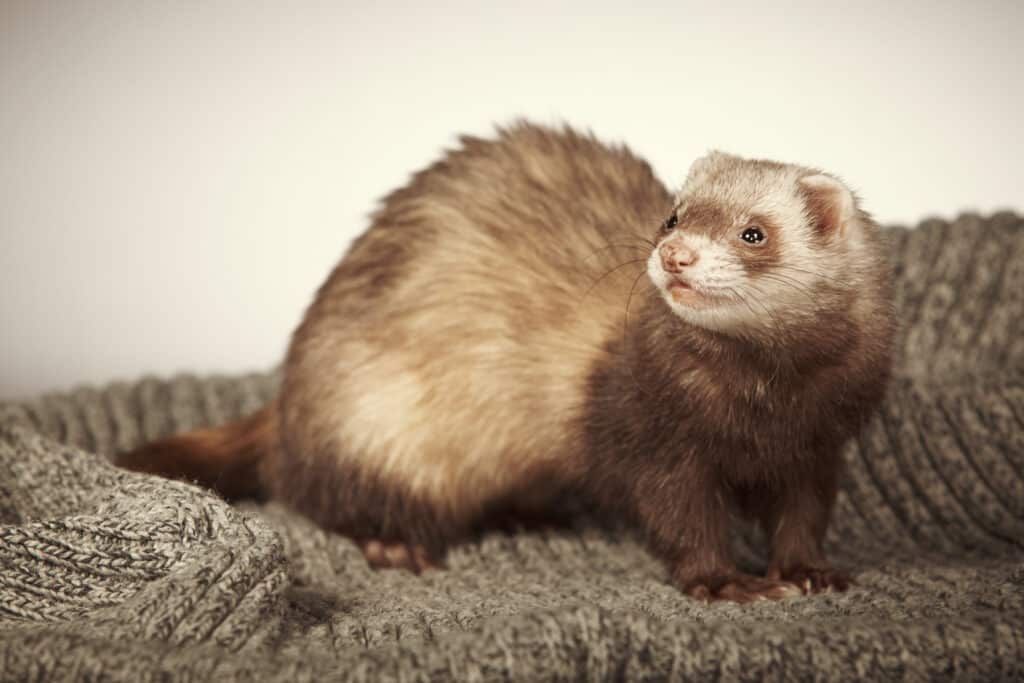
Ferrets are related to ermines, minks, and weasels.
©Couperfield/Shutterstock.com
The scientific name of this animal is Mustela furo, which is a distinct species. It was formerly considered a subspecies of polecat and had the scientific name Mustela putorius furo. Mustela putorius is the scientific name for the European polecat from which the ferret originated. Depending on opinion, a ferret is a close relative of the polecat or a domesticated European polecat.
It is also believed that the Steppe Polecat (scientific name Mustela eversmanni) may have been bred to produce European Polecats or domestic Ferrets. The ferret can interbreed with both and have fertile offspring. In fact, a polecat-ferret hybrid has a somewhat different coloring but is genetically indistinguishable from pure polecats using DNA analysis.
The term “Ferret” also refers to other mustelids such as the North American black-footed ferret, also called the American polecat or prairie dog-hunter (scientific name Mustela nigripes). The Mustelidae is a large family of carnivorous mammals that includes weasels, polecats, ferrets, badgers, martens, minks, otters, and wolverines. The Mustela genus specifically includes weasels, polecats, ferrets, minks, stoats, and ermines.
Appearance
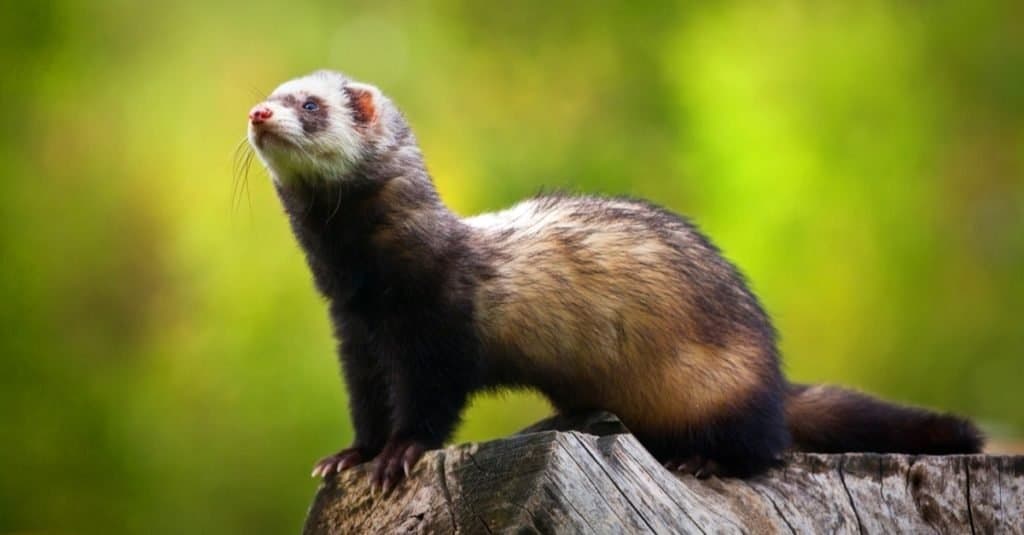
Ferrets are known for their long, slender bodies.
©jurra8/Shutterstock.com
There is only one species of domesticated or common ferret, although it has been divided into “breeds” or types known as Standard, Angora, and European. The Angora ferret, or simply “Angora,” has a mutation resulting in longer fur. There are also “Angora type” dilutions. According to the American Ferret Association, there are 20 different types of these animals based on fur color, length, and pattern. Albino, Blaze, and Panda are just a few other examples. All facts about their behavior remain the same.
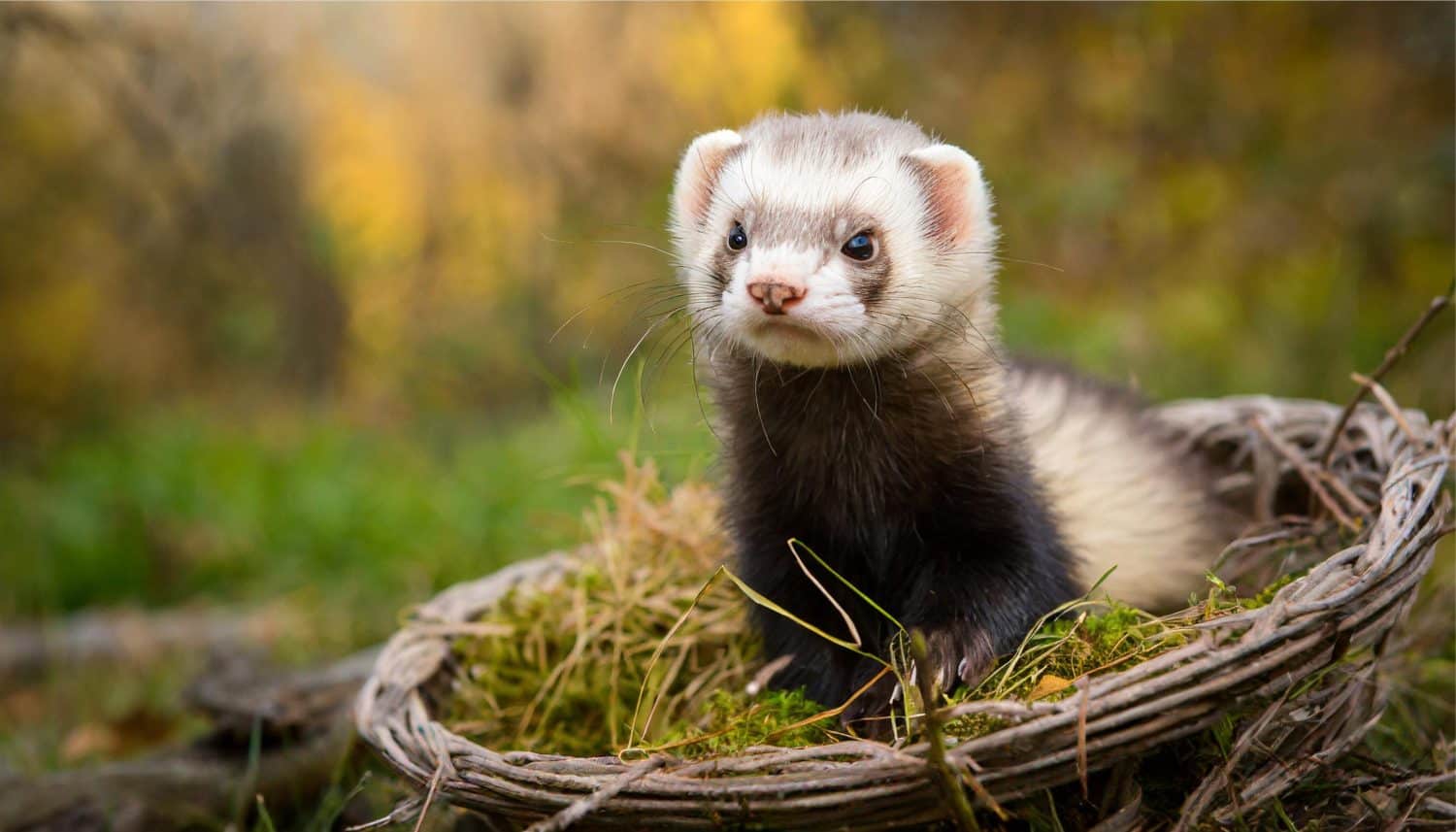
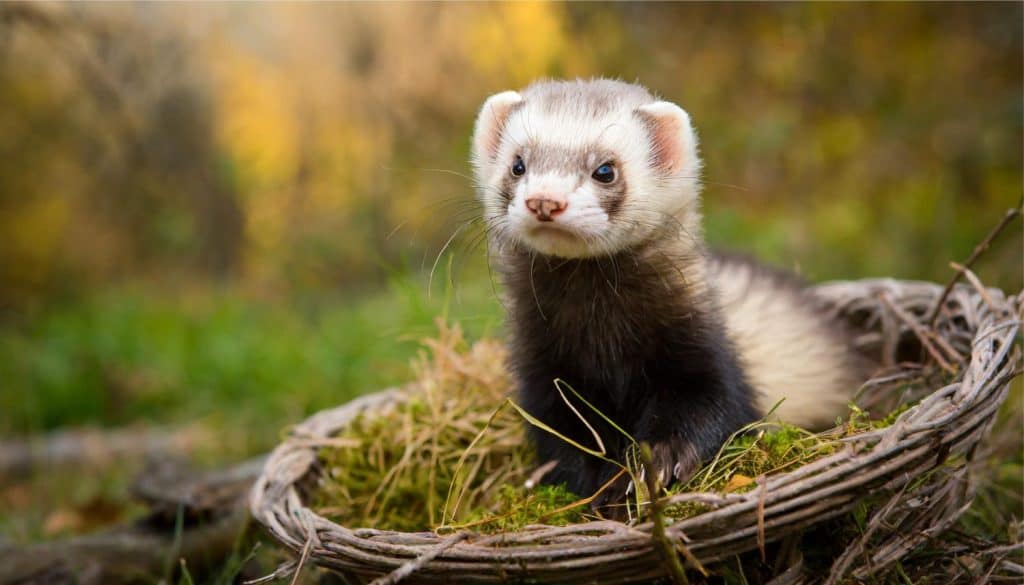
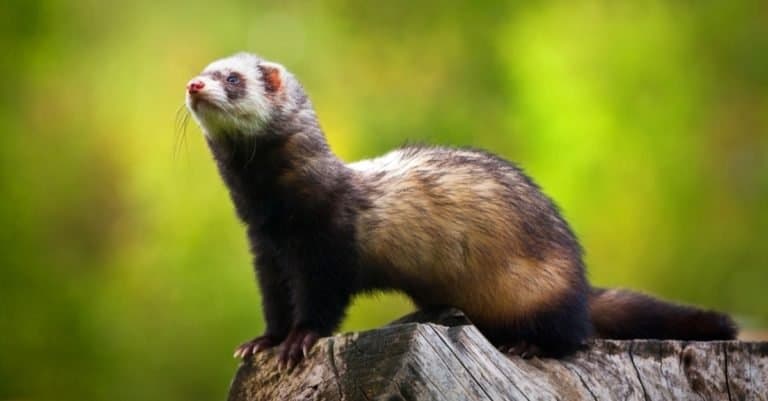
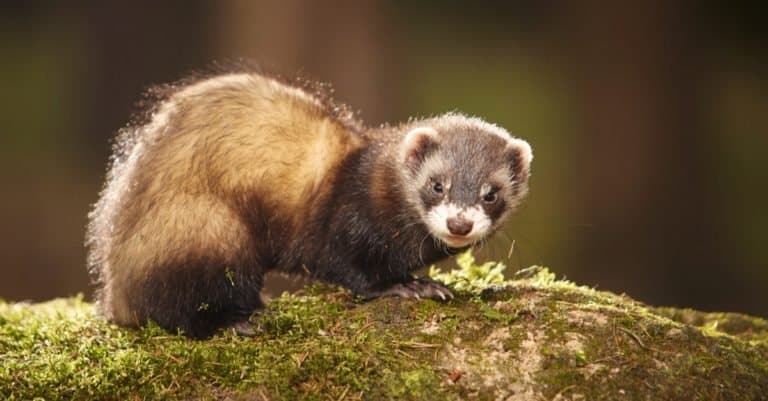
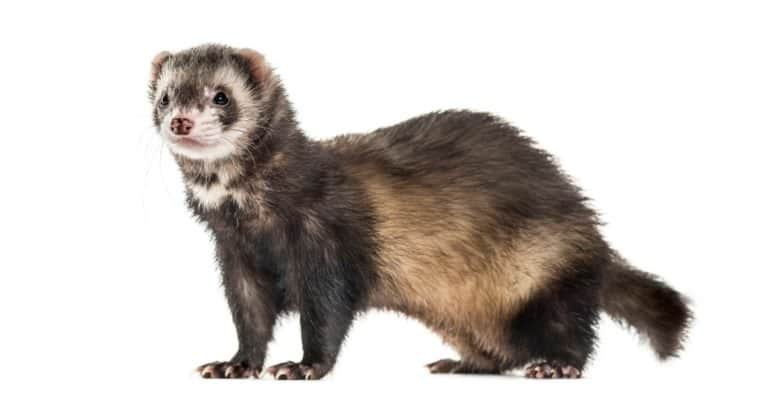
The different types of ferrets and other mustelids share similar physical features; namely, their small size, long and slender bodies, and short legs. The common ferret can measure between 40cm and 50cm (15.7 in and 19.7 in), with an average length of 50 cm (20 in) including a 13 cm (5.1 in) tail, and weigh between 0.7 and 2.0 kg (1.5 and 4.4 lb). Compared to the weasel, it has a longer body and a shorter tail. It has fur colors of brown, white, and black. Males are larger in size and weight than females, with more body muscle and larger, wider, and rounder heads and thicker, blunter noses.
Differences vs. Weasels, Polecats, and other Related Animals
Ferrets are most closely related to weasels, polecats, minks, and ermines. While ferrets have been domesticated for thousands of years, their relatives are mostly wild. Compared to weasels, ferrets are longer. In addition, non-domesticated ferrets prefer grasslands while polecats inhabit a wider variety of habitats that include marshes. Weasels are also much more aggressive animals and are known for being ferocious predators capable of hunting prey significantly larger than themselves.
Behavior
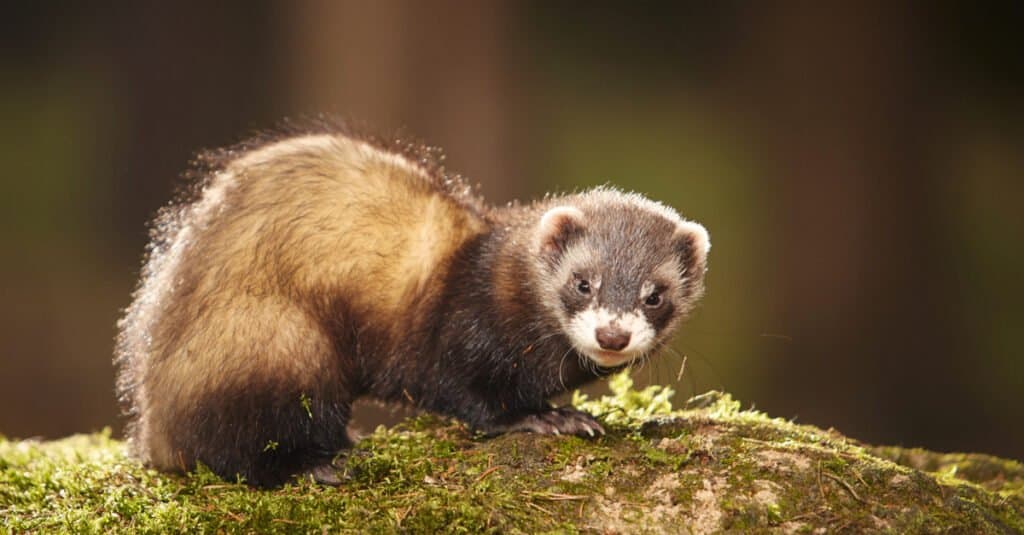
Ferrets were used to introduce cables and wires in narrow tunnels.
©Couperfield/Shutterstock.com
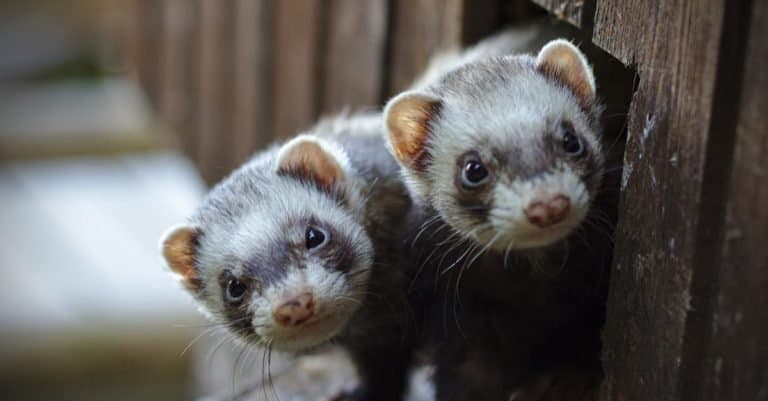
The English writer and poet D.H. Lawrence once wrote, “Do come back and draw the Ferrets; they are the most lovely noble darlings in the world.” Like other mustelids, these animals display complex social behaviors. A group of them is called a “business” or “fesnyng” or, historically, a “busyness.” Unlike polecats, ferrets are not solitary but are happy in social groups. They are territorial and enjoy burrowing.
The domestication of these animals resulted in their being used for forcing mice, rabbits, and gophers out of burrows as well as hunting rodents on ships or in grain stores. First imported into the USA in the 1700s and often kept in warehouses and barns rather than cages, they were sometimes paired with terriers while hunting, a practice called “ferreting.” Ferreting was popular for about 200 years and only declined with the invention of chemical rodenticides.
Before mechanical runners were invented for the oil, telephone, and airline repair industries, these animals were used to place wires and cables in narrow tunnels. There is a sport called “ferret legging,” popular among pub patrons in England, in which 2 angry ferrets are put inside participants’ tied baggy pants, and participants can discourage them from biting only from outside the pants.
Facts about their behavior also depend on the sex involved. Although ferrets are sexually dimorphic, they can sometimes be hard to distinguish from one another. Females are said to be more unpredictable, whereas males are mellower. Regardless, intact males and females do not make good pets, and altering them mellows them out significantly. Ferrets might bite humans in some cases if they are not properly trained.
These animals sleep 14 to 18 hours a day and enjoy sleeping in enclosed areas such as cages. They have anal scent glands that produce musk, used for individual recognition and marking territory. They mark territory by dragging their rear ends across the ground or spraying with urine. The musk is an unpleasant odor, so animals sold in the US are already descented, whereas descenting is considered unnecessary mutilation in other parts of the world.
They are also messy, burrowing into the bedding of their cages to gather and sleep together. They sleep so deeply that one can hold, poke, and yell at them and they won’t wake up. This is called being “ferret dead asleep,” a behavior resulting from their need to rest after playing hard. They enjoy dancing for joy, wrestling (especially dominant males), and chasing each other.
Other behaviors include nipping at their owner’s toes, digging food out of their bowls (an example of burrowing), hissing like a snake (when angry or scared), hoarding small objects, wagging their tail (when happy or excited), clucking or chortling (when happy or excited; called “dooking”), and poofing out their tails (when threatened or scared). They also have what’s called a “weasel war dance,” which looks similar to their dance of joy but with their tails poofed out, coats bristled, and hissing. On the other hand, when they dance for joy, they engage in dooking and will run, jump, hop, and clumsily bump into things. Sometimes this joyous dance is called a weasel war dance.
When kept in cages, these animals need at least an hour and ideally up to four hours of play every day. They are most active at dawn and dusk, making them crepuscular.
Habitat
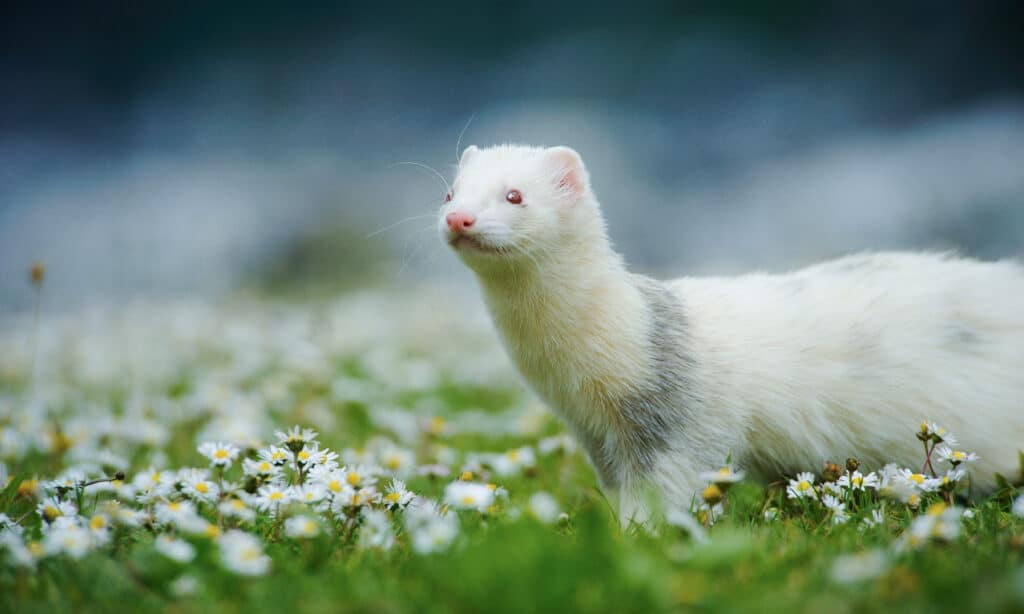
Ferrets can be found in Africa, Asia, Europe, and North America.
©everydoghasastory/Shutterstock.com
In the wild, ferrets live throughout Europe, northern and western Asia, and North Africa. Their habitats include forests, meadows, parks, villages, farms, and barns, or anywhere there is food. The black-footed ferret species lives in the shrublands and grasslands of North America and hence is also called the North American black-footed ferret.
Diet
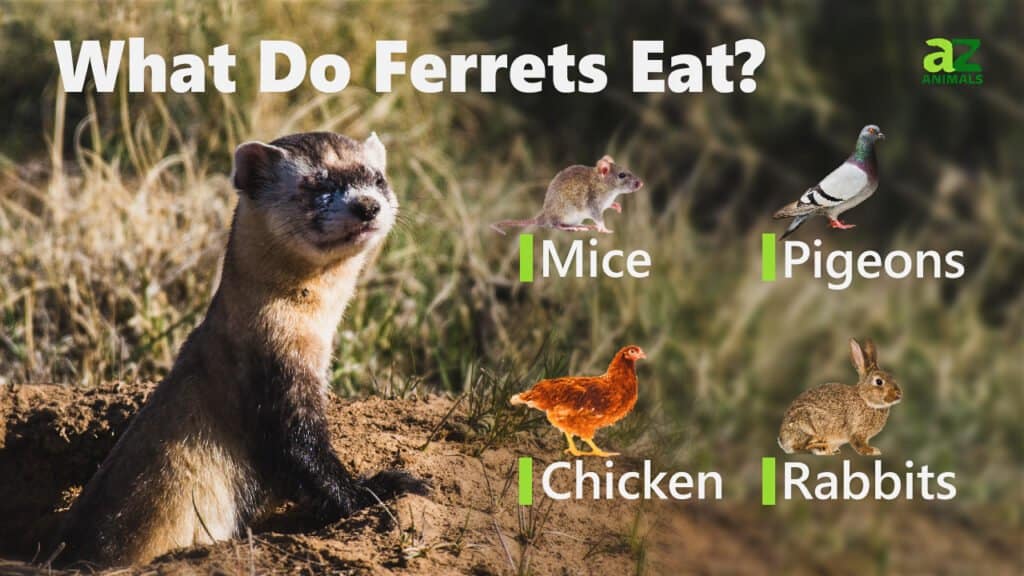
These animals have sharp teeth and claws, a top speed of 15 mph, and a long and slender body for finding and catching their prey. They are obligate carnivores, meaning they must eat only meat and cannot survive without it. Their short digestive tracts mean they need food several times a day.
What do ferrets eat?
In the wild, these animals consume whole small animals as their food. Their prey includes rodents such as mice, rats, and gophers, prairie dogs, rabbits, and other small mammals, birds, reptiles, and amphibians. As pets, they may be fed pre-killed or live prey such as mice and rabbits or commercial ferret food. They also enjoy eating cooked egg, chicken, turkey, lamb, and cat treats. Balanced commercial ferret food has 40% protein and 20% fat. When ferrets are sick, it is good to give them baby food.
What foods are bad or poisonous for ferrets?
These animals should not eat fruit, vegetables, grains, or anything that is not animal protein. They imprint on their food when they are about six months old, so it’s important to feed them the right food from the start.
Predators and Threats
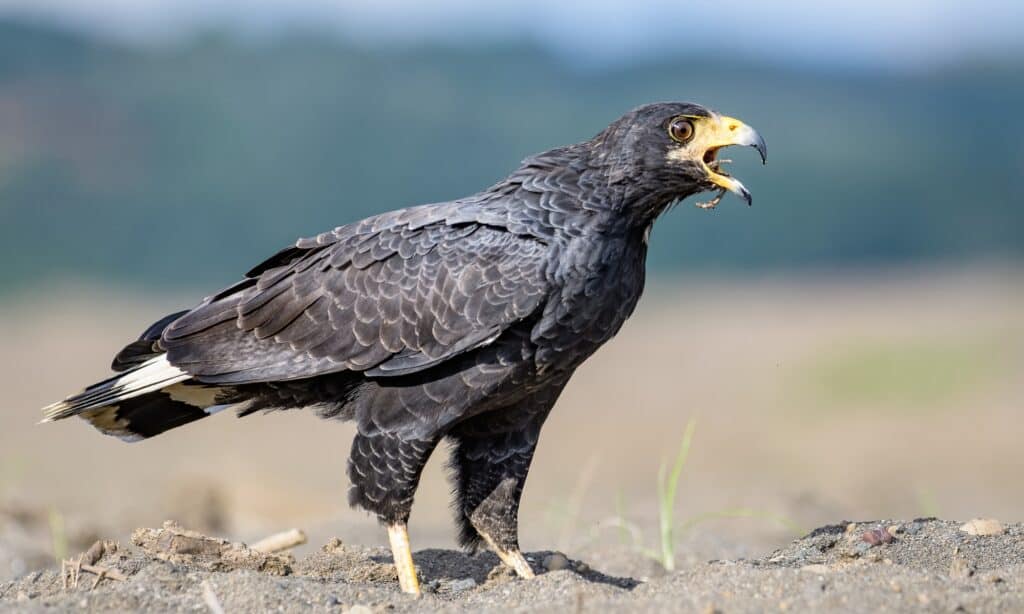
Hawks and other birds of prey hunt ferrets.
©iStock.com/Thorsten Spoerlein
Birds of prey such as hawks and owls eat these animals. Large carnivorous mammals including dogs, coyotes, foxes, and badgers also eat ferrets. Threats that the Black-footed Ferret face are land development, agriculture, hunting and trapping, invasive species, and viral or prion-induced diseases.
These animals have a history of being raised on fur farms in Europe for several centuries. Despite efforts to establish the ferret fur farm industry in the US, they failed in the early 1900s.
These animals can get heartworm from being bitten by an infected mosquito. They can be treated with the same heartworm prevention treatment as cats. They can also suffer from hairballs and dental problems, as well as losing their hair. If they chew on and swallow foreign objects, they can get bowel obstruction. Their most common health issues are cancers of the adrenal glands, pancreas, and lymphatic system, followed by viral diseases such as canine distemper and influenza. Also, certain colors of the ferret (Blaze, Badger, and Panda) can carry a genetic defect known as Waardenburg syndrome. Overfeeding a ferret can also cause problems in the long run.
Unspayed females can also suffer from health problems when not being used for breeding, while health issues can also occur if ferrets are neutered too early — before reaching sexual maturity. Impacted anal glands can occur in ferrets that have not been descented.
Reproduction, Babies, and Lifespan
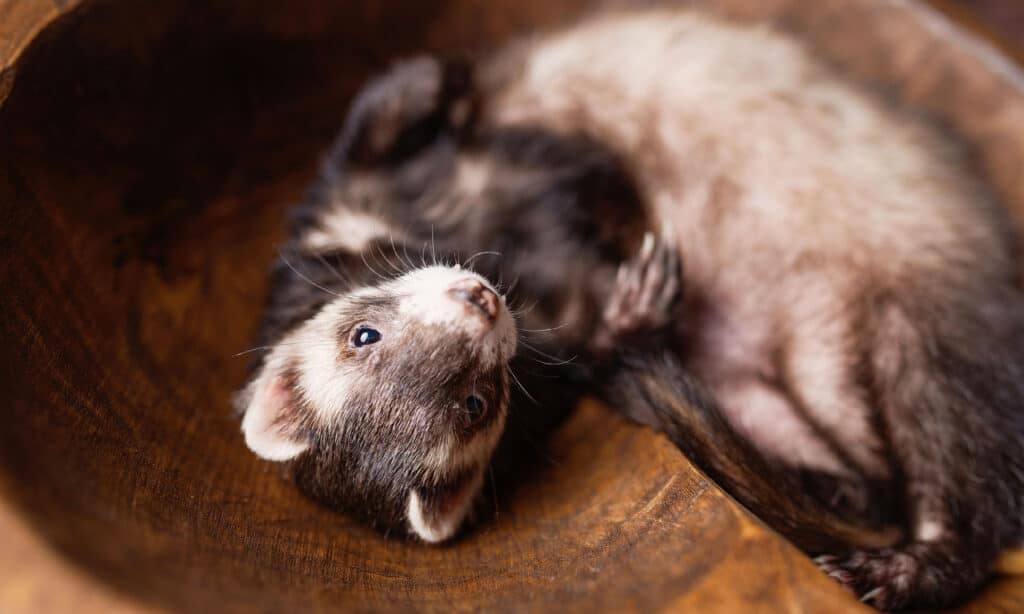
Ferrets can live for up to a decade.
©iStock.com/Tatyana Consaul
Females go into constant oestrus, or heat, between late March and early August if they are not bred. Ferrets reach sexual maturity between 4 and 8 months of age, with females reaching puberty between 8 and 12 months. Almost all ferrets from pet stores or shelters are spayed or neutered, so owners who want to breed them should seek out unaltered ferrets from private breeders.
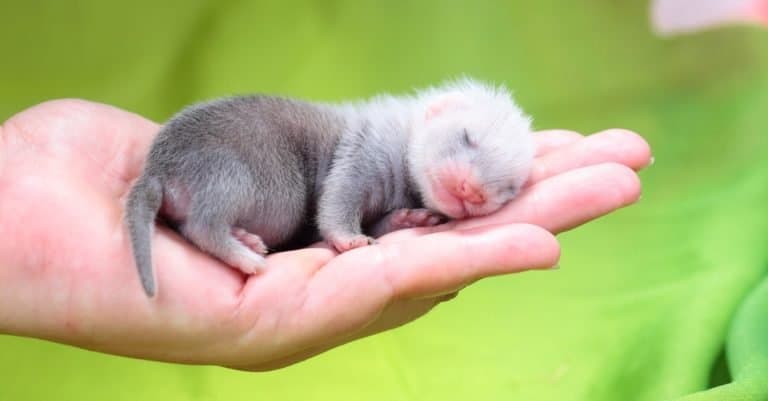
Ferrets raise each baby communally. A ferret baby is called a kit. All kits have white fur when they are born and get their adult color at 3 weeks. An intact female is a jill, and a spayed female is a sprite. An intact male is a hob, and a neutered male is a gib.
The lifespan of a ferret is 7 to 10 years, with an average lifespan of 8 years.
Ferret Population
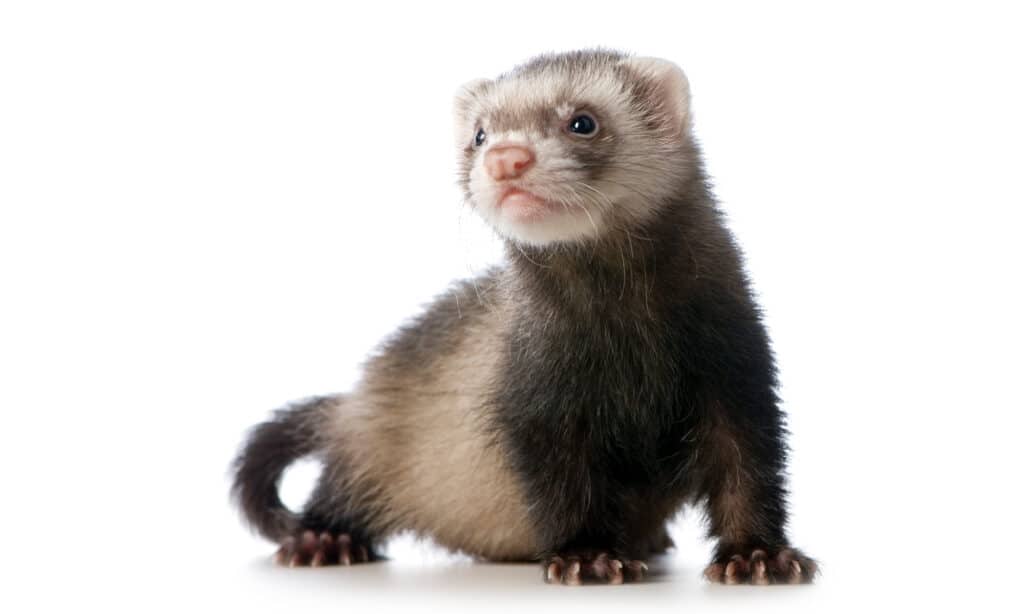
Conservation efforts have enabled the black-footed ferret population to rise.
©iStock.com/GlobalP
The Black-footed Ferret is endangered, and 206 mature individuals exist. It was once believed extinct due to a rabies epidemic, and the remaining 10 individuals were taken into captivity and initiated in a breeding program. So far, more than 5,000 kits have been born, with 2,000 released into the wild since a reintroduction effort was begun in 1991. The species lives in protected natural habitats in Arizona, Colorado, Montana, South Dakota, Utah, Wyoming, and northern Mexico.
By 1996, it was estimated in a government study by the California State Bird and Mammal Conservation Program that about 800,000 domestic ferrets were being kept as pets in the United States.
Ferrets In the Zoo
Besides the National Black-footed Ferret Conservation Center in Colorado, there are five other breeding facilities for the species, and they are all in zoos. You can see the ferrets at the Smithsonian’s National Zoo, Phoenix Zoo, Cheyenne Mountain Zoo, Louisville Zoo, and San Diego Zoo Institute for Conservation Research.
Ferret Pictures
View all of our Ferret pictures in the gallery.

Clement Morin/Shutterstock.com
Sources
- Wikipedia / Accessed February 8, 2021