N S W E
Wildlife Expeditions

Wildlife of
British Indian Ocean Territory

A remote, nearly uninhabited archipelago wrapped in one of the world's largest fully protected marine reserves, the British Indian Ocean Territory is notable for pristine coral reefs, abundant pelagic life, and vast seabird colonies far from the pressures of mass tourism.
2 Species
60 km² Land Area
Overview

About British Indian Ocean Territory

The British Indian Ocean Territory (BIOT)-the Chagos Archipelago-stands out as a rare modern example of large-scale ocean wilderness: isolated atolls and low coral islands surrounded by clear, nutrient-dynamic waters where marine ecosystems can function with comparatively little direct human impact. With no permanent civilian population and extremely limited access, wildlife here is defined less by charismatic land mammals and more by thriving ocean life and seabird-dominated island ecology. For nature-minded travelers and researchers, the draw is the sense of encountering an intact Indian Ocean reef-and-atoll system, with healthy fish communities, large schools over drop-offs, and the constant presence of ocean-going birds.

BIOT's key ecosystems are overwhelmingly marine. Shallow lagoons, coral reef flats, reef slopes, and deep surrounding waters support rich coral assemblages, reef fish, sharks and rays, and migratory pelagics such as tunas and billfish. These habitats also underpin globally important nesting and roosting sites for seabirds on many of the islands, where dense colonies cycle nutrients from sea to land, helping sustain coastal vegetation and nearshore productivity. The archipelago's remoteness and relatively low local stressors make it a valuable natural reference point for understanding reef resilience, recovery after bleaching events, and the dynamics of predator-rich fish communities.

In global conservation terms, BIOT is best known for the establishment of a vast marine protected area (MPA), which has been widely cited as an important safeguard for central Indian Ocean biodiversity and a potential refuge for wide-ranging species. Its protection contributes to broader efforts to conserve pelagic corridors and reef systems that face accelerating threats elsewhere, from warming seas to overfishing. The wildlife experience here is unique precisely because it is hard to reach and tightly regulated: encounters are typically focused on ocean exploration (where permitted), seabird spectacle, and the feeling of visiting a large protected seascape that functions as a benchmark for what healthier tropical marine ecosystems can look like.

Physical Features

Geography

British Indian Ocean Territory (BIOT) consists of the low-lying coral atolls and reefs of the Chagos Archipelago. With very little land but extensive surrounding ocean, wildlife distribution is dominated by marine habitats (coral reefs, lagoons, pelagic waters) that support reef fish, sharks, turtles, seabirds, and invertebrates; on land, the small, flat islands provide limited but important nesting and roosting habitat for seabirds and coastal species. The absence of permanent civilian settlement reduces direct land-use pressure, making habitat quality-especially reef condition, lagoon seagrass/algal beds, and undisturbed beaches-key drivers of biodiversity patterns.

60 km² Land Area
Extremely small (one of the world's smallest territories); roughly comparable to the land area of Manhattan (~59 km²) Size Rank

Key Landscapes

  • Coral atolls and low sandy/coral islands (very limited elevation and freshwater)
  • Fringing and barrier coral reefs (core habitat for reef biodiversity)
  • Shallow lagoons within atolls (nursery grounds; often with seagrass/algal beds)
  • Sandy beaches and dune/berm systems (critical nesting areas for sea turtles and seabirds)
  • Coastal strand vegetation and coconut-dominated woodland (where present)
  • Patchy wetlands/brackish pools and small-scale mangrove or scrub pockets (locally important where they occur)
  • Nearshore reef slopes, channels, and drop-offs (connect lagoon and outer reef; important for fish movement and predators)
  • Open-ocean pelagic waters surrounding the archipelago (supporting wide-ranging species such as tuna, sharks, dolphins, and whales)

Ecoregions

  • Chagos Archipelago moist forests (WWF terrestrial ecoregion; heavily modified but relevant for remaining native/coastal vegetation and seabird habitat)
  • Chagos Archipelago (MEOW marine ecoregion; BIOT's reefs and lagoons fall within this ecoregion)
Parks & Reserves

Protected Areas

British Indian Ocean Territory (BIOT) is managed primarily through a single, very large protected-area designation: the British Indian Ocean Territory Marine Protected Area (BIOT MPA) covering the Chagos Archipelago and its surrounding waters. Because BIOT has no permanent civilian population and contains extensive, relatively intact coral reef and atoll ecosystems, conservation management is strongly oriented toward safeguarding marine biodiversity (coral reefs, reef fish, sharks and rays, turtles, seabirds) and limiting extractive activities. Terrestrial conservation is largely tied to protecting nesting seabirds and turtles and maintaining invasive-free/island-biosecurity conditions, while Diego Garcia is a developed military atoll with conservation values but also significant infrastructure.

Protected Coverage

Marine protection: ~100% of BIOT's surrounding waters/EEZ are within the BIOT Marine Protected Area (often cited at ~640,000 km²). Land protection: most of the territory's small land area (~60 km² across low-lying atolls) lies inside the MPA boundary; effectively the great majority (often estimated >90%) is within a formally designated protected area, though parts of Diego Garcia are developed/managed for military use.

Notable Parks & Reserves

British Indian Ocean Territory Marine Protected Area (Chagos Archipelago MPA)

Marine Protected Area (large-scale MPA; Chagos Archipelago)

One of the world's largest remote ocean protected areas, encompassing near-pristine atolls, coral reefs, and deep pelagic waters that support high biomass of reef predators and important turtle and seabird nesting sites.

Green sea turtle
Hawksbill turtle
Spinner dolphin
Reef sharks (e.g., grey reef shark)
Manta rays
Napoleon wrasse

Great Chagos Bank (within the BIOT MPA)

Marine protected area feature (reef bank) within the BIOT MPA

A vast, shallow bank and reef complex that functions as a major nursery and feeding area for reef fishes and predators; its size and isolation make it a key stronghold for relatively intact coral-reef food webs.

Grey reef shark
Grey reef shark
Giant trevally
Giant trevally
Bumphead parrotfish
Napoleon wrasse
Manta rays
Green sea turtle

Peros Banhos Atoll (within the BIOT MPA)

Marine protected area feature (atoll/lagoon) within the BIOT MPA

A classic atoll system with extensive lagoon and outer-reef habitats that support turtle nesting and large seabird colonies, as well as diverse coral and reef-fish assemblages.

Hawksbill turtle
Green sea turtle
Red-footed booby
Sooty tern
Reef sharks
Coconut crab
Coconut crab

Salomon Atoll / Salomon Islands (within the BIOT MPA)

Marine protected area feature (atoll/island group) within the BIOT MPA

Notable for concentrated seabird breeding and productive reef slopes where pelagic species and reef predators are often encountered; the small-island setting also supports important turtle nesting beaches.

Sooty tern
Brown noddy
Red-footed booby
Hawksbill turtle
Spinner dolphin
Reef sharks

Egmont Islands (Six Isles) and Lagoon (within the BIOT MPA)

Marine protected area feature (atoll/lagoon) within the BIOT MPA

A remote atoll and lagoon system valued for seabird rookeries, turtle nesting, and healthy reef habitats with strong representation of large reef fish and invertebrates in low-impact conditions.

Green sea turtle
Hawksbill turtle
Frigatebirds (e.g., great frigatebird)
Reef sharks
Giant trevally
Giant trevally
Coconut crab
Coconut crab

Diego Garcia Atoll and Lagoon (within the BIOT MPA)

Marine protected area feature (atoll/lagoon) within the BIOT MPA

Despite development, Diego Garcia retains extensive lagoon, mangrove and reef habitats that support turtles, dolphins, and reef fish; it is also an important reference site for studying reef resilience in the central Indian Ocean.

Green sea turtle
Hawksbill turtle
Spinner dolphin
Blacktip reef shark
Blacktip reef shark
Manta rays
Napoleon wrasse
Animals

Wildlife

The British Indian Ocean Territory (BIOT)-the Chagos Archipelago-is a remote, largely uninhabited tropical atoll system best defined by ocean wildlife: coral reefs, clear lagoons, large reef-fish biomass, and pelagic megafauna. Terrestrial biodiversity is limited (small low-lying islands with few native land vertebrates), but BIOT is regionally important for breeding seabirds and for nesting marine turtles. The wildlife "signature" is therefore seabird colonies, turtle nesting beaches, and healthy reef predators (sharks) supported by relatively low local human pressure.

~20-25+ marine mammal species recorded (no native terrestrial mammals) Mammals
~80-100 species recorded overall; ~15-20 regular breeding seabird species in colonies Birds
~6-10 species (notably 2 nesting sea turtles, plus a few widespread lizards on some islands) Reptiles
0 (none native/known established) Amphibians

Iconic Species

Green Sea Turtle BIOT supports important nesting and foraging habitat across multiple atolls; beaches on the outer islands are especially significant for nesting, and the remote lagoons/reef flats provide rich feeding grounds.
Hawksbill Sea Turtle A globally threatened species that nests in the archipelago; BIOT's relatively intact reefs and low disturbance make it a valuable refuge for hawksbills in the central Indian Ocean.
Spinner Dolphin Commonly encountered in and around lagoons where groups may rest during the day; the sheltered atoll environments make BIOT one of the better places in the region to see large, active schools.
Indo-Pacific Bottlenose Dolphin Frequently observed along reef edges and in lagoon channels; approachable, nearshore behavior makes this a flagship species for BIOT's marine wildlife.
Sooty Tern Forms dense breeding colonies on suitable low islands; the spectacle of tens of thousands of terns nesting and commuting to sea is a defining Chagos wildlife experience.
Red-footed Booby A signature tropical seabird of BIOT, often nesting in shrubs/trees where available; large colonies highlight the archipelago's importance as a predator-free (or low-predator) breeding area on some islands.
Great Frigatebird Highly visible over lagoons and nesting islands, known for aerial piracy and (in males) inflatable red throat pouch displays; BIOT is an important regional breeding area.
Grey Reef Shark
Grey Reef Shark A hallmark predator of healthy Indo-Pacific reefs; BIOT's protected reefs and steep drop-offs support robust reef-shark sightings compared with many more heavily fished areas.
Giant Trevally
Giant Trevally An iconic apex reef predator often seen hunting along reef edges and passes; BIOT's comparatively intact food webs support larger individuals and higher encounter rates than many populated island groups.
Coconut Crab
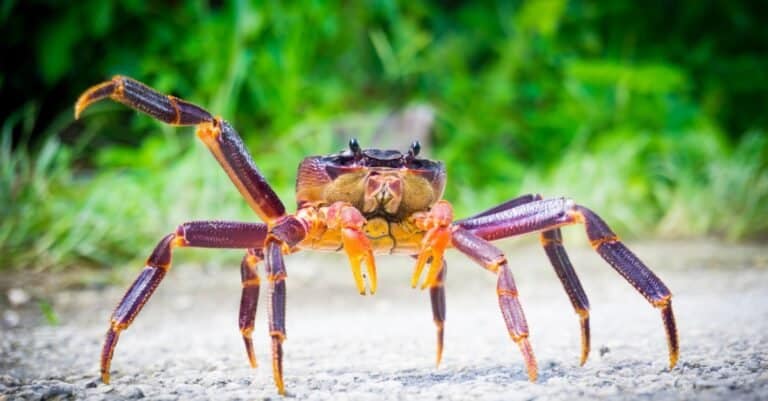
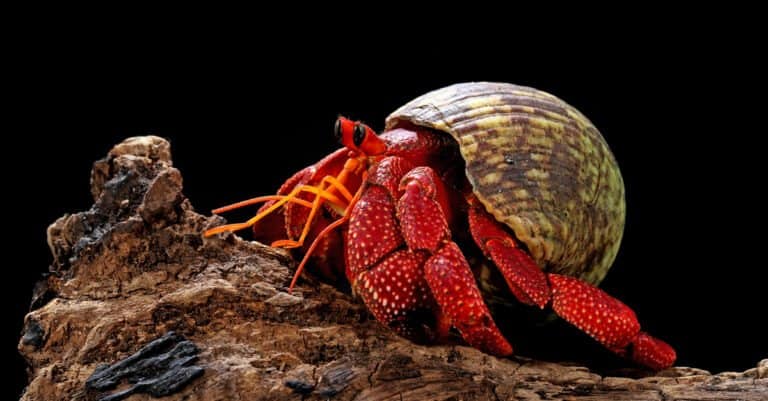
Coconut Crab One of the world's largest land arthropods; on islands where it persists, the coconut crab is a charismatic emblem of remote, minimally disturbed tropical island ecology.

Endemic Species

Chagos Anemonefish (Chagos Clownfish) A central-Indian-Ocean anemonefish described from the Chagos region and considered near-endemic to this part of the ocean; it represents the kind of localized reef endemism that contributes to BIOT's conservation value (even though most BIOT vertebrates are widespread Indo-Pacific species). Endemic

Notable Populations

  • Regionally important nesting rookeries for green and hawksbill sea turtles across multiple Chagos atolls, supported by low disturbance and extensive reef/lagoon habitat.
  • Exceptionally large seabird breeding aggregations (e.g., sooty terns, boobies, noddies, frigatebirds) that make BIOT one of the key seabird sites in the central Indian Ocean.
  • High relative abundance/biomass of reef predators (including reef sharks and large jacks/trevallies) compared with many exploited Indian Ocean reef systems, reflecting BIOT's remoteness and protection.
Protection

Conservation

Primary Threats

  • Rising sea temperatures drive mass coral bleaching events and increased coral mortality risk across Chagos reefs; ocean warming and acidification can reduce calcification and reef resilience, while sea-level rise threatens low-lying islets used by nesting seabirds and turtles and can alter lagoon/coastal geomorphology.
  • Although BIOT's MPA restricts extractive use, its remoteness and vast area create enforcement challenges that can enable IUU fishing, including targeting of high-value tuna and sharks in surrounding waters and incursions into protected zones, potentially reducing apex predators and altering reef and pelagic food webs.
  • Where illegal fishing occurs, shark finning and retention of high-value species can be linked to international trade incentives; even limited extraction can have outsized ecological impacts because many sharks and large pelagic species are slow-growing and vulnerable to depletion.
  • Marine debris and plastics transported by Indian Ocean currents accumulate on remote beaches and reefs, causing ingestion/entanglement risks for seabirds and turtles. Localized contamination risk also exists near Diego Garcia from port/airfield operations (e.g., fuel, firefighting foams, waste handling), with potential impacts on nearshore habitats if releases occur.
  • Introduced rats, cats, and invasive plants on some islands can depress seabird breeding success through predation and habitat degradation; invasive insects and weeds can alter native island vegetation structure, affecting nesting habitat and nutrient cycling that links seabirds to island ecosystems.
  • Most islands have minimal human presence, but disturbance can be significant locally around Diego Garcia (lights, noise, vessel traffic) and during occasional visits (research, enforcement, military activities), potentially affecting sensitive nesting beaches (turtles) and seabird colonies if not carefully managed.
  • Built infrastructure is concentrated on Diego Garcia (airfield, port, coastal defenses, utilities). Construction, dredging/maintenance, shoreline armoring, and vessel movements can directly affect nearshore habitats (reefs, seagrass) through sedimentation, altered currents, and physical damage if not mitigated.
  • Terrestrial habitat loss is limited across the uninhabited islands, but localized coastal habitat conversion on Diego Garcia (and any future expansion) can reduce or fragment native strand vegetation and coastal habitat used by seabirds and turtles; beach erosion linked to storms/sea-level rise can further reduce nesting habitat.
  • Coastal engineering and lagoon/harbor maintenance around Diego Garcia can modify natural sediment transport and hydrology, potentially affecting reef flats and lagoon habitats. On some islands, invasive-driven vegetation change also modifies ecosystem function, altering seabird-driven nutrient inputs that support nearshore productivity.
Visit

Wildlife Tourism

Wildlife tourism in the British Indian Ocean Territory (BIOT)-the Chagos Archipelago-is almost entirely marine-focused and tightly constrained by access rules. BIOT's global significance comes from its vast marine protected area (MPA) and exceptionally intact coral reef ecosystems that support reef fish biomass, sharks, rays, turtles, seabirds, and seasonal pelagic visitors. Economically, BIOT is not a conventional tourism destination: there is no permanent civilian population, limited infrastructure, and entry is typically restricted (often tied to scientific, conservation, military, or tightly controlled vessel movements). As a result, wildlife travel here is best thought of as expedition-style, conservation- and research-adjacent ocean travel rather than mainstream tourism. Historically, the archipelago's remoteness and limited development helped preserve marine ecosystems; modern conservation attention centers on reef resilience, shark and turtle protection, and safeguarding one of the Indian Ocean's largest no-take/protected seascapes. Accessibility is the main hurdle: travel planning generally involves specialist operators and permissions, plus self-sufficiency at sea; visitors should expect strict rules, minimal services, and a strong "leave no trace" ethic.

Best Time to Visit

Practical seasonality is driven by Indian Ocean weather, sea conditions, and migration/visibility patterns rather than "big game" calendars.
- Jan-Mar: Often warm water and strong pelagic potential; good window for blue-water encounters (tuna, dolphins, occasional large oceanic visitors) when seas allow; excellent for coral reef snorkeling/diving in calm spells.
- Apr-Jun: Frequently among the best all-round months for underwater visibility and comfortable conditions; peak-style reef diving/snorkeling for coral gardens, reef sharks, rays, and turtles.
- Jul-Sep: Trade-wind season can mean choppier seas; still rewarding for experienced liveaboard/expedition trips-expect more exposed-ocean conditions and strong current diving; seabirds can be especially active around outer islands.
- Oct-Dec: Transition period often brings improving seas and visibility; strong mix of reef life plus pelagic action; good for photography-focused trips due to clearer water windows.
Notes: Exact "best months" vary by atoll and annual weather. Because access is limited, most visitors time trips around permitted expedition schedules and the most stable sea states for the intended activities (snorkeling vs. current diving vs. offshore fishing/blue-water work).

Top Wildlife Experiences

  • Join a liveaboard-style expedition cruise focused on reef systems-spending multiple days rotating between shallow coral gardens for snorkeling and deeper passes for current dives (expect schooling fish, reef sharks, and rays).
  • Do a dedicated "blue-water day" offshore: drifting in deep water with a safety boat to look for pelagic life-dolphins, tuna, and other open-ocean species-paired with onboard naturalist briefings.
  • Plan a dawn-and-dusk snorkel schedule on sheltered reef flats to maximize turtle encounters and witness the daily reef "shift change" as diurnal fish retreat and nocturnal species emerge.
  • Undertake a responsible seabird-watching circuit by boat around key islets: photograph frigatebirds, terns, and noddies, and learn to identify behaviors (feeding flocks, kleptoparasitism, nesting aggregations) without approaching nesting sites.
  • Take a marine megafauna tracking session with a guide/scientist (where permitted): learn how researchers log sightings of sharks/rays/turtles, practice standardized ID photography, and contribute observations to citizen-science datasets.
  • Run a "coral health safari" snorkel: compare multiple reef sites in one day to spot differences in coral structure, bleaching history, and fish assemblages-ideal for visitors who want a conservation lens.
  • Try a controlled night snorkel or night dive (operator- and permit-dependent): focus on hunting morays, crustaceans, sleeping parrotfish, and bioluminescent plankton, with strict buoyancy and light-discipline protocols.
  • Join a catch-and-release, pelagic-focused sportfishing session (where legal and permitted), targeting fast-moving species (e.g., tuna/trevally) while learning about sustainable fishing practice in remote MPAs.
  • Spend a day on "lagoon edge exploration": kayak or small-boat along the inside rim of an atoll to observe juvenile reef fish nurseries, rays over sand patches, and birdlife along low-lying islands (landing only if allowed).
  • Participate in a beach-and-reef cleanup and microplastic survey (if access/landings are permitted), combining a short shore walk with a structured data collection session and a debrief on ocean-borne debris pathways.

Safari Types Available

  • Liveaboard/expedition cruise wildlife safaris (multi-day boat-based exploration)
  • Boat safaris (reef-hopping by tender/RIB, lagoon and outer reef circuits)
  • Snorkeling safaris (shallow reef, drift snorkels, lagoon-edge sessions)
  • Scuba diving safaris (pass dives, wall dives, current dives; operator/permit dependent)
  • Blue-water/pelagic observation sessions (drift/spotting with safety boat support)
  • Seabirding and coastal/islet wildlife viewing (boat-based, non-intrusive)
  • Citizen-science/conservation-focused trips (species ID, reef monitoring, debris surveys)
  • Night wildlife experiences (night dive/snorkel where permitted)
  • Sportfishing experiences (only where legal/authorized; ideally catch-and-release)
  • Kayak/paddle wildlife sessions in sheltered lagoon areas (conditions and permissions permitting)
Fun Facts

Did You Know?

The territory's biggest "island" is mostly invisible: the record-setting Great Chagos Bank is largely submerged, with only small cays and atolls breaking the surface-so a world-scale atoll exists mostly underwater.

BIOT has no permanent civilian population; outside of Diego Garcia's military presence, many islands function more like de facto wildlife sanctuaries than typical inhabited tropical islands.

On many Chagos reefs, the food pyramid can look "upside down" compared to human-impacted reefs: top predators (especially sharks) can dominate the large-fish biomass-an ecosystem structure that's now rare across the tropics.

Coconut crabs (the world's largest land arthropod) persist on parts of the Chagos Archipelago; where they aren't heavily harvested, individuals can reach enormous sizes and are strong enough to crack coconuts-an increasingly uncommon sight elsewhere in the region.

After the severe 1998 Indian Ocean bleaching event, multiple Chagos reef sites were documented recovering unusually strongly over the following years-making the archipelago an important natural laboratory for understanding reef resilience when local human pressures are low.

Great Chagos Bank (in the Chagos Archipelago) is widely cited as the world's largest atoll structure by area-roughly ~12,000-13,000 km²-making BIOT a home to a global geomorphology/wildlife record-holder.

The British Indian Ocean Territory Marine Protected Area (declared in 2010) spans about 640,000 km²-one of the largest no-take marine reserves ever established-covering entire reef-to-open-ocean food webs (corals to tuna, sharks, and rays).

Reef surveys on remote Chagos reefs have documented some of the highest recorded reef-shark biomass/densities measured globally-an unusually intact "predator-heavy" coral reef baseline compared with most fished tropical reefs.

Chagos supports one of the largest remaining tropical seabird breeding assemblages in the Indian Ocean (often reported at well over a million breeding seabirds across the archipelago), including major colonies of species like sooty terns and red-footed boobies.

Because of its extreme isolation and limited coastal development, BIOT is frequently cited in conservation science as having some of the least locally stressed coral reef ecosystems in the Indian Ocean-used as a regional benchmark for "near-pristine" reef condition.

Thank you for reading! Have some feedback for us?