N S W E
Wildlife Expeditions

Wildlife of
Liberia

Liberia is one of West Africa's last strongholds of intact Upper Guinean rainforest, where travelers come for rare, elusive mammals-like pygmy hippopotamuses and forest elephants-alongside rich primate life and coastal mangrove biodiversity.
119 Species
96,320 km² Land Area
Overview

About Liberia

Liberia's wildlife character is defined by deep, humid forests and a rugged, river-laced landscape that still holds some of the most extensive remnants of the Upper Guinean Forest-one of Africa's most threatened biodiversity hotspots. This natural heritage supports a high concentration of forest-dependent species, including secretive mammals that have disappeared from many neighboring areas. For wildlife enthusiasts, Liberia offers a sense of discovery: sightings often come from patient tracking, listening for primate calls, and exploring remote forest trails where biodiversity feels intact and underexplored.

Key ecosystems range from lowland tropical rainforest in the interior to mangroves, lagoons, and coastal wetlands along the Atlantic. Sapo National Park-Liberia's flagship protected area-anchors national conservation, safeguarding a vast block of forest critical for wide-ranging species such as forest elephants and for rare specialists like the pygmy hippopotamus. The country's waterways, swamp forests, and mangrove margins add another layer of life, supporting waterbirds, reptiles, and nursery habitats that connect inland forests to the sea.

Globally, Liberia plays an outsized conservation role because what remains here is both rare and strategically important for maintaining connectivity across the Upper Guinean region. Conservation efforts increasingly focus on protecting large forest landscapes, strengthening park management, and supporting community-based stewardship in a nation where human livelihoods are closely tied to forest resources. The wildlife experience is unique for its "frontier rainforest" feel-less crowded, deeply immersive, and centered on tracking iconic forest species and primates in one of West Africa's most biologically significant settings.

Physical Features

Geography

Liberia's wildlife distribution is strongly shaped by its humid West African coastal setting: lowland tropical rainforests dominate the interior (supporting forest specialists like pygmy hippopotamuses, forest elephants, and many primates), while a short, wet-season-influenced coastline of lagoons and mangroves provides critical habitat for fish nurseries, waterbirds, and coastal species. Gradients from coastal plains to inland hills and a few montane areas create shifts in forest type and connectivity, influencing where intact habitat blocks persist (notably in the southeast around Sapo National Park) versus where forest gives way to more open woodland/savanna mosaics in the north.

96,320 km² Land Area
~100th largest country by land area; about the size of Portugal Size Rank

Key Landscapes

  • Atlantic coastline with sandy beaches, coastal lagoons, and estuaries (important for mangroves, turtles, waterbirds, fish nurseries)
  • Mangrove belts and tidal creeks along the coast (high productivity; nursery habitat and roosting/breeding sites for birds)
  • Lowland Upper Guinean rainforests of the interior and southeast (largest blocks of forest-dependent wildlife; core areas include/around Sapo National Park)
  • Northern forest-savanna transition zone (more seasonal habitats; supports a different suite of species and influences movement corridors)
  • Inland hills and uplands (e.g., Lofa-Mano highlands; influence rainfall, microclimates, and forest structure)
  • Montane and submontane areas near the Guinea/Ivory Coast borders (e.g., Nimba-associated highlands; localized endemism and cooler-climate refugia)
  • Major river systems and watersheds-Mano, Lofa, St. Paul, St. John, Cestos, and Cavalla rivers (riparian forests, wetlands, dispersal corridors; seasonal flooding shapes habitat mosaics)
  • Freshwater wetlands and swamp forests in river basins (key for amphibians, fish, waterbirds, and species tied to swampy forest conditions)

Ecoregions

  • Western Guinean lowland forests (dominant interior rainforest ecoregion)
  • Guinean forest-savanna mosaic (mainly in the north/northeast transition zone)
  • Guinean mangroves (coastal mangroves and estuarine systems)
  • Guinean montane forests (localized in higher-elevation border areas/highlands)
Parks & Reserves

Protected Areas

Liberia's protected-area system centers on a small number of gazetted national parks and nature reserves embedded within the Upper Guinean rainforest belt, plus key wetland/coastal sites (e.g., mangroves and lagoons) recognized under international designations such as Ramsar. In addition to formally gazetted areas, Liberia also has several "proposed" protected areas and community/forest management landscapes that are important for connectivity between remaining rainforest blocks and for safeguarding highly threatened species such as the pygmy hippopotamus and western chimpanzee.

Protected Coverage

Approximately ~4-6% of Liberia's land area is under formal protection (gazetted parks/reserves), with a larger additional share in forest reserves/proposed protected areas and managed forests depending on definition.

Notable Parks & Reserves

Sapo National Park

National Park

Liberia's flagship rainforest park and the country's largest protected area, safeguarding a major block of intact lowland forest critical for threatened mammals and forest birds. It is among the most important strongholds in West Africa for pygmy hippopotamus and other Upper Guinean endemics.

Pygmy hippopotamus
Pygmy hippopotamus
African forest elephant
Western chimpanzee
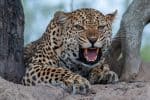
Leopard
Leopard
Diana monkey
Red river hog
Great blue turaco

Grebo-Krahn National Park

National Park

A high-biodiversity rainforest landscape in southeastern Liberia that helps protect the remaining Upper Guinean forest belt and supports wide-ranging mammals. It is notable for its primate diversity and as an important refuge for forest elephants in a heavily pressured region.

Western chimpanzee
African forest elephant
Leopard
Leopard
Diana monkey
King colobus
Sooty mangabey
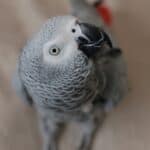
African grey parrot
African grey parrot

East Nimba Nature Reserve (Liberia)

Nature Reserve

Protects Liberia's portion of the Mount Nimba highlands-one of West Africa's most unique montane ecosystems with many localized species. It is especially notable for rare amphibians and montane fauna tied to the Nimba massif.

Western chimpanzee
Diana monkey
Leopard
Leopard
African forest buffalo
Maxwell's duiker
Hornbills (various)

Gola National Forest (Liberia) / Gola landscape (proposed protected area)

National Forest / proposed protected area (transboundary conservation landscape)

Part of a globally significant transboundary rainforest complex with Sierra Leone's Gola Rainforest National Park, important for landscape connectivity and forest-dependent wildlife. It supports rich birdlife and threatened mammals typical of Upper Guinean forests.

Western chimpanzee
African forest elephant
Pygmy hippopotamus
Pygmy hippopotamus
Diana monkey
White-breasted guineafowl
Yellow-casqued hornbill
Leopard
Leopard

Wonegizi Proposed Protected Area (Lofa County)

Proposed Protected Area

A critical northern forest block near the Guinea border that helps maintain connectivity for elephants and primates across remaining rainforest fragments. It is considered a high-priority site for expanding Liberia's protected-area network due to strong biodiversity values.

African forest elephant
Western chimpanzee
Diana monkey
Giant pangolin
Leopard
Leopard
Red river hog
Hornbills (various)

Lake Piso Multiple Use Reserve / Lake Piso Ramsar Site

Multiple Use Reserve; Ramsar Wetland of International Importance

A major coastal lagoon-mangrove system important for waterbirds, fisheries nurseries, and coastal biodiversity, with habitats ranging from brackish lagoons to mangroves and beach systems. It is among Liberia's most important wetland conservation areas.

West African manatee
Atlantic humpback dolphin
African softshell turtle
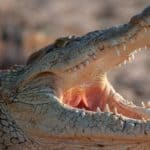
Nile crocodile
Nile crocodile
Waterbirds (herons and egrets)
Sea turtles (nesting/nearshore)

Krahn-Bassa Proposed Protected Area

Proposed Protected Area

A large rainforest landscape proposed to secure additional habitat for Liberia's most threatened forest mammals and to improve connectivity among southeastern forest blocks. It is noted for its potential to protect rare duikers and other elusive rainforest species.

Animals

Wildlife

Liberia sits in the heart of the Upper Guinean rainforest belt and is one of West Africa's best remaining strongholds for intact lowland tropical forest, swamp forest, mangroves, and coastal lagoons. This mix supports a classic rainforest wildlife experience: elusive forest megafauna (forest elephants, pygmy hippos), high primate diversity (including threatened chimpanzees), secretive forest carnivores (African golden cat, leopard), and rich birdlife with many Upper Guinean-forest specialties. Flagship viewing and conservation areas include Sapo National Park (Liberia's largest protected area), Grebo-Krahn National Park, and the Gola forest landscape, plus coastal turtle beaches and mangrove/lagoon systems such as Lake Piso.

≈200 species (notably diverse primates, forest ungulates/duikers, and bats) Mammals
≈600-650 species (strong Upper Guinean rainforest assemblage plus coastal/mangrove birds) Birds
≈140-170 species (forest snakes, crocodilians, coastal/river turtles) Reptiles
≈70-90 species (many forest frogs tied to intact rainforest and swamp habitats) Amphibians

Iconic Species

Pygmy Hippopotamus
Pygmy Hippopotamus Liberia is a global stronghold for this endangered West African endemic. The best-known refuge is Sapo National Park and surrounding forest/swamp mosaics, where signs are more likely than direct sightings due to dense habitat and nocturnal behavior.
African Forest Elephant
African Forest Elephant One of the most emblematic mammals of Liberia's rainforests, persisting in key blocks such as Sapo National Park and the Grebo-Krahn landscape. Encounters are typically indirect (tracks, dung, forest clearings), reflecting low densities and hunting pressure historically.
Western Chimpanzee Liberia retains important populations of this critically endangered subspecies in large forest tracts (including Sapo and southeastern forests). Chimpanzees are central to Liberia's primate diversity and conservation story, though viewing is difficult without habituated groups.
Diana Monkey A signature Upper Guinean rainforest monkey, often detected by calls and movement in the canopy. It occurs in Liberia's remaining mature forests (e.g., Sapo/Grebo-Krahn areas) and is a key indicator of high-quality forest.
Western Red Colobus Highly threatened in West Africa and strongly associated with intact forest; Liberia's larger forest blocks are among the places where viable groups still persist. Often encountered as noisy, group-living primates when forests are undisturbed.
Jentink's Duiker A rare, threatened Upper Guinean forest antelope that survives in Liberia's best remaining rainforest, particularly in the southeast. It is exceptionally elusive, making Liberia notable simply for still supporting populations.
Zebra Duiker A West African forest specialty and a "must-know" species of the Upper Guinean fauna. Liberia's forests remain an important refuge; sightings are rare, but it strongly defines the region's unique duiker diversity.
West African Manatee Associated with Liberia's coastal lagoons, mangroves, and slow rivers (e.g., Lake Piso and other wetland systems). Mostly seen via local knowledge, surfacing signs, and occasional direct observations in quiet waterways.
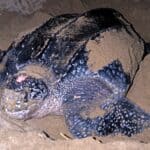
Leatherback Sea Turtle
Leatherback Sea Turtle Liberia's Atlantic beaches can host regionally important nesting, making coastal areas a key part of the country's wildlife experience (seasonal). Conservation groups monitor nesting activity along sections of the coast.

Endemic Species

Liberian Mongoose A little-known carnivore regarded as endemic to Liberia, with records centered in the country's remaining forest zone. Its rarity and restricted range make it one of Liberia's most distinctive mammals. Endemic

Notable Populations

  • Liberia is a key global stronghold for the endangered pygmy hippopotamus, with Sapo National Park and surrounding forests among the most important refuges.
  • One of West Africa's most important remaining blocks of Upper Guinean rainforest habitat, supporting regionally significant populations of forest elephants, threatened primates, and rare duikers.
  • Coastal Liberia includes regionally important sea turtle nesting beaches (notably leatherback and green turtles in some areas), adding global conservation value beyond the forests.
  • The Gola forest landscape (Liberia-Sierra Leone) is internationally important for Upper Guinean rainforest birds, including range-restricted specialties such as the Gola malimbe.
  • Liberia is the only country known to support the Liberian mongoose, making its forests uniquely important for this endemic carnivore.
Protection

Conservation

Primary Threats

  • Industrial concessions and informal/illegal timber extraction-especially along road networks and in forest landscapes surrounding protected areas-fragment Upper Guinean rainforest, degrade high-value habitat for forest elephants and primates, and increase access for hunters. Governance improvements exist, but enforcement and chain-of-custody controls remain uneven in remote counties.
  • Artisanal and small-scale gold and diamond mining causes localized deforestation, river siltation, and mercury/chemical contamination risks, particularly in forested watersheds. Large-scale mining footprints and associated settlements/roads can also convert habitat and intensify human pressure around biodiverse areas (e.g., Nimba region).
  • Shifting cultivation, cocoa expansion, and large plantation crops (notably rubber and oil palm) convert and fragment forests and wetlands, especially outside formally protected areas. Expansion often follows new access routes and can encroach on community forests and key wildlife corridors.
  • Net forest and wetland loss occurs through the combined effects of logging, agriculture, mining, settlement growth, and mangrove cutting. Fragmentation is a particular concern in the southeast and in coastal zones where mangroves and wetlands are converted or heavily harvested.
  • Bushmeat hunting remains widespread for food and income, facilitated by forest roads and logging/mining camps. This directly reduces populations of primates, duikers, and other forest fauna and can impact threatened species near and even within protected areas where patrol coverage is limited.
  • Illegal trade in live animals and parts (e.g., primates, pangolins and other wildlife) persists through local markets and cross-border routes. Demand can be domestic or regional, and weak detection capacity at transport nodes enables movement of wildlife products.
  • As farms expand into forest edges, crop-raiding and occasional property damage from wildlife (including primates and, where present, forest elephants) can provoke retaliatory killing or increased tolerance for hunting. Conflict is most acute near forest-farm boundaries and along corridor areas.
  • Coastal and nearshore fisheries face heavy pressure from artisanal fishing and incursions by industrial fleets, reducing fish stocks and affecting food security. Weak monitoring, control, and surveillance at sea increases illegal, unreported, and unregulated fishing risks.
  • Mining-related sedimentation and potential mercury/chemical use, urban waste mismanagement (notably around Monrovia), and oil/fuel spills from maritime activity degrade freshwater and coastal habitats. Plastic and solid waste also affect beaches and turtle nesting areas.
  • Rising temperatures and shifting rainfall patterns threaten forest resilience and increase flood/erosion risks. Sea-level rise and storm surge intensify coastal erosion and saltwater intrusion, impacting mangroves, coastal wetlands, and low-lying communities that depend on these ecosystems.
  • Road building linked to logging, mining, and agricultural development opens previously remote forests, accelerating deforestation, land conversion, and hunting access. New infrastructure can also disrupt wildlife movement by fragmenting habitat and increasing edge effects.
  • Heavy reliance on fuelwood and charcoal (including mangrove wood in some coastal areas) drives localized forest degradation near settlements and along transport routes. Overharvesting of non-timber forest products can also pressure certain plant and wildlife resources.
  • Encroachment, temporary camps, and settlement expansion around protected areas increase disturbance, fire risk, and opportunistic hunting. Limited staffing and logistics for ranger teams can make it difficult to maintain consistent presence across large, rugged forest landscapes.
Visit

Wildlife Tourism

Liberia's wildlife tourism is a developing but highly rewarding niche centered on Upper Guinean tropical rainforests, coastal lagoons/mangroves, and rare mammals like pygmy hippopotamus, forest elephant, and chimpanzee. Historically, years of conflict limited visitation and park management, but conservation efforts and community initiatives have been rebuilding access and guiding capacity-especially around flagship forests like Sapo National Park and select coastal wetland areas. Economically, wildlife tourism is smaller than in East/Southern Africa, yet it can be meaningful locally through guiding, porters, community lodges, transport services, and conservation jobs; visitor spending often directly supports patrols and community benefits where partnerships exist. Accessibility is improving but remains "adventure travel": most trips start from Monrovia, with long overland transfers on variable road conditions (especially in the rainy season). Expect limited lodge infrastructure in remote forest areas, more basic camps/guesthouses, and logistics that often require local guides, permits, and flexible itineraries. The payoff is immersive rainforest wildlife viewing, excellent birding, and a strong sense of exploration in a country that still feels undiscovered.

Best Time to Visit

Dry season is generally best for logistics and forest trails, while early rains can be excellent for birds and amphibians.

- November-February (main dry season): Best overall for rainforest trekking-drier trails, easier river crossings, and better access to remote forest blocks. Good time for primate tracking (chimpanzees/monkeys), forest birds, and general biodiversity walks.
- March-April (end of dry season into early rains): Often a productive shoulder season-wildlife activity remains high, humidity rises, and birding can be outstanding as breeding behaviors increase. Amphibians become more active after the first rains.
- May-October (rainy season; peak rains often June-September): Lush forests and spectacular soundscapes, but travel can be difficult (muddy roads, slower transfers). Best for photographers seeking dramatic rainforest atmospheres, peak frog/insect activity, and strong birding; some remote areas may become impractical without extra time and local support.

Coastal/mangrove wildlife viewing can be worthwhile year-round, but plan boat outings around tides and local sea conditions; calmer windows are more frequent in the dry months.

Top Wildlife Experiences

  • Guided rainforest trek in and around Sapo National Park to look for chimpanzee nests, primate troops (diana/spot-nosed/colobus monkeys where present), and signs of forest elephant-focusing on tracks, dung, feeding traces, and listening for calls at dawn.
  • Night walk in lowland rainforest (with a trained guide) to spotlight nocturnal wildlife-galagos, tree frogs, chameleons, nocturnal insects, and bioluminescent fungi in wetter months.
  • Pygmy hippopotamus "sign safari" along forest streams and swampy clearings: tracking footprints, slides, dung piles, and browsing marks with local trackers (rarely seen, but field sign interpretation is a highlight).
  • Birding-by-trail in Upper Guinean rainforest for specialty species-early-morning stakeouts at fruiting trees, mixed-species flock walks, and quiet listening sessions for canopy birds; ideal for keen birders building a West Africa list.
  • Mangrove canoe/boat excursion to scan mudflats and channels for coastal birds, kingfishers, herons/egrets, and other wetland wildlife, timed to favorable tides for best viewing.
  • Community-guided nature walk in a forest-edge village landscape to see how cocoa/farms, secondary forest, and riverine habitat connect-often the most reliable way to encounter monkeys, hornbills, and colorful butterflies.
  • Dawn "soundscape sit" at a forest clearing or ridge viewpoint: a structured hour of stillness to detect primate calls, hornbill wingbeats, and movement in the canopy before hiking begins.
  • Macro-focused rainforest photography session after rain (especially May-October): frogs, orchids, fungi, and insects-ideal for visitors who want a high-success wildlife experience even when large mammals are elusive.
  • Conservation-focused visit (where available) with local partners-learning about anti-poaching patrols, camera-trap monitoring, and community conservation projects; a meaningful add-on that directly supports protection efforts.
  • Beach-and-forest combined itinerary: pair a coastal relaxation day with a guided inland biodiversity hike, maximizing wildlife variety (wetlands + rainforest) in a single trip.

Safari Types Available

  • Guided rainforest trekking (day hikes and multi-day hikes)
  • Primate-focused tracking hikes (chimpanzee/monkey tracking by calls, nests, and feeding sites)
  • Night walks/spotlighting for nocturnal wildlife
  • Birding safaris (forest birding, wetland birding, mixed-habitat itineraries)
  • Boat/canoe safaris in mangroves, lagoons, and river channels (tide-dependent)
  • Community-based nature walks and cultural-ecology experiences (forest-edge and secondary forest habitats)
  • Camera-trap and conservation-activity tourism (research-style experiences where offered)
  • Photography-focused trips (macro, rainforest atmospherics, birds)
  • Expedition-style overland wildlife trips (remote access, camping/basic lodges, flexible routing)
Fun Facts

Did You Know?

Liberia has a carnivore literally named for it: the Liberian mongoose (Liberiictis kuhni). It's one of Africa's least-known mongooses, with a very limited known range centered on Liberia and nearby western Ivory Coast, and is rarely detected outside focused surveys and camera-trap work.

"Forest elephants" in Liberia aren't just smaller savanna elephants-they're a different species (African forest elephant, Loxodonta cyclotis). Their decline can measurably change rainforest composition because they're major long-distance dispersers of large-seeded trees.

Pygmy hippopotamuses in Liberia are forest-adapted rather than river-herd animals: they tend to be solitary, use dense swampy forest cover, and move along narrow, repeated "hippo paths" through understory-behavior that makes them far harder to spot than their savanna relatives.

Sapo National Park wasn't just set aside recently-it was created in 1983 as Liberia's first national park, and later biodiversity surveys/camera trapping have re-confirmed that elusive flagship species (like pygmy hippos and forest elephants) persisted there despite years of national instability.

Liberia's brackish coastal lagoons and mangrove systems can host African manatees-large mammals that can move between fresh and salt water and often remain almost invisible in tannin-dark water, meaning a "sea cow" can be living near communities without ever being seen.

Liberia is the single biggest stronghold of what's left of the Upper Guinean rainforest-commonly cited as holding around ~40% of the remaining block of this globally important (and heavily reduced) West African forest biome.

Sapo National Park is Liberia's largest protected area (about 1,804 km² after its 2003 expansion) and is among the largest protected tracts of intact lowland rainforest in West Africa.

Liberia is one of only four countries where pygmy hippopotamuses still survive in the wild (the others are Sierra Leone, Guinea, and Ivory Coast), making its forests globally significant for this species' future.

In the Mount Nimba massif on the Guinea-Ivory Coast border, the Nimba toad is famous for an extreme reproductive record: it is the only known truly viviparous toad-females give birth to fully formed live toadlets rather than laying eggs.

Lake Piso is Liberia's largest natural lake/lagoon and is recognized internationally as a Ramsar-listed wetland-an outsized biodiversity "hotspot" for a single named site on Liberia's coast.

Liberia Animal Fun Fact: There are 530 butterfly species in Liberia. However, only one is native to the country!

Western Africa’s biodiversity hotspot, Liberia boasts a variety of habitats that 140 mammals, over 600 bird species, plus 75 reptiles and amphibians call home. Offshore, scores of south Atlantic marine animals dart around its coastal waters, including the African manatee.

National Animal of Libera: Asiatic Lion

The national animal of Liberia is the Asiatic lion — also known as the Indian lion and Persian lion. Sanctified and protected, most live in Gir Sanctuary, Mitiyala Sanctuary, Pania Sanctuary, Gir National Park, and Girnar Sanctuary.

Liberia’s Endangered and Rare Animals

Liberia is the primary stomping ground of notable threatened species like the endangered pygmy hippopotamus. Additionally, the elusive Liberian mongoose, categorized as Endangered by the IUCN, is the country’s rarest mammal. First discovered in 1958, scientists know little about the secretive Liberian animal because only a handful have ever been observed.

Liberia Wildlife: Common Species

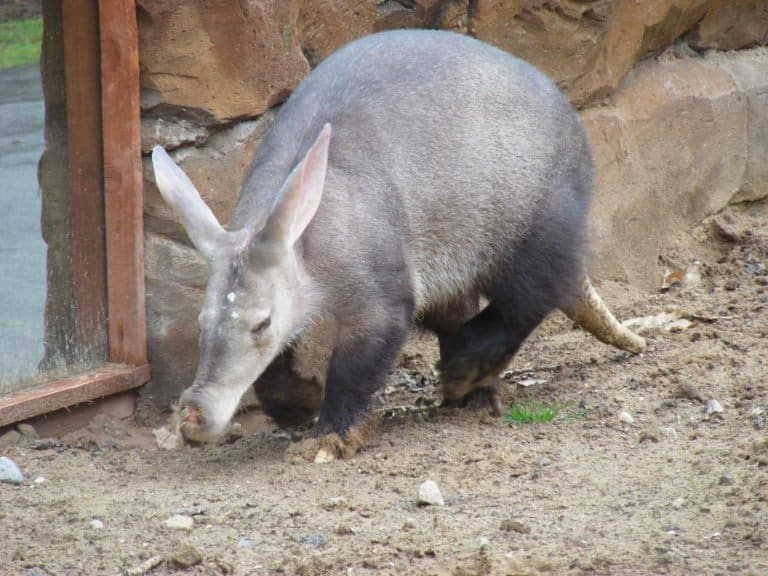
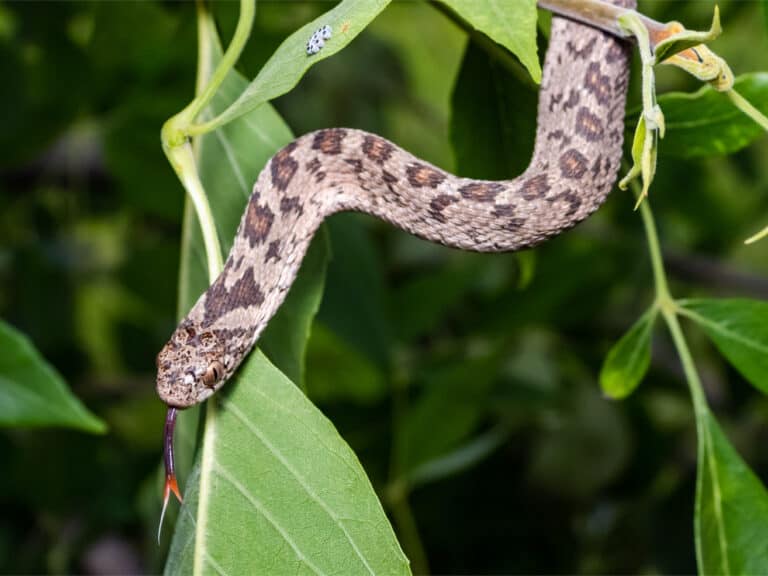
Leopards, monkeys, chimpanzees, antelopes, elephants, anteaters, and the red river hog are common Liberian animals. According to the latest count, 695 birds occupy the country, of which 21 are vulnerable according to conservation standards. Reptiles — including various crocodiles, snakes, and geckos — are also plentiful in the equatorial nation. And due to large amounts of annual rainfall, amphibians thrive in the ecosystem — the most interesting being the Gaboon caecilian, which looks like a giant worm!

The country’s eastern Atlantic waters are teeming with marine life, and fishing is a critical industry. Most fisheries export rough-head sea catfish. Shrimp and lobsters are heavily fished as well. Other swimmers in the region’s lakes, rivers, and streams include the African brown knifefish and Guinean killifish.

As an ecologically diverse nation about the size of Tennessee, the list of animals in Liberia is extensive. Many animals live in one of the country’s 10 national parks and nature preserves, including Cape Mount, Sapo, and the National Forest.

Animals Found in Liberia

119 species documented in our encyclopedia

Thank you for reading! Have some feedback for us?