N S W E
Wildlife Expeditions

Wildlife of
Alagoas

Alagoas pairs Brazil's Atlantic Forest remnants with lagoon-estuary mosaics, creating a compact hotspot for coastal birds, mangrove life, and elusive forest endemics.
7 Species
27,767 km² Land Area
Overview

About Alagoas

Alagoas' wildlife is shaped by strong contrasts: a warm Atlantic coast with reefs, dunes, mangroves, and large lagoons, and a hinterland where small Atlantic Forest patches survive among wide areas of farmland. This mix supports many coastal birds—waders, terns, and herons—while forest fragments shelter special mammals, reptiles, and Atlantic Forest birds found nowhere else. Conservation feels urgent: many of the state’s plants and animals depend on protecting and reconnecting remaining forest islands and keeping estuaries and lagoons healthy. Key habitats are mangrove-lined estuaries (nurseries for fish, crabs, and shrimp and feeding areas for waterbirds), lagoon systems and coastal wetlands (important for migratory and resident shorebirds), and lowland Atlantic Forest remnants. Offshore reefs add reef fish and occasional marine megafauna. You can quickly move from sandflats to mangroves to forest, which concentrates wildlife and links watching to local reserves and restoration work.

Physical Features

Geography

Alagoas has a short Atlantic coast, lagoons and estuaries, and a rise from low coastal plains to inland uplands. Remnant Atlantic Forest in the humid Forest Zone supports birds, primates, and other forest animals. Mangroves, estuaries, and lagoons are nurseries for fish and waterbirds. Sugarcane and pasture have fragmented habitats, so riparian corridors, wetlands, and forest patches are vital.

27,767 km² Land Area
2nd smallest state in Brazil (25th largest of 26 states) Size Rank
Brazil Country
State Type
Elevation Range

Sea level to ~844 m (interior uplands), creating a humid coastal-forest zone and drier inland habitats that influence species turnover

Coastline

Atlantic Ocean coastline with multiple estuaries and lagoon outlets; includes major coastal lagoon-estuary complexes (notably the Mundau-Manguaba complex) that strongly structure aquatic and shorebird habitats.

Key Landscapes

Atlantic Ocean coastline with beaches, dune fields, and nearshore reefs Mangroves and estuaries along the coastal plain (key nursery habitat for aquatic fauna) Lagoon systems, especially Mundau Lagoon and Manguaba Lagoon, plus associated channels and marshes Sao Francisco River corridor along the northern/northwestern boundary (major riparian habitat and dispersal route) Coastal plains and coastal tablelands (low plateaus) supporting a mosaic of wetlands, coastal sandy scrub vegetation, and agriculture Atlantic Forest remnants in the humid eastern Forest Zone, including forest fragments and riparian forests amid sugarcane landscapes
Parks & Reserves

Protected Areas

Alagoas has a fragmented protected-area network to save the last threatened Atlantic Forest patches in the interior highlands (Pernambuco Endemism Center) and protect coastal and estuary areas—coral reefs, seagrass beds, mangroves, lagoons, and Sao Francisco River mouth—that support marine megafauna, sea turtles, and shorebirds. Larger areas are federal sustainable-use zones; key forest sites are small ecological stations and reserves.

Protected Coverage

About 14%

State & Provincial Parks

Serra da Barriga State Park

about 2,000-3,000 ha

A forested ridge with Atlantic Forest remnants and strong cultural significance (Palmares maroon community heritage area); despite modest size, it functions as an important local refuge for forest birds, mammals, and pollinators within a highly altered matrix.

Red-handed howler monkey (Alouatta belzebul) Blond capuchin (Sapajus flavius) Atlantic Forest hummingbirds (multiple species) Forest raptors (multiple species) Agoutis (Dasyprocta spp.)

Marituba do Peixe Environmental Protection Area (state)

about 15,000-20,000 ha (lagoon and wetland mosaic)

A major lagoon, mangrove, and coastal scrub complex important for breeding and feeding waterbirds and for sustaining fisheries; a high-value site for wetland conservation and birdwatching in Alagoas.

Herons and egrets (Ardeidae) Roseate spoonbill (Platalea ajaja) Whistling-ducks (Dendrocygna spp.) Shorebirds (multiple migratory species) Caimans (Caiman spp.)

Catole and Fernao Velho Environmental Protection Area

about 5,000-7,000 ha

Protects watershed forests near Maceio that help maintain water quality and preserve Atlantic Forest fragments; notable for forest-dependent birds and primates and for connectivity-focused restoration around headwaters.

Blond capuchin (Sapajus flavius) Red-handed howler monkey (Alouatta belzebul) Manakins (Pipridae) Antbirds (Thamnophilidae) Tree frogs (Hylidae)

Wildlife Refuges

Murici Ecological Station

about 6,000 ha

One of the most important and most threatened Atlantic Forest strongholds in northeastern Brazil, globally known for critically endangered endemic birds; a flagship site for preventing extinctions in the Pernambuco Endemism Center and a priority for forest restoration and corridor work.

Alagoas antwren (Myrmotherula snowi) Blond capuchin (Sapajus flavius) Red-handed howler monkey (Alouatta belzebul) Alagoas foliage-gleaner (Philydor novaesi) Atlantic Forest understory antbirds (multiple species)

Pedra Talhada Biological Reserve (Alagoas/Pernambuco)

about 4,000-5,000 ha

A highland Atlantic Forest refuge on the Alagoas-Pernambuco border, crucial for safeguarding cooler, moist forest habitats that act as refuges for birds, amphibians, and small mammals; significant for conservation of range-restricted species in forest fragments.

Endemic Atlantic Forest birds (multiple threatened species) Amphibians associated with cloud-forest conditions (multiple species) Small forest cats (Leopardus spp., where present) Tinamous (Tinamidae) Trogons (Trogonidae)

Jequia Lagoon Marine Extractive Reserve

about 8,000-12,000 ha (reported figures vary)

A community-based coastal lagoon protected area supporting mangroves, estuarine nurseries, and traditional fisheries; valuable for maintaining food webs that sustain waterbirds and coastal fauna.

Mangrove crabs (Ucides cordatus) Estuarine fish nurseries (multiple species) Herons and egrets (Ardeidae) Neotropical otter (Lontra longicaudis) Sea turtles (Cheloniidae, coastal zone)

Coruripe Marine Extractive Reserve

about 10,000-25,000 ha (reported figures vary)

Protects mangroves, estuaries, and nearshore habitats critical for artisanal fisheries and for coastal biodiversity; helps conserve feeding grounds for shorebirds and supports ecological connectivity along the southern Alagoas coast.

Mangrove-dependent birds (multiple species) Shorebirds (multiple migratory species) Estuarine fish and shrimp (multiple species) Neotropical otter (Lontra longicaudis) Caimans (Caiman spp.)

Wilderness Areas

  • Murici Ecological Station (Murici Atlantic Forest)
  • Pedra Talhada Biological Reserve (Alagoas-Pernambuco border)
  • Costa dos Corais Environmental Protection Area (nearshore reefs and seagrass)
  • Piacabucu Environmental Protection Area (Lower Sao Francisco River mouth, dunes, and wetlands)
  • Marituba do Peixe Environmental Protection Area (lagoon and mangrove wetlands)
Animals

Wildlife

Alagoas' wildlife is shaped by a narrow but highly varied coastal-to-forest gradient: coral-influenced shoreline and beaches (important for sea turtles), mangroves and estuaries/lagoons (fish nurseries and waterbirds), and highly fragmented Atlantic Forest remnants that hold some of Brazil's most threatened endemic birds and primates. The state's biodiversity value is disproportionately concentrated in a few forest strongholds (notably the Murici region and other protected fragments) and key coastal wetland systems, while much of the surrounding matrix is dominated by agriculture (especially sugarcane), increasing isolation and pressure on native species.
≈120-160 species recorded (including bats and coastal marine mammals; highest diversity in remaining Atlantic Forest fragments) Mammals
≈430-520 species recorded (very high for the state's size; includes many Atlantic Forest endemics and migratory shorebirds) Birds
≈90-130 species recorded (snakes, lizards, freshwater turtles; plus marine turtles along the coast) Reptiles
≈50-90 species recorded (mostly Atlantic Forest frogs/toads; many localized to humid forest remnants) Amphibians
≈400-700+ species (combined coastal/marine, estuarine, and freshwater; mangroves/estuaries are key nurseries) Fish
Examples

Iconic Species

West Indian Manatee A flagship coastal mammal in northeastern Brazil; Alagoas' calm estuaries, seagrass areas, and nearshore waters support sightings and conservation actions (including rehabilitation and releases), making it one of the state's defining wildlife experiences.
Hawksbill Sea Turtle An iconic and globally threatened turtle that nests along parts of Brazil's northeast coast; Alagoas beaches are part of the broader regional nesting landscape, with conservation monitoring and occasional nesting activity.
Green Sea Turtle Commonly encountered compared with other sea turtles in nearshore waters; juveniles forage along the coast, and nesting occurs regionally on suitable beaches.
Blond Capuchin A charismatic, highly threatened primate endemic to northeastern Atlantic Forest; Alagoas forest fragments are part of its core range and a focal point for conservation and ecotourism in forest reserves.
Seven-colored Tanager A striking Atlantic Forest endemic of Brazil's northeast; Alagoas' remaining humid forest patches are among the places birders seek this threatened species.
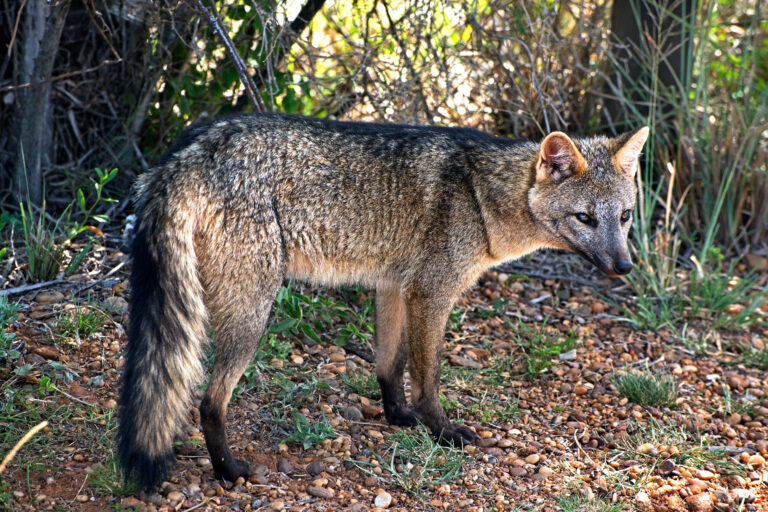
Crab-eating Fox
Crab-eating Fox A widely distributed canid that is frequently seen along rural edges, coastal scrub and sandy coastal plains, and open habitats; it typifies the 'forest-fragment plus agricultural matrix' wildlife assemblage of Alagoas.
Ocelot
Ocelot A secretive mid-sized cat that persists in larger forest remnants and connected mosaics; it is emblematic of the remaining Atlantic Forest carnivore community.
Rufescent Tiger-Heron A characteristic heron of Brazilian wetlands, including mangroves, lagoons, and slow rivers; it is often associated with the coastal wetland habitats that contribute strongly to Alagoas' biodiversity.

Endemic & Rare Species

Alagoas Curassow

Mitu mitu

Extinct in the Wild (IUCN); survives via captive population and conservation breeding

One of Brazil's most famous conservation cases: formerly native to Alagoas' Atlantic Forest, it symbolizes both the scale of historical forest loss and the potential role of managed breeding and future reintroduction planning.

Alagoas Antwren

Myrmotherula snowi

Critically Endangered (possibly extinct in the wild in some assessments/contexts); extremely small and localized population if extant

A micro-endemic tied to the last humid forest fragments in the Murici region; it represents the 'last-stand' biodiversity of Alagoas' northeastern Atlantic Forest.

Alagoas Foliage-gleaner

Philydor novaesi

Critically Endangered (often treated as possibly extinct); historically known from Alagoas forest remnants

A highly specialized Atlantic Forest bird whose disappearance risk highlights the fragility of tiny, isolated forest patches in the state.

Alagoas Tyrannulet

Phylloscartes ceciliae

Endangered (IUCN)

A rare Atlantic Forest endemic with a very restricted range in the northeast; conservation in Alagoas' remaining forest fragments is important to its survival.

Pernambuco Pygmy Owl

Glaucidium mooreorum

Critically Endangered (possibly extinct); historically recorded in the Pernambuco-Alagoas endemism center

One of the most elusive birds associated with the severely fragmented northeastern Atlantic Forest; its uncertain status underscores ongoing survey and habitat-protection needs.

West Indian Manatee

Trichechus manatus

Vulnerable (IUCN); nationally threatened in Brazil

Alagoas' estuaries and nearshore waters are part of a priority conservation coast in northeastern Brazil, where strandings, rehabilitation, and releases are key management themes.

Notable Populations

  • Northeastern Atlantic Forest 'Murici' biodiversity stronghold: one of the most important remaining habitat complexes for Pernambuco-Alagoas endemic birds (including multiple Critically Endangered taxa).
  • Regionally important sea turtle nesting and nearshore foraging along the northeast coast: Alagoas contributes habitat for hawksbill and green sea turtles within the wider conservation landscape.
  • Mangroves, estuaries, and lagoon systems as fish nurseries and feeding areas for colonial waterbirds and migratory shorebirds on the Atlantic flyway.

Recent Changes

  • Forest-fragment specialists have continued to decline where isolation, edge effects, and habitat degradation persist; several Murici-region endemics are now extremely rare and subject to intensive survey/monitoring.
  • Manatee conservation has emphasized rehabilitation of stranded/orphaned individuals and managed releases along northeastern Brazil, improving local awareness and reducing some human-caused mortality risks (e.g., entanglement/boat strikes) where mitigation is implemented.
  • Sea turtle nesting success has improved in monitored areas along the northeast coast due to nest protection, community engagement, and enforcement, though coastal development and fisheries bycatch remain ongoing pressures.
  • The Alagoas Curassow remains extinct in the wild; conservation breeding continues and reintroduction feasibility discussions/planning have been an ongoing focus, dependent on habitat security and long-term management capacity.
Visit

Wildlife Viewing

Alagoas offers coastal, reef, estuary, and Atlantic Forest wildlife viewing in a small area. Costa dos Corais, the region’s largest coastal marine protected mosaic, has reef fish and seagrass. Calm estuaries shelter protected West Indian manatees. Scattered forest remnants hold popular birds and mammals. Best sightings come in APAs, reserves, community programs, and guided trips.

Best Seasons

Dry season (roughly Sep-Mar)

Best overall visibility and sea conditions for reef snorkeling and boat trips (Maragogi, São Miguel dos Milagres, Japaratinga). Peak months for sea turtle nesting on many NE Brazil beaches (typically spring-summer), so you may find monitoring activities and occasional hatchling events where conservation groups operate. Lagoons and estuaries are still productive for birds, and calmer weather makes early-morning paddles easier.

Rainy season (roughly Apr-Aug)

Lusher landscapes and strong bird activity around wetlands and forest edges; good for photography of greenery and for exploring lagoons/river margins when seas are rougher. Increased runoff can reduce water clarity on reefs and limit access to natural pools on certain days-plan snorkeling flexibly and prioritize estuaries, lagoons, and forest walks.

Peak winter-spring offshore period (roughly Jul-Oct)

Potential for humpback whale presence offshore in Northeast Brazil (most reliable farther south in Bahia, but occasional sightings can occur along the Alagoas coast). Even without whales, this period can be excellent for seabirds and coastal viewpoints; choose operators who know local conditions and prioritize safe, legal distances.

Shoulder months (Mar-Apr and Aug-Sep)

Often a sweet spot for mixed itineraries: fewer crowds than high summer, decent sea windows for reefs, and strong dawn/dusk wildlife activity in estuaries. Great time to combine manatee programs, birding, and one or two reef days.

Top Wildlife Experiences

  • Observe West Indian manatees with the Projeto Peixe-Boi / ICMBio program in the Tatuamunha River area (Porto de Pedras region). Join an authorized, low-impact viewing outing (quiet boat/canoe style) that follows conservation protocols.
  • Snorkel the reef natural pools within the APA Costa dos Corais (e.g., Maragogi, Japaratinga, São Miguel dos Milagres) with a licensed operator. Focus on early tides for clearer water and look for reef fish, sea urchins, crustaceans, and coral/reef communities.
  • Birding and sunrise photography around the Mundaú-Manguaba lagoon system near Maceió (estuaries, mangroves, mudflats). Go with a local guide to find herons, egrets, kingfishers, terns, and seasonal migrants.
  • Explore the São Francisco River mouth region (Piaçabuçu / surrounding dunes, river channels, and wetlands). Combine a boat ride with shore walks to watch riverine birds, coastal species, and changing sandbar habitats.
  • Day trip to the Atlantic Forest in the Pedra Talhada area (Alagoas–Pernambuco border) at dawn with an expert bird guide to see endemic and rare forest birds, with a focus on conservation.
  • Mangrove and estuary paddle (kayak/stand-up paddle) in calmer backwaters along the north coast (Costa dos Corais communities). Look for crabs, mangrove birds, and juvenile fish nurseries; choose operators who avoid wildlife harassment and sensitive roost sites.
  • Night beach walk focused on coastal ecology (where permitted) to learn about sea turtle conservation, ghost crabs, shorebird behavior, and light-pollution impacts. Prefer organized, permitted activities rather than self-guided nighttime searching.

Wildlife Watching Types

Manatee viewing (estuary/seagrass-linked habitats, conservation-led outings) Reef snorkeling and tide-pool wildlife observation (reef fish, invertebrates, corals) Birding in lagoons, mangroves, mudflats, and coastal scrub Atlantic Forest birding (endemics and threatened species in forest fragments) Dolphin/whale chance sightings on offshore boat trips (seasonal; whales not guaranteed) River-and-dune wildlife watching (São Francisco River mouth landscapes) Mangrove ecology walks and paddling safaris (nursery habitats, crabs, birds) Sea turtle conservation-focused viewing (seasonal and location-dependent, only where programs operate)

Guided Options

  • Projeto Peixe-Boi (ICMBio) / local community partners in the Tatuamunha River area: authorized manatee interpretation and observation outings that emphasize animal welfare and habitat protection.
  • APA Costa dos Corais (ICMBio) authorized operators: licensed reef/natural-pool snorkeling trips with rules around access, group size, and sensitive areas (ask specifically about compliance and environmental briefings).
  • Local birding guides based in Maceió and the north-coast communities for lagoon/mangrove birding circuits (sunrise outings are typically best).
  • Specialist bird guides and conservation-linked visits for the Pedra Talhada region (best arranged in advance; dawn starts; focus on forest fragments and surrounding buffers).
  • São Francisco River mouth boat excursions from Piaçabuçu with pilots familiar with shifting channels/sandbars-combine with a guide who can interpret birds and dune/river ecology rather than a purely scenic ride.
  • Community-based mangrove/estuary kayaking and canoe tours along Costa dos Corais that prioritize quiet approaches, no feeding/handling wildlife, and respect for roosting/nesting areas.
Habitats

Ecosystems

Alagoas has many coastal and lowland ecosystems in a small area: Atlantic Forest remnants and coastal sandy-plain vegetation; large lagoon-estuary systems (notably the Mundau-Manguaba complex); mangroves and tidal flats; and drier seasonal forests and thorn scrub inland. Most habitats are broken by farming (especially sugarcane) and towns, so remaining forests and wetlands need protection.

Biomes

Tropical Rainforest

Represents the Atlantic Forest domain (humid coastal and subcoastal forests), including lowland evergreen/semievergreen forests and moist forest fragments on hills and escarpments; much of it persists as small, isolated remnants amid agriculture.

Historically widespread; today largely fragmented, with remaining native forest concentrated in coastal/subcoastal zones and protected fragments (generally <~15% of the state in more intact condition).

Tropical Dry Forest

Occurs as seasonally dry forests and thorny dry-forest transition vegetation toward the western interior, with stronger dry-season stress and more open canopy structure than coastal Atlantic Forest.

Mainly inland/western portions; heavily converted and degraded in many areas (roughly on the order of ~15-30% of the state as a climatic/vegetation zone, but with much transformed).

Freshwater

Large rivers and drainage networks (including the lower São Francisco River) plus prominent coastal lagoons and freshwater-influenced backwaters that support fisheries, aquatic vegetation, and waterbird habitats.

Linear and patchy but regionally important; concentrated along major river corridors and the lagoon complexes near the coast.

Marine

Tropical Southwestern Atlantic coastal waters, with nearshore reefs/reef-like beachrock, sandy bottoms, and coastal fisheries influenced by estuaries and lagoons.

Narrow but continuous band along the Atlantic shoreline and adjacent continental shelf.

Wetland

Mangroves, estuarine mudflats, tidal channels, lagoon margins, and floodplain wetlands supporting high productivity and nursery habitat for fish and crustaceans.

Limited in area but concentrated around estuaries and the Mundaú-Manguaba system and other river mouths; ecologically disproportionate to its footprint (generally a few percent of area, locally extensive around lagoons).

Habitats

Rainforest

Atlantic Forest remnants (humid lowland/foothill forest) in fragmented patches; important for endemic and forest-dependent fauna and flora.

Forest

Mosaic of secondary forests, riparian forest strips, and regenerating fragments connecting (or isolating) larger remnants.

Woodland

More open, seasonally dry woodland formations inland, often transitional between moist Atlantic Forest and drier scrub.

Shrubland

Dry, thorny scrub and secondary vegetation in the western interior (the state's semiarid seasonally dry forest zone) and other heavily degraded areas, including dry-forest transition scrub and early-successional fallows.

River/Stream

Lower Sao Francisco River and coastal-draining rivers (e.g., Paraiba do Meio, Mundau), with riparian corridors and floodplain features.

Lake

Coastal lagoons-especially the Mundau-Manguaba lagoon complex-mixing fresh and brackish influences and supporting fisheries and waterbirds.

Wetland

Lagoon-edge marshes, floodplain wetlands, and seasonally inundated lowlands associated with river mouths and lagoon margins.

Mangrove

Mangrove forests around estuaries and lagoons (notably near Maceio's lagoon-estuary systems), key as fish and crustacean nurseries and shoreline stabilizers.

Estuary

River-mouth estuaries and tidal channels linking lagoons to the sea, with strong salinity gradients and high productivity.

Coastal

Coastal plains with dunes, restinga mosaics, and lagoon/estuary interfaces; heavily pressured by development in places.

Beach

Extensive sandy beaches along the Atlantic coast, including turtle- and shorebird-relevant zones where disturbance is managed.

Rocky Shore

Localized rocky headlands and reef-like beachrock/nearshore hard substrate that create tidepool habitats and wave-exposed shore communities.

Cliff/Rocky Outcrop

Coastal bluffs and sea cliffs in parts of the shoreline, shaping erosion-prone habitats and scenic coastal geomorphology.

Open Ocean

Nearshore tropical Atlantic waters used by pelagic fish and marine mammals, strongly influenced by coastal productivity and estuarine outflow.

Seabed/Benthic

Shallow continental-shelf sandy and mixed bottoms supporting demersal communities and artisanal fisheries.

Agricultural/Farmland

Extensive croplands and pasture mosaics dominating much of the landscape, driving fragmentation and altering hydrology.

Plantation

Large-scale sugarcane plantations, a defining land use in the coastal tablelands, often adjacent to forest remnants.

Urban

Urbanized coastal corridors (notably around Maceió) with habitat loss, altered drainage, and coastal/lagoon water-quality pressures.

Suburban

Expanding peri-urban areas around coastal cities and lagoon margins, increasing edge effects and encroachment on wetlands.

Ecoregions

Pernambuco coastal forests (Atlantic Forest) Caatinga Northeast Brazil mangroves Sao Francisco freshwater ecoregion (lower Sao Francisco River basin) Northeastern Brazil (MEOW marine ecoregion)
Protection

Conservation

Primary Threats

  • Atlantic Forest cover in Alagoas is reduced to small, isolated fragments embedded in sugarcane and pasture landscapes, especially in the Zona da Mata; continued clearing and edge effects reduce breeding habitat for forest endemics (e.g., Murici endemics) and primates.
  • Sugarcane monoculture dominates much of the coastal tablelands and interior transition zones, driving forest conversion, suppressing natural regeneration, and increasing agrochemical runoff into streams feeding lagoons and estuaries.
  • Selective illegal extraction of hardwoods and fuelwood persists in remaining forest fragments and buffer zones around protected areas, degrading canopy structure critical for threatened birds and increasing access for hunters.
  • Growth of Maceió and coastal municipalities drives loss of restinga vegetation, dune systems, mangrove margins and small wetlands; informal expansion also increases encroachment and pollution loads into lagoon systems.
  • Untreated/partially treated sewage and solid waste enter the Mundaú-Manguaba lagoon complex and urban estuaries; agricultural pesticides and fertilizers contribute to eutrophication, fish kills and degradation of seagrass/mangrove nursery habitats.
  • High pressure on reef and estuarine fisheries (including nearshore reef fish and invertebrates) reduces trophic structure and reef resilience along the Costa dos Corais, with localized depletion near urban/tourism hubs.
  • Intensive extraction of mangrove resources (e.g., crabs and wood for small-scale use) and declining water availability/quality in some catchments undermine estuarine productivity and the livelihoods that depend on sustainable harvest.
  • Coastal roads, resort development and shoreline hardening fragment restinga/mangroves and intensify light/noise on nesting beaches; port/industrial activities around metropolitan areas add chronic disturbance and risk of spills in coastal waters.
  • Solution mining/extraction of evaporites (salt/brine) in the Maceió region has been linked to ground instability and landscape disruption; broader sand/clay extraction for construction can degrade riparian zones and coastal dunes if poorly regulated.
  • Unregulated tourism (vehicles and foot traffic on beaches, boat traffic in estuaries) disturbs sea turtle nesting and increases collision/entanglement risk for manatees in calm coastal and lagoon channels.
  • Hunting pressure in forest remnants (for subsistence and opportunistic take) affects medium/large fauna such as primates and ground birds, compounding the impacts of fragmentation.
  • Capture and trade of songbirds and parrots persists in the region, with forest-edge accessibility facilitating removal of individuals from small, already isolated populations.
  • Introduced fishes (notably tilapia in lagoon and reservoir systems) alter food webs and compete with native species; feral cats/dogs near settlements increase predation pressure on ground-nesting birds and wildlife in fragments.
  • Marine heat stress and degraded water quality can elevate coral disease susceptibility on shallow reef systems; interactions with domestic animals around forest edges can increase pathogen spillover risk to wildlife.
  • Sea-level rise and stronger storm surges threaten low-lying mangroves, estuaries and nesting beaches; ocean warming increases bleaching risk on nearshore reefs in the Costa dos Corais; shifting rainfall extremes stress lagoon hydrology and water quality.
  • Drainage and canalization of wetlands, alteration of river flows, and mangrove conversion (including for aquaculture in some areas) reduce nursery habitat connectivity between rivers, lagoons and coastal waters.
Fun Facts

Did You Know?

Alagoas' "pool reefs" can be walked at extreme low tide-meaning some corals and reef organisms periodically face hot sun and brief air exposure, a harsh routine that still supports vibrant reef communities offshore of places like Maragogi/Porto de Pedras.

In the Tatuamunha River estuary (Porto de Pedras), West Indian manatees (Trichechus manatus) use brackish/freshwater channels as well as the sea-many visitors expect "open-ocean" animals, but these are often quiet estuary residents.

Seahorses occur in Alagoas' mangroves and estuaries (including the Costa dos Corais region), and it's the males that become "pregnant": eggs develop in the male's brood pouch until live young are released.

The Alagoas antwren (Myrmotherula snowi), described from this region's Atlantic Forest, has one of the smallest known ranges of any Brazilian bird-today it persists in just a handful of tiny forest fragments, making individual patches in Alagoas globally important.

Some of Alagoas' best-known wildlife is nearly invisible unless you know the habitat: many threatened Atlantic Forest birds live only in the shaded understory of small forest patches, while nearby sugarcane fields can seem empty.

Costa dos Corais, in Alagoas and Pernambuco, is Brazil's largest federal coastal marine protected area (~413,000 ha). It shelters one of the country's biggest reef systems and a refuge for reef fish, corals, and large marine animals.

The Alagoas curassow (Mitu mitu)-historically from the lowland Atlantic Forests of Alagoas/Pernambuco-is classified as Extinct in the Wild (IUCN) and survives only in captivity, placing it among the rarest birds on Earth.

Murici Ecological Station, in Alagoas' Atlantic Forest remnants, is one of the best-known single sites in the Atlantic Forest for concentrations of globally threatened birds, including Critically Endangered endemics tied to the Pernambuco Center of Endemism.

The cryptic treehunter (Cichlocolaptes mazarbarnetti) is known only from Murici forests in Alagoas (Pernambuco Center of Endemism). Described in 2014, it is IUCN Critically Endangered (Possibly Extinct) after a very fast decline.

Thank you for reading! Have some feedback for us?