N S W E
Wildlife Expeditions

Wildlife of
Mato Grosso

Where Amazon rainforest, Cerrado savanna, and the Pantanal converge, Mato Grosso offers Brazil's most dramatic wildlife crossroads-from jaguars to macaws and river giants.
47 Species
903,357 km² Land Area
Overview

About Mato Grosso

Mato Grosso is a large inland state where three big biomes meet: the Amazon in the north, the Cerrado in the center, and the Pantanal in the south. This mix gives it a special wildlife mix: canopy species in the Amazon, open-country animals in the Cerrado, and wetland species in the Pantanal. A single trip can visit very different habitats and see many kinds of animals, often near rivers and floodplains. The Amazon forests have many primates, canopy bird flocks, and large raptors. The Cerrado's grasslands, gallery forests, and rocky areas hide armadillos, giant anteaters, and many local birds. The Pantanal's seasonal floods push animals to waterways and islands, making jaguars, capybaras, caimans, and waterbirds easy to see, especially in the dry season. The sharp change between biomes in one state makes Mato Grosso especially rich for wildlife and birding.

Physical Features

Geography

Mato Grosso has a north-to-south pattern: Amazon rainforest in the north, Cerrado savanna in the central highlands, and the Pantanal floodplain in the south. Big rivers and seasonal floods create different habitats (terra firme forest vs wetlands; gallery forest vs open savanna), leading to many different species and supporting jaguar, giant otter, birds, monkeys, and reptiles.

903,357 km² Land Area
3rd largest state in Brazil Size Rank
Brazil Country
State Type
Elevation Range

Approximately ~90 m in the Pantanal lowlands to ~1,100 m on cerrado plateaus and chapadas (uplands), creating sharp climatic and vegetation shifts over short distances

Key Landscapes

Southern Pantanal wetlands (Upper Paraguay Basin): vast seasonally flooded grasslands, marshes, oxbow lakes, and river channels critical for aquatic and semi-aquatic fauna Amazon rainforest (north/northwest): extensive continuous forest, including terra firme and river-influenced forests supporting primates, large cats, and high bird diversity Cerrado savannas and woodlands (central/east): a mosaic of grasslands, shrub savanna, woodland, and gallery forests that acts as a transition zone and key corridor between biomes Chapada dos Guimarães and associated escarpments/plateaus: sandstone cliffs, cerrado on uplands, and gallery forests in valleys; important for raptors, endemics, and cave/rock habitats Parecis Plateau (west/central): highlands and headwaters with cerrado vegetation; influences river formation and connectivity to Amazon tributaries Major rivers and headwaters (hydrological divide): Amazon-directed tributaries (e.g., Juruena-Teles Pires/Tapajós system, Xingu headwaters) and La Plata-directed rivers (Paraguay, Cuiabá, São Lourenço), structuring dispersal routes and wet-season refugia
Parks & Reserves

Protected Areas

Mato Grosso lies where three big habitats meet: the Amazon rainforest (north), the Brazilian savanna (central/east), and the Pantanal floodplain (southwest). Its protected areas include federal Conservation Units—National Parks, Ecological Stations, National Forests, Environmental Protection Areas—plus state parks and large Indigenous Territories. These areas protect jaguar strongholds, river headwaters (Xingu, Teles Pires, Juruena), and important wetlands.

Protected Coverage

Approximately ~30-35% of Mato Grosso is under some form of protection when combining Conservation Units and Indigenous Territories; Conservation Units alone are roughly ~8-10% (approximate, varies by dataset/definitions).

National Parks & Preserves

Pantanal Matogrossense National Park

≈135,000 ha (≈1,350 km²)

A strictly protected core area of the northern Pantanal, dominated by seasonal floodplains, oxbow lakes, and gallery forests. Wildlife densities can be especially high in the dry season when animals concentrate near remaining water bodies.

Jaguar (Panthera onca) Giant otter (Pteronura brasiliensis) Hyacinth macaw (Anodorhynchus hyacinthinus) Jabiru stork (Jabiru mycteria) Yacare caiman (Caiman yacare)

Chapada dos Guimaraes National Park

≈32,630 ha (≈326.3 km²)

A flagship Cerrado-forest transition park known for sandstone cliffs, waterfalls, and savanna (Cerrado) habitats that support wildlife distinct from the Pantanal and Amazon. Notable for raptors, terrestrial mammals, and regionally characteristic Cerrado species.

Maned wolf (Chrysocyon brachyurus) Giant anteater (Myrmecophaga tridactyla) Puma (Puma concolor) Red-legged seriema (Cariama cristata) Greater rhea (Rhea americana)

Juruena National Park

≈1,958,000 ha (≈19,580 km²)

A vast Amazon protected area centered on the Juruena River basin, with extensive intact rainforest, rapids, and river islands. It is important for wide-ranging predators, primates, and large forest birds, and forms part of a major conservation mosaic in northwest Mato Grosso.

Jaguar (Panthera onca) Lowland tapir (Tapirus terrestris) White-lipped peccary (Tayassu pecari) Harpy eagle (Harpia harpyja) Giant armadillo (Priodontes maximus)

Amazonian Fields National Park (portion in Mato Grosso)

≈961,000 ha total (multi-state; includes areas in Mato Grosso)

Protects a rare mosaic of Amazon rainforest interspersed with natural open grassland formations and wetlands. This habitat diversity supports both forest and open-area species and helps maintain connectivity across a broad, relatively roadless frontier zone.

Jaguar (Panthera onca) Lowland tapir (Tapirus terrestris) Giant anteater (Myrmecophaga tridactyla) Harpy eagle (Harpia harpyja) Giant otter (Pteronura brasiliensis)

State & Provincial Parks

Meeting of the Waters State Park

≈108,000 ha (≈1,080 km²)

Among Brazil's most famous jaguar-viewing landscapes, protecting river corridors and floodplain habitats where big cats, capybaras, caimans, and waterbirds concentrate. Often highlighted for predator-prey dynamics along the Cuiaba river system in the northern Pantanal.

Jaguar (Panthera onca) Giant otter (Pteronura brasiliensis) Capybara (Hydrochoerus hydrochaeris) Yacare caiman (Caiman yacare) Jabiru stork (Jabiru mycteria)

Cristalino State Park

≈184,900 ha (≈1,849 km²)

A major Amazon rainforest stronghold in northern Mato Grosso, noted for very high bird diversity and intact forest structure. Important for large raptors, primates, and forest megafauna, and often managed or visited in conjunction with adjacent private reserves.

Harpy eagle (Harpia harpyja) Black spider monkey (Ateles chamek) Lowland tapir (Tapirus terrestris) Jaguar (Panthera onca) Giant armadillo (Priodontes maximus)

Blue Mountain Range State Park

≈11,000 ha (≈110 km²)

A Brazilian savanna park of hills, springs, and forested valleys that protects important headwaters and offers reliable viewing of savanna birds and medium-to-large mammals near Barra do Garcas.

Giant anteater (Myrmecophaga tridactyla) Maned wolf (Chrysocyon brachyurus) Puma (Puma concolor) Red-legged seriema (Cariama cristata) Collared peccary (Pecari tajacu)

Araguaia State Park

≈223,000 ha (≈2,230 km²)

Protects riverine forests, seasonally flooded areas, and savanna mosaics along the Araguaia system, important for aquatic fauna, migratory and colonial waterbirds, and connectivity between Brazilian savanna and Amazon influences.

Giant otter (Pteronura brasiliensis) Orinoco/Amazon river dolphin (Inia sp.) Giant anteater (Myrmecophaga tridactyla) Jabiru stork (Jabiru mycteria) Black caiman (Melanosuchus niger)

Wildlife Refuges

Taiama Ecological Station (federal)

≈11,200 ha (≈112 km²)

A strictly protected wetland unit in the Pantanal with extensive marshes and lagoons. It is especially important for breeding and feeding waterbirds and for aquatic predators in a landscape with strong seasonal flooding.

Giant otter (Pteronura brasiliensis) Jabiru stork (Jabiru mycteria) Marsh deer (Blastocerus dichotomus) Jaguar (Panthera onca) Black caiman (Melanosuchus niger)

Araguaia River Meanders Environmental Protection Area (federal)

≈350,000 ha (order-of-magnitude; large riverine protected area spanning Mato Grosso and Goias)

A large multiple-use protected landscape safeguarding the meandering Araguaia River, sandbanks, islands, and riparian habitats. Notable for freshwater biodiversity, turtle nesting areas, and seasonal concentrations of birds along river beaches and lagoons.

Giant river turtle (Podocnemis expansa) Amazon/Araguaia river dolphin (Inia sp.) Giant otter (Pteronura brasiliensis) Jabiru stork (Jabiru mycteria) Black skimmer (Rynchops niger)

Juruena National Forest (federal)

≈1,900,000 ha (≈19,000 km²; approximate)

A vast sustainable-use forest that helps maintain roadless Amazon blocks and wildlife connectivity in the Juruena basin. Important for forest megafauna and large-ranging species, and for buffering nearby strictly protected areas.

Jaguar (Panthera onca) Lowland tapir (Tapirus terrestris) White-lipped peccary (Tayassu pecari) Harpy eagle (Harpia harpyja) Giant armadillo (Priodontes maximus)

Guariba-Roosevelt Extractive Reserve (federal; portion in Mato Grosso)

≈138,000 ha total (multi-state; includes areas in Mato Grosso)

A sustainable-use reserve protecting large forest tracts and river habitats while supporting traditional livelihoods. It contributes to a broader conservation mosaic across the Mato Grosso-Amazonas frontier and helps conserve aquatic mammals and intact riparian corridors.

Giant otter (Pteronura brasiliensis) Jaguar (Panthera onca) Lowland tapir (Tapirus terrestris) Black spider monkey (Ateles chamek) White-lipped peccary (Tayassu pecari)

Wilderness Areas

  • Pantanal interior floodplains away from major roads (seasonally roadless landscapes with high wildlife densities in the dry season)
  • Juruena-Teles Pires headwaters and interfluvial forests (large, sparsely roaded Amazon blocks important for connectivity)
  • Upper Xingu headwaters region (a key source area for clearwater rivers, with large continuous natural habitats around protected and Indigenous lands)
  • Xingu Indigenous Park (Indigenous Territory) and surrounding Indigenous lands (very large, relatively intact mosaics that function as de facto wilderness and biodiversity refuges)
  • Northwest Mato Grosso conservation mosaic (national parks, state parks, and federal forests forming one of Brazil's largest remaining road-poor forest regions)
Animals

Wildlife

Mato Grosso is very wildlife-rich because it covers three biomes: Amazon rainforest in the north, Cerrado (savanna and woodlands) in the center and east, and the Pantanal floodplain in the south. This causes a strong change from upland forest to gallery forests, flooded wetlands, and open grasslands. It supports Amazon specialists (harpy eagle, spider monkeys) and wetland/savanna icons (jaguar, giant otter, jabiru). The Pantanal has especially good views of big animals in the dry season, while the Amazon–savanna edge holds many unique species and urgent conservation needs.

~180-230 species (Amazon + Brazilian tropical savanna + Pantanal assemblages combined; inventories vary by region) Mammals
~700-850 species (among Brazil's richest state-level totals due to biome overlap) Birds
~160-220 species (including many snakes, turtles, caimans) Reptiles
~140-200 species (highest diversity near Amazon/Brazilian savanna transition zones and riparian habitats) Amphibians
~400-700+ freshwater species (very high diversity across Paraguay-Paraná, Tapajós/Xingu headwaters, Araguaia and other basins) Fish
Examples

Iconic Species

Jaguar
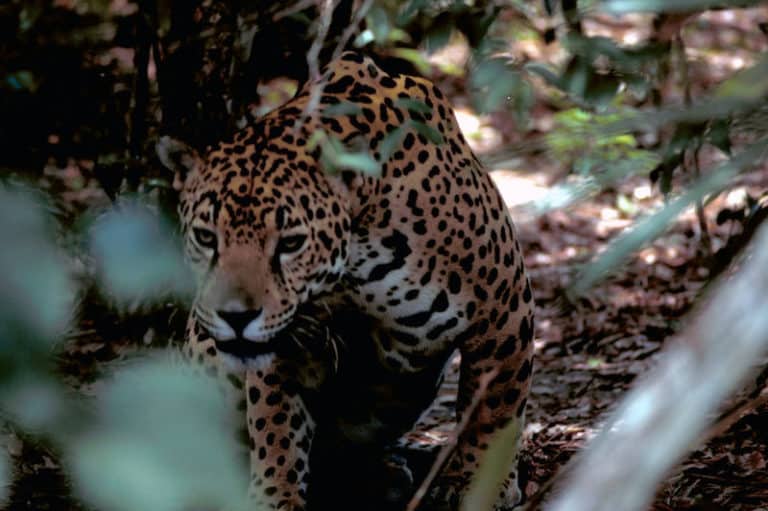
Jaguar The Pantanal of southern Mato Grosso is one of the world's best places to reliably see jaguars, especially along river margins in the dry season-making it the state's flagship wildlife draw.
Giant Otter
Giant Otter Family groups are frequently observed in Pantanal rivers and oxbow lakes; their daytime activity and loud vocalizations make them a signature wetland experience.
Hyacinth Macaw
Hyacinth Macaw This charismatic, large blue macaw is strongly associated with the Pantanal's palm-rich landscapes; Mato Grosso supports important viewing opportunities and conservation projects focused on nest sites.
Jabiru Stork A towering wetland stork and an emblem of the Pantanal; conspicuous at nests and foraging wetlands during seasonal flooding cycles.
Capybara
Capybara Abundant along waterways and floodplains; often seen in large groups and a key prey species in Pantanal food webs.
Lowland Tapir South America's largest terrestrial mammal occurs across all three biomes in the state; commonly encountered via tracks and occasionally seen at water edges in the Pantanal and forest rivers.
Giant Anteater A Cerrado and Pantanal icon; frequently sought on safaris in open habitats where it forages for ants and termites.
Yacare Caiman One of the defining animals of the Pantanal-often seen in high densities along channels and lagoons, especially in the dry season.
Green Anaconda
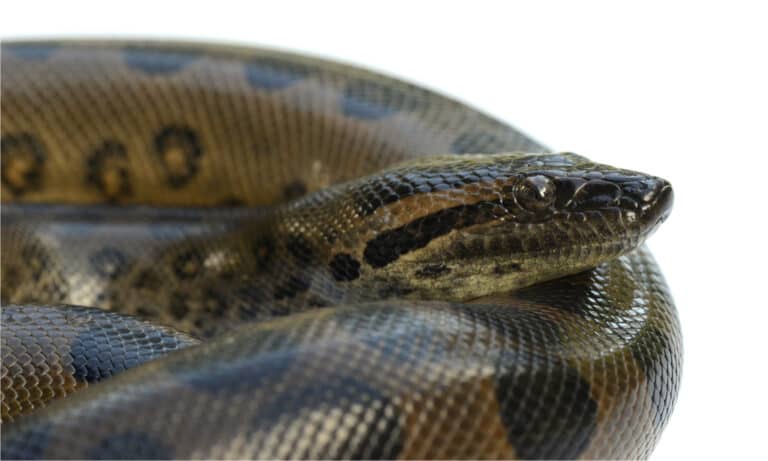
Green Anaconda A famed Pantanal predator associated with flooded habitats; sightings are sporadic but highly memorable, especially during low-water periods.
Harpy Eagle
Harpy Eagle A premier Amazon rainforest raptor; Mato Grosso's northern forests (where intact) can support this apex bird, making it a coveted sighting for birders.

Endemic & Rare Species

White-cheeked Spider Monkey

Ateles marginatus

Endangered (IUCN)

An Amazonian primate largely restricted to Brazil, occurring in parts of Mato Grosso and neighboring states; highly sensitive to forest loss and hunting, making remaining populations conservation-critical.

Giant Armadillo

Priodontes maximus

Vulnerable (IUCN)

A rare, wide-ranging species in Amazon and Brazilian savanna mosaics; Mato Grosso's large protected areas and low-density landscapes can still hold important strongholds, but it is difficult to detect and threatened by habitat loss.

Marsh Deer

Blastocerus dichotomus

Vulnerable (IUCN)

A specialist of wetlands and floodplain grasslands; the Pantanal portion of Mato Grosso is among its key habitats, with vulnerability tied to wetland alteration, fires, and disease.

Maned Wolf

Chrysocyon brachyurus

Near Threatened (IUCN)

A Brazilian savanna flagship that also uses open habitats in ecotones; threatened by habitat conversion, road mortality, and conflict, it represents the savanna side of Mato Grosso's biodiversity.

Crowned Solitary Eagle

Buteogallus coronatus

Endangered (IUCN)

A rare raptor of open woodlands and savannas in south-central South America; Mato Grosso's Brazilian savanna/Pantanal interface can support individuals, but it is sensitive to habitat fragmentation and persecution.

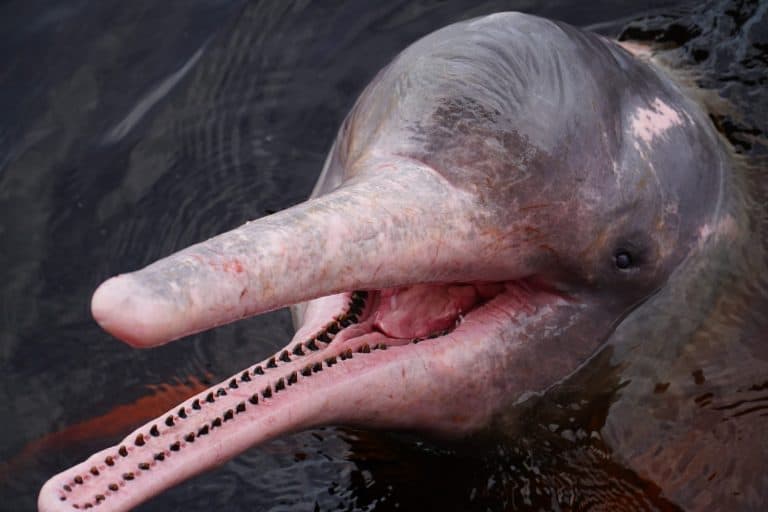
Araguaian River Dolphin

Inia araguaiaensis

Data Deficient (IUCN); range-restricted freshwater dolphin

A recently recognized river dolphin from the Araguaia-Tocantins system (which includes parts of eastern Mato Grosso); its restricted distribution and freshwater threats make it a high-priority research and conservation focus.

White-lipped Peccary

Tayassu pecari

Vulnerable (IUCN)

A wide-ranging forest and wetland-edge species that can undergo strong regional declines; Mato Grosso's remaining connected habitats are important for sustaining herds, which are key ecosystem engineers and prey for jaguars.

Notable Populations

  • Pantanal jaguar population: globally important for density, visibility, and long-term research/monitoring tied to river corridors in southern Mato Grosso.
  • Pantanal wetland bird assemblages: regionally significant concentrations of jabiru storks, herons/egrets, and other floodplain-dependent species during seasonal cycles.
  • Hyacinth macaw in the Pantanal: one of the most important landscapes for the species' continued recovery, supported by nest-site availability and focused conservation actions.
  • Giant otter in the Pantanal: one of the species' best strongholds for regular observations, with key river-lagoon systems supporting breeding groups.
  • Amazon-Brazilian savanna transition (ecotone) biodiversity: nationally significant because it overlaps two megadiverse biomes and contains many range-limit populations and unique community mixtures.

Recent Changes

  • Severe Pantanal wildfire seasons (notably 2020, with recurring intense fire years): documented habitat loss and short-term impacts on wetland and savanna wildlife, with recovery varying by habitat type and subsequent flood cycles.
  • Ongoing Amazon rainforest and Brazilian savanna habitat conversion in Mato Grosso (especially along the 'arc of deforestation'): continued pressure on forest-dependent mammals and birds, increased fragmentation, and more human-wildlife conflict near agricultural frontiers.
  • Localized increases in wildlife-viewing stability in parts of the Pantanal: intensified protection/monitoring and ecotourism incentives in some river corridors have supported more consistent sightings of jaguars and giant otters, though outcomes vary by site.
  • Range-use shifts near deforested landscapes: some open-habitat species (e.g., certain savanna canids and generalist birds) are reported using newly opened areas, while forest specialists tend to decline with fragmentation.
  • Fisheries and river pressure: growing concerns in some basins about overfishing, bycatch, and aquatic habitat alteration affecting large fish and river dolphins; research and management attention have increased, particularly in the Araguaia system.
Visit

Wildlife Viewing

Mato Grosso has three biomes: southern Amazon, Cerrado savanna and Pantanal wetlands. Visitors can see jaguars, giant otters, tapirs, giant anteaters, capybaras, caimans, macaws, toucans and many birds—often in one trip if you visit both Pantanal and Amazon lodges. Best on rivers, wetlands and forest edges; the dry season brings animals together and eases road and boat travel.

Best Seasons

Dry season (Jun-Oct)

Best overall wildlife viewing. Water levels drop in the Pantanal, concentrating animals along rivers and remaining pools; clearer trails/roads and easier logistics. Prime time for jaguar-focused river safaris in the northern Pantanal (e.g., Porto Jofre/Cuiabá River system) and excellent birding throughout wetlands and gallery forests. Cooler nights, low humidity, fewer biting insects.

Shoulder season (Apr-May)

Great balance of wildlife and greener landscapes. Water is receding but still widespread in the Pantanal, so you can combine boat-based viewing with increasingly accessible tracks. Strong bird activity as habitats transition; good time for mixed itineraries that include the Amazon lodges north of Cuiabá. Generally fewer visitors than peak dry months.

Early wet season (Nov-Dec)

The Pantanal begins to flood and explodes with life: dramatic skies, lush vegetation, and increased amphibian/reptile activity. Birdlife can be spectacular (many species are active and vocal), but some roads become difficult and jaguar sightings may be less predictable as animals disperse. Excellent for photographers who want vibrant scenery and storm light.

Peak wet season (Jan-Mar)

High water and maximum flooding in many Pantanal areas; access can be limited to boats/air transfers depending on location. Wildlife is more dispersed, but you can see breeding/rookery activity, abundant aquatic life, and strong Amazon rainforest experiences (forest walks, canoeing, night safaris) where lodge operations are tailored to rain. Expect heat, humidity, and more insects-pack accordingly.

Top Wildlife Experiences

  • Jaguar-focused boat safaris in the Northern Pantanal (Porto Jofre / Cuiaba River and adjacent channels): multiple daily outings by motorboat to scan riverbanks for jaguars, giant otters, capybaras, and caimans (best Jun-Oct).
  • Transpantaneira Road wildlife drive + short walks (Pocone to Porto Jofre): classic Pantanal route with frequent roadside encounters-jabirus, herons, hawks, capybaras, caimans, and sometimes anteaters and cats-plus sunset viewing from bridges and river edges.
  • Giant otter and riverbird watching in the Pantanal waterways (Cuiaba River, Sao Lourenco River, and side channels): slow boat drifts to find otter families, kingfishers, storks, and raptors; ideal for natural history guiding and photography.
  • Amazon lodge stay north of Cuiaba (southern Amazon of Mato Grosso): guided forest hikes, canoe trips in forest streams, and night walks to look for frogs, insects, owls, and other nocturnal wildlife; great complement to the Pantanal's open-country viewing.
  • Cerrado savanna mammal-tracking (central/eastern Mato Grosso): guided dawn/dusk outings in savanna and gallery forest to look for giant anteater, armadillos, maned-wolf habitat (region-dependent), and rich raptor and parrot activity; best in the drier months.
  • Birding-intensive itinerary targeting macaws and wetland specialties (Pantanal + Cerrado edges): early-morning bird walks and boat sessions for hyacinth macaw, toucans, trogons, jabiru stork, seriema, and a huge supporting cast-ideal for multi-day species-building.
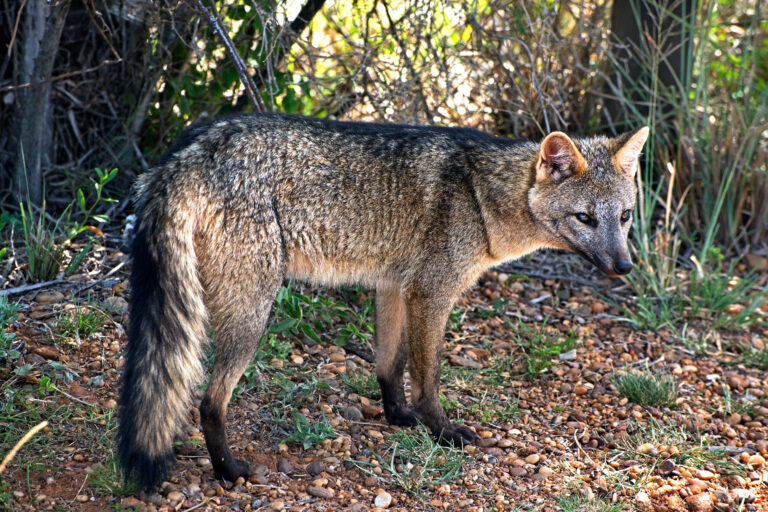
  • Night safari in the Pantanal (near lodge bases along the Transpantaneira): spotlighting for owls, nightjars, crab-eating fox, ocelot (rare), and nocturnal reptiles; also excellent for learning about Pantanal ecology after dark.

Wildlife Watching Types

Jaguar tracking and big-cat river safaris (Pantanal, especially the northern river systems) Wetland wildlife watching by boat (caimans, capybaras, otters, waterbirds) Birding hotspots (Pantanal wetlands, gallery forests, Cerrado transitions, Amazon forest edge) Forest wildlife hikes and canoeing (southern Amazon of Mato Grosso) Night safaris / spotlighting (Pantanal lodges and private reserves) Mammal tracking in savanna and forest-edge habitats (Cerrado and transitional zones) Wildlife photography-focused trips (boats, hides where available, sunrise/sunset drives) Reptile and amphibian-focused outings (wet season especially; night walks/boat edges)

Guided Options

  • Pantanal lodge-based packages along the Transpantaneira (Pocone-Porto Jofre corridor): typically include daily boat trips, drives, and walks with local naturalist guides; many lodges can tailor 'jaguar priority' schedules in peak season.
  • Northern Pantanal jaguar programs based out of Porto Jofre: dedicated small-boat day trips with specialist guides/trackers focusing on riverbank search patterns and big-cat behavior (best Jul-Oct).
  • Amazon rainforest lodge programs in northern Mato Grosso (southern Amazon): guided hikes, canoe excursions, canopy/forest-edge birding, and nocturnal outings; good for adding primates, forest birds, and herps to a Pantanal-heavy trip.
  • Private Natural Heritage Reserve (RPPN) and conservation-area guiding in the Pantanal: some properties run structured wildlife monitoring and responsible viewing protocols-ask operators about participation in citizen-science style sightings logs and jaguar/otter codes of conduct.
  • Custom wildlife itineraries combining three biomes (Amazon + Cerrado + Pantanal): specialist Brazil nature operators can build multi-stop routes timed to water levels, maximizing species diversity and minimizing long transfers with smart flight/road planning.
Habitats

Ecosystems

Mato Grosso is a key South American meeting point where the Amazon rainforest (north) meets the Cerrado savanna (center/east) and the Pantanal wetlands (southwest). It has evergreen forests, bamboo undergrowth, fire-adapted savannas, rocky grasslands, and seasonally flooded wetlands fed by the Paraguay and Araguaia-Xingu rivers. Much land is now large farms and pasture.

Biomes

Tropical Rainforest

Amazonian moist forests cover the north, with unflooded upland evergreen forest, bamboo patches, and wide riverine/gallery forests along big tributaries. Forests are tall, layered, mostly evergreen, with high biomass and many species.

~50-55% of the state (primarily northern Mato Grosso and parts of the Amazon-Cerrado transition).

Tropical Dry Forest

Seasonally dry tropical forests occur mainly in ecotonal belts and drier valleys/plateaus where rainfall seasonality is stronger; these forests are more deciduous/semideciduous and often fragmented, forming a transition between Amazon forest and Cerrado formations.

Localized and patchy, most prominent in the Amazon-Cerrado arc and southwestern transition zones (minor share overall).

Savanna

Cerrado landscapes form a mosaic of open grasslands, shrub savannas, and wooded savannas with fire-adapted plants, plus gallery forests along streams. Includes very open grasslands and shrub-grassland formations as well as denser typical cerrado woodland/savanna.

~35-45% (central and eastern Mato Grosso, extending into broad transition areas).

Wetland

The Pantanal portion of Mato Grosso (upper Paraguay basin) features vast seasonally flooded grasslands, marshes, riparian corridors, and oxbow lakes; flood pulses drive productivity and wildlife concentrations.

~5-10% (southwestern Mato Grosso, especially around Cáceres and the upper Paraguay floodplain).

Freshwater

Major river systems (Xingu, Teles Pires-Tapajós headwaters, Juruena, Araguaia, Paraguay) support floodplain lakes, oxbows, and aquatic habitats; water chemistry and flow regimes vary from clearwater to sediment-rich channels depending on basin and season.

Statewide along dense river networks; highest aquatic habitat density in floodplain/wetland zones and major river corridors.

Habitats

Rainforest

Evergreen Amazon forest in the north (unflooded upland forest), with strong vertical stratification and extensive liana/epiphyte presence in many areas; key in the "arc of deforestation" where remaining blocks are conservation priorities.

Forest

Riparian and gallery forests occur across Amazon and Cerrado zones, forming biodiversity corridors along streams and rivers (including seasonally flooded forest fringes).

Deciduous Forest

Seasonally deciduous/semideciduous patches in drier ecotones and transitional zones between Amazon and Cerrado, often heavily fragmented by pasture and cropland.

Savanna

Typical Cerrado woodland/savanna and related savanna-woodland mosaics with fire-adapted shrubs/trees and a rich herb layer; widely converted to soy and cattle pasture in flatter areas.

Grassland

Open grassland formations in the Cerrado and seasonally flooded Pantanal grasslands; critical for ground-nesting birds and grazing wildlife, shaped by fire and inundation regimes.

Woodland

Denser Cerrado woodlands and transitional forest-savanna ("ecotone") belts, often forming a patchwork with gallery forests and open grasslands.

Shrubland

Shrubby Cerrado formations on well-drained, nutrient-poor soils; frequently intermixed with grasslands and woodland in a fine-scale mosaic.

Wetland

Pantanal floodplain habitats with dramatic wet-dry seasonality, including flooded fields, riparian belts, and lake margins; supports high densities of waterbirds and large vertebrates.

Swamp

Permanently or semi-permanently saturated areas in the Pantanal and along sluggish backwaters/oxbows, with emergent vegetation and floating plant mats in places.

Marsh

Seasonally flooded marshes and shallow-water zones in the Pantanal and floodplains of major rivers; important breeding/feeding habitat for fish and aquatic birds.

River/Stream

Large, biodiverse river corridors (Xingu, Juruena, Teles Pires, Araguaia, Paraguay) with rapids/headwaters in uplands and broad floodplain reaches downstream; strong seasonal flow pulses.

Lake

Oxbow lakes and floodplain lakes (especially in Pantanal and large river valleys), varying from clear to turbid, expanding greatly during floods.

Agricultural/Farmland

Extensive mechanized croplands (notably soy/maize rotations) and cattle pasture, concentrated in the Cerrado and transition belt; major driver of habitat loss and fragmentation.

Plantation

Localized planted forests and commercial plantations (e.g., eucalyptus/teak in some areas), generally smaller in extent than row-crop agriculture.

Urban

Urban and peri-urban habitats around cities such as Cuiabá and Rondonópolis, with associated river impacts (runoff, channel modification) and fragmented native vegetation remnants.

Ecoregions

Pantanal Cerrado Mato Grosso tropical dry forests Chiquitano dry forests Southern Amazon moist forests Tapajós-Xingu moist forests Madeira-Tapajós moist forests Xingu-Tocantins-Araguaia moist forests Araguaia river floodplain forests
Protection

Conservation

Primary Threats

  • Large-scale conversion of Cerrado and Amazon-transition forests to soy and other row crops, plus pasture expansion/renewal for cattle. This drives habitat fragmentation, removes riparian buffers in headwater regions feeding the Pantanal, and increases fire ignition sources along farm frontiers (e.g., BR-163 corridor and eastern Cerrado municipalities).
  • Deforestation and clearing land break up habitats needed by jaguar, tapir, and giant armadillo, and shrink gallery forests and seasonally flooded grasslands. In the north roads and settlements break up the Amazon; in the central east, Cerrado is cleared faster with weaker protection.
  • Illegal and unsustainable timber extraction in the Amazon portion (including selective logging that degrades forests before conversion). Logging roads increase access for further clearing, hunting, and land grabbing, particularly in remote basins (e.g., Juruena-Teles Pires region).
  • Highway and logistics development (notably BR-163 and associated feeder roads) accelerates land speculation, forest clearing, and wildlife roadkill. Hydropower cascades on rivers such as the Teles Pires and Juruena alter flow regimes and fish migrations, affecting aquatic food webs and local fisheries.
  • Alluvial and small-scale gold mining in river systems introduces sediment and often mercury contamination, degrading aquatic habitats and posing risks to fish, river dolphins, giant otters, and human communities. Mining also opens new access routes that amplify deforestation and hunting pressure.
  • Agricultural pesticides/fertilizers from intensive soy/cotton landscapes enter streams and wetlands, impacting amphibians, fish, and invertebrates and contributing to eutrophication in slow-moving waters. Mercury and fine sediment from mining contaminate fish and riparian food chains.
  • Alteration of the Pantanal's flood pulse via upstream land-use change (erosion/siltation), river engineering, and hydropower, plus widespread changes to fire regimes (too frequent/intense fires). Drainage and channel modifications in headwaters can reduce wet-season storage and dry-season baseflows critical to wetland function.
  • More frequent droughts and hotter conditions intensify wildfire risk and stress wetlands. In the Pantanal, extreme drought years reduce inundation extent and duration, disrupting breeding cycles (fish, birds) and increasing mortality during fires; in the Amazon-Cerrado transition, a hotter/drier climate can favor forest degradation and savannization in fragmented areas.
  • Jaguar predation on cattle in the Pantanal and surrounding ranchlands can lead to retaliatory killing; conflict also affects pumas and other carnivores. Expanding road networks increase collisions with tapirs, giant anteaters, and reptiles, creating additional conflict/negative perceptions.
  • Subsistence and opportunistic hunting increase along new roads and river access routes, reducing populations of large-bodied species (peccaries, tapirs, large birds) and destabilizing ecological interactions (seed dispersal, predator-prey dynamics) in both forest and wetland mosaics.
  • Illegal capture and trade of birds (especially parrots/macaws and songbirds) occurs around urban centers and frontier towns; removal of nestlings and adults reduces local reproductive success, including in Pantanal and Cerrado gallery-forest habitats.
  • In the Pantanal, intense fishing pressure (commercial and recreational) can reduce key stocks and alter trophic dynamics; combined with altered hydrology and water quality degradation, this threatens fisheries that support local livelihoods and wildlife dependent on fish biomass.
  • Feral pigs/wild boar and exotic pasture grasses spread in disturbed Cerrado and agricultural mosaics, damaging native vegetation, increasing soil disturbance, and changing fire behavior. Non-native fish in modified waterways can compete with or prey upon native species, especially where dams favor generalists.
  • Pathogen spillover from domestic animals (dogs, livestock) can affect wild carnivores and ungulates, particularly in ranching interfaces of the Pantanal and peri-urban areas; disease risk rises where habitat fragmentation forces closer contact among wildlife, people, and domestic animals.
  • Unregulated tourism/boating, expanding settlement footprints, and increasing noise/light near waterways can disturb nesting birds and riverine mammals. In the Pantanal, concentrated wildlife-viewing and boat traffic can disrupt giant otter groups and sensitive breeding sites when not well managed.
Fun Facts

Did You Know?

Many Pantanal jaguars in Mato Grosso are unusually comfortable in water: they regularly swim across rivers and are famously documented preying on caimans-behavior that surprises visitors who expect cats to avoid deep water.

The Pantanal's boom-and-bust flood cycle means "land" can turn into a shallow inland sea for months; when water drops, fish and aquatic prey get concentrated into shrinking channels and pools, creating dramatic feeding bonanzas for herons, storks, otters, and caimans.

In Mato Grosso's Cerrado-to-Amazon transition zone, it's possible (within the same state) to encounter wildlife typically associated with very different ecosystems-e.g., maned wolf in open Cerrado landscapes and harpy eagle in tall Amazonian forest-because the state spans multiple major biomes.

Some key Pantanal ecological links are literally eaten: fruit-eating fish like pacu move seeds through flooded forests and river margins, helping disperse plants during the high-water season-seed dispersal by fish is a real, measurable process in the Paraguay-Cuiaba basin.

Caiman "crowds" can actually benefit other animals: high caiman abundance in Mato Grosso's Pantanal helps sustain top predators (notably jaguars) and scavengers, making caimans a foundational prey base rather than just fearsome predators.

Mato Grosso contains part of the Pantanal-widely recognized as the world's largest tropical wetland-and its southern floodplains (around the Cuiaba/Paraguay River system) are one of the planet's great seasonal wildlife "concentration" events when waters recede.

The Porto Jofre area on the Cuiaba River in the northern Pantanal, Mato Grosso, has some of the highest jaguar numbers known. Camera traps and photo ID studies often find several jaguars along short river stretches in the dry season.

The Pantanal part of Mato Grosso has one of the world’s biggest wild crocodile groups: the yacare caiman (Caiman yacare) lives there in huge numbers, often millions, making it a global stronghold.

Mato Grosso is a reliable place to see the hyacinth macaw (Anodorhynchus hyacinthinus)-the world's largest parrot-especially in the Pantanal where it nests in large tree cavities and feeds heavily on palm nuts.

Northern Mato Grosso (Amazon forest) and southern Pantanal make it one of few places where both giants live: the giant otter (Pteronura brasiliensis), one of the largest freshwater otters, and the lowland tapir (Tapirus terrestris), South America's largest land mammal.

Thank you for reading! Have some feedback for us?