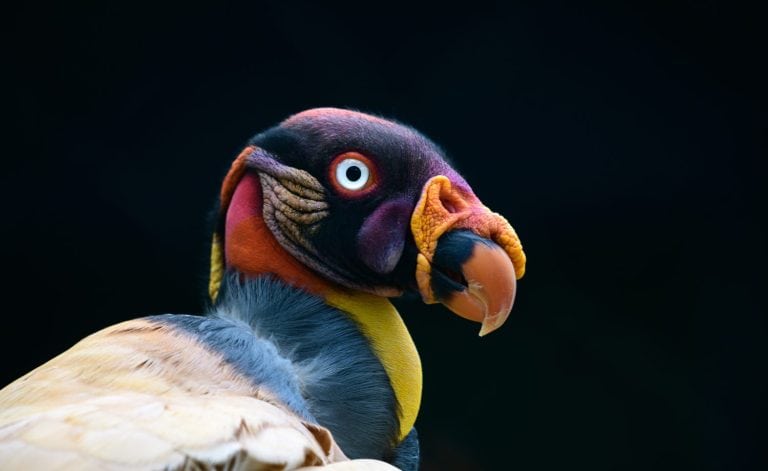
King Vulture
Color-crowned cleaner of the rainforest

Color-crowned cleaner of the rainforest
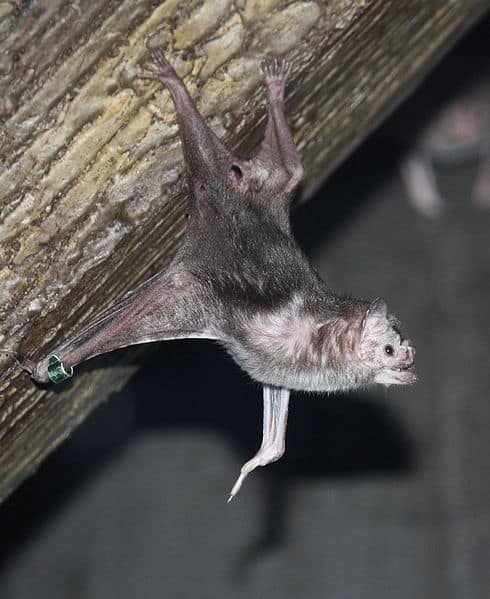
Small bite, big biology.
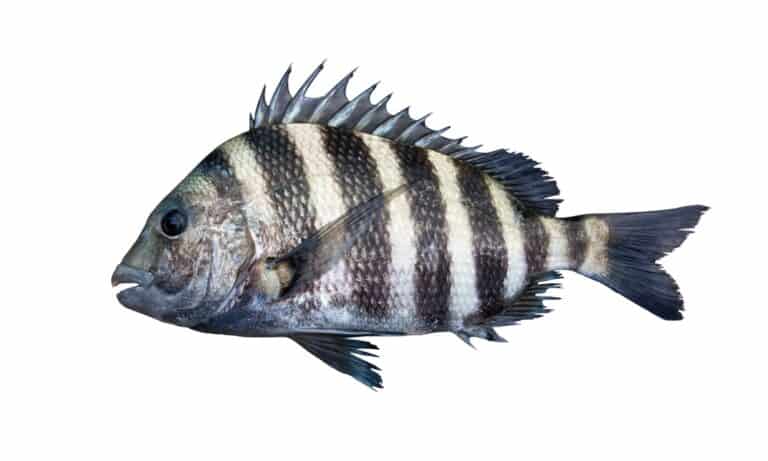
Built to bite shells off the dock
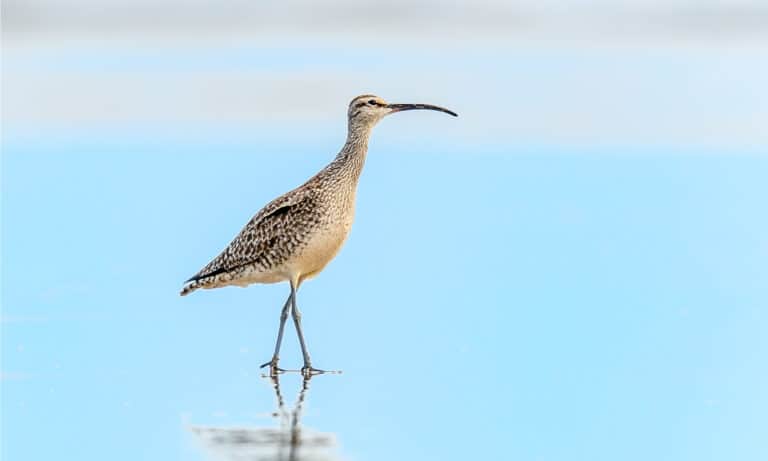
Curved bill, epic journeys
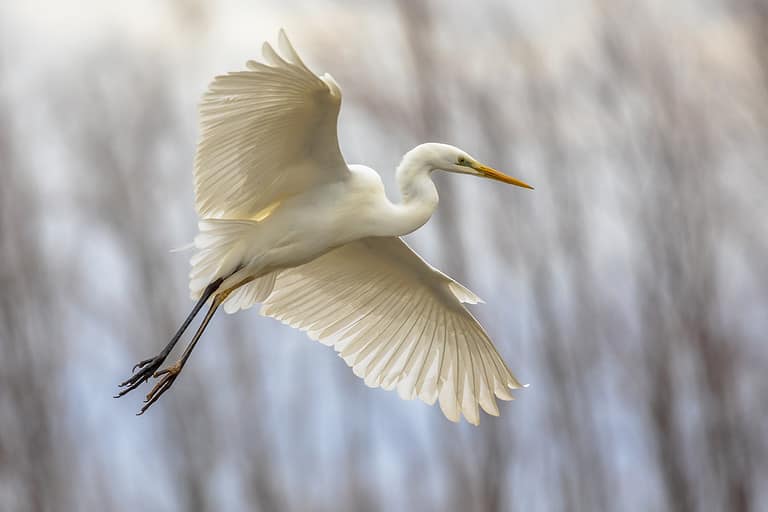
Big white hunter of the wetlands
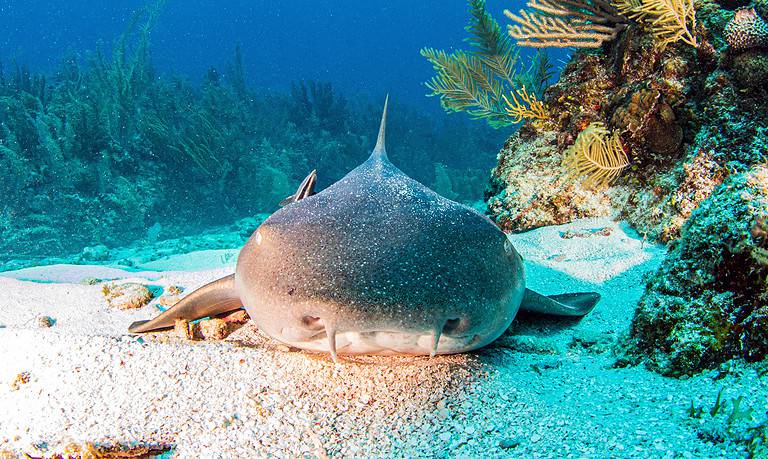
The reef's gentle vacuum hunter
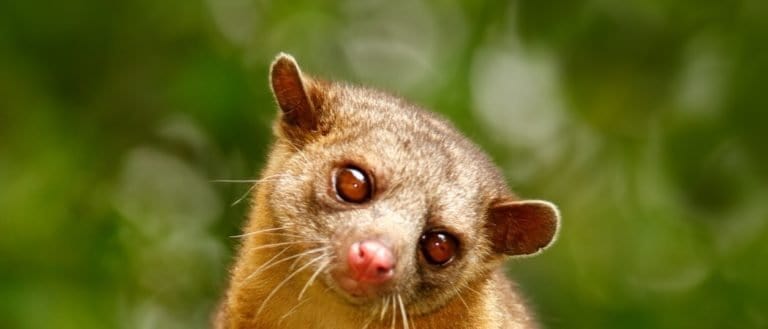
Tail-grip nectar sipper of the canopy
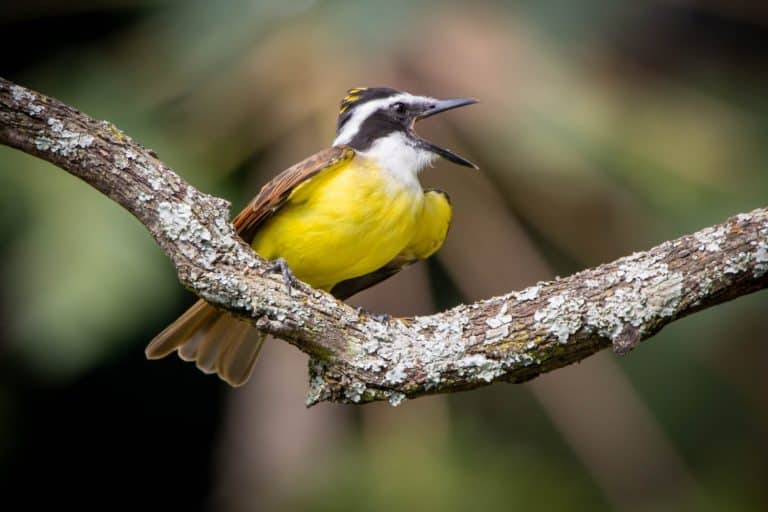
Hear it before you see it: Kiskadee!
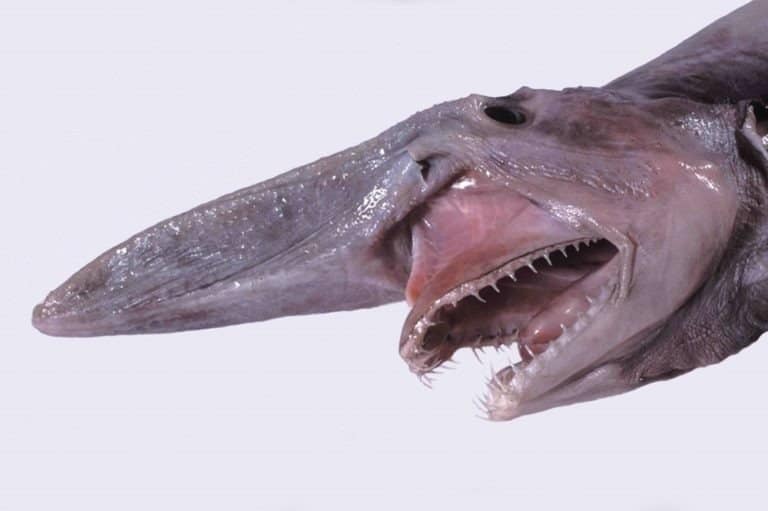
The deep-sea "slingshot-jaw" shark
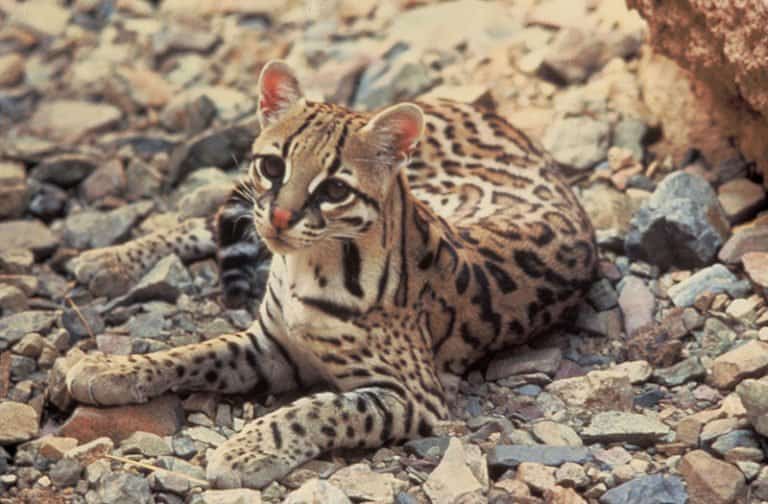
Rosettes in the shadows.
Rio de Janeiro's wildlife is shaped by the Atlantic Forest, a threatened area with many kinds of plants and animals, especially in steep mountains and protected forest patches despite heavy coastal development. Even with Brazil’s biggest city at its heart, the state still has rich groups of birds, primates, frogs, orchids, and butterflies adapted to steep slopes, misty heights, and forest interiors. The Serra do Mar and nearby ranges are the backbone of Rio’s nature, with cloud and mountain forests that give shelter to forest species and help supply clean water. On the coastal plain, a mix of sand-plain scrub, sandy forests, beaches, mangroves, and lagoons supports migratory shorebirds, waterbirds, and special plants and reptiles. Offshore waters also bring seabirds and marine life. What stands out is how close these habitats are to cities: trails, granite domes, and lagoons can be minutes from neighborhoods, offering varied day-trip wildlife watching.
Rio de Janeiro's wildlife shifts from the Atlantic Ocean and coastal plains into steep Atlantic Forest mountains. A mix of mangroves, estuaries, dunes, lagoons, lowland and cloud forests creates many different species over short distances. Coastal cities break up lowland habitat, so protected mountain areas and coastal wetlands are vital for links and species only in the Atlantic Forest.
Sea level to ~2,791 m (Black Needles Peak in the Itatiaia massif), creating strong climatic and vegetation zonation from coastal mangroves and dune scrub to montane and high-altitude habitats
Atlantic Ocean coastline with extensive beaches and rocky shores, plus major embayments (Guanabara Bay, Sepetiba Bay, Ilha Grande Bay) and large coastal lagoons (notably Araruama Lagoon), supporting marine-estuarine-freshwater habitat transitions
Rio de Janeiro's protected areas focus on the remaining Atlantic Forest in the Serra do Mar, plus marine areas. Many reserves are island habitats that serve as strongholds and wildlife corridors, protecting forests, wetlands and marine areas. Priorities: protect endemic Atlantic Forest species (primates, birds), reconnect fragments, and safeguard breeding areas along the Green Coast and Lakes Region.
About 25% of the state's land area is under some form of official protection (including large sustainable-use areas such as Environmental Protection Areas; strictly protected core areas are a smaller share).
One of the most important Atlantic Forest strongholds near the Rio metropolitan area, with steep elevation gradients (lowland-montane) that support high bird diversity and wide-ranging mammals; also a key piece of the Serra do Mar connectivity mosaic.
A globally notable urban Atlantic Forest massif (much of it reforested) that supports charismatic wildlife viewing close to the city and provides crucial habitat for forest birds and mammals in an urban landscape.
Brazil's first national park created specifically to protect restinga ecosystems-coastal scrub, dunes, and lagoons-supporting wetland birds, reptiles, and mammals adapted to sandy coastal plains and freshwater lagoons.
A flagship high-altitude Atlantic Forest and montane grassland park on the RJ-MG border, famous for endemic/highland birds, cool-climate ecosystems, and opportunities to detect elusive forest mammals along strong altitudinal gradients.
A large Serra do Mar protected block spanning RJ-SP that helps anchor a major forest-to-coast continuum (including areas near Paraty), important for landscape-scale conservation of Atlantic Forest mammals and birds.
The largest state park in Rio de Janeiro, protecting extensive montane Atlantic Forest and rugged peaks; key for maintaining connectivity among Serra do Mar forests and for conserving wide-ranging mammals and endemic birds.
A major urban-adjacent forest block in western Rio de Janeiro city, important for maintaining watershed/forest functions and providing refuge for primates and forest birds within a heavily modified landscape.
An Atlantic Forest island reserve with strong coastal-marine interfaces; notable for intact forest on steep terrain, rich birdlife, and adjacent waters used by dolphins and sea turtles.
A key northern RJ mountain forest refuge protecting headwaters and montane Atlantic Forest remnants; important for regional persistence of forest mammals and threatened birds in a more fragmented part of the state.
A cornerstone lowland Atlantic Forest reserve created to protect and recover the iconic golden lion tamarin; includes swampy/lowland habitats and is central to regional corridor and reintroduction efforts.
Lowland Atlantic Forest reserve and a major stronghold for golden lion tamarins and other forest fauna; important for maintaining genetic connectivity among remaining forest fragments in the region.
A highly protected marine/coastal area (islands and surrounding waters) in the Costa Verde region, important for seabirds, reef-associated biodiversity, and as a refuge for sea turtles and marine mammals.
A marine protected area shaped by the region's productive upwelling system, supporting high marine biodiversity and offering strong opportunities for observing seabirds, dolphins, and seasonal large marine fauna while managing sustainable use.
Rio de Janeiro's wildlife centers on the Atlantic Forest, a very biodiverse yet threatened forest region in a highly urbanized coastal state. Remaining habitats include steep coastal mountains with humid montane and cloud forests, lower-elevation forests, mangroves and coastal lagoons, beaches, and coastal sandplain shrublands. Protected areas like Tijuca National Park and Organ Mountains National Park help protect native species. Wildlife includes forest primates and many birds in the forests, and marine animals like dolphins, whales, sea turtles, and seabirds along the coast.
Rio de Janeiro state offers rich wildlife viewing in the Atlantic Forest, coastal lagoons, sandy coastal scrub, rocky islands, and mountain habitats of the Coastal Range, often within a day trip from major cities. Visitors can see tanagers, toucans, trogons, marmosets, capuchins, sloths, caimans, and seasonal humpback whales. Many top sites are protected parks with trails and local guides.
Lush forests and peak activity for many frogs, insects, and reptiles; frequent rain and humidity can reduce visibility but increases chances of seeing amphibians on night walks. Sea conditions can be choppier for boat trips. Great time for rainforest hikes in Tijuca National Park and Serra dos Órgãos between storms.
Often one of the best all-round windows: generally drier, comfortable temperatures, and good trail conditions. Strong for birding in Atlantic Forest reserves (more consistent mornings, less rain). Lagoons and restinga areas remain productive, and diving/snorkeling visibility around Ilha Grande can improve.
Prime marine season offshore with increased chances for humpback whale sightings on boat outings (especially Aug-Sep). Cooler, drier weather makes mountain hikes in Serra dos Órgãos and Itatiaia region more comfortable. Birding remains excellent; some species are easier to observe with sparser understory and clearer mornings.
Breeding season ramps up for many birds-more song, displays, and activity in the forest canopy. Flowers and fruiting pulses can bring mixed flocks. Transitional weather: warmer with occasional showers. A strong time for photography in coastal restinga and forest-edge habitats.
Rio de Janeiro lies in Brazil's Atlantic Forest and has a mix of ecosystems shaped by steep coastal mountains (Serra do Mar), crowded coastal plain, and a jagged shoreline. This creates strong height and coastal gradients: humid evergreen forests on windward slopes, seasonal/semideciduous forests inland, grasslands on peaks, beach-dune sandplains, lagoons, estuaries, and South Atlantic shelf marine habitats.
Atlantic Forest evergreen and moist forests are the main native vegetation across Rio de Janeiro, especially in coastal mountains (lowland, submontane, montane). Many unique species; forests are fragmented near cities and industry.
Historically covered most of the state; today persists as substantial but fragmented blocks, especially in mountainous areas and protected units (largest remaining natural cover).
Seasonal and semideciduous Atlantic Forest formations occur in relatively drier inland/northern portions and rain-shadowed valleys, with more pronounced leaf drop and a more open canopy than coastal moist forest.
Patchy and localized, mainly inland/north-northwest and valley settings; much converted to pasture/agriculture.
High-elevation grasslands (mountaintop grasslands and scrub) above the montane forest belt on the highest massifs (e.g., Serra dos Orgaos and the Itatiaia region on/near state boundaries), with cold, windy conditions and shallow rocky soils.
Very limited, restricted to highest peaks and ridgelines (small, discontinuous patches).
Rivers draining to the Atlantic (including the Paraíba do Sul basin and many short coastal rivers), plus reservoirs, streams, and lagoons, support riparian forests, aquatic macrophytes, and migratory fish corridors.
Widespread as linear networks; condition ranges from relatively intact headwaters in mountains to heavily modified lowland channels and reservoirs.
Coastal wetlands associated with lagoons, floodplains, and estuaries, including marshes and mangrove-fringed lowlands; important for waterbirds, fisheries nurseries, and water filtration.
Concentrated on the coastal plain and around major bays/lagoons; often fragmented and under pressure from land reclamation and pollution.
Warm-temperate South Atlantic coastal and shelf waters, including sandy and rocky shores, bays (e.g., Guanabara Bay, Sepetiba Bay), nearshore reefs/rocky bottoms, and offshore shelf habitats supporting fisheries and marine megafauna migration routes.
Extensive along the entire coastline and across the continental shelf; heavily used near major ports/metros, less impacted offshore.
Evergreen Atlantic Forest on windward slopes and humid valleys (Serra do Mar/Serra dos Órgãos), with high canopy complexity, epiphytes, and endemic fauna.
Mixed Atlantic Forest mosaics (lowland to montane) including secondary forests regenerating around protected areas and rural landscapes.
Steep granite/gneiss massifs and escarpments driving sharp rainfall gradients and elevational zonation from lowland forests to cloud-forest conditions.
Rock walls and escarpments (common in Serra dos Órgãos and coastal headlands) providing nesting sites and specialized rupicolous vegetation.
High-elevation grasslands and scrub on exposed mountaintops with rocky soils and frequent mist/wind.
Coastal sandplain scrub and thickets on sandy coastal plains and dunes, with salt- and drought-tolerant plants and high plant endemism.
Short coastal rivers plus larger systems (notably Paraiba do Sul tributaries within the state) with critical headwaters in protected montane forests.
Coastal lagoons and larger lentic systems (e.g., Marica and other lagoon complexes), often brackish and ecologically linked to barrier beaches.
Small wetlands, borrow pits, and temporary waters on the coastal plain and in urban/peri-urban landscapes important for amphibians and birds.
Flooded lowlands, lagoon margins, and estuarine wetland mosaics supporting waterbirds and nursery habitat.
Fresh to brackish marshes along lagoon edges and floodplains, dominated by emergent vegetation.
Mangrove forests in sheltered bays and estuaries (notably around Guanabara Bay and Sepetiba Bay), providing nursery grounds and shoreline stabilization.
Estuarine mixing zones at river mouths and within major bays; highly productive but sensitive to pollution and dredging.
Coastal plains and embayments with strong land-sea connectivity (barrier systems, tidal flats where present, and coastal lagoons).
Long sandy beaches and barrier spits backing dune/restinga systems; important nesting/roosting for shorebirds where disturbance is low.
Rocky headlands and islands with tidepools and algal/invertebrate communities; common along parts of the Costa Verde and near offshore islands.
Continental shelf bottoms (sand/mud/rock) supporting demersal fish and benthic invertebrates; affected locally by trawling and port activities.
Pelagic waters beyond the nearshore zone used by migratory fish, seabirds, and marine mammals.
Off-shelf slope and deep-water environments beyond the continental shelf, less directly visible but part of the broader state offshore domain.
Major metropolitan areas (notably the city of Rio de Janeiro) with highly modified waterways, remnant forest patches, and intense coastal development.
Peri-urban expansion zones around metro regions where secondary forests, wetlands, and restingas are fragmented by housing and infrastructure.
Pasture, smallholder crops, and peri-urban horticulture in interior valleys and lowlands, often replacing seasonal forest and riparian habitats.
Localized commercial plantations (e.g., eucalyptus and other managed stands) in parts of the interior, contributing to habitat simplification where extensive.
Some of Rio's most range-restricted, threatened birds aren't rainforest specialists at all: the Restinga Antwren (Formicivora littoralis) is endemic to the state's sandy coastal scrub habitat-one of the most overlooked habitats between beaches and cities.
Marshes and lowland forests around Guanabara Bay hold the Rio de Janeiro Antwren (Myrmotherula fluminensis), described in the 1990s and known from only a few sites—a new species living in a very urban area.
At Arraial do Cabo, seasonal upwelling pulls cold, nutrient-rich deep water to the surface at a tropical latitude, creating an unusual mix of marine life (warm-water coastal species alongside species more typical of cooler waters) and boosting local productivity.
Capybaras can be seen living in highly urban settings in Rio-using canals, lagoons, and grassy margins in areas like Barra da Tijuca/Jacarepagua-illustrating how a large wild mammal can exploit city waterways.
Tijuca's wildlife community is partly "re-built": after historic deforestation, much of the forest was replanted and several animals later recolonized or were reintroduced-so today's urban rainforest is both natural habitat and a long-running restoration experiment.
Tijuca National Park (≈3,953 ha) inside the city of Rio de Janeiro is widely cited as the world's largest urban rainforest-large enough to support free-ranging mammals like sloths, coatis, and howler monkeys within a major metropolis.
Itatiaia National Park (spanning RJ/MG) is one of the most bird-rich protected areas in Brazil: more than ~370 bird species have been recorded there, an exceptional total for a single Atlantic Forest site.
Araruama Lagoon (in the Lakes Region of Rio de Janeiro State) is Brazil's largest hypersaline lagoon (≈220 km²), with salinity often above seawater-creating an extreme habitat where only salt-tolerant fish and invertebrates thrive.
The golden lion tamarin (Leontopithecus rosalia), native to the lowland Atlantic Forest in Rio de Janeiro, rose from about 200 wild animals in the 1970s to roughly 3,000–4,000 today after strong protection and reintroduction efforts.
Rio de Janeiro's Atlantic Forest leaf litter hosts some of the tiniest frogs on Earth, including the minute "flea-toad" Brachycephalus didactylus (around 1 cm long), placing it among the smallest vertebrates known.
56 species documented in our encyclopedia
Thank you for reading! Have some feedback for us?
We appreciate your help in improving our content.
Our editorial team will review your suggestions and make any necessary updates.
There was an error submitting your feedback. Please try again.