N S W E
Wildlife Expeditions

Wildlife of
Mato Grosso do Sul

Home to the Pantanal's unrivaled big-fauna spectacles, Mato Grosso do Sul blends wetlands, Cerrado savannas, and border forests into one of South America's best wildlife regions.
30 Species
357,145 km² Land Area
Overview

About Mato Grosso do Sul

Mato Grosso do Sul is in Brazil's Central-West. Water, grassland, and woodland mix there to support many animals. The state has strong seasons: floods and droughts that push animals together and make meetings common. Its borders with Paraguay and Bolivia help animals that move long distances travel through South America. The main feature is the Pantanal, the world's largest tropical wetland. Rivers, flooded fields, gallery forests, and lakes make a changing landscape rich in life. The Cerrado savanna adds open grasslands and scrubby woodlands for species that handle fire and dry seasons. Small patches of Atlantic Forest and river forests give fruit trees, shelter, and breeding places for birds and mammals. This mix of wetlands, savanna, and forest edges supports many kinds of animals and makes wildlife easy to see, especially along waterways and floodplains.

Physical Features

Geography

Mato Grosso do Sul's wildlife is formed by the low Pantanal floodplain, a huge seasonal wetland, and nearby savanna plateaus and river basins. Annual floods of the Paraguay River create shifting marshes, gallery forests, ponds, and grasslands that gather fish, waterbirds, capybaras, caimans, and predators. Higher uplands hold savanna, dry forests, and limestone habitats linking Brazil to Paraguay and Bolivia.

357,145 km² Land Area
6th largest state in Brazil Size Rank
Brazil Country
State Type
Elevation Range

~80 m (Pantanal floodplain) to ~1,065 m (upland peaks on the Maracaju/Bodoquena plateau system)

Key Landscapes

Pantanal floodplain (seasonally inundated wetlands, oxbow lakes, marshes, wet grasslands) Paraguay River basin and major tributaries (e.g., Taquari, Miranda, Aquidauana, Negro) that drive flood regimes and riparian habitat networks Bodoquena Range (limestone plateau/escarpments, springs and clear rivers; caves and karst features influencing aquatic and bat habitats) Maracaju-Campo Grande Plateau and adjacent plateaus (Brazilian savannas and woodlands; headwater areas feeding wetland and river systems) Upper Parana Basin in the east/southeast (large rivers such as the Parana and tributaries like the Ivinhema; riparian forests and wetlands important for migratory fish and birds) Southern forest-savanna transition zones (Atlantic Forest remnants and semideciduous forests interspersed with grasslands, affecting range limits and connectivity)
State Symbols

Official Wildlife Symbols

bird

Hyacinth macaw

tree

Purple trumpet tree

Parks & Reserves

Protected Areas

Mato Grosso do Sul protects three main landscapes: the Pantanal wetlands (important for big mammals and waterbirds), the Brazilian savanna (grasslands and woodlands with many threatened open-country species), and the karst Bodoquena Mountains (caves and very clear rivers). Protection includes strict parks, large sustainable-use areas, and private reserves like Private Natural Heritage Reserves.

Protected Coverage

≈12% of the state under some form of protected area (strict + sustainable-use categories; the exact share varies by dataset and whether overlapping designations and private reserves are included).

National Parks & Preserves

Bodoquena Range National Park

~76,000 ha (≈760 km²)

Protects the Bodoquena Range plateau-one of Brazil's standout karst landscapes-with seasonal forests, limestone outcrops, caves, and headwater streams feeding the Bonito area. Notable for forest-savanna transition wildlife and high-quality freshwater habitats.

Jaguar (Panthera onca) Lowland tapir (Tapirus terrestris) Giant anteater (Myrmecophaga tridactyla) Puma (Puma concolor) Bare-faced curassow (Crax fasciolata)

Big Island National Park

~78,000 ha (≈780 km²) total (spans Mato Grosso do Sul-Parana)

Large river-island and floodplain complex along the Upper Parana River (shared with Parana state). Important for wetland mammals, nesting and migratory birds, and remnant riparian forests in a heavily altered basin.

Marsh deer (Blastocerus dichotomus) Giant otter (Pteronura brasiliensis) Capybara (Hydrochoerus hydrochaeris) Jabiru stork (Jabiru mycteria) Broad-snouted caiman (Caiman latirostris)

State & Provincial Parks

Black River Pantanal State Park

~78,000 ha (≈780 km²)

One of the key state-level strongholds in the Pantanal of Mato Grosso do Sul, protecting floodplain habitats that support high densities of large mammals and waterbirds. Valued for jaguar-country landscapes and intact wetland mosaics.

Jaguar (Panthera onca) Giant otter (Pteronura brasiliensis) Hyacinth macaw (Anodorhynchus hyacinthinus) Jabiru stork (Jabiru mycteria) Marsh deer (Blastocerus dichotomus)

Ivinhema River Floodplains State Park

~73,000 ha (≈730 km²)

Protects seasonally flooded wetlands, oxbow lakes, and riparian forests of the Parana basin, functioning as an important refuge for wetland mammals and birds amid agricultural landscapes.

Marsh deer (Blastocerus dichotomus) Giant otter (Pteronura brasiliensis) Capybara (Hydrochoerus hydrochaeris) Jabiru stork (Jabiru mycteria) Neotropical otter (Lontra longicaudis)

Taquari River Headwaters State Park

~30,000 ha (≈300 km²)

Created to protect headwaters and reduce erosion and sedimentation risks affecting the Pantanal downstream. Conserves Brazilian savanna vegetation and riparian corridors that help maintain regional connectivity for wide-ranging mammals.

Giant anteater (Myrmecophaga tridactyla) Maned wolf (Chrysocyon brachyurus) Lowland tapir (Tapirus terrestris) Puma (Puma concolor) Giant armadillo (Priodontes maximus)

Wildlife Refuges

Upper Parana River Islands and Floodplains Environmental Protection Area

~1,000,000 ha (≈10,000 km²) total (multi-state; includes Mato Grosso do Sul portion)

A vast federal sustainable-use protected area covering islands, marshes, and riparian habitats along the Upper Parana (including stretches in Mato Grosso do Sul). Critical for wetland biodiversity, fisheries, and migratory bird use in a fragmented river basin.

Giant otter (Pteronura brasiliensis) Marsh deer (Blastocerus dichotomus) Jabiru stork (Jabiru mycteria) Broad-snouted caiman (Caiman latirostris) Roseate spoonbill (Platalea ajaja)

Apa River Environmental Protection Area

~400,000 ha (≈4,000 km²) (approx.)

Federal sustainable-use area along the Apa River on the Paraguay border, aiming to protect riparian forests, headwaters, and landscape connectivity between Brazilian savanna, Chaco-influenced zones, and the Pantanal fringe-important for wide-ranging mammals and watershed integrity.

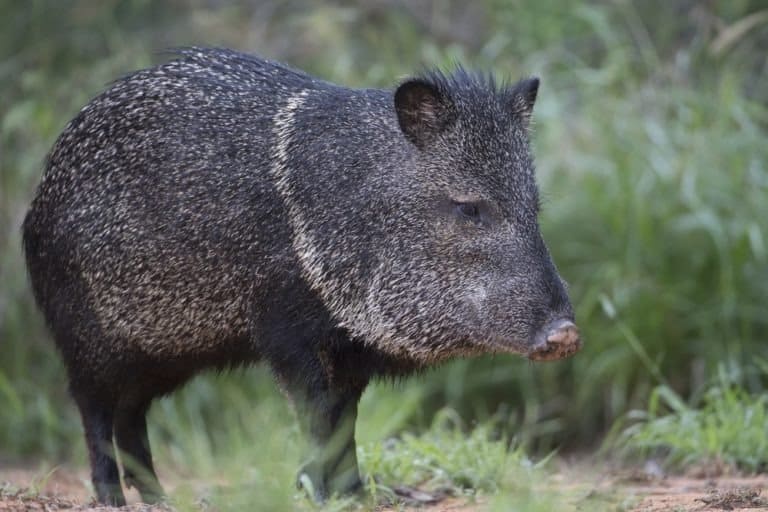
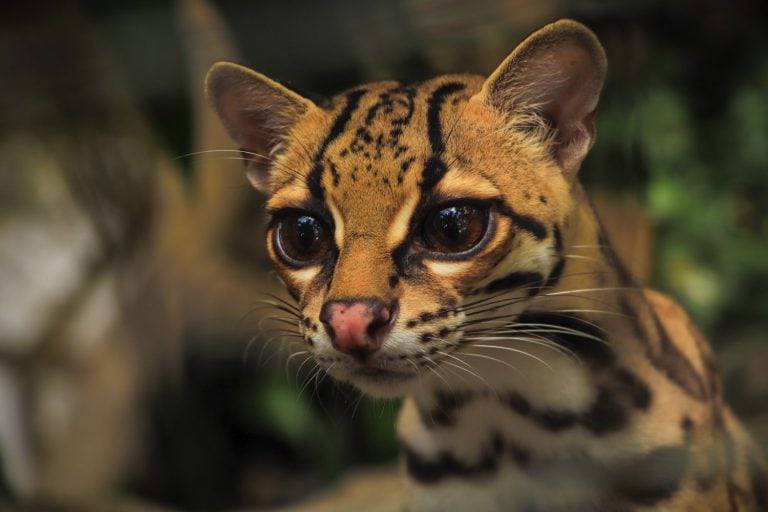
Jaguar (Panthera onca) Lowland tapir (Tapirus terrestris) Giant armadillo (Priodontes maximus) Ocelot (Leopardus pardalis) White-lipped peccary (Tayassu pecari)

Bodoquena Range Environmental Protection Area

~400,000 ha (≈4,000 km²) (approx.)

Large buffer and connectivity unit around and near Bodoquena Range National Park, helping maintain forest cover, karst recharge areas, and riparian corridors that sustain the region's clear-water rivers and aquatic biodiversity.

Lowland tapir (Tapirus terrestris) Jaguar (Panthera onca) Giant anteater (Myrmecophaga tridactyla) Bare-faced curassow (Crax fasciolata) Howler monkeys (Alouatta spp.)

Rio Negro Ranch Private Natural Heritage Reserve

~7,000 ha (≈70 km²) (approx.)

A well-known private reserve in the Pantanal that complements public protected areas by conserving seasonally flooded grasslands, gallery forests, and wetlands-often cited for exceptional wildlife observation and research support.

Jaguar (Panthera onca) Giant anteater (Myrmecophaga tridactyla) Hyacinth macaw (Anodorhynchus hyacinthinus) Giant otter (Pteronura brasiliensis) Marsh deer (Blastocerus dichotomus)

Wilderness Areas

  • Remote Pantanal wetland mosaics of Nhecolândia and Paiaguás (seasonally roadless floodplains with high jaguar/waterbird value)
  • Upper Paraguay River floodplain backwaters and oxbow-lake complexes (Pantanal core landscapes with limited access outside the dry season)
  • Serra da Bodoquena karst plateau interior (cave systems, forested ridges, and spring-fed streams with low road density)
  • Borderland riparian forests and savanna-Chaco transition zones along the Rio Apa (important transboundary corridor to Paraguay)
  • Upper Paraná River island chains and seasonally inundated várzeas within the Ilha Grande complex (large stretches of riverine habitat with minimal permanent infrastructure)
Animals

Wildlife

Mato Grosso do Sul (MS) sits at a major South American ecological crossroads, dominated by the Pantanal (one of the world's largest tropical wetlands) and complemented by Cerrado savannas/woodlands, seasonal forests, river-gallery forests, and small Atlantic Forest remnants. This mix of flood-pulse wetlands, open savanna, and forested river corridors produces exceptionally high wildlife visibility-especially for large mammals, waterbirds, and reptiles-making MS one of Brazil's premier destinations for jaguar-focused ecotourism and wetland birding.

~150-180 species (Pantanal + Cerrado + forest mosaics) Mammals
~650-750 species (very high waterbird and savanna/forest turnover) Birds
~110-150 species (notably caimans, snakes, turtles) Reptiles
~70-100 species (strongly tied to seasonal wetlands and gallery forests) Amphibians
~260-320+ species in the Upper Paraguay/Pantanal basin (highly diverse floodplain fish assemblages) Fish
Examples

Iconic Species

Jaguar
Jaguar The Pantanal in MS is famous for some of the best jaguar viewing on Earth, with jaguars frequently seen along rivers during the dry season.
Giant Otter
Giant Otter A flagship wetland carnivore that forms noisy family groups in Pantanal rivers and oxbow lakes; sightings are a highlight of boat trips.
Hyacinth Macaw
Hyacinth Macaw The world's largest macaw; the Pantanal is a key stronghold where visitors often see birds flying over palm stands and nesting in large tree cavities.
Marsh Deer South America's largest deer, strongly tied to flooded grasslands and marshes; MS is one of its most important remaining landscapes.
Giant Anteater Commonly encountered in more open Pantanal and Cerrado habitats; its size and distinctive gait make it a signature savanna species for visitors.
Lowland Tapir A key seed-dispersing megaherbivore of wetlands and forests; often seen near watercourses and forest edges in the Pantanal.
Yacaré Caiman One of the most visible reptiles in MS; massive aggregations occur in Pantanal waterways and lagoons, especially in the dry season.
Capybara
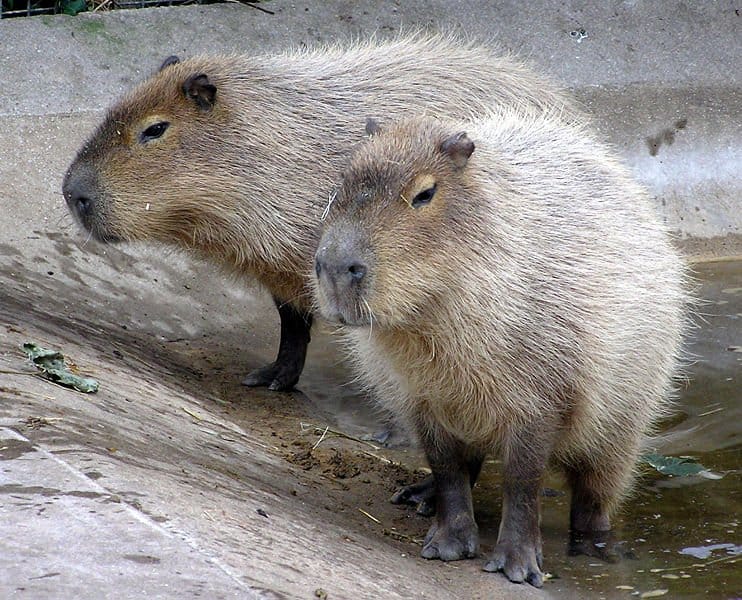
Capybara The world's largest rodent is abundant along rivers and marshes; it is also a primary prey base supporting jaguar densities in the Pantanal.
Green Anaconda
Green Anaconda A legendary wetland snake that occurs in the Pantanal; encounters are less predictable than for caiman or capybara but are iconic when they happen.
Toco Toucan A highly recognizable bird of forest edges and savanna woodlands across MS; frequently photographed and strongly associated with the Pantanal/Cerrado experience.

Endemic & Rare Species

Hyacinth Macaw

Anodorhynchus hyacinthinus

Vulnerable (IUCN)

MS (especially the Pantanal) supports one of the species' most important wild populations; conservation actions (nest protection and artificial nest boxes) have been central here.

Giant Otter

Pteronura brasiliensis

Endangered (IUCN)

A conservation-dependent top predator of clean, fish-rich wetlands; MS is a key refuge where the species has recolonized parts of its former range.

Marsh Deer

Blastocerus dichotomus

Vulnerable (IUCN)

MS's floodplains are among the best remaining habitats for this wetland specialist, threatened elsewhere by habitat loss, disease, and fragmentation.

Giant Armadillo

Priodontes maximus

Vulnerable (IUCN)

A wide-ranging, low-density species that is hard to see; MS's large natural areas and private ranchlands can still support viable populations.

Maned Wolf

Chrysocyon brachyurus

Near Threatened (IUCN)

A Cerrado flagship that persists in MS's savanna mosaics; vulnerable to roadkill, habitat conversion, and conflicts with domestic animals.

Crowned Solitary Eagle

Buteogallus coronatus

Endangered (IUCN)

A rare raptor of open woodlands and savannas; MS's Cerrado remnants and ranchlands are among the landscapes where it can still occur.

Chacoan Peccary

Catagonus wagneri

Endangered (IUCN) / extremely rare in Brazil

Primarily a Gran Chaco species; in Brazil it is confined to the far southwest border region, making any MS occurrence nationally significant.

Southern Three-banded Armadillo

Tolypeutes matacus

Near Threatened (IUCN)

A three-banded armadillo of the Gran Chaco/Pantanal region; in Brazil it occurs in the western/southwestern areas including Mato Grosso do Sul, where it is locally rare and threatened by habitat conversion and hunting.

Notable Populations

  • High jaguar encounter rates and globally notable jaguar viewing areas along major Pantanal rivers in MS, supported by abundant prey (especially capybara and caiman).
  • One of the most important global strongholds for Hyacinth Macaw, with long-running nest monitoring and management in the Pantanal.
  • Large, regionally significant wetland populations of Yacaré Caiman and capybara that structure much of the Pantanal food web.
  • Key Upper Paraguay/Pantanal floodplain fish communities that underpin the productivity of the wetland (supporting otters, birds, caiman, and fisheries).
  • Important concentrations of waterbirds (herons, storks, ibis, spoonbills, kingfishers) tied to seasonal flooding and drying cycles.

Recent Changes

  • Severe Pantanal drought and large wildfires (notably in 2020 and other recent dry years) caused acute wildlife mortality and habitat degradation; recovery is ongoing but uneven across burned areas.
  • Giant otters have shown localized recoveries/recolonization in protected and well-managed river stretches, benefiting from reduced hunting and increased conservation enforcement.
  • Hyacinth macaw conservation in the Pantanal has expanded the use of nest protection and artificial nest boxes, improving breeding opportunities where natural cavities are limited.
  • Ongoing Cerrado habitat conversion and fragmentation in parts of MS continues to pressure wide-ranging species (maned wolf, giant anteater, tapir) and increases roadkill risk.
  • Human-jaguar conflict on ranchlands remains a management challenge; in some areas, ecotourism incentives and better husbandry have reduced retaliatory killing, while other areas still report conflict.
  • Aquatic ecosystems face increasing pressure from altered hydrology (upstream dams/river regulation outside the Pantanal), overfishing in some areas, and sedimentation-factors that can reduce fish recruitment and ripple through wetland predators.
  • Expansion of feral/invasive animals (e.g., wild boar) in parts of the state adds predation/competition pressure and can damage sensitive habitats, complicating conservation and disease management.
Visit

Wildlife Viewing

Mato Grosso do Sul is a Brazil wildlife area. The southern Pantanal is a huge wetland with many animals. Visitors take safaris by boat, 4x4, horseback or on foot, plus birding, jaguar trips and snorkeling in Bonito and Serra da Bodoquena. Cerrado savanna and forest corridors link Brazil, Bolivia and Paraguay, offering big mammals, birds and lodges linked to conservation.

Best Seasons

Dry season (Jun-Oct)

Best time to see wildlife in much of the Pantanal. Animals gather around shrinking water, roads and tracks are easier to use, and boat trips along main rivers work well. Great for finding jaguars in southern Pantanal river areas (Miranda and Paraguay rivers), and for giant otters, caimans, and raptors. Nights are cooler, few mosquitoes, clear for photos.

Early wet / shoulder season (Nov-Dec)

Landscapes turn lush and green as rains return; many species become more dispersed but birdlife ramps up with breeding displays and mixed flocks. Fewer visitors and a wilder feel. Some tracks become muddy; boat time remains productive. Great for travelers prioritizing scenery, birding, and quieter lodge stays.

Peak wet season (Jan-Mar)

The Pantanal floods expand dramatically: expect spectacular wetland scenery, strong aquatic wildlife viewing (caiman, otters, water birds) and more emphasis on boat-based outings. Some areas may be inaccessible by road; flexible itineraries matter. Best for experiencing the Pantanal as a true flooded ecosystem and for dramatic skies and reflections.

Receding waters / transition (Apr-May)

Water levels begin to fall and wildlife viewing improves week by week as animals start concentrating again. Migratory and resident birds can be abundant, and conditions are often comfortable for longer excursions. Good value period with strong photography potential and improving access.

Top Wildlife Experiences

  • Jaguar-focused river safari in the Pantanal (boat-based spotting along major rivers and oxbow lakes; best in drier months).
  • Giant otter and hyacinth macaw watching in the southern Pantanal (dawn boat rides and roost-site viewing from lodge areas and riverbanks).
  • Sunrise and sunset caiman-and-bird cruise on the Miranda or Aquidauana river systems (excellent for jabirus, herons, kingfishers, and raptors).
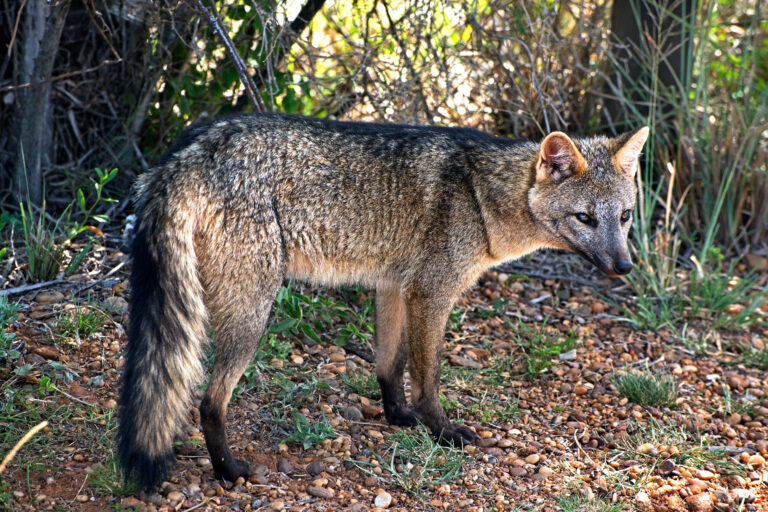
  • Night drive or spotlighting safari in the Pantanal (search for ocelot, crab-eating fox, tapir, and nocturnal birds around lodge tracks).
  • Horseback safari on a Pantanal fazenda (traditional low-impact way to approach capybaras, deer, rheas, and open-country birds).
  • Bonito/Serra da Bodoquena: snorkel crystal-clear rivers (e.g., Rio da Prata or nearby spring-fed systems) to see dorado/pacu and other freshwater fish in submerged forests.
  • Macaw and parrot photography session at known roosting/flight corridors in the Pantanal (golden-hour flights over wetlands and palm stands).
  • Cerrado savanna wildlife day in protected areas and private reserves (target maned wolf, giant anteater, and specialized Cerrado birds where conditions and permits allow).

Wildlife Watching Types

Big-cat tracking (jaguar-focused safaris, primarily boat-based in wetland river corridors) Wetland safari (4x4, boat, walking, and horseback) for capybara, caiman, deer, tapir, and abundant birdlife Birding hotspots and roost viewing (macaws, jabiru, raptors, kingfishers, wetland specialists) Nocturnal wildlife watching (spotlighting/night drives for mammals, owls, nightjars, caiman eye-shine) Aquatic wildlife observation (giant otters, caiman, water birds) Freshwater snorkeling and river-wildlife viewing (Bonito/Serra da Bodoquena spring-fed rivers) Wildlife photography-focused trips (hides/boats, golden-hour roosts, specialist guides) Conservation-oriented visits (projects and lodges supporting habitat protection and monitoring)

Guided Options

  • Pantanal lodge-based safari packages (multi-day stays combining boat rides, 4x4 drives, walks, and horseback outings; ideal for first-timers).
  • Private jaguar safari by boat with a specialist naturalist guide (higher success for jaguar/otter behavior and photography; flexible daily routing).
  • Birding-focused tours with expert ornithologists (targeting Pantanal icons like hyacinth macaw and jabiru plus seasonal migrants).
  • Bonito guided snorkeling and river-float programs (mandatory-guided in many sites; combines fish observation with environmental interpretation).
  • Pantanal photographic expeditions (small groups, extended river time, optimized light and positioning; often uses dedicated boats/vehicles).
  • Community and conservation program visits arranged through lodges/NGOs (talks, monitoring participation where permitted, and responsible wildlife-viewing protocols).
  • Multi-ecosystem itineraries combining southern Pantanal + Serra da Bodoquena/Bonito (mix safari with freshwater ecosystems for a varied wildlife portfolio).
Habitats

Ecosystems

Mato Grosso do Sul sits where three big ecosystems meet: the seasonally flooded Pantanal wetland, the fire‑adapted Cerrado savannas and woodlands on uplands, and patches of Atlantic Forest‑influenced seasonal forest in the south and east. Rivers (Paraguay and Paraná) cause strong wet–dry seasons, long river corridors, and rapid habitat changes; the southwest changes to Chaco‑like dry areas.

Biomes

Wetland

Dominated by the Pantanal floodplain, where annual inundation creates a shifting mosaic of flooded grasslands, marshes, gallery forests, and shallow lakes supporting abundant fish, waterbirds, and large mammals.

Major feature in the west/northwest (Pantanal subregion); forms a broad belt along the Paraguay River floodplain and associated lowlands.

Savanna

Cerrado landscapes on higher ground: mosaics of open grasslands, typical cerrado savanna with scattered trees, and dense cerrado woodlands, shaped by seasonal drought, nutrient-poor soils, and fire.

Widespread across the central, eastern, and northeastern uplands; generally the most extensive non-flooded biome in the state.

Tropical Dry Forest

Seasonally dry/semideciduous forests and forest-savanna transitions, including interior Atlantic Forest-influenced fragments and dry-forest patches on fertile soils and along river valleys.

Patchy, mainly in the south and east (and along some river corridors), heavily fragmented by agriculture and pasture.

Freshwater

Large rivers (Paraguay, Paraná and tributaries) and associated oxbow lakes, channels, and floodplain lagoons that drive the Pantanal flood pulse and sustain fisheries and aquatic biodiversity.

Statewide along major basins; highest density and ecological influence in the Pantanal and along major river corridors.

Habitats

Wetland

Pantanal mosaics of seasonally inundated plains, wet prairies, and floodplain forests; key areas include riverine floodplains and protected wetlands (e.g., around the Paraguay River system).

Swamp

Permanently or long-duration flooded areas with woody vegetation and palm-dominated stands in parts of the floodplain; important refuge during dry-season contractions.

Marsh

Shallow, herbaceous wetlands (often dominated by grasses/sedges) that expand in the wet season and concentrate wildlife as waters recede.

River/Stream

Major corridors (Paraguay and Paraná systems) with dynamic channels, sandbars, and riparian forests; crucial for connectivity and migrations of fish and aquatic fauna.

Lake

Floodplain lagoons and oxbow lakes in the Pantanal that vary strongly with the annual flood pulse and support high aquatic productivity.

Forest

Riparian/gallery forests along rivers and streams across both Pantanal and Cerrado landscapes, providing shade, bank stability, and movement corridors for fauna.

Deciduous Forest

Seasonal semideciduous forests (Atlantic Forest interior influence) in the south/east, now fragmented; often on more fertile soils and within agricultural matrices.

Woodland

Cerradão and other denser savanna-woodland formations on uplands, transitional between open savanna and closed forest.

Grassland

Open campos and seasonally flooded grasslands-especially extensive within the Pantanal-supporting grazing fauna and large bird assemblages.

Savanna

Cerrado sensu stricto with scattered trees and shrubs, adapted to fire and seasonal drought; common across uplands and plateaus.

Shrubland

Drier transitional formations (including Chaco-influenced scrub near the southwest border) with thorny shrubs and drought-adapted plants.

Agricultural/Farmland

Large areas converted to cattle pasture and mechanized crops (e.g., soy/corn), particularly on the Cerrado uplands and southern/eastern regions; key driver of fragmentation.

Urban

Urban/peri-urban habitats around cities such as Campo Grande, Dourados, and Corumbá, with impacts concentrated along transport corridors and river-adjacent settlements.

Ecoregions

Pantanal (Paraná-Paraguay flooded savannas) Cerrado Upper Paraná Atlantic forests Humid Chaco
Protection

Conservation

Primary Threats

  • Rapid conversion of Cerrado and forest mosaics on the surrounding plateaus (e.g., in the Upper Paraguay basin headwaters) to soy, corn, and intensified cattle production increases habitat loss and fragmentation, and drives downstream impacts in the Pantanal through altered runoff and sediment loads.
  • Clearing and degradation occur both on uplands (Cerrado/Atlantic Forest remnants) and in parts of the Pantanal via pasture intensification, selective removal of native vegetation, and wetland-edge development-reducing denning/nesting sites for species like giant anteater, tapir, and hyacinth macaw.
  • Changes to floodplain dynamics-through drainage, riverbank alteration, small hydrological works, and watershed-level land-use change-can weaken the Pantanal's seasonal flood pulse, impacting fish recruitment, aquatic vegetation, and wildlife that depend on predictable inundation cycles.
  • Hotter temperatures and more frequent/intense drought years heighten wildfire risk and shorten or destabilize flooding periods. In MS this manifests as extreme fire seasons in the Pantanal and stress on wetlands, riparian forests, and water availability for people and wildlife.
  • Agrochemical runoff from upland agriculture, plus urban wastewater in growing towns, degrades water quality in tributaries feeding the Paraguay River system. This can contribute to eutrophication, fish stress, and contamination risks in wetlands and karst waters (e.g., Bonito/Serra da Bodoquena region).
  • Road upgrades, new bridges, port/logistics expansion (including routes linked to the Bioceanic Corridor) and energy transmission corridors increase fragmentation, vehicle collisions (notably for giant anteaters and tapirs), and open access for illegal extraction and hunting in remote areas.
  • Localized extraction (e.g., limestone and other materials) can affect karst systems and springs in Serra da Bodoquena and contributes to sedimentation and habitat disturbance when poorly managed, with downstream consequences for clearwater rivers and aquatic biodiversity.
  • Although large-scale logging is less dominant than agriculture, illegal or poorly regulated wood extraction and fuelwood collection in forest remnants and riparian corridors reduce structural habitat complexity and increase fire susceptibility.
  • Illegal hunting for bushmeat and retaliation killing (e.g., after livestock predation) persists in rural landscapes. Species such as peccaries, deer, and large cats are especially affected, and hunting pressure can intensify near access roads and waterways.
  • Jaguar-livestock conflict on cattle ranches in the Pantanal is a recurrent driver of persecution. Conflict can rise during drought/fire years when prey availability shifts and cattle are concentrated near remaining water sources.
  • MS's borders with Paraguay and Bolivia facilitate trafficking routes for parrots/macaws, reptiles, and other fauna. Capture pressure is elevated where enforcement is thin and transport corridors are improving.
  • High fishing pressure in the Paraguay River system and its tributaries (commercial, subsistence, and sport) can reduce key stocks, affecting food webs that support iconic Pantanal wildlife and local livelihoods, especially during low-water years.
  • Non-native fish (commonly introduced for aquaculture/sport) and invasive/feral animals can alter aquatic communities and compete with native species. Feral pigs can also damage wetlands and riparian zones, increasing turbidity and erosion.
  • Spillover risks increase where wildlife, livestock, and domestic dogs interact on ranchlands and near settlements. Carnivores (e.g., maned wolves and wild canids) can be exposed to canine pathogens, while ungulates may face pressures from livestock-associated diseases.
  • Rapidly growing nature tourism (boat traffic, wildlife viewing) and river recreation can disturb nesting/roosting birds and alter animal behavior if unmanaged-especially in jaguar-viewing hotspots and sensitive riparian habitats.
Fun Facts

Did You Know?

In Mato Grosso do Sul's Pantanal, the land flips between dry and water each year. During floods, fish spread into flooded grasslands and forest edges, then flow back to rivers. The flood pulse drives huge wildlife numbers.

Pantanal jaguars in Mato Grosso do Sul often swim across wide rivers and hunt large reptiles, especially caimans, a hunting style that likes water and is rare in most jaguar areas.

Hyacinth macaws in the state depend heavily on a specific nesting resource: natural cavities in large Sterculia apetala trees. Conservation in Mato Grosso do Sul often focuses on protecting these old trees-and adding nest boxes where cavities are scarce.

Rivers near Bonito and Serra da Bodoquena are crystal clear not because they lack life, but because limestone makes tiny bits clump and sink, giving aquarium-like visibility to watch wild fish schools.

Floating vegetation mats in the Pantanal can drift like living islands, carrying invertebrates, amphibians, and shelter for young fish-so parts of the food web literally move with the wind and currents.

Mato Grosso do Sul contains roughly two-thirds of Brazil's share of the Pantanal-part of the world's largest tropical wetland system-so the state sits at the core of this globally record-scale floodplain.

In the Pantanal of Mato Grosso do Sul, camera-trap studies show jaguars reach some of the highest wild densities—about 6–7 jaguars per 100 km² in top areas—so the region is famous for reliable jaguar sightings.

The Pantanal's yacare caiman (Caiman yacare) population rebounded to an estimated ~10 million individuals across the wetland-one of the largest crocodilian populations on Earth-and Mato Grosso do Sul holds a major share of that stronghold.

Mato Grosso do Sul's Pantanal is a global stronghold for the hyacinth macaw (Anodorhynchus hyacinthinus), the world's largest flying parrot (about 1 m long), with long-running nest monitoring and protection programs concentrated in the state's floodplain ranchlands.

The giant armadillo (Priodontes maximus)-the world's largest armadillo-occurs in Mato Grosso do Sul (Cerrado-Pantanal ecotones and forest patches), making the state one of the places where this record-size, rarely seen mammal still persists.

Thank you for reading! Have some feedback for us?