






M
Species Profile

Mountain Feist

Canis lupus familiaris

Small dog, big mountain hunt
Kyler Mitchell/Shutterstock.com

Mountain Feist Distribution

Click a location to explore more animals from that region

Origin Location

This map shows the native origin of the Mountain Feist. As a domesticated species, they are now found worldwide.

Loading map...

Size Comparison

Human 5'8"
Mountain Feist 1 ft 3 in

Mountain Feist stands at 22% of average human height.

Mountain Fest sitting in the grass

At a Glance

Domesticated
Diet Omnivore
Activity Diurnal+
Lifespan 13 years
Weight 11 lbs
Status Not Evaluated
Did You Know?

"Feist" is a traditional American hunting-dog type, prized more for performance than for a uniform show look.

Scientific Classification

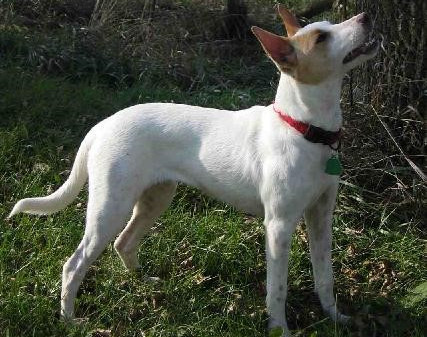
The Mountain Feist is a small-to-medium American hunting dog (a ‘feist’ type) historically developed in the Appalachian and Ozark regions for treeing and pursuing small game, especially squirrels. It is a domestic dog variety often treated as a distinct breed in working-dog registries rather than major all-breed kennel clubs.

Kingdom
Animalia
Phylum
Chordata
Class
Mammalia
Order
Carnivora
Family
Canidae
Genus
Canis
Species
lupus

Distinguishing Features

  • Small, agile treeing hunting dog used primarily for squirrels and other small game
  • High energy and strong prey drive; quick, alert temperament
  • Short, smooth coat is common; coloration varies widely
  • Often compact build with athletic proportions; ear carriage can vary (erect, semi-erect, or button)

Physical Measurements

Males and females differ in size

Height
1 ft 4 in (1 ft 2 in – 1 ft 6 in)
1 ft 2 in (12 in – 1 ft 4 in)
Length
2 ft (1 ft 10 in – 2 ft 5 in)
Weight
25 lbs (20 lbs – 31 lbs)
15 lbs (10 lbs – 21 lbs)
Tail Length
12 in (10 in – 1 ft 2 in)
9 in (7 in – 11 in)
Top Speed
28 mph
running

Appearance

Primary Colors
Secondary Colors
Skin Type Typical canine skin under a short, tight, smooth coat; moderate pigmentation; low feathering and generally weather-tolerant with seasonal shedding.
Distinctive Features
  • Domestic dog breed/type (feist) developed in Appalachian and Ozark regions for small-game hunting, especially squirrels.
  • Small-to-medium, athletic, leggy build with quick acceleration, agility, and stamina for rough terrain.
  • Short, smooth coat that is easy-care but offers limited insulation in extreme cold.
  • Often wedge-shaped head with alert expression; ears may be semi-erect, erect, or button due to type variability.
  • Tail set high; tail length varies (natural bobtails can occur in some lines/registries).
  • Strong prey drive and pronounced treeing behavior; intense focus on moving quarry and frequent vocal/alert signaling.
  • Distinguishes from base species (gray wolf lineage) by compact size, neotenous facial proportions, and human-directed working partnership; selected for close-range hunting and recall rather than wild survival traits.
  • Health concerns to watch: patellar luxation, hip dysplasia, dental disease (small-to-medium breeds), seasonal/environmental allergies, and occasional ear irritation in active field dogs.
  • Care requirements: daily vigorous exercise plus mental work (tracking, squirrel games, obedience), secure fencing/leash due to prey drive, routine tick/flea prevention, regular nail/ear care, and tooth brushing/chews.
  • Body and markings can vary notably between lines; function-focused selection is typical in working registries.

Sexual Dimorphism

Males are usually slightly larger and more muscular through neck and shoulders, while females tend to be lighter-framed and more streamlined. Differences are modest and vary by line due to the breed/type's working-dog variability.

  • Slightly greater height and weight on average
  • More pronounced neck/forequarter muscling
  • Broader head and chest in some lines
  • Slightly lighter overall build
  • Narrower chest and finer bone in some lines
  • May appear more tapered through waist and muzzle

Did You Know?

"Feist" is a traditional American hunting-dog type, prized more for performance than for a uniform show look.

Mountain Feists are best known as squirrel dogs, using speed, sharp eyes, and loud "treeing" barks to hold game at a tree.

Most are small-to-medium (often ~5.4-13.6 kg), making them easy to carry in a truck box yet tough enough for all-day hunts.

Coat colors vary widely (black, white, tan, brindle, piebald patterns), reflecting working-line selection rather than strict appearance.

Many lines are associated with the Appalachian and Ozark regions, where small-game hunting was a key part of rural life.

Because they are working dogs, registries and clubs focused on hunting have historically mattered more than major all-breed show clubs.

Unique Adaptations

  • Compact, athletic build for steep, rocky terrain: efficient acceleration, tight turns, and jumping agility suited to mountain woods.
  • Endurance selected for long hunts: many can work for hours in variable weather when conditioned properly.
  • Vocal "tree" communication: loud, sustained barking is a functional trait that helps hunters locate the dog and the treed game.
  • Weather-tolerant short coat: low burr/brush snagging and easy maintenance after dense cover (though not heavy insulation).
  • Human-focused cooperation: unlike the base species (gray wolf), this domestic dog is selected for working in partnership and taking direction, not for independent pack hunting of large prey.
  • Strong startle recovery and boldness ("grit"): willingness to push through briars and loud woodland commotion in pursuit of small game.

Interesting Behaviors

  • Treeing sequence: quick pursuit → cut-and-turns → circling the trunk → steady, rhythmic barking while looking up to "show" the game's location.
  • "Range and check-in" hunting style: some work ahead to find scent, then loop back to keep contact with the handler.
  • High prey-drive scanning: intense visual tracking of canopy movement (squirrels) and rapid direction changes.
  • Persistent problem-solving: probing brush piles, fence lines, and den trees; will revisit a hot spot repeatedly.
  • Alert watchdog tendencies: quick to announce strangers or unusual yard activity with sharp barks.
  • Digging and "nose work" in the yard: following chipmunk/vole scent trails; can become a self-assigned pest-control crew.
  • Chase reflex around small pets: may pursue cats, rabbits, or backyard birds unless carefully trained and managed.

Cultural Significance

Across the Appalachian and Ozark highlands, the Mountain Feist (Canis lupus familiaris) is a family-kept working dog for squirrel hunting. Part tool, part friend, it supports food and fun, shapes "squirrel camp" culture, and is celebrated for its treeing voice and hustle.

Myths & Legends

Appalachian oral tradition often praises the "little feist that kept a pot full," a hard-times story motif where a small squirrel dog helps a family stretch meals through winter by reliably treeing game.

Hunters' campfire tales sometimes describe a "ghost squirrel" that only the best feist can tree-an elusive quarry used as a playful yardstick for a dog's nose, grit, and persistence.

In Ozark hunting tales, a Mountain Feist is said to 'talk to the timber'—its tree barking and body signals are so clear a skilled hunter can find exact tree and direction without seeing the dog.

Old-time naming lore around working feists emphasizes lineage-by-reputation-dogs remembered by a family name, holler, or handler-reflecting a tradition where stories of famous squirrel dogs traveled farther than written pedigrees.

Woods superstition says a feist's first "true tree" brings lifelong luck in squirrel woods. It is a rite of passage and the dog is then treated as a full hunting partner.

Conservation Status

NE Not Evaluated

Has not yet been evaluated against the criteria.

Population Stable

Life Cycle

Birth 4 pups
Lifespan 13 years

Lifespan

In the Wild
10–15 years
In Captivity
10–18 years

Reproduction

Mating System Polygyny
Social Structure Managed Domestic
Breeding Pattern Serial
Fertilization Managed Selective
Birth Type Internal_fertilization

As a domestic Mountain Feist, mating is typically controlled by owners who choose a stud for one or more females to maintain hunting/temperament traits. Copulation uses internal fertilization; pairings are temporary and change between heat cycles.

Behavior & Ecology

Social Pack Group: 3
Activity Diurnal, Crepuscular
Diet Omnivore High-protein, meat-forward meals (e.g., poultry or beef-based diet); many individuals are especially motivated by cooked chicken or liver used as training rewards.

Temperament

Breed context vs base species (wolf): highly human-directed, reduced pair-bond breeding constraints, and far lower territorial aggression.
Mountain Feist distinguishing traits: intense prey drive, quick visual scanning, and persistent treeing/staying-on-game behavior.
HUBS (common across the group): energetic "always ready" demeanor; variation ranges from steady to highly reactive lines.
Generally confident, bold, and inquisitive; may be wary of strangers without early, frequent social exposure.
Dog-to-dog sociability varies: many are tolerant in groups, but some show same-sex tension or resource guarding.
Trainability: smart and responsive but can be independent; best with short sessions, rewards, and clear rules.
Household behavior: strong attachment to primary handler; can develop nuisance barking or destructiveness if under-exercised.
Care requirements: daily vigorous exercise plus scent/seek or chase-type enrichment; secure fencing and reliable recall training.
Health concerns seen in small-to-medium working dogs: patellar luxation, hip dysplasia, dental disease, allergies; monitor joint wear in hard hunters.
Handling needs: early habituation to nails/teeth/ears; use calm restraint training to reduce squirmy, high-arousal reactions.

Communication

sharp alert barking
rapid repetitive 'tree' barking when game is located
whines during anticipation or separation
growls for boundary-setting or resource defense
high-pitched yips during play or excitement
intense staring and body-pointing toward quarry or squirrels in trees
tail carriage and ear set changes signaling arousal or uncertainty
scent investigation and urine marking on novel outdoor routes
pawing/jumping to solicit interaction or direct handler attention
mouthy play and quick darting movements used to initiate chase games

Habitat

Biomes:
Temperate Forest Boreal Forest (Taiga) Tundra Alpine Temperate Grassland Desert Hot Desert Cold Mediterranean Freshwater Wetland +4
Terrain:
Mountainous Hilly Plateau Valley Plains Riverine Rocky +1
Elevation: Up to 6683 ft 1 in

Ecological Role

Human-associated small-game hunter and pest-control predator (working dog) rather than a natural apex predator; ecologically functions as a localized mesopredator under human direction.

reduces local rodent/small mammal pest pressure around farms/homesteads assists hunters by locating/holding small game (treeing squirrels) can deter nuisance wildlife through presence and pursuit converts human-provided food into working activity/utility (cultural ecosystem service: hunting tradition/companionship)

Diet Details

Main Prey:
Other Foods:
wild berries fallen fruit grasses Starchy plant matter Vegetables

Human Interaction

Domestication Status

Domesticated

Mountain Feist (Canis lupus familiaris) is a fully domesticated, small-to-medium American feist hunting dog from gray wolf ancestry, bred in the Appalachian and Ozark regions to tree small game, especially squirrels. Kept as working stock, it is fast, high-energy, vocal, and chase-driven. Used for hunting, homesteads, active families; needs training, vet care, and may be rehomed.

Danger Level

Low
  • Bites/scratches possible if fearful, poorly socialized, or mishandled (especially around high arousal during hunting/chase)
  • High prey drive can lead to chasing small pets/children running; risk is usually controllable with training and supervision
  • Zoonotic/parasite risks typical of dogs (ticks, fleas, intestinal parasites) if preventive care is lacking
  • Injury risk from strong pulling/bolting on leash if under-exercised or untrained

As a Pet

Suitable as Pet

Legality: Mountain Feist (Canis lupus familiaris) are usually legal as pets in most places. They must follow local rules (licenses, leashes, shots). Hunting use may face state or province rules; local bans are rare.

Care Level: Moderate

Purchase Cost: Up to $800
Lifetime Cost: $15,000 - $30,000

Economic Value

Uses:
Hunting and field work Companion animal ownership Training and sporting events (field trials, squirrel dog competitions) Veterinary services (preventive care, injury treatment) Breeding and sales within working-dog registries Adoption/rescue and rehoming services
Products:
  • Hunting services/assistance (treeing small game)
  • Pest control around farms/homesteads (rodent/small-varmint deterrence)
  • Puppy/dog sales (working lines; registry-based)
  • Training services (recall, impulse control, hunting conditioning)
  • Pet supplies (food, collars, tracking collars/GPS, crates)
  • Veterinary care (vaccines, parasite prevention, injury/orthopedic care)

Relationships

Predators 4

Ecological Equivalents 6

Animals that fill a similar ecological role in their ecosystem

Mountain Feists are small, yet muscular dogs, initially bred by mountain pioneers to help with hunting vermin and other small game in rural areas of the United States to keep the rodent population under control. While they are still often used for hunting, especially squirrels, their temperament also makes a Mountain Feist a wonderful companion dog or family pet. They are very affectionate and loving to the members of their family and have a fun and playful personality.

However, Mountain Feist dogs can also be a bit challenging to train and do best with more experienced owners. With proper training, though, and sufficient exercise to match their higher energy level, a Mountain Feist can do very well in homes with children. Mountain Feists are relatively small, weighing just 12 to 30 pounds. Their coat can be a variety of colors, including black, gray, white, brindle, blue, brown, red, or silver.

Ownership: 3 Pros and Cons

ProsCons
Good with children: With proper training, Mountain Feists can make a good family pet. They have a friendly and affectionate temperament.High exercise needs: Mountain Feists have a lot of energy and will require multiple long walks each day.
Low maintenance: Mountain Feists don’t require much grooming.Can be difficult to train: Mountain Feists can be challenging to train and are best suited for homes with experienced owners.
Unique appearance: Mountain Feists are small and muscular. Their coats come in a range of colors, including black, brown, gray, red, white, brindle, and cream.High prey drive: Mountain Feists have a high prey drive and may try to chase small animals outside or cats.

Size and Weight

Cute Mountain Fest playing in the garden.

Mountain Feist dogs are small to medium in size, weighing 12-30 pounds.

Mountain Feists are a small to medium-sized dog breed. Males and females are generally between 12 and 18 inches tall and weigh between 12 and 30 pounds. Puppies will gain muscle as they develop into full-grown dogs.

Common Health Issues

Overall, these dogs are a very healthy breed. They typically enjoy a very long lifespan. However, there are still some potential concerns owners should be aware of if they have one of these dogs.

Some Mountain Feists may develop hip dysplasia. This is a condition where the hip bone doesn’t form correctly and becomes dislocated. It can make walking very painful for dogs, and surgery may be required to correct it.

A Mountain Feist may also be a bit more likely to develop an ear infection than some other breeds. Be sure to keep your dog’s ears clean and contact your veterinarian if you notice your dog scratching at his ears.

Bloat is another potential concern for the Mountain Feist dog. Also known as gastric dilation-volvulus (GDV), bloat is a condition in which a dog’s stomach is filled with gas and twists. It can be life-threatening, and you should bring your dog in for immediate care if you suspect it has developed bloat. It is not completely clear what causes bloat in dogs, but it commonly occurs after the dog eats a large meal and then exercises. So, take care to limit your dog’s activity following a meal.

Mountain Feists may also suffer from atopic dermatitis, a condition caused by the inhalation or ingestion of any substances they are allergic to. Symptoms include licking, rubbing, or scratching due to the itching caused by the illness. Allergen specific immunotherapy which serves to boost the immune system can prove especially beneficial in alleviating symptoms caused by airborne allergens. Atopic dermatitis can also be treated using essential fatty acids and antihistamines, or steroids. The former takes longer to act (about two months) while the latter acts promptly but may cause an increase in appetite and a decrease in immunity.

Temperament and Behavior

These dogs are a very active breed with a very curious and playful personality. They enjoy playing outdoors and need long walks to make sure they get their energy out. As long as their exercise needs are met, the dog’s behavior should stay under control. Their personality traits can make this breed a wonderful family dog.

However, if the dog isn’t given the exercise it needs, it may get bored and exhibit destructive behaviors. Mountain Feist dogs may also bark or growl more than many other breeds. Due to their higher intelligence and potential stubbornness, they typically do best in a home with an experienced trainer.

Care

Mountain Feists are a unique dog breed with unique needs. Keep their temperament, exercise requirements, health concerns, training needs, and all other relevant characteristics and information in mind when caring for your dog.

Best Dog Food

As a very active breed, it is important to make sure your dog gets enough food to keep it healthy. These dogs should eat around 400 calories of high-quality dog food formulated for active breeds. Since this breed is also susceptible to bloat, feed them two smaller meals each day rather than one large meal.

Puppies have smaller stomachs than adults. Therefore, it is important that you feed them between three and four meals each day until they are around six months old. Your veterinarian is an excellent resource to consult if you are not sure how much food to feed your dog or how frequently they should eat each day.

Fortunately, Mountain Feists are a rather healthy breed. But it’s still best to find dog food that provides robust nutrition to support a long, active, happy life.
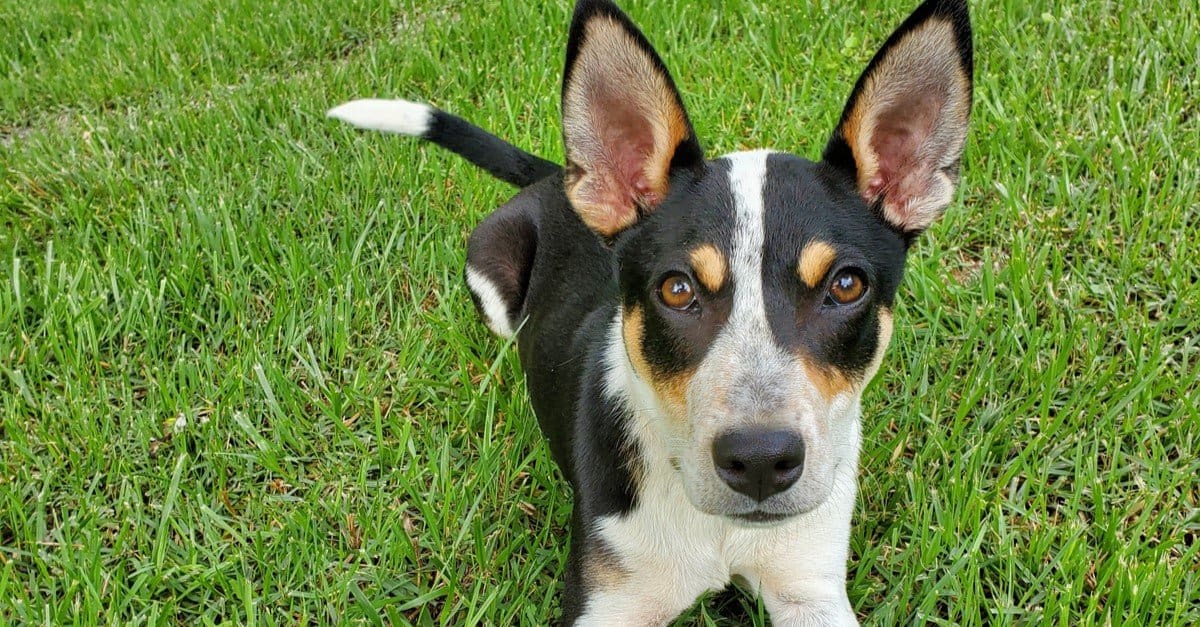
Mountain Fest sitting in the grass

Mountain Fest dogs are bred to be low-maintenance and don’t need much grooming, though they are prone to shedding.

Maintenance and Grooming

These dogs were bred to be low-maintenance dogs. They have short hair and do not need much grooming to stay looking their best. This breed does shed a fair amount, but the amount of hair they lose will be minimal because they have such short hair. So, you won’t need to worry too much about finding a pile of black, brown, white, or gray hair all over your furniture or floors. You should use a slicker brush or bristle brush about once each week to brush your dog and remove any loose hairs and dirt from their coat.

For the most part, a Mountain Feist will keep itself pretty clean, but they may require an occasional bath if they get very dirty. You will also need to keep your dog’s nails trimmed, their teeth brushed, and their ears clean.

Training

Training a Mountain Feist is not always easy. They have a pretty strong prey drive and a very high energy level, which can make training sessions more challenging. Generally, these dogs do best in homes with experienced owners. They do have a high intelligence level, so with the right trainer and training techniques, this breed can learn quickly.

Exercise

These dogs need a lot of exercise each day. They do best when they get to walk at least 14 miles each week, so don’t bring home a Mountain Feist unless you enjoy going for long walks or hikes each day. In addition to taking your pup for long walks, you can also give your dog playtime in a fenced-in backyard. These dogs were bred to be hunting dogs, and bringing your dog hunting with you can also help him or her meet exercise requirements.

Puppies

While Mountain Feist puppies may not be as widely available as some more popular breeds, reputable breeders and kennels are offering purebred Mountain Feist puppies for sale in 2025. However, a Mountain Feist mix may be easier to find. Some breeds that may be mixed with these dogs include Mountain Curs, Golden Retrievers, Jack Russel Terriers, and Labrador Retrievers.

Before bringing home a new puppy, make sure that you’re ready to commit to giving the dog the exercise it needs. This is a very high-energy breed, and without proper exercise, dogs can become bored and destructive.

Children

If these dogs get proper training, they can do very well with children. They have a very playful and affectionate personality. However, they are a very active breed, so they may do better in a home with older children who won’t be injured accidentally. Always take care to supervise children around a Mountain Feist or any other dog breed.

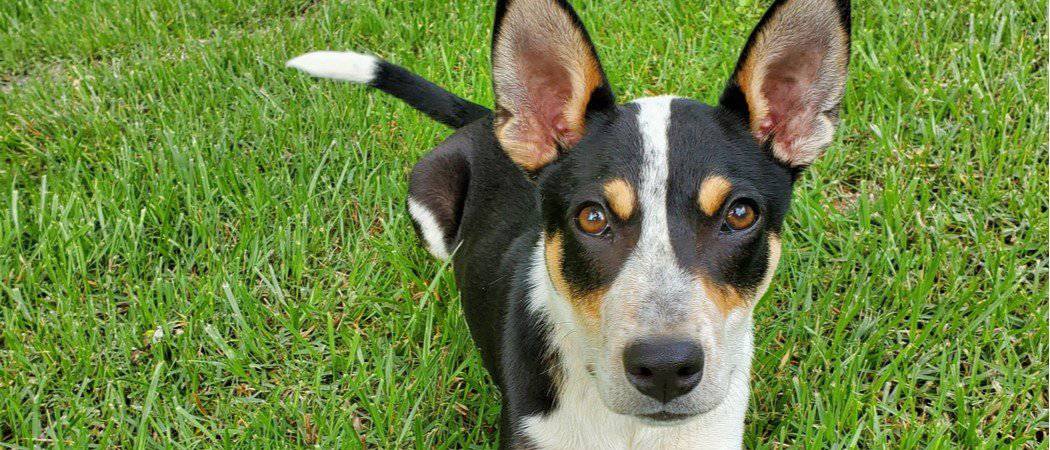
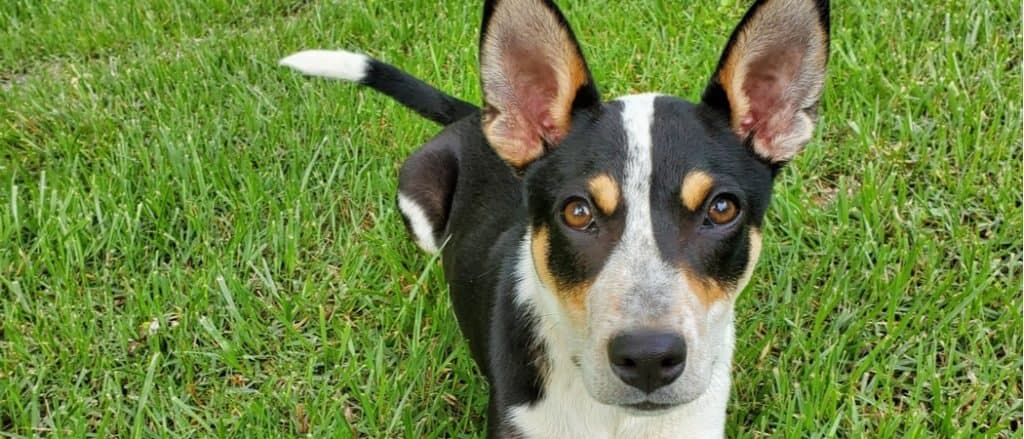
Mountain Feist puppy in grass

Mountain Feist puppies are playful and affectionate.

Dogs similar to Mountain Feist

Jack Russell Terriers, Fox Terriers, and Rat Terriers are three breeds that are similar to these dogs.

  • Jack Russell Terriers: Jack Russell Terriers and Mountain Feists can both be very affectionate with the people they trust. Both breeds are also very territorial and can make a good watchdog. Jack Russell Terriers have a higher weight gain potential, so the amount of food they eat should be closely regulated to prevent obesity.
  • Fox Terrier: Fox Terriers and Mountain Feists are both likely to bark a lot. Both breeds also have a very high prey drive. A Fox Terrier can make a better dog for homes with children than a Mountain Feist, though.
  • Rat Terrier: Rat Terriers and Mountain Feists were both bred by American farmers to hunt rodents and other small animals. Both breeds are very similar in size, with an average weight between 21 and 23 pounds. Rat Terriers can be a better breed for homes with children, though.

Famous Mountain Feists

Follow some of these dogs on Instagram to get your daily fix of this adorable and fun-loving breed:

View all 329 animals that start with M

Sources

  1. Wag! / Accessed June 8, 2021
  2. Dog Breed Info / Accessed June 8, 2021
  3. Dog Breeds List / Accessed June 8, 2021
  4. Dogable / Accessed June 8, 2021
  5. United Kennel Club / Accessed June 8, 2021
  6. Petkeen / Accessed June 8, 2021
Thank you for reading! Have some feedback for us?


Mountain Feist FAQs (Frequently Asked Questions)

The cost to purchase a Mountain Feist from one of the breeders in your area can range from $200 to $600. However, keep in mind that there may not be any breeders local to you since this is a rarer breed. You may also be able to find a Mountain Feist or Mountain Feist mix-up for adoption through a local rescue organization. In most cases, it will be less expensive to adopt a dog through a rescue than to purchase from breeders.

Mountain Feists live a long life and will require quality care from you as their owner. Be prepared to spend $1,000 to $1,500 the first year you own your Mountain Feist to purchase all the food, supplies, training, and veterinary care they’ll need. The following years will likely be much less expensive, but could still cost between $500 and $1,000.