
A
Species Profile

Australian Shepherd Mix

Canis lupus familiaris

Brains, bounce, and a herder's heart
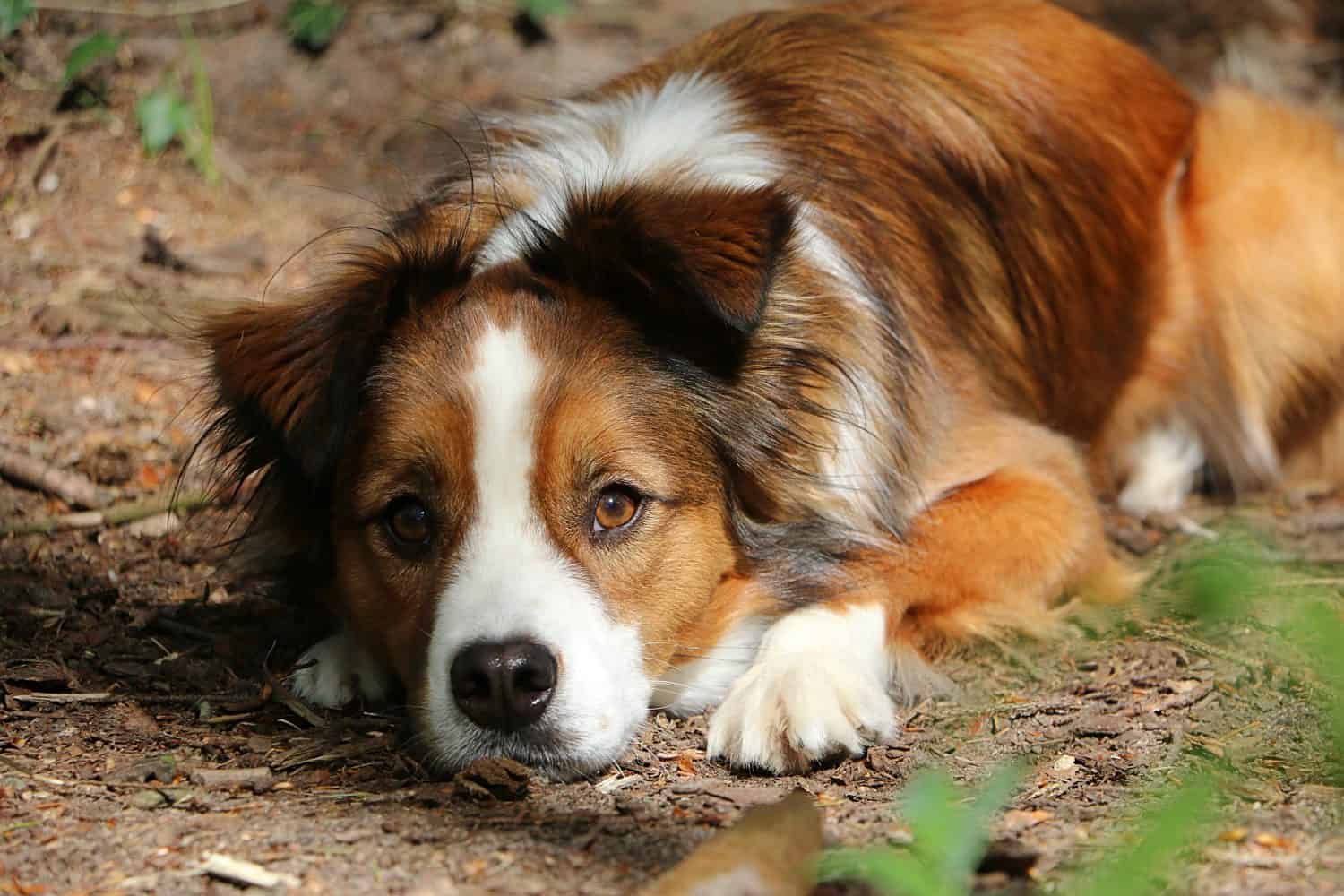
CulmSee-Axel-acad.2161 / CC BY-SA 4.0

Australian Shepherd Mix Distribution

Click a location to explore more animals from that region

Origin Location

This map shows the native origin of the Australian Shepherd Mix. As a domesticated species, they are now found worldwide.

Loading map...

Found in 1 country

Size Comparison

Human 5'8"
Australian Shepherd Mix 1 ft 8 in

Australian Shepherd Mix stands at 30% of average human height.

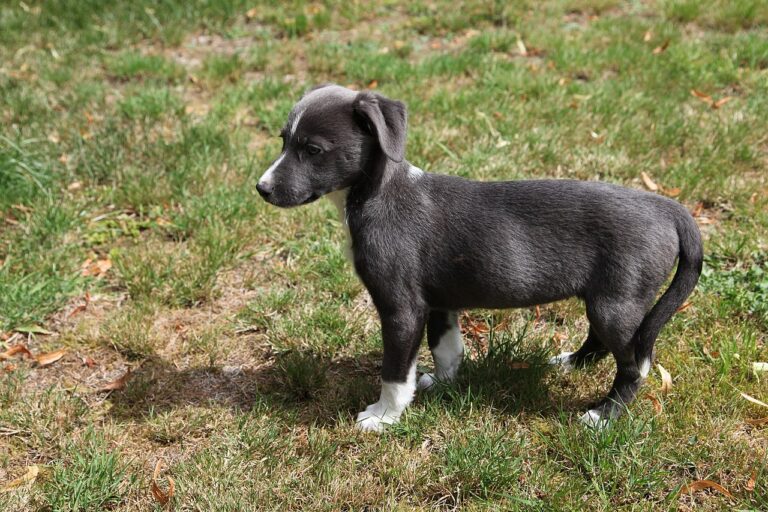
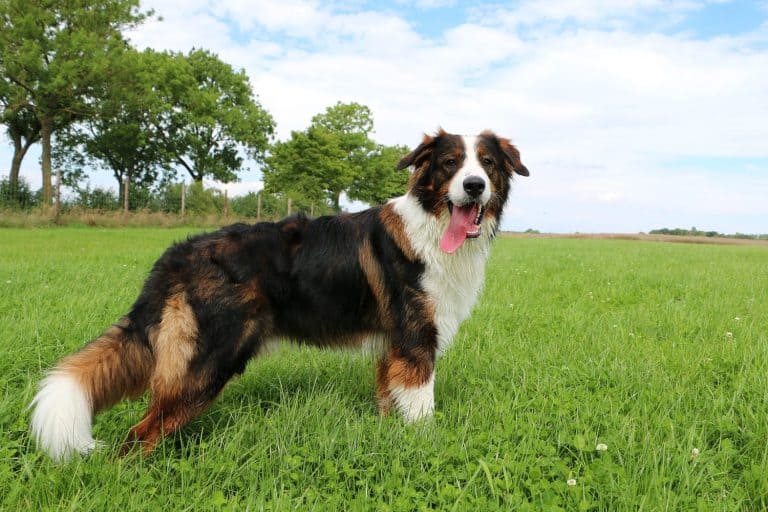
Aussiedor puppy close-up

At a Glance

Domesticated
Also Known As mixed-breed dog, mutt, mongrel, crossbreed, designer cross
Diet Omnivore
Activity Diurnal+
Lifespan 4 years
Weight 36 lbs
Status Not Evaluated
Did You Know?

Despite the name, Australian Shepherds were developed largely in the western United States; many "Aussie mixes" inherit that ranch-dog heritage.

Scientific Classification

A mixed-breed domestic dog that includes Australian Shepherd lineage. Because “mix” indicates non-standardized ancestry, traits can vary widely, but many individuals show herding-dog behavioral tendencies (high activity, trainability, strong attachment to handlers) depending on the other breed(s) involved.

Kingdom
Animalia
Phylum
Chordata
Class
Mammalia
Order
Carnivora
Family
Canidae
Genus
Canis
Species
Canis lupus

Distinguishing Features

  • Variable appearance; may show Aussie-like merle patterning, medium-length double coat, and semi-pricked or folded ears (not guaranteed)
  • Often high energy and mentally driven; benefits from training, enrichment, and regular exercise
  • Temperament and size strongly depend on the other breed(s) in the mix

Physical Measurements

Males and females differ in size

Height
1 ft 10 in (1 ft 7 in – 2 ft)
1 ft 6 in (1 ft 4 in – 1 ft 8 in)
Length
2 ft 8 in (1 ft 10 in – 3 ft 5 in)
Weight
57 lbs (44 lbs – 71 lbs)
44 lbs (31 lbs – 60 lbs)
Tail Length
Up to 1 ft 4 in
Up to 1 ft 2 in
Top Speed
31 mph
About 45-55 km/h

Appearance

Primary Colors
Secondary Colors
Skin Type Australian Shepherd mix (Canis lupus familiaris) has a medium to thick double coat over skin with normal color. Nose and eye rims can be black or brown; paw pads are thick. Some lines get skin irritation from allergies.
Distinctive Features
  • Canis lupus familiaris (Australian Shepherd mix) is a human-made companion and working dog, friendlier to people, with many coat colors and patterns, less uniform, shaped by selective breeding and mixed ancestry.
  • Not a formally standardized breed: "Australian Shepherd mix" indicates partial Australian Shepherd lineage; size, coat length, ear set, and overall build can vary widely depending on the other breed(s) involved.
  • Australian Shepherd-derived look often includes: medium-length double coat with feathering on legs/tail, a moderately athletic/herding-dog build, and expressive facial markings (blaze/collar/socks) in many individuals.
  • Head/ears: commonly a moderately broad skull with a defined stop; ears may be semi-erect with tipped fold or fully dropped, depending on the mix.
  • Eyes: may be brown/amber/blue or mixed; heterochromia can occur in some Aussie-lineage dogs but is not guaranteed in mixes.
  • Tail: may be long and plumed; some lines may have naturally short tails. Tail docking is not a reliable assumption for mixes and varies by region/practice.
  • Temperament tendencies (Aussie lineage, variable): often intelligent, highly trainable, handler-attached, and energetic; may show herding behaviors (heel-nipping, circling, intense 'watching') and can be reserved with strangers without proper socialization.
  • Care requirements (common for Aussie-type mixes): needs daily physical exercise plus mental work (training, scent games, agility, herding-style outlets); without enrichment may develop nuisance behaviors (barking, destructiveness, anxiety).
  • Grooming: typically benefits from weekly brushing (more during seasonal shedding) to manage undercoat; feathering can mat behind ears, on britches, and under collar/harness areas.
  • Health concerns seen in Aussie lineage (risk varies by mix): hip/elbow dysplasia, cranial cruciate ligament issues in active dogs, epilepsy/seizure disorders, and eye disease (e.g., cataracts/CEA-like issues depending on ancestry).
  • Some Australian Shepherd mixes carry the MDR1/ABCB1 gene, making them sensitive to some drugs (high-dose ivermectin, some cancer drugs). Genetic testing is often recommended for dogs with herding ancestry.
  • Merle-related cautions (only if merle present): avoid merle-to-merle breeding due to risk of hearing/vision defects in double-merle offspring; individual merle dogs may still be healthy, but screening of eyes/hearing is prudent.
  • Weight/conditioning: typically benefits from a lean, athletic condition; obesity worsens orthopedic risk-structured exercise and measured diet are important.
  • Heat/cold: double coat can insulate in cold and heat, but high-drive dogs still need shade/water and careful heat management during intense activity.

Sexual Dimorphism

Mild-to-moderate sexual dimorphism typical of domestic dogs: males often have slightly larger frames and broader heads/neck ruffs, while females are often slightly smaller and lighter-boned. In a mixed-breed, differences can be subtle and heavily influenced by the other breed(s) and by spay/neuter status.

  • Often slightly taller/heavier with more pronounced neck/shoulder musculature
  • May show a broader head and thicker ruff/coat around the neck in some coat types
  • Often slightly smaller frame with a lighter, more refined head shape
  • May appear a bit more streamlined in build, especially in athletic working-line mixes

Did You Know?

Despite the name, Australian Shepherds were developed largely in the western United States; many "Aussie mixes" inherit that ranch-dog heritage.

Many Aussie-line dogs carry the "merle" pattern; in mixes, coat color can range from solid to striking marbles and speckles.

Heterochromia (two different eye colors) can occur in Aussie-line mixes, especially where merle is present.

Aussie mixes often excel at dog sports (agility, disc, obedience, scent work) thanks to speed + trainability-if their other ancestry supports it.

They're frequently "velcro dogs," preferring to stay close to their person and monitor activity around the home.

Herding instincts may show up as circling, crouching, staring ("eye"), or trying to move kids/pets in a group-sometimes with nipping at heels.

Unique Adaptations

  • Working-dog cognition and biddability (strong responsiveness to training) typical of herding breeds-often present but variable in mixes.
  • Athletic build and efficient gait inherited from herding-dog ancestry in many individuals, supporting endurance and rapid directional changes.
  • Dense double coat in many Aussie-line mixes provides weather insulation; shedding can be heavy seasonally.
  • Heightened social attunement: many read human movement and posture closely, an asset for coordinated work and training.
  • Flexible behavioral "toolkit": depending on the non-Aussie ancestry, individuals may blend herding drive with traits like retrieving, guarding, or scenting.

Interesting Behaviors

  • Herding-style control behaviors: stalking posture, intense focus ("eye"), flanking arcs, and attempts to gather moving family members.
  • Shadowing/handler-checking: frequently orienting to a preferred person for cues and reassurance.
  • High "work ethic": inventing jobs (patrolling fences, carrying toys, alerting) when under-stimulated.
  • Motion sensitivity: quick response to bikes, squirrels, or running children; may chase without careful training.
  • Problem-solving play: opening doors, learning routines fast, and testing boundaries-common in intelligent working-line mixes.
  • Vocal communication can vary by mix: some are talkative "woofers," others quiet but highly expressive with body language.

Cultural Significance

Australian Shepherd mixes (Canis lupus familiaris) are linked to North American ranch and rodeo culture, first made popular by stock work, trick-dog shows, and mid-1900s rodeos. They bring a smart, active, trainable working-dog image to pet life, yet vary widely in look, size, and drive, showing adoption and designer-cross trends.

Myths & Legends

Old ranch-country lore says a good Aussie could "read cattle like a book," anticipating a herd's break before the rider saw it-stories told to explain their uncanny timing and close partnership with handlers.

A common naming story says the dogs were called 'Australian' after Australian sheep brought to the U.S. Ranch workers nicknamed them for the sheep, and the name stuck even though development was American.

Rodeo anecdotes from the mid-1900s describe performing Aussies as near-magical trick dogs-leaping onto horses, balancing, and taking complex hand signals-feeding the popular image of the breed as a showman's shadow.

In some herding communities, merle coats and "glass eyes" (pale blue) inspired folk beliefs that these dogs were especially watchful at dusk-an old superstition tying unusual eyes to heightened vigilance on the range.

Frontier-style tales sometimes credit a loyal herding dog with finding the way home across long distances after storms-stories that celebrate the working dog's endurance and devotion, commonly told about Aussie-type ranch dogs.

Conservation Status

NE Not Evaluated

Has not yet been evaluated against the criteria.

Population Stable

Life Cycle

Birth 5 pups
Lifespan 4 years

Lifespan

In the Wild
1–10 years
In Captivity
8–16 years

Reproduction

Mating System Polygynandry
Social Structure Managed Domestic
Breeding Pattern Serial
Fertilization Managed Selective
Birth Type Internal_fertilization

Australian Shepherd mix (Canis lupus familiaris): Domestic dogs mate by internal fertilization and are often bred by humans. Mating is polygynandrous (multiple males and females), managed with serial pairings and studs; 1–2 cycles/year, no long-term pair bonds.

Behavior & Ecology

Social Pack Group: 5
Activity Diurnal, Crepuscular, Cathemeral
Diet Omnivore high-value animal protein (e.g., cooked meat or meat-based training treats)

Temperament

Species context (domestic dog): Highly social, human-directed cooperative carnivore with flexible social rules shaped by early socialization and reinforcement; displays strong intraspecific communication via body language and vocalizations.
Australian Shepherd mixes have high work drive, strong attention to people, and use eye contact and herding moves. They range from mildly busy pets to intense workers, depending on other breeds, early life, and training.
Australian Shepherd mixes are eager, quick learners, attached and watchful of family. They may chase or herd others when unexercised, be reactive to new sounds, and need training, scentwork, or herding play.
Trainability/working style: Typically biddable and pattern-seeking; excels with reward-based, high-frequency feedback. Can become 'too smart' (inventing behaviors, testing boundaries) if reinforcement is inconsistent. Benefits from clear jobs and impulse-control training.
Sociability with humans: Often affectionate and loyal; may be reserved with strangers relative to many companion breeds and may alert-bark. Early positive exposure reduces wariness and reduces over-guarding tendencies.
Often friendly with known dogs but may try to herd or control groups and nip at heels when excited. Chase drive varies; introduce carefully to cats and small pets until safe.
Arousal profile: High baseline energy and quick arousal; can struggle with settling without training (mat work, calm reinforcement). Enrichment that combines thinking + movement is usually most effective.
Australian Shepherd mixes may have higher risk of hip and elbow dysplasia, cranial cruciate ligament injury, epilepsy/seizures, eye problems (cataracts), MDR1 (ABCB1) drug sensitivity, anxiety and noise sensitivity. Screening advised.
Needs daily physical exercise and mental work (training, puzzles, scent games). Without outlets may bark, destroy things, keep chasing or herding. Use cooperative training for grooming/vet care; give routine and downtime.
Good leash manners and reliable recall (coming when called) are very important because of herding and chasing urges. Teach 'leave it,' 'place,' and 'settle.' Use rewards and clear rules; avoid harsh punishment.
Working/companionship fit: Often thrives in active households, dog sports (agility, obedience, rally, disc), hiking, and structured jobs; may be challenging in low-activity homes unless exceptionally well-managed.

Communication

bark Alert, demand, excitement
whine Attention, frustration, appeasement
growl Warning, resource/space guarding, play
howl Less common; social/response to sounds
yip/yelp Startle or play
Body language: tail carriage/wag style, ear set, facial tension, piloerection
Eye contact and 'strong eye'/stare used to influence movement Herding-style in many individuals
Mouthiness/nipping as a herding-derived control behavior Often redirected with training
Play bows, bouncy gait, and self-handicapping during play
Scent marking (urine marking), sniffing, and over-marking; information gathering via scent trails
Proximity control: shadowing/following handler; blocking/circling family members or other dogs
Tactile signals: pawing, leaning, nose nudges
Displacement behaviors under stress (lip licking, yawning, shake-off) used as calming/appeasement signals

Habitat

Biomes:
Temperate Forest Temperate Grassland Mediterranean Desert Hot Desert Cold Boreal Forest (Taiga) Tundra Alpine Savanna Tropical Dry Forest Tropical Rainforest Freshwater Wetland +7
Terrain:
Plains Hilly Mountainous Valley Coastal Riverine Island +1
Elevation: Up to 14763 ft 9 in

Ecological Role

Human-associated commensal/working predator (domesticated canid) with primarily anthropogenic food sources; secondarily an opportunistic mesopredator/scavenger when free-ranging.

companionship and human well-being support herding/stock management and farm labor (breed-lineage tendency) property alerting and deterrence pest suppression (predation on rodents in some free-ranging contexts) carrion/food-waste scavenging in free-roaming contexts (can also be a negative impact if unmanaged)

Diet Details

Main Prey:
Domestic livestock byproducts Fish Eggs Small mammals Birds Rabbits and hares Insects and other small invertebrates +1
Other Foods:
Cereal grains Starchy plants Legumes Vegetables Fruits Grasses

Human Interaction

Domestication Status

Domesticated

Dogs (Canis lupus familiaris) were domesticated from gray wolves by humans for tameness, cooperation, and work. Australian Shepherds developed in the U.S. as ranch herding dogs for focus and energy. An Australian Shepherd mix is not a fixed breed; traits vary, but many show herding instincts, high exercise and mental needs, and strong bonds with a handler.

Danger Level

Moderate
  • nipping/heel-chasing and body-checking associated with herding drive, especially toward running children or fast-moving pets
  • fear-based or protective barking/reactivity if under-socialized or under-exercised
  • bite risk increases with poor supervision, pain/illness, resource guarding, or inadequate training/management
  • large variability across mixes; temperament depends heavily on genetics, early socialization, and owner handling

As a Pet

Suitable as Pet

Legality: Australian Shepherd mix dogs are usually legal to have as pets, but local rules (licenses, leashes), breed laws if they look like a restricted breed, and housing or landlord rules may limit ownership.

Care Level: Experienced

Purchase Cost: $50 - $1,500
Lifetime Cost: $20,000 - $55,000

Economic Value

Uses:
Companionship and family pet Working/herding and farm utility (depends on mix and training) Dog sports (agility, flyball, rally, obedience, disc) Service/therapy/assistance potential (individual-dependent) Training, grooming, boarding, and veterinary service markets
Products:
  • adoption fees or private rehoming fees; occasional breeder/accidental-litter sales
  • professional training (basic manners, reactivity management, working/sport foundations)
  • high-activity pet supplies (durable toys, enrichment puzzles, long-line/leash gear)
  • grooming services (coat care varies by mix; many have double-coat shedding)
  • veterinary prevention and treatment (vaccines, parasite control, spay/neuter, dental care)

Relationships

Ecological Equivalents 5

Animals that fill a similar ecological role in their ecosystem

Australian Shepherd
Australian Shepherd Canis lupus familiaris Many Australian Shepherd mixes derive from this breed and often retain herding instincts: they learn quickly, are very active, and focus on a person. Watch for MDR1 drug sensitivity, eye problems, and hip/elbow dysplasia. They need daily exercise, training, and socialization.
Miniature American Shepherd Canis lupus familiaris Occupies a compact herding-companion niche; many mixes exhibit comparable energy levels and need for engagement. Management needs are similar: consistent training, enrichment to prevent boredom-related behaviors, and proactive screening for eye and orthopedic issues common in herding-breed populations.
Border Collie
Border Collie Canis lupus familiaris Very similar working niche: intense herding drive and high responsiveness to cues. Australian Shepherd mixes may resemble border-collie-type behavior, showing motion sensitivity and a strong chase/herd instinct. Requires high daily activity, problem-solving tasks, and careful off‑leash management around cyclists, runners, and livestock if herding/chasing drive is strong.
Rough Collie
Rough Collie Canis lupus familiaris Similar pastoral/herding heritage and people-oriented temperament. Mixed individuals can share collie-like sensitivity and strong attachment. Over-arousal and anxiety can be reduced with predictable routines, positive-reinforcement training, and adequate exercise without excessive repetitive impact.
Shetland Sheepdog
Shetland Sheepdog Canis lupus familiaris Occupies a similar small-herding niche; overlaps in alertness, vocalization, and need for mental stimulation. Herding-breed mixes often benefit from early noise and bark management training and enrichment to prevent nuisance behaviors.

An Australian shepherd mix results from crossbreeding an Australian shepherd with another purebred dog. Despite its name, the Australian Shepherd was developed in the United States and was originally bred to herd livestock due to its excellent work ethic and intelligence. However, breeders wanted to experiment with this breed’s impeccable traits to see if they could create something superior. Therefore, there are several Australian shepherd mixes that make amazing pets. This article will focus on the Aussiedor (Australian shepherd and Labrador mix), but first, take a look at some other hybrids.

Types of Australian Shepherd Mixes

While the Australian shepherd is basically perfect in every way, crossbreeding them with another purebred often results in a healthier canine with other desirable traits. Here are three of the most popular Australian shepherd mixes:

Texas Heeler (Australian Shepherd and Australian Cattle Dog Mix)
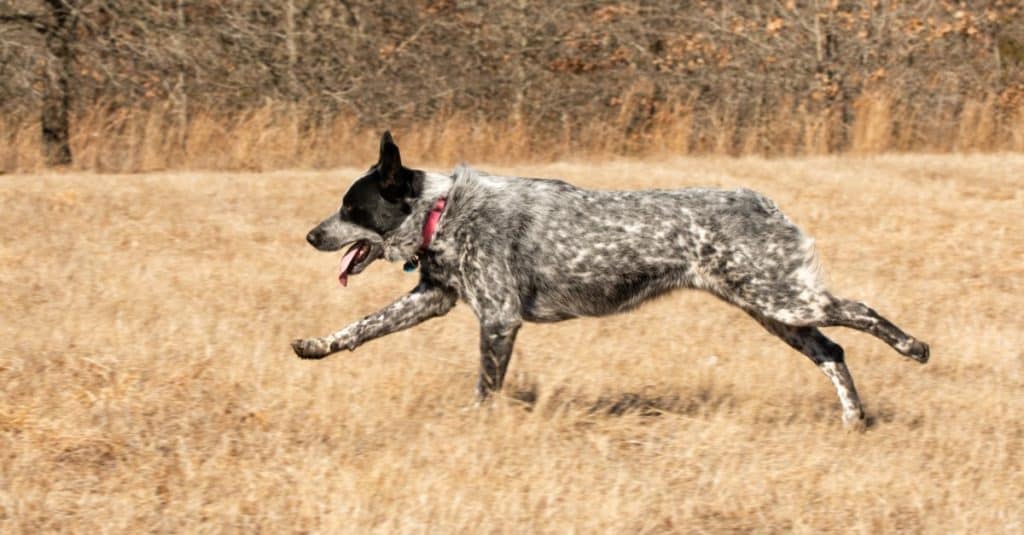
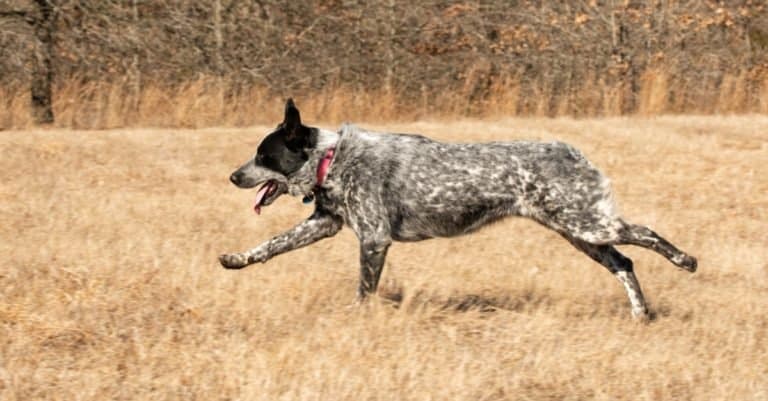
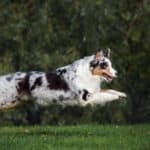
Texas Heeler dog running across a grass field at full speed.

Texas Heelers are a cross between the Australian Shepherd and the blue heeler.

The Texas heeler is a mix between the Australian shepherd and an Australian cattle dog, often called the blue heeler. These dogs are notorious for being herding dogs, so when combined with the Australian shepherd (also a herding dog), it results in one capable herder!

Texas heelers are extremely active and unsuitable for apartment or city living. They need an environment with lots of space where they can play outdoors and burn off all their excess energy. Additionally, this hybrid makes an incredible working dog. Furthermore, they can get on well with kids, but they tend to try and herd smaller children and animals.

Aussiedoodle (Australian Shepherd and Poodle Mix)
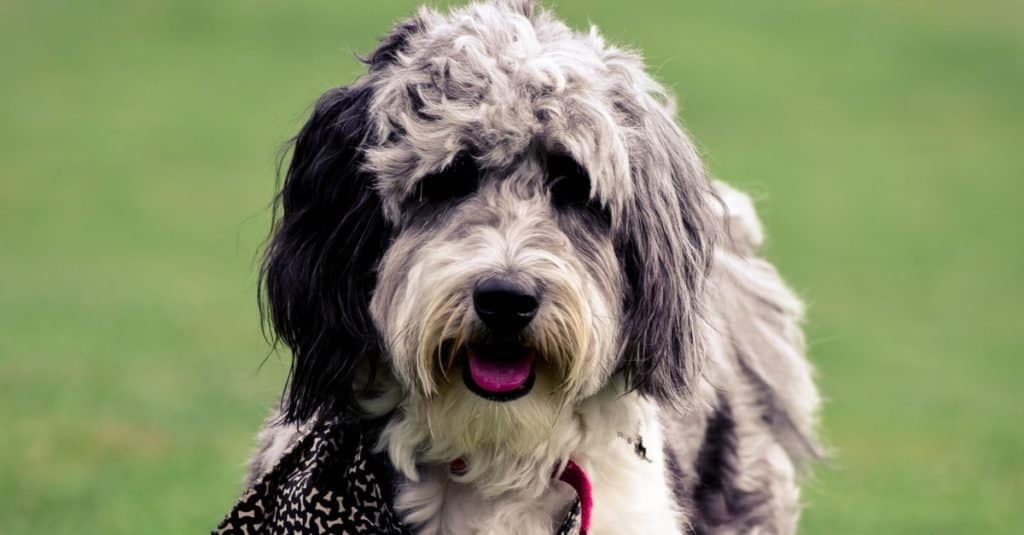
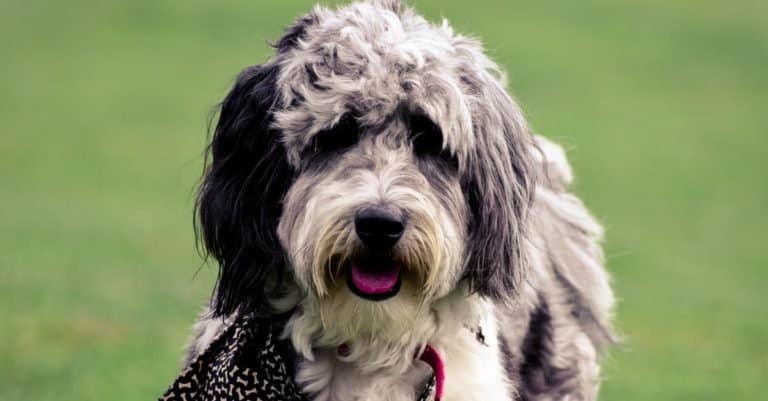
Aussiedoodle vs goldendoodle

The Aussiedoodle is a trendy, hypoallergenic designer breed.

The Aussiedoodle, also known as the Aussipoo, is the result of crossing the Australian shepherd and a Poodle. These are one of Australia’s most popular breeds, especially because they were specifically bred to be the perfect companion and family dog.

This hybrid is highly intelligent and loves socializing with everybody, including children and other pets. Their affectionate and loyal nature is perfect for anyone of any age. This Australian shepherd mix is an active dog who loves to swim, but they will be happiest when you exercise with them.

Unfortunately, Aussiedoodles suffer from separation anxiety, so they require socialization from an early age. However, training them is a breeze because of their outstanding intellect and obedience. So, naturally, these hybrids are perfect for novice pet owners. Furthermore, this mixed breed is hypoallergenic and safe for allergy sufferers.

Australian Retriever (Australian Shepherd and Golden Retriever Mix)
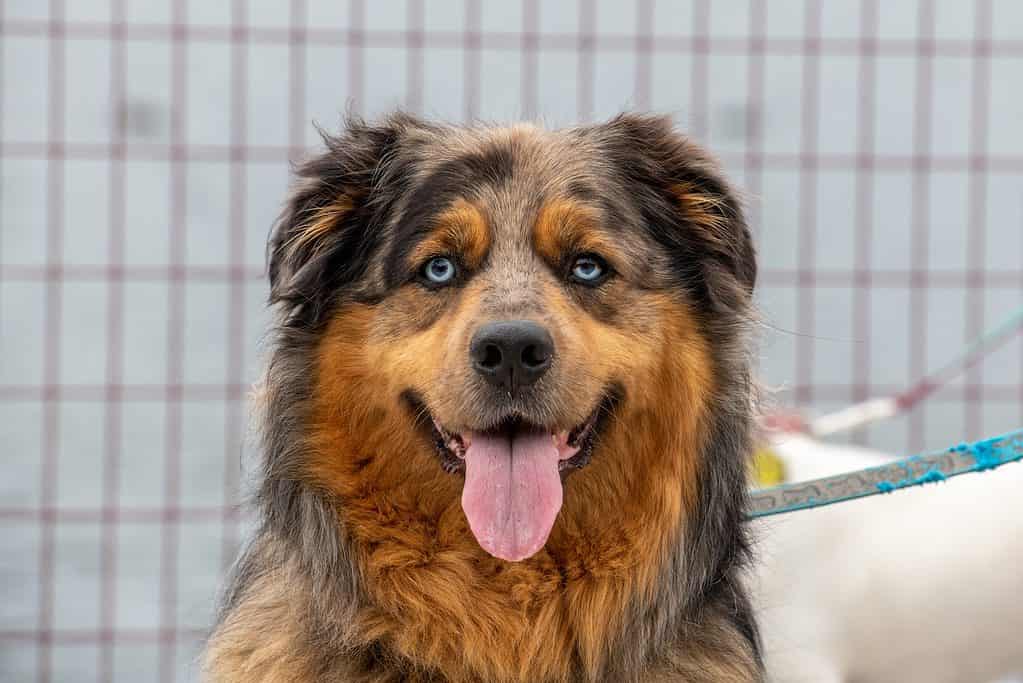
Australian retriever isolated

The Australian retriever is a cross between an Australian shepherd and a golden retriever.

When you combine an Australian shepherd and a golden retriever, the result is an Australian retriever. With two popular purebreds like this, their offspring are in high demand. These hybrids still retain the incredible work ethic of the Australian shepherd, while their friendliness and playful nature come from the golden retriever. Additionally, they make great companions for families with children who will give them plenty of attention. Furthermore, they are unbelievably obedient and loyal dogs, making them incredibly easy to train. Therefore, this Australian shepherd mix is perfect for a first-time pet owner.

The Australian retriever is an active dog that needs a fit family to keep up with it, so get ready for plenty of swimming, running, and hiking! However, as these hybrids love being around people, they are prone to separation anxiety and will be best suited to an owner who is home most of the time.

Pros and Cons of Owning an Australian Shepherd Mix

ProsCons
Intelligent and easy to trainPotential to be aloof or reserved
Relatively healthy for a dog their sizeMay display guarding tendencies
Makes an excellent working dogSheds a lot and requires plenty of grooming

The Best Dog Food for an Australian Shepherd Mix

Ensure the food you give your Aussiedor meets its daily nutritional needs. This breed requires:

  • 0.04 ounces of protein per pound of total weight daily
  • 0.02 ounces of fat per pound of total weight daily

The best choice for dog food is top-quality, high-calorie kibble divided into two meals per day. But their food needs to facilitate the phase of growth they are in; for example, puppies need a special diet formulated for their needs. Other things to consider are your Aussiedor’s size, age, allergies, and characteristics.

Australian Shepherd Mix Size and Weight

This Australian shepherd mix falls into the large dog category because its weight ranges from 50 to 60 pounds. Additionally, they can grow between 23 to 25 inches tall.
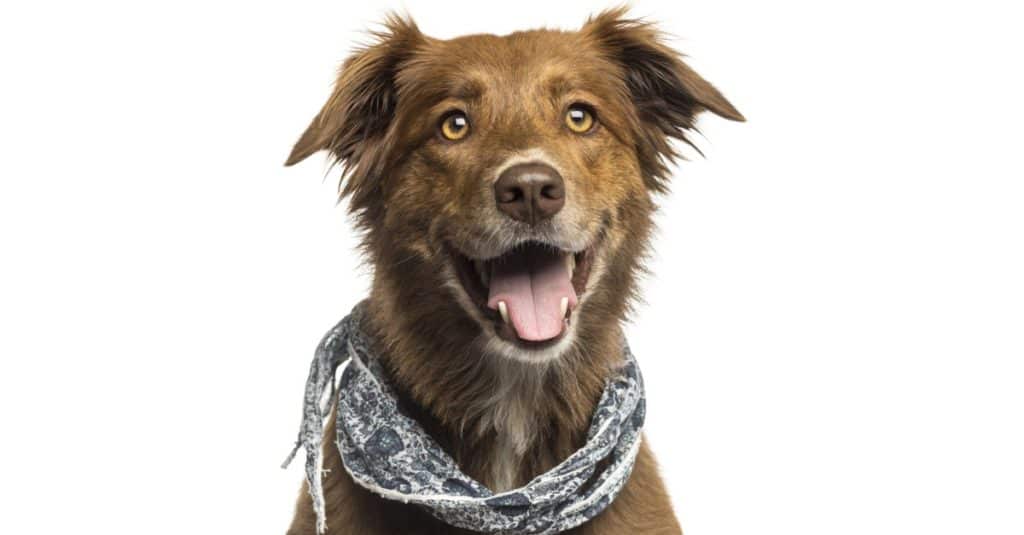
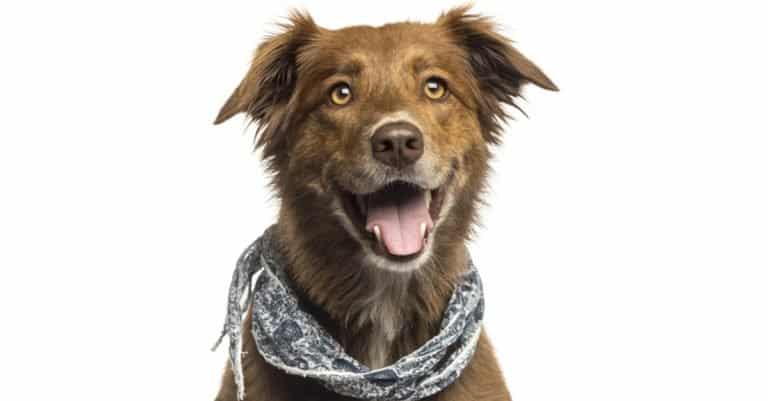
Labrador Australian Shepherd crossbreed dog, Aussidor, panting isolated on white

Aussiedors are categorized as a large dog breed.

Australian Shepherd Mix Common Health Issues

The Aussiedor is relatively healthy, with minimal risk of severe health problems. Additionally, most of these conditions can be avoided if you use a reputable breeder who has screened their breeding pairs for any hereditary diseases.

However, it is still possible for this hybrid to inherit health issues that plague Australian shepherds or Labrador retrievers since it’s in the genes. So, always be on the lookout for any one of the following conditions:

Autoimmune Thyroiditis

Autoimmune thyroiditis happens when the immune system starts to attack the thyroid gland. This results in decreased production of thyroid hormones and, eventually, the deterioration of the gland altogether. Symptoms of this condition include:

  • Weight gain
  • Skin issues
  • Tendency to seek heat

However, the only way to honestly know if your dog has autoimmune thyroiditis is through blood tests. Luckily, this condition can be treated with medication. However, your hybrid needs to be on this medication for the rest of its life.

Hip Dysplasia

This condition occurs during a dog’s growth stage. First, the hip joint starts to loosen, which causes pain and dysfunction. Then, as the dog ages, the hip’s cartilage and bone begin to wear down. Eventually, this leads to muscle atrophy, arthritis, and decreased mobility.

Cataracts

Unfortunately, cataracts are hereditary, so if your Aussiedor has them, your breeder probably didn’t screen their dogs. Luckily, this condition can be treated with surgery. However, if left untreated, your dog can go completely blind and develop glaucoma.

Life Expectancy

The Aussiedor has a relatively long lifespan for a large breed. These healthy dogs can live for 10 to 12 years with proper care. In addition, mixed breeds generally live longer than purebreds because some of the purebreds’ genetic health issues can be eliminated through screening and stronger genetics.

Australian Shepherd Mix Temperament

The Aussiedor is a natural busybody, so they might not be the best hybrid for first-time dog owners. They have to have a job that keeps them busy because if they are bored, these Australian shepherd mixes can get into a lot of trouble. But if you don’t have a job for them, keep them busy with training sessions, play, or exercise. Luckily, the Australian shepherd and Labrador retriever’s personality is almost identical, so if you have had one of these breeds before, you know exactly what you’re in for when getting an Aussiedor.

This hybrid has powerful herding skills, which come with guarding instincts, so some Aussiedors may be protective of their loved ones. As a result, they may be reserved or shy around new people. Therefore, ensuring your pup is socialized from a young age is imperative.

On the other hand, Labrador retrievers are not reserved or shy around strangers or other pets. On the contrary, they are happy-go-lucky dogs that enjoy the company of humans. So, there is a chance your Aussiedor inherits this trait. Unfortunately, there is no way of knowing how your hybrid will turn out; only time will tell.

How to Take Care of an Australian Shepherd Mix

The Aussiedor’s maintenance requirements will differ depending on which parent they take after. For example, they could inherit the Australian shepherd’s long, thick, double coat, which requires additional grooming.

Grooming

As mentioned above, the Aussiedor could either inherit the Labrador’s short, double coat or the Australian shepherd’s thick, long, double coat. Depending on which parent they take after, you will have to brush them every day or once a week. If your hybrid has longer fur, brush it thoroughly to ensure there are no knots and to remove all the dead hair.

Aussiedors are heavy shedders, so if you have allergies, opt for the Aussiedoodle, which is hypoallergenic and shares many traits with the Aussiedor.

You must never bathe your Australian shepherd mix more than once every three months. It washes away all the natural oils that keep their skin moisturized and healthy. Additionally, they need their nails clipped and their ears cleaned every three months.

Training

Owners need to start training their Aussiedors while they are still young. Ensure the experience is enjoyable because if they have a terrible experience, they might not want to continue learning. There are three main factors you should concentrate on:

  • Obedience:  focuses on the fundamental skills of sit, stay, and heel, which will help your pooch curb its herding instincts.
  • Socialization: introduce your Aussiedor to strangers on walks, take them to dog parks, and have puppy playdates with friends.
  • Tricks: you can start with the basics, like fetch, and work your way up to more demanding tricks, like “play dead.”

Exercise

Because of this Australian shepherd mix’s energy levels, they need at least an hour of vigorous exercise daily, including power walking, jogging, or running. However, they are best suited to families with large properties where they have plenty of space to run around in between their daily walks. If you work a full-time job and won’t have time to walk your Aussiedor twice a day, you will need to hire a dog walker, as the Aussiedor cannot be left alone and bored for the entire day; they will cause havoc!

Puppies

Aussiedors can give birth to six to seven puppies per litter. But ensure you are selecting your breeder carefully. Most backyard breeders do not screen their breeding pairs for hereditary diseases, and some won’t bat an eye at inbreeding. So, you will likely receive a pup with multiple health conditions as they age. It would also help if you saw your Aussiedor beforehand or if you could pick it yourself. When choosing one of these hybrids, pay attention to their behavior. If they are sleepy or reserved, there might be something wrong. Instead, lean towards the most playful of the litter. Other signs to look for are:

  • Clean eyes and ears
  • Good appetite
  • A healthy and shiny coat

Australian Shepherd Mix and Children

Aussiedors have the potential to be wonderful family companions if they are socialized and trained from a young age. However, whenever you have a large dog around your children, they must always be supervised.

Australian Shepherd Mix Cost

The Aussiedor is still a relatively new designer breed, so its prices are reasonable. Owners can expect to pay around $400 to $800 for one of these pups. However, if you can find one at a rescue or shelter, you will likely pay about $250.

Dogs similar to the Australian Shepherd Mix

View all 328 animals that start with A

Sources

  1. Hepper / Accessed January 14, 2023
  2. The Pets / Accessed January 14, 2023
  3. The Labrador Site / Accessed January 14, 2023
Chanel Coetzee

About the Author

Chanel Coetzee

Chanel Coetzee is a writer at A-Z Animals, primarily focusing on big cats, dogs, and travel. Chanel has been writing and researching about animals for over 10 years. She has also worked closely with big cats like lions, cheetahs, leopards, and tigers at a rescue and rehabilitation center in South Africa since 2009. As a resident of Cape Town, South Africa, Chanel enjoys beach walks with her Stafford bull terrier and traveling off the beaten path.
Connect:

Thank you for reading! Have some feedback for us?


Australian Shepherd Mix FAQs (Frequently Asked Questions)

The Aussiedor is a natural busybody, so they might not be the best hybrid for first-time dog owners. They have to have a job that keeps them busy because if they are bored, these Australian shepherd mixes can get into a lot of trouble!